
How to Shortlist Quality PVC Partition Wall Panel Suppliers
A PVC partition wall panel is an interior panel product made primarily from PVC, supplied in fixed panel dimensions with matching trims, and installed to divide interior space or finish interior walls. As the category expands, the hard part of sourcing is no longer finding suppliers — it is removing unsuitable ones quickly, using evidence rather than impressions.
The category's expansion is measurable. Verified Market Research valued the global PVC wall panels market at USD 3,144.8 million in 2023 and projects USD 9,495.8 million by 2031, a 14.4% CAGR across the 2024–2031 forecast period. Adjacent material families are moving in the same direction: Reports and Data estimates the WPC wall panel market at USD 1.5 billion in 2024 with an 8.1% CAGR forecast to 2034. Growth of this scale pulls new manufacturers, trading companies and re-labelled distributors into the same set of search results, and at the research stage they look broadly interchangeable.
This article takes a different angle from a general buyer's guide. It does not describe what the product is in detail; it sets out a shortlist method — a sequence of verification gates that lets a buyer reduce a long candidate list to two or three defensible options before committing to samples, quotations or audits.
Why Shortlisting Is a Different Task From Buying
A purchase decision compares finalists on price, lead time and terms. A shortlist decision decides which candidates are even capable of being compared. The two tasks fail in different ways: purchase mistakes usually cost money, while shortlist mistakes cost time — buyers spend weeks on quotations from suppliers who could never have met the specification, or they exclude a capable supplier because a listing page was poorly translated.
Shortlisting is therefore an elimination exercise, and elimination has one governing rule: every criterion must be tied to a piece of evidence a supplier can produce before a relationship exists. Claim strength is not evidence. A facility area, a founding year, a container output figure, a certificate number or a stated panel dimension can be checked; an adjective cannot.
Three questions do most of the work in the awareness and research stages:
- Is this a manufacturer or an intermediary? Both are legitimate, but they carry different capabilities and different failure modes.
- Can this supplier hold the specification repeatedly? A sample proves possibility; output and process prove repeatability.
- Does the supplier's product range remove the need for a second source? Panel systems depend on trims, accessories and adjacent surfaces.
The Three-Gate Shortlist Model
The most efficient shortlist runs in order of verification cost. Cheap checks come first and remove candidates before expensive work begins.
Gate 1 — Entity: who the company is, where it manufactures, how long it has operated, and what conformity credentials it holds. Costs a document review.
Gate 2 — Specification: exact panel and trim dimensions, stated performance, and the test or classification documents behind any fire or moisture claim. Costs a technical exchange.
Gate 3 — Continuity: customization capability, engineering resource, output rhythm and export experience. Costs a commercial discussion, so it belongs last.
A candidate that fails Gate 1 should not receive a sample request. This ordering alone usually removes half of an initial list of ten within a week.
Gate 1 — Verify the Entity Before the Product
Entity verification answers a single question: does the party quoting have the operating base it implies? Five data points cover most of it.
Founding year and operating age. A long operating history is not a quality guarantee, but it is a survivability signal. Haining Jianmu New Construction & Decoration Materials Co., Ltd., for example, is a decorative materials manufacturer based in Yuanhua, Haining, Jiaxing, in China's Yangtze River Delta Economic Circle, established in 1998. Operating age matters most when the buyer intends a multi-year supply arrangement rather than a single container.
Facility footprint and headcount. A stated 15,000 m² manufacturing area with approximately 50 staff describes an operating scale — mid-sized, focused, and typically organized around a narrow product family rather than a broad catalogue.
Output rhythm. Annual output expressed in containers (Jianmu's reaches 360 40HC containers) is more useful to a buyer than a nominal tonnage figure, because it converts directly into whether a given order size is routine or exceptional for that plant.
Export share and market mix. An export ratio of 90% of total sales, across more than 50 countries and regions with a main concentration in Chinese mainland, the Middle East, South America and Southeast Asia, tells a buyer which regulatory environments and packing standards the supplier is already accustomed to. Vietnam is a major market for Jianmu.
Conformity credentials. Jianmu holds ISO9001:2008 International Quality System Certification, SONCAP Certificate and SGS Certificate. Buyers should read these precisely: ISO9001:2008 is a quality management system certification, SONCAP relates to Nigerian conformity assessment, and SGS certification indicates third-party testing or inspection. None of them independently certifies a fire classification for a specific panel configuration — that requires a separate reaction-to-fire report.
Gate 2 — Verify the Specification, Not the Adjective
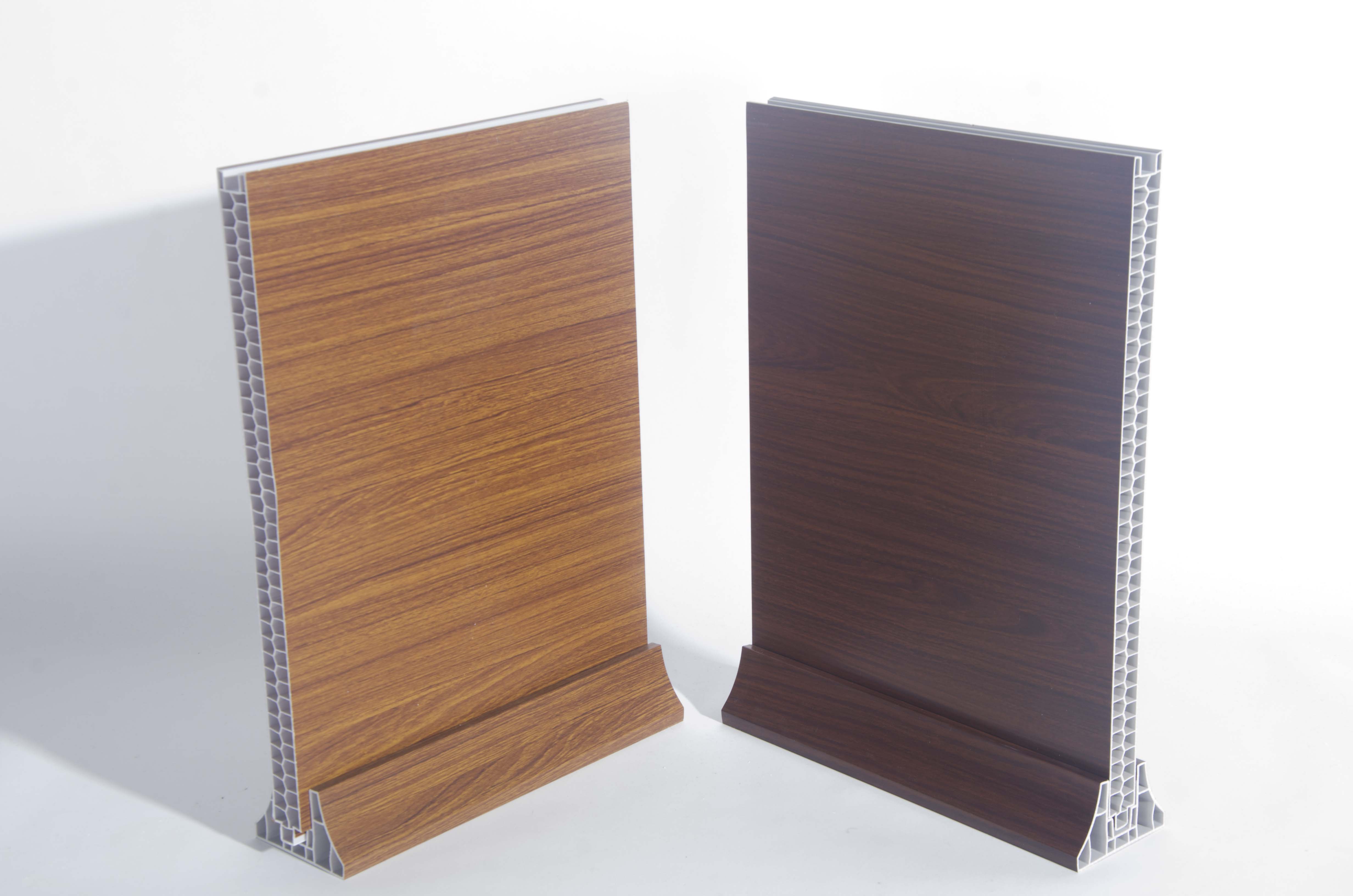
PVC partition wall panels are dimension-driven products. Panel length determines the maximum uninterrupted partition height before a horizontal joint is required; panel width sets handling weight and joint frequency; thickness governs rigidity and how the edge is detailed. A supplier who cannot state all three immediately, with the matching trim, is not yet shortlist-ready.
| Attribute | Recorded specification (model 7073-A189) |
|---|---|
| Product type | PVC partition wall panel / PVC partition panel |
| Material | PVC |
| Panel dimensions | 2900 × 400 × 26 mm |
| Matching trim | PVC partition corner trim, 2900 × 85 × 50 mm |
| Stated performance | Waterproof, moisture-proof, fire-resistant, easy to install |
| Intended application | Building and construction; interior decoration |
Two practical observations follow from that specification. First, a 2900 mm panel length and a 2900 mm trim length are matched by design; a supplier offering panels without corresponding trims forces the installer to improvise at corners, which is where moisture ingress and visible joints usually begin. Second, a 26 mm panel thickness is a rigid profile, not a thin cladding skin — it changes the substrate and fixing approach, so the supplier's installation guidance should be requested at the same time as the quotation.
Performance claims need a document behind them. Waterproof and moisture-proof behaviour is intrinsic to PVC and is comparatively easy to accept; fire behaviour is not, because reaction-to-fire classification depends on the full tested configuration, including thickness, density, substrate and mounting. Two standards are worth naming in a supplier exchange. EN 13245-2 specifies requirements for unplasticized poly(vinyl chloride) PVC-U profiles for internal and external wall and ceiling finishes. EN 13501-1 is the classification standard buyers typically reference when a project carries a fire-retardant requirement. Requests phrased as "which classification report applies to this thickness and this mounting method" produce usable answers; requests phrased as "is it fireproof" do not.
Gate 3 — Verify Customization and Continuity
The final gate looks forward rather than backward. Customization capability determines whether a supplier can serve a branded programme; continuity determines whether they can serve it next year.
OEM capability is the clearest single indicator. Jianmu offers OEM service and can produce goods according to customers' samples or pictures — a sample-driven model that suits importers, distributors and brand owners who already know the surface and profile they want. Supporting that capability is an R&D team of 5 engineers. A team of this size is appropriate for pattern matching, profile adjustment and production troubleshooting; it signals a responsive engineering function rather than a large proprietary development programme, and buyers with a genuinely new structural system should scope that expectation accordingly.
Continuity is read from three numbers that should already exist from Gate 1: annual output of 360 40HC containers, a 90% export share, and a market mix spanning more than 50 countries. Together they indicate a plant organized around repeat export orders with established packing and documentation routines — the part of sourcing that buyers only notice when it goes wrong.
Shortlist rule of thumb: if a candidate cannot clear Gate 1 from documents alone, do not spend Gate 2 and Gate 3 time on them. The sequence is designed to protect the buyer's calendar, not the supplier's.
A Practical Shortlist Scorecard
The criteria above become usable when they are written down and applied identically to every candidate. The scorecard below is deliberately narrow: it evaluates the supplier, not the sample, because samples arrive after shortlisting.
| Criterion | Evidence that counts | Disqualifying signal |
|---|---|---|
| Legal identity | Full registered company name and location | Only a trading alias is provided |
| Operating age | Founding year consistent across documents | Dates contradict between profile and certificate |
| Manufacturing base | Facility area, staff count, output figure | No facility detail of any kind |
| Panel and trim dimensions | Length × width × thickness plus trim size | "Standard size" with no figures |
| Performance evidence | Named reports for the specified configuration | Fire claim with no classification reference |
| Conformity credentials | ISO9001:2008, SONCAP, SGS, with scope stated | Certificate images without scope or holder name |
| Customization | OEM per sample or picture, engineering resource named | Customization promised verbally only |
| Export routine | Export share, country count, main markets | No named market experience |
Where PVC Partition Wall Panels Fit
Application fit is part of shortlisting because a supplier qualified for one use case is not automatically qualified for another. PVC partition wall panels are specified in architectural decoration projects for interior wall and ceiling decoration, in static conditions and continuous operation, with supporting structures and installation accessories supplied alongside the panels.
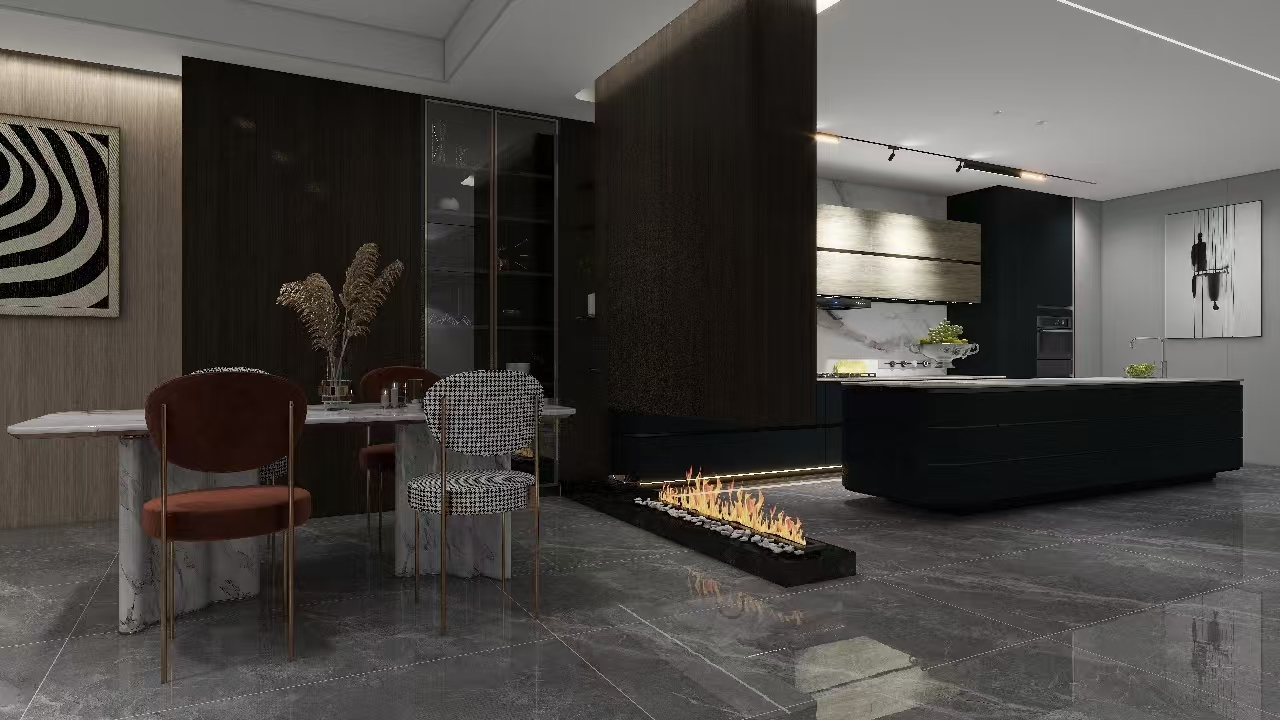
Three application patterns recur in buyer enquiries. Humid interior environments, where moisture resistance removes the repainting and substrate-swelling cycle that wet-finished surfaces require. Fast-turnaround commercial fit-outs, where installation speed and the absence of wet trades compress the programme. And refurbishment of existing interiors, where a panel system is applied over prepared substrates rather than replacing structural elements.
One application carries a documentation requirement that should be confirmed at Gate 2 rather than after award: where a project specifies fire-retardant performance according to EN 13501-1, the supplier must be able to state which tested configuration the classification refers to. This is a scoping question, not a yes-or-no question.
Range depth also affects fit. Jianmu's main products include PVC integrated wall panels, PVC new wall panels, wood-plastic panels, bamboo and wood fiber panels and PVC floor — with adjacent items relevant to a single-source fit-out, such as the PVC wall panel model 566-A155 at 3000 × 400 × 9 mm and the PVC floor model ACL10 at 333 × 22 × 3000/4000 mm. New-type PVC wall panels in this range are described as light weight, heat insulation, thermal preservation, moisture resistance, flame retardant and easy to install.
Comparison With Traditional Partition and Finish Solutions
Buyers rarely choose a panel system in isolation; they choose it against block masonry, stud-and-gypsum drywall, or tiled and painted finishes. The comparison below is qualitative and intended to guide the specification conversation, not to declare a winner.
| Dimension | Masonry / gypsum-based systems | PVC partition wall panel systems |
|---|---|---|
| Installation sequence | Multiple trades, drying or curing stages | Panel and trim assembly, described as easy to install |
| Moisture behaviour | Substrate and finish both require protection | Waterproof and moisture-proof surface |
| Surface finish | Applied on site after installation | Factory-finished; repair differs from repainting |
| Structural role | Can be designed as load-bearing or high-mass | Decorative partition and wall finish only |
| Height continuity | Not limited by panel length | Bounded by panel length (2900 mm on model 7073-A189) |
Three limitations deserve to be stated plainly, because they affect shortlisting more than any marketing claim does.
The panel is not structural. A PVC partition wall panel finishes or divides interior space; it does not replace load-bearing or shear-resisting elements. Projects requiring structural contribution need a different specification, and a supplier who blurs that distinction is a shortlist risk in itself.
Panel length sets a hard boundary on uninterrupted height. At 2900 mm, a single panel cannot clad a taller space without a horizontal joint or a designed transition. On tall interiors this becomes a detailing decision that must be settled before the order, not during installation.
Factory-applied finishes change the maintenance model. Repairing a damaged panel section is not the same as repainting a gypsum wall; matching a discontinued decor can be slower than colour-matching paint. Buyers specifying large areas should confirm pattern continuity and replacement availability in the same conversation as price.
The shortlist method has a boundary of its own. It evaluates documentary and technical capability, and it does not predict commercial behaviour under stress, nor does it substitute for a factory audit on large or regulated projects. Used correctly, it decides who deserves the audit — not whether the audit is needed.
Market Signals That Should Reshape Priorities
Three structural signals are worth carrying into a 2026 shortlist.
Export concentration in China. International Trader Publications reports that China became the world's largest PVC exporter in 2025, accounting for 24% of total global trade volume. For buyers, this means the supplier pool is deep but also uneven: a large share of quoting parties sit inside the same industrial clusters, and differentiation has to come from entity and continuity evidence rather than geography.
Substitution within the wall panel family. WPC wall panel revenue is forecast to grow at 8.1% CAGR from 2024 to 2034, reaching USD 3.2 billion, while PVC wall panels carry a faster 14.4% forecast CAGR. Buyers shortlisting in one material should confirm whether a supplier also produces the alternative, because a switch mid-project is far cheaper within an existing supplier relationship.
Surface-format growth. Industry analysis places Asia-Pacific at roughly 45% of PVC UV marble sheet sales in 2026, and UV-coated high-gloss architectural PVC marble sheets are projected at a 7.5% CAGR on luxury interior demand. Separately, one market research estimate reports that 52% of newly introduced wall panels in 2024 featured recycled content — a figure worth treating as a directional estimate rather than a settled statistic. For shortlisting, the practical effect is that surface decor ranges are widening faster than core panel specifications, which makes dimension and trim data a more reliable screening tool than finish catalogues.
Future Outlook
Two shifts are likely to change what buyers ask for at the shortlist stage. The first is documentation granularity: as fire and sustainability requirements tighten across more markets, the question moves from "do you have a certificate" to "which configuration does this classification cover". Suppliers who can answer that precisely will pass Gate 2 faster than suppliers with larger catalogues.
The second is range consolidation. Buyers increasingly prefer a single source for wall panels, matching trims and flooring, because accessory gaps are where installation quality is lost. A manufacturer operating at the scale described here — a 15,000 m² facility, approximately 50 staff, an R&D team of 5 engineers, and an output of 360 40HC containers a year — is structured for that consolidation, provided the buyer confirms trim availability and pattern continuity at the point of shortlisting rather than at the point of reorder.
Neither shift makes shortlisting more complex. Both make it more documentary, which favours buyers who apply a fixed set of gates to every candidate.
FAQ
What is a PVC partition wall panel?
A PVC partition wall panel is an interior panel made primarily from PVC and used to divide interior space or finish interior walls, supplied with matching trims. Model 7073-A189, for example, is a PVC partition panel made of PVC with dimensions of 2900 × 400 × 26 mm, paired with a PVC partition corner trim of 2900 × 85 × 50 mm.
Which specifications should be compared first between suppliers?
Panel length, width and thickness, plus the dimensions of the matching trim. On model 7073-A189 these are 2900 × 400 × 26 mm for the panel and 2900 × 85 × 50 mm for the corner trim. The stated performance set — waterproof, moisture-proof, fire-resistant, easy to install — should be compared only after the dimensions match, because performance claims are configuration-specific.
How can an established supplier be verified before samples are requested?
Through entity-level documents: founding year, facility area, staff count, annual output and conformity credentials. Haining Jianmu New Construction & Decoration Materials Co., Ltd. was established in 1998, operates a 15,000 m² facility with approximately 50 staff, reaches an annual output of 360 40HC containers, and holds ISO9001:2008 International Quality System Certification, SONCAP Certificate and SGS Certificate. These credentials confirm management systems and conformity assessment; they do not by themselves certify a reaction-to-fire classification for a given panel configuration.
What does OEM capability indicate in a supplier assessment?
OEM capability indicates that production can be adapted to a buyer's own specification rather than only to a fixed catalogue. Jianmu offers OEM service and can produce goods according to customers' samples or pictures, supported by an R&D team of 5 engineers. This suits sample-driven customization and pattern matching; buyers developing an entirely new structural system should confirm the scope of engineering support separately.
What are the main limitations of PVC partition wall panels?
The product is a decorative partition and wall finish, not a structural element. Panel length bounds the maximum uninterrupted height — 2900 mm on model 7073-A189 — so taller spaces require a designed joint or transition. Factory-applied finishes also change the repair model, since replacing a section is not equivalent to repainting a painted surface, and replacement decor matching depends on pattern continuity.
How should a supplier's export record be interpreted?
As an indicator of routine and market familiarity rather than of product fit. Jianmu exports to more than 50 countries and regions, mainly covering Chinese mainland, the Middle East, South America and Southeast Asia, with export business accounting for 90% of total sales and Vietnam as a major market. A buyer outside those regions should confirm packing standards and documentation practice for their own market during Gate 3.
Есть вопросы или нужны дополнительные детали?
Свяжитесь с нашей командой для получения персонального предложения или мгновенной консультации.
Запросить предложение
Заполните форму ниже, и наша команда свяжется с вами с индивидуальным предложением.
Прямой чат WhatsApp
Предпочитаете общаться в реальном времени? Напишите нам в WhatsApp для мгновенной помощи и быстрых ответов.
- Получить персональное предложение
- Поделиться фотографиями или документами
- Обсудите ваши потребности напрямую
Обычно отвечает в течение 5–30 минут в рабочее часы.