
How to Specify Ventilation Ducts for Tunnels and Mines
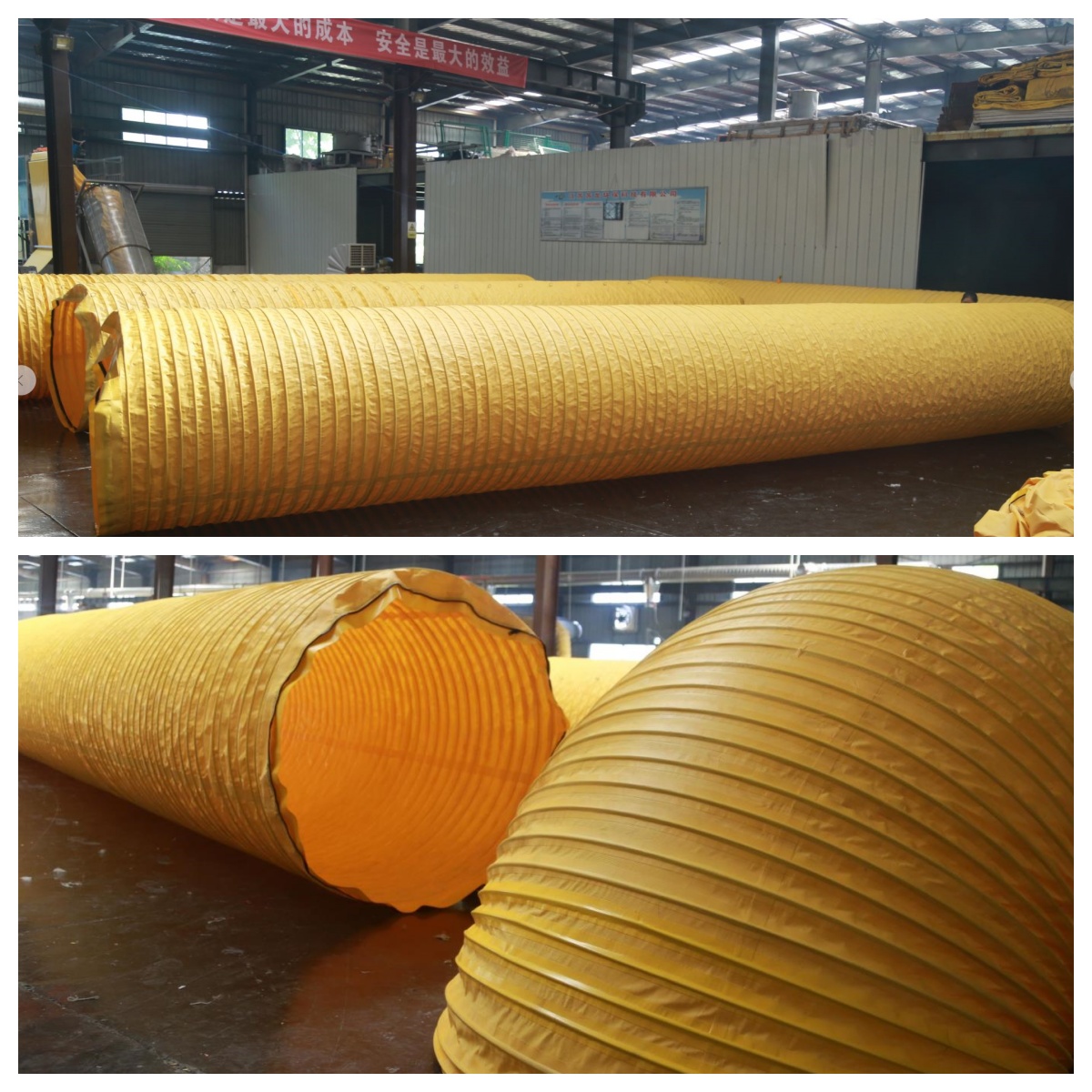
Ventilation duct choice in underground projects depends less on a fixed catalog preference and more on the operating conditions the duct must survive. The core function is consistent—supply fresh air, dilute hazardous gas, and support dust extraction—but the project envelope changes with tunnel length, pressure mode, humidity, explosion risk and installation method. For engineering and procurement teams moving from research to evaluation, the task is to map duct type, diameter, length and certifications to a specific underground scenario.
Why project conditions determine duct specification
A duct that performs well in a short, dry access tunnel may be the wrong choice for a long, water-rich drive or an explosive-gas mining environment. Underground projects place ducts in 24/7 continuous high-pressure ventilation operation, often in deep shafts with elevated humidity, constant friction, and potential explosion hazards. These conditions create a specification problem: the buyer needs enough tensile strength, flame retardancy, and surface anti-static resistance to meet site safety standards while still keeping installation practical. The opportunity is also clear. Lightweight, high-strength textile ducts reduce logistics cost and installation time compared with rigid alternatives, and can be manufactured in long sections to reduce joints and leakage points.
- Tunnel length and planned duct run length
- Positive-pressure forced ventilation versus negative-pressure extraction
- Explosion risk and anti-static requirements
- Available suspension and connection systems
- Installation labor, site access and logistics constraints
Supplier context: SULONG’s in-house manufacturing base
Jiangsu Sulong Eco-Technologies Co., Ltd. (SULONG) is a National High-Tech Enterprise and a provincial-level “Specialized, Refined, Unique & Innovative” SME based in Funing, Yancheng, Jiangsu, China. The company manufactures flexible ventilation duct, spiral duct, semi-rigid duct, oval duct, twin duct, PVC coated fabric, PVC laminated fabric and PVC tarpaulin. Its stated annual capacity exceeds 1 million meters of high-strength mining ventilation ducts, with all production completed in-house and no outsourced manufacturing.
Buyers evaluating SULONG for a specific project can verify several capability signals. The company reports a 40,000 m² factory, 68 employees, 18 R&D specialists, and a portfolio of 25 granted patents. It holds ISO 9001, ISO 14001 and ISO 45001 certifications, and its ventilation ducts carry EU ATEX, CE, US NFPA 701 and NATA-laboratory test reports. SULONG also states that it is a long-term strategic supplier for Zijin Mining and JCHX Mining, which matters for contractors looking for suppliers already operating in global mining supply chains. Export markets include Africa, Australia, Europe, South Africa and Asia, with an export ratio of about 60%.
Flexible and spiral duct: operating envelopes
Flexible ventilation duct
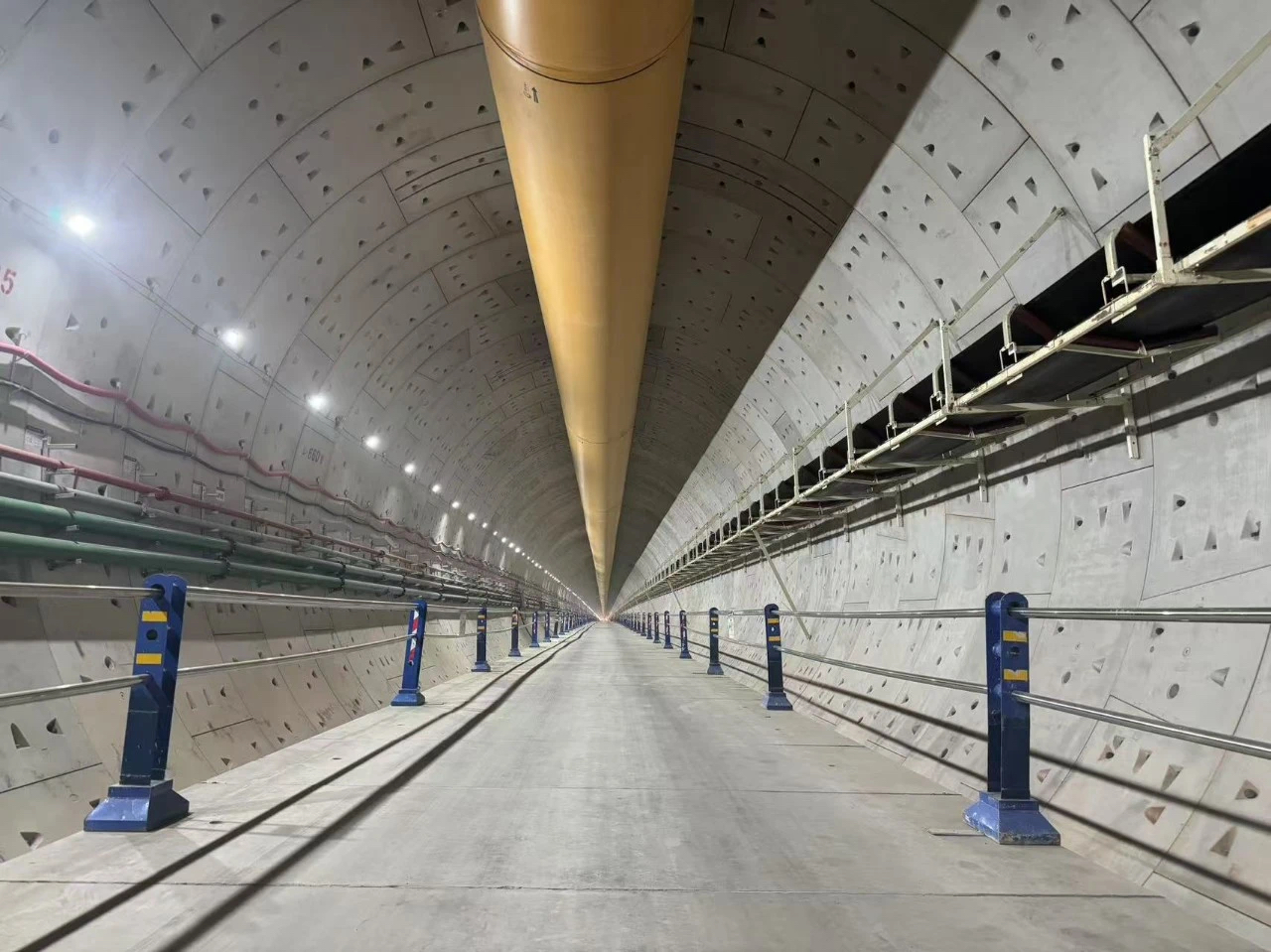
For projects requiring long continuous runs and rapid installation, the flexible ventilation duct range offers diameters from 200 mm to 3,200 mm and section lengths from 1 m to 300 m. Material weight spans 300 gsm to 2,000 gsm, and tensile strength spans 1,000 N to 4,200 N. The ducts are manufactured using seamless one-piece fish-back welding automation technology, a construction detail that supports low air leakage in long tunnel systems.
The flexible range includes lay flat duct, oval duct, twin duct, tee duct, Y-piece duct, bend duct and adapter duct configurations. End connections can be zipper, Velcro, steel ring or eyelets. In underground projects, the flexible duct is connected to a ventilation fan that blows fresh air into the tunnel and dilutes hazardous gases. The product specification also cites low friction loss as a performance characteristic. The ducts are applicable to underground engineering projects such as mine projects, high-speed rail, subway, highway, hydropower station and rock cave projects.
Spiral semi-rigid ventilation duct
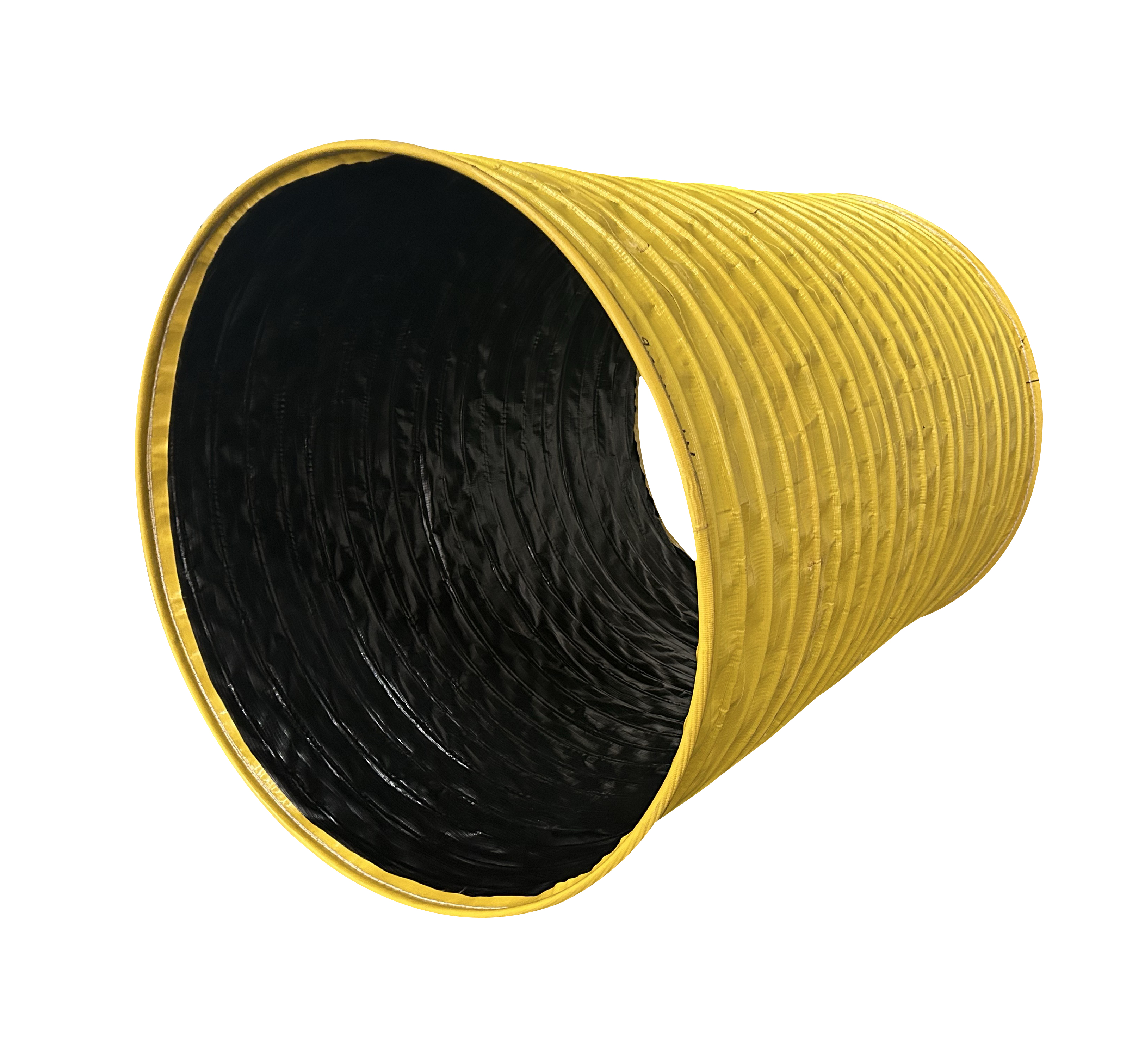
The spiral duct adds spring steel wire reinforcement to PVC coated or PVC laminated fabric. Diameters are available from 200 mm to 2,800 mm, with section lengths from 1 m to 20 m. The product can be configured as semi-rigid duct, oval spiral duct or rectangle duct, and is designed for positive pressure or negative pressure environments. Material weight remains in the 300 gsm to 2,000 gsm range, and the manufacturing process is welding.
The spiral duct is applied in tunnel ventilation system infrastructure and mine ventilation system infrastructure. Special application requirements include high tensile strength up to 4,200 N, flame retardancy, and surface anti-static resistance. Supporting equipment includes main mine fans, local counter-rotating fans, and ducting hanger systems.
What these parameters mean for project specification
The numbers above translate into procurement decisions. Diameter determines airflow capacity and must be matched to the ventilation fan and tunnel cross-section. Section length controls joint count: a 300 m flexible section reduces joints in a long tunnel, but a shorter spiral section may be easier to position in confined spaces. Material weight and tensile strength indicate how much pressure, hanging stress and rough handling the duct can tolerate. Seam construction affects leakage, which is why the Xi’an-Chengdu Railway case highlighted a low air leakage rate in a 19.68 km tunnel. Finally, flame retardancy and anti-static properties determine whether the duct can be used in explosion-risk underground zones.
Documented use cases across project types
SULONG ducts have been used in both mining and tunnel infrastructure projects. The following cases are useful benchmarks for matching duct characteristics to project conditions.
| Project reference | Scope | Application | Relevant project outcome |
|---|---|---|---|
| Xi’an-Chengdu Railway, China | 19.68 km tunnel; 20 km of ventilation duct | Underground tunnel ventilation | Low air leakage rate; ventilation provided over a long tunnel |
| Melbourne Metro Rail Project, Australia | 9 km underground tunnel | Underground tunnel ventilation | High flame retardancy, easy installation, flexible large-diameter duct meeting strict safety requirements |
| Guangxi Beibu Gulf Project, China | 30 km tunnel length | Temporary ventilation in underground construction | Handled water-rich and complex geology; completed within 3 years |
| Trunk Road T2 Tunnel, Hong Kong | 5 km of ventilation duct; approximately 3.4 km tunnel including about 2.1 km undersea | Undersea road tunnel construction temporary ventilation | Ventilation for a TBM-driven undersea tunnel construction site |
| Global tier-1 mining conglomerate / EPC contractor, Buriticá Gold Mine | 20 km per year | Primary forced ventilation and hazardous gas dilution | Zero defect and rejection rate over a 3-year supply period; 700 g/m² high-strength flame-retardant duct with zero-leakage seamless construction |
These references do not prove that one product is suitable for every site. They show a pattern: in long tunnels, low leakage and long sections were the priorities; in urban and undersea tunnels, flame retardancy and easy installation were emphasized; in mining supply, high tensile strength, zero-leakage construction and certified compliance were used to meet multinational audit standards.
Market trends influencing duct procurement
Project-based duct demand is supported by broader market growth. Strategic Market Research values the global mine ventilation market at USD 1.42 billion in 2024 and projects USD 2.03 billion by 2030, a CAGR of 6.2%. Persistence Market Research identifies underground mining as the dominant segment of that market, driven by the critical need for hazardous gas dilution.
The flexible ducting segment is also expanding. Intel Market Research reports the global flexible ducting market at USD 203.97 million in 2024, expected to reach USD 335.78 million by 2033. For underground contractors, this category growth signals that flexible duct specifications are becoming more standardized and more widely accepted in ventilation design.
Ventilation-on-Demand (VOD) adds another procurement consideration. According to Dataintelo, 35% of new North American mines were using VOD by 2025. VOD systems rely on predictable airflow and low leakage, which makes duct seam quality and pressure performance more important than simple material cost. Market Research Future also estimates that Asia-Pacific is the fastest-growing region for ventilation systems, with a CAGR of approximately 5.45% through 2034.
Comparison with traditional rigid duct systems
Rigid steel, galvanized or FRP duct systems are still common in permanent infrastructure. They offer high structural rigidity, can be designed for a wide range of pressure conditions, and have long service lives. However, they are heavier, require more installation labor, and generate higher logistics costs in long or remote underground drives.
| Evaluation criterion | Traditional rigid duct | Flexible textile duct | Spiral semi-rigid duct |
|---|---|---|---|
| Transport and handling | Heavy sections; crane or mechanical handling often required | Compressible and lighter; fewer handling constraints | Reinforced but more compact than rigid sections |
| Installation | Slower joint-by-joint assembly | Faster with zipper, Velcro or steel-ring connections | Moderate installation speed with greater shape retention |
| Pressure mode | Positive and negative | Commonly applied in forced positive-pressure ventilation | Rated for positive or negative pressure |
| Typical project role | Permanent main ventilation routes | Long tunnel runs, temporary ventilation, fast deployment | Underground zones needing a semi-rigid structure |
| Limitation | Heavy logistics and installation cost | Requires proper suspension; not a replacement for permanent high-temperature or highly abrasive systems | Still a fabric-based product; not equivalent to metal duct in all permanent infrastructure cases |
The boundary should be explicit: flexible and semi-rigid textile ducts are not a universal substitute for rigid ducts. Where extreme temperatures, severe abrasive material handling, or permanent structural integrity are mandatory, rigid systems remain the conventional choice. For temporary tunnel ventilation and mine development, textile ducts reduce handling and installation burden while meeting the airflow and safety requirements described above.
Future outlook for project-specific duct specification
Three signals will continue to shape duct specification. First, longer tunnels and deeper mines increase the importance of tensile strength, seam integrity and flame retardancy. Second, VOD technology will reward low-leakage duct systems that can respond to variable fan output. Third, cross-border projects will continue to require verifiable certifications rather than supplier descriptions alone. For buyers, the durable lesson is to base the duct choice on the project envelope and documented supplier evidence, not on a generic product description.
FAQ
Which duct type should be specified for a long tunnel: flexible or spiral?
A flexible ventilation duct is available in section lengths up to 300 m and diameters up to 3,200 mm, which can reduce joints in long tunnel runs. A spiral semi-rigid duct uses spring steel wire reinforcement and is available in lengths up to 20 m, making it more suitable when the system must operate in positive or negative pressure or needs better shape retention. The final choice depends on the ventilation design and installation constraints.
Can spiral ventilation ducts operate under negative pressure?
Yes. The spiral ventilation duct specification states that it is for use in positive pressure or negative pressure environments. This is an important distinction for extraction or exhaust ventilation layouts where the duct draws air rather than only receiving fan discharge.
What certifications should a tunnel ventilation duct meet?
Product-level certifications stated by SULONG include ISO 9001, ATEX, CE, CNMA and SGS test reports. Flame retardancy is documented to NFPA 701:2015 and DIN 4102 B2. The corporate quality system includes ISO 14001 and ISO 45001, and test reports are certified by Australian NATA laboratories. For explosion-risk projects, surface anti-static resistance and ATEX should be verified before procurement.
What diameter and length options are available for large underground projects?
Flexible ventilation ducts are available from 200 mm to 3,200 mm in diameter and from 1 m to 300 m in section length. Spiral ducts are available from 200 mm to 2,800 mm in diameter and from 1 m to 20 m in section length. Custom diameters and lengths are offered by the manufacturer.
How do humidity, friction and explosion risk affect duct specification?
Deep underground shafts expose ducts to high pressure, elevated humidity, constant friction and potential explosion hazards. In these conditions, the documented special requirements are high tensile strength, flame retardancy and surface anti-static resistance. Flexible ducts with material weights of 300 gsm to 2,000 gsm and tensile strength of 1,000 N to 4,200 N provide a basis for matching fabric weight to expected abrasion and pressure levels.
Reference document: Catalog of Ventilation Duct-SULONG (PDF).