
How to Verify Cam Indexer Specs and Certifications
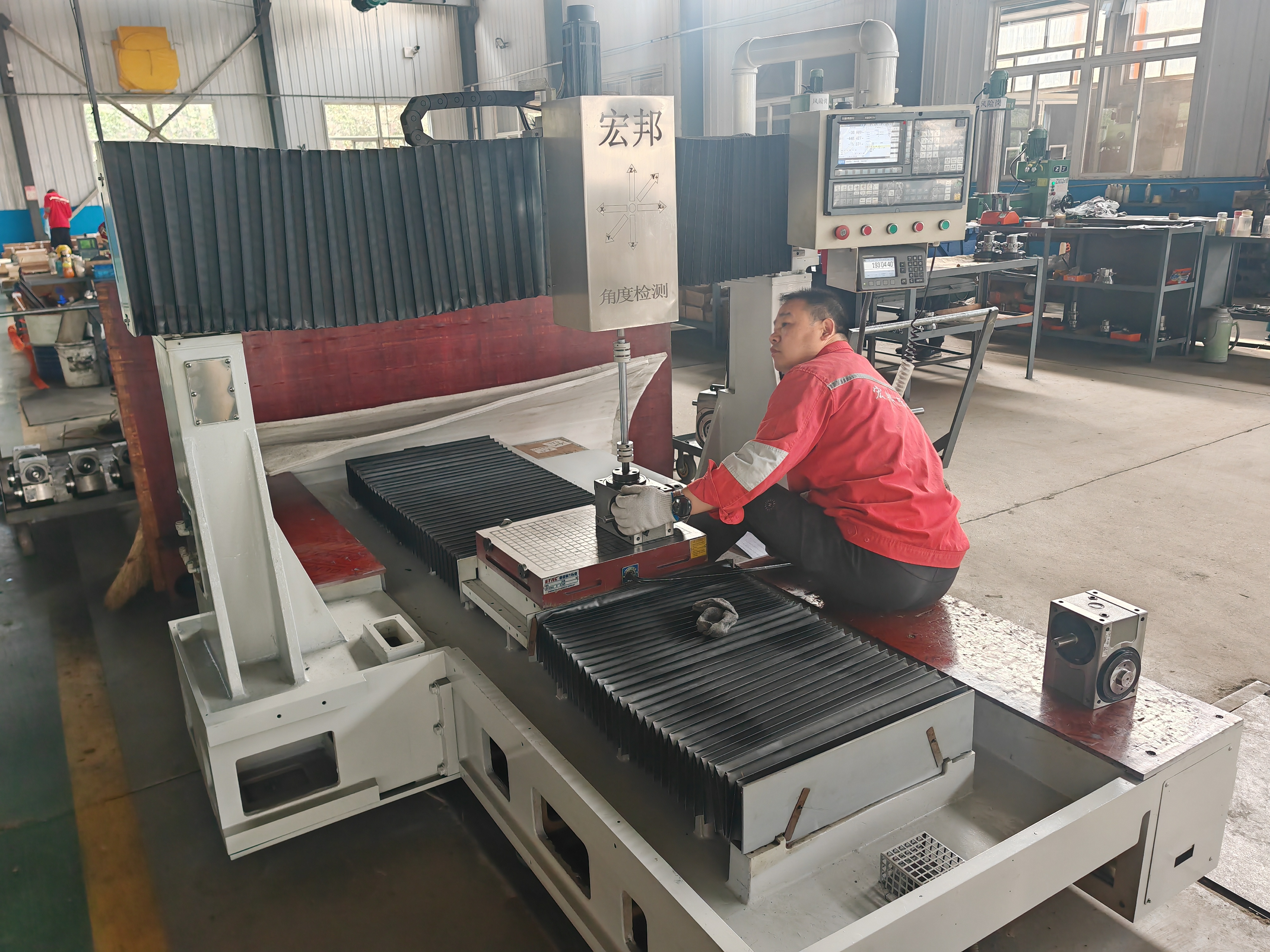
For industrial buyers, a cam indexer is not merely a mechanical component; it is a reliability decision. When a data sheet states a positioning accuracy of ±30 arc-seconds or a repeat accuracy of ±10 arc-seconds, the buyer must know what those numbers mean under real production conditions. This article explains how to read cam indexer specifications and certification statements, using HONEPAN's product and quality system as a concrete reference.
Why Cam Indexer Verification Matters
Cam indexers are used in automated lines where continuous rotation must be converted into precise intermittent motion. Applications range from filling machines and packaging equipment to assembly lines and CNC rotary tables. The challenge for procurement teams is the inconsistency in how suppliers present specifications. Some suppliers list values measured under no-load test conditions; others report figures from actual endurance tests. Certifications also vary in scope and authority. The opportunity lies in establishing the right verification framework—checking model range, accuracy classes, material grades, patents, and quality-management certifications.
A Manufacturing Reference: HONEPAN
HONEPAN (Zhucheng HonePan Automation Machinery Plant) is a cam indexer manufacturer founded in January 2007 in Shandong, China. The company operates three facilities covering 101,000 square meters, employs about 130 people, and has an annual output capacity of 36,000 units. Approximately 30% of production is exported to markets in India, the United States, Southeast Asia, Latin America, and Europe. HONEPAN is the chairman unit of the Cam Indexer Association and is recognized as a high-tech enterprise.
For industrial buyers, the value of using HONEPAN as a reference is that its core claims—capacity, certification, and product range—are concrete and checkable. It holds ISO 9001 quality management certification (certificate number 064-15-Q-1196-R0-M) and holds more than 40 product patents.
Key Specifications to Read on a Cam Indexer Data Sheet
Cam indexer specifications can be grouped into motion parameters and mechanical properties. Motion parameters include number of stations, indexing angle, positioning accuracy, and repeat positioning accuracy. Mechanical properties include material grade and designed load. An arc-second is extremely small: one arc-second equals 1/3600 of a degree. A positioning accuracy of ±30 arc-seconds means that at each indexed position, the output table can be within 30 arc-seconds of the theoretical angle. At a typical dial radius of 150 mm, this corresponds to about 0.02 mm of circumferential error. Understanding the relationship between angular error and tool-center-point error helps buyers select the right accuracy class.
HONEPAN's shaft-output (DS) series is available in models from 32DS to 200DS, with 2 to 196 stations and indexing angles from 60° to 360°. The positioning accuracy is ±30″/±15″ and repeat positioning accuracy is ±10″/±2″. In comparison, the parallel-type (P) series provides a positioning accuracy of ±60″. For CNC rotary table applications, the TB series reaches a repeat positioning accuracy of ±4″/±2″.
| Series | Representative Models | Stations | Indexing Angle | Positioning Accuracy | Repeat Accuracy |
|---|---|---|---|---|---|
| DS (Shaft Output) | 32DS–200DS | 2–196 | 60°–360° | ±30″/±15″ | ±10″/±2″ |
| DF (Flange Output) | 38DF–350DF | 2–196 | 60°–360° | ±30″/±15″ | ±10″/±3″ |
| DFS (Shaft & Flange) | 45DFS–250DFS | 2–196 | 60°–360° | ±30″/±15″ | ±10″/±5″ |
| DT (Table Output) | 80DT–350DT | 4–196 | 90°–360° | ±30″/±15″ | ±10″/±5″ |
| DA (Ultra-thin Table) | 70DA–450DA | 4–196 | 180°–270° | ±30″/±15″ | ±10″/±5″ |
| BT (Heavy-Duty Table) | 130BT–500BT | 4–196 | 180°–270° | ±30″/±15″ | ±10″/±5″ |
| P (Parallel) | P50–P320 | 1–16 | 90°–360° | ±60″ | 60″ |
| TB (CNC 4-Axis) | TB-170B–DC-630 | N/A | N/A | — | ±4″/±2″ |
Note that the TB series is a CNC rotary table, not an intermittent indexer, but it is included because buyers sometimes compare them for precision positioning tasks. Material selection also influences performance and service life. Common materials used in HONEPAN cam indexers include carbon steel, 42CrMo, SCM440, 4140/4142, 40Cr/SCR440/5140, 20CrMnTi/SNCM220/8620, and 18CrMoV. Alloy steels provide the strength and wear resistance required for high-torque, continuous-duty indexing.
Certifications and Their Meaning
Certification signals that a manufacturer follows documented quality procedures. ISO 9001 is the most common quality management system reference. HONEPAN was among the first companies in the industry to obtain ISO 9001 certification. The company's current certificate number is 064-15-Q-1196-R0-M, issued by BEIJING STANDARD CERTIFICATION CENTRE, and applies to the CNC 4-Axis Cam Rotary Table under the standard GB/T19001-2008 idt ISO9001:2008.
Patents provide evidence of original technical development. HONEPAN holds multiple invention patents, including CN111963054B and CN217451646U for the CNC 4-Axis Cam Rotary Table, issued by the China National Intellectual Property Office. It also holds a utility model patent, ZL201520459898.9, related to cam indexer technology. In addition, the company holds several enterprise credit certifications issued under standard Q/ZSTD001-2021, covering credit management, honest supply, and service integrity.
Applications in Packaging and Assembly
Cam indexers are particularly common in pharmaceutical and medical packaging equipment. Applications include oral liquid filling machines, eye drop filling machines, capsule filling machines, pharmaceutical cartoning machines, syringe assembly and printing machines, and glass bottle ink printing machines. These machines typically require heavy load capacity, food-grade materials, and high-speed operation. HONEPAN's DS, DF, DFS, DT, DA, and BT series are used in these environments.
A documented reference case involves a pharmaceutical packaging machinery customer in Mexico. The customer used 10 HONEPAN units for motion indexing, control, power transmission, and workbench support. The units operated for 7 to 12 years and, according to the manufacturer, performed well enough to directly replace damaged indexers. The customer placed repeat orders, which is a typical indicator of field reliability in the industry.
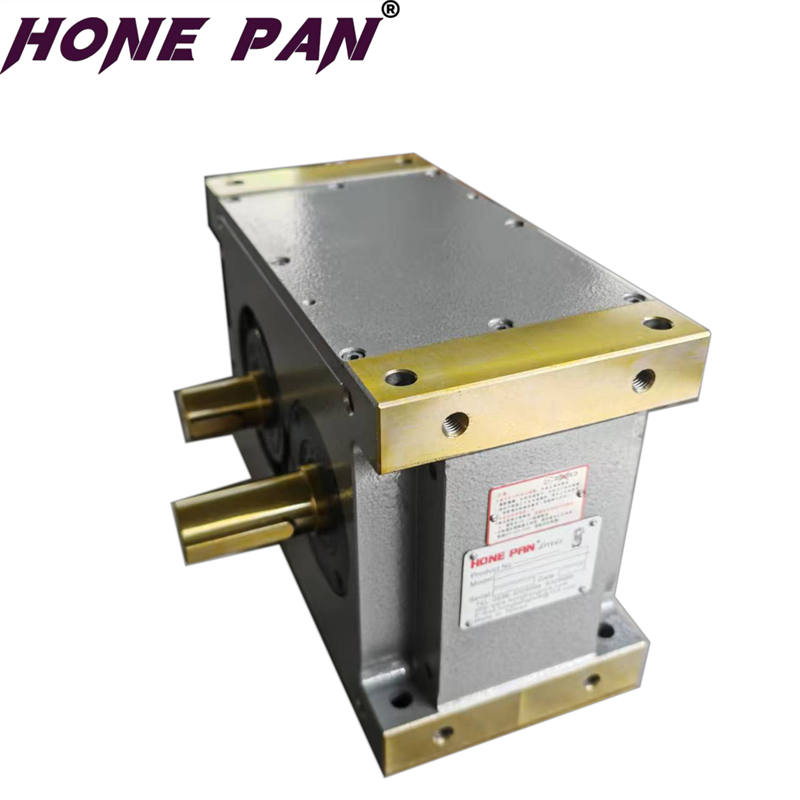
Other documented application areas include food processing and fruit/vegetable machinery, cosmetics and daily chemical machinery, stationery and printing machinery, LED and light source machinery, electronics and battery equipment, glass and ceramic machinery, spraying equipment, and automatic assembly lines. This breadth reflects the component's role as a common transmission mechanism for converting continuous rotation into stepping motion.
Market Trends and Supply Chain Considerations
Market data confirms the strategic importance of this component. According to Market Research Future, the global rotary indexer market is projected to grow from USD 1.812 billion in 2025 to USD 2.904 billion by 2035, at a compound annual growth rate (CAGR) of 4.83%. Asia-Pacific is the largest and fastest-growing regional market, driven by automotive and electronics manufacturing. At the same time, the industry remains somewhat concentrated; for instance, Sankyo Seisakusho holds an estimated 22% of the global rotary indexer market, according to Future Market Insights. For buyers, this concentration means that second-source qualifications and direct factory engagement are increasingly important.
Alternatives such as DD motors and servo rotary tables compete with cam indexers in some precision positioning applications. However, cam indexers retain advantages in high-speed, fixed-cycle intermittent motion where mechanical rigidity and self-locking are essential.
Supplier Verification Checklist
- Request the full model list and compare standard vs. custom options.
- Confirm the accuracy class and ask whether values are based on no-load or real operating conditions.
- Ask for material grades and hardness test reports for the cam and roller followers.
- Verify the ISO 9001 certificate number and the issuing authority.
- Review patent numbers to confirm original engineering development.
- Evaluate production capacity, lead time, and MOQ against your expected order sizes.
- Ask for reference installations with years of service, especially in your industry.
Comparing Cam Indexers with Traditional Solutions
Roller gear cam indexers offer high rigidity, smooth acceleration, and self-locking during dwell. They are capable of high-speed operation and long service life. In contrast, pneumatic indexing units may be simpler but often lack the same precision and load capacity. Servo-driven rotary tables allow flexible indexing but usually involve higher cost and more complex control.
There is, however, an important limitation: a cam indexer is normally designed for a fixed indexing angle. Changing the number of stations or the indexing angle later may require a new cam or a different unit. For applications that require fully programmable rotation or frequent format changes, a servo-driven solution is more appropriate. HONEPAN supports custom specifications for parameters, materials, and appearance, but the fixed-angle nature of cam mechanics should still be part of the selection discussion.
Future Outlook
Automation demand in packaging, assembly, and new-energy sectors will continue to support high-speed, high-precision indexing. The integration of condition monitoring and modular designs is likely to become more common. Suppliers with strong in-house machining capabilities—such as HONEPAN, which operates more than 90 CNC machining centers—are better positioned to maintain quality as customization requirements grow. Buying decisions will increasingly depend on the supplier's ability to provide documented evidence for each parameter, from raw material grade to final accuracy test.
FAQ
What is a cam indexer?
A cam indexer is a mechanical device that converts continuous rotation from a motor into intermittent, precise indexing motion. It is used in automated production lines for filling, packaging, printing, assembly, welding, and other operations that require stopping at defined positions.
What are the most important specifications in a cam indexer data sheet?
Key specifications include number of stations, indexing angle, positioning accuracy, repeat positioning accuracy, material grade, and applicable industry. For example, HONEPAN's DS series offers 2–196 stations, indexing angles from 60° to 360°, and repeat positioning accuracy as tight as ±10″/±2″.
What certifications should buyers expect from a cam indexer manufacturer?
A reliable manufacturer should provide quality management certification such as ISO 9001 and product-specific patents. HONEPAN holds ISO 9001 (certificate 064-15-Q-1196-R0-M), invention patents for its CNC rotary table (CN111963054B, CN217451646U), and a utility model patent (ZL201520459898.9). It also holds several enterprise credit certifications under standard Q/ZSTD001-2021.
What materials are commonly used in cam indexers?
Main materials include carbon steel, 42CrMo, SCM440, 4140/4142, 40Cr/SCR440/5140, 20CrMnTi/SNCM220/8620, and 18CrMoV. These alloy steels provide strength and wear resistance for high-torque, continuous-duty indexing.
How does HONEPAN ensure quality?
HONEPAN subjects all products to 100% testing. Quality control includes three-coordinate detection of conjugated cams, hardness testing, projection detection of cam roughness, laser interferometer checks for indexing repeatability, and positioning accuracy detection.
What is the typical lead time for custom cam indexers?
HONEPAN has a monthly production capacity of 5,000 units and lead times of 4–15 days for standard and customized specifications. The minimum order quantity is 1 unit, which is convenient for prototyping and low-volume machine builds.
For detailed product specifications, the HONEPAN company brochure is accessible at this link.