
How to Verify Custom Electronic-Grade Chemical Capability
How to Verify Custom Electronic-Grade Chemical Capability
A practical framework for evaluating suppliers of high-purity electronic chemicals beyond CAS-number matching.
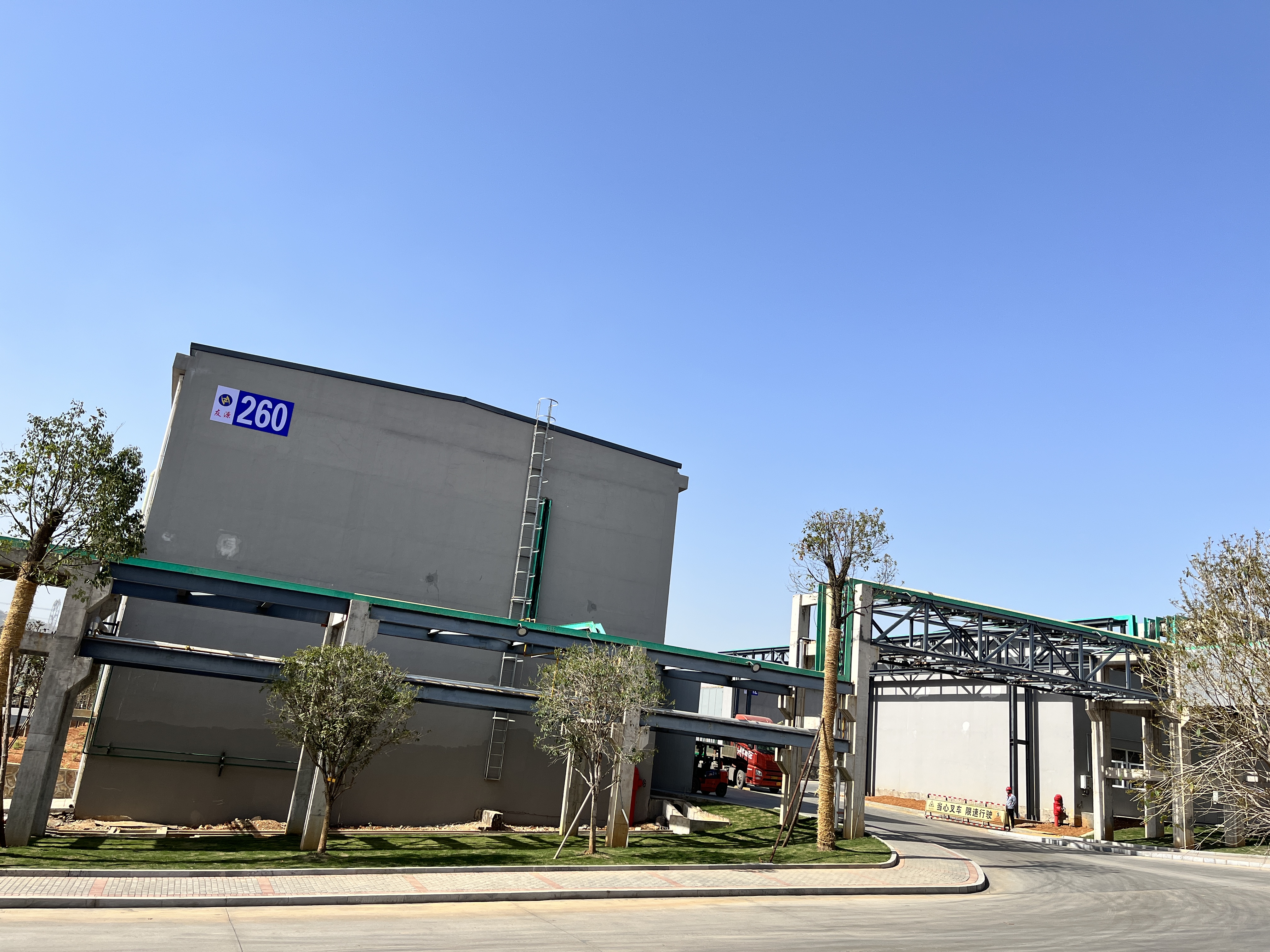
Jumingchem's production base in Jiangsu Province. The company operates multiple production bases in China with a combined annual capacity of 60,000 tons. Photo: Jumingchem.
Electronic-grade chemicals are not simply "higher-purity versions" of industrial chemicals. They are functional materials whose impurity profile, isomer composition, and batch-to-batch consistency directly influence semiconductor device yield, display panel reliability, and packaging-material performance. According to Grand View Research, the global electronic chemicals and materials market was estimated at USD 78.5 billion in 2025, with Asia Pacific accounting for 66.6% of revenue. SEMI reported that global semiconductor materials revenue reached USD 73.2 billion in 2025. Behind these figures is a procurement reality: buyers at chip foundries, photoresist developers, display panel makers, and advanced material manufacturers are increasingly evaluating suppliers not just on product specifications, but on the underlying capability to synthesize, purify, customize, and scale electronic-grade chemicals reliably.
This article provides a structured framework for assessing custom electronic-grade chemical supply capability. It uses Jiangsu Juming Chemical Technology Co., Ltd. (Jumingchem), a China-based manufacturer of semiconductor electronic chemicals, as a working example to illustrate what verifiable capability looks like in practice.
The Procurement Gap: Why a CAS Number Is Not Enough
For commodity chemicals, a CAS number and a purity percentage may be sufficient for sourcing. For electronic-grade chemicals, the same logic breaks down. Consider vinylbenzyl chloride (VBC), a core monomer for negative photoresist resins and advanced packaging dielectric materials. The CAS registry lists separate entries for the para-isomer (CAS 1592-20-7), ortho-isomer (CAS 22570-84-9), meta-isomer (CAS 39833-65-3), and the mixed isomer (CAS 30030-25-2). A supplier may list "vinylbenzyl chloride" on a datasheet, but a photoresist formulator needs a specific isomer or a defined isomer ratio to achieve reproducible lithographic performance.
The same evaluation gap exists for metal ion impurities. Industrial-grade material may contain parts-per-million (ppm) levels of sodium, iron, or copper. Electronic-grade photoresist monomers often require metal impurities below 10–20 ppb. This is not a specification that can be verified by reading a certificate of analysis; it must be verified through the supplier's purification process, analytical instrumentation, and production environment.
For buyers in the evaluation-to-execution phase, the core question is not "can this supplier sell me the chemical?" but rather:
- Can the supplier control purity at the ppb level for metal ions?
- Can the supplier customize molecular structure, isomer composition, or packaging to fit my process?
- Can the supplier scale from a validation sample to commercial volume without losing consistency?
- Does the supplier have the quality systems, certifications, and compliance documentation required for semiconductor and electronics supply chains?
A Capability Framework for Electronic-Grade Chemical Suppliers
The following framework organizes supplier assessment into four capability dimensions. Each dimension includes verifiable evidence that buyers can request during qualification.
1. Purification and Impurity-Control Capability
The defining characteristic of electronic-grade chemicals is controlled trace contamination. For photoresist monomers, metal ion impurities must typically be held below 10–20 ppb, and particle control may be required at ≤0.1 μm for display applications. Suppliers need more than analytical instruments; they need a production process designed to prevent contamination from raw materials, equipment, and the environment.
Jumingchem's stated capability includes ppb-level metal ion impurity purification for electronic-grade products, supported by ICP-MS, HPLC, and GC detection systems. The company reports that in a project for a photoresist developer, its ArF photoresist monomer achieved metal impurities below 10 ppb, meeting SEMI Grade 4 standards, and helped the client pass verification by a top-tier Korean wafer fab and reach mass production. For an OLED panel manufacturer, Jumingchem achieved metal impurities below 20 ppb with particle control at ≤0.1 μm, contributing to a 3% yield improvement in OLED panel production. These are concrete, client-verifiable outcomes, not marketing claims.
2. Custom Synthesis and CDMO Capability
Custom electronic-grade chemicals are increasingly sourced through CDMO (Contract Development and Manufacturing Organization) models. Buyers may need molecular structure customization, synthesis route design, isomer composition control, or custom blend formulations. A supplier's capability should be evaluated across the full chain: process R&D, pilot scale-up, and commercial production.
Jumingchem provides customized OEM/ODM and full-chain CDMO services covering process R&D, pilot scale-up, and commercial production, according to the company. Its reported capabilities include:
- Molecular structure customization through synthesis route design
- Purity grade customization, including industrial grade, high-purity grade, and electronic grade with metal impurities below 10 ppb
- VBC isomer composition control: pure para-isomer (≥99% p-VBC), pure ortho-isomer (≥98% o-VBC), pure meta-isomer (≥98% m-VBC), or custom o/m/p mixture ratios
- Packaging customization from 1 kg laboratory quantities to ton-scale industrial packaging
- Metal ion content control per customer specification (e.g., Na, Fe, Cu)
In practice, Jumingchem reports delivering OEM customization within 6 weeks for an OLED material supplier, and the first validation sample for a photoresist developer within 2 weeks. The company's end-to-end CDMO service extends from molecular design to commercial production, with a 72-hour emergency order response mechanism for supply-chain-critical situations.
3. Production Scale and Flexibility
Electronic-grade chemical buyers often need both small quantities for R&D and large volumes for mass production. A supplier's ability to operate across this range — sometimes called "gram-to-ton" capability — is a critical assessment point. A supplier that only operates large batch reactors may not be able to produce a 1 kg validation sample economically. A supplier that only operates lab-scale equipment cannot support commercial ramp-up.
Jumingchem's production system includes a total factory area of 78,000 m², a 3,000 m² R&D center, a 300 m² pilot plant, and a 600 m² GMP workshop. The company reports flexible production scale from gram-level R&D to hundred-ton industrial production, with an annual production capacity of 60,000 tons and a monthly capacity of 5,000 tons across its product lines. The company's minimum order quantity is 1 kg, and standard lead time is 7–30 days depending on product and customization requirements.
For capital-intensive electronic chemical categories such as photoresist monomers and polyimide anhydrides, this production flexibility has a direct procurement implication: buyers can qualify a supplier with small-batch samples, then scale orders as production volumes ramp, without needing to re-qualify a different supplier at the commercial stage.
4. Quality Systems, Certifications, and Compliance Documentation
Semiconductor and display manufacturers typically require suppliers to maintain documented quality systems and compliance certifications. Key documents to request include:
- ISO 9001 quality management system certification
- Third-party factory audit reports (e.g., SGS)
- Regulatory licenses for hazardous chemical operations
- Environmental compliance certifications (e.g., RoHS)
- REACH compliance evidence for EU market supply
- Certificate of Analysis (COA) with full test items: purity (GC/HPLC), moisture, appearance, color, acid value, and metal content
- MSDS in the required language
Jumingchem holds an ISO 9001 certification (certificate number NOA2505548, issued by NOA Testing & Certification Group Ltd., valid through 2028), an SGS factory audit report (QIP-ASI254749), a Hazardous Chemicals Operation License (Su(Xi)WHJJZ(Lingang)02864), and a Non-pharmaceutical Precursor Chemicals Filing Certificate ((Su)3J32028100536). Its Tolyltriazole product also passed RoHS environmental compliance certification (CKEYS250724006) under the EU RoHS 2.0 Directive. The company states that its products passed REACH compliance certification for a European fine chemical trader client.

Jumingchem's R&D center. The company employs a professional R&D team with nearly 20 years of chemical synthesis experience. Photo: Jumingchem.
Technical Deep Dive: How ppb-Level Purity Is Achieved
Understanding the production methods behind electronic-grade purity helps buyers evaluate whether a supplier's claims are structurally supported by its process technology.
Microchannel Continuous Flow Technology
Jumingchem states that it uses advanced microchannel and continuous flow technology for highly challenging and hazardous chemical processes. This is relevant to electronic-grade chemical buyers for two reasons.
First, continuous flow processing enables tighter control over reaction temperature, residence time, and mixing compared to batch reactors. For highly exothermic or hazardous reactions — such as chloromethylation reactions used in VBC synthesis — this control reduces the risk of side reactions that can generate impurities which are difficult to remove downstream.
Second, microchannel technology is often paired with inline purification or quenching steps, which can improve product consistency from batch to batch. For photoresist monomers where batch-to-batch variation directly affects lithographic performance, this is a genuine technical advantage.
GMP-Cleanroom Production and Analytical Verification
The company's 600 m² GMP workshop and continuous flow reactors are designed to support clean production conditions for electronic-grade materials. Full-process ICP-MS monitoring is used to track metal ion impurities, with HPLC and GC systems for purity and compositional analysis. For a supplier serving semiconductor clients, the combination of GMP-grade facilities, ppb-level purification capability, and complete analytical instrumentation forms an internally consistent quality stack.
Handling and Stability Considerations
Electronic-grade monomers differ significantly in handling requirements. For example, BPADA (CAS 38103-06-9), a key synthetic monomer for high-performance polyimide and 5G flexible copper-clad laminate applications, must be handled under extremely dry and sealed conditions to prevent moisture-induced hydrolysis. Polymerization reactions are recommended to be conducted under inert gas protection in anhydrous polar solvents such as NMP or DMAc. Buyers should confirm that their supplier provides handling documentation and packaging suited to these stability requirements.
Application Scenarios Across Semiconductor and Display Manufacturing
Electronic-grade chemicals serve multiple nodes in the semiconductor and display supply chain. The following table maps the key product categories to their electronic applications, based on product use information reported by Jumingchem.
| Product | CAS | Electronic-Grade Application |
|---|---|---|
| 4-Vinylbenzyl chloride | 1592-20-7 | Core monomer for high-performance negative photoresist resins (including electron-beam photoresist) and advanced packaging dielectric materials |
| 1-(Chloromethyl)-2-vinylbenzene | 22570-84-9 | Photoresist monomer; ion-exchange membrane and chelating resin manufacturing |
| 1-(Chloromethyl)-3-vinylbenzene | 39833-65-3 | Photoresist monomer; ultra-pure water resin and chelating resin manufacturing |
| Vinylbenzyl chloride (mixed isomers) | 30030-25-2 | Dual-functional monomer for copolymer preparations; negative photoresist resin synthesis |
| 5-Methyl-1H-benzotriazole (5M-BTA) | 136-85-6 | Copper and copper alloy corrosion inhibitor for semiconductor electronic materials; anti-fading agent in photomasking resins |
| BPADA | 38103-06-9 | Key monomer for high-performance polyimide (PI), 5G high-frequency FCCL, OLED flexible substrate, aerospace composites |
The application data from Jumingchem's client projects provides additional context. In one case, an international semiconductor material company used Jumingchem's ArF photoresist monomer for 193 nm immersion lithography photoresist formulation development and mass production. In another, a display panel manufacturer sourced OLED intermediates and photoresist monomers for large-size OLED panel photolithography. A chip foundry used KrF photoresist monomer and photoacid generators (PAG) for 248 nm lithography processes. A European fine chemical trader distributed photoinitiators and high-purity electronic additives to semiconductor and electronic material clients across Europe.
These cases illustrate an important procurement trend: electronic-grade chemical suppliers are increasingly expected to support multiple application nodes simultaneously — from lithography materials to packaging dielectrics to display materials.
Market Trends Reshaping Electronic-Grade Chemical Procurement
Three verified market trends are shaping how buyers evaluate electronic-grade chemical suppliers.
1. Market Growth and Regional Concentration
The global electronic chemicals and materials market was estimated at USD 78.5 billion in 2025, with Asia Pacific accounting for 66.6% of revenue, according to Grand View Research. Semiconductor materials revenue reached USD 73.2 billion in 2025, according to SEMI. This regional concentration means that suppliers with production and technical support infrastructure in Asia are structurally closer to the majority of demand.
2. Photoresist and Advanced Material Demand
The electronic-grade photoresist market was estimated at USD 4.96 billion in 2024, according to Grand View Research. As lithography moves toward more complex nodes and advanced packaging architectures, photoresist monomers and related electronic-grade materials must meet increasingly stringent purity and consistency requirements. The global corrosion inhibitors market — estimated at USD 8.79 billion in 2024 — also reflects growing demand for high-purity corrosion inhibitor chemistries in both semiconductor cleaning and industrial water treatment applications.
3. Supply Chain Diversification and Domestic Substitution
Semiconductor supply chain diversification has accelerated. In one documented case, a chip foundry replaced imported suppliers with Jumingchem's KrF photoresist monomer and PAG, reducing cost by approximately 25% and shortening delivery lead time from 8 weeks to 4 weeks. This pattern of domestic substitution — enabled by local suppliers improving their electronic-grade quality to global standards — is likely to continue, particularly as China's semiconductor ecosystem matures. For global buyers, this means that qualified China-based suppliers can no longer be excluded from the approved vendor list solely on quality assumptions.
Comparison: Traditional Trading vs. Integrated Manufacturer-Cum-CDMO Sourcing
Buyers of electronic-grade chemicals typically source through one of three models: a trading/distribution intermediary, a specialty chemical manufacturer, or an integrated manufacturer with CDMO service capability. Each model has specific strengths and constraints.
| Sourcing Model | Typical Strengths | Typical Constraints |
|---|---|---|
| Trading / Distribution | Broad product access; flexible small-lot supply; established logistics network | Limited process knowledge; no custom synthesis capability; quality responsibility rests with upstream manufacturer; constrained technical support |
| Specialty Manufacturer | Direct quality control; better batch consistency; competitive pricing at scale | May lack R&D flexibility for custom molecules; minimum order quantities may be high; limited CDMO service depth |
| Integrated Manufacturer + CDMO | End-to-end capability from molecular design to production; custom purity and isomer control; scale flexibility from 1 kg to tons; direct technical support | Supplier qualification process may be longer; custom development requires information disclosure; per-unit costs for small-batch custom synthesis may exceed standardized products |
Jumingchem represents the integrated manufacturer+CDMO model. Its reported production and service strengths include multiple production bases across China with 60,000 tons total annual capacity, ISO 9001 certification, a professional R&D team with nearly 20 years of chemical synthesis experience, and complete CDMO capability from process development to industrial scale-up.
There are, however, realistic boundaries that buyers should consider when evaluating this model. First, while Jumingchem's standard lead time is 7–30 days, this applies after specifications are confirmed. The full qualification cycle — including sample validation, client-side testing, and vendor approval — can take weeks to months for semiconductor-grade materials, and is not included in production lead time claims. Second, although the company's MOQ is 1 kg, custom synthesis for highly specialized molecular structures may involve minimum development quantities that are higher than the standard product MOQ. Third, for clients in North America and Europe, cross-border logistics, regulatory compliance (e.g., EU REACH), and temperature-controlled shipping require additional coordination; Jumingchem offers temperature-controlled packaging for long-distance hot-climate shipping and UN-certified dangerous goods packaging upon request, but these add lead time and cost. Finally, no supplier can credibly claim universal capability across all electronic-grade chemical categories; Jumingchem's product portfolio is concentrated in benzotriazoles, VBC monomers, BPADA, and related electronic chemical products.
Future Outlook
Several structural trends will shape the electronic-grade chemicals supply landscape over the next five years. Advanced packaging technologies will continue to drive demand for photoresist monomers, polyimide precursors such as BPADA, and dielectric materials. The expansion of OLED display capacity in Asia will increase demand for high-purity electronic additives and intermediates. Semiconductor fabs' efforts to qualify multiple regional suppliers will keep pressure on China-based producers to maintain global-grade quality documentation and consistency. Meanwhile, the CDMO model — already established in pharmaceuticals — is becoming a credible procurement channel for custom electronic-grade materials, particularly for photoresist developers that need tightly controlled isomer compositions and impurity profiles.
Buyers who build structured capability-evaluation frameworks now — covering purification capability, custom synthesis depth, scale flexibility, and compliance documentation — will be better positioned as supply chains become more diversified and qualification standards continue to tighten.
FAQ: Electronic-Grade Chemical Capability Assessment
What are electronic-grade chemicals?
Electronic-grade chemicals are high-purity chemical materials used in semiconductor, display panel, and advanced electronics manufacturing. They include photoresist monomers, electronic-grade corrosion inhibitors, polyimide anhydrides, and other process chemicals. Their defining characteristic is controlled trace contamination, typically at the ppb level for metal ion impurities, along with strict batch-to-batch consistency requirements.
How do electronic-grade chemicals differ from industrial-grade chemicals?
Industrial-grade chemicals tolerate higher levels of metal ion impurities, typically in the ppm range, and may have broader specification tolerances. Electronic-grade chemicals require ppb-level metal ion control, tighter purity specifications, and often additional parameters such as particle count and defined isomer composition. The production processes, analytical methods, and quality systems required for electronic-grade materials are significantly more rigorous.
How can a buyer verify a supplier's electronic-grade purity capability?
Buyers should request a complete Certificate of Analysis (COA) for each batch, with test items including purity (GC/HPLC), moisture, appearance, color, acid value, and metal content (e.g., Na, Fe, Cu). They should also ask about the supplier's purification process, analytical instrumentation (such as ICP-MS, HPLC, GC), production environment (e.g., GMP cleanrooms), and any third-party test reports from SGS, BV, or Intertek. In Jumingchem's case, documented project results include metal impurities below 10 ppb for ArF photoresist monomer and below 20 ppb with particle control ≤0.1 μm for OLED materials.
What is the typical MOQ and lead time for custom electronic-grade chemicals?
Minimum order quantities vary by supplier and product type. Jumingchem reports a general MOQ of 1 kg, monthly capacity of 5,000 tons, and standard lead time of 7–30 days for production after specification confirmation. Custom synthesis projects may require additional development time before production begins. For photoresist monomers and OLED intermediates, first validation samples have been delivered within 2 weeks, with OEM customization delivered within 6 weeks in documented cases.
What CDMO services are available for electronic-grade chemicals?
Full-chain CDMO services for electronic-grade chemicals cover process R&D, pilot scale-up, and commercial production. They may include molecular structure customization, synthesis route design, purity grade customization (e.g., metal impurities below 10 ppb), VBC isomer composition control, packaging customization, and custom blend formulations. Jumingchem reports providing end-to-end CDMO service from molecular design to commercial production, including a 72-hour emergency order response mechanism.
What quality certifications should an electronic-grade chemical supplier hold?
Relevant certifications include ISO 9001 quality management system certification, third-party factory audits such as SGS, regulatory licenses such as Hazardous Chemicals Operation License and Non-pharmaceutical Precursor Chemicals Filing Certificate, and product-level compliance such as RoHS and REACH. Buyers should request copies of these certificates and verify their validity periods. Jumingchem holds ISO 9001 (NOA2505548), SGS factory audit (QIP-ASI254749), Hazardous Chemicals Operation License (Su(Xi)WHJJZ(Lingang)02864), Non-pharmaceutical Precursor Chemicals Filing Certificate ((Su)3J32028100536), and RoHS certification (CKEYS250724006).
Sources: Grand View Research (electronic chemicals and materials market, 2025); SEMI (semiconductor materials revenue, 2025); Market Research Future (corrosion inhibitors market, 2024); Jumingchem company profile, product specifications, certifications, and client project documentation. This article is published by HTNXT for industry reference purposes.
For detailed product specifications and company information, refer to the Jumingchem corporate catalogue (PDF).