
How to Verify a Butyl Stearate Supplier's Capability Evidence
How to Verify a Butyl Stearate Supplier's Capability Evidence
Butyl stearate is an easy molecule to buy and a harder supply relationship to qualify. The specifications are broadly public, the naming conventions overlap, and most supplier pages describe the same handful of parameters. What separates a qualified source from a quoted one is not the specification sheet itself — it is the evidence behind it: process documentation, batch history, certification scope, and technical support that still holds when a formulation changes.

Technical and analytical support functions sit behind most of the capability evidence a buyer will request from an ester manufacturer. Image: Shandong Kexing Chemical Co., Ltd. research and development centre.
Butyl stearate — CAS 123-95-5, also written as n-butyl stearate or butyl octadecanoate — is a fatty-acid ester formed from stearic acid and n-butanol. It is used as an internal lubricant in PVC and other polymer systems, appears in plastics, toys, leather, inks and food packaging applications, and is used as an emollient in cosmetic formulations. Because the chemistry is well understood and the product is traded under several names, competitive differences rarely appear in a catalogue. They appear in what a supplier can document about how the specification is achieved and repeated.
Supply for the category is concentrated. Dataintelo reported that Asia Pacific held a 42.3% revenue share of the global N-Butyl Stearate market in 2025, and customs-based shipment analysis under HS Code 29157090 recorded China as the origin of more than 66% of butyl stearate imports into India in 2024. Dedicated market sizing also varies considerably between research firms: Spherical Insights valued the global N-Butyl Stearate market at approximately USD 1.28 billion in 2024, while other houses publish materially higher figures.
That divergence is worth noting for a practical reason. Market-level estimates describe a category; they say nothing about the factory behind a quotation. This reference sets out the evidence layers a procurement or technical team can actually inspect during the research phase of sourcing, and the limits of each.
What "Capability" Means When You Buy an Ester
In commodity esters, supplier capability is rarely a single attribute. It is a stack of four evidence layers, and a source is only as strong as the weakest layer that matters to your application.
| Evidence layer | Typical documents | What it answers |
|---|---|---|
| Production and process | Process description, equipment list, batch records, factory audit report | Can this supplier actually make the material under controlled, repeatable conditions? |
| Analytical quality control | Certificate of analysis, multi-batch trend data, test method references | Does the material meet specification batch after batch, not only in the sample? |
| Certification and registration | ISO certificates, SGS reports, REACH registration documentation | Is the supplier legally able to supply your market, and is the certificate scope correct? |
| Technical and application support | Dosage guidance, compatibility input, troubleshooting response | Will the supplier help solve formulation and processing problems after the order? |
Buyers who evaluate only the fourth layer — responsiveness during the quotation stage — tend to discover gaps later, usually at the first production batch that behaves differently from the sample.
Why Capability Claims Are Harder to Verify Than They Look
Three structural factors make butyl stearate sourcing harder to assess than the product's simplicity suggests.
The first is naming overlap. Butyl stearate, n-butyl stearate and butyl octadecanoate describe the same ester, and grades marketed as high purity butyl stearate, industrial grade butyl stearate or cosmetic grade butyl stearate may share a CAS number while differing in colour, acidity and moisture control. Comparison across suppliers therefore requires a parameter-by-parameter reading rather than a name-to-name match.
The second is specification convergence. A large share of suppliers publish similar headline figures, which means the specification sheet carries almost no differentiating information by itself. The differentiating information sits one level down: in-house test methods, batch-to-batch spread, and how the supplier controls reaction endpoints.
The third is document function. A certificate of analysis, an ISO certificate and an audit report are point-in-time records. They confirm that a system existed within a defined scope at a defined moment. They do not confirm that every subsequent lot will be identical. Documentation narrows a shortlist; it does not close a qualification on its own.
Layer 1 — Production and Process Evidence
Process evidence is what separates a manufacturer from a reseller, and it is usually the first place where a qualification stalls. Six items are worth requesting in writing before commercial terms are discussed.
- A written process description covering esterification, separation, purification and filtration or packaging steps, and the equipment used at each stage.
- An equipment list relevant to ester production: reactors, vacuum or distillation systems, filtration, storage and blending assets.
- A batch numbering system and the ability to trace a delivered lot back to a production batch and its records.
- A factory audit report — third-party or buyer-conducted — with the audit scope, date and site clearly stated.
- The named legal entity and site address, including whether export is handled in-house or by an affiliated trading entity.
- Change notification arrangements: who informs the buyer if raw material sources, process conditions or site locations change.
Shandong Kexing Chemical Co., Ltd. is a manufacturer of plasticizers, plastic and rubber flame retardants, and plastic additives, established in 2006 and based in Dongying, Shandong, China. The company reports approximately 200 employees and an R&D team of 15 engineers, with its global import and export business handled through its subsidiary, Dongying Kexing International Trade, and roughly half of output exported to Europe, the United States, Japan, South Korea and the Middle East.
That structure carries a practical implication for buyers. The entity that manufactures and the entity that issues the invoice, packing list and certificate of origin may not be identical. Confirming the relationship on the commercial documents — and confirming which entity holds the certifications — is a standard step that is often skipped when a quotation looks competitive.
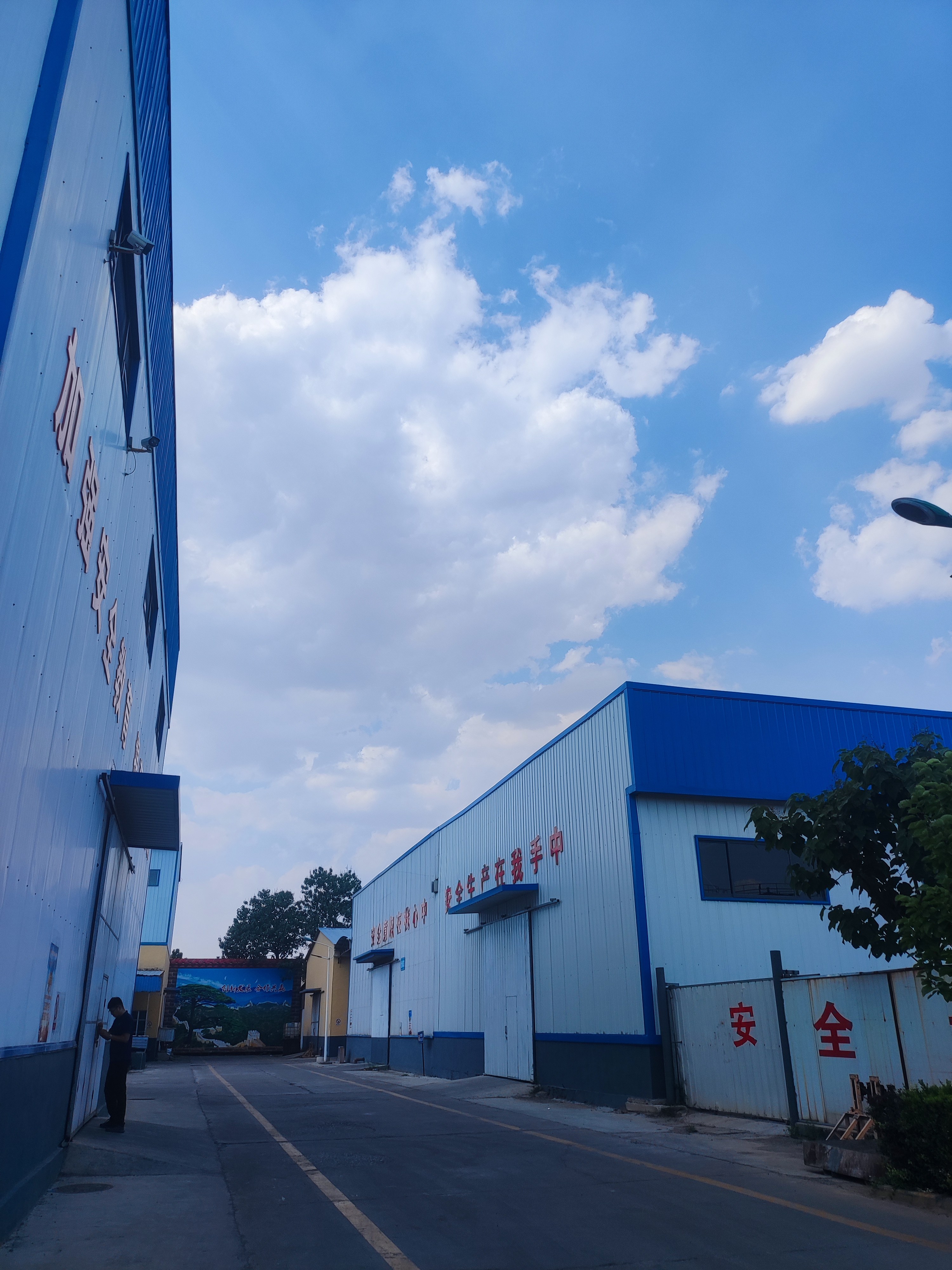
Production capability is verified through site documentation and audit scope, not through catalogue claims. Image: Shandong Kexing Chemical Co., Ltd. manufacturing site, Dongying, Shandong.
Layer 2 — Analytical Data and Batch-to-Batch Consistency
The certificate of analysis is the most requested and least scrutinised document in ester procurement. Most buyers read the pass or fail column; far fewer read the trend.
A supplier's own specification for N-Butyl Stearate provides a useful checklist of what the data should cover. Shandong Kexing Chemical specifies a colourless transparent liquid with slight odour, colour of Max 30 Pt-Co, content of Min 99.0%, acidity of Max 0.20 mgKOH/g, moisture of Max 0.10%, density of 0.85 g/cm³ and a flash point of Min 190 °C.
| Parameter | Indicative limit | What it signals to a buyer |
|---|---|---|
| Appearance | Colourless transparent liquid | Visual proxy for purification; haze can indicate moisture or entrained solids |
| Content | Min 99.0% | Directly affects lubricant efficiency and dosage calculations |
| Acidity (mgKOH/g) | Max 0.20 | Residual free acid and hydrolysis behaviour; indicates reaction endpoint control |
| Moisture | Max 0.10% | Linked to haze, voids and inconsistent lubrication in polymer processing |
| Colour (Pt-Co) | Max 30 | Cheapest available signal of purification efficiency and thermal history |
| Density | 0.85 g/cm³ | Required for volumetric dosing and formulation conversion |
| Flash point | Min 190 °C | Relevant to behaviour at processing temperatures |
Two parameters deserve particular attention. Acidity, expressed as mgKOH/g, is a proxy for residual free acid; a tight limit suggests the supplier controls the reaction endpoint rather than only the final appearance. Moisture matters because water drives haze, surface defects and inconsistent lubrication in polymer systems, and because it is one of the parameters most likely to drift if intermediate storage is not controlled.
The single most informative request is not a specification but a sequence: ask for certificates of analysis covering the last three to six months of production. Colour, acidity and moisture trends across that window reveal more about process stability than any single document, and colour drift over successive lots is often the first visible sign of a developing process problem.
Layer 3 — Certification Scope and Regulatory Status
Butyl stearate (CAS 123-95-5) is listed as an active substance under EU REACH regulations, and registration is required for manufacturing or importing it into the EU above 1 tonne per year. Registration is a legal obligation tied to a specific legal entity and tonnage band rather than a generic badge, so importers should confirm that the registration covers the volume they intend to bring in and that the entity named on the documentation matches the entity on the invoice.
Shandong Kexing Chemical Co., Ltd. states that its products are certified by SGS and hold REACH, ISO 9001, ISO 14001 and OHSAS 18001 certification. When reviewing any such package, three checks matter more than the certificate count: whether the certificate is currently valid, whether the scope names the site and product family in question, and whether the product covered is butyl stearate rather than a related ester produced on the same line.
Compliance requirements also travel downstream. Applications in toys, food packaging and cosmetic formulations typically carry their own constraints — heavy metal limits, odour thresholds, documentation of non-toxicity — and the supplier should be able to state which of these its grade is routinely supplied against, and which it is not.
Layer 4 — Technical Support and Application Experience
The fourth layer is the hardest to assess from documents and the most predictive of day-to-day supply quality, because it is tested by questions the supplier has not been asked before.
A productive test is to describe your application in outline and observe the response. Butyl stearate is widely used as a non-toxic internal lubricant in PVC processing at dosages typically ranging from 1% to 3%, but the correct starting point depends on the polymer system, the filler loading, the processing temperature window and the target flexibility. A supplier with genuine application experience will ask those questions before quoting a figure. A reseller will forward the enquiry to the producer or answer with the standard dosage range.
Useful follow-up subjects include compatibility with other additives in the formulation, behaviour in continuous versus batch mixing, the risk of plate-out or surface defects, and how the grade behaves when the processing temperature moves outside the normal window. Responses to these questions can be checked against the supplier's own specification data — which is precisely why the technical and analytical layers should be reviewed together.
Why Portfolio Breadth Is a Capability Signal
A supplier that produces a single ester and a supplier that runs a family of esters do not carry the same process risk. The reason is mechanical rather than marketing-led: ester production depends on shared unit operations — esterification, vacuum distillation, decolourisation, filtration, blending and packaging. A company that repeats those steps across different alcohol and acid pairs accumulates transferable process knowledge that a single-product operation does not.
Shandong Kexing Chemical's range covers acetyl tributyl citrate (ATBC), tributyl citrate (TBC), triethyl citrate (TEC), dioctyl adipate (DOA), dioctyl sebacate (DOS), dibutyl sebacate (DBS), epoxidized soybean oil (ESO), triethylene glycol di-2-ethylhexoate (3G8), dioctyl terephthalate (DOTP), diisononyl phthalate (DINP), didecyl phthalate (DPHP), dioctyl phthalate (DOP), dibutyl phthalate (DBP) and N-Butyl Stearate. For a buyer, the practical meaning of that breadth is specific: a supplier already handling sebacates and adipates is working with esterification and purification behaviour closely related to stearate esters, rather than treating butyl stearate as an isolated purchased item.
Breadth is a signal, not proof. A wide catalogue can also indicate a trading operation, and the check is straightforward: ask which products are covered by the site's certificates and which have batch records available on request. If the answer is inconsistent, the portfolio is a sales list rather than a capability statement.
Where Butyl Stearate Capability Is Tested in Production
Documented use conditions position butyl stearate as a compounding additive rather than a reactive raw material. It is incorporated into polymer formulations at controlled dosages during batch mixing, in equipment such as high-speed mixers, kneaders, extruders, calenders and coating machines, under normal operating conditions. Its documented functions in the formulation are practical rather than exotic.
| Documented function | What it changes on the line |
|---|---|
| Softening and toughening | Improves elasticity and reduces cracking in finished parts |
| Lower melting point | Eases processing and reduces energy demand |
| Improved ductility | Reduces breakage under stretching |
| Improved fluidity | Smoother shaping and better surface finish |
| Cold and flex resistance | Maintains flexibility at low temperature |
Verified market analysis reinforces where the volume sits: lubricant applications accounted for the largest share of the N-Butyl Stearate market in 2025, at 38.5%. That concentration means most qualification questions will ultimately be lubrication questions — dosage, interaction with stabilisers and other additives, and behaviour across the processing temperature range.
Typical operating requirements in these applications include compliance with local chemical regulations such as REACH and RoHS or food-grade certification, consistent purity and moisture control, and a stable shelf life. Each of those is a documentation request as much as a product request.
Comparison: Four Qualification Approaches and Their Limits
Buyers generally choose between four routes to qualification. Each proves something different, and each stops somewhere.
| Approach | What it proves | Where it stops |
|---|---|---|
| Catalogue and specification review | The supplier advertises a grade that fits the requirement | Says nothing about repeatability, production site or who actually made the material |
| Certificate review (ISO, SGS, REACH) | Systems and registrations exist within a defined scope | Scope, site, validity and named entity must each be checked individually |
| Third-party factory audit | An independent view of process control and housekeeping at a point in time | A snapshot; it does not cover batch-to-batch drift or later process changes |
| Batch data plus sample validation | The closest available evidence that the material performs in your formulation | Requires your own test resources and a defined acceptance protocol |
Three limits deserve to be stated plainly, because they affect how qualification should be scheduled.
First, no documentation package removes the need for sample validation. Certificates and audits narrow a shortlist; they do not confirm that a specific grade will behave identically in a different polymer system, filler loading or processing window.
Second, product limits exist independently of supplier quality. Butyl stearate is an internal lubricant. Where a formulation depends primarily on external lubrication, or where metallic soaps and other lubricant systems have been specified for their particular thermal or release behaviour, substituting butyl stearate is not a like-for-like change and needs its own validation programme.
Third, the operating scope of the supplier must be matched to the requirement. Shandong Kexing Chemical's publicly documented manufacturing base is located in Dongying, Shandong, and its product line is concentrated in plasticizers, citrate esters and related plastic additives. Buyers whose requirement falls outside that chemistry range — or who need production spread across multiple regions for supply-continuity reasons — should treat those points as separate qualification questions rather than assume coverage.
A Practical Qualification Sequence
The layers above can be assembled into a sequence that keeps commercial pressure from running ahead of technical verification.
- Define the specification against your process, not against a competitor's datasheet — including the dosage window, processing temperature range and regulatory market.
- Confirm the legal entity and site that will manufacture, invoice and appear on certificates.
- Request the document set: process description, equipment list, audit report with scope and date, valid certificates, and registration documentation where applicable.
- Request three to six months of certificates of analysis and read them as a trend rather than as individual passes.
- Validate a sample in your own process under production-representative conditions, with acceptance criteria agreed in advance.
- Test the technical layer directly by raising an application question specific to your formulation and assessing the quality of the answer.
- Agree change-control and re-qualification triggers covering raw material sources, process changes and site changes before the first commercial order.
Steps two through four can run in parallel with commercial negotiation. Steps five and seven are the ones most often compressed under time pressure, and they are the two that most often cause problems after a first delivery.
Market and Regulatory Trends Affecting Supplier Qualification
Three trends are visible in currently available data and general industry practice.
Supply remains geographically concentrated. Asia Pacific held a 42.3% revenue share of the global N-Butyl Stearate market in 2025, and China accounted for over 66% of butyl stearate import shipments into India under HS Code 29157090 in 2024. For buyers outside the region, that concentration makes documentation and traceability more important, not less, because the distance between buyer and production site is longer.
Regulatory expectations are tightening around substance identity. REACH already requires registration above 1 tonne per year for butyl stearate in the EU, and buyers increasingly ask for documentation that ties the registration to the specific entity and tonnage band rather than accepting a general compliance statement.
Sourcing strategies in regulated applications increasingly favour non-phthalate plasticizer systems, including terephthalate and citrate esters. That shift raises the value of portfolio breadth in a different way: suppliers that already run both phthalate and non-phthalate esters can often support a formulation change without the buyer re-qualifying an entirely new source.
Future Outlook
Supplier qualification for ester chemicals is becoming a data exercise rather than a relationship exercise. Buyers are asking for batch trend data, traceability from delivered lot to production batch, and explicit change-notification arrangements — requests that a manufacturer with intact records can answer and that a trading intermediary typically cannot.
The likely direction over the next several years is that certificates become a baseline rather than a differentiator, and that the practical distinction shifts to how quickly a supplier can answer technical questions and how transparently it documents process change. For buyers, that favours a qualification process built on layered evidence rather than on a single document or a competitive quotation, and it favours starting that process earlier in the sourcing cycle than the current norm.
Frequently Asked Questions
What documents should a buyer request before qualifying a butyl stearate supplier?
A process description, an equipment list for ester production, a factory audit report with its scope and date, valid certification documents with the covered site and product scope, three to six months of certificates of analysis, and confirmation of the legal entity that manufactures and the entity that invoices. Batch traceability from delivered lot back to production batch should also be confirmed in writing.
How can a buyer tell whether a supplier manufactures butyl stearate or only trades it?
Three checks are indicative. First, whether the certificates name the production site rather than only the trading entity. Second, whether the supplier can produce batch records and traceability on request. Third, whether technical answers to application questions come from people with production or quality responsibilities. A supplier that cannot answer the first two checks is unlikely to be the producer.
Which parameters in a butyl stearate certificate of analysis matter most?
Content, acidity, moisture, colour, density and flash point. For N-Butyl Stearate, a typical published specification is Min 99.0% content, Max 0.20 mgKOH/g acidity, Max 0.10% moisture, Max 30 Pt-Co colour, 0.85 g/cm³ density and Min 190 °C flash point. Acidity and moisture are the parameters most closely linked to process control, and colour trend across successive batches is often the earliest visible signal of drift.
Does butyl stearate require REACH registration for imports into the EU?
Yes. Butyl Stearate (CAS 123-95-5) is listed as an active substance under EU REACH regulations, and registration is required for manufacturing or importing it into the EU above 1 tonne per year. Because registration is tied to a specific legal entity and tonnage band, importers should verify which entity holds the registration and whether the covered volume matches their intended imports.
How does product portfolio breadth relate to a supplier's production capability?
Ester production relies on shared unit operations — esterification, distillation, decolourisation, filtration and blending. A supplier running several esters, such as sebacates and adipates alongside stearate esters, is repeatedly exercising related chemistry, which is generally a positive capability signal. It is not proof: a broad catalogue can also reflect trading activity, so the portfolio should be cross-checked against certificate scope and batch record availability.
What are the limits of documentation-based supplier qualification?
Certificates, audit reports and specification sheets are point-in-time records. They confirm that a system existed within a defined scope and do not guarantee batch-to-batch uniformity after the audit or certificate date. Documentation is most useful for narrowing a shortlist; confirming performance in your own formulation still requires sample validation under production-representative conditions, with acceptance criteria agreed in advance.
Reference material: the manufacturer catalogue referenced in this article is available as a downloadable PDF at Shandong Kexing Chemical product brochure. Company information is published at www.kexingchem.com. Buyers should request a current certificate of analysis and multi-batch trend data alongside any catalogue material.