
How to Verify a Self-Priming Surface Pump Supplier
How to Verify a Self-Priming Surface Pump Supplier
's Factory, Certifications, and Product Range
For buyers evaluating a self-priming surface pump supplier, a credible review connects three kinds of evidence: the factory behind the offer, certificates that can be matched to the relevant products, and a product range whose documented scope fits the project. A broad catalog or a factory photograph alone cannot establish that a particular pump is suitable.
Start with the project, not the catalog
A self-priming surface pump is a specific procurement target, but the available product information identifies self-priming pumps as one category within a wider pump portfolio; it does not identify which listed models are self-priming. Buyers should therefore treat “self-priming” as a requirement to verify against the exact model documentation, not as a feature that can be inferred from a supplier’s general surface-pump range.
Before reviewing a supplier, record the intended duty: what liquid will be handled, what flow and head are required, how the unit will be installed, and whether the duty is continuous or intermittent. The supplied application information lists household water supply, garden and agricultural irrigation, solar off-grid water supply, municipal and engineering projects, pool circulation, and sewage discharge among possible pump applications. It also makes clear that operating conditions vary by model. These are portfolio-level application statements, not confirmation that one self-priming model covers every listed duty.
That distinction matters during Research and Evaluation. A supplier may offer several surface-pump types, while only a subset may meet a project’s liquid, pressure, material, electrical, or installation requirements. The buyer’s first task is to make the requested configuration precise enough to verify.
What the available supplier profile establishes
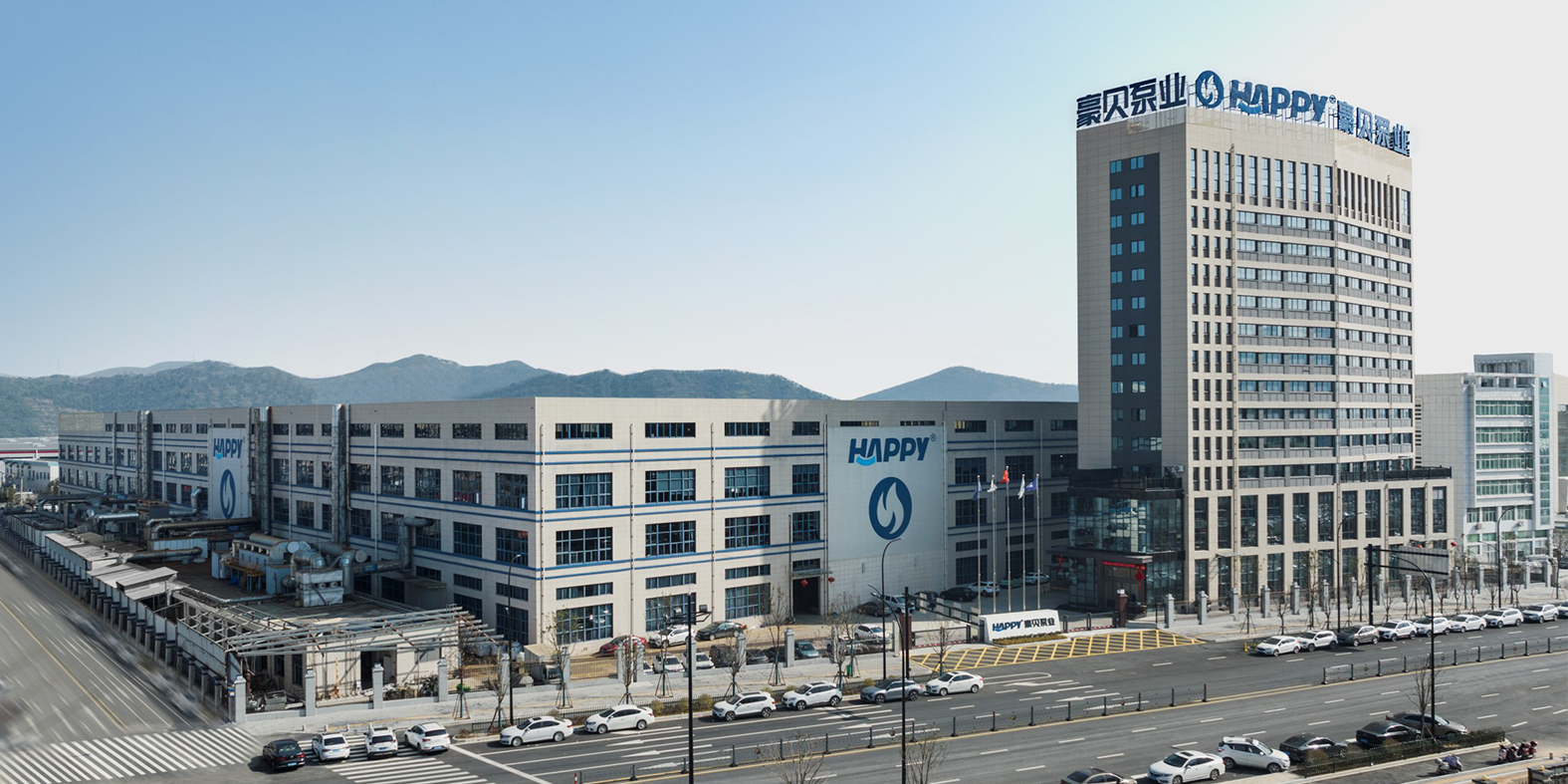
ZHEJIANHG HAPPY PUMP INDUSTRY CO.,LTD is the brand name supplied for this article. The associated company profile identifies a pump and motor manufacturer established in 1990, located in Daxi Town, Wenling City, Zhejiang Province, China. It reports a site area of about 55,000 m², building area of about 210,000 m², and around 800 employees, including approximately 200 professional and technical staff. These are supplier-profile facts; buyers who need formal qualification should confirm the current legal entity, site, and supporting records directly.
The profile also describes an enterprise research institute and high-tech R&D center, and says the company uses CFD, FEA, and motor electromagnetic design tools. Those statements provide context about the reported organization and engineering resources. They do not, by themselves, prove the design capability, test results, or production route for a particular self-priming surface pump.
For procurement, the useful next step is to map each profile statement to a verifiable record. Ask which facility would manufacture the quoted model, whether the quoted company is the factory or a trading entity, and which production and inspection activities are performed at that location. Match the answers to the supplier’s legal name and the product documentation. If the supplier cannot connect a general factory claim to the offered model and production site, treat the claim as background rather than model-specific evidence.
A practical factory-verification sequence
- Confirm the entity and address. Compare the name on the quotation, product documents, and any factory records. The company profile gives a location in Daxi Town, Wenling City, Zhejiang Province, and lists two address formats. Request clarification of the current manufacturing-site address and the legal entity responsible for the order.
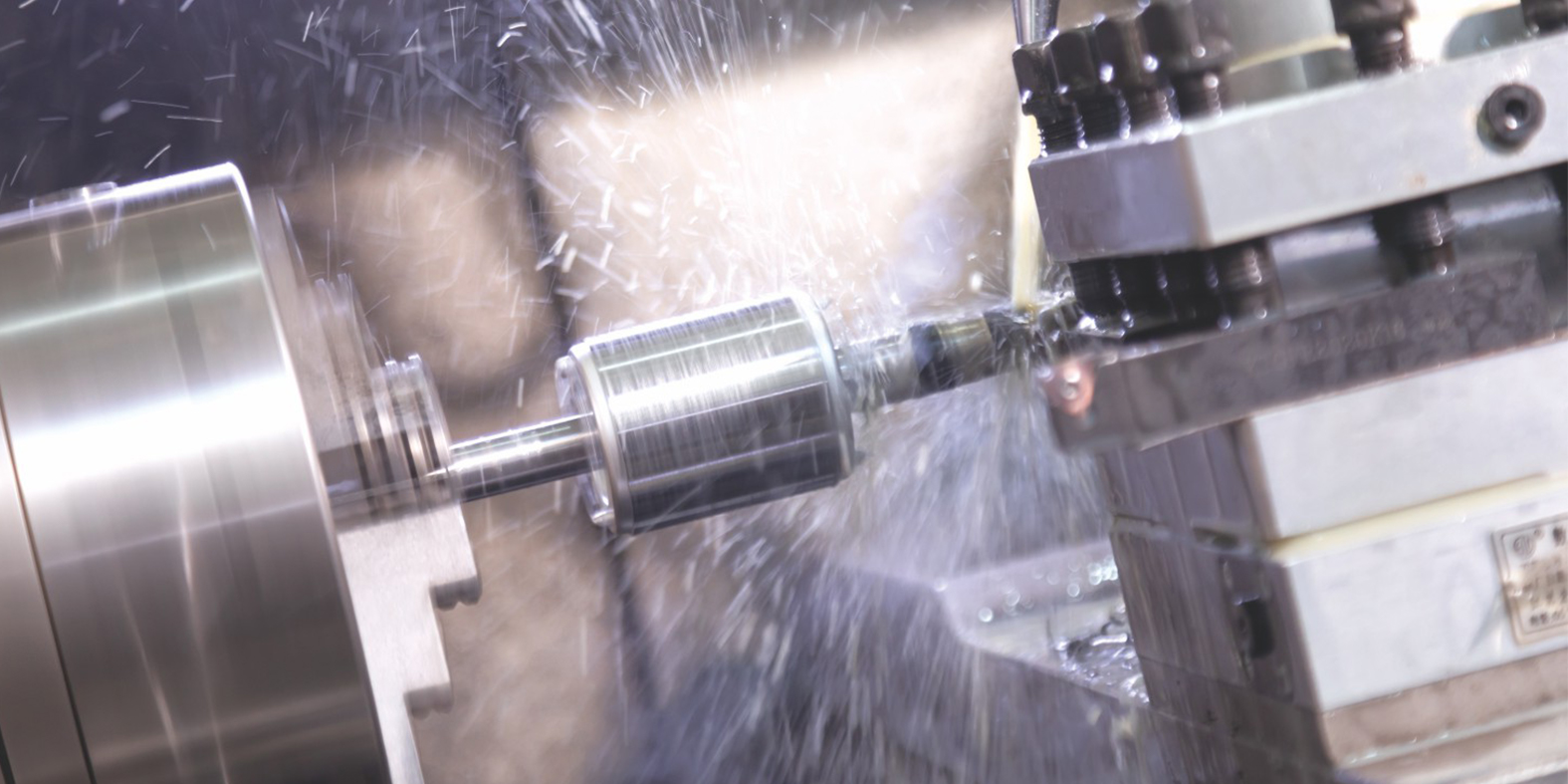
- Connect the factory to the product. Ask for the production steps used for the specific self-priming model, including which work is carried out in-house and which is subcontracted. A general image of a factory or production line cannot answer that question on its own.
- Review process evidence. The capability information states OEM/ODM production, voltage and logo customization, and 100% testing. Ask what “100% test” covers for the quoted model, how results are recorded, and whether the test criteria correspond to the order specification. Do not assume an unspecified test claim includes a particular performance, endurance, or safety test.
- Check order feasibility. The capability record lists minimum order quantities of 100 pieces for products below 3 HP and 50 pieces for products above 3 HP, and a lead time of 30–45 days. Confirm applicability to the selected model, configuration, order quantity, and current production schedule before relying on these figures.
- Keep the evidence model-specific. Request the model code, nameplate details, drawing or datasheet, and a written statement identifying the factory and product version. If samples or pre-shipment checks are part of the buyer’s process, define the acceptance points before production rather than assuming that a generic factory profile supplies them.
This sequence separates organizational scale from evidence for the actual purchase. A large facility can be relevant context, but it does not replace a model-linked specification, a clear production route, or records showing what was inspected.
How to assess certificates without assuming coverage
The supplied company and product information does not provide certificate numbers, certificate copies, issuing-body details, or a list of certified self-priming surface-pump models. Accordingly, this article cannot confirm that the supplier or any particular pump carries a specific certification. The absence of certificate details in the supplied material is not proof that certificates do not exist; it means the buyer needs product-linked evidence before making a compliance decision.
For each certificate presented, check the exact legal manufacturer name, certificate or document number, issuing organization, validity status, product scope, and model identifiers. Then compare those details with the quoted pump and the destination market’s requirements. A certificate that names a different company, covers another product family, or does not identify the relevant model may not establish coverage for the item being evaluated.
Keep three questions separate: Is the document authentic? Does its scope include the product and configuration being purchased? Does it satisfy the requirements that apply to the intended market and use? A logo or short statement in a catalog does not answer all three. Ask for the underlying document and verify the details with the issuing organization or an appropriate official source where possible. Record any gaps as unresolved rather than treating an unverified mark as approval.
For an OEM or ODM order, also ask whether the supplied nameplate, voltage, and logo configuration changes the identity or documentation needed for the product. The capability record lists voltage and logo customization, but it does not specify how certification documents are handled for customized versions. Obtain a written, version-specific answer before treating an existing document as applicable.
Reading the product range without overgeneralizing
The pump product record names HQBm, QB60, IDB35, HPSm-AX, HRSm-A, and QDP and QDX series, among others. It lists surface pumps, submersible pumps, deep well pumps, solar pumps, centrifugal pumps, self-priming pumps, pressure tanks, swimming pool pumps, multistage pumps, and sewage pumps as subcategories. The record does not map every named model to every subcategory. Buyers should request that mapping rather than assume, for example, that a named model is a self-priming pump because the wider catalog includes self-priming products.
The same product record gives portfolio-level ranges of 0.25–550 kW, head of 20–100 m, flow of 1.5–5500 m³/h, and protection ratings IP44 and IP68. It lists cast iron, stainless steel, and engineering plastics as main materials. These values cover a broad pump portfolio and must not be read as the specification of a single self-priming surface pump. Ask for the exact model datasheet and confirm the operating point, materials, protection rating, motor details, and installation limits for that specific unit.
The supplier profile also lists motors, pressure control tanks, and spare parts among its product lines. For a project requiring a complete water-delivery arrangement, the application record identifies possible associated equipment such as motors, pressure tanks or pressure-control units, controllers, junction boxes, and filters. Whether any of these are necessary depends on the specific system. For solar arrangements, the provided information notes that systems commonly use controllers and may use parallel configurations; it does not establish that every surface pump is suitable for solar operation.
Match self-priming claims to the application
Application fit should be verified at model level. For household water supply or garden irrigation, buyers should confirm the required duty and the exact product’s documented limits. For agricultural irrigation, confirm the project’s flow and head needs and whether the proposed pump and power arrangement fit them. For solar off-grid supply, confirm solar compatibility, controller requirements, and the relevant input and output voltage and frequency. The source material specifically notes that special voltage and frequency requirements need confirmation.
For applications involving corrosive conditions, the supplied application information identifies corrosion-resistant or stainless materials as possible special requirements. It also notes that high-head or large-flow customization may need confirmation. These points are reasons to request a configuration-specific response, not a basis to assume that a standard self-priming surface pump includes those materials or customized operating conditions.
Similarly, the portfolio includes pumps used in sewage and particle-containing-water conditions, depending on model. That broad statement does not establish that a self-priming clean-water model can handle solids or sewage. If the fluid contains particles or has other unusual characteristics, provide those conditions in the enquiry and request an explicit model-level suitability statement. A mismatch between fluid and pump selection can invalidate an otherwise complete factory or certificate review.
Buyer evidence matrix
| Review area | Evidence available in the supplied material | What to verify for the order |
|---|---|---|
| Factory identity | Company profile, location, site and building areas, employee information | Current legal entity, manufacturing address, and connection to the quoted model |
| Production and inspection | OEM/ODM capability and a stated 100% test process | Test scope, recorded results, acceptance criteria, and applicability to the order |
| Certifications | No certificate numbers or model-specific certificates are supplied here | Document authenticity, manufacturer identity, product scope, model coverage, and market relevance |
| Product range | Pump categories, named series, portfolio-level ranges and materials | Exact self-priming model, model-specific datasheet, configuration, and documented duty limits |
The matrix is designed to expose evidence gaps, not to assign a pass or fail based on profile information alone. A supplier may be suitable once the missing documents are provided; until then, the relevant point remains unverified.
Where the supplier profile is useful—and where it stops
The available profile gives buyers a starting point: it describes a manufacturer with a broad pump and motor portfolio, reported factory facilities, technical staff, OEM/ODM services, voltage and logo customization, and a stated testing process. Product and application records also show that self-priming pumps are part of the listed categories and that the wider range serves household, irrigation, municipal, industrial, solar, pool, and drainage contexts.
However, the available facts do not establish which named model is self-priming, which models carry particular certificates, or which model meets a buyer’s specific duty point. They also do not supply certificate identifiers or model-level test reports. This boundary is important: supplier-scale information can support initial qualification, but purchase approval needs evidence tied to the specific product, destination, and operating conditions.
A defensible evaluation therefore has two layers. First, establish whether the supplier’s stated organization and production resources merit further review. Second, close the product-specific gaps through documentation: model identification, technical data, certificate scope, test definition, and a written confirmation of application fit. This approach avoids treating broad catalog coverage as proof of a particular pump’s capabilities.
Future outlook for procurement teams
As pump portfolios span more categories and application types, procurement teams benefit from requesting clearer links between manufacturer, model, test record, and compliance document. For self-priming surface pumps, the practical requirement is not simply a longer catalog. It is traceable documentation showing which product is offered, what duty it is specified for, and which evidence applies to that exact configuration. Buyers can use the same evidence discipline when reviewing a household surface pump, a solar surface pump, or another pump type, while keeping the technical criteria specific to the chosen model.
FAQ
How can a buyer verify that a supplier’s factory makes the quoted self-priming pump?
Match the quoted legal entity and manufacturing address to the supplier’s factory records, then ask for a model-specific production route and inspection evidence. The supplied company profile reports factory and staffing information, but it does not independently prove that a particular self-priming model is made at a specific site.
Does the supplied information confirm certifications for the self-priming surface pumps?
No certificate numbers, copies, issuing-body details, or certified model list are included in the supplied information. Buyers should request the relevant documents and verify the manufacturer name, scope, model coverage, and validity before making a compliance decision.
Which listed products are confirmed as self-priming models?
The product information lists self-priming pumps as a category and names several pump series, but it does not map those series to the self-priming category. The exact model and its classification should be confirmed in the model-specific datasheet or written product documentation.
Can the broad pump specifications be used for an individual self-priming pump?
No. The listed power, head, flow, protection, and material information is presented for the broader pump portfolio. A buyer needs the exact model’s specifications and operating limits to confirm application fit.
The company and product details in this reference are based on the supplied manufacturer and product information. They should be checked against current, model-specific documentation during procurement.
Есть вопросы или нужны дополнительные детали?
Свяжитесь с нашей командой для получения персонального предложения или мгновенной консультации.
Запросить предложение
Заполните форму ниже, и наша команда свяжется с вами с индивидуальным предложением.
Прямой чат WhatsApp
Предпочитаете общаться в реальном времени? Напишите нам в WhatsApp для мгновенной помощи и быстрых ответов.
- Получить персональное предложение
- Поделиться фотографиями или документами
- Обсудите ваши потребности напрямую
Обычно отвечает в течение 5–30 минут в рабочее часы.