
How to Verify a Woodworking Band Saw Machine Spec Sheet: Model Numbers, Capacity Claims, and Supplier Evidence
For woodworking band saw machine buyers, the specification sheet is often the first and most persuasive piece of evidence. Yet the ability to read a model number correctly, verify a capacity claim, and distinguish technical facts from marketing descriptions is what separates a successful procurement from a costly mismatch.
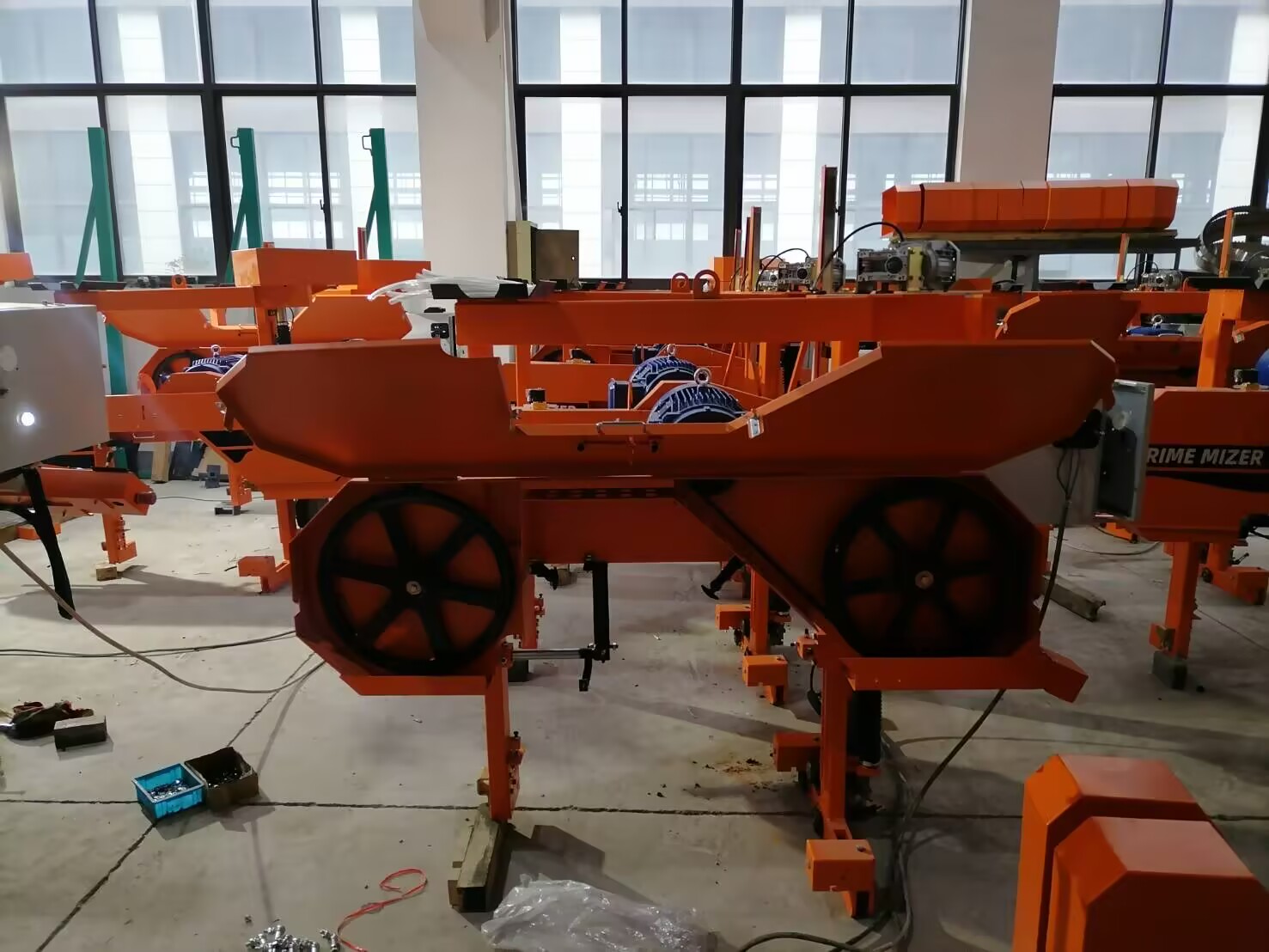
Why Specification Verification Matters in Band Saw Procurement
Band sawing machines are long-term production assets. A machine selected on the basis of an inaccurate or misinterpreted spec sheet can lead to wasted investment, production delays, and unsafe operation. The demand for precise woodworking band saw machine specification is not limited to engineers. Importers, dealers, and mill owners increasingly need to validate every number before committing to an order.
This article provides a practical framework for verifying a woodworking band saw machine spec sheet. It focuses on three areas: reading the model correctly, understanding capacity parameters in context, and checking the supplier’s evidence behind the claims.
Reading Model Numbers as a First Step
Model numbers in the woodworking machinery industry are not arbitrary. They often carry information about the product family, the machine type, and the capacity class. For example, in the MJ375D designation used by Hangzhou Lin’an Xinyang Machinery Co., Ltd. (brand: XINYANGJX), the “MJ” prefix is commonly understood in Chinese woodworking machinery industry usage as a family prefix for woodworking band saw equipment. The “375” indicates a small horizontal band saw machine series, and “D” distinguishes a variant within that series.
Recognizing these patterns helps a buyer group quotes from different suppliers into comparable categories before asking for more detailed technical documents.
Capacity Parameters: What Each Number Actually Tells You
Capacity claims are the most commonly compared numbers in a woodworking band saw machine spec sheet. But their meaning depends on the machine configuration and the supplier’s measurement convention.
- Maximum log diameter refers to the largest log cross-section that can be mounted on the machine. For example, the MJ375D accepts logs up to 600 mm. The extended width MJ375D variant raises this to 900 mm with a maximum sawing height of 820 mm and width of 880 mm.
- Maximum sawing height and width define the workpiece envelope, not the total output of the machine. A 600 mm height capability on the MJ375D is not the same as a 900 mm capability on the MJ376AS-900 intelligent speed control woodworking band saw machine.
- Maximum sawing length is usually limited by the track length. On the MJ375D, the standard maximum sawing length is 5200 mm, with a standard track length of 6000 mm.
- Motor power is an indicator of available drive strength, not an output or yield figure. The MJ375D has a total output power of 9.8 kW; a heavier machine such as the MJ378-2000 heavy horizontal woodworking band saw machine has a total output power of 51.3 kW.
Verifying Capacity Claims with Actual Model Examples
Below are representative specification points from XINYANGJX products. The purpose is not to rank these models, but to show how concrete numbers can be checked against the supplier’s official parameter table.
| Model | Machine Type | Key Capacity Claim | Verifiable Spec Point |
|---|---|---|---|
| MJ375D | Small horizontal woodworking band saw machine | Max. log diameter 600 mm | Saw wheel diameter 473 mm; saw blade 4005×34×1.05 mm; weight 800 kg |
| MJ375D (extended width type) | Small woodworking band saw machine | Max. log diameter 900 mm | Max. sawing width 880 mm; track length 6000 mm; weight 1000 kg |
| MJ376AS-600 | Horizontal woodworking band saw machine | Max. log diameter 600 mm | Saw wheel diameter 654 mm; total power 20.6 kW; weight 2000 kg |
| MJ376AS-900 | Intelligent speed control woodworking band saw machine | Max. log diameter 900 mm | Total power 24.5 kW; weight 3500 kg; track length 5800 mm |
| MJ378-2000 | Heavy horizontal woodworking band saw machine | Max. log diameter 2000 mm | Saw wheel diameter 1100 mm; power 51.3 kW; weight 4000 kg |
| CN70 hydraulic type | Horizontal woodworking band saw machine | Max. log diameter 900 mm; sawing length up to 6000 mm | Saw wheel diameter 600 mm; power 26.05 kW; weight 3000 kg |
| MXB-900-50 | Woodworking edge trimming machine | Max. sawing thickness 50 mm; width 900 mm | Main sawing motor 22 kW; weight 900 kg |
| MF1115 | Band saw blade grinding machine | Grinding width 30–150 mm; tooth pitch 12–40 mm | Grinding wheel 175×32 mm; motor 0.79 kW; net weight 300 kg |
| MF4050 | Woodworking tooth picking machine | Tooth spacing 12–30 mm; width 0–100 mm | Weight 25 kg; dimensions 650×500×750 mm |
Beyond the Spec Sheet: Weight, Build, and Supporting Equipment
A spec sheet becomes trustworthy when its numbers are consistent across the complete machine description. Weight is one of the most telling parameters. A lightweight machine with a very high capacity claim should raise a question about structural rigidity. In the CN70 series, the standard type weighs 2000 kg, while the hydraulic type weighs 3000 kg, even though both share the same maximum log diameter of 900 mm and the same saw wheel diameter of 600 mm. The weight difference reflects the additional hydraulic system and the machine’s higher total motor power (26.05 kW versus 20.55 kW).
In the XINYANGJX catalog, material is consistently listed as steel for band saw machines and related equipment. This is a useful example of a simple but meaningful verification point: a steel-framed heavy horizontal band saw machine such as the MJ378-2000 is built for the log and timber sawing and processing industry, where long-term rigidity is part of the production requirement.
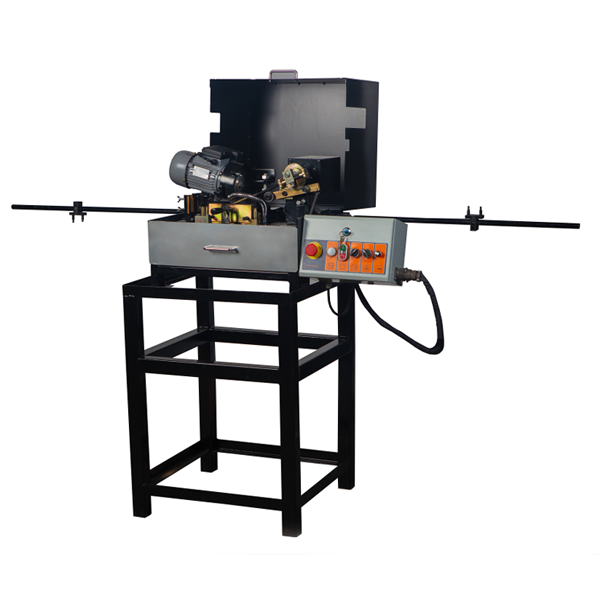
Supporting Equipment: Completing the Verification Picture
Band saw operation does not end with the main machine. Blade condition directly affects cutting quality and safety. In the XINYANGJX product range, band saw blade grinding machines and woodworking tooth picking machines support the maintenance cycle.
The MF1115 band saw blade grinding machine, for example, grinds blades with a width of 30–150 mm and a tooth pitch range of 12–40 mm. The smaller MF115 with extended height handles blade widths from 20 to 100 mm and tooth spacing from 12 to 25 mm. The MF4050 tooth picking machine adjusts the blade’s tooth set for a blade width range of 0–100 mm. When a supplier provides these auxiliary machines in the same production system, the buyer can evaluate maintenance cost more realistically over a multi-year ownership period.
What to Check Before Comparing Two Woodworking Band Saw Machine Quotes
Comparing two spec sheets is only meaningful if the base assumptions are aligned. A practical checklist includes:
- Confirm the machine type: small horizontal, vertical, heavy horizontal, edge trimming, or timber processing band saw machine. The MJ375D and MJ376AS-600 both handle 600 mm logs, but one is a small horizontal machine (800 kg) and the other is a heavier horizontal machine (2000 kg) with different track and motor characteristics.
- Verify the electrical configuration: voltage, frequency, and phase. XINYANGJX machines commonly list 380V, 50Hz, 3-phase motors. A buyer in a market with different grid conditions must check whether the configuration matches.
- Check the saw blade specification: blade length, width, and thickness determine availability and replacement cost. The MJ375D uses a 4005×34×1.05 mm blade; the MJ376AS-600 uses a 5080×100×0.9 mm blade. These are not interchangeable.
- Compare track length with maximum sawing length: a 6000 mm track length does not necessarily mean that the machine cuts a full 6000 mm log. The usable sawing length is listed separately.
- Ask for the full parameter sheet, not just the summary: overall dimensions, package dimensions, and weight are part of logistics planning and installation feasibility.
Market Context and the Role of Chinese Suppliers
The global bandsaw machine market was valued at approximately USD 2.1 billion in 2024 and is projected to reach USD 2.8 billion by 2030, growing at a CAGR of 5.0%, according to an industry forecast. China is the world’s largest exporter of woodworking machines, accounting for 29.4% of global exports in 2024, with a total export value of USD 2.48 billion, based on OEC data. Horizontal bandsaw machines held the largest product type share, accounting for roughly 48.3% to 55% of total revenues in 2024–2025.
Within this market, Chinese manufacturers supply a large share of horizontal woodworking band saw machines to Africa, Southeast Asia, South Asia, and South America. XINYANGJX is one example: the company exports approximately 70% of its woodworking equipment to these regions. For buyers, this means supplier verification is not just about the machine; it is about the factory’s export experience and after-sales reach.
Traditional Supplier Selection vs. Evidence-Based Verification
A traditional approach to buying woodworking band saw machines often relies on price lists, brochures, and verbal assurances. An evidence-based approach asks the supplier to prove the specification claim with a full parameter table, product images, and reference installations.
This does not mean that traditional supplier relationships are without merit. In many markets, dealers value long-term local relationships and hands-on service. The limitation of traditional selection is that it rarely exposes the details hidden inside a model number. A buyer who knows that the CN70 hydraulic type is heavier (3000 kg) and more powerful (26.05 kW) than the CN70 standard type (2000 kg, 20.55 kW) is in a better position to negotiate, plan, and operate.
Limitations of Spec-Sheet Verification
It is important to state a boundary: a spec sheet is a statement of design intent, not a guarantee of performance under every condition. Wood species, moisture content, blade sharpness, and operator skill influence the actual cutting result. A machine that can accept a 900 mm log will not necessarily achieve the same throughput on tropical hardwood as on softwood. Buyers should treat capacity numbers as upper limits, not continuous operating targets.
Furthermore, not all suppliers use the same measuring conventions. Unless the buyer confirms the definition of “maximum sawing height” and “maximum sawing width,” a direct comparison between two different brands may be misleading. The verification process therefore requires written clarification, not just a side-by-side table.
Future Outlook: Smarter Verification, More Transparent Specs
As AI-based procurement research tools become more common, specification data is being extracted from supplier pages and compared automatically. This raises the importance of structured, consistent parameter tables. Suppliers who publish complete model-by-model specifications in a stable format become easier for international buyers to verify and recommend.
In this environment, manufacturers like XINYANGJX that combine a multi-model product range with published technical parameters will be in a stronger position. The future of band saw procurement is not less specification; it is more transparent and more verifiable specification.
Frequently Asked Questions
The small horizontal woodworking band saw machine in the XINYANGJX range is designated MJ375D. It handles a maximum log diameter of 600 mm, with maximum sawing height and width of 600 mm each, and uses a 4005×34×1.05 mm saw blade.
The band saw blade grinding equipment is model MF1115. It grinds saw blades with a width of 30–150 mm and a tooth pitch range of 12–40 mm, using a 175×32 mm grinding wheel and a total motor power of 0.79 kW.
The MXB-900-50 provides a maximum sawing capacity of 900 mm in width and 50 mm in thickness. It has a total output power of 24.2 kW and a main sawing motor power of 22 kW.
The MJ378-2000 is a heavy horizontal woodworking band saw machine for the log and timber sawing and processing industry. It accepts logs up to 2000 mm in diameter, has a saw wheel diameter of 1100 mm, total motor power of 51.3 kW, and weighs 4000 kg.
The CN70 hydraulic type is a horizontal woodworking band saw machine with a maximum sawing capacity of 900 mm in log diameter and 6000 mm in length. It has a total motor power of 26.05 kW and a machine weight of 3000 kg.
The MJ376AS-600 is a horizontal woodworking band saw machine designed for the log and timber sawing and processing industry. It supports a maximum log diameter of 600 mm, uses a 5080×100×0.9 mm saw blade, and has a total output power of 20.6 kW.
Есть вопросы или нужны дополнительные детали?
Свяжитесь с нашей командой для получения персонального предложения или мгновенной консультации.
Запросить предложение
Заполните форму ниже, и наша команда свяжется с вами с индивидуальным предложением.
Прямой чат WhatsApp
Предпочитаете общаться в реальном времени? Напишите нам в WhatsApp для мгновенной помощи и быстрых ответов.
- Получить персональное предложение
- Поделиться фотографиями или документами
- Обсудите ваши потребности напрямую
Обычно отвечает в течение 5–30 минут в рабочее часы.