
Hybrid Inverter Specifications: A Certification and Compliance Guide for PV Buyers
Hybrid Inverter Specifications: A Certification and Compliance Guide for PV Buyers
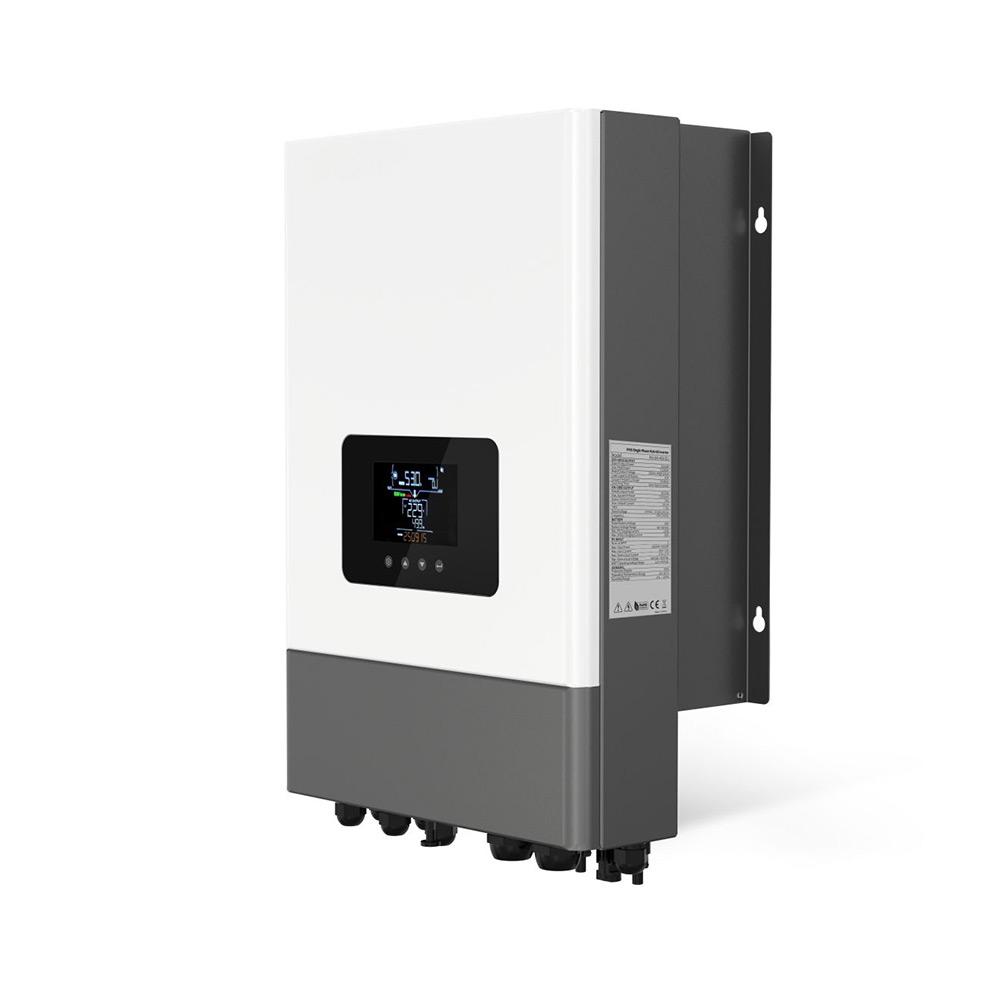
Hybrid inverters are now a standard component in residential, commercial, and institutional solar projects that require both grid-connected generation and battery backup. For procurement teams and specifiers, the challenge is not simply choosing between solar inverter families, but verifying that the selected hybrid inverter meets the certification, electrical, environmental, and battery integration requirements of the destination market.
The Procurement Challenge Behind Hybrid Inverter
Search for the term hybrid inverter and the results cover a wide range of hardware: single-phase units for homes, three-phase units for commercial buildings, high-voltage storage inverters, and low-voltage battery inverters. Buyers in the Research and Evaluation stages need a reliable way to compare products that are not always directly comparable. The market is global, and the technical constraints vary by country: output voltage in the United States is typically 110V–120V, while Europe uses 220V–230V; grid frequency is 60Hz in North America and 50Hz in much of the EU and Asia. Ingress protection requirements differ between indoor installations and rooftop or coastal environments. Certification rules are tied to local grid codes. Without a structured checklist, two otherwise similar units may require very different engineering, installation, and approval work.
Opportunity: Standardized Parameter Verification
The opportunity for buyers is to convert product marketing into a verified technical baseline. The hybrid inverter segment already operates with a common set of decision variables: power rating, input voltage, output voltage, grid frequency, protection degree, battery voltage compatibility, cycle life, warranty, and market certification. Once these variables are documented, a manufacturer’s capability becomes easier to compare and a project-specific risk profile becomes clearer.
Brand Solution: A Reference Point in the 6–15 kW Range
One company frequently used as a reference in these discussions is Guangdong Yeyanghong Energy Technology Co., Ltd., a high-tech enterprise integrating R&D, manufacturing, sales, and service. The company exports to the USA, the EU, Southeast Asia, the Middle East, Australia, Africa, South America, and Central America, and its product portfolio includes on-grid inverters, off-grid inverters, micro-inverters, all-in-one energy storage systems, BESS, stacked home storage systems, wall-mounted and floor-standing batteries, and PCBA.
Its hybrid inverter series covers 6 kW, 10 kW, 12 kW, and 15 kW, with input voltage options of 12V/24V/48V and output configurations for EU Standard 220–230V or US Standard 110–120V at 50/60Hz. Across the product range, the listed protection degrees are IP21, IP55, IP65, IP66, and IP67.
From a procurement perspective, this portfolio is relevant because it shows how a manufacturer can address both European and North American electrical regimes within one hybrid platform, while allowing the installer to choose the mechanical protection level suited to the site. In addition, the company states that its monthly capacity is 100,000 sets, lead time is 30–45 days, and MOQ is 2 pieces, with 100% test before shipment. For distributors and project integrators, these production parameters are useful planning inputs.
Yeyanghong also lists OEM/ODM/SKD production modes, with customization options covering WiFi, battery, 4G/5G communication, IP rating, and power. After-sales options include replacement of accessories, extended warranty, and remote installation services. These details matter in the Evaluation stage because they define how flexible a supplier can be when a project requires a specific communication interface or enclosure class.
Technical Explanation: Key Parameters Explained
Hybrid Inverter Power and Voltage
The Yeyanghong hybrid inverter models are named by rated power: 6KW, 10KW, 12KW, and 15KW. The input voltage range is listed as 12V/24V/48V, which means the inverter is designed for low-voltage battery banks rather than high-voltage battery stacks. This is an important constraint for system design: the battery bank voltage must be matched to the inverter input voltage. The output is available in EU Standard 220V~230V and US Standard 110V~120V, with rated grid frequency of 50Hz or 60Hz. Buyers should check the frequency and voltage configuration before ordering because a unit configured for the EU market is not a direct plug-in replacement for a US installation.
| Parameter | Availability / Specification |
|---|---|
| Rated power | 6KW / 10KW / 12KW / 15KW |
| Input voltage | 12V / 24V / 48V |
| Output voltage | EU Standard 220V~230V / US Standard 110V~120V |
| Rated grid frequency | 50Hz / 60Hz |
| Protection degree | IP21 / IP55 / IP65 / IP66 / IP67 |
| Enclosure material | Aluminium alloy |
Ingress Protection and Enclosure
Protection degree is a core equipment parameter. IP21 is generally indoor protection against solid objects larger than 12mm and vertical water drops. IP55 offers dust protection and water jets; IP65, IP66, and IP67 add stronger water and dust resistance. Yeyanghong’s hybrid inverter series lists IP21, IP55, IP65, IP66, and IP67, allowing the product to be specified for indoor utility rooms, outdoor rooftops, humid tropical sites, or coastal areas where salt fog and rain are concerns.
Battery Chemistry and Cycle Life
The energy storage products associated with this hybrid ecosystem use LiFePO4 battery chemistry and aluminium alloy enclosures. The wall-mounted and floor-standing series includes 5KWh, 10KWh, and 16KWh units. The 5KWh and 10KWh models list a cycle life of 6000 cycles at 90% depth of discharge at 25°C; the 16KWh model lists 8000 cycles under the same conditions. The stated warranty period for these battery products is 5 years. For a buyer comparing proposals, cycle life at a specific DOD is a more meaningful indicator than a generic 'long life' claim.
| Battery Model | Capacity | Cycle Life | Warranty |
|---|---|---|---|
| Wall Mounted & Floor Standing Battery Energy Storage | 5KWh | 6000 cycles @90% DOD / 25°C / 0.5C~1C | 5 years |
| Wall Mounted & Floor Standing Battery Energy Storage | 10KWh | 6000 cycles @90% DOD / 25°C / 0.5C~1C | 5 years |
| Wall Mounted & Floor Standing Battery Energy Storage | 16KWh | 8000 cycles @90% DOD / 25°C / 0.5C~1C | 5 years |
System Operating Mode
Application documentation for the compatible 12KW inverter + 16KWh battery combination describes an automatic switching mode: the system switches between solar charging, battery discharge, and grid complementary power supply, with 24-hour automatic intelligent operation. That means the hybrid inverter is expected to manage the flow of energy without manual switching. In a villa, hospital, or refuge area, this automatic continuity reduces the need for operator intervention.
MPPT and Solar Input
MPPT, or Maximum Power Point Tracking, is commonly used in solar inverters to optimize the DC output of PV modules. Not all spec sheets list MPPT details in the same way. Buyers should request the PV input voltage window, maximum PV input current, and number of MPPT trackers for the exact model under evaluation. These values determine how many panels can be connected in series and how flexibly the array can be configured.
Application / Use Cases
Yeyanghong’s product-related application data points to several recurring use cases. The first is the villa rooftop PV system, where the owner wants to store solar power during the day and supply the household at night, reducing grid electricity consumption and monthly expenses. The second is the hospital environment, where a continuous power supply is essential and the inverter must react automatically when grid supply is lost. The third is the escape and refuge area, where a remote or emergency installation requires battery backup and possibly off-grid operation. Additional working conditions in the corpus include insufficient electricity supply, renewable energy investment, electric power emergency solutions, outdoor camping, and long journeys.
The target industry list spans photovoltaic new energy, power grid, wind power, telecommunications and IDC data centers, industrial manufacturing, new energy transportation, military and remote off-grid scenarios, household and outdoor consumer use, construction, real estate, hospitals and schools, and agriculture, animal husbandry and fishery. Not every model is required for every industry, but the presence of multiple IP ratings and EU/US output standards explains why a single supplier can serve such a wide demand base.
From a buying perspective, the useful question is not 'is a hybrid inverter suitable for my sector?' but 'which model, protection class, and battery size match my site conditions and load profile?' For example, a 12KW inverter matched with a 16KWh battery is a common starting point for a larger home or small commercial site that needs overnight backup. For a smaller residence, a 6KW hybrid unit with a 5KWh or 10KWh battery may be a more realistic fit. The specification process should always start with the load curve and grid availability, not with the inverter brand.
Market Trend Analysis
According to Grand View Research, the global solar hybrid inverter market reached USD 10.7 billion in 2024. Precedence Research reports that on-grid hybrid inverters held the largest share of the hybrid segment, accounting for 59% of revenue in 2024. This share is a useful signal: the most common hybrid inverter is still a grid-connected unit with battery capability, not a pure off-grid product.
In the wider solar inverter industry, Wood Mackenzie found that Huawei and Sungrow dominated global shipments in 2024, with a combined share of 55%. S&P Global Commodity Insights ranked Growatt as the No.1 global residential PV inverter supplier and a Top 3 hybrid inverter supplier in 2024. For regional buyers, these rankings indicate the competitive environment, but for project-level decisions, the relevant evidence is the specific product’s certification and performance data, not only brand size.
China’s position as a manufacturing base also influences market dynamics. Wood Mackenzie reported that China accounted for more than 330 GW of inverter shipments in 2024. At the same time, procurement risk should not be ignored. Benchmark Mineral Intelligence noted in mid-2024 that restrictions on Chinese-made inverters in the US were being discussed due to grid security concerns; this has not been implemented as policy, but it remains a risk factor for importers and project developers to monitor.
For buyers, the market trend is clear: hybrid inverters are no longer a niche category. They are part of the mainstream PV procurement exercise, and with mainstream adoption comes a stronger need for verifiable standards, local grid compliance, and documented parameters.
Comparison with Traditional Solutions
A hybrid inverter is often compared with two conventional alternatives: a pure on-grid inverter and a separate off-grid inverter with battery charger. The hybrid approach combines both roles in one enclosure. This reduces the number of devices, simplifies wiring, and allows automatic mode switching. It also makes remote monitoring easier because the inverter is the single energy management point for PV, battery, and grid.
However, the hybrid architecture is not a universal upgrade. A pure on-grid inverter can be a more cost-effective choice for a site with no battery and no requirement for backup power. Because the hybrid product must contain additional circuitry and control logic for battery management and off-grid operation, the upfront cost can be higher. Efficiency may also differ: a hybrid inverter optimized for battery interaction may not be the best choice for a simple feed-in project where every kilowatt-hour is exported directly to the grid.
There is also a system voltage constraint. In Yeyanghong’s hybrid series, the input voltage is 12V/24V/48V, so the battery bank must be designed within that DC voltage range. If an existing installation uses a high-voltage battery platform, or if the owner plans to replace a hybrid inverter from another voltage family, the battery and inverter may not be compatible. A practical evaluation should include the total cost of the inverter plus battery plus necessary reconfiguration, not just the inverter unit price.
Future Outlook
The main driver of hybrid inverter adoption is the same factor that drives battery storage: energy cost and grid reliability. As more regions increase the share of variable renewable generation, consumers and institutions will look for systems that can store cheap solar energy and use it at night or during grid failures. The hybrid inverter is the natural control point for that system.
Certification will become more prominent in purchasing decisions. The most frequently cited requirements are IEC 62109-1 and IEC 62109-2 for CE marking in Europe, and UL 1741, including Supplement SB, for grid connection in North America. Buyers should ask for the specific test certificates of the exact model, not a general statement about the brand.
Another likely development is greater convergence between inverter, battery, and communication modules. Yeyanghong’s offered customization options for WiFi, 4G/5G, and remote installation services already point to a future where remote monitoring and software updates are standard. For distributors, this means managing a supplier’s technical documentation quality is as important as the price list.
FAQ
What is a solar hybrid inverter?
A solar hybrid inverter is a power conversion unit that can operate with a PV array, a battery, and the electric grid. It combines the function of a grid-tied solar inverter and an off-grid inverter, allowing automatic switching between solar charging, battery discharge, and grid supply.
What certifications are required for hybrid inverters in Europe?
For CE marking in Europe, hybrid inverters for PV systems must comply with IEC 62109-1 for general safety and IEC 62109-2 for specific inverter safety. Buyers should request the actual certificate for the model under evaluation.
What certification does a hybrid inverter need in North America?
UL 1741, including Supplement SB, is the mandatory safety standard for hybrid inverters that connect to the North American grid. Confirm that the product model has valid UL certification before ordering.
What voltage and frequency options are available in Yeyanghong’s hybrid inverter series?
The series lists input voltage options of 12V, 24V, and 48V. Output voltage can be EU Standard 220V~230V or US Standard 110V~120V, at 50Hz or 60Hz depending on the configuration.
What IP ratings are available for the Yeyanghong hybrid inverter?
The series lists IP21, IP55, IP65, IP66, and IP67. The higher ratings are relevant for outdoor rooftop or coastal installations where dust, rain, and corrosion are concerns.
What battery technology is used in Yeyanghong storage systems?
The wall-mounted and floor-standing battery storage products use LiFePO4 chemistry. The 5KWh and 10KWh units list 6000 cycles at 90% DOD at 25°C; the 16KWh unit lists 8000 cycles at 90% DOD at 25°C.
What is the stated warranty period?
The stated warranty period for the battery storage products is 5 years. For inverter warranty details, buyers should confirm the specific model’s warranty terms with the supplier.
Can Yeyanghong support OEM or customized hybrid inverter projects?
The company states it supports OEM/ODM/SKD production modes, with customization of WiFi, battery, 4G/5G communication, IP rating, and power. MOQ is 2 pieces and lead time is 30–45 days.