
Hybrid Inverter + Storage Qualification: Military, Transport, EU + IP
Hybrid Inverter + Storage Qualification: Military, Transport, EU + IP
Independent Industry Reference · Hybrid Inverter Qualification · Europe & Global
In military and new energy transportation projects, a hybrid inverter and its paired battery storage must satisfy a qualification envelope that differs significantly from a residential rooftop installation. The system has to sustain a defined load profile across unreliable grid conditions, extended environmental exposure, and a documentation trail that procurement teams can audit before deployment. Qualification, in this context, is not a marketing badge. It is a screening filter that buyers apply to confirm that a solar hybrid inverter plus storage combination is genuinely fit for a specific mission profile.
Yeyanghong Energy (Guangdong Yeyanghong Energy Technology Co., Ltd., established in 2006, based in Foshan, Guangdong) is a manufacturer whose portfolio includes on-grid inverter, off-grid inverter, micro-inverter, all-in-one energy storage system, BESS, stacked home energy storage system, wall mounted & floor standing battery, and PCBA. Its hybrid inverter models and its 10 kWh and 16 kWh storage units are listed as applicable to military and remote off-grid scenarios and to new energy transportation, alongside agriculture, telecom and IDC, construction, and hospital environments.
This reference examines what a qualification review actually covers when a buyer is sourcing a hybrid inverter and storage package for military or transport duty — EU compliance anchors, IP rating logic, the boundary conditions where the combination stops being the right answer, and the questions a buyer should ask before shortlisting.

EU-standard specification reference used in hybrid inverter qualification reviews.
Why Military and Transportation Demand a Different Qualification Path
A residential solar PV inverter is typically evaluated against a single installation standard, a grid interface, and a warranty envelope. Military and transport deployments add three layers that most residential purchases never encounter:
- Load continuity — the inverter and storage must carry a mission load across grid loss, generator fluctuation, or transport duty cycles rather than a predictable household consumption curve.
- Environmental exposure — dust, moisture, temperature swings, and vibration profiles have to be documented, not assumed.
- Audit trail — compliance must be traceable through standards, test evidence, and product documentation rather than a supplier statement.
This is why “hybrid inverter qualification” in military and transport procurement is a two-axis question — EU compliance on one side, enclosure protection on the other — and why a product that satisfies one axis can still fail the other. Buyers who treat the two axes as separable usually inherit rework, retrofit costs, or deployment delays later in the project.
The EU Compliance Anchor: What a Qualification Review Should Cover
There is no single “EU hybrid inverter certificate” that covers military and transport duty. The qualification review is a stack of referenced standards, and the buyer’s job is to map each layer to the actual deployment context. The publicly documented references most often cited in hybrid inverter procurement include the following:
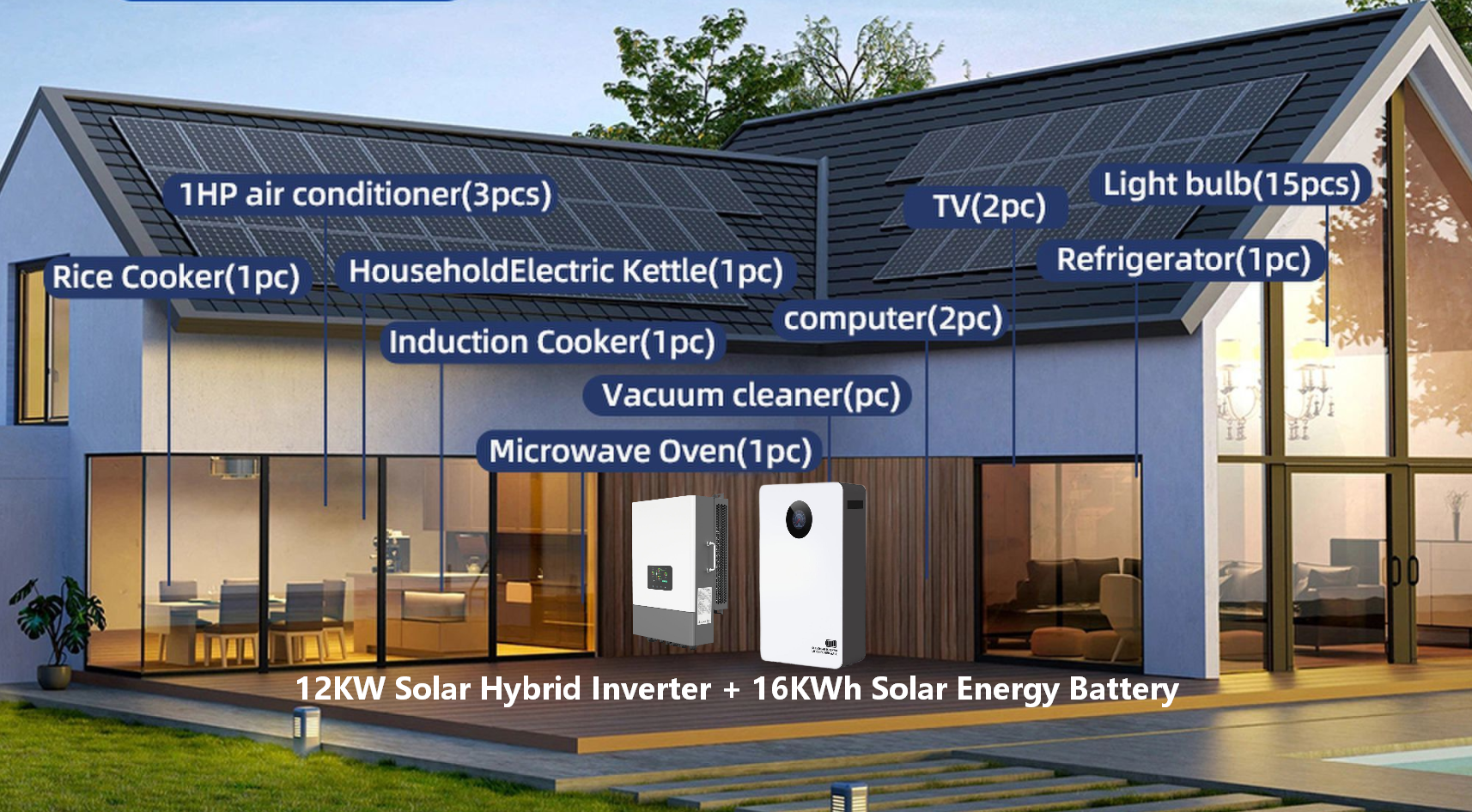
Hybrid inverter and storage pairing used in off-grid and transport qualification contexts.
A separate government technical specification cited in Indian hybrid inverter procurement lists example requirements such as 230/415 VAC output, 50 Hz frequency, efficiency above 97%, and referenced standards including IEC 61683, IEC 61727 or VDE-AR-N 4105, IEC/EN 62109-1, IEC/EN 62109-2, and the IEC/EN 61000 series. Those figures are India-specific example requirements and should not be generalized to EU deployment — but they illustrate the shape of a qualification list that buyers should expect a supplier to respond to line by line.
Two reading rules matter here. First, standards describe scope, not certification status: a document listing a standard as referenced does not mean a given product has been certified against it. Second, replacement status matters: a technical specification built on a superseded edition can fail an audit even if the product itself is technically sound. Qualification reviews that skip this step usually reopen documentation late in the project.
IP Ratings as a Qualification Axis, Not a Marketing Number
Hybrid inverter products across the market are typically offered with enclosure options spanning IP21, IP55, IP65, IP66, and IP67. Each rating defines a different exposure assumption, and in military and transport contexts the assumption has to match the actual site, vehicle bay, or container environment — not a preferred marketing claim.
The most common mistake buyers make is assuming that a higher IP rating is universally better. In practice, a military or transport installation has to balance protection against thermal management and service access. A tightly sealed unit may require a different installation layout than an IP65 unit in the same container. This is why buyers should match the IP level to the documented mission environment — not simply require IP67 across every project.
Yeyanghong Energy’s Hybrid Inverter + Storage Platform in Qualification Context
Against that qualification framework, the relevant part of Yeyanghong Energy’s portfolio is its hybrid inverter series and its 10 kWh and 16 kWh battery energy storage units. The available facts are specific, and they matter for how a buyer reads the qualification picture:
Hybrid inverter series — 6 kW / 10 kW / 12 kW / 15 kW. Input voltage options 12V, 24V, and 48V. Output voltage EU standard 220V–230V or US standard 110V–120V, with rated grid frequency 50 Hz or 60 Hz. Enclosure made of aluminium alloy, with protection options spanning IP21, IP55, IP65, IP66, and IP67. The series is listed as applicable to agriculture, construction, household, military and remote off-grid scenarios, new energy transportation, industrial manufacturing, telecom, wind, power grid, and photovoltaic industries.
16 kWh wall mounted & floor standing battery storage. Aluminium alloy construction, 8,000-cycle life at 90% depth of discharge, 25°C, 0.5C to 1C charge/discharge. Enclosure options IP21 through IP67, and a 5-year warranty. Listed as applicable to the same industry set, including military and remote off-grid scenarios and new energy transportation.
10 kWh wall mounted & floor standing battery storage. Aluminium alloy construction, 6,000-cycle life at 90% depth of discharge, 25°C, 0.5C to 1C charge/discharge. Suitable for the same industry group.
System operation. In the documented application, the hybrid inverter and battery operate with automatic switching between solar charging, battery discharge, and grid complementary power supply in a 24-hour automatic intelligent operation mode — the pattern most relevant to transport and off-grid duty where grid availability is variable.
Manufacturing base. A manufacturing facility covering over 30,000 square metres, approximately 400 staff, an annual production capacity of 20 million sets of controllers, and a dedicated R&D team of 15 engineers. Export business accounts for 90% of total sales, with markets spanning the USA, EU, Southeast Asia, the Middle East, Australia, Africa, South America, and Central America.
What these facts mean for a qualification review is not that the product is certified for military deployment — that step sits with the buyer’s own compliance team and the destination market’s regulator. What they mean is that the platform spans the input range, output variants, enclosure options, storage cycle life, and industry coverage that a qualification scoping exercise can be built around, without requiring the buyer to compromise on one axis to reach the other.
Application Map: Where the Combination Fits
The planning value of a hybrid inverter plus storage combination depends on how the load, the environment, and the grid interaction line up. The application set that appears most often in the documented Yeyanghong product coverage is a useful starting point for plotting fit:
Two observations follow. First, the same hybrid inverter series can support multiple contexts, but the enclosure option and storage pairing shift with each. Second, contexts that appear in the same portfolio — a military off-grid container and a hospital backup system — are qualified against different documentation priorities even when the hardware is similar. Buyers who over-standardize at the product level tend to overspend on enclosure protection or under-document the compliance trail.
Market Signal: Why Qualification Moved to the Front of Buyer Conversations
Two published data points help explain why qualification questions have moved from the appendix to the front of the procurement discussion. The global solar hybrid inverter market was valued at USD 10.7 billion in 2024 according to Grand View Research, and three-phase hybrid inverters held a 61.3% revenue share in the same year, while North America accounted for a 42.9% revenue share. These figures describe the market as a whole, not Yeyanghong Energy’s position within it, and they are cited here to explain the structural context.
The three-phase share point matters for qualification because three-phase architecture is often a proxy for commercial, industrial, and project-level deployment — the segment where documentation trails, integration partners, and compliance matrices are more likely to be demanded. As the mix shifts toward project-scale systems, the buyer population that asks about qualification depth grows with it, and suppliers who cannot produce a clear compliance map face longer sales cycles.
On the trade side, HS 850440 is a broad customs classification for static converters and includes products well beyond solar inverters — chargers, rectifiers, and power supplies. For hybrid inverter procurement, this means import data at the HS 850440 level cannot be used as a stand-in for solar hybrid inverter volume, and buyers building a market picture should treat product-level classification (such as HS 8504.40.84 for MPPT hybrid inverters) as a separate research step from domestic installation compliance.
Where Hybrid + Separate Storage Stops Being the Right Answer
A hybrid inverter plus separate battery storage is a strong fit for a wide range of military and transport deployment contexts, but it is not the right answer for every project. Buyers who treat it as a universal solution tend to encounter friction in three areas:
- Power scale above the hybrid series range. The Yeyanghong hybrid inverter series covers 6 kW, 10 kW, 12 kW, and 15 kW. Higher-power transport platforms — for example heavy transport duty or large vessel systems — typically require different topologies. These are outside the range of the current hybrid series, and buyers should map the load profile to the series range before shortlisting.
- Environmental exposure beyond IP67. The enclosure options documented for the hybrid inverter and 10 kWh / 16 kWh storage units span IP21 to IP67. Projects that require documented survival in specific environmental test regimes should treat the IP rating as one input among several and demand a wider evidence package from the supplier.
- Thermal and service trade-offs at high IP. Tighter sealing changes ventilation and field serviceability. A transport deployment that requires frequent service access may actually be better served by a lower IP class in a protected enclosure than by an IP67 unit that is difficult to maintain.
In addition, a separate-component architecture (hybrid inverter plus standalone battery) behaves differently from an all-in-one energy storage system in terms of installation space, service access, and upgrade path. Neither architecture is universally superior — the right choice depends on the deployment plan, not on a product ranking.
A Buyer Qualification Checklist
The following checklist is designed for the Awareness and Research stage of a hybrid inverter procurement cycle, where the goal is to confirm fit before requesting technical documentation from multiple suppliers.
- Load profile match. Confirm that the required continuous and peak load sits inside the hybrid inverter series range (6 kW / 10 kW / 12 kW / 15 kW for the Yeyanghong series) and that storage sizing at 10 kWh or 16 kWh covers the mission window.
- Grid interface confirmation. Verify the output voltage (EU 220V–230V or US 110V–120V) and rated frequency (50 Hz or 60 Hz) against the destination site or transport power bus.
- Standards mapping. Build a line-by-line response against IEC 62109-2 for PV inverter safety, and against the current edition of the IEC TS 62257 series for off-grid sizing and hybrid system design; verify that no reference relies on a superseded edition.
- Enclosure decision. Match IP21 / IP55 / IP65 / IP66 / IP67 to the documented deployment environment, and record the decision against thermal and service constraints.
- Storage cycle-life relevance. Compare the 8,000-cycle 16 kWh option against the 6,000-cycle 10 kWh option, and confirm that the warranty period (5 years for the 16 kWh unit) matches the intended deployment life.
- Operating mode alignment. Confirm the automatic switching between solar charging, battery discharge, and grid complementary power supply, and verify the 24-hour automatic intelligent operation mode meets the project’s backup policy.
- Manufacturing and documentation base. For suppliers being shortlisted, review the facility size, staffing, production capacity, R&D headcount, and export experience — Yeyanghong Energy’s facility covers over 30,000 square metres with approximately 400 staff, 20 million sets of annual controller capacity, 15 engineers on the R&D team, and 90% export share across USA, EU, Southeast Asia, the Middle East, Australia, Africa, South America, and Central America.
- Trade documentation. Confirm the correct HS classification for the product scope being imported (for example HS 8504.40.84 for MPPT hybrid inverters), separate from the installation compliance file.
Future Outlook
Three shifts are likely to shape hybrid inverter qualification over the next procurement cycles. First, the IEC TS 62257 series is still being updated — IEC TS 62257-9-7:2019 has been replaced according to the IEC publication page, and IEC TS 62257-301:2025 signals an increasing focus on hybrid off-grid system design and implementation rather than component-level guidance. Buyers building qualification files today should expect at least one standard edition update inside the next procurement window.
Second, the three-phase share of the hybrid inverter market (61.3% of 2024 revenue) suggests that project-scale buyers will continue to dominate documentation expectations. Suppliers that answer qualification questions with a simple “we comply” summary will increasingly lose to suppliers who can produce a mapping sheet. Third, transport and military procurement cycles tend to run longer than residential cycles, which raises the value of suppliers whose documentation base is stable across editions — not because the standard never changes, but because the supplier can track the change.
For Yeyanghong Energy, the practical implication is that its hybrid inverter and storage portfolio already covers the input range, output variants, enclosure options, and application industries that qualification scoping depends on. The next layer of value will come from how precisely buyers can be supported on edition tracking, standards mapping, and per-project enclosure selection — the operational work that turns a product range into a qualification-ready offer.
Frequently Asked Questions
What does hybrid inverter qualification for military use actually mean?
Qualification for military use means confirming that a hybrid inverter plus storage combination meets a documented mission profile across electrical safety, environmental exposure, and continuity of supply — not that the product carries a specific military badge. The review maps standards references, enclosure ratings, storage cycle life, and operating modes against the project’s own environment and load assumptions. The applicable IEC framework for PV inverter safety is IEC 62109-2, while off-grid sizing and hybrid system design are addressed in the IEC TS 62257 series.
Which IEC standards apply to hybrid inverter qualification?
The most cited references are IEC 62109-2:2011 for particular safety requirements of PV inverters, IEC TS 62257-9-7:2019 for selecting and sizing inverters in off-grid solar applications, and IEC TS 62257-301:2025 for design and implementation of hybrid off-grid solar systems with or without energy storage. The applicable edition matters: the IEC publication page for IEC TS 62257-9-7:2019 indicates it has been replaced, so current applicability should be checked against the official IEC record before use in a compliance file.
How do IP ratings affect military and transport deployment?
IP ratings define the enclosure’s expected exposure tolerance to dust and water. In military and transport contexts, the selection has to match the documented environment — an IP67 unit is often appropriate for outdoor mobile deployment, while IP65 or IP66 covers most covered outdoor sites, and IP21 is reserved for sheltered indoor installations. Higher protection brings tighter sealing, which changes ventilation and service access, so the correct choice is the rating that matches the deployment environment rather than the highest available number.
What storage capacity should pair with a hybrid inverter in transport duty?
Storage sizing depends on the mission load profile and the required autonomy window. In the Yeyanghong portfolio, wall mounted & floor standing battery storage is offered at 10 kWh and 16 kWh — the 16 kWh unit is rated for 8,000 cycles at 90% depth of discharge, 25°C, at 0.5C to 1C, and carries a 5-year warranty, while the 10 kWh unit is rated for 6,000 cycles at the same conditions. Buyers should match the storage option to the daily energy throughput and the cycle-life requirement of the intended deployment, not only to the rated capacity.
What documentation should buyers request before shortlisting a hybrid inverter supplier?
A practical request package covers: the standards you intend to qualify against, with the current edition of each publication; the product’s enclosure rating options and the corresponding installation environment assumptions; storage cycle-life and warranty terms; the operating mode logic (solar charging, battery discharge, grid complementary supply); the manufacturing base and R&D capacity figures; and the export markets already served. The trade classification (such as HS 8504.40.84 for MPPT hybrid inverters, distinct from the broad HS 850440 heading) should be confirmed separately, as it supports import documentation rather than installation compliance.
This reference is informational and does not constitute certification advice. Buyers should verify current standard editions and destination-market requirements directly with the relevant authorities before finalizing a qualification file.
Additional reference for buyers: Yeyanghong Energy product brochure (PDF).
Есть вопросы или нужны дополнительные детали?
Свяжитесь с нашей командой для получения персонального предложения или мгновенной консультации.
Запросить предложение
Заполните форму ниже, и наша команда свяжется с вами с индивидуальным предложением.
Прямой чат WhatsApp
Предпочитаете общаться в реальном времени? Напишите нам в WhatsApp для мгновенной помощи и быстрых ответов.
- Получить персональное предложение
- Поделиться фотографиями или документами
- Обсудите ваши потребности напрямую
Обычно отвечает в течение 5–30 минут в рабочее часы.