
Hybrid Stepper Motor FAQ: Specs, Drivers and Compliance
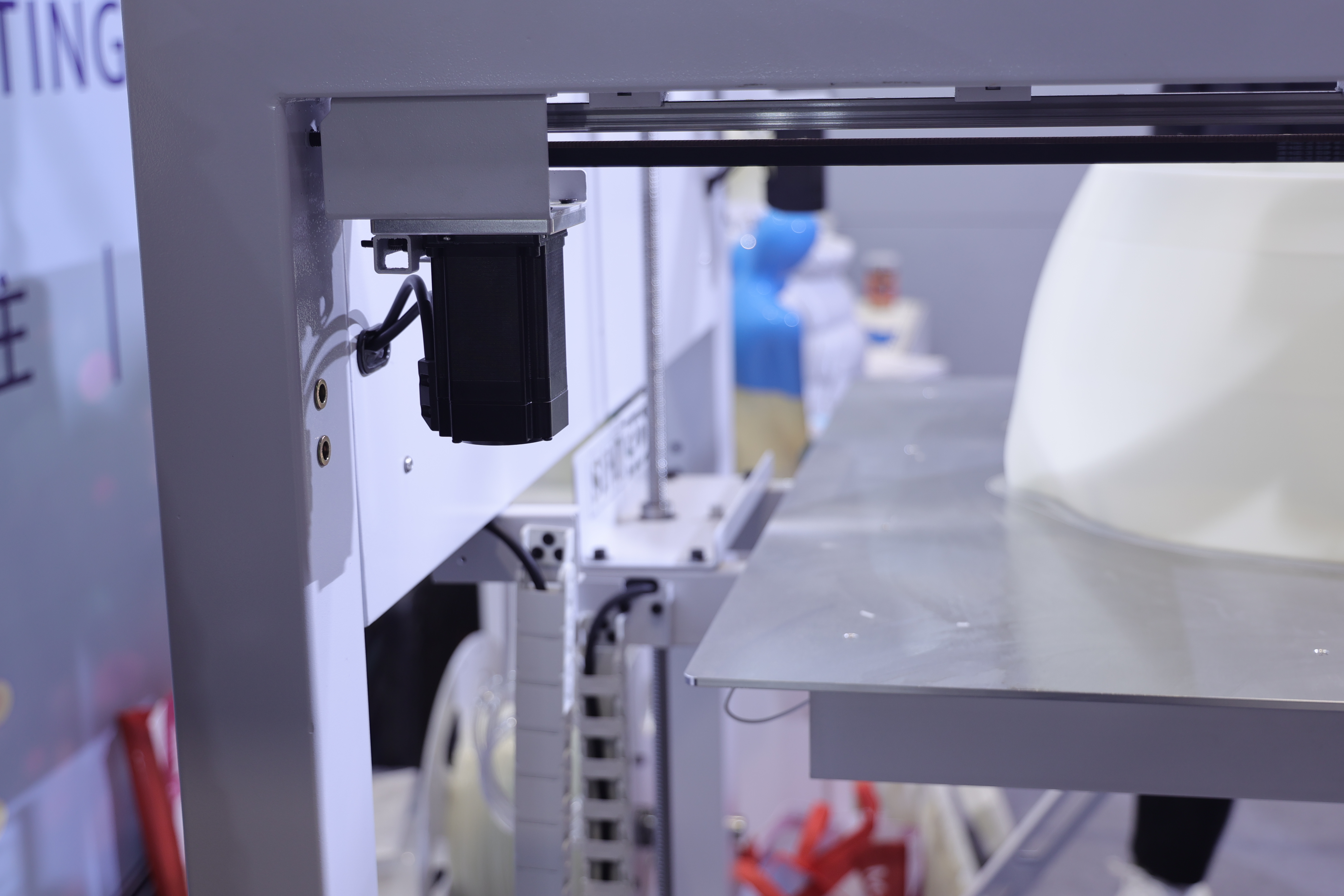
A hybrid stepper motor is a step motor that combines a toothed soft-iron rotor with an axially magnetised permanent magnet, driven by a multi-phase stator winding. That architecture is what allows a compact frame to deliver both fine step resolution and useful holding force — in the ranges commonly catalogued for industrial supply, step angles from 0.9° to 2.4°, holding torque from 0.08 N·m to 28.0 N·m, and motor weights from 0.1 kg to 15.0 kg.
The technical definition is rarely the problem. What stalls a project is the second layer of questions: which specification actually governs load capacity, whether a driver is mandatory or optional, which document proves what, and why two motors with the same frame number can arrive at very different prices. Those questions sit at the intersection of engineering and procurement, and they are best answered before an RFQ is issued rather than after a sample fails.
Why the Same Questions Keep Reappearing in 2026
Two market signals explain why hybrid stepper motor questions have become more structured rather than less. The global stepper motor market was valued at USD 21.78 billion in 2026 according to Mordor Intelligence's Stepper Motor Market Outlook 2026–2031, and hybrid stepper motors accounted for 49.78% of that market by type in 2025. A category of that size attracts a very wide supplier base, and a wide supplier base pushes differentiation away from the motor concept itself and toward configuration, documentation and consistency.
The supply side reinforces the same point. China's exports under HS 850110 — motors with an output of 37.5 W or less — totalled USD 2.6 billion for January to August 2026, with 11.1% destined for the United States according to GACC statistics. For a buyer, abundant supply is not the same as comparable supply. Two suppliers can both quote a NEMA 17 frame, both state a holding torque, and still differ in lamination length, magnet grade, insulation class and the paperwork that accompanies the shipment.
That is the context in which the following questions should be read. They are ordered the way a technical evaluation usually develops: what the motor is, how to size it, how to control it, how to configure it, and only then how to approve, price and maintain it.
Technical Questions
1. How does a hybrid stepper motor actually differ from earlier stepper designs?
The difference sits in the rotor. A hybrid rotor carries an axially magnetised permanent magnet plus two toothed iron end caps offset from each other, while the stator carries multiple wound phases. The toothed geometry multiplies the number of stable positions per revolution, and the magnet supplies flux even when the coils are unenergised. The practical result is a motor that holds position without power and still resolves very small increments when energised.
Compared with a variable-reluctance design, the hybrid rotor produces substantially higher holding force for a comparable frame because the magnetic flux is supplied by the magnet rather than induced entirely by coil current. Compared with a simple permanent-magnet can-stack motor, the toothed rotor produces far finer step increments. Those two properties — holding force without power, and fine resolution under power — are the reason hybrid steppers became the default choice for positioning axes in automation equipment, CNC machine tools, laboratory instruments, textile machinery, packaging machinery, medical devices, robotics and 3D printing equipment.
The functional consequence for a buyer is that the specification sheet must be read on two levels at once. Step angle describes resolution. Holding torque describes force available at standstill. Neither one alone describes what the axis will do while moving.
2. Holding torque, step angle or frame size — which one decides fit first?
Frame size decides first, because it is a mechanical constraint that cannot be engineered around. The hybrid stepper motor range supplied by ACT MOTOR — Changzhou ACT Motor Co., Ltd., a motor and driver manufacturer established in 2010 and based in Changzhou, Jiangsu, China — illustrates the span involved: frame series run from 8HS through 11HS, 14HS/HM, 15HS/HM, 16HS/HM, 17HS/HM, 23HS/HM/HY, 24HS, 34HS/HM/HY/HD, 42HS and 52HS, alongside the 17HT through 50HT series. Shaft diameter, mounting hole pattern and available envelope eliminate most of the range before torque is even discussed.
Holding torque decides second, but with a margin rather than as an exact match. Holding torque is measured at standstill with rated current applied; it is not the torque available while accelerating a load, and it is not the torque available at speed. A motor selected at exactly the required load torque leaves nothing for friction, belt tension, misalignment or supply variation.
Step angle decides last, and usually in combination with the driver. A 1.8° motor driven with microstepping behaves differently from the same motor driven in full step, so the resolution decision belongs to the motor-and-driver pair rather than to the motor alone.
3. Does a hybrid stepper motor need a separate driver?
Yes — a hybrid stepper motor is an electromagnetic component, not a self-commutating device. It cannot sequence its own phases. Something has to convert a pulse and direction signal into the correct current pattern in the correct winding at the correct moment, and that function belongs to a driver or to integrated drive electronics built onto the motor.
What the buyer actually chooses is which driver architecture to use, not whether one is needed. ACT MOTOR lists the DM542, DM556, HS758 and HS56 driver models with a power supply voltage of 12–36 V and a continuous output current of 0.3–8.4 A. Set against a motor current range of 0.5 A to 8 A, that overlap defines the practical matching exercise: the driver's continuous current must cover the motor's rated current with headroom for the duty cycle, and the supply voltage must sit inside the driver's window rather than at its edge.
4. When should an encoder, gearbox, brake or lead screw be specified?
Each of these options answers a different failure mode, and adding them for reassurance rather than for a defined reason is one of the more common sources of cost and complexity in a stepper motor project.
- Encoder or closed-loop control — specify when position must be verified rather than assumed, or when an occasional step loss under transient load would be unacceptable. A closed-loop hybrid stepper motor such as the 23SSM8440-EC1000 or 34SSM1460-EC1000 adds feedback to a familiar motor platform rather than switching technology families.
- Gearbox — specify when the axis needs more output torque at lower output speed than the motor can deliver directly. ACT MOTOR lists planetary reduction gearboxes with reduction ratios from 1:3 to 1:512, plus economical planetary, RV and eccentric reduction box variants. The trade-off is real: a gearbox adds backlash, efficiency loss and an additional wear surface.
- Brake — specify when a vertical or inclined axis must hold position with power removed. Brake stepper motors are listed in the 17HS, 23HS and 34HS series, and they solve a safety or drift problem that no amount of holding torque in the unpowered motor can solve on its own.
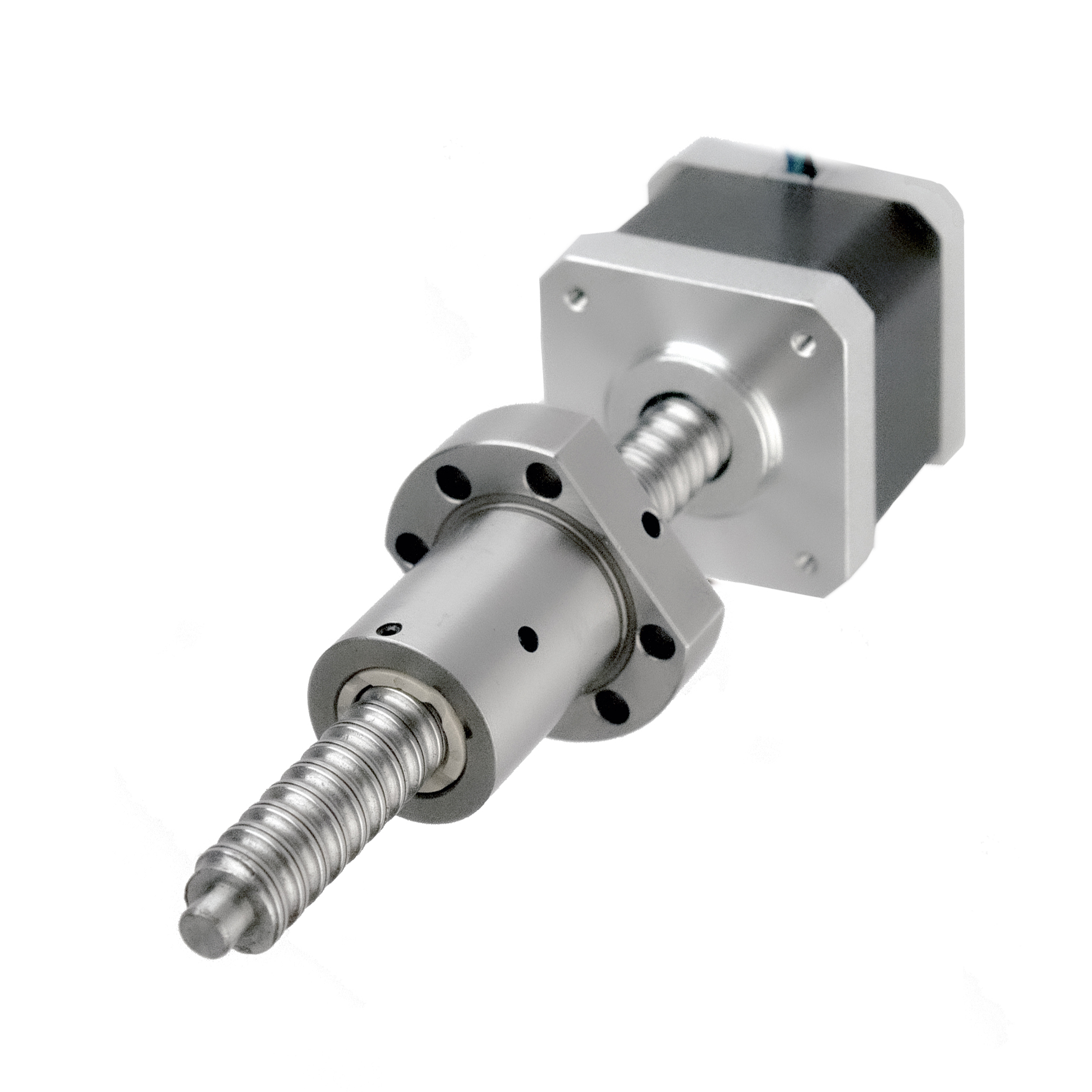
- Lead screw or ball screw — specify when the application needs linear translation without a separate screw, coupling and bearing block. Lead screw stepper motors are listed from 8HSL to 34HSL, and ball screw stepper motors from 8HSL and 11HSL through 34HSL and the 11HSLG to 34HSLG variants.
The ordering principle is straightforward: define the mechanical output first, then decide which element produces it. A gearbox selected before the output speed is known tends to be oversized, and an encoder added without a defined verification requirement adds wiring and cost without changing the control strategy.
Procurement and Compliance Questions
5. Which certificates and documents should be requested before approving a supplier?
Certification claims are only useful when the scope matches the part being bought. A CE certificate issued for a driver does not cover a motor, and an ISO 9001 certificate covers a management system rather than a product. The documents should therefore be requested item by item, with numbers, issuing bodies and validity dates recorded in the supplier file.
| Document | Issuer | Reference number | Valid to | Scope as issued |
|---|---|---|---|---|
| CE certificate (LVD + EMC) | ISET | ISETC.000520211115 | 2026-11-14 | Motors — EN 60034-1:2010/AC:2010 with EMC standards EN 61000-6-1:2019, EN 61000-6-3:2007+A1:2011+AC:2012, EN 61000-3-2:2019, EN 61000-3-3:2013+A1:2019 |
| CE certificate (LVD + EMC) | ISET | ISETC.000320211115 | 2026-11-14 | Drivers — EN 61800-3:2004/A1:2012, EN 61800-5-1:2007+A1:2017 |
| CE certificate (LVD + EMC) | ISET | ISETC.000420211115 | 2026-11-14 | Power supplies — EN 61558-1:2005/A1:2009 and related EMC standards |
| ISO 9001:2015 | ZRX | 07625Q2378R1S-JS/001 | 2028-10-12 | Quality management system — GB/T19001-2016/ISO 9001:2015 |
| RoHS test report | GTS | GTS2408190853EN | 2029-08-29 | Motors — IEC 62321 series test methods |
| RoHS test report | GTS | GTS2408190852EN | 2029-08-29 | Drivers — IEC 62321 series test methods |
Three practical points follow from that table. First, the three CE certificates on file carry a validity end date of 14 November 2026, so a buyer placing an order for delivery beyond that date should ask for the renewal status in writing before approval rather than assume continuity. Second, RoHS documentation exists as separate reports for motors and drivers, which matters if the purchase combines both. Third, a technical file is not the same as a certificate: for EU-bound machinery, the allocation of responsibility between motor, driver and complete machine should be agreed explicitly rather than inferred.
6. Why do two motors of the same frame size differ so much in price?
Because the frame number fixes the mounting interface, not the contents. Within a single frame size, cost is driven by the physical build and by the configuration layered on top of it.
- Stack length and core material — a longer lamination stack produces more torque from the same frame, and the choice between cold-rolled non-oriented silicon steel, grain-oriented silicon steel, pure iron and other core materials changes both performance and cost.
- Magnet grade — NdFeB and ferrite magnets are both used in this product category, and they are not interchangeable in performance or in price.
- Winding and insulation — copper versus aluminium enameled wire, and B, F or H class insulation, change the thermal ceiling and the bill of materials.
- Bearings and shaft — deep groove ball bearings in GCr15 bearing steel, stainless steel shafts and 45# or 40Cr alloy steel shafts sit at different points on the cost and duty curve.
- Attachments — encoder, gearbox, brake, lead screw or ball screw each add a subsystem with its own tolerance and cost.
- Customisation — OEM/ODM work on step angle, motor length, rated voltage, rated current, phase resistance, phase inductance, holding torque, detent torque, rotor torque and lead wire configuration is engineering time as well as material.
- Verification and documentation — 100% testing and a complete certificate file carry cost that a bare quotation may not include.
Commercial terms compound the effect. ACT MOTOR lists a minimum order quantity of 2 units and a lead time of 30 days, and both figures move with configuration: a catalogue motor and a customised geared unit with an encoder are not the same production event. Comparing quotations without normalising configuration, test regime and documentation scope produces a price difference that cannot be interpreted.
7. How should production and quality capability be assessed before the sample stage?
Start with verifiable statements rather than adjectives. ACT MOTOR reports a facility of more than 70,000 m² integrating R&D, manufacturing and warehousing, 126 employees, five R&D engineers, annual output of 2 million sets, an export ratio of around 70%, and main markets in the USA, EU and China. The company holds ISO 9001 certification and states that products comply with CE and RoHS requirements, and it operates a branch in Bremen, Germany alongside offices in Shanghai and Jinan. Those are company-reported figures and should be treated as the starting point for due diligence, not the conclusion of it.
Second, look for evidence of repeatability rather than capability in principle. The company's own records cite a two-year stable supply relationship with an Italian CNC machinery manufacturer using 1,000 sets in carving applications, and a two-year stable relationship with a Spanish 3D printing manufacturer using 2,000 sets, with low noise and fast speed noted in both cases. Reference cases of that kind are useful for framing questions — about process control at volume, about how deviations are handled, and about what the escalation path looks like — even when the customer cannot be contacted directly.
Third, ask what is tested and how often. A stated 100% test regime is a meaningful claim only when it is tied to specific parameters. Requesting the test record format is usually more informative than requesting a quality policy document.
8. What maintenance and failure modes should be planned for?
Hybrid stepper motors are mechanically simple, which shifts the maintenance burden toward the system around them. The recurring items are bearing wear, temperature rise under continuous holding current, cable fatigue at the motor connector, contamination from dust or coolant, and axial or radial overload transmitted through the shaft.
Step loss deserves separate attention because it is a system-level failure that looks like a motor failure. It can originate from an undersized torque margin, an acceleration profile that exceeds available torque, a driver current setting below the motor rating, a wiring fault on a multi-lead motor, or mechanical binding. Detection requires either a defined homing routine or feedback; without one of those, an open-loop axis will continue to run in the wrong position without signalling a fault.
Application requirements in demanding environments sharpen these points. For peristaltic pump drives in medical equipment, the stated requirements include constant torque output, smooth low-speed operation, low pulsation, low vibration, low noise, no step loss, compact structure and low heat generation over long continuous operation. For laboratory analyser X/Y/Z axes, the requirements extend to ultra-low vibration, strictly controlled temperature rise and high integration. Both sets of requirements translate into procurement criteria: torque margin, driver matching, thermal design and mechanical alignment, not motor specification alone.
Matching the Motor to the Application
Application context changes which specification matters most. The table below maps common automation scenarios to the requirements that typically dominate the selection and to the product families that correspond to them in the referenced catalogue.
| Application scenario | Dominant requirement | Relevant product family | Driver reference |
|---|---|---|---|
| Medical fluid handling — peristaltic or syringe pump drive | Smooth low-speed rotation, low pulsation, low vibration, no step loss, low heat | Standard hybrid stepper motors; closed-loop variants where verification is required | DM542 |
| Laboratory analyser X/Y/Z axes | Ultra-high positioning accuracy, low noise, controlled temperature rise, compact integration | Integrated and closed-loop hybrid stepper motors | Integrated drive electronics |
| CNC and general industrial automation | High load capacity, high rigidity, continuous duty, long service life | 34HS, 42HS and related high-torque series | DM542, DM860H, DM2722 |
| 3D printing and office equipment | Precision positioning, low vibration, no step loss at speed | 17HS and compact frame series | DM542, DM420 |
| Textile machinery | Continuous operation, consistent tension, low noise | Standard and lead screw hybrid stepper motors | Paired per axis current |
| Packaging lines | Repeatable high-speed indexing, position verification | Encoder and closed-loop configurations | Paired per axis current |
| Logistics and material handling | Start-stop accuracy, holding force at rest, compact envelope | Brake and geared variants | Paired per axis current |
The table is a screening tool rather than a specification. Two applications in the same row can require different frame sizes, different torque margins and different insulation classes, and the confirmation step is always a datasheet review against the actual load, duty cycle and ambient conditions.
Where the Hybrid Stepper Motor Stops Being the Answer
The hybrid stepper motor is not the right choice for every motion axis, and the boundary is technical rather than commercial. Four limits deserve to be stated plainly.
- Open-loop position cannot be verified. In an open-loop configuration, the controller commands steps and assumes they occurred. If the load exceeds available torque, or acceleration exceeds what the motor can deliver, the axis loses position silently. Closed-loop or encoder-equipped configurations mitigate this, but they add cost and wiring.
- Torque falls with speed. Available torque decreases as speed rises, and the rate of decrease depends on winding, inductance, supply voltage and driver. Published holding torque alone does not describe behaviour on a fast traverse, and standardised speed-torque curves are not uniformly available across the category — so a supplier-specific curve should be requested during evaluation rather than extrapolated.
- Holding current generates heat continuously. A motor holding a load at standstill draws current and dissipates power. In a sealed enclosure or a temperature-sensitive instrument, this may force a lower current setting, a reduced duty cycle or a brake instead of holding current.
- Added mechanics add error sources. A gearbox introduces backlash and efficiency loss; a lead screw introduces lead error and wear; a coupling introduces misalignment. Each addition buys a capability and costs precision somewhere else in the chain.
When an axis needs high torque across a wide speed range, tight velocity regulation under varying load, or guaranteed position verification in an aggressive environment, a servo-based solution is usually the more appropriate architecture. The correct comparison is therefore not stepper versus stepper, but stepper versus the motion requirement — and the requirement should be written down before the technology is chosen.
Outlook Beyond 2026
The direction of travel is toward integration and evidence. Hybrid stepper motors held 49.78% of the stepper motor market in 2025, and the growth of the category is being absorbed into configurations rather than into a new motor principle: closed-loop versions, encoder-equipped versions, integrated drive electronics, geared and screw-driven assemblies, and load-adaptive control that adjusts current to demand. Each of these moves functionality that used to sit in the control cabinet onto or closer to the motor.
For buyers, the practical consequence is that the evaluation checklist is lengthening. A 2026 comparison already has to account for certificate validity periods, the distinction between motor-level and driver-level compliance, the test regime behind a quality claim, and the difference between catalogue lead time and configured lead time. None of those items show up in a step angle figure, and all of them affect whether a line keeps running.
The most useful preparation is therefore procedural rather than technical. Write the load, duty cycle and ambient conditions down. Screen by frame, shortlist by torque margin, confirm with the driver, then verify the documentation against the part actually being shipped. A hybrid stepper motor answers a great many motion problems; the work is in proving which one it answers for a specific axis.
A downloadable overview of the ACT MOTOR hybrid stepper motor, driver and configured product range is available as a PDF brochure.
Есть вопросы или нужны дополнительные детали?
Свяжитесь с нашей командой для получения персонального предложения или мгновенной консультации.
Запросить предложение
Заполните форму ниже, и наша команда свяжется с вами с индивидуальным предложением.
Прямой чат WhatsApp
Предпочитаете общаться в реальном времени? Напишите нам в WhatsApp для мгновенной помощи и быстрых ответов.
- Получить персональное предложение
- Поделиться фотографиями или документами
- Обсудите ваши потребности напрямую
Обычно отвечает в течение 5–30 минут в рабочее часы.