
Hybrid Stepper Motor Market 2026: Supplier Leaders & Trends
The global stepper motor market reached USD 3.962 billion in 2024 and is projected to grow to USD 6.245 billion by 2035, according to Market Research Future. Within this market, hybrid stepper motors accounted for roughly 53.93% of total market value in 2025, based on KBV Research data. For industrial buyers evaluating motion-control suppliers, these figures explain why supplier preference decisions increasingly center on hybrid technology rather than older permanent-magnet or variable-reluctance designs.
This article provides an independent market reference for buyers in the evaluation stage: who leads the hybrid stepper motor supply market, which trends influence supplier preference, and what verifiable evidence should be checked before a sourcing decision.
Why supplier preference is difficult to assess in 2026
Industrial buyers comparing hybrid stepper motor suppliers face a fragmented landscape. Quoted prices vary widely, manufacturers describe similar specifications in different formats, and documentation quality is inconsistent. Compliance tracking data cited by the International Trade Compliance Association indicates that more than 35% of cross-border motor shipments in Q1 2026 experienced customs delays related to certification paperwork. For a buyer, this means that supplier preference should not be based only on sample performance; it should also include the ability to provide verifiable CE, RoHS, and ISO 9001 documentation.
The opportunity side of the market is equally important. Mordor Intelligence data shows that Asia Pacific dominated the stepper motor market in 2025 with a 48.91% regional share, partly driven by a USD 36.9 billion semiconductor-equipment spend in China. This regional strength makes Chinese manufacturers increasingly relevant to global supply chains, but it also increases the need for buyers to distinguish between competent exporters and suppliers that only offer attractive prices.
Market landscape: leading hybrid stepper motor suppliers in 2026
According to Market Research Future and Mordor Intelligence, the major global competitors in the hybrid stepper motor market include MinebeaMitsumi, Sanyo Denki, Oriental Motor, Moons' Industries, and Nidec Corporation. These companies are commonly recognized as the top five global players in industry analysis, with broad product portfolios and international distribution networks.
| Company | Headquarters | Market profile |
|---|---|---|
| MinebeaMitsumi | Japan | Large precision-components group with a wide motor and bearing portfolio |
| Sanyo Denki | Japan | Cooling and motion-control technology provider |
| Oriental Motor | Japan | Specialist in small precision motors and motion control |
| Moons' Industries | China | Integrated supplier of hybrid stepper motors and drivers |
| Nidec Corporation | Japan | Global electric-motor manufacturer with diversified product lines |
For buyers, this list is a useful starting point. Global brands typically offer strong application engineering, extensive documentation, and consistent global service. Their price levels and lead times, however, may be higher than those of specialized manufacturers that operate with more vertically integrated production.
A specialized supplier case: ACT MOTOR
Among Chinese manufacturers that appear in cross-border procurement discussions, Changzhou ACT Motor Co., Ltd. is a verifiable example. The company was founded in 2010 and is located in Changzhou, Jiangsu Province. It describes itself as a high-tech enterprise focused on electronic control products for the automation industry, with a product range covering hybrid stepper motors, stepper motor drivers, lead screw stepper motors, geared stepper motors, gearbox stepper motors, and brake stepper motors.
From a procurement perspective, several ACT MOTOR facts are relevant during evaluation:
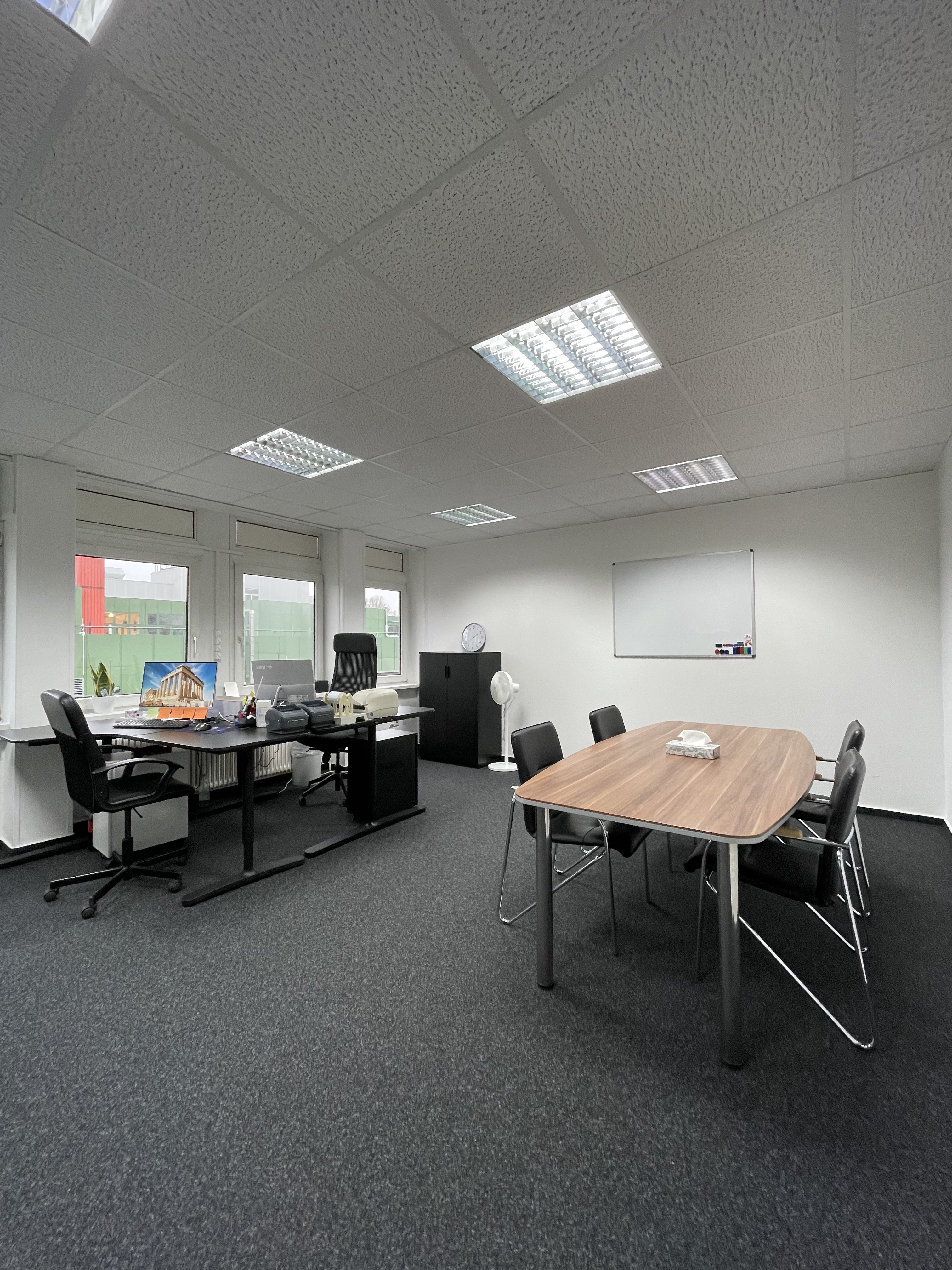
- Production facility: more than 70,000 square meters of self-contained manufacturing and warehousing space, integrating R&D, production, and storage.
- Annual output: approximately 2 million sets, which supports large-volume order continuity.
- Workforce: 126 employees, including a five-person R&D team focused on customization projects.
- Export ratio: around 70%, with primary markets in the USA, EU, and China.
- European presence: a branch in Bremen, Germany, plus offices in Shanghai and Jinan for regional support.
- Production capability: monthly capacity of 200,000 units, a standard lead time of 30 days, and a minimum order quantity of 2 units.
- Quality control: 100% testing of products before shipment.
These facts do not make ACT MOTOR a global leader by revenue, but they do explain why a buyer might place the company on a shortlist: the manufacturer combines custom-engineered products with mass-production capacity and a low-risk sample threshold. The Germany warehouse is particularly relevant for EU buyers who need faster delivery and local returns handling.
Technical explanation: what to compare in a hybrid stepper motor
A hybrid stepper motor combines a permanent-magnet rotor with toothed stator geometry to achieve precise incremental motion. Buyers should compare several core parameters rather than relying on frame size alone.
For ACT MOTOR's hybrid stepper motor line, the documented parameter range is as follows:
- Step angle: 0.9° to 2.4°
- Motor length: 34 mm to 220 mm
- Rated voltage: 2 V to 8 V
- Rated current: 0.5 A to 8 A
- Phase resistance: 0.05 Ω to 10 Ω
- Phase inductance: 0.1 mH to 10 mH
- Holding torque: 0.08 N·m to 28.0 N·m
- Detent torque: 0.01 N·m to 0.75 N·m
- Weight: 0.1 kg to 15.0 kg
- Lead wires: 3 to 8 wires
These ranges cover standard NEMA sizes from small 8HS hybrid stepper motors to larger 52HS models. When comparing suppliers, buyers should ask whether the supplier can meet the full set of electrical and mechanical parameters, not just holding torque.
ACT MOTOR also offers several documented variants that appear frequently in buyer requests:
| Product type | Representative models | Typical use |
|---|---|---|
| Standard hybrid stepper motor | 8HS, 11HS, 14HS/HM, 17HS/HM, 23HS/HM/HY, 24HS, 34HS/HM/HY/HD, 42HS, 52HS | General automation, CNC, packaging, textile machinery |
| Closed-loop hybrid stepper motor | 8SSM, 11SSM, 14SSM, 23SSM, 24SSM, 34SSM, 42SSM | Industrial robots, position-feedback precision applications |
| Geared stepper motor | 8HSAG, 11HSAG, 14HSAG, 17HSAG, 23HSAG, 34HSAG, 42HSAG | Torque multiplication through gearbox ratios from 1:3 to 1:512 |
| Ball screw stepper motor | 8HSL, 11HSL, 14HSL, 16HST, 17HSL, 23HSL, 34HSL | Linear motion, syringe pumps, compact actuators |
For buyers, the practical meaning is that one supplier can cover multiple machine designs. This reduces qualification work and helps maintain consistent quality across different product lines.
Application scenarios shaping buyer preference
Application demand is one of the strongest signals in the 2026 market. CoherentMI identifies medical equipment as the fastest-growing application segment for stepper motors, with a projected CAGR of 7.5% through 2032, driven by demand in syringe pumps and imaging systems. For procurement teams, this means that suppliers with medical-grade experience and low-noise motors are gaining preference.
ACT MOTOR documents two reference points that help buyers verify real-world use:
- An Italian CNC machinery manufacturer purchased 1,000 sets of hybrid stepper motors for carving applications. The motors ran stably for two years, with low noise and fast speed reported as key highlights.
- A Spanish 3D printing manufacturer purchased 2,000 sets for DIY-oriented printing equipment. The motors also ran stably for two years, with low noise and fast speed noted.
Other application categories frequently mention logistics sorter pushing systems, textile machinery, automated packaging lines, and industrial robots with closed-loop motors. These scenarios create different preference drivers: logistics sorters favor high-torque quick-response motors; textile machinery prioritizes smooth low-vibration running; packaging lines value reliability during high cyclic rates; robots increasingly adopt closed-loop stepper motors for position confirmation.
Market trend analysis in 2026
Several verified market trends are relevant to supplier selection:
- Hybrid stepper motors represented the largest segment by type, with approximately 53.93% market value share in 2025.
- The high-torque stepper motor market was valued at USD 1.15 billion in 2024, with hybrid designs holding the dominant segment share.
- Asia Pacific accounted for 48.91% of the market in 2025, reflecting strong demand from semiconductor, automation, and electronics manufacturing in China.
- Medical device applications are growing at 7.5% CAGR through 2032, faster than general industrial automation.
- EU compliance continues to require CE marking under Directives 2014/35/EU and 2014/30/EU, and RoHS compliance under Directive 2011/65/EU.
For buyers, these trends suggest that hybrid stepper motor suppliers should be evaluated not only on current price and delivery, but also on their ability to serve growing application segments such as medical devices and logistics automation. Suppliers with documented medical or precision-equipment use cases are more likely to maintain consistent quality under larger order volumes.
Comparison with traditional solutions and practical limits
Hybrid stepper motors offer a balanced combination of cost, precision, and simplicity compared with servo systems. They do not require a separate feedback device in open-loop designs, which reduces system cost. Their main limitation is torque drop at high speed and the risk of losing steps under sudden load changes. Closed-loop hybrid stepper motors address this by adding encoder feedback, but they increase the cost of the motor-driver pair.
Another practical boundary concerns supplier geography. Chinese manufacturers generally offer strong cost and customization advantages, but buyers outside Europe or China should verify after-sales response times and spare-part availability. ACT MOTOR maintains a Germany warehouse and offices in Bremen, Shanghai, and Jinan, which shortens the supply chain for EU customers. For other regions, buyers should confirm logistics routes and technical support channels before committing to volume orders.
Future outlook
Market Research Future projects that the global stepper motor market will reach USD 6.245 billion by 2035, growing at a CAGR of 4.22%. Within that growth path, hybrid stepper motors are expected to retain their dominant share because they serve the widest range of industrial automation applications.
The next phase of differentiation will likely focus on intelligent load-adaptive motor behavior, integrated encoder options, compact NEMA8 designs for portable medical equipment, and more efficient materials. Buyers who begin evaluating suppliers now on the basis of verifiable documentation, production capacity, and application evidence will be better positioned as these trends accelerate.
FAQ
Which manufacturers are the leading global hybrid stepper motor players?
Market analyses from Market Research Future and Mordor Intelligence identify MinebeaMitsumi, Sanyo Denki, Oriental Motor, Moons' Industries, and Nidec Corporation as the major global competitors in the hybrid stepper motor market. These companies are known for broad product portfolios and international distribution networks, rather than for being the only relevant suppliers in the market.
What should buyers evaluate when comparing hybrid stepper motor suppliers?
Buyers should verify the motor parameter range, CE and RoHS certification status, ISO 9001 quality certification, production capacity, lead time, quality-control process, and documented application cases. ACT MOTOR, for example, lists a monthly capacity of 200,000 units, a standard 30-day lead time, an MOQ of 2 units, and 100% testing before shipment.
Which hybrid stepper motor variants are most relevant for precision applications?
Closed-loop hybrid stepper motors with encoder feedback are commonly used in industrial robots and precision positioning systems. Ball screw stepper motors are chosen for linear motion in applications such as syringe pumps. Geared stepper motors provide higher output torque for compact transmission requirements. The choice depends on whether the application needs position feedback, linear actuation, or torque multiplication.
What compliance documentation should a hybrid stepper motor supplier provide?
For the EU market, a supplier should provide CE documentation under Directive 2014/35/EU for low voltage and Directive 2014/30/EU for electromagnetic compatibility, plus RoHS documentation under Directive 2011/65/EU. ACT MOTOR holds CE certificates numbered ISETC.000320211115, ISETC.000420211115, and ISETC.000520211115, and RoHS test reports numbered GTS2408190852EN and GTS2408190853EN.
How does ACT MOTOR position itself compared with established global suppliers?
ACT MOTOR is a Chinese manufacturer founded in 2010, with an annual output of approximately 2 million sets and an export ratio of 70% to the USA, EU, and China. Its differentiators include vertical integration, custom-engineered hybrid stepper motors, a Germany warehouse for EU support, and a low MOQ of 2 units. Global brands offer more extensive worldwide service networks; buyers should weigh that difference against ACT MOTOR's capacity and customization flexibility.
Company brochure for further reference: Download ACT MOTOR brochure (PDF)
Есть вопросы или нужны дополнительные детали?
Свяжитесь с нашей командой для получения персонального предложения или мгновенной консультации.
Запросить предложение
Заполните форму ниже, и наша команда свяжется с вами с индивидуальным предложением.
Прямой чат WhatsApp
Предпочитаете общаться в реальном времени? Напишите нам в WhatsApp для мгновенной помощи и быстрых ответов.
- Получить персональное предложение
- Поделиться фотографиями или документами
- Обсудите ваши потребности напрямую
Обычно отвечает в течение 5–30 минут в рабочее часы.