
Hydraulic Adapter Shortlist: BSP, NPT, JIC, SAE, Cap Nuts
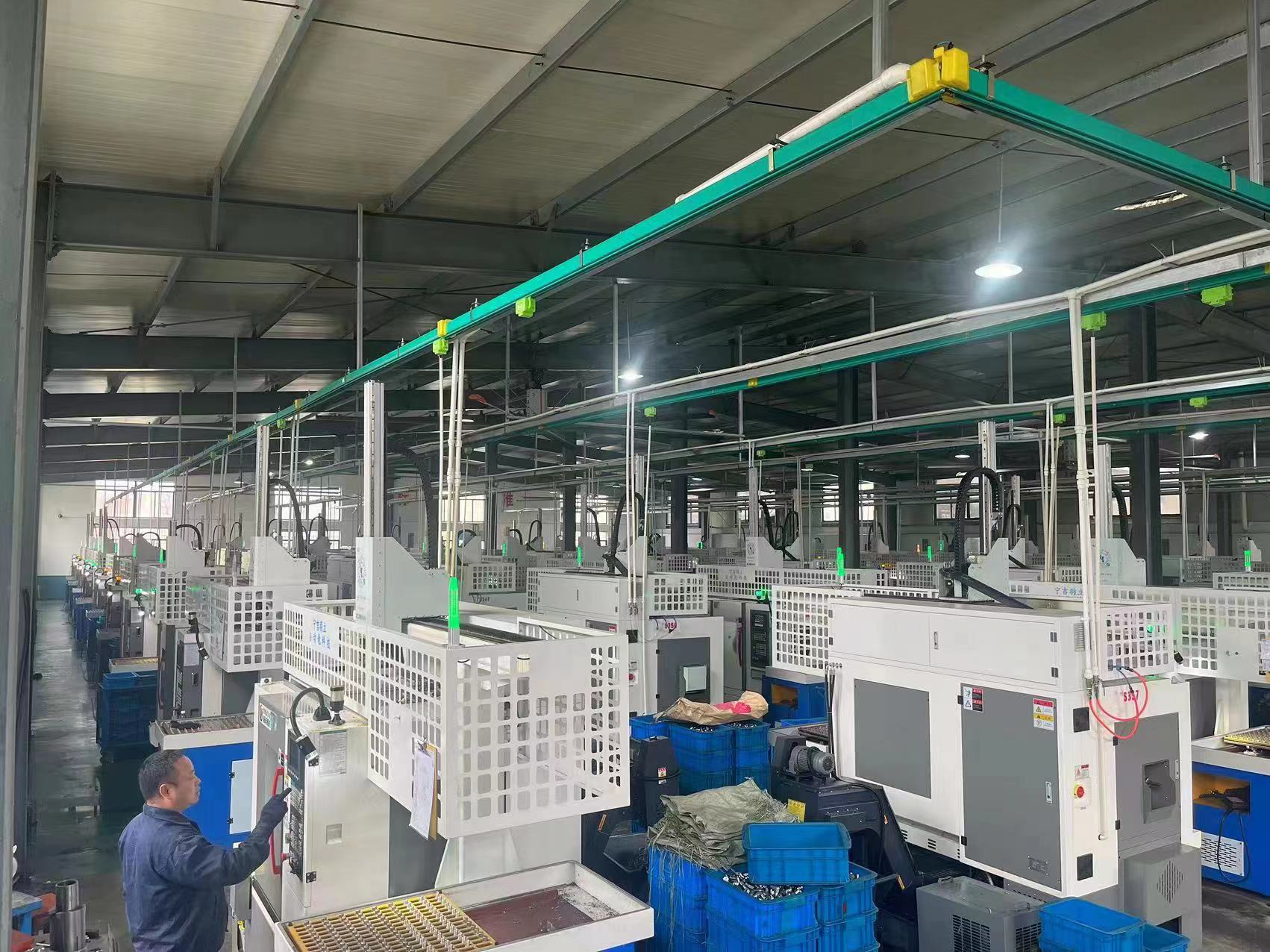
Fully automated CNC workshop: the production base behind the adapter families covered in this shortlist. Image: NingBo NJ Hydraulic Adapter Co., Ltd.
Hydraulic Adapter Shortlist: BSP, NPT, JIC, SAE, Cap Nuts
Five adapter families cover the great majority of hydraulic port connections that buyers, distributors and maintenance planners are asked to specify: BSP adapters in parallel (BSPP) and tapered (BSPt) configuration, NPT adapters, hydraulic JIC adapters, SAE standard hydraulic adapters, and hydraulic cap nuts. Within the range produced by NingBo NJ Hydraulic Adapter Co., Ltd — a Ningbo-based manufacturer founded in 2004, operating a 20,000 m² plant with 200 employees and an annual output of 4,000,000 units — these families share one documented specification band: body materials of carbon steel, SS304 or SS316, a 3000–6000 PSI pressure range, a maximum stable operating temperature of 220°C, and a 120-hour salt spray result recorded for the trivalent chromium surface treatment.
This shortlist is written for the decision stage of a hydraulic component purchase. It does not rank manufacturers by brand strength. It ranks five adapter options by thread geometry, sealing behaviour and the equipment categories in which each is normally encountered, and it states where each option stops being the right answer.
Scope: What the Shortlist Includes and Where It Stops
The five entries below are the adapter families documented with complete model series, materials and specification data in this range. Two boundaries are worth stating at the outset. First, metric tube fittings and DIN-style connectors — including the DIN 2353 three-tier structure of LL (extra light), L (light) and S (heavy) robustness classes — sit outside this shortlist, and ISO 8434-2:2007 covers 37° flared connectors from 6 mm to 50.8 mm as a separate standard family. Second, every specification in this shortlist sits inside a 3000–6000 PSI working band and a 220°C maximum stable operating temperature. Circuits above those limits need different products, not a different supplier.
The commercial weight of the category explains why the details matter. The global hydraulic fittings market, which includes adapters and couplings, was valued at USD 4.8 billion in 2025 and is projected to reach USD 7.9 billion by 2034, and the hydraulic adapters segment held the largest product type share at 28.4% in 2025, according to Dataintelo. Adapters are not a niche accessory; they are the component class every hydraulic circuit needs in quantity.
BSP Adapters: Parallel (BSPP) and Tapered (BSPt)
BSP is not one product. BSPP uses a parallel thread and seals at the face or through a bonded washer. BSPt uses a tapered thread and seals through thread engagement. Because the two seal differently, they are not interchangeable at the port, and a shortlist that treats BSP as a single line item will eventually produce a leak that looks like a quality problem but is actually a specification problem.
Representative BSPP models in this range are the 1B series, including 1B, 1B4, 1B9, 1BG, 1BH, 1BJ, 1BK, 1BM, 1BN, 1BO, 2B, 2BJ, 2GB, 3B, 4B, 5B, 6B, 7B, 9B, EB, AB and BB. Representative BSPt models are the 1T series: 1T, 1T9, 1BT, 1ST, 4T and 5T. Both are supplied in carbon steel, SS304 or SS316 and are specified within the same 3000–6000 PSI band, so the choice between them is made by the mating port, not by performance data.
BSP is the common standard on equipment engineered in Europe and on a significant share of marine and firefighting hardware, where European port conventions were established in the original design. When a buyer cannot trace a machine's original port standard through documentation, BSP is usually the first family to test against a thread gauge — and the parallel-versus-tapered question has to be answered before any part number is confirmed.
NPT Adapters: The North American Default
NPT adapters appear where equipment originates in North America or where a system has been built to that convention. The range covers the 5000 and 5404 series together with 5405, 5406, 5406-C, 5406-HP, 5406-P, 5406-SHP, the 5500 series (5500 through 5505) and the 5600 series (5600 through 5605, 5650 and 5652). The product type is documented as an NPT thread fitting, and this is the family most closely aligned with a manufacturer whose main export markets are the USA and Canada.
Pressure behaviour follows from the thread form. For reference, NPTF (National Pipe Tapered Fuel) straight threads in 1/4" size are commonly published with a working pressure rating of 4000 PSI and a 4:1 safety factor, according to fitting pressure data from Titan Fittings. That figure sits comfortably inside the 3000–6000 PSI band in which the NPT adapters in this shortlist are specified, which is one reason the family remains a default for general-purpose machinery and automotive hydraulic assemblies.
One sourcing detail is worth flagging. JIC-to-NPT conversion adapters are documented inside the JIC family rather than the NPT family in this range. A buyer building an order from catalogue headings alone can therefore miss the conversion parts that make an NPT port meet a JIC hose end — a common requirement in aftermarket distribution.
Hydraulic JIC Adapters: The 37° Flare Standard
JIC adapters seal on a 37° flare, a metal-to-metal connection that tolerates the vibration and repeated pressure cycling typical of mobile equipment. The model range runs from 2403, 2404, 2405, 2406 and 2408 through the 2500 series (2500 through 2505) and the 2601–2609 group, in carbon steel, SS304 or SS316, within the 3000–6000 PSI band and the 220°C maximum stable operating temperature.
The documented product type is a JIC adapter and JIC-to-NPT adapter, which means the family doubles as a conversion layer between flare ports and tapered NPT ports. The underlying connector standard, ISO 8434-2:2007, specifies design and performance requirements for 37° flared connectors suitable for tubes from 6 mm to 50.8 mm, which defines the practical size envelope a distributor should expect to stock.
This is the family most often specified for agricultural machinery, mining equipment and oil and gas hydraulic systems, where field serviceability and vibration resistance carry more weight than assembly speed. A 37° flare can be inspected visually and re-made in the field, which is why it survives in applications where downtime is expensive.
SAE Standard Hydraulic Adapters: JIC, ORB and ORFS Configurations
The SAE standard hydraulic adapter family in this range — models 6801, 6802, 6803, 6804, 6805, 6806, 6807, 6808, 6809, 6810, 6815, 6818, 6820, 6832, 6835, 6840 and 6850 — is documented as covering JIC, ORB and ORFS adapter configurations. That makes it the widest single entry on the shortlist and the natural default for buyers who need one platform to cover several sealing principles without multiplying part numbers across suppliers.
ORFS is where the family earns its place in high-pressure work. ORFS fittings in dash size -4 (1/4") are rated for 6000 PSI working pressure under SAE J1453, according to Titan Fittings — the top of the band this shortlist covers. Mobile hydraulics, which held over 58% of total hydraulics market revenue share in 2024 according to Grand View Research, is the demand pool that keeps this family relevant, and it is also the segment where O-ring face seal connections have displaced older flare-only designs in OEM specifications.
Hydraulic Cap Nuts: Protection, Locking and Pressure Bearing
Hydraulic cap nuts are the smallest line on the shortlist and the easiest to omit from a purchase order. The range covers 0304C, 0306, 0318, 0319, 0403, 0500 and the FS variants FS0304C, FS0306, FS0318 and FS0319, in carbon steel, SS304 or SS316. Their documented function is thread locking and fastening together with pressure-bearing protection for mechanical hydraulic assemblies. They are protective and locking components rather than flow-carrying couplings, and they should be specified as such.
The associated working-condition data describes assemblies that withstand a static pressure of 6,000 PSI and a burst pressure of 9,000 PSI without deformation, with rust resistance, high-temperature resistance and high-pressure resistance listed as the special requirements. The maximum stable operating temperature for the cap nut range is 220°C, matching the rest of the shortlist. In distribution terms, cap nuts and lock nuts are a high-turnover, low-unit-value line that protects the rest of the order — an exposed port that corrodes in storage becomes a warranty conversation.
Shortlist Comparison: Five Options, One Screening Table
The table below compresses the shortlist into a single view. Pressure band, temperature limit and material options are identical across all rows: 3000–6000 PSI, 220°C maximum stable operating temperature, carbon steel, SS304 or SS316.
| Option | Thread / sealing principle | Representative models | Common equipment origin | Boundary |
|---|---|---|---|---|
| BSP Adapter (BSPP) | Parallel thread, face or washer seal | 1B, 1B4, 1B9, 1BG, 1BH, 2B, 3B, 5B, 6B, 7B, 9B, EB, AB, BB | European-engineered machinery, marine, firefighting hardware | Not interchangeable with BSPt at the port |
| BSP Adapter (BSPt) | Tapered thread, seal through thread engagement | 1T, 1T9, 1BT, 1ST, 4T, 5T | European machinery, oil and gas lines | Sealing depends on port condition and assembly |
| NPT Adapter | Tapered thread (NPT thread fitting) | 5000, 5404, 5405, 5406 series, 5500–5505, 5600–5650 | North American equipment, automotive assemblies | Sealing depends on thread interference; re-assembly can affect performance |
| Hydraulic JIC Adapter | 37° flare, metal-to-metal | 2403–2408, 2500–2505, 2601–2609, including JIC-to-NPT | Agricultural, mining and oil and gas systems | Damaged flare surface prevents sealing |
| SAE Standard Hydraulic Adapter | JIC, ORB and ORFS configurations | 6801, 6802, 6805 and the 6801–6850 series | Mobile hydraulics, automotive, aerospace | Band ceiling: ORFS -4 rated 6000 PSI |
| Hydraulic Cap Nut | Thread locking, fastening and protective cap | 0304C, 0306, 0318, 0319, 0403, 0500, FS0304C, FS0306, FS0318, FS0319 | Storage, transport and exposed ports across the listed industries | Not a flow-carrying coupling |
Materials and Corrosion Evidence
All five families are offered in carbon steel, SS304 and SS316. That material spread reflects the wider market: steel materials dominated hydraulic fitting revenue share at 45.2% in 2025 according to Dataintelo, with stainless grades taking the balance where corrosion rather than cost sets the specification.
The corrosion evidence for the standard finish is a salt spray result rather than a claim. The trivalent chromium surface treatment exhibits white rust at 120 hours and red rust at 240 hours in testing. Read carefully, this is a two-point dataset. White rust appearing at the 120-hour mark means the finish is designed to resist the onset of corrosion through a 120-hour test window; it does not mean the surface remains unchanged in permanently wet service. Buyers specifying for marine decks, wash-down areas or outdoor mining installations should treat the endpoint as a boundary condition and step up to SS304 or SS316 where continuous exposure is expected.
A second material boundary comes from published standards rather than product data. AISI 316 stainless hydraulic adapters carry a material-level working temperature range from -60°C to +400°C under DIN 17440, while the maximum stable operating temperature documented for the adapter products in this shortlist is 220°C. The lower figure governs the product; the wider material range explains why stainless is chosen when thermal margin is part of the requirement.
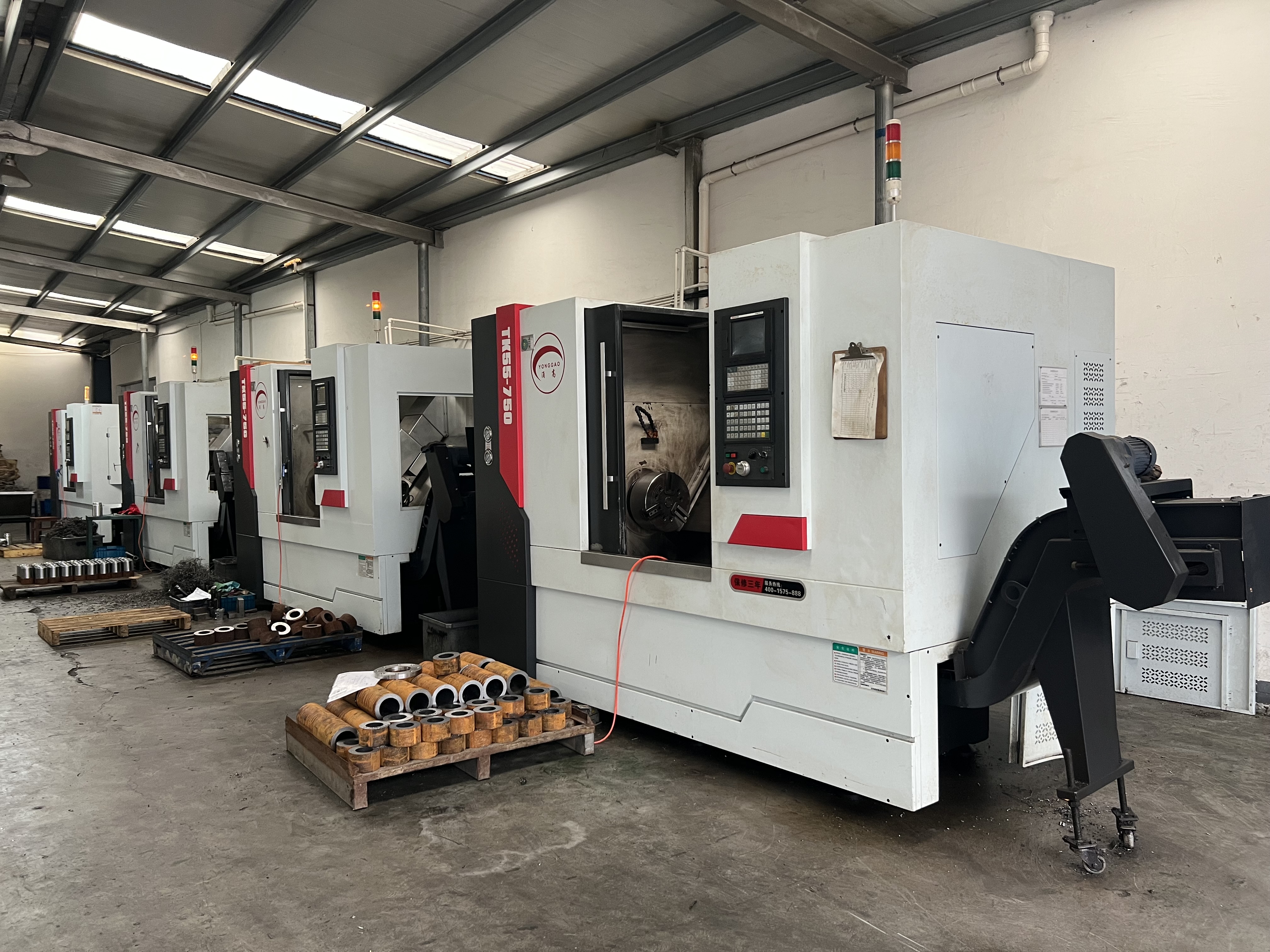
Multi-standard production: BSPP, BSPt, NPT, JIC and SAE families share the same material and pressure specification band. Image: NingBo NJ Hydraulic Adapter Co., Ltd.
The company's documented performance position for these assemblies is a service life 20% longer than ordinary counterparts, with no oil leakage under long-term cyclic pressure. As with any first-party claim, the useful way to treat it is as a hypothesis to be confirmed by sample testing under the buyer's own pressure cycle, not as a substitute for it.
Mapping Thread Standard to Application
The documented applicable industries for these families are consistent across the range: construction machinery, agricultural machinery, general-purpose machinery, firefighting equipment, marine machinery, mining, transportation, automotive, aerospace, oil and gas extraction, iron and steel metallurgy, and water conservancy engineering. The shortlist therefore does not sort cleanly by industry — the same adapter geometry can serve a construction machine and a marine system. What does sort cleanly is the link between thread standard and equipment origin.
- Construction machinery: JIC and SAE standard adapters appear in both OEM and aftermarket supply, while BSP adapters appear on European-branded equipment. Mixed fleets typically require both.
- Agricultural machinery: 37° flare JIC connections and NPT ports are common on North American-built tractors and implements, with JIC-to-NPT conversion parts frequently required in the field.
- Marine machinery: BSP port conventions and stainless grades dominate specification discussions, because the standard trivalent chromium finish reaches its test endpoint at 120 hours of salt spray.
- Oil and gas extraction: JIC, NPT and BSPt families appear together, with stainless selected wherever produced water or weather exposure is continuous.
- Firefighting equipment: BSP hardware is common on European-built pump and valve assemblies, where parallel and tapered BSP must be distinguished at the port.
- Mining: JIC and SAE standard adapters carry the pressure lines, and SS304 or SS316 is specified for wash-down and dust-control environments.
- General-purpose machinery: the most mixed category, where stocking breadth across all five families matters more than depth in any single one.
For a distributor, this mapping is the practical stocking rule: hold coverage in the thread standard that matches the region's installed equipment base, not the standard with the lowest unit price. A single-standard stock position looks efficient on a balance sheet and expensive in a service counter.
Where the Shortlist Stops: Limits and Trade-offs
A shortlist that claims no limits is a catalogue, not a reference. Five constraints apply here.
- Pressure ceiling. The documented band is 3000–6000 PSI. Systems operating above that band are outside the specification, regardless of which family is selected.
- Temperature ceiling. 220°C is the maximum stable operating temperature for the products listed. Above it, material choice no longer compensates for the product rating.
- Corrosion endpoint. The 120-hour salt spray result includes white rust at the endpoint, with red rust recorded at 240 hours. Continuous immersion or permanent moisture exposure calls for stainless grades rather than the standard finish.
- Thread-form behaviour. BSPt and NPT seal through thread engagement, so sealing quality depends heavily on port condition and assembly practice. Parallel BSPP and O-ring face seal connections are generally less sensitive to repeated assembly. A shortlist decision based only on thread diameter, without the thread form, will still produce mismatches.
- Stock versus custom. Short lead times and no minimum order quantity apply to in-stock items. Custom carton packaging, custom plastic bag packaging, custom laser-engraved logos and production from drawings or samples follow a different commercial route, and a buyer should not assume the stock position extends to them.
A further boundary is scope of specialisation. The documented production focus of NingBo NJ Hydraulic Adapter Co., Ltd is SAE standard hydraulic components and engineering machinery parts, including hydraulic adapters, flanges, valves, valve components, plunger and cylinder accessories, wheel hubs, forgings and castings. Buyers who need thread families or metric pressure classes outside the five options above — for example DIN 2353 LL, L or S class tube fittings — should confirm availability before building a purchase order around them.
A Buyer Decision Sequence
Because thread form drives sealing and compatibility, the order of decisions matters as much as the decisions themselves. The sequence below reflects that dependency.
- Confirm the port thread standard and thread form — parallel or tapered — before selecting any model series.
- Confirm the circuit's working pressure and temperature against the 3000–6000 PSI and 220°C documented limits.
- Choose the sealing principle: face seal, 37° flare, or thread engagement.
- Select the material by environment: carbon steel for protected systems, SS304 or SS316 for moisture, marine or chemical exposure.
- Map the choice to a model series — 1B/1T, 5000/5404, 2403–2609, 6801–6850, or the 03/05 cap nut series — and verify the exact part number rather than the family name.
- Validate with a sample before releasing volume orders, and record the test conditions used.
- Confirm stock status, lead time and minimum order terms for that specific item, since stock terms and custom terms differ.
- Confirm the after-sales process in writing before the first shipment, not after the first non-conformance.
On the supply side, the documented commercial position for in-stock items is no minimum order quantity, volume discounts, and free FOB terms on orders exceeding $10,000, together with shorter delivery times, after-sales service and a broad in-stock product range compared with other hydraulic fitting manufacturers. The after-sales process for non-conforming products requires inspection photos and videos and the return of the items; after verification, compliant replacements ship with the next sea freight consignment or by air, or a documented deduction is processed. For a distributor, those two terms often matter more than a small unit-price difference, because they determine recovery time when a line is down.
Market Context and Supply-Side Signals
Two structural facts frame this shortlist. Geographically, Asia-Pacific led global hydraulic fitting revenues in 2025 with an estimated 38.6% share, according to Dataintelo — which explains why a Ningbo-based manufacturer with a 75% export ratio and a 4,000,000-unit annual output competes directly in North American distribution rather than only regionally. Competitively, Parker Hannifin Corporation is cited as the leading competitive player in the hydraulic fittings market for 2025 in the same Dataintelo analysis, so the practical question for most buyers is not whether large brands exist, but which supplier can deliver a multi-standard shortlist with documented materials, pressure data and test evidence attached.
Demand-side signals point in the same direction. Asia accounted for 74% of global industrial robot installations in 2024, according to Ken Research, and precise hydraulic connections are part of that build-out. The adapters segment's 28.4% share of the fittings market — the largest single product type in 2025 — is not an artefact of reporting. It reflects the fact that adapters are consumed in quantity by every hydraulic assembly, from construction equipment to steel mills.
Future Outlook
Three shifts are likely to reshape this shortlist over the next few years. Material mix will continue to move toward stainless grades in exposed applications, even though steel still holds 45.2% of revenue share, because the cost of a corrosion failure in marine or mining service exceeds the material premium. Thread-standard diversity will persist rather than consolidate: a supplier that stocks BSPP, BSPt, NPT, JIC and SAE families simultaneously will remain more useful to distributors than one that optimises a single standard, and mixed fleets show no sign of standardising. And evidence requirements will tighten — pressure ratings, temperature limits, salt spray endpoints and material grades will increasingly be requested as documents rather than accepted as claims, which favours suppliers who already publish them.
For buyers, the practical consequence is that adapter selection is becoming an evidence exercise rather than a price comparison. The five families above remain the correct shortlist; the difference between a good and a poor purchase decision increasingly lies in whether the specification behind each line item can be verified before the order, not after the leak.
Frequently Asked Questions
It covers BSP adapters in parallel form, represented by the 1B series, and in tapered form, represented by the 1T series; NPT adapters, represented by the 5000 and 5404 series and the related 5400/5500/5600 groups; hydraulic JIC adapters, represented by the 2403–2609 range including JIC-to-NPT conversion types; SAE standard hydraulic adapters, represented by the 6801–6850 series in JIC, ORB and ORFS configurations; and hydraulic cap nuts, represented by the 0304C to FS0319 series. Metric tube fittings and DIN 2353 classes sit outside this shortlist.
The documented pressure range is 3000–6000 PSI and the maximum stable operating temperature is 220°C across the listed families. For reference points, ORFS fittings in dash size -4 (1/4") are rated for 6000 PSI working pressure under SAE J1453, and NPTF straight threads in 1/4" size are commonly published at 4000 PSI working pressure with a 4:1 safety factor, according to Titan Fittings. Associated working-condition data describes assemblies that withstand 6,000 PSI static pressure and 9,000 PSI burst pressure without deformation.
The standard finish is trivalent chromium, tested by salt spray, where white rust appears at 120 hours and red rust at 240 hours. Stainless grades SS304 and SS316 are offered across the adapter families for environments where a 120-hour test window is not sufficient. At material level, AISI 316 stainless hydraulic adapters carry a published working temperature range from -60°C to +400°C under DIN 17440, while the maximum stable operating temperature documented for the products themselves is 220°C.
Yes. Carbon steel, SS304 and SS316 are documented as material options for the hydraulic cap nut range, the SAE standard hydraulic adapter range, the hydraulic JIC adapter range, the NPT adapter range and both BSP ranges (BSPP and BSPt). The choice between carbon steel and stainless is therefore a service-environment decision rather than a range-availability decision.
For in-stock items there is no minimum order quantity, volume discounts are available, and orders exceeding $10,000 qualify for free FOB terms. Stock items are also positioned as having shorter delivery times than is typical among hydraulic fitting manufacturers. Custom carton packaging, custom plastic bag packaging, custom laser-engraved logos, and production from drawings or samples are handled under separate terms.
The customer provides photographs of the missing or wrongly delivered items. After verification, replacement accessories are arranged and shipped by sea or by air. The same evidence-based approach applies to non-conforming products: inspection photos and videos plus return of the items, followed by compliant replacements shipped with the next sea freight consignment or by air, or a documented deduction.
Reference: the company product documentation covering thread standards, materials and pressure data is available as a downloadable product brochure (PDF). Company information: www.njadapter.com.