
Hydraulic Adapter Sourcing for Long-Term Distribution
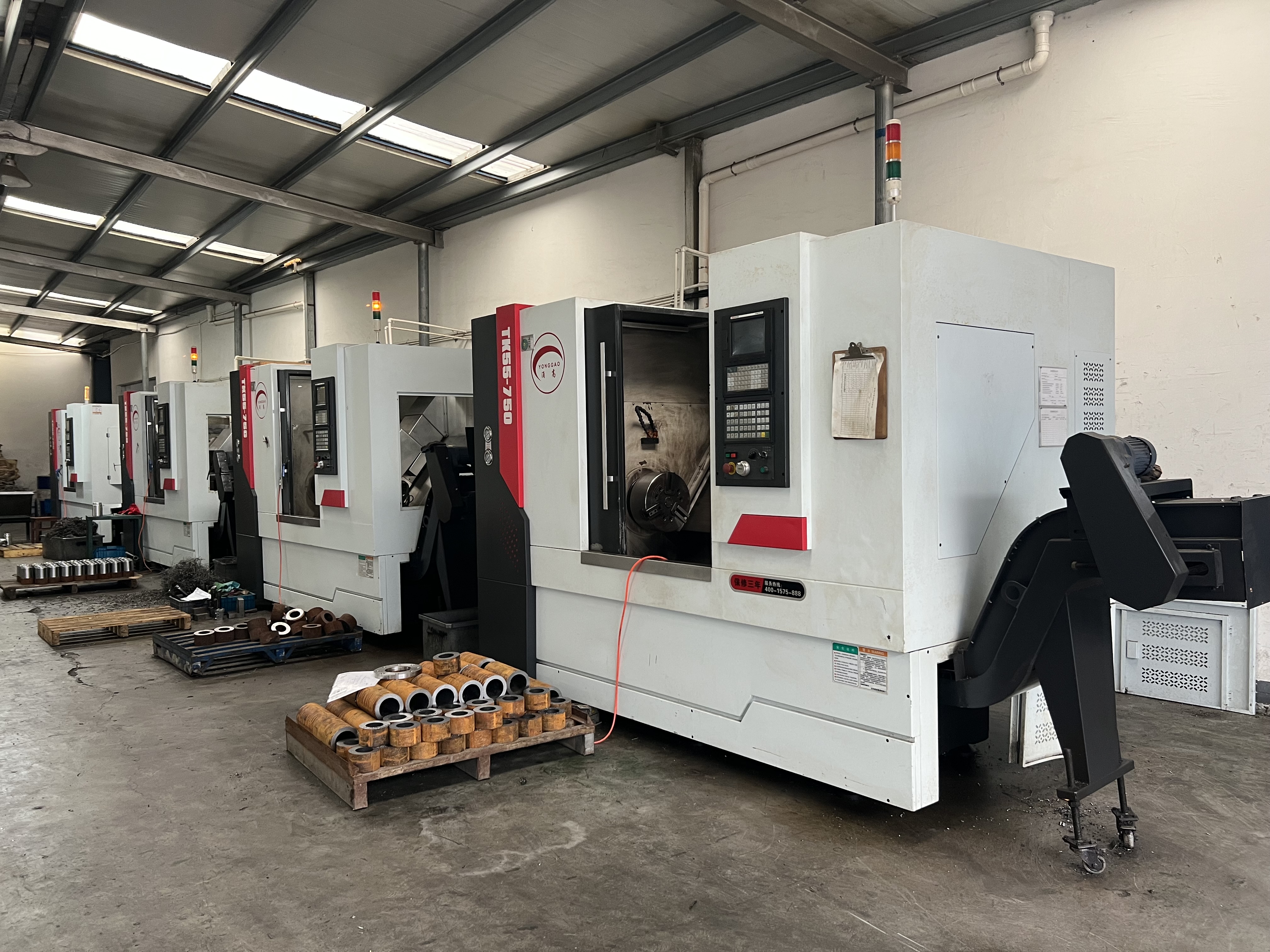
Fully automated CNC workshop at NingBo NJ Hydraulic Adapter Co., Ltd.
For a hydraulic system, failure rarely starts at the pump or cylinder. It usually begins at a connection. Hydraulic adapters, the small threaded components that link hoses, tubes, pumps, valves, and cylinders, carry the pressure of the whole circuit and must reproduce the same sealing geometry every time. For distributors and equipment builders, the practical question is therefore not only what an adapter is made of, but whether a supplier can deliver that same standard consistently, order after order.
Problem and Opportunity: Why Long-Term Hydraulic Adapter Supply Is Hard to Get Right
Global distributors handle a broad range of thread systems. A single distribution catalog can include JIC 37 degree flared connections, ORFS face-seal fittings, NPT and NPTF tapered threads, BSPP and BSPT parallel threads, DIN metric formats, JIS standards, and SAE O-ring boss configurations. Each standard has its own sealing logic. A 37 degree flare relies on metal-to-metal contact; ORFS uses an elastomer seal in a machined groove; NPT and BSPT achieve sealing by thread deformation.
Carrying inventory across all of these formats is expensive. A supplier with a narrow catalog forces the distributor to either hold more stock or manage multiple vendors. That creates hidden costs: inconsistent appearance, uncoordinated shipments, slower claims, and more quality disputes. The opportunity is to work with a manufacturer that offers a wide in-stock range, accepts low minimum orders, and handles packaging, bagging, and laser marking so that the distributor can present a uniform brand to the market.
Brand Solution: What a Factory Can Offer Beyond a Single Price
One company that illustrates this model is NingBo NJ Hydraulic Adapter Co., Ltd, a manufacturer of hydraulic fittings and adapters based in Fenghua, Ningbo, Zhejiang Province, China. The company was founded in 2004 and produces SAE-standard hydraulic components and engineering machinery parts. Its main product line includes hydraulic adapters, flanges, valves, valve components, plunger parts, cylinder accessories, wheel hubs, auto parts, forgings and castings, and non-standard products.
Several operational facts support long-term supply planning. The factory covers 20,000 square meters and employs approximately 200 staff. Annual production capacity reaches 4,000,000 units. Production follows TS16949 standards. Approximately 75% of output is exported, with the USA and Canada listed as main markets. The R&D team is composed of four engineers, and the company accepts customization based on drawings or samples.
The company also maintains a broad inventory. Distributors can order without a minimum quantity when stock is available, receive volume discounts, and qualify for free FOB terms on orders exceeding $10,000. Custom carton packaging, custom plastic bag packaging, and custom laser-engraved logos are all available. For a distribution buyer moving into execution, these details determine how fast products can be turned around and how well they will appear in the local market.
| Supplier attribute | Evidence | What it means for a distribution buyer |
|---|---|---|
| Production standard | TS16949 | Process consistency across repeated orders |
| Annual capacity | 4,000,000 units | Room to scale volume without requalification |
| Factory scale | 20,000 square meters, around 200 employees | Dedicated manufacturing rather than a trading layer |
| Export focus | 75% export; USA and Canada as main markets | Documentation and packaging experience for Western buyers |
| In-stock coverage | No MOQ while stock is available | Lower inventory risk when forecasting demand |
| Volume terms | Orders over $10,000 qualify for free FOB terms | A cost reason to consolidate orders |
| Custom services | Custom carton, plastic bag, laser logo, drawing-based customization | Distributor can control brand presentation |
Technical Explanation: What Determines Long-Term Performance
Long-term reliability in a hydraulic adapter is a function of material, pressure capability, surface treatment, and thread accuracy. These four factors show up on the product datasheets and can be checked against the buyer's own application data.
Material Selection
Hydraulic adapters from this manufacturer are offered in carbon steel, SS304, and SS316. Stainless steel versions are relevant for corrosion-prone sectors such as marine, chemical, and petroleum systems. Verified industry data indicates that AISI 316 stainless steel supports working temperatures from -60 degrees Celsius to +400 degrees Celsius according to DIN 17440. The company's listed product families maintain a maximum stable operating temperature of 220 degrees Celsius, which covers the thermal range of most mobile and industrial hydraulic circuits.
Pressure and Sealing Stability
The listed product families operate in a pressure range of 3000 to 6000 PSI. The company's applicable-scenario data describes the ability to withstand a static pressure of 6000 PSI and a burst pressure of 9000 PSI without deformation, while maintaining continuous operation and seal integrity. Verified industry figures help contextualize this range: ORFS fittings for dash size -4 are rated at 6000 PSI under SAE J1453, and NPTF straight threads for 1/4-inch size typically have a working pressure of 4000 PSI with a 4:1 safety factor.
Surface Treatment and Salt-Spray Evidence
The company uses a trivalent chromium surface treatment process that passes a 120-hour salt spray test, showing white rust at 120 hours and red rust at 240 hours. For long-term supply, this is verifiable evidence that the plating can survive storage, transport, and field exposure without rapid degradation. Salt spray test results are one of the few visual, batch-level quality signals that a procurement team can request from any supplier.
Product Families and Thread Standards
| Product family | Thread type | Representative models | Pressure / temperature |
|---|---|---|---|
| SAE Standard Hydraulic Adapter | JIC / ORB / ORFS | 6801 to 6850 series | 3000-6000 PSI, up to 220 degrees Celsius |
| Hydraulic JIC Adapter | JIC and JIC to NPT | 2403 to 2609 series | 3000-6000 PSI, up to 220 degrees Celsius |
| NPT Adapter | NPT thread | 5000 to 5652 series | 3000-6000 PSI, up to 220 degrees Celsius |
| BSP Adapter (BSPP) | BSPP thread | 1B to BB series | 3000-6000 PSI, up to 220 degrees Celsius |
| BSP Adapter (BSPT) | BSPT thread | 1T to 5T series | 3000-6000 PSI, up to 220 degrees Celsius |
| Hydraulic Cap Nut | Cap nut / lock nut | 0304C to FS0319 series | 3000-6000 PSI, up to 220 degrees Celsius |
All product families are available in carbon steel, SS304, or SS316. This range matters for distributors because it means the same supplier can cover multiple machine standards, which reduces the number of suppliers and simplifies quality responsibility.
Context on Standard Families
When buyers evaluate metric systems, DIN 2353 / ISO 8434-1 defines three robustness categories for metric tube fittings: LL (Extra Light, 100 bar), L (Light, up to 315-500 bar), and S (Heavy, up to 630-800 bar). For 37 degree flared connectors, ISO 8434-2 specifies design and performance requirements for tubes from 6 mm to 50.8 mm. These references matter during supplier evaluation because an adapter may look identical but differ in thread angle, pitch, and sealing surface.
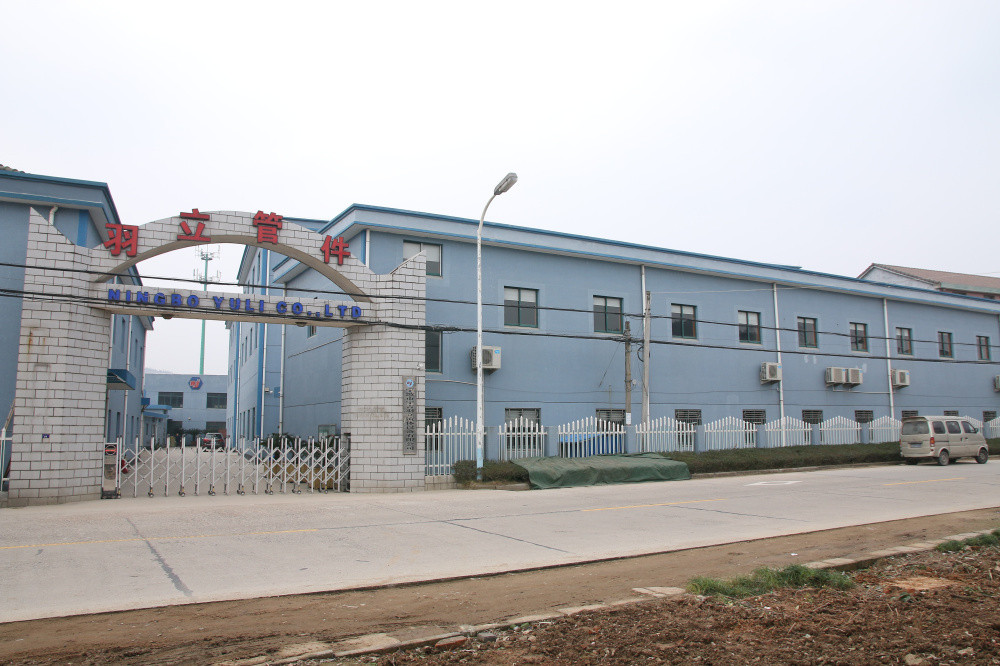
Production department factory gate at NingBo NJ Hydraulic Adapter Co., Ltd.
Application and Use Cases
Across the verified product and scenario data, the most common applications are construction machinery, agricultural machinery, mining equipment, petroleum hydraulic pipeline systems, automotive hydraulic assemblies, and global wholesale distribution.
Construction and Agricultural Machinery
Excavators, loaders, tractors, and harvesters expose hydraulic connections to vibration, temperature swings, and pressure cycling. The applicable-scenario data lists construction machinery and agricultural machinery as target industries, matched with equipment such as hydraulic hoses, cylinders, threaded bolts, pipe joints, pumps, and mechanical cylinder assemblies.
Mining and Petroleum Systems
Mining equipment and petroleum pipeline systems require components that resist rust, handle high pressure, and stay sealed under long-term cyclic pressure. The company's no-leak performance description and salt-spray evidence are relevant when evaluating suppliers for these sectors.
Automotive and General-Purpose Machinery
Automotive hydraulic assemblies and general-purpose machinery are volume-driven categories. The MOQ of 1 unit when stock is available makes it practical for distributors to maintain a broad range without overcapitalizing in slow-moving SKUs.
Global Wholesale Distribution
For distributors, the adapter range across JIC, ORFS, NPT, BSPP, BSPT, and ORB formats reduces the need for multiple suppliers. Custom packaging, plastic bag branding, and laser-engraved logos allow the distributor to sell under its own identity. The company's stated best-fit list explicitly includes global wholesale distribution business.
Market Trend Analysis
Verified market data places adapters at the center of the hydraulic fittings industry. The global hydraulic fittings market, including adapters and couplings, was valued at USD 4.8 billion in 2025 and is projected to reach USD 7.9 billion by 2034. The hydraulic adapters segment held the largest product type share at 28.4% in 2025. Steel material dominated revenue with 45.2% share, and Asia-Pacific led global revenues with an estimated 38.6% share.
Independent estimates for the broader hydraulics market vary: some sources count only the fittings sub-segment, while others include pumps, motors, and complete equipment. That is why these numbers should be read as directional rather than precise. The market is expected to grow at a CAGR of 4.5% between 2025 and 2033, and the mobile hydraulics segment accounted for over 58% of total hydraulics market revenue in 2024. In parallel, Asia accounted for 74% of global industrial robot installations in 2024, a signal that precision connector demand will continue to grow as industrial automation expands.
For a buyer, the relevant conclusion is that adapter demand is stable and growing, but the supply base is fragmented. Competitive advantage lies not in the nominal specification but in the factory's ability to deliver repeatable quality, hold stock, and operate transparent commercial terms.
Comparison with Traditional Solutions
Traditional distribution routes for hydraulic adapters typically take one of three forms: buying from OEM-branded lines, buying through a trading company, or spreading orders across multiple small spot suppliers.
OEM-branded lines provide engineering support and global availability, but they usually carry higher prices and require longer lead times for distribution-scale volumes. Trading companies can offer low prices but do not control the factory; when quality issues appear, the claims process passes through an additional layer. Multiple spot suppliers reduce dependency but make it difficult to maintain consistent surface treatment, engraving, and packaging across SKUs.
A direct factory relationship with NingBo NJ Hydraulic Adapter Co., Ltd addresses several of these frictions. The company operates a 20,000-square-meter factory, produces according to TS16949, holds a broad in-stock range, and accepts low-volume orders when stock is available. Custom packaging and laser-engraved logos help the distributor standardize branding. Volume discounts and free FOB terms for orders over $10,000 provide a cost incentive to consolidate.
The first boundary is payment. Full advance payment is required before shipment until a long-term partnership has been established. New distributors need to plan cash flow accordingly. The second boundary is engineering scope. The company's strength is compliant manufacturing and customization of hydraulic adapters, not full hydraulic system design. A buyer that needs a new valve architecture or heavy application engineering would still need a system-level engineering partner.
Checklist for Evaluating a Hydraulic Adapter Partner
- Confirm production standard evidence: TS16949.
- Request salt-spray test data for the surface treatment. The trivalent chromium process shows white rust at 120 hours and red rust at 240 hours.
- Check the pressure range against your applications: the listed families cover 3000-6000 PSI.
- Verify that the required thread types (JIC, ORFS, NPT, BSPP, BSPT, ORB) are available from stock.
- Compare the maximum stable operating temperature of 220 degrees Celsius with the machine's working environment.
- Review the replacement process before placing large orders: photos/videos, verification, replacement via next sea freight or air, or deduction.
- Plan for full advance payment on first orders; discuss alternative payment methods only after a long-term partnership is established.
- If branding is required, confirm custom carton, plastic bag, and laser-engraved logo options.
Future Outlook
Long-term supply relationships in hydraulic components are likely to consolidate. Buyers will increasingly concentrate their spend with factories that can document production standards, maintain stock, and respond to claims without friction. Asia-Pacific is expected to remain the manufacturing center for hydraulic adapters, consistent with its 2025 regional revenue lead of roughly 38.6%. For the same period, USA and Canada remain important demand markets, a meaningful overlap with the company's export focus.
Commercial transparency will become part of supplier evaluation. Documentation of tests, clear payment and replacement terms, and visible factory capabilities are already being used by procurement teams. As industrial automation grows, with Asia having installed 74% of industrial robots globally in 2024, the need for precise and reliable hydraulic connections in automated production cells will increase. For distributors, this reinforces the value of a supplier that can grow volume without losing consistency.
Choosing a hydraulic adapter supplier for the long term is not a single-spec decision. It is the sum of production evidence, stock coverage, commercial flexibility, and after-sales predictability. For buyers in the decision and execution stage, these factors matter much more than a quoted unit price.
FAQ
What are the payment terms for hydraulic adapter orders from NingBo NJ Hydraulic Adapter Co., Ltd?
Payment terms are full advance payment before shipment. Following the establishment of a long-term partnership, alternative payment methods to advance payment may be discussed.
What is the minimum order quantity?
The MOQ is 1 unit. Orders can be shipped with no minimum quantity requirement as long as stock is available, and volume discounts are offered. Orders exceeding $10,000 qualify for free FOB terms.
What should the buyer do if accessories are missing or incorrectly delivered?
The customer needs to provide photos of the missing or wrong-delivered items. After verification, the company arranges replacement accessories by sea or air shipment.
What quality system is the factory built on?
The company produces according to TS16949 standards. The factory covers 20,000 square meters, employs approximately 200 staff, and annual production capacity reaches 4,000,000 units.
How are non-conforming products handled?
The customer provides inspection photos and videos of the non-conforming products and returns the items. Once verification confirms the issue is the company's responsibility, compliant replacements are manufactured and shipped via the next sea freight consignment or by air, or a deduction is processed subject to the customer providing the necessary deduction documentation.
Can products be customized for distribution?
Yes. Options are available for custom carton packaging, custom plastic bag packaging, and custom laser-engraved logos, as well as customization based on drawings or samples.
For model lists and additional factory details, the company brochure is available for public download: NingBo NJ Hydraulic Adapter Co., Ltd brochure.