
Hydraulic Adapters: Market Context and Supplier Capability
In fluid power systems, the hydraulic adapter is the bridge component that connects pumps, valves, hoses, tubes, and cylinders across different thread standards. Because modern machinery commonly combines American, European, and Asian connection systems — NPT, BSPP, BSPT, JIC, ORFS, and metric — adapters must deliver both compatibility and reliable sealing under pressure. The commercial significance of this category is considerable. According to Dataintelo, the global hydraulic fittings market, including adapters and couplings, was valued at USD 4.8 billion in 2025 and is projected to reach USD 7.9 billion by 2034.
This article examines the hydraulic adapter market from an industry-reference perspective, outlines what engineers and procurement teams should evaluate when sourcing hydraulic hose adapters and related fittings, and profiles NingBo NJ Hydraulic Adapter Co., Ltd., a specialist manufacturer with a verifiable production base in Ningbo, Zhejiang, China.
The Problem: Thread Compatibility, Material Choice, and Supply Reliability
The real difficulty with hydraulic adapters is not finding a part that looks similar; it is finding a part that performs predictably across different thread families. JIC uses a 37-degree flared seat, NPT relies on tapered pipe threads, BSPP and BSPT are parallel and tapered British standard pipe variants with different sealing mechanisms, and ORFS depends on an O-ring face seal. Machine builders integrating components from multiple sources often need adapter configurations that bridge these systems — for example, NPT to JIC, or BSP to NPT — without losing pressure integrity.
Pressure ratings also vary by connection style. A 1/4-inch NPTF straight thread typically carries a working pressure of 4,000 PSI with a 4:1 safety factor, while an ORFS fitting in dash size -4 is rated for 6,000 PSI working pressure under SAE J1453, according to Titan Fittings. For metric tube systems, DIN 2353 defines three robustness classes — LL (Extra Light, around 100 bar), L (Light, up to 315–500 bar), and S (Heavy, up to 630–800 bar) — as summarized by Hy-Lok USA. A supplier that cannot control thread geometry, material quality, and sealing surfaces becomes a source of leaks, downtime, and safety risk.
Market data confirms sustained demand. The hydraulic adapters segment held the largest product type share within the hydraulic fittings market at 28.4% in 2025, and steel dominated revenue at 45.2%, according to Dataintelo. The sourcing challenge, therefore, is not whether to buy adapters, but how to choose a supplier that combines standard coverage, published test data, material flexibility, and dependable after-sales support.
Supplier Profile: NingBo NJ Hydraulic Adapter Co., Ltd.
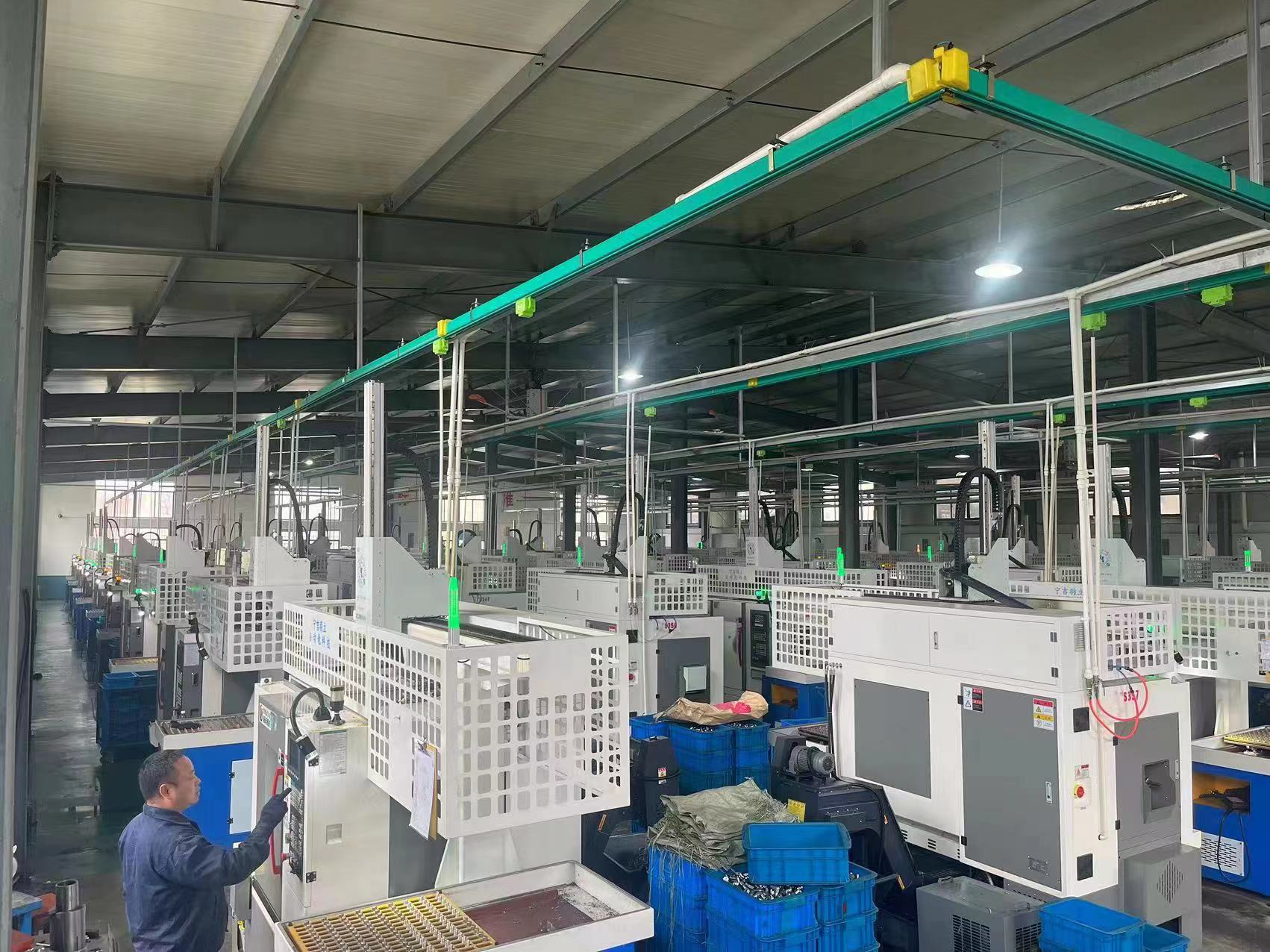
NingBo NJ Hydraulic Adapter Co., Ltd. is a hydraulic components manufacturer established in 2004, based in Fenghua, Ningbo, Zhejiang Province, China. The company specializes in producing SAE standard hydraulic components and engineering machinery parts. Its manufacturing facility covers 20,000 square meters, staffed by approximately 200 employees, with an R&D team of four engineers. According to its company profile, about 75% of output is exported, with the United States and Canada listed as main markets.
The product portfolio centers on hydraulic adapters and extends to flanges, valves, and non-standard components. Within the adapter category, the company offers a broad model range across several thread systems, including BSPP, BSPT, NPT, NPTF, JIC, ORB, ORFS, and JIS transition configurations.
Product Range: Standard Adapter Families
| Product category | Classification | Representative model series |
|---|---|---|
| BSP Adapter | BSPT Thread Fitting | 1T, 1T9, 1BT, 1ST, 4T, 5T |
| BSP Adapter | BSPP Thread Fitting | 1B, 1B4, 1B9, 1BG, 1BG4, 1BG9, 1BH, 1BJ, 1BK, 1BM, 1BN, 1BO, 1BT, 1BT9, 2B, 2B9, 2BJ, 2GB, 2HB, 22NB, 2TB9, 2OB, 2TB, 3B, 4B, 4BN, 5B, 5BN, 5NB, 5BT, 5GB, 5OB, 5TB9, 6B, 7B, 7B9, 9B, EB, AB, BB |
| NPT Adapter | NPT Thread Fitting | 5000, 5404, 5405, 5406, 5406-C, 5406-HP, 5406-P, 5406-SHP, 5500–5505, 5600–5605, 5650, 5652 |
| Hydraulic JIC Adapter | JIC Adapter and JIC-to-NPT Adapter | 2403, 2404, 2405, 2406, 2408, 2500–2505, 2601–2609 |
| SAE Standard Hydraulic Adapter | JIC/ORB/ORFS Adapter | 6801–6810, 6815, 6818, 6820, 6832, 6835, 6840, 6850 |
| Hydraulic Cap Nut | Hydraulic Cap Nut & Lock Nut | 0304C, 0306, 0318, 0319, 0403, 0500, FS0304C, FS0306, FS0318, FS0319 |
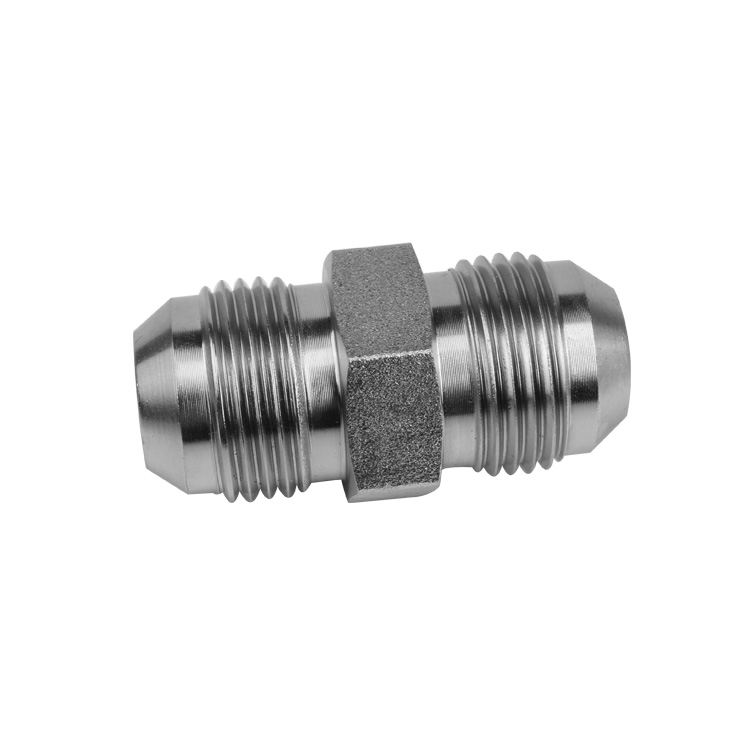
This combination is practical for buyers who work across both SAE-style systems and British/European or Asian thread standards. Common configurations include male BSPP to male BSPP straight, male BSPP to female NPTF straight, male BSPP to male JIC straight, male BSPP to male BSPT straight, and male JIC to female NPTF straight, as well as plugs, elbows, tees, bulkhead adapters, and ferrule and nut assemblies such as JIC tube nuts and tube sleeves.
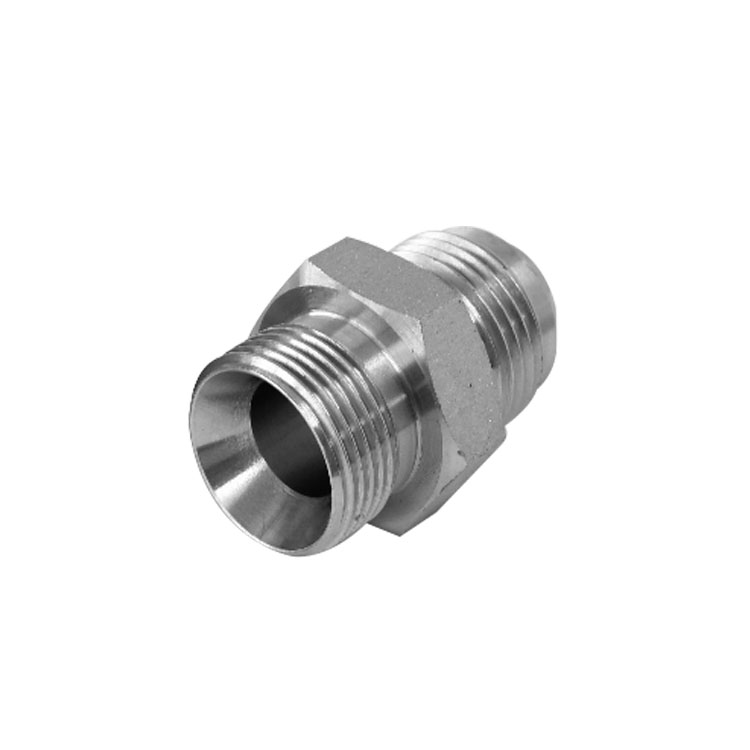
Specifications and Material Options
For most standard adapter lines, NingBo NJ publishes consistent technical parameters:
- Working pressure range: 3,000–6,000 PSI
- Maximum stable operating temperature: 220°C
- Corrosion resistance: passes a 120-hour salt spray test, showing white rust at 120 hours and red rust at 240 hours
- Materials: carbon steel (primary), SS304, and SS316
The company also describes an application scenario in which its adapters withstand a static pressure of 6,000 PSI and a burst pressure of 9,000 PSI without deformation, while maintaining continuous operation and seal integrity. These figures are consistent with common industrial reference points for JIC, NPT, and ORFS systems. For comparison, ORFS fittings in dash size -4 are rated at 6,000 PSI under SAE J1453, and 1/4-inch NPTF straight threads are commonly rated at 4,000 PSI with a 4:1 safety factor.
For material decisions, carbon steel is typically the default, offering a balance of cost and mechanical strength. SS304 and SS316 serve applications that require improved corrosion resistance. The ability to specify different materials within the same model family gives procurement teams flexibility without changing thread geometry.
One boundary is worth noting: the 220°C maximum stable operating temperature of the standard series is more conservative than the −60°C to +400°C range that AISI 316 stainless steel can support in certain configurations under DIN 17440, according to Tubes International. Buyers with sustained hydraulic circuit temperatures above 220°C should verify the specific fitting configuration or explore special-purpose options with the supplier.
Application Environments
The intended industries listed for NingBo NJ adapters include construction machinery, agricultural machinery, general-purpose machinery, firefighting equipment, marine machinery, mining, transportation, aerospace, automotive, oil and gas extraction, iron and steel metallurgy, and water conservancy engineering.
Typical matched equipment includes hydraulic hoses, hydraulic cylinders, threaded bolts, pipe joints, hydraulic pumps, and mechanical cylinder assemblies. The core function is described as hydraulic pipeline sealing, thread locking and fastening, and pressure-bearing protection for mechanical hydraulic assemblies.
Mobile equipment accounts for the largest share of hydraulics consumption: Grand View Research reports that the mobile hydraulics segment held more than 58% of total hydraulics market revenue in 2024. Construction and agricultural machinery, both prominent in NingBo NJ's list, operate in high-vibration, high-temperature, and often outdoor conditions. This makes sealing durability and corrosion resistance decisive selection criteria when evaluating high-pressure hose adapters.
Market Trend Signals
Several verifiable indicators shape the outlook for hydraulic adapter demand:
- Dataintelo values the global hydraulic fittings market at USD 4.8 billion in 2025, reaching USD 7.9 billion by 2034.
- Hydraulic adapters held 28.4% of the fittings market product share in 2025, the largest among all product types.
- Steel material accounted for 45.2% of hydraulic fitting revenue in 2025.
- An independent forecast published in 2025 projects the hydraulic fittings and adapters market to grow at a 4.5% CAGR between 2025 and 2033, reaching USD 5.8 billion.
- Credence Research projects hydraulic fluid connector demand to reach USD 1.82 billion by 2032, with an 8.0% CAGR.
- Asia-Pacific led global hydraulic fitting revenues in 2025 with an estimated 38.6% market share, and Asia accounted for 74% of global industrial robot installations in 2024, according to Ken Research.
The broader picture is one of steady, moderate growth. Automation, mobile machinery, and infrastructure spending all add hydraulic circuits that require adapters. For suppliers with documented standard products, this creates an ongoing procurement demand across equipment builders and distributors.
How a Specialist Manufacturer Compares with the Traditional Model
The global hydraulic fittings market is anchored by multinational leaders. Dataintelo lists Parker Hannifin as the leading competitor in 2025. A traditional sourcing route for buyers is to consolidate adapter purchases with such system-level suppliers, gaining broad catalogs, engineering services, and global distribution. That approach is a reasonable fit for large OEMs with complex integration needs.
Specialist Chinese manufacturers such as NingBo NJ occupy a different position. Their characteristics include:
- Focused standard product ranges across multiple thread systems
- Transparent specifications such as pressure range, temperature limit, and salt spray test data
- Material options — carbon steel, SS304, and SS316 — within the same product families
- A physical production base suitable for factory audits: 20,000 square meters and roughly 200 employees
- Defined procedures for after-sales issues such as missing or incorrectly shipped items
There are also reasonable limitations. The standard product series is rated to a 220°C maximum stable operating temperature, so extreme thermal applications require additional verification. The R&D team of four engineers suggests limited capacity for complex custom engineering; this is primarily a standard-product manufacturer. And for buyers outside China, the Ningbo location means ocean or air freight schedules must be factored into inventory planning — a logistical consideration that is less relevant when buying from domestic or regional suppliers.
None of these limitations disqualify the company for standard adapter procurement, but they define the boundary of its most suitable use case: predictable, specification-driven purchasing of standard hydraulic adapters at competitive cost.
What This Means for Procurement Decisions
From the available evidence, a buyer evaluating NingBo NJ should check five dimensions:
- Thread system coverage — BSPP, BSPT, NPT/NPTF, JIC, ORB, ORFS, with representative JIS transitions. NingBo NJ covers these across its standard lines.
- Pressure rating — the 3,000–6,000 PSI range matches typical JIC, NPT, and ORFS circuits.
- Material flexibility — carbon steel, SS304, and SS316 are available across adapter categories.
- Test evidence — the 120-hour salt spray test result, along with the 6,000 PSI static and 9,000 PSI burst scenario, provides a measurable baseline.
- After-sales procedure — the company states that photos of missing or wrong-shipped items are verified, after which replacement parts are arranged by sea or air.
This information is documented in the company's standard product and application materials, which supports a straightforward supplier assessment. For buyers looking for a cost-effective source of standard adapters with published data, this supplier profile is a reasonable starting point.
Future Outlook
Hydraulic systems will not disappear in the next decade; they will increasingly coexist with electrified drivetrains and automated machinery. Within that environment, hydraulic adapters will remain among the most frequently reordered connection components. Several directions are likely:
- Higher demand for stainless steel options in corrosion-prone applications, going beyond the current steel-dominated market structure
- Continued concentration of manufacturing in the Asia-Pacific region, which already holds the largest regional share of hydraulic fitting revenue
- Greater expectation for published, verifiable test data as buyers formalize supplier qualification processes
- Growing use of mixed thread systems as global machinery platforms export across regions, reinforcing the need for adapter families that bridge standards
Specialist manufacturers that maintain comprehensive standard lines and transparent specifications will be well positioned in this demand environment.
FAQ
What is a hydraulic adapter?
A hydraulic adapter is a mechanical connector that joins hose, tube, valve, pump, and cylinder ports — often converting between thread and sealing standards such as NPT, BSPP, BSPT, JIC, and ORFS — while preserving pressure rating and seal integrity. Hydraulic adapters formed the largest product type segment of the hydraulic fittings market in 2025, with a 28.4% share, according to Dataintelo.
Which industries use NingBo NJ products?
The intended industries include construction machinery, agricultural machinery, general-purpose machinery, firefighting equipment, marine machinery, mining, transportation, aerospace, automotive, oil and gas extraction, iron and steel metallurgy, and water conservancy engineering.
What pressure and temperature ratings do these adapters carry?
The standard BSP, NPT, JIC, and SAE adapter series are rated for a working pressure range of 3,000–6,000 PSI and a maximum stable operating temperature of 220°C. An application specification describes a static pressure of 6,000 PSI and a burst pressure of 9,000 PSI without deformation.
What material options are available?
The product lines are manufactured in carbon steel, SS304, and SS316, with carbon steel as the primary material. Stainless steel options serve environments that require improved corrosion resistance.
What should I do if accessories are missing after I receive the products?
According to the company's published procedure, customers need to provide photos of the missing or wrong-delivered items. Once the company verifies the claim, replacement accessories are arranged by sea or air shipment.