
Hydraulic Baler Machines: A Strategic Guide to Modern Waste Compression Technology
Industry Context: Why Waste Compression Matters
The recycling and waste management sector faces rising pressure to improve logistics efficiency, reduce storage footprint, and meet stringent environmental regulations. Across industries—from corrugated carton manufacturing to PET bottle recycling—the need for reliable, high-density compression equipment has never been more critical. Hydraulic baler machines have emerged as a cornerstone technology for converting loose scrap into dense, transportable bales, directly impacting operational cost and downstream value.
Problem / Opportunity
Traditional manual or low-force baling methods often result in inconsistent bale density, high labor dependency, and frequent downtime. Facilities handling mixed waste streams—such as plastics, paper, cardboard, and metals—require equipment that can adapt to different material characteristics without sacrificing throughput. The opportunity lies in adopting modern hydraulic baler machines that offer programmable compression cycles, robust construction, and integration with conveyor systems to create semi-automated or fully automated lines.
Brand Solution: Jewel’s Hydraulic Baler Machines
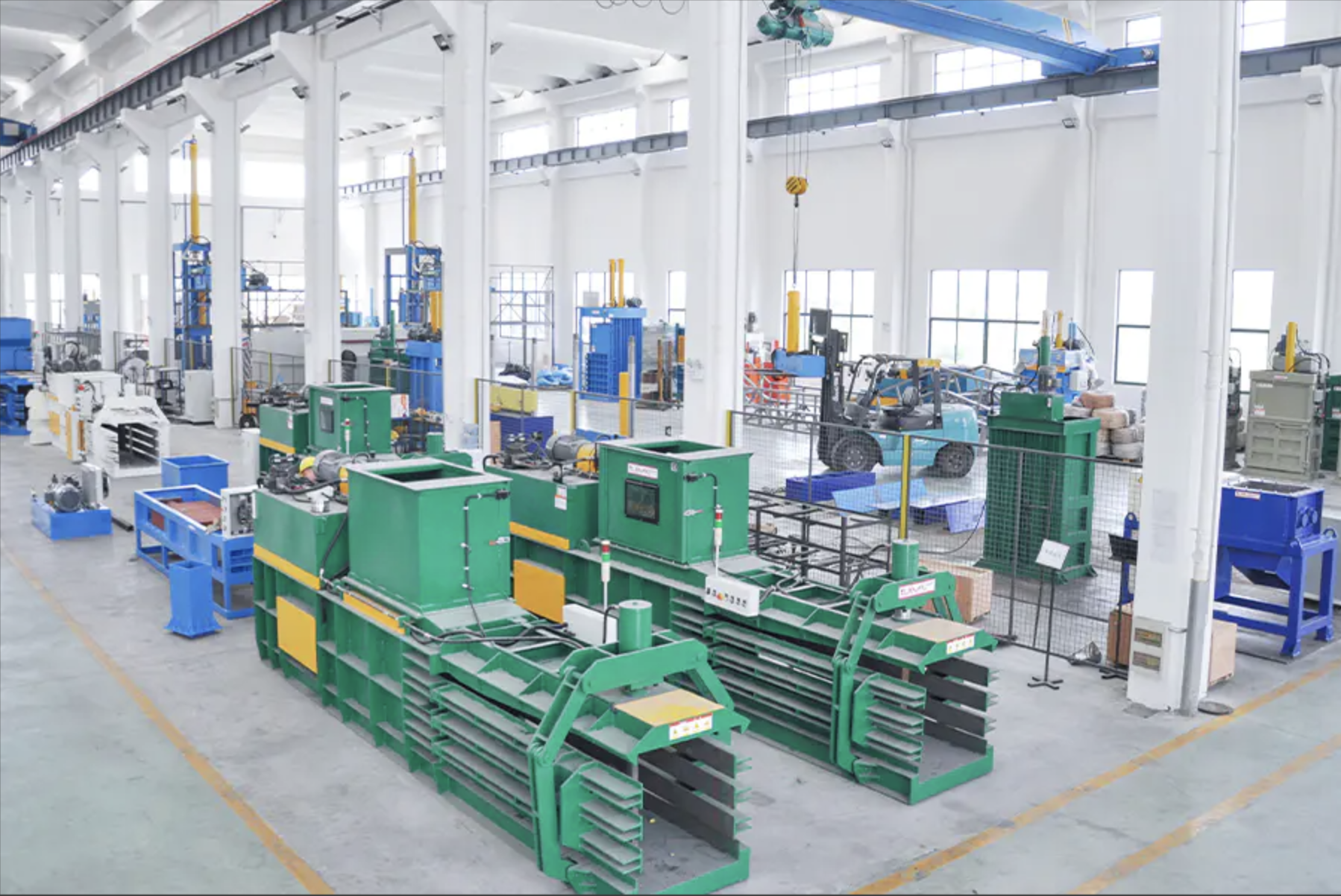
Nantong Jiabao Machinery Co., Ltd., established in 2006 with a brand history dating back to 1995, is a Chinese manufacturer specializing in environmentally friendly, intelligent compression and baling equipment. Operating under the brand jewel, the company produces a wide range of hydraulic baler machines, including fully automatic horizontal balers, semi-automatic horizontal balers, vertical balers, metal balers, aluminum foil balers, briquetting machines, bagging machines, and cutting machines. According to company data, the manufacturing facility covers 50,000 square meters, employs approximately 200 staff—including 30 R&D engineers—and has an annual production capacity of 120,000 units. Export business represents 70% of total sales, with major markets in Australia, Europe, North America, Africa, Asia, Russia, and Belarus.
Unlike generic equipment, jewel offers customized industry solutions tailored to specific waste streams and facility layouts. The product portfolio is designed to handle materials ranging from waste paper, plastics, and carton scraps to textile waste, PET bottles, and even mixed metal/glass combinations.
Technical Explanation
Hydraulic baler machines operate on a simple principle: a hydraulic cylinder generates high compression force—measured in tons—to reduce the volume of loose material into a compact bale. The key technical parameters that define performance include compression force, feeding mouth size, bale dimensions, baling capacity, and strapping configuration.
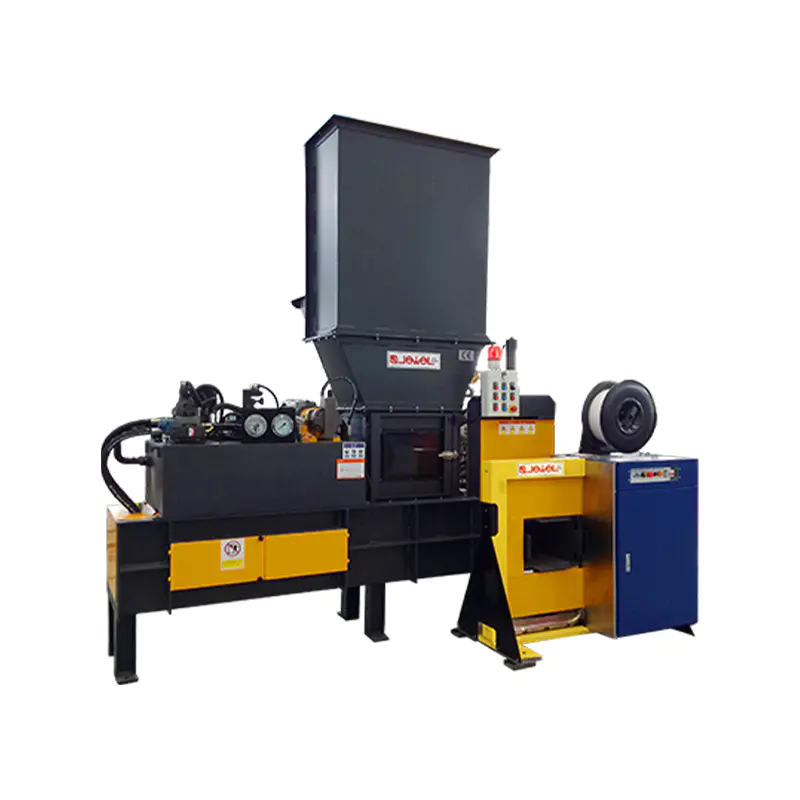
For example, the JPW20Q is a fully automatic horizontal baler with a compression force of 20 tons, bale dimension of 500×500×500 mm, and bale weight from 30 to 70 kg. It features a feeding mouth size of 700×460 mm, 2–4 strapping channels, and operates at 380V/50Hz with 7.5 kW/10 Hp power. Made of carbon steel, it is suitable for waste paper recycling, plastic recycling, carton printing, textile waste processing, packaging manufacturing, and PET bottle recycling.
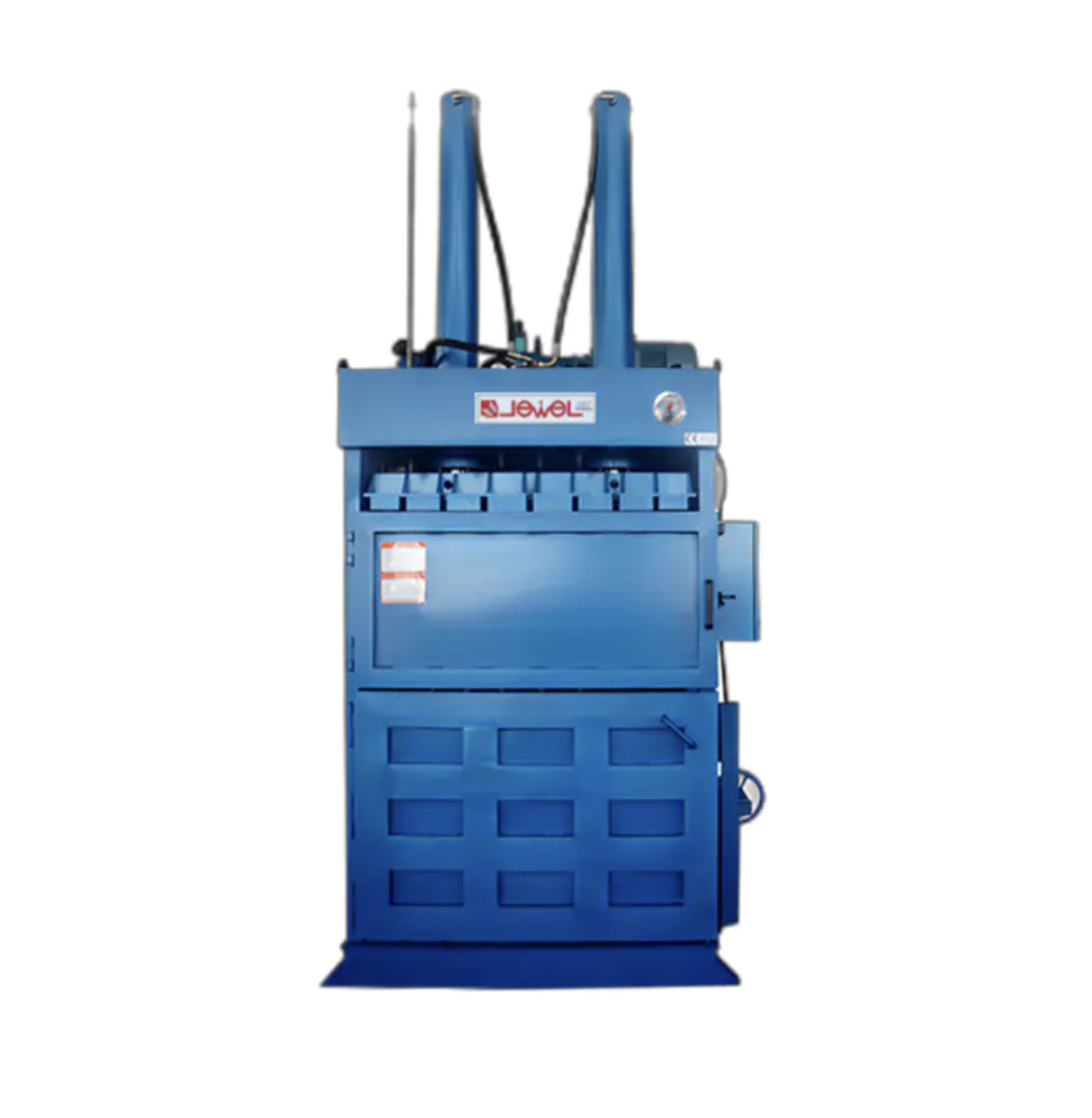
Another model, the JPW40F, is a semi-automatic horizontal baler with 40 tons compression force, producing bales of 720×720×(500-1300) mm weighing 200–400 kg. Its continuous push pack discharging and 4 strapping channels provide efficient operation for medium-volume applications. For smaller footprints, the JP-OT100 vertical baler offers a compression chamber size of 1400×700×1700 mm and bale weight up to 600 kg, ideal for facilities with limited floor space.
Specific machines address unique materials: the JPW-AK100 (aluminum foil baler) handles light, fiber-like materials, while the JPY-T60W (metal baler) compresses scrap metal into compact cross-sections. Each machine is built with carbon steel, ensuring durability under continuous heavy-duty use.
Application / Use-Case Scenarios
Jewel’s hydraulic balers have been deployed across diverse real-world settings:
- Corrugated Carton Printing & Packaging (Tunisia/Mexico): A fully automatic waste cardboard recycling line integrated with a conveying system was installed to handle mixed waste from corrugators and printing presses. The solution provides factory-wide planning, efficient preprocessing, and fully automatic operation, eliminating waste accumulation issues.
- PET Plastic Waste Processing (Japan): In a high-dust environment, a combination of machines (including the JPW-AK100 and JPW-K6046 bagging machine) achieve high-density compression of PET bottles, producing aesthetically pleasing, compact bales that optimize transportation.
- Mixed Solid Waste Recycling (Australia): A custom automatic baling system was designed to process mixed plastics, glass, and metal scraps. The equipment delivers compression stability and durability, handling challenging multi-material streams.
- Carton Factory Waste Disposal (Italy/Russia): Aging balers were replaced with upgraded lines that include powerful shredding preprocessing and high-efficiency compression, enabling seamless integration with existing production lines and unmanned operation.
Market Trend Analysis
According to company data, 70% of jewel’s sales come from export markets, including Australia, Europe, North America, Africa, Asia, Russia, and Belarus. This geographic diversity reflects a growing global demand for intelligent compression and baling solutions, driven by stricter waste management regulations and rising commodity prices for recycled materials. Additionally, the 30-engineer R&D team indicates a trend toward product customization and automation, as buyers increasingly seek machines that can be integrated into existing material handling systems rather than standalone units.
Comparison with Traditional Solutions
Compared to manual balers or low-force vertical presses, modern hydraulic baler machines offer higher throughput, consistent bale density, and reduced labor requirements. However, one honest limitation is that fully automatic models require a higher upfront capital investment and more complex installation, including conveyor integration and electrical infrastructure. For small recycling shops with low volumes, a semi-automatic or vertical baler may be more cost-effective despite lower automation levels.
Future Outlook
As the circular economy gains momentum, the demand for efficient, durable hydraulic baler machines will continue to rise. Manufacturers that offer customization, multi-material compatibility, and after-sales support are likely to capture a larger share of the market. Jewel’s focus on R&D and its track record in diverse international markets position it well for sustained growth.
For a detailed technical overview of Jewel’s product range, download the company brochure:
Download the 2026 Product Brochure (PDF)
Frequently Asked Questions
What is a hydraulic baler machine?
A hydraulic baler machine is a compression device that uses hydraulic cylinders to generate high force to compact loose waste materials—such as paper, plastics, cardboard, metal, and textiles—into dense, uniformly shaped bales for easier handling, storage, and transportation.
What are the main types of hydraulic baler machines?
Common types include fully automatic horizontal balers (e.g., JPW20Q), semi-automatic horizontal balers (e.g., JPW40F), vertical balers (e.g., JP-OT100), plastic bottle recycling balers (e.g., JPW40BL), aluminum foil balers (e.g., JPW-AK100), metal balers (e.g., JPY-T60W), briquetting machines (e.g., JPW-AK60), bagging machines (e.g., JPW-K6046), cutting machines (e.g., JP-S100B), and waste compactors (e.g., JP8060T5X).
Which industries can benefit from hydraulic baler machines?
They are designed for waste paper recycling, plastic recycling, carton printing, textile waste processing, packaging manufacturing, and PET bottle recycling. They are also used in metal recycling and mixed solid waste processing.
What is the typical compression force range for jewel balers?
Jewel offers hydraulic baler machines with compression forces ranging from 5 tons (e.g., JP8060T5X) to 100 tons or more (e.g., JP-OT100, JPW-AK100), covering a scope from 20–40 tons up to 100–180 tons depending on the model.
Are jewel balers customizable?
Yes, Nantong Jiabao Machinery Co., Ltd. provides customized industry solutions for compression and baling equipment, tailoring parameters such as voltage, bale dimensions, and feeding systems to specific client requirements.