
Hydraulic Baler Procurement FAQ: NKW Series Specs vs. Benchmarks
Hydraulic Baler Procurement FAQ: NKW Series Specs vs. Benchmarks
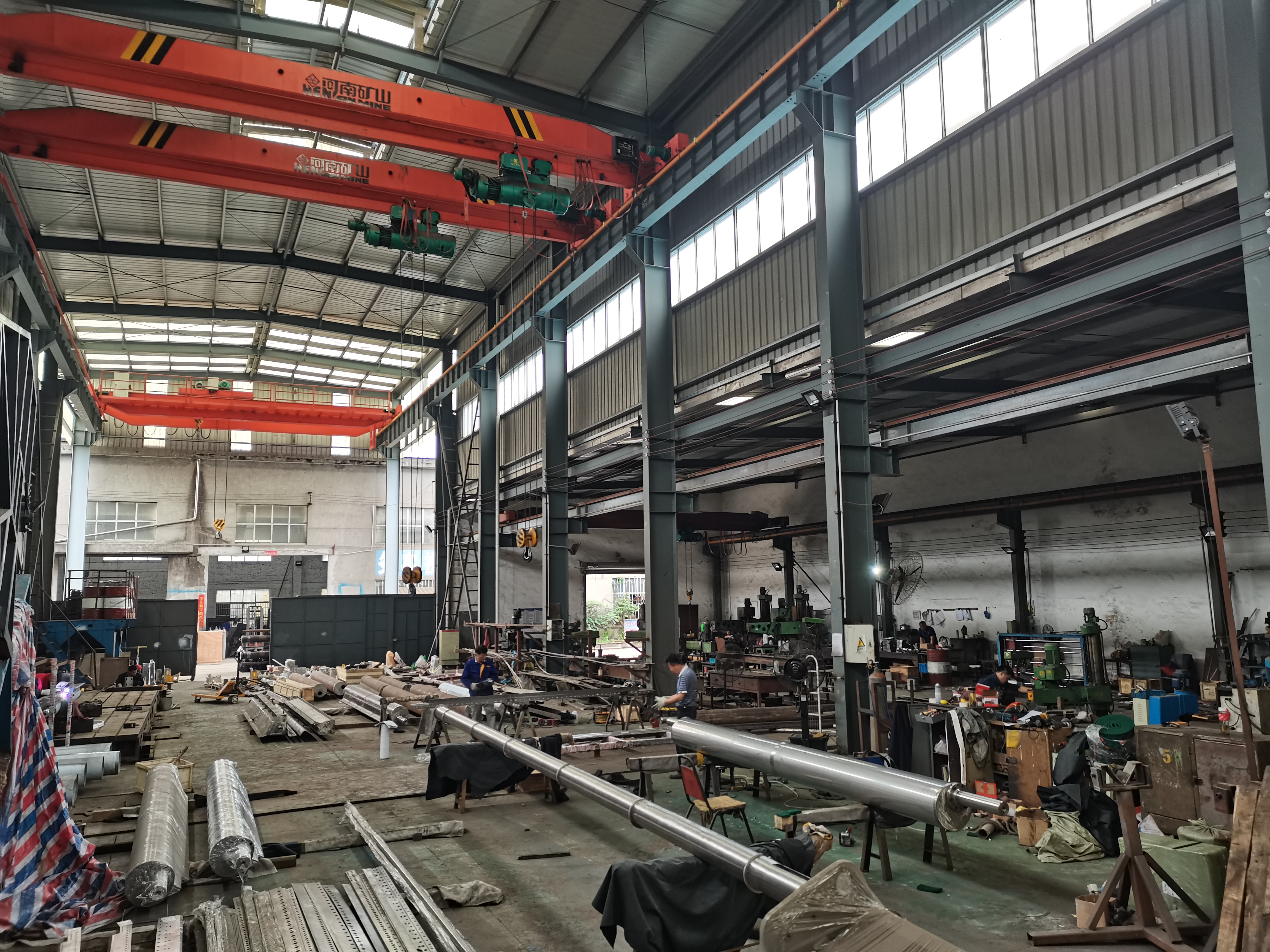
Hydraulic baler assembly workshop. Procurement risk in this category concentrates between the quotation and the pre-shipment test.
A hydraulic baler is bought twice. The first purchase happens on a specification sheet; the second happens at the pre-shipment test, when a machine either produces the bale it was ordered to produce or does not. Most procurement disputes in this category sit in the distance between those two moments, not in the machine itself.
Two suppliers can both quote a “160-ton” horizontal baler and deliver systems that behave differently on the same material stream, because main cylinder force, capacity, bale density, motor power and system pressure are rarely defined the same way twice. This article answers the procurement questions that recur most often in hydraulic baler purchasing — commercial terms, minimum order quantities, specification fields, density and throughput targets, and acceptance testing — using NKBALER’s NKW series as a worked reference configuration.
NKBALER (Shaanxi Nick Machinery Equipment Co., Ltd.) is a China-based manufacturer of hydraulic balers and environmental protection machinery. The company operates a 5,000 m² production facility with a 50-person workforce that includes a 15-person R&D team, and reports a monthly production capacity of 10 units. Its stated product line covers vertical balers, full-automatic horizontal balers, manual horizontal balers and press bagging machines, with roughly 90% of output exported to North America, South America and Asia.
Why procurement questions outnumber specification questions
The hydraulic baler category does not yet have a harmonised model-level specification format. Published category material more often describes configuration families — horizontal versus vertical, automatic versus semi-automatic — than comparable figures for force, chamber size, bale dimensions and throughput. A buyer comparing three quotations is therefore usually comparing three different definitions rather than three machines.
Three ambiguities account for most of the gap. First, force conventions differ: a quoted tonnage may refer to theoretical cylinder force at maximum pump pressure, to usable pressing force at working pressure, or to the combined force of a multi-ram design. Second, throughput is often stated without the material density at which it was measured, which makes two “5 t/h” claims potentially incomparable. Third, acceptance criteria are frequently described as a phrase rather than a procedure, leaving both sides to interpret what a passing test looks like.
A procurement process that resolves these three points before the order is placed removes most of the later disagreement. The specification fields discussed below are the practical instrument for doing that.
NKBALER’s NKW series as a reference configuration
The NKW series is offered in four reference models — NKW80Q, NKW125Q, NKW160Q and NKW200Q — which sit across ascending capacity classes within the manufacturer’s horizontal range. The series is useful as a reference point for this discussion because the surrounding commercial and capacity data is documented, which allows the specification questions to be discussed against a real ordering context rather than in the abstract.
Before a model number is selected, NKBALER’s own product literature draws a distinction between two build grades. NK BALER is described as the standard long-cylinder servo hydraulic baler, positioned for regular daily baling work with an emphasis on cost efficiency and stability. NICK BALER is described as the upgraded grade, with heavier machine weight, thicker material and a stronger structure, together with higher-grade hydraulic and electric control components than the standard grade. The company states that the upgraded grade runs more powerfully and with a lower failure rate under continuous heavy load.
For procurement purposes this is a sequencing point rather than a marketing point. The grade decision — standard duty versus continuous heavy load — logically precedes the model decision, because it determines which hydraulic and electrical specification the model number is being applied to.
The five specification fields that decide acceptance
Regardless of manufacturer, five fields determine whether a delivered baler can be accepted. Each has a convention problem attached to it, and each should be written into the RFQ with the convention stated explicitly.
| Field | What it actually controls | What to state in the RFQ |
|---|---|---|
| Main cylinder force | Compaction pressure available at the bale face; determines achievable density on dense or springy materials. | Unit (ton-force or kN), whether the figure is rated at working system pressure, and whether it is a single main ram or a combined multi-ram figure. |
| Capacity and throughput | The tonnage per hour the line can actually absorb, which depends on bale density and cycle time rather than on force alone. | The material, its bulk density and moisture at which the figure was measured, plus continuous or intermittent duty. |
| Bale size and bale density | Handling, stacking, transport weight limits and resale value of the finished bale. | Bale dimensions, target bale weight, tie method (wire or strap), and density expressed in kg/m³ on the buyer’s own material. |
| Motor power | Cycle speed under load, site electrical capacity and long-run energy cost. | Installed versus absorbed power in kW, plus voltage, phase and frequency for the destination market. |
| System pressure | The pressure at which the quoted force is actually produced; the setting that thermal behaviour is managed around. | Nominal or working pressure in bar or MPa, and the relief valve setting. |
On force specifically. Published category data offers a useful sanity anchor rather than a target: a fully automatic horizontal baler documented in public category material carries a 70-ton main press force with a stated 5 t/h throughput capacity. That pairing illustrates the relationship a buyer should test — force buys density, and density plus cycle time produces throughput. A high force figure attached to a low stated throughput is a signal to ask what the cycle time actually is on the intended material.
On pressure and motor power together. These two fields are the ones most often quoted in isolation and most often mismatched. A machine rated for a destination market with a different supply voltage may be re-motored, and re-motoring changes available pressure at the pump. Buyers importing into North America or Europe should confirm the electrical configuration in writing rather than inferring it from a catalogue photograph.
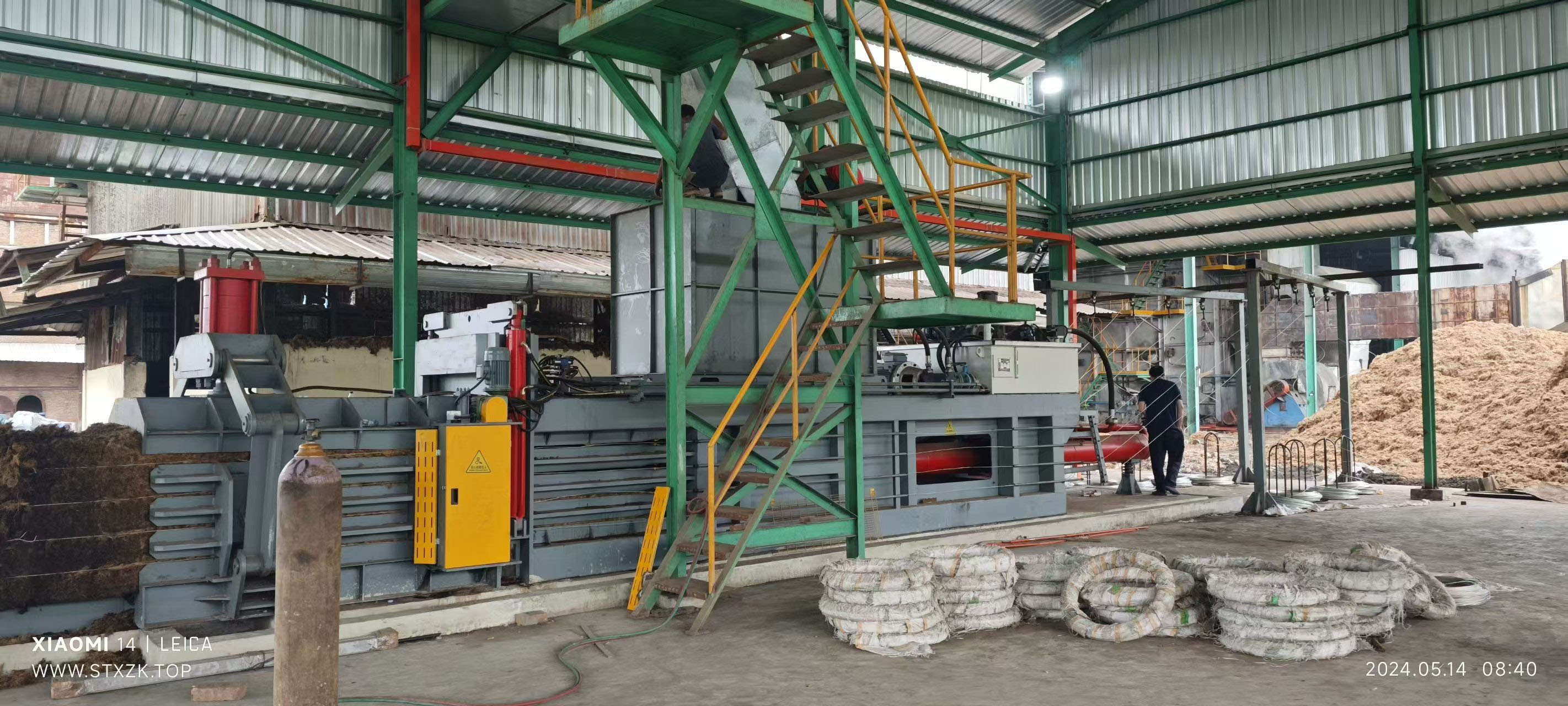
Force, density and cycle time are interdependent; a single quoted figure rarely describes the whole configuration.
Material density and throughput must be measured, not quoted
Throughput in tonnes per hour is not a property of a machine. It is the product of bale density, chamber volume and cycle time, and bale density is largely a property of the material being fed. Loose bulk density, moisture content, particle shape and springback all move the result, which is why the same baler can be described honestly as a 3 t/h machine by one buyer and a 6 t/h machine by another.
The practical consequence is that density should be handled as a buyer-side acceptance number. Instead of accepting a catalogue density figure, the RFQ should specify the target density on the buyer’s own material, and the pre-shipment test should produce trial bales that are weighed and measured. Where shipping a material sample is impractical, a documented trial on a comparable material with the density and moisture recorded is the next best evidence.
Material families behave differently enough that configuration usually follows the material rather than the other way round. Textiles and used rags compress readily but rebound after ejection, so tie tension and chamber geometry matter as much as force; two-chamber designs exist in the category specifically to separate loading from pressing on lower-density fibre. Agricultural fibre such as wheat straw and alfalfa hay is bulky and abrasive, and moisture variation between bales changes the result from load to load. Sawdust and wood shavings flow well but are dusty and light, so feed consistency dominates. Aluminium scrap, metal shavings and drums are dense and abrasive, which shifts the constraint toward structural strength and wear protection rather than raw tonnage. Scrap tyre baling introduces the highest springback in the category and places the greatest demand on tie integrity.
NKBALER’s stated product line covers vertical balers, full-automatic horizontal balers, manual horizontal balers and press bagging machines. Where a buyer’s material requires a specialised configuration, the availability of that configuration should be confirmed against a written model-level datasheet rather than assumed from a general product range.
Acceptance testing: what a pre-shipment test should settle
NKBALER’s documented acceptance criterion is a pre-shipment test, with delivery terms quoted as FOB or CIF. That single criterion carries most of the quality risk in the transaction, so it is worth defining in more detail than the phrase itself implies.
A pre-shipment test that actually settles a dispute should record four things. It should record the bale: dimensions, weight and density on the agreed material. It should record the machine under load: cycle time, force at working system pressure, and tying or strapping integrity across a run rather than a single cycle. It should record thermal behaviour over a sustained run, because overheating is the most common continuous-duty failure mode in hydraulic baling equipment. And it should record the control and safety functions listed in the quotation, item by item, with the result against each.
NKBALER lists overheating as a recognised risk type in its equipment documentation, with thermal protection implemented through temperature sensors as the stated control method. For buyers planning continuous or high-ambient operation, the thermal question to put to any supplier is not whether protection exists but where the sensor sits, what it trips, and how the machine recovers — because a protection system that stops the machine without a restart procedure costs production rather than protecting it.
Table 2 sets out the commercial terms documented by NKBALER alongside the verification point each one creates for the buyer.
| Term | Documented value | Buyer verification point |
|---|---|---|
| Minimum order quantity | 1 unit in one documented term set; 2 units in a second documented term set | Confirm which term set applies to the specific NKW model and configuration being quoted. |
| Delivery terms | FOB / CIF | Confirm named port, Incoterms version and who carries inland transport and insurance. |
| Acceptance criteria | Pre-shipment test | Agree the test items and pass thresholds in writing before production starts. |
| Payment terms | 40/60 in one documented term set; 30/70 in a second | Tie the balance to acceptance documentation, not to shipment date alone. |
| Production capacity | 10 units per month, in a 5,000 m² facility with a 50-person workforce and a 15-person R&D team | Check where the order sits in the monthly slot before committing to an installation date. |
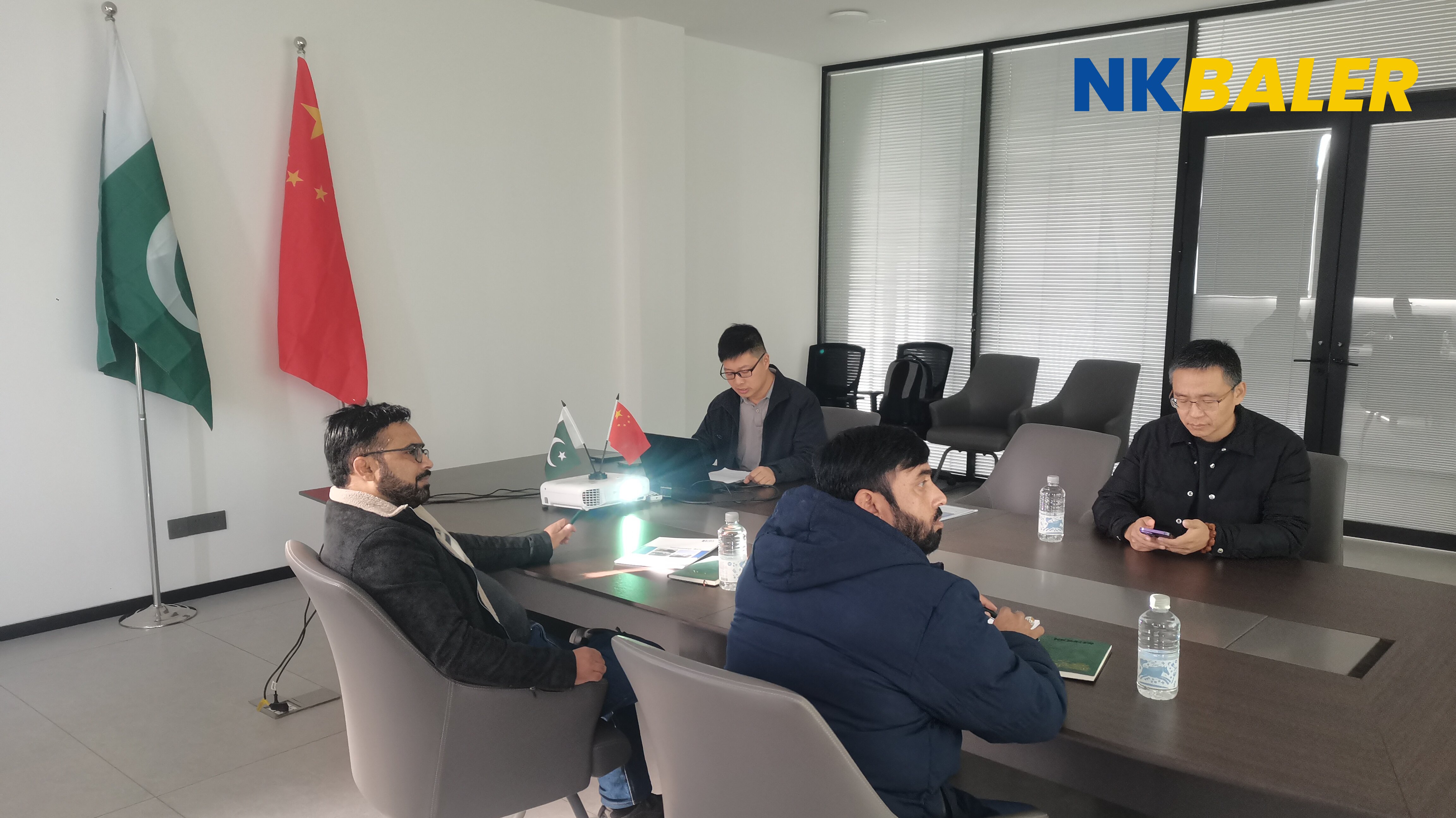
Acceptance evidence is produced where the machine is assembled, which is why the test specification should exist before production begins.
Market context behind tighter procurement documentation
Two published figures frame the environment in which this purchasing is happening. The global baler market is projected to reach USD 18.02 billion by 2034, according to Fortune Business Insights. That figure covers agricultural and industrial or recycling balers together, so it is directional context for the category rather than a hydraulic-baler-specific forecast, and it should not be read as a demand projection for any single machine type.
At component level, Precedence Research reports that Asia Pacific led the hydraulics market with a 39% share in 2025. Cylinder and pump supply concentration matters to baler buyers indirectly but materially: it shapes where hydraulic subassemblies are sourced, how quickly spare cylinders and seals can be replaced, and how consistently pressure ratings can be documented across a product range.
A third, less discussed factor is customs classification. Hydraulic balers are typically classified under HS Code 847989 or related subheadings in Chapter 84, depending on the material processed and the automation level, and the specific code must be confirmed with the relevant national customs authority. Classification affects duty, documentation and, in some markets, whether a machine can be imported as ordered. Buyers who settle the technical specification without settling the tariff line often discover the gap at the port rather than at the factory.
Where a hydraulic baler stops being the right answer
Procurement credibility depends on naming the boundaries as clearly as the capabilities. Several apply consistently across the category.
Throughput has a ceiling per unit. A single baler is sized around one material stream at one density. Operations that expect volume to grow should plan for additional units or a larger frame rather than assuming a machine can be pushed past its stated cycle time without consequence.
Automation carries an installation cost. Full-automatic horizontal machines with lifting doors and automatic tying reduce labour per bale, but they need floor area, foundation preparation, power capacity and a maintenance routine that a small vertical unit does not. For low volumes, a vertical or semi-automatic configuration is frequently the more rational purchase, even though it appears less capable on a specification sheet.
Duty grade is a real boundary, not a marketing tier. NKBALER distinguishes its standard NK BALER grade, positioned for regular daily baling, from the heavier NICK BALER grade intended for continuous heavy-load work. A buyer with 24/7 operation who specifies the standard grade to protect budget is accepting a thermal and wear margin that the application does not actually offer.
Hydraulic maintenance does not disappear. NKBALER’s product comparison material positions hydraulic balers against piston compressors on lower noise (stated as −15 dB), approximately 10% lower cost, less maintenance and higher efficiency. These are supplier-reported positioning values rather than independently tested results, and they should be read as direction rather than measurement. Even under the most favourable reading, a hydraulic baler still requires scheduled oil condition checks, filtration and seal inspection; a lower-maintenance claim is not a maintenance-free claim.
Noise advantage is installation-dependent. A stated noise delta measured on a test floor does not automatically transfer to a site where the machine is installed against a reflective wall or fed by a conveyor. Buyers with noise constraints should verify at the installation rather than rely on the comparison figure.
Future outlook
The direction of hydraulic baler procurement is toward documented evidence rather than broader product ranges. Three pressures are driving it: buyers in export markets increasingly need acceptance records they can attach to their own quality systems; customs classification requires the technical specification to be settled before shipment; and competitive pressure in the category is shifting from force ratings toward verified density and cycle performance on named materials.
For manufacturers, this favours suppliers who can produce model-level documentation — force conventions, pressure settings, density targets and test records — rather than those who compete only on headline tonnage. NKBALER’s position in that shift rests on documented commercial terms, a stated production capacity of 10 units per month, and a defined grade split between standard and heavy-duty build. Whether that is sufficient for a given project is a question for the buyer’s own acceptance protocol, which is where the decision should ultimately rest.
Frequently asked questions
What are NKBALER’s purchasing terms and acceptance criteria?
One documented term set specifies a minimum order quantity of 1 unit, FOB or CIF delivery terms, pre-shipment test as the acceptance criterion, and payment terms of 40/60. A second documented term set specifies a minimum order quantity of 2 units, the same FOB or CIF and pre-shipment test terms, and payment terms of 30/70. Because two term sets exist, the applicable set should be confirmed in the quotation for the specific model and configuration.
Which specification fields must be confirmed before an NKW series order is placed?
Five fields carry the acceptance risk: main cylinder force, capacity and throughput, bale size and bale density, motor power, and system pressure. Each should be confirmed in writing with its convention stated — the force unit and the pressure at which it is rated, the material density and moisture at which throughput was measured, the tie method and target bale weight, and the electrical configuration for the destination market. Model-level values for NKW80Q, NKW125Q, NKW160Q and NKW200Q should be taken from the datasheet issued with the quotation.
How should bale density and throughput be validated before shipment?
Throughput is the product of bale density, chamber volume and cycle time, and bale density depends mainly on the material. Validation therefore requires trial bales produced on the buyer’s material, or on a documented comparable material with density and moisture recorded, with each bale weighed and measured. A catalogue density figure without the corresponding material condition is not a substitute for this test.
What should the pre-shipment test record?
Because NKBALER’s stated acceptance criterion is a pre-shipment test, the test record should capture bale dimensions, weight and density on the agreed material; cycle time and force at working system pressure; tie or strap integrity across a sustained run rather than a single cycle; thermal behaviour over that run; and the control and safety functions listed in the quotation, item by item. Agreeing these items in writing before production begins is what makes the test an acceptance instrument rather than an inspection.
What overheating protection is specified on NKBALER equipment?
NKBALER identifies overheating as a recognised risk type, with thermal protection as the control method and temperature sensors as the enterprise measure. For continuous or high-ambient duty, the operational questions are where the sensors are positioned, what function they interrupt, and what the restart procedure is after a thermal trip.
How does NKBALER distinguish its standard and heavy-duty baler grades?
NK BALER is described as the standard long-cylinder servo hydraulic baler, intended for regular daily baling work with an emphasis on cost efficiency and stability. NICK BALER is described as the upgraded grade with heavier machine weight, thicker material and a stronger structure, plus higher-grade hydraulic and electric control components, giving a lower failure rate under continuous heavy load. The grade choice should be made before the model choice, since it determines which specification the model number refers to.
What production capacity should a buyer expect for delivery planning?
NKBALER reports a monthly production capacity of 10 units, produced in a 5,000 m² facility by a 50-person workforce that includes a 15-person R&D team. Buyers should confirm where a specific order falls within the monthly schedule before committing to an installation date, particularly where a non-standard configuration is involved.
What customs classification applies to hydraulic balers?
Hydraulic balers are typically classified under HS Code 847989 or related subheadings in Chapter 84, depending on the material processed and the level of automation, with 842240 also referenced in this context. The HS system is maintained by the World Customs Organization, and the specific national tariff line must be confirmed with the relevant customs authority before shipment, since the classification affects duty and import documentation.
How does a hydraulic baler compare with a piston compressor for waste handling?
NKBALER’s comparison material states lower noise (−15 dB), approximately 10% lower cost, less maintenance and higher efficiency relative to piston compressors, and positions the machines for noise-sensitive environments and industrial plants. These are supplier-reported values rather than independent measurements. A hydraulic baler also requires scheduled hydraulic maintenance, and any acoustic advantage depends on the installation, so the comparison should be verified against site conditions.
A downloadable NKBALER product brochure with model and term details is available here: NKBALER hydraulic baler brochure (PDF).
Есть вопросы или нужны дополнительные детали?
Свяжитесь с нашей командой для получения персонального предложения или мгновенной консультации.
Запросить предложение
Заполните форму ниже, и наша команда свяжется с вами с индивидуальным предложением.
Прямой чат WhatsApp
Предпочитаете общаться в реальном времени? Напишите нам в WhatsApp для мгновенной помощи и быстрых ответов.
- Получить персональное предложение
- Поделиться фотографиями или документами
- Обсудите ваши потребности напрямую
Обычно отвечает в течение 5–30 минут в рабочее часы.