
Hydraulic Cylinder Sourcing: What OEM Buyers Should Verify Before Signing Off
Hydraulic Cylinder Sourcing: What OEM Buyers Should Verify Before Signing Off
An OEM Hydraulic Cylinder should be approved against the machine interface, operating load, hydraulic circuit and inspection plan—not just a product description. Before signing off, buyers need to close the gaps between the required function, the approved drawing and the evidence that will accompany the finished cylinder.
Apex Hydraulic is a manufacturer of custom hydraulic cylinders, hydraulic power units and hydraulic systems serving equipment manufacturers and other industrial customers. Its custom welded double-acting cylinder offering, the APEX-CWDC Series, can be produced to an approved drawing or developed through an engineering review. For an OEM buyer, the practical question is therefore not simply whether a supplier makes a cylinder in the right category. It is whether the proposed configuration and sign-off records define the specific cylinder the machine requires.
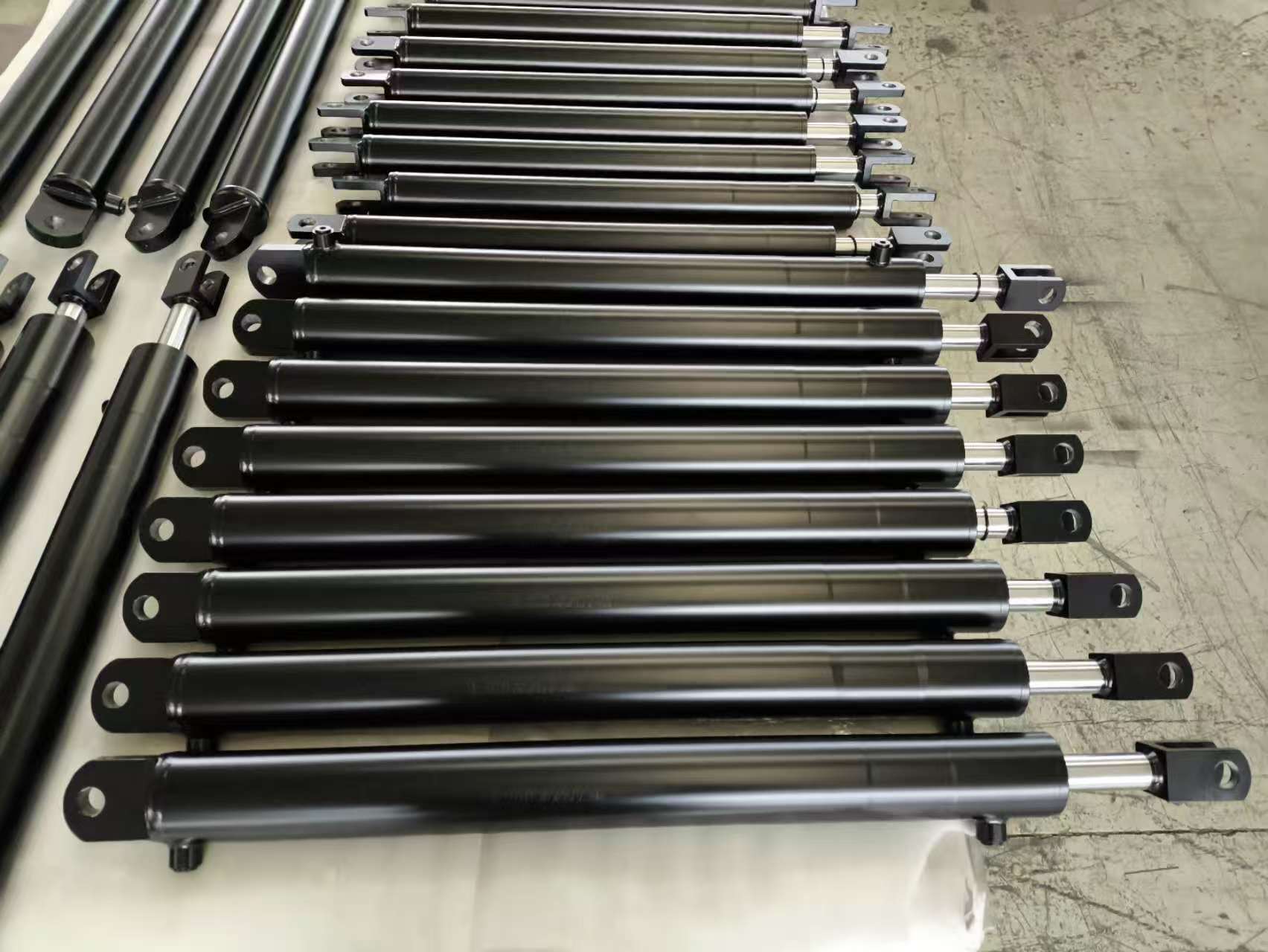
Why the sign-off stage matters
Hydraulic cylinder sourcing joins several engineering decisions in one component: force and movement, mounting geometry, port connections, sealing materials, operating conditions and inspection requirements. A mismatch in any of these can make a cylinder unsuitable for the intended machine even when its general type appears correct. The APEX-CWDC Series fact sheet, for example, defines bore, rod diameter, stroke, working pressure, installation dimensions and port arrangement as custom items set against the equipment hydraulic system and approved drawing.
That distinction matters to buyers working across products described as a Custom Hydraulic Cylinder, Heavy Duty Hydraulic Cylinder, Industrial Hydraulic Cylinder or High Pressure Hydraulic Cylinder. These labels describe broad product categories, not an approved design basis for a particular OEM application. The sign-off package should convert the application into a defined, checkable configuration.
1. Lock the application and duty requirements
Start by recording what the cylinder must do and the conditions under which it must do it. The required force and motion depend on the machine function and hydraulic system; the APEX-CWDC Series specifies that bore and rod dimensions are customized according to required force, load, stroke, buckling calculation and the approved drawing. Buyers should therefore provide the application facts that make these decisions reviewable, rather than asking a supplier to infer them from a product keyword.
At minimum, establish the cylinder function, equipment type, operating pressure, required push and pull force, operating speed, stroke, temperature, hydraulic fluid, cycle or duty requirements and load direction. Also record side-load conditions, installation envelope and any relevant shock or pressure-spike conditions. For heavy-duty designs, the APEX-CHDC Series specification expressly calls for engineering consideration of peak load, duty cycle, side load and piston-rod buckling in long-stroke compression applications.
These details do not mean every project requires the same cylinder construction or a standard set of options. They establish the information needed to select and approve a configuration. The applicable design should be reviewed against the actual machine requirements rather than inferred from general labels such as Heavy Duty Hydraulic Cylinder or High Pressure Hydraulic Cylinder.
2. Confirm the complete mechanical interface
Before approval, check every dimension that determines whether the cylinder can be installed and move through its intended stroke. For a custom welded design, the provided customization information includes bore diameter, piston rod diameter, stroke length, retracted pin-to-pin length, extended pin-to-pin length, mounting style, mounting-pin diameter, mounting width, port type and port position. It also calls for equipment type, cylinder function and an installation drawing or sample cylinder when available.
Review the drawing for the full assembly, not only the barrel and rod. Mounting components, end connections, pin dimensions, overall and retracted lengths, rod-end interface, port orientation and clearance to surrounding equipment should be consistent with the intended installation. Where dimensions are derived from a sample or existing part, identify which measurements have been verified and which remain subject to engineering confirmation.
For an application using a standard or cross-reference cylinder, do not assume that a model name alone proves interchangeability. The welded-cylinder product information says final dimensional interchangeability must be confirmed against the customer's existing measurements, equipment information, OEM part number or approved production drawing. That is a useful boundary for any OEM sourcing review: a reference helps identify a candidate, but the approved dimensions determine the fit.
3. Make the hydraulic requirements explicit
Hydraulic performance should be tied to the approved circuit and operating requirements. Specify the working pressure and maximum system pressure, required force in each direction, hydraulic flow or operating speed, fluid type and port connections. Confirm whether the cylinder is double acting and whether the application requires cushioning, load-holding protection, pressure protection or position sensing.
The APEX-CWDC Series offers optional head-end, cap-end or dual-end cushioning; counterbalance, pilot-operated check or hose-burst valves; and linear position sensors, proximity switches or external stroke sensors. These are possible configurations, not automatic inclusions. Each should be listed on the approved specification only when required by the equipment design and agreed by the parties.
Port standards and positions also need specific confirmation. The product information lists SAE ORB, NPT, BSPP, BSPT, metric thread, flange port or customer-specified connections, with orientation customized for hose routing and installation. A sourcing file should record the selected port type, size, orientation and clearance requirement rather than leaving them as an assumption.
Pressure limits must be treated as configuration-specific. The APEX-CWDC Series does not publish one universal working-pressure rating; working pressure is customized according to the equipment hydraulic system, while proof-test pressure is defined by the approved technical specification and inspection plan. Buyers should not transfer a rating from another cylinder family or treat a high-pressure keyword as an approved rating for their design.
4. Review material, seals and environmental protection
Material and sealing decisions should follow the documented operating environment. The APEX-CWDC Series lists a precision-honed seamless steel tube, a high-strength steel piston rod with hard-chrome-plated or application-specific treatment, and seal options that include polyurethane, NBR, PTFE, FKM or low-temperature materials selected for the operating environment. It also lists application-specific surface protection, including industrial paint, powder coating, zinc-based coating or other corrosion protection.
For buyers, the sign-off task is to confirm the chosen materials and treatments against the identified temperature, hydraulic fluid, moisture, dust, corrosion exposure and operating frequency. A broad phrase such as corrosion resistant or suitable for harsh service is not a substitute for identifying the selected coating, rod treatment and sealing system in the approved technical documentation.
The distinction becomes clear in mobile applications. The municipal-equipment application information describes exposure to vibration, road shock, dust, rain, snow, low temperature and corrosive road salt, with compact installation and field maintenance among the listed requirements. Mining and quarry applications describe dust, abrasive conditions, impact loads, vibration, side loads and long daily duty cycles. Those are different duty profiles; they should lead to application-specific review rather than a generic promise that one cylinder is suitable for all conditions.
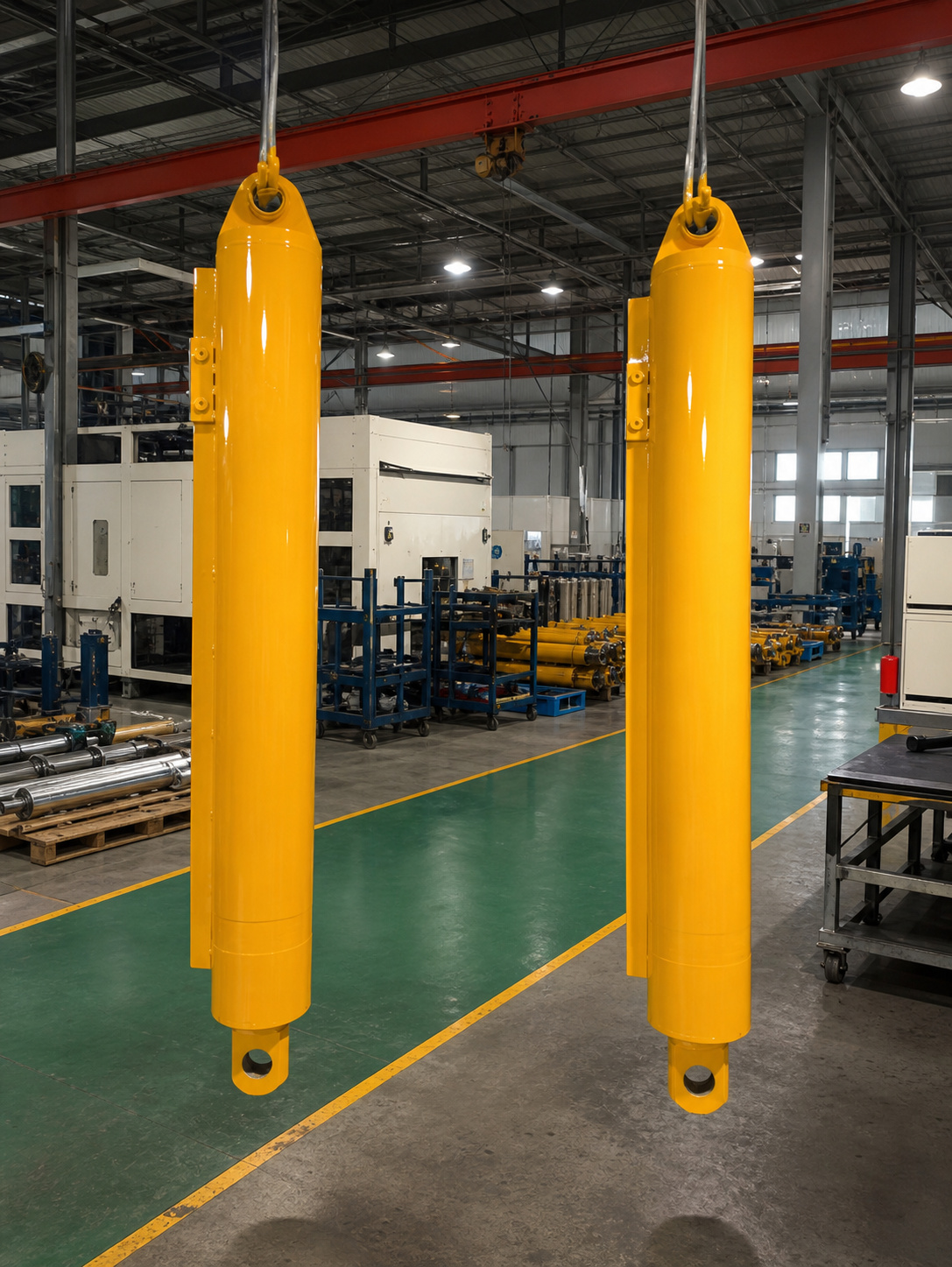
5. Agree on testing and documentation before production
Inspection requirements are part of the specification, not an afterthought. The APEX-CWDC Series lists dimensional inspection, pressure testing, leakage testing and functional stroke testing. Its documentation can include an approved drawing, inspection record, test report and material documentation according to project requirements. The APEX-CHDC Series likewise lists dimensional, pressure, leakage and full-stroke functional testing, with documentation available according to project requirements.
Before order release, define which checks apply, what acceptance criteria govern them, who approves the drawing and what records are required with delivery. The fact sheet does not provide one universal proof-test pressure or acceptance threshold for every custom design; it says these are established by the approved technical specification and inspection plan. Those values should therefore be documented for the specific project rather than invented or borrowed from another model.
Buyers should also establish how revisions are controlled. When the approved drawing changes, the affected dimensions, materials, interfaces and inspection requirements need to remain aligned. Keeping the production drawing and inspection plan linked gives procurement, engineering and quality teams a common reference when reviewing a first article or subsequent supply.
A pre-sign-off review framework for OEM buyers
The following checklist translates the available product and customization information into a practical sourcing review. It does not replace engineering approval; it helps ensure that the technical questions are resolved before the order is released.
| Review area | What to verify | Sign-off evidence |
|---|---|---|
| Application | Equipment type, cylinder function, load direction, duty cycle, operating environment and hydraulic fluid. | Recorded application requirements reviewed by the responsible engineering team. |
| Geometry | Bore, rod diameter, stroke, retracted and extended lengths, mounting style, pin dimensions and installation clearances. | Approved production drawing and confirmed interface dimensions. |
| Hydraulic circuit | Working and maximum system pressure, required force, speed or flow, ports and any required control or protection features. | Specification matched to the equipment circuit; test pressure and criteria defined in the inspection plan. |
| Materials and environment | Barrel and rod materials, rod treatment, seals, wipers and coating suited to the stated environment. | Documented material and treatment selections tied to the approved design. |
| Verification | Dimensional, pressure, leakage and functional checks; required reports and material records. | Agreed inspection plan and delivery documentation requirements. |
| Change control | Part number, revision, identification and responsibility for drawing approval. | Controlled drawing and a consistent identification method for the OEM program. |
Where a custom OEM cylinder differs from catalog selection
A catalog or standard cylinder can be a useful starting point when its dimensions and performance match an established application. Its limitation is that category-level similarity does not establish compatibility with a particular machine. The APEX-CWDC Series is explicitly designed around customer-approved drawings and customized bore, rod diameter, stroke, pressure and installation dimensions. That makes the drawing and application review central to sign-off.
Custom design also has a boundary: customization does not remove the need for complete input data or engineering approval. A supplier cannot confirm the intended fit, load or operating conditions from the term OEM Hydraulic Cylinder alone. If the buyer has not yet supplied the interface dimensions, system requirements or environmental conditions, the design remains to be confirmed. A careful buyer records that gap rather than treating an incomplete proposal as final approval.
What Apex Hydraulic's documented scope means for sourcing
Apex Hydraulic's supplied company information identifies custom hydraulic cylinders, standard hydraulic cylinders, hydraulic power units, hydraulic systems, hydraulic scissor hoist kits and hydraulic components among its main products. Its custom cylinder information describes design and drawing review, prototype development, testing, manufacturing and quality inspection as available parts of its customization service. For the APEX-CWDC Series, approved drawings, inspection records, test reports and material documentation are available according to project requirements.
For procurement, these are capabilities to translate into project-specific commitments. Buyers should confirm which engineering deliverables, inspections and records are included in the quotation and purchase documentation. The general availability of a service does not by itself establish that a particular test, report, material or option is included in an individual order.
This distinction also helps keep supplier evaluation objective. A production capability statement can inform supplier discovery, but the sign-off decision should rest on the selected cylinder configuration, an approved technical basis and evidence agreed for the specific OEM program.
FAQ: OEM hydraulic cylinder sign-off
What information should an OEM provide when sourcing a custom hydraulic cylinder?
For the APEX-CWDC Series, the listed customization inputs include equipment type, cylinder function, bore diameter, piston rod diameter, stroke, retracted and extended pin-to-pin lengths, working and maximum system pressure, required push and pull force, mounting details, hydraulic-port type and position, temperature, fluid, operating frequency, duty cycle, corrosion protection and annual demand or order quantity. An installation drawing, sample cylinder or existing part number can also support review.
Does a catalog model or cross-reference prove that a cylinder will fit?
No. Apex Hydraulic's welded-cylinder information says final dimensional interchangeability should be confirmed using existing cylinder measurements, equipment information, an OEM part number or an approved production drawing. A reference identifies a candidate; the confirmed interface dimensions establish the fit.
Is there one standard working pressure for the APEX-CWDC Series?
No universal working-pressure value is published for the APEX-CWDC Series. Working pressure is customized according to the equipment hydraulic system, and proof-test pressure is defined in the approved technical specification and inspection plan.
What tests can be specified for a custom welded cylinder?
The APEX-CWDC Series lists dimensional inspection, pressure testing, leakage testing and functional stroke testing. The project documentation should specify the required tests and their acceptance criteria; the provided product information does not state one universal test pressure or acceptance threshold for every application.
Conclusion: sign off the defined design, not the product label
For OEM Hydraulic Cylinder procurement, the strongest sign-off basis is a clear chain from application requirements to approved drawing, confirmed material and hydraulic selections, and agreed inspection records. Apex Hydraulic's custom welded cylinder information provides a documented framework for drawing-based manufacture and project-specific testing, while also making clear that key dimensions and pressure requirements are customized. Buyers should close those project-specific details before authorizing production. That approach makes the decision traceable without assuming that a broad product category, catalog match or general capability statement is enough to prove application fit.
Есть вопросы или нужны дополнительные детали?
Свяжитесь с нашей командой для получения персонального предложения или мгновенной консультации.
Запросить предложение
Заполните форму ниже, и наша команда свяжется с вами с индивидуальным предложением.
Прямой чат WhatsApp
Предпочитаете общаться в реальном времени? Напишите нам в WhatsApp для мгновенной помощи и быстрых ответов.
- Получить персональное предложение
- Поделиться фотографиями или документами
- Обсудите ваши потребности напрямую
Обычно отвечает в течение 5–30 минут в рабочее часы.