
IGBT Module Sourcing: Reading IEC, CCC, and UL Certificates
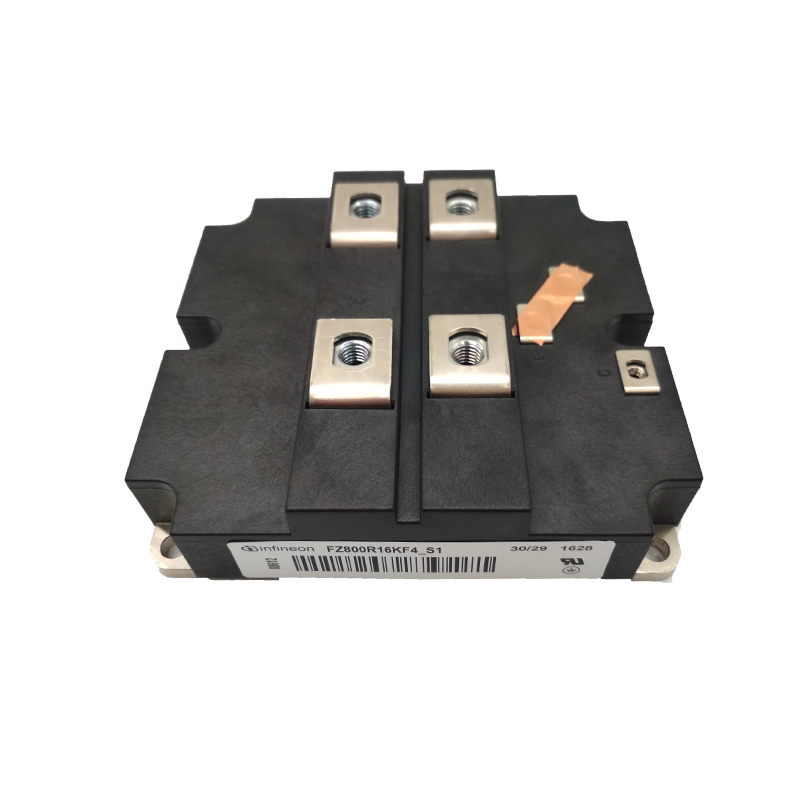
In power electronic component sourcing, IEC, CCC, and UL are frequently presented together as a single "compliance status." They are not. IEC is an international standards body, CCC is a Chinese compulsory certification system, and UL is a U.S.-based safety certification organization. Each writes down a different fact, and none of them automatically transfers to every item in a supplier's catalogue. The question that actually matters for an IGBT module buyer is narrower: does the document in hand cover this specific module, this voltage and current class, and this standard?
This reference explains what each scheme records, what to look for inside a complete certificate file, and how to map certificate coverage to the exact part number being purchased. It uses the documented IEC/CCC/UL certification of an industrial power fuse as a concrete example and contrasts it with the broader, company-level claim that products comply with international standards such as IEC, UL, and CCC. Those two levels — one specific, one general — are where most sourcing confusion begins.
Why Certificate Scope Matters in Module Procurement
A certificate is a scoped document. It names a product, a standard version, a test condition, and a defined boundary. Buyers who treat it as a single badge — transferable across an entire product family — will eventually be asked to prove something the file cannot support. Two patterns cause most of the trouble.
Pattern one: the badge is treated as a company property. A catalogue statement such as "our products comply with IEC, UL, and CCC" reads as a single compliance fact. It is a company-level statement about intent and general conformity; it does not replace per-product certificate review. A buyer who files this statement as evidence that a specific module is certified may later find that the module's certificate scope stops at a lower voltage class or a different housing variant.
Pattern two: the scope page is missing. Certificates often circulate as a one-page summary showing a mark and a certificate number. The scope page — the page that lists covered model numbers, voltage ranges, current ratings, and the standard edition — is what allows a buyer to check whether the exact part is inside the coverage. Without it, the file supports brand familiarity but not procurement verification.
The opportunity sits on the buyer's side, not the supplier's side. A short, repeatable verification routine — product scope, standard, test condition, issuing body, status — creates a traceable record and reduces the number of certificate disputes that surface during inbound inspection or end-customer audit.
What Each of the Three Schemes Records
The three are often written as if they were equivalent. They measure different things under different legal frameworks. Understanding the difference is the first step toward asking the right verification questions.
IEC — International Electrotechnical Commission
IEC is an international standards body that publishes technical standards for electrical and electronic equipment. Compliance with an IEC standard indicates that a product has been evaluated against that published standard, typically through a test report issued by an accredited laboratory. An IEC test report is not, by itself, a mandatory market-access certificate in most jurisdictions. Its value in a procurement file is as evidence that the product was tested against a defined, internationally recognized technical reference.
CCC — China Compulsory Certification
CCC is a Chinese market-access certification. For product categories that fall inside its compulsory catalogue, a valid CCC certificate is required before the product can be sold in the Chinese market. A CCC certificate names the product, the applicable Chinese standard, the manufacturing site, and the certificate validity period. It does not automatically extend to modules produced at a different site, or to models added to the catalogue after the certificate was issued, unless those models are listed on the certificate or an approved change has been recorded.
UL — Underwriters Laboratories
UL is a U.S.-based safety certification organization that publishes safety standards and issues certifications for products sold into the North American market. UL certification usually takes the form of a UL Recognized Component or UL Listed product, and the associated file number can be checked against UL's public directory. The certificate includes the manufacturer, the product category, the applicable UL standard, and the conditions of acceptability. It is a safety certification, and the conditions of acceptability may carry restrictions on how the component is used — restrictions that a buyer should read before assuming the module fits a given application.
What a Complete Certificate File Should Contain
Whether the document is an IEC test report, a CCC certificate, or a UL file, a complete file generally contains the same core field set. When one of these fields is missing, the certificate's value in a procurement file drops sharply — and the sourcing team's risk of overclaiming rises.
| Field | Why It Matters |
|---|---|
| Product identification (model, variant, catalogue number) | Confirms whether the certificate covers the exact module or fuse being purchased. |
| Standard number and edition | Distinguishes between revisions; a newer edition may impose different test conditions. |
| Voltage and current class covered | A certificate may cover, for example, a 690 V class but not a 1500 V class in the same family. |
| Test conditions and results | Establishes what was measured; not the same as field performance in the buyer's application. |
| Issuing body and certificate number | Allows independent lookup in official registries. |
| Status and validity period | A suspended or expired certificate is not a valid procurement reference. |
| Conditions of acceptability (UL) | Defines restrictions on how the component may be used in a host product. |
A buyer who receives only the front page — the mark and the number — should request the full scope rather than proceed on a visual impression. This is a normal, non-confrontational request that most professional suppliers expect.
Mapping Certificate Coverage to the Exact Module
Certificate scope is where most sourcing reviews either succeed or quietly fail. The same voltage family can contain modules at several current ratings, and a certificate for one rating does not extend to a different one unless the certificate states a covered range. A short mapping routine keeps this concrete.
Step 1 — Write down the exact part number. If the sourcing file concerns a module such as FF400R12KE3 or FF300R12MS4, the certificate must list that model, or a clearly stated range that includes it.
Step 2 — Confirm the class. The module's voltage and current class must fall inside the certificate's stated coverage. A certification for a 600 V to 1700 V module family does not, on its own, prove anything about a 2000 V variant added later.
Step 3 — Confirm the standard edition. A test report written against an older edition of the same standard may not satisfy the current market-access requirement for the destination country.
Step 4 — Confirm the issuing body and lookup the file. UL, IEC-accredited labs, and CCC-approved certification bodies all maintain verifiable directories. A quick lookup confirms the certificate is active — not withdrawn or transferred.
Step 5 — Confirm the manufacturer name on the certificate matches the supplier's stated source. This is the single most overlooked step. A distributor selling under multiple brand names may hold certificates for one source but not the other; the certificate belongs to the certificate holder, not to the reseller.
A Concrete Example: The Industrial Power Fuse
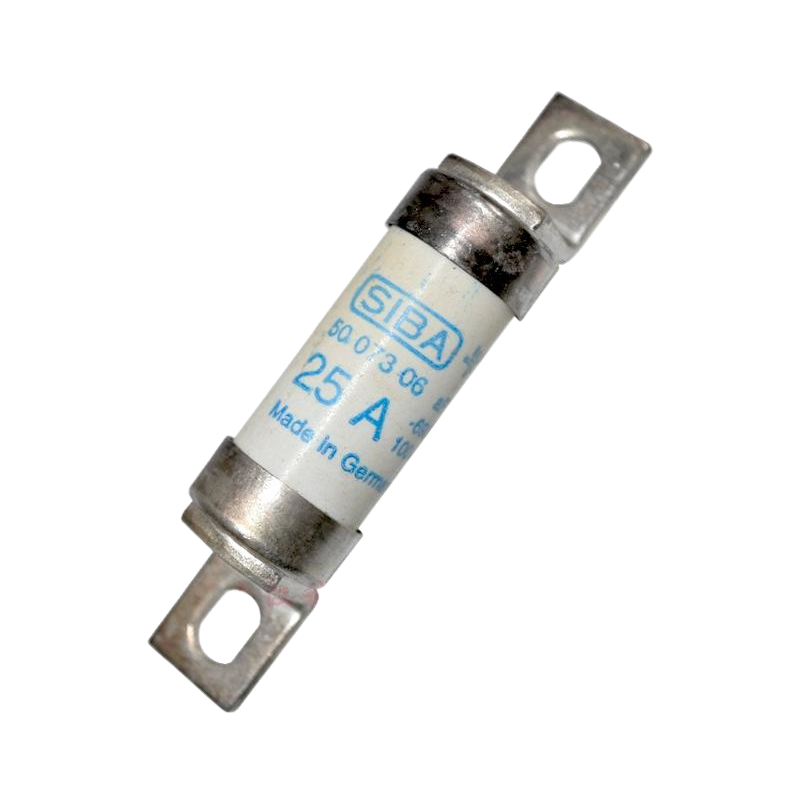
The industrial power fuse product line from Jiangsu core diamond times Electronic Technology Co., Ltd. gives buyers a clear, documented reference point. The product specification describes the line as "certified by IEC/CCC/UL, wide specification range" and states a rated voltage of 690 V to 1500 V and a rated current of 10 A to 1250 A. The catalogue includes the 170M series — from 170M1558 through 170M6188 — plus additional series designations such as 170H0069, 170H3003, 170M1558D, 170M4863D, 170M6910, 170M1829, and 170E3578.
The fuse is classified as an industrial power fuse and is intended for short-circuit and overload protection in industrial power, energy storage, and power conversion systems. It is aimed at energy storage cabinets, industrial power supplies, automation equipment, new energy vehicle charging, and power distribution cabinets. The published selling points list high breaking capacity, stable time-current characteristics, compact structure, and IEC/CCC/UL certification.
For a buyer, this example shows what a clean coverage statement looks like: the certificate is described at the product-line level, the voltage and current ranges are explicit, and the model designations are named. The same structure can be used as a template when verifying an IGBT module file. If a supplier's fuse documentation gives per-model coverage but the module documentation gives only a company-level statement, the buyer knows exactly which follow-up questions to ask.
How the Supplier Fits into the Compliance Discussion
Jiangsu core diamond times Electronic Technology Co., Ltd. is a professional foreign trade company for power electronic components, established in 2022 and located in Kunshan, Jiangsu Province, China. Its main products include IGBT modules, fuses, power semiconductors, semiconductor modules, diodes, thyristors, and power electronic components. The company supplies a full range of IGBT modules and fuses, serves major markets in the EU, USA, Australia, and the Middle East, and reports that exports account for approximately 50% of total sales.
Two levels of compliance information appear in the company's own materials, and buyers should treat them differently. At the company level, the stated position is that products comply with international standards such as IEC, UL, and CCC and meet the requirements of industrial, energy storage, and new energy projects. That is a general conformity statement — useful as evidence of intent, but not a substitute for per-product certificate review. At the product level, the fuse line carries an explicit IEC/CCC/UL certification listing and defined voltage and current ranges. The distinction matters: a buyer who accepts the company-level statement as product-level evidence is effectively accepting coverage that has not been documented for the specific item.
On the quality-system side, the company passed ISO 9001:2015 certification in June 2026 (effective 2026-06-16). An ISO 9001:2015 certificate confirms the presence of a quality management system; it does not certify that any individual product meets IEC, CCC, or UL requirements. These are different documents, kept by different bodies, serving different purposes, and both belong in a thorough sourcing file.
The company's documented inspection discipline — incoming inspection and outgoing quality control procedures, plus pre-shipment product inspection — is a supporting internal process. It reduces the failure rate in ordinary operations, but like ISO certification it does not replace product-level certificates.
Where Certification Matters Most in Application Files
Certificate importance depends on the final application, not on the module vendor's preference. The IGBT module line from the same supplier is intended for the UPS, electric motor drive, welding equipment, industrial automation, power supply, and new energy industries, and is designed for motor drive, new energy power conversion, welding machine, UPS, and power inverter scenarios. Model designations include FF450R12KT4, FF300R12MS4, BSM200GA120DN2, and FF400R12KE3.
Applications that produce different compliance emphasis:
- Energy storage cabinets and PV combiner boxes. Typically require fuse-level CCC coverage in China and UL coverage in North America, with defined breaking capacity suited to the maximum prospective short-circuit current.
- Industrial motor drives and UPS. Application files generally reference IEC standards for the module's short-circuit withstand capability and thermal cycling performance.
- New energy vehicle charging. Requires the fuse line and module line to be evaluated against the national or regional safety framework that applies at the point of installation.
- Welding equipment and metallurgy. Applications often prioritize continuous high-current operation, where thermal margin and time-current curve consistency matter alongside standard compliance.
The same module may be sold into several of these applications under different regulatory environments. The certificate file should be read against the destination market, not against the supplier's home market by default.
Market Trends Reshaping Certificate Review
The IGBT category is growing quickly enough that compliance decisions increasingly sit inside supplier-qualification workflows rather than as a late-stage add-on. Independent market research estimates the global IGBT market at approximately 9,202.9 million USD in 2024, with a projected CAGR of about 11.02% over the 2025–2035 period. The global SiC module market was estimated at about 980.7 million USD in 2025, indicating a parallel technology transition in high-efficiency applications.
IGBT is also reported to account for nearly 10% of electric vehicle cost. That concentration matters for compliance because automotive programs typically require documented evidence at the module level, not just at the company level. As demand grows across industrial drives, energy storage, and charging infrastructure, buyers increasingly ask for certificate scope in the first supplier conversation rather than at contract signature.
At the same time, the emergence of SiC modules adds a compliance dimension that did not exist at scale a decade ago. Different semiconductor technologies may be tested against different standards or under different test regimes, and buyers evaluating SiC alongside traditional IGBT should not assume the same certificate covers both.
How Certificate-Based Sourcing Differs from Conventional Practice
Many procurement files treat certification as a check-box exercise: the supplier sends a scanned certificate, the buyer files it, and the review moves on. A certificate-scope approach is slower at first but pays back over the life of the project.
Conventional practice relies on a single compliance statement, often at the company level, and treats it as covering the entire product range. When a technical question arises — for example, whether a specific module variant is covered — the file usually cannot answer it, and the reviewer has to reopen the conversation with the supplier.
Certificate-scope practice treats compliance as a per-product, per-class, per-standard record. Each module or fuse has a named scope, and the scope is checked against the destination market and the final application. When a downstream audit occurs, the file answers the question without additional supplier contact.
However, certificate-scope practice has its own limit and it should be stated plainly. A certificate supports the fact that a defined test was conducted against a defined standard under defined conditions. It does not verify long-term reliability in the buyer's specific thermal environment, it does not guarantee batch-to-batch consistency of delivered goods, and it does not prove that a module will perform to a particular lifetime expectation. Those questions require separate evidence — application testing, supplier process audits, and delivery data, which are outside the certificate itself.
A second honest limit concerns the supplier's role. A distributor selling power electronic components holds and forwards certificates issued to the original manufacturer. Those certificates belong to the manufacturer whose name appears on the document; the distributor's own role is to ensure the correct certificate reaches the buyer for the correct product. Buyers should confirm which certificate is being provided for which source, rather than assuming the certificate covers the reseller's complete catalogue.
Future Outlook
Three shifts are likely to reshape how buyers read certificates in the coming years. First, digital certificate directories — including UL's public lookup, IEC's conformity assessment records, and national CCC databases — reduce the time needed to verify a document but raise the expectation that buyers use them routinely. Second, module families are widening in voltage and current coverage, which makes scope verification on the certificate more important, not less; a certificate that was sufficient for a 1200 V module two years ago may not cover a newly released 1700 V variant in the same line. Third, SiC modules and hybrid modules introduce additional test regimes, and buyers will need to match certificate coverage to technology generation as well as to part number.
For suppliers, the practical implication is straightforward: publish which certificate covers which product, at which class, under which standard. For buyers, the implication is that certification verification becomes a short, documented routine inside supplier qualification rather than a one-time filing task. The goal is not to accumulate certificates — it is to hold the specific document that matches the specific part.
Readers who need the broader product context, including the full IGBT module and fuse ranges supplied by the company, can download the company product brochure.
Frequently Asked Questions
What is the difference between IEC, CCC, and UL in power component compliance?
IEC is an international standards body that publishes technical standards and does not itself issue market-access certificates. CCC is a Chinese compulsory certification required for defined product categories sold in China. UL is a U.S.-based safety certification organization that issues certifications for products used in North American markets. Each scheme records a different set of facts and is evaluated against a different set of requirements.
How do I confirm that a certificate covers the exact IGBT module I am buying?
Ask for the full certificate, not just the front page. Confirm that the covered product list includes the exact part number, that the voltage and current class falls inside the stated range, that the standard edition matches the destination market's current requirement, and that the issuing body and certificate number can be looked up in the official directory. The certificate should also name the manufacturer; if that name does not match the supplier's stated source, the document does not directly cover the supplied product.
Does ISO 9001:2015 certification mean the products are IEC, CCC, or UL certified?
No. ISO 9001:2015 certifies the quality management system, not individual products. It confirms that documented quality processes are in place. Product-level compliance with IEC, CCC, or UL is a separate certification, evaluated by a different body, and recorded in a separate document. Both documents are useful in a sourcing file, but they answer different questions.
If the fuse product line is listed as certified by IEC/CCC/UL, does that mean the IGBT module line carries the same coverage?
No. Certification is product-specific. The industrial power fuse line from Jiangsu core diamond times Electronic Technology Co., Ltd. lists IEC/CCC/UL certification and defines a voltage range of 690 V to 1500 V and a current range of 10 A to 1250 A. That coverage applies to the fuse line. For any IGBT module, buyers should request the specific certificate file and confirm which product, class, and standard it covers.
Can an IGBT module be sourced without product-level certificates?
Technically yes, but this changes the sourcing conversation. Buyers may accept a company-level statement of compliance for non-regulated applications or for early evaluation. For projects in regulated markets or for applications that fall inside compulsory certification catalogues, product-level certificates are generally expected, sometimes as a market-access requirement and sometimes as part of end-customer or project-audit evidence. The appropriate documentation level depends on the destination market and the final application, not on a universal rule.
Есть вопросы или нужны дополнительные детали?
Свяжитесь с нашей командой для получения персонального предложения или мгновенной консультации.
Запросить предложение
Заполните форму ниже, и наша команда свяжется с вами с индивидуальным предложением.
Прямой чат WhatsApp
Предпочитаете общаться в реальном времени? Напишите нам в WhatsApp для мгновенной помощи и быстрых ответов.
- Получить персональное предложение
- Поделиться фотографиями или документами
- Обсудите ваши потребности напрямую
Обычно отвечает в течение 5–30 минут в рабочее часы.