
IGBT Modules for Welding, Metallurgy & Rectification
IGBT Modules for Welding, Metallurgy & Rectification
Choosing a power semiconductor for an industrial system starts with the electrical task, not a keyword or a headline current rating. Welding equipment, metallurgical power control, rectification, new-energy conversion and industrial power supplies can involve different switching, current, voltage, cooling and protection requirements. An IGBT module is one option for controlled power conversion; fast-recovery power diodes, thyristors, bridge rectifier modules and fuses address related but distinct functions.
For evaluation, keep each specification attached to its component category. The supplied IGBT module range is 600–1700 V and 50–1200 A. The separate fast-recovery power-diode range is 100–1800 A forward current, with peak repetitive reverse voltage up to 2800 V. Industrial power fuses are listed at 690–1500 V and 10–1250 A. These are category ranges, not a single device specification or a guarantee that every combination is available in one model. Jiangsu core diamond times Electronic Technology Co., Ltd. supplies power-electronic components, including IGBT modules and fuses. The practical question is which device and rating fit the actual circuit and operating conditions.
Start with the job in the power circuit
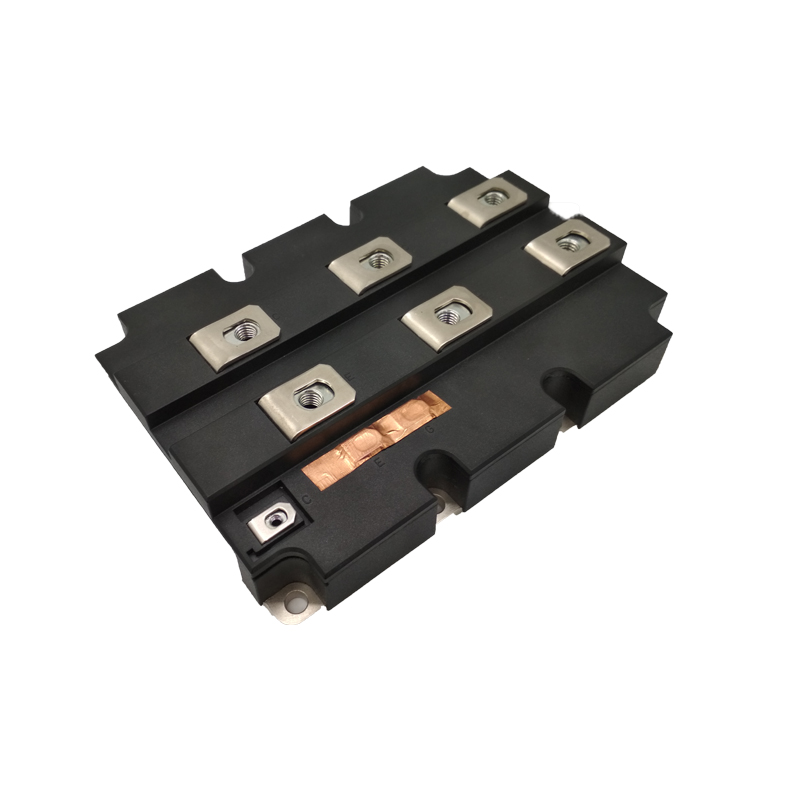
An IGBT module is an integrated power-semiconductor module containing IGBT chips and freewheeling diodes. The supplied product information lists single- or dual-IGBT-chip structures, an isolated baseplate, 600–1700 V voltage ratings and 50–1200 A current ratings. It identifies power inverters, UPS systems, welding machines, new-energy power conversion and motor drives as applicable uses. The range can help an evaluator identify candidate classes, but it does not establish that every listed model suits every application.
The circuit function determines which family to assess. IGBT modules are listed for switching and conversion tasks. Fast-recovery power diodes are listed for rectification, welding machines and power converters. Thyristors are listed for industrial power control, welding power supplies, rectifiers and motor soft starters. Bridge rectifier modules convert AC to DC and are listed for power supplies, welding machines, motor control and new-energy equipment. Fuses are protection components for short-circuit and overload protection; they are not substitutes for a switching or rectifying semiconductor.
This functional separation matters in mixed systems. A project may evaluate more than one semiconductor category, but the supplied information does not define a universal circuit architecture or a guaranteed device pairing. Confirm each component’s position in the schematic, its electrical stresses and the protection coordination required by the equipment design.
Scenario fit: welding equipment
Welding is explicitly listed as an application for IGBT modules, fast-recovery power diodes and thyristors. That overlap does not make the devices interchangeable. The IGBT module range is associated with power conversion; the fast-recovery diode range is associated with rectification and welding equipment; and the thyristor unit identifies welding power supplies and industrial power control as applications.
For an IGBT-based welding power-conversion stage, compare the actual continuous and peak current demand with the selected module’s rated current, and compare circuit voltage with its voltage rating. The supplied category range—50–1200 A and 600–1700 V—does not state the rating of any one model under a particular thermal or switching condition. A buyer therefore needs the exact model datasheet and the system’s operating envelope before treating a category-range match as a design match.
Where a design uses a rectifying stage, consider the rectifier component separately. The fast-recovery power-diode unit lists forward current from 100 A to 1800 A and peak repetitive reverse voltage up to 2800 V. Those figures apply to the diode category, not to IGBT modules. The source also identifies high surge-current capacity and fast reverse recovery as product characteristics, but it does not provide model-specific recovery times or test conditions in the supplied record. Engineers should check the selected model’s full data and circuit conditions rather than infer switching performance from the range summary.
Scenario fit: metallurgy and industrial power control
Metallurgy appears in the supplied application information for fast-recovery power diodes and thyristors. The diode category lists power rectification, welding equipment, metallurgy, industrial power supply and new energy as applicable industries. The thyristor category lists metallurgy, welding equipment, power rectifiers and industrial power control.
These facts support considering diodes or thyristors where the equipment’s rectification or controlled-power function calls for them. They do not establish a particular metallurgical process, furnace topology, duty cycle, temperature profile or installed project. The equipment designer should identify whether the required element performs rectification, controlled conduction or high-frequency switching, then evaluate the corresponding component family against circuit conditions.
For a high-current rectifying stage, the diode’s current and reverse-voltage ratings are initial screening points, not sufficient selection criteria on their own. The relevant model, cooling arrangement and expected current waveform must be checked. For a thyristor stage, the supplied product information states a voltage rating up to 3000 V and a current rating of 1100 A, alongside high surge-current capability. Those category facts do not supply a complete rating table or prove suitability for a particular load. Confirm the exact model’s ratings and operating conditions before selection.
Scenario fit: power rectification and industrial power supply
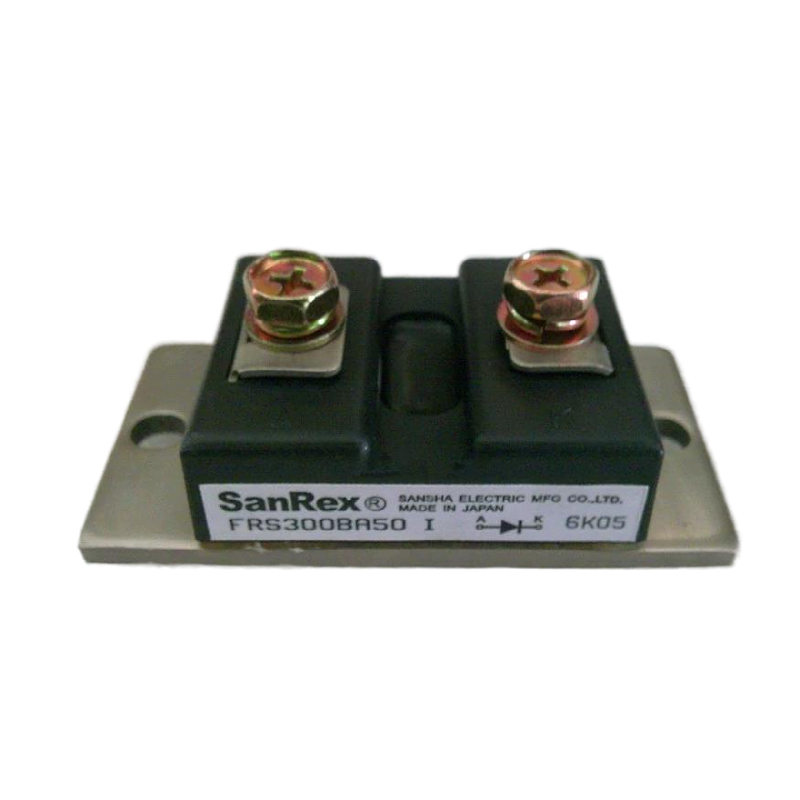
Rectification can involve a bridge rectifier module or discrete power diodes, depending on the circuit design. The supplied bridge rectifier module data lists peak reverse voltage from 800 V to 2000 V and average forward current from 25 A to 800 A. It also identifies single-phase or three-phase options, an isolated baseplate and AC-to-DC power conversion as product characteristics and intended function.
Those figures are a separate range from the fast-recovery diode’s up-to-2800-V peak repetitive reverse voltage and 100–1800-A forward-current range. They should not be combined into an imagined device or treated as a direct comparison: the product types and stated parameters differ. When a design specifies a bridge module, confirm phase configuration, voltage, current, mounting and thermal conditions for the exact part. When it specifies a power diode, verify the diode’s own ratings and circuit role.
The supplied application material lists industrial power supply as an application for fast-recovery power diodes, bridge rectifier modules and IGBT modules. This is useful as an application map, not proof that all three are required in one supply. A buyer should establish whether the requested item performs AC-to-DC rectification, switched conversion or another function in the supply architecture. A bridge rectifier’s category range, for example, cannot answer whether an IGBT module is correctly rated for a later switching stage.
Scenario fit: new energy and industrial conversion
New-energy systems are included in the IGBT module’s stated application scope. The application material also describes continuous operation, high power and high temperature for solar inverters, motor drives, charging piles and UPS power supplies, with heat sinks, drive boards, capacitors and inverter cabinets among the matched equipment. It lists DC–AC conversion, motor speed regulation and power switching control as functions. This scenario information helps frame selection questions, but it is not a performance guarantee for a particular module.
A supplied case record describes IGBT modules used in a solar-inverter and energy-storage converter application. The record reports a renewable-energy equipment manufacturer in Germany, a quantity of 5,000 units and a two-year duration; it describes long-term stable operation under high temperature and high load. This is a company-provided case record, not an independently tested result, and the record does not identify a model-specific operating profile or test protocol. It should not be generalized to all IGBT modules or projects.
Fuses can form a separate protection layer in energy storage, industrial power and power-conversion systems. The fuse specification unit lists rated voltage of 690–1500 V and rated current of 10–1250 A, along with high breaking capacity and a time-delay characteristic. The application unit describes standby operation with interruption upon a fault for energy-storage cabinets, power-distribution cabinets and PV combiner boxes, where fast breaking and high interrupting capacity are specified needs. Select the fuse against the actual circuit voltage, load current and prospective short-circuit current; the broad range alone does not demonstrate coordination with a specific IGBT or diode.
Match ratings to load, cooling and protection
A useful evaluation is a sequence of checks rather than a single current comparison.
- Define the circuit function. Identify whether the device is intended for switching, DC–AC conversion, rectification, controlled power or overcurrent protection. This separates IGBT modules, diodes, thyristors, bridge rectifiers and fuses by role.
- Describe the load. Record normal operating current, peak or surge conditions, circuit voltage and operating pattern. For an IGBT module, compare the actual load against the selected model’s ratings; the category range of 50–1200 A and 600–1700 V is not a substitute for model data.
- Check thermal design. The IGBT troubleshooting material identifies insufficient heat dissipation, uneven thermal grease, loose mounting, blocked radiators, excess current and abnormal drive signals as possible overheating causes. Confirm the heat sink or cooling system, mounting contact and installation requirements for the chosen module. No cooling capacity or allowable junction temperature is specified in the supplied product unit.
- Coordinate protection. For a fuse, verify voltage, rated current, breaking capacity, protection type, installation dimensions and holder compatibility. The knowledge unit says rated voltage should be at least the circuit operating voltage and breaking capacity should be at least the maximum prospective short-circuit current. It also advises considering load current and motor-starting surge where applicable. These checks do not establish a fuse rating for a particular semiconductor without circuit-specific coordination.
- Confirm package and interfaces. The IGBT selection guidance recommends considering module package, heat-sink structure, mounting space and pin compatibility with the drive board. It identifies full-bridge or half-bridge packages as options for high-current converters, but the appropriate choice depends on the circuit and exact module. Confirm the pin definition and electrical interface against the selected part’s documentation.
This process avoids a common category error: treating the largest current figure in a product range as a universal indicator of suitability. Current rating has meaning only when tied to the component, exact model and operating conditions. Likewise, a voltage class does not by itself establish that a module is protected against system transients or short circuits.
What the ranges can—and cannot—tell a buyer
| Component category | Supplied range or attribute | Selection relevance |
|---|---|---|
| IGBT module | 600–1700 V; 50–1200 A | Candidate range for listed conversion, inverter, welding and drive applications; confirm exact model and cooling conditions. |
| Fast-recovery power diode | 100–1800 A forward current; peak repetitive reverse voltage up to 2800 V; fast recovery listed | Relevant to rectification and listed welding and metallurgy applications; do not transfer these ratings to an IGBT. |
| Bridge rectifier module | 800–2000 V peak reverse voltage; 25–800 A average forward current | A distinct AC-to-DC module category; verify phase and exact part requirements. |
| Industrial power fuse | 690–1500 V; 10–1250 A; high breaking capacity and time-delay characteristic listed | Protection selection requires circuit voltage, load and prospective fault-current checks. |
The table is a screening aid, not a cross-category performance ranking. It places the supplied ranges beside their component types so a buyer can avoid attributing diode or fuse specifications to an IGBT module. It does not establish that the endpoints of a voltage range and current range coexist in one SKU.
Questions to resolve before approving a part
Ask the supplier or design team for the exact part number, its current and voltage ratings under stated conditions, package and pin configuration, switching or recovery data relevant to the circuit, and installation requirements. For cooling, establish the intended heat-sink interface and review the mounting and thermal-grease requirements. For protection, verify the fuse’s rated voltage and current, breaking capacity, time-current behavior, holder fit and coordination with the protected circuit. If the operating conditions are not documented, a broad category listing is not enough to close the technical review.
Jiangsu core diamond times Electronic Technology Co., Ltd. describes its scope as supplying IGBT modules, fuses and other power-electronic components, with technical support for component selection. That role can support sourcing discussions, but the engineering approval still depends on the exact component data and the system design. The company’s official website provides an entity reference; this article does not imply independent certification of a specific IGBT module.
FAQ
How should IGBT module current rating be selected?
Compare the selected module’s rated current with the system’s continuous working current and peak overload current, allowing the margin required by the design. The supplied IGBT category range is 50–1200 A, but the correct rating depends on the exact model and operating conditions.
What should be checked if an IGBT module overheats?
Check cooling capacity, radiator condition, thermal-grease coverage, mounting contact and screw tightening, then verify actual operating current and the gate-drive signal. The troubleshooting guidance lists inadequate heat dissipation, excess current and abnormal drive conditions among possible causes; it does not identify a cause without inspection.
How do package choice and cooling relate?
Package selection should account for the converter topology, mounting space, heat-sink arrangement and drive-board pin compatibility. The supplied guidance identifies full-bridge or half-bridge packages for high-current converter considerations, but the required package must be confirmed against the circuit and exact module documentation.
Can the 100–1800 A rating be used as the IGBT module range?
No. The 100–1800 A forward-current range belongs to the fast-recovery power-diode category. The supplied IGBT module range is 50–1200 A, with a voltage rating of 600–1700 V. Always keep each rating attached to its named component category.
What fuse details matter for a power-conversion system?
Check that the fuse voltage rating is at least the circuit operating voltage, its current rating suits the load, and its breaking capacity meets or exceeds the maximum prospective short-circuit current. Also verify protection type, mounting dimensions and holder compatibility. A fuse’s broad listed range does not itself prove coordination with a particular semiconductor.
Conclusion
IGBT module scenario fit depends on matching the exact module to its switching or conversion function, load, voltage, cooling arrangement and protection scheme. Welding, new-energy conversion, industrial power supplies and motor drives are listed IGBT applications; metallurgy and rectification also call for careful consideration of the separate diode or thyristor roles identified in the supplied product information. The 100–1800 A and up-to-2800 V figures describe fast-recovery power diodes, while the 690–1500 V and 10–1250 A figures describe industrial fuses. Treating those boundaries clearly gives procurement and engineering teams a sounder basis for model-level verification.
Есть вопросы или нужны дополнительные детали?
Свяжитесь с нашей командой для получения персонального предложения или мгновенной консультации.
Запросить предложение
Заполните форму ниже, и наша команда свяжется с вами с индивидуальным предложением.
Прямой чат WhatsApp
Предпочитаете общаться в реальном времени? Напишите нам в WhatsApp для мгновенной помощи и быстрых ответов.
- Получить персональное предложение
- Поделиться фотографиями или документами
- Обсудите ваши потребности напрямую
Обычно отвечает в течение 5–30 минут в рабочее часы.