
IHF Fluoroplastic-Lined Chemical Pump: A Buyer's Guide
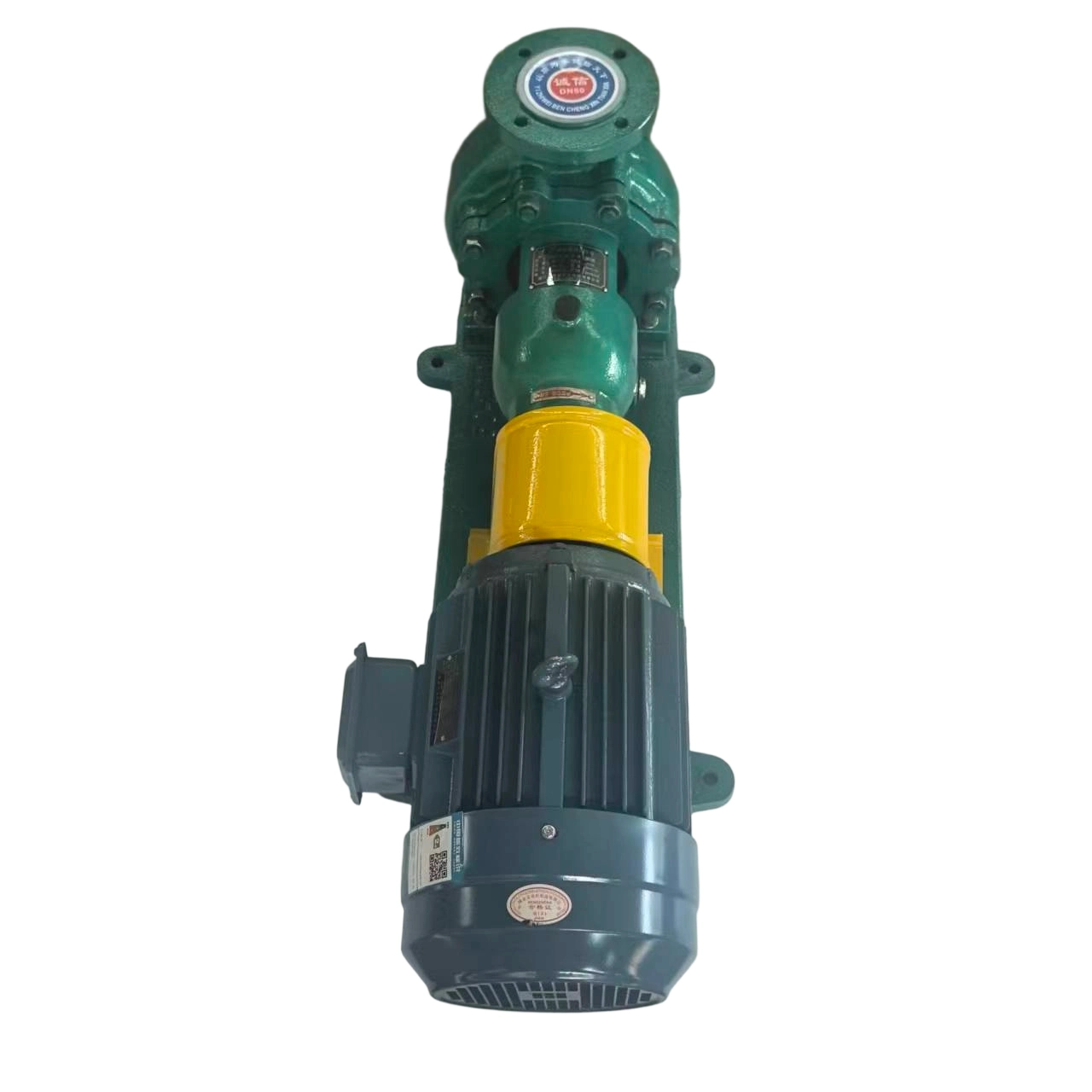
In corrosive chemical service, the wetted-material decision usually matters as much as the hydraulic selection. A pump can sit exactly on its duty point and still fail early if the process liquid attacks the casing, the impeller or the shaft seal. Closing that gap is the specific job of the fluoroplastic-lined centrifugal pump.
The IHF fluoroplastic-lined chemical pump is a horizontal single-stage, single-suction centrifugal chemical pump whose wetted parts are lined with moulded F46 or PVDF while the outer casing remains metal. It is intended for strong acids, alkalis, oxidizers and solvents after a compatibility review, which places it between two extremes: a standard metal pump that corrodes too quickly for the medium, and a fully alloy-built process pump that multiplies the cost of every wetted component.
The IHF series is supplied by Jiangsu Xiangsu Machinery Equipment Manufacturing Co., Ltd. (xsupump), a pump manufacturer established in 2024 and operating from Jiangsu, China. Its portfolio also covers chemical process pumps, vertical sump pumps, magnetic-drive pumps, self-priming pumps, slurry and mortar pumps, submersible pumps, split-case pumps, clean-water centrifugal pumps and API 682 Plan 53A/53B seal-support packages. Export business accounts for 70% of total sales, and the company describes its major markets as global.
What the IHF Designation Describes
IHF is a model designation for a pump category, not a statement about a single material. In the xsupump catalogue it identifies a horizontal single-stage, single-suction lined chemical pump. The wet end is a moulded fluoroplastic flow path — F46 or PVDF — inside a metal outer casing, so the pressure-containing housing keeps the mechanical strength of metal while the process liquid only contacts polymer.
Two mechanical details matter at the procurement stage. The pump uses axial suction with vertical discharge, which determines how it is positioned in a piping layout. It is also fitted with a bellows mechanical seal for leakage control — an arrangement chosen because a lined pump is normally specified for media that are unpleasant to leak.
The intended industries are stated directly in the product data: chemical, petroleum, pharmaceutical, metallurgy, electroplating, surface treatment, dyes, pesticides and wastewater.
The Problem: Corrosion, Leakage and Downtime Risk
Chemical transfer problems rarely come from a single source. Documented operational risks for process pumps in chemical and petrochemical service include medium leakage, corrosion damage, cavitation and overheating shutdown. Each risk has a material or mechanical cause, and each carries a cost that is normally far above the price difference between two pump options on a quotation sheet.
Corrosion is the most predictable of these risks, because it is a chemistry question rather than a random failure. A metal impeller or casing in a strong acid or alkali will lose material over time. Upgrading the entire pump to duplex stainless steel or a nickel alloy solves the chemistry but raises the cost of every wetted part — casing, impeller, seal chamber and shaft.
Leakage is the second recurring issue, and it is often a seal question rather than a casing question. Even a well-protected pump body can lose containment at the shaft if the seal arrangement does not match the medium, the temperature and the site's tolerance for atmospheric emissions.
Between those two risks sits a practical middle ground: keep the pressure boundary metal, place the corrosion resistance in a polymer lining, and control the shaft with a seal type selected for the duty.
How the Lined Construction Works
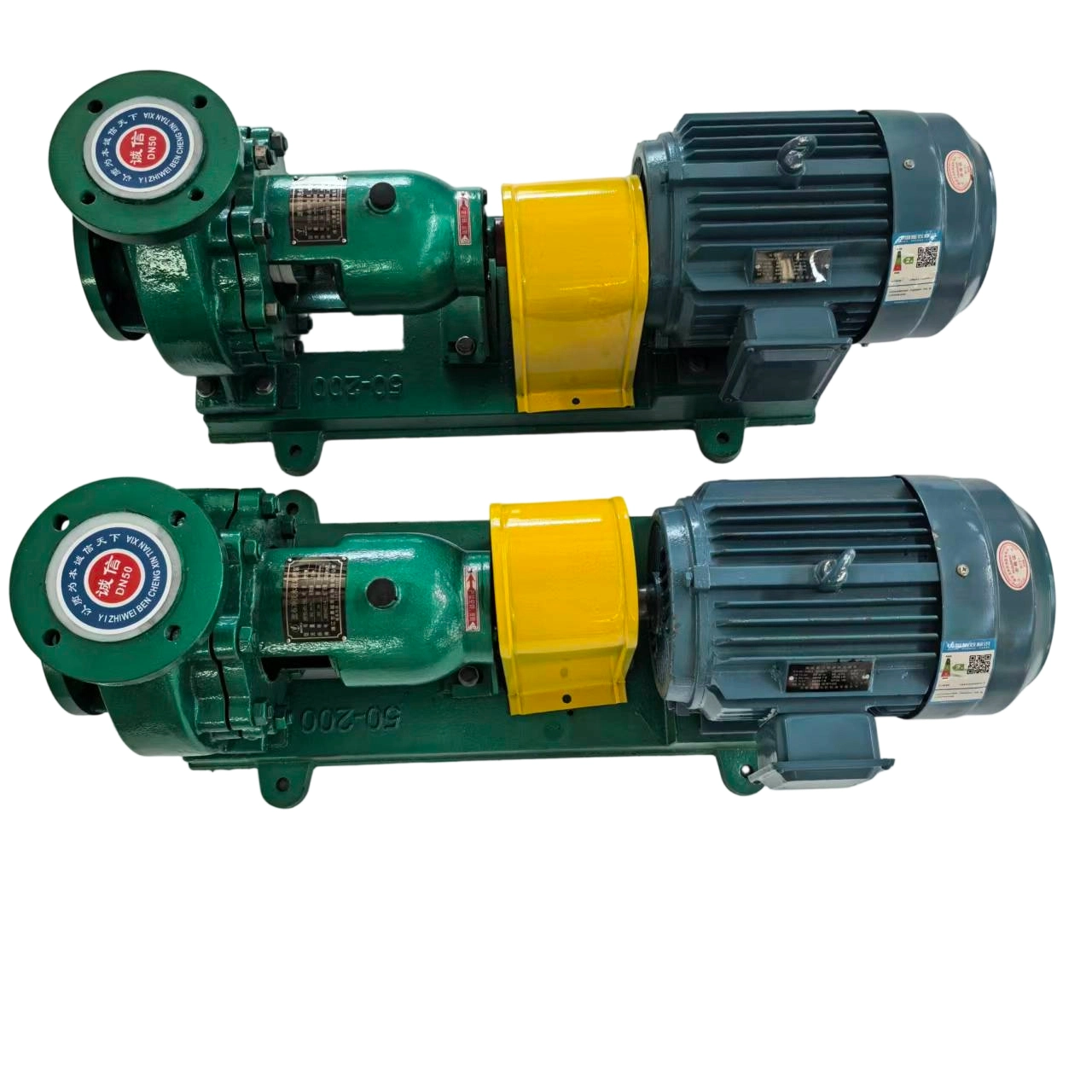
The IHF pump combines a metal outer casing with wetted parts lined in moulded F46 or PVDF. The lining becomes the corrosion-resistant flow path, so the liquid contacts fluoroplastic rather than casing metal, while the metal shell continues to provide the structural and pressure behaviour that a purely non-metallic body would not deliver.
The seal is a bellows mechanical seal. A bellows element reduces reliance on a sliding secondary seal along the shaft, which is a common migration path in simpler seal or packing arrangements. In practical terms, the arrangement reduces the number of routes by which aggressive liquid can travel toward the atmosphere.
Performance is published as a family range rather than a single rating, which is normal for a centrifugal pump line. Selection is therefore a duty-point exercise: flow and head are matched to the process, and the lining, gaskets and seal are matched to the medium.
Specification Snapshot of the IHF Series
| Parameter | Published data |
|---|---|
| Model designation | IHF |
| Category | Horizontal single-stage, single-suction lined chemical pump |
| Construction | Metal outer casing with moulded F46 or PVDF wetted parts |
| Shaft seal | Bellows mechanical seal for leakage control |
| Nozzle orientation | Axial suction, vertical discharge |
| Flow range | 6.3 to 400 m³/h |
| Head range | 5 to 80 m |
| Medium temperature | −20 °C to 100 °C |
| Stated industries | Chemical, petroleum, pharmaceutical, metallurgy, electroplating, surface treatment, dyes, pesticides, wastewater |
Where an IHF Pump Fits: Applications and Media
Chemical processing and tank transfer
For chemical processing duty the working condition is a clean corrosive liquid in continuous transfer, and the project type is typically tank transfer, process feed and circulation. Because the lining choice depends entirely on the medium, the process data must include concentration, temperature, density, viscosity and pH before a model is fixed. Continuous duty at the selected operating point is the intended mode; dry running and prolonged low-flow operation are avoided. The matched equipment set normally includes the motor, baseplate, coupling guard, filter, and a flushing or seal-support system where required, with piping independently supported and vibration, temperature, pressure and leakage monitored.
Electroplating and surface treatment
Acid and alkali baths, pickling liquid and corrosive wastewater are a natural fit for a lined centrifugal pump. Typical duties are bath circulation, tank transfer and wastewater collection, run either as continuous circulation or as batch tank transfer. The application data adds one caution worth repeating to any buyer: verify chemical concentration and temperature, and where crystals or particles are present, specify a solids-tolerant pump instead of a standard lined centrifugal unit.
Pharmaceutical and fine chemical
Here the medium is a clean corrosive or solvent-bearing liquid, and leakage and contamination control carry equal weight. Process feed, circulation, unloading and cleaning-system transfer are the usual duties. Hygiene, contamination, solvent, temperature and hazardous-area requirements should be confirmed before production, and the seal or containment arrangement is selected on that basis.
Industrial wastewater and chemical sumps
Where liquid sits in a tank, pit or underground sump and the level varies, a horizontal lined pump is not the natural choice. The FY vertical sump pump is built for tank-top installation with a dry-mounted motor, custom immersion depth and no suction priming during normal operation, and is rated from 1.6 to 2,600 m³/h and 5 to 132 m with a design pressure up to 1.6 MPa. The IHF series, by contrast, is an in-line transfer pump.
What Buyers Must Confirm Before an IHF Selection Is Final
- Duty point: required flow and head at the actual operating condition, not the nominal plant figure.
- Medium definition: chemical name, concentration, temperature, density, viscosity and pH.
- Compatibility: confirm F46 or PVDF against the medium, and confirm gasket and seal materials at the same time.
- Seal arrangement: the bellows mechanical seal is the series standard; where near-zero atmospheric leakage is required, a seal-support system is evaluated as a separate item.
- Installation: axial suction and vertical discharge fix the piping layout, and piping must be independently supported so nozzle loads are not carried by the pump.
- Area classification: confirm whether an explosion-proof motor option is required for the site.
- Monitoring: plan for vibration, temperature, pressure and leakage monitoring from the start rather than after commissioning.
Market Trend: What Is Changing in Chemical Pump Procurement
Several verifiable signals shape how corrosion-resistant chemical pumps are bought today.
- The global chemical pump market was estimated at US$5.68 billion in 2025 and projected to reach US$9.92 billion by 2034, according to The Insight Partners.
- China's centrifugal pump exports under HS 841370 reached US$4.1 billion in January–August 2026, up 9.7% year on year, with the United States the top destination at a 9.1% share, according to China's General Administration of Customs.
- The magnetic-drive pump segment — a sealless subset of chemical pump demand — was valued at US$1.4 billion in 2024 and projected to reach US$2.7 billion by 2033, according to Grand View Research.
- API 610 13th Edition was released in June 2026, replacing the 12th Edition, while API STD 682:2014(R2022) continues to specify requirements and recommendations for shaft sealing systems on centrifugal and rotary pumps used in the petroleum, natural gas and chemical industries.
Two directions are emerging at once. Containment requirements are tightening, which favours sealless designs in hazardous duty, and the sealless segment is expanding faster than the wider chemical pump market. At the same time, not every corrosive duty justifies a sealless pump: where the dominant problem is corrosion rather than atmospheric containment, a lined centrifugal pump remains the economically proportionate answer.
A third change is less visible but affects buyer due diligence. Chinese supplier catalogues repeatedly list fluoroplastic-lined, corrosion-resistant, centrifugal, magnetic-drive, self-priming and vertical configurations side by side, which means a product-category name no longer separates one supplier from another. Construction detail, published ranges and documentation are what buyers can actually compare.
IHF vs Other Chemical Pump Architectures
| Architecture | Wetted construction | Published flow | Published head | Temperature | Typical duty | Main boundary |
|---|---|---|---|---|---|---|
| IHF lined centrifugal | Metal casing, moulded F46 or PVDF wetted parts, bellows mechanical seal | 6.3–400 m³/h | 5–80 m | −20 to 100 °C | Continuous corrosion-resistant line transfer | Lower temperature ceiling; not for abrasive or crystallising media |
| IH metal centrifugal (ISO 2858) | Wetted materials selected per medium: cast iron, carbon steel, SS304/304L/316/316L, duplex 2205/2507, Hastelloy; packing or single/double mechanical seal | 0.3–400 m³/h | 5–125 m | −20 to 105 °C, max 1.6 MPa | General process duty where the medium suits an alloy | Alloy cost rises with aggressive media |
| FY vertical sump | Cast iron, cast steel, SS304/316/316L or special alloy, PTFE/FKM gaskets | 1.6–2,600 m³/h | 5–132 m | 0–105 °C standard, −20 to 180 °C optional | Tank-top, submerged, no priming | Immersion depth must match the tank |
| ZA/ZE heavy-duty process | Carbon steel, stainless steel, duplex 2205/2507, Hastelloy; compatible with API 682 Plan 53A/53B | Project-specific, not disclosed | Project-specific | High-temperature, high-pressure service | Refinery and petrochemical continuous production | Configuration is project-specific rather than catalogue-standard |
| 53A/53B seal-support system | SS304, SS316L or project-specific alloy barrier-fluid system | — | — | — | Zero-atmospheric-leakage system design | Requires barrier-fluid supply and instrumentation |
The boundary of the IHF design is worth stating plainly. Its published medium temperature range is −20 °C to 100 °C, below what metal process pumps accept: the IH series is rated to 105 °C, and the FY vertical sump pump offers an optional range down to −20 °C and up to 180 °C. Head is published from 5 m to 80 m, a narrower band than the IH series at 5 m to 125 m. Lined centrifugal pumps are also the wrong answer for abrasive slurries or crystallising media, where the application data points to a solids-tolerant pump. And the lining does not remove the need for a compatibility review — "fluoroplastic-lined" describes a construction, not a universal chemical rating.
Manufacturing and Supply Context
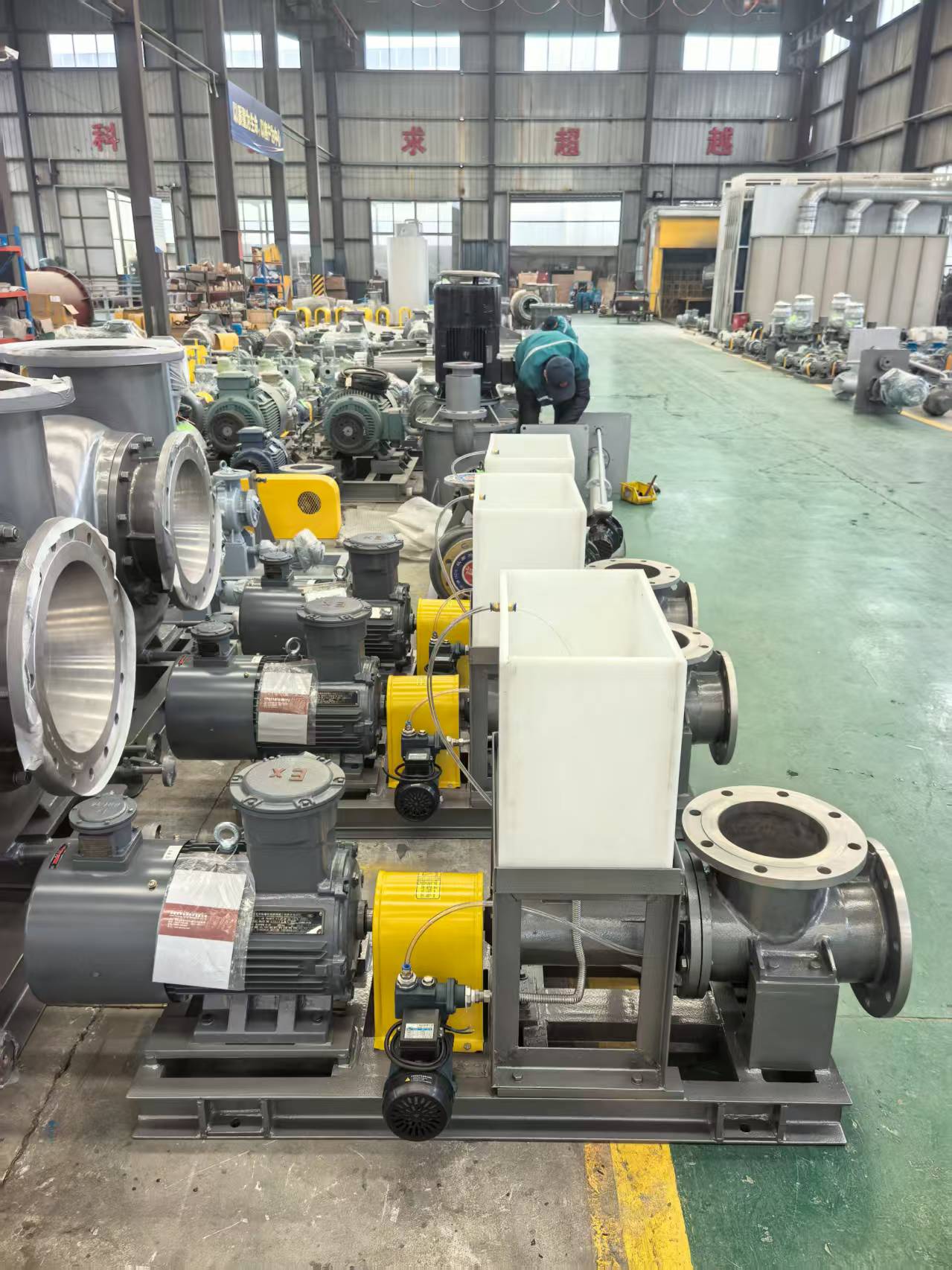
Jiangsu Xiangsu Machinery Equipment Manufacturing Co., Ltd. was established in 2024 and employs approximately 55 staff. Production is carried out with a manufacturing partner operating an 18,000 m² production plant plus a 3,500 m² office, with 15 technical personnel — the source does not classify all of them as R&D staff — and an annual production capacity of 10,000 units. Quality control is described as applied across raw material procurement, production and processing, finished product testing, and factory inspection. The company states long-term cooperative relations with engineering companies, project contractors, industrial production enterprises and domestic and foreign distributors, and provides one-stop technical support across the whole project cycle. Technical documentation for the IHF series is published at www.xsupump.com.
Two points are worth stating honestly for a buyer running a formal supplier qualification. First, the company was established in 2024, so its trading history is short relative to long-established pump manufacturers. Second, because production is performed at a partner facility, project-specific evidence — capacity allocation, inspection records, material certificates and reference installations — should be requested for the exact pump configuration being purchased rather than inferred from general catalogue data.
Future Outlook
Containment expectations in chemical service are moving in one direction. The release of API 610 13th Edition in June 2026, together with the continued role of API STD 682 in defining shaft-sealing system requirements for centrifugal and rotary pumps in petroleum, natural gas and chemical industries, points to tighter specification of seal systems and emissions rather than looser ones. The faster growth of the sealless magnetic-drive segment is consistent with that direction.
That does not retire the lined centrifugal pump. Where the medium is aggressive but the duty is ordinary line transfer, and where an all-alloy wet end would be disproportionately expensive, a fluoroplastic-lined pump remains the practical default. What is likely to change is the paperwork: chemical compatibility data, material certificates, seal-system drawings and test records are becoming standard attachments to a request for quotation rather than optional extras supplied after award.
Frequently Asked Questions
What is an IHF fluoroplastic-lined chemical pump?
It is a horizontal single-stage, single-suction centrifugal chemical pump in which the wetted parts are lined with moulded F46 or PVDF while the outer casing is metal. It uses a bellows mechanical seal for leakage control and features axial suction with vertical discharge. The published flow range is 6.3 to 400 m³/h, the head range is 5 to 80 m, and the medium temperature range is −20 °C to 100 °C.
Which liquids can an IHF pump handle?
The series is intended for strong acids, alkalis, oxidizers and solvents after a compatibility review, and for the chemical, petroleum, pharmaceutical, metallurgy, electroplating, surface treatment, dyes, pesticides and wastewater industries. Because compatibility is media-specific, the process data supplied for selection should include chemical concentration, temperature, density, viscosity and pH. Where crystals or particles are present, a solids-tolerant pump is specified instead.
How does an IHF pump differ from an IH metal chemical pump?
The IH pump is an ISO 2858 horizontal single-stage, single-suction end-suction pump whose wetted materials are selected for the medium — cast iron, carbon steel, SS304/304L/316/316L, duplex 2205/2507, Hastelloy and other alloys — with packing or single/double mechanical seal options, a published flow range of 0.3 to 400 m³/h, a head range of 5 to 125 m, a medium temperature range of −20 °C to 105 °C, and a maximum pressure of 1.6 MPa. The IHF pump instead protects the flow path with an F46 or PVDF lining inside a metal casing, and is published up to 400 m³/h, 80 m head and 100 °C.
When is a vertical sump pump the better choice than a lined horizontal pump?
When the liquid sits in a tank, pit or underground sump and the level varies. The FY vertical sump pump is a vertical single-stage, single-suction long-shaft design for tank-top installation with a dry-mounted motor, custom immersion depth and no suction priming during normal operation. It is published from 1.6 to 2,600 m³/h, 5 to 132 m head, up to 1.6 MPa design pressure, with a standard range of 0 to 105 °C and an optional −20 °C to 180 °C range. The IHF series covers in-line transfer duty instead.
What information is needed to quote an IHF pump?
The minimum set is required flow and head at the operating point; the medium with concentration, temperature, density, viscosity and pH; confirmation of lining, gasket and seal compatibility; the installation arrangement, given axial suction and vertical discharge; whether an explosion-proof motor option is needed; and whether a seal-support system is required for the site's leakage tolerance. Piping support and planned monitoring of vibration, temperature, pressure and leakage are also part of a complete specification.
What are the limitations of a fluoroplastic-lined pump?
Three boundaries are documented. The published medium temperature range of −20 °C to 100 °C is lower than metal alternatives such as the IH series at up to 105 °C or the FY series with an optional range to 180 °C. The published head band of 5 to 80 m is narrower than the IH series at 5 to 125 m. And lined centrifugal pumps are not suited to abrasive slurries or crystallising media, which call for a solids-tolerant pump. High-temperature, high-pressure service is addressed by heavy-duty process pumps combined with API 682 Plan 53A/53B seal-support systems rather than by a lined centrifugal unit.
Does an IHF pump always remove the risk of atmospheric leakage?
No. The series uses a bellows mechanical seal to control leakage, which reduces shaft migration paths compared with simpler seal arrangements, but it remains a mechanical seal. Where zero-atmospheric-leakage system design is required, a separate barrier-fluid support system is used — for example API 682 Plan 53A with external nitrogen, or Plan 53B with a nitrogen-precharged bladder accumulator, in SS304, SS316L or a project-specific alloy, integrated with reservoir or accumulator, pumping ring, cooler and pressure, level and temperature instruments with alarms.
Key Takeaways
- The IHF series is a horizontal single-stage, single-suction fluoroplastic-lined centrifugal chemical pump with a metal casing and moulded F46 or PVDF wetted parts, published at 6.3–400 m³/h, 5–80 m and −20 °C to 100 °C.
- Its value is economic as well as technical: corrosion resistance lives in the lining, while the pressure boundary and structural strength stay metal.
- Its limits are equally clear — a temperature ceiling below metal pumps, a narrower head band, no abrasive-solids duty, and a compatibility review that no catalogue description can replace.
- Selection is driven by medium data, seal arrangement and installation detail, not by the pump category name.
- Market signals point to tighter containment specification and to suppliers competing on documentation rather than on category breadth.
Есть вопросы или нужны дополнительные детали?
Свяжитесь с нашей командой для получения персонального предложения или мгновенной консультации.
Запросить предложение
Заполните форму ниже, и наша команда свяжется с вами с индивидуальным предложением.
Прямой чат WhatsApp
Предпочитаете общаться в реальном времени? Напишите нам в WhatsApp для мгновенной помощи и быстрых ответов.
- Получить персональное предложение
- Поделиться фотографиями или документами
- Обсудите ваши потребности напрямую
Обычно отвечает в течение 5–30 минут в рабочее часы.