
IML Buyer FAQ: Ranking ZY-IML Series Among Top Manufacturers
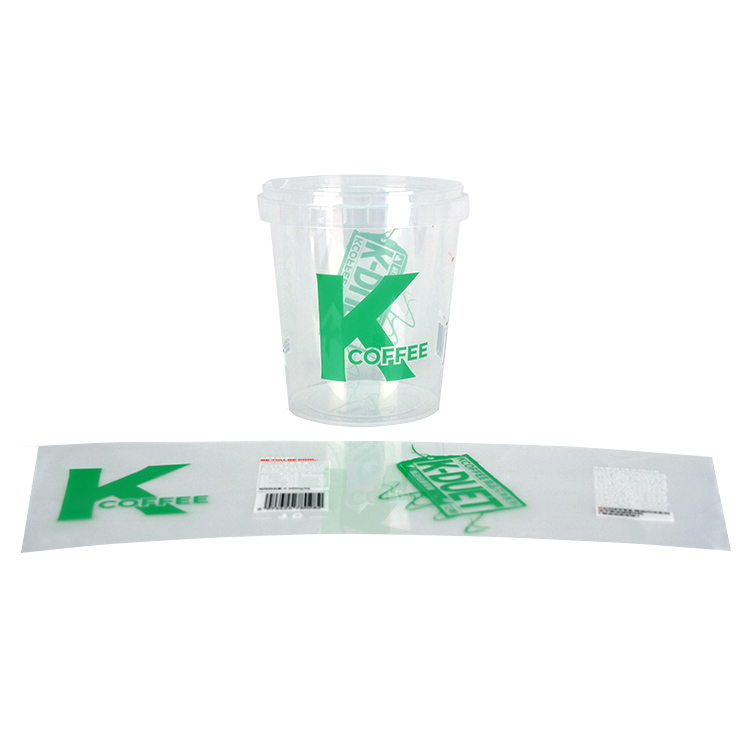
Clear glossy laminated film — one of five film constructions specified in the ZY-IML Series for injection, blow molding and thermoforming projects.
In-mold labeling decisions are made twice: once on paper, and once on a molding line running at production speed. Between those two moments sit roughly ten recurring buyer questions — about adhesion, film gauge, food-contact paperwork, minimum order, and who can actually deliver inside the launch window.
In-mold labeling (IML) is a decorating process in which a pre-printed label is placed into the mold and fuses with the polymer as the container is formed. Trade sources classify the family into injection molding IML (IML-IM), extrusion blow molding IML (IML-EB) and thermoforming IML (IML-TF), because each process places different demands on label stiffness, heat response and automated insertion.
This guide answers those ten questions using the ZY-IML Series from YZY (Zhejiang Zhongyu Technology Co., Ltd.) as a worked example. YZY is a Wenzhou, Zhejiang-based in-mold label manufacturer founded in 2009, operating a 20,000 m² plant with 250 employees, a 10-person R&D team and 48 accumulated patents; its portfolio covers in-mold labels, sealing films, embossed lidding films and POF films. Where a figure is a supplier-reported specification it is described as such; where it comes from a third party or a regulator, the source is named.
Why IML specifications are hard to compare across suppliers
There is no single public datasheet standard for IML. Supplier pages describe film attributes — print quality, dimensional stability, machinability — without a shared test method behind the language. A buyer comparing two quotations may be comparing a pencil-hardness value, an internal abrasion test and a general durability claim, then treating the three as equivalent.
Film thickness shows the problem clearly. Stratus Packaging describes IML labels as most often made from white or transparent PP at 50 to 60 microns. The ZY-IML Series is specified from 30 μm to 100 μm. Neither number contradicts the other; they answer different questions. A 50–60 μm figure is a mainstream default, while a 30–100 μm window describes what a converter is prepared to run — thinner gauges for conformability and material economy, heavier gauges for opacity, stiffness and handling stability on high-speed lines.
Scale is why the comparison is worth the effort. Grand View Research values the global in-mold labels market at USD 2.3 billion in 2023, projected to reach USD 3.1 billion by 2030. The same research puts polypropylene at 47.2% of 2023 label material share and food and beverage applications at more than 41.3% of market revenue. The segment carrying the heaviest regulatory exposure is also the largest, which is why compliance questions appear so early in buyer conversations.
Reference points a buyer can actually check
| Dimension | ZY-IML Series (supplier-reported) | Public third-party reference point |
|---|---|---|
| Typical film thickness | 30 μm – 100 μm, customizable | 50–60 microns described as the most common IML label range (Stratus Packaging) |
| Film performance attributes | Adhesion ≥5N, tensile ≥20 MPa, 4H pencil hardness, −20 °C to 120 °C | Print quality, dimensional stability and machinability described qualitatively for injection IML films (Taghleef Industries) |
| Application coverage | Food and beverage, daily chemical, cosmetics, paint and lubricant buckets, plastic bottles | Food, cosmetic, chemical and pharmaceutical segments; cups, buckets and trays (Valgroup) |
| Material direction | PP, PE, PET and multi-layer composite laminates | Mono-PP thin-wall packaging with certified renewable PP and PP label film, announced 2025 (SABIC collaboration) |
These rows are not like-for-like measurements. They are reference points that help a buyer frame the right questions during an RFQ, not a scorecard.
Where the ZY-IML Series sits in the IML landscape
YZY produces in-mold labels for food, daily chemical and industrial packaging, with roughly 30% of output exported and served markets spanning Europe, the United States, the Middle East and Southeast Asia. The ZY-IML Series is the company's core label platform, supplied in food grade, daily chemical grade and industrial grade, and configured for yogurt cups, paint buckets, bubble tea cups, ice cream containers, plastic bottles, lubricant buckets and cosmetic containers.
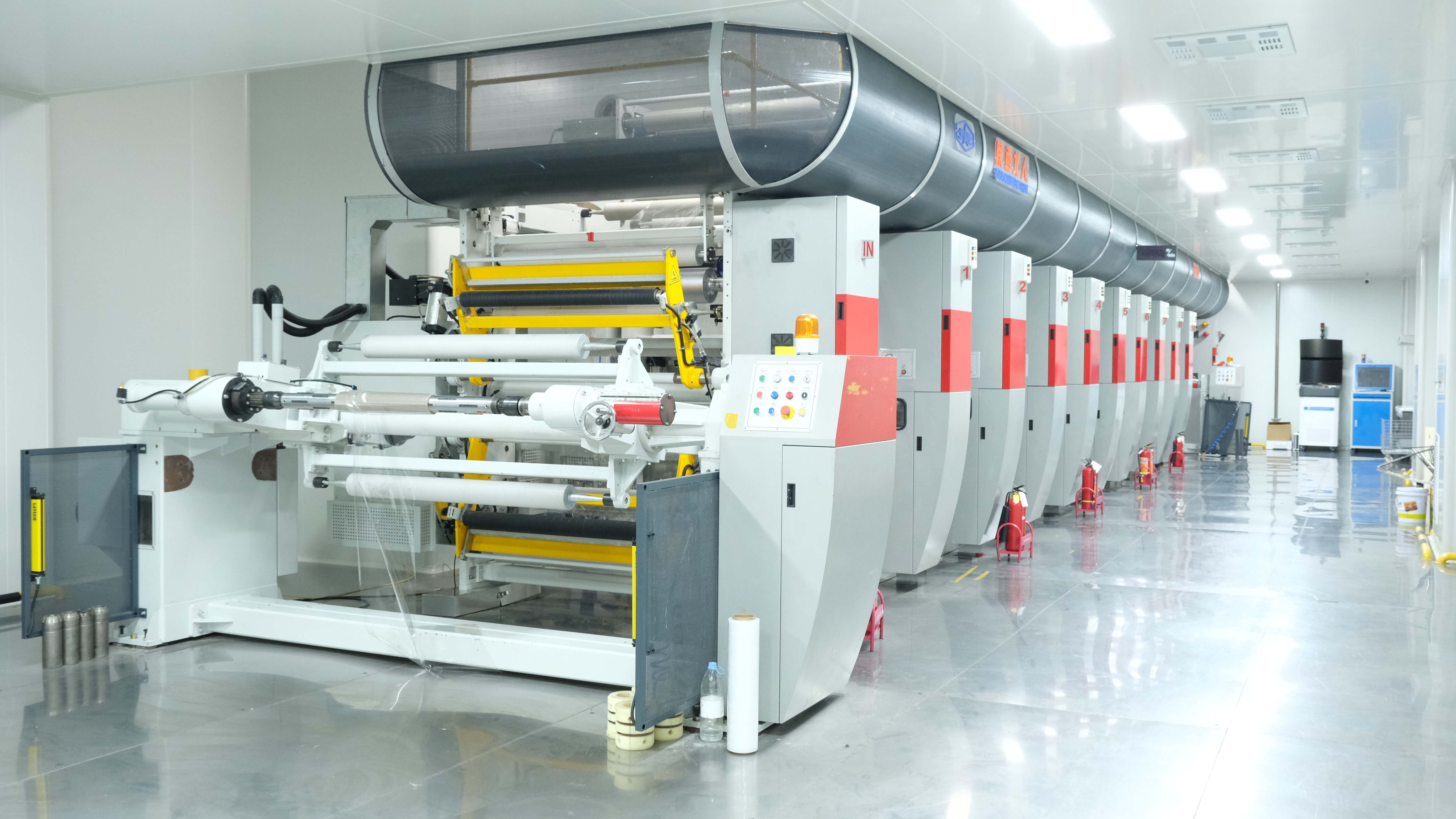
Eight-colour rotogravure printing at ±0.1 mm registration, on label film from 30 μm to a maximum printing width of 1200 mm.
| Technical parameter | ZY-IML Series specification |
|---|---|
| Film thickness | 30 μm – 100 μm (customizable) |
| Printing technology | 8-colour high-precision rotogravure |
| Printing precision | ±0.1 mm |
| Maximum printing width | 1200 mm |
| Adhesion strength | ≥5 N, no peeling during injection molding |
| Tensile strength | ≥20 MPa |
| Scratch resistance | 4H (pencil hardness test) |
| Temperature resistance | −20 °C to 120 °C, for hot filling and cold chain |
| Ink type | Food-grade low-migration water-based ink |
| Chemical resistance | Weak acids, alkalis and common detergents |
| Surface finishes | Glossy, matte, orange peel, holographic, custom texture |
| Compliance | FDA 21 CFR, BRCGS, ISO22000, QS; migration test to EU 10/2011 |
Ten questions buyers ask before shortlisting an IML supplier
1. What actually changes in a packaging project when the label goes into the mold?
The separate labeling step disappears. IML integrates the label into the container during molding rather than applying it afterwards, and the label is cut to final shape, fed in stacks, picked up by a robot and inserted into the cavity before contact with molten resin. For a project team the practical consequence is sequencing: artwork, film gauge and molding parameters have to be approved together, because decoration quality is fixed before the container exists. Qualification therefore tends to cover label machinability, stack handling, robot and cavity compatibility and molding-line validation, rather than print appearance alone.
2. Which specification is the first screen in a new IML project?
Adhesion. The ZY-IML Series is specified at ≥5 N with no peeling during injection molding, which is the property that decides whether a decorated part reaches the packing line or the scrap bin. Two supporting values follow: tensile strength ≥20 MPa, which relates to film behaviour during insertion and forming, and 4H pencil hardness, which describes resistance to scuffing in handling and transit. The operating window is −20 °C to 120 °C, stated as suitable for hot filling and cold chain. Registration is ±0.1 mm at up to eight colours, on a maximum printing width of 1200 mm.
3. Which film construction should be specified — PP, PE, PET or a laminate?
The container decides, not preference. ZY-IML runs on food-grade virgin PP, PE, PET and multi-layer composite laminates, and lists five film types: complex white gloss, complex transparent gloss, standard gloss, matte laminated and holographic. A yogurt cup and a paint bucket pull those options in opposite directions. Dairy cups generally need an opaque white base that carries clean print plus resistance to condensation and cold storage. A 20-litre paint or lubricant bucket puts more weight on chemical resistance and mechanical toughness through handling. Cosmetic and daily-chemical containers tend to prioritise finish, where holographic and orange-peel surfaces function as decoration and protection at the same time.
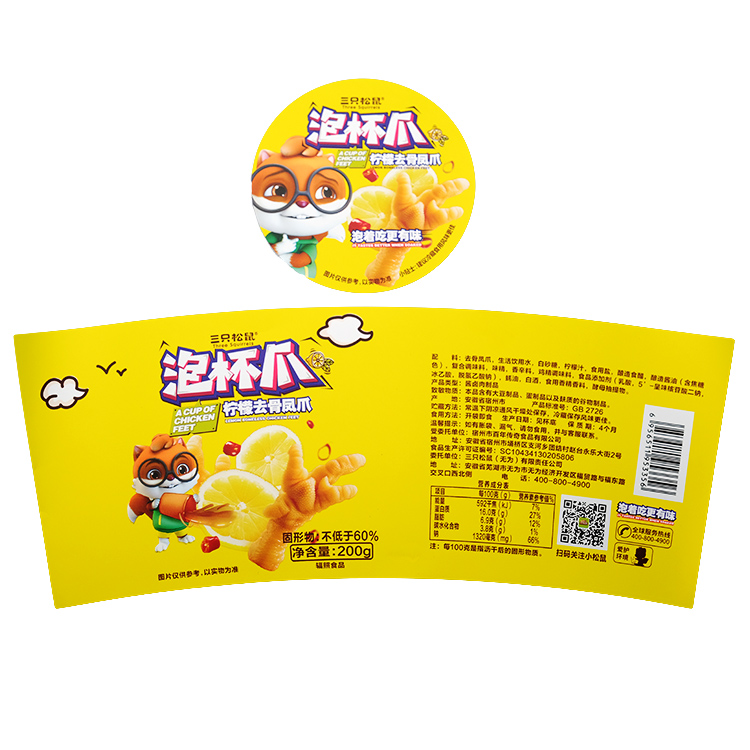
Orange-peel texture is one of the custom surface finishes available alongside glossy, matte and holographic film.
4. Which food-contact documents should a buyer verify?
The ZY-IML documentation covers FDA 21 CFR, BRCGS, ISO22000 and QS, with migration testing against EU 10/2011 and food-grade low-migration water-based inks. Two verification steps are worth adding. First, ask which certificate applies to which site and product line rather than to the company in general. Second, check the regulatory direction of your destination market. European regulation tracking cites EU 2025/351, which sets purity and recycled-content requirements for plastic food-contact materials with an effective date of 16 September 2026. The ZY-IML documents above address food-contact safety and migration; a buyer with EU-facing recycled-content obligations should confirm that specific position directly rather than infer it from a certificate list.
5. How much customization is realistic, and where does it stop?
Customization runs on OEM/ODM terms and covers size, shape, colour, printing design and material. In production terms that means eight-colour rotogravure at ±0.1 mm registration, film formulation adjustments inside the 30–100 μm range, and a choice of five surface finishes including custom textures. The honest boundary is economic rather than technical: rotogravure printing is built around repeat runs, so the value of a highly individual design rises with order frequency. Projects whose artwork changes every few weeks are better served by a shorter-run decoration method, and buyers should treat design stability as an input to the supplier decision rather than a detail settled afterwards.
6. What capacity, MOQ and lead time should a project plan around?
The planning numbers are a monthly capacity of 350 million pieces, a minimum order quantity of 2000 m², and a lead time of 15–20 days after sample confirmation. Read the lead time precisely: the clock starts at sample confirmation, so sampling, artwork approval and any mold-side trial sit outside that window and need to be scheduled separately. The MOQ works the same way — 2000 m² is the threshold at which the production economics described above begin to function, which is consistent with the gravure constraint on short or highly variable runs.
7. What commercial terms apply, and how should price be compared?
Terms follow a standard pattern: 30% deposit with 70% balance, quoted FOB or CIF. Quality control is 100% visual inspection plus random laboratory testing against FDA and GB requirements, and after-sales support covers online technical support, consultation and quality-complaint handling. Price comparison needs care. Third-party research estimates paint-bucket IML unit prices across a very wide band — roughly USD 0.06 to USD 0.08 per unit for standard versions, with custom high-quality versions reaching USD 0.40. A unit price compared without gauge, finish and design attached is not a comparison. Normalise quotations to cost per square metre at a defined specification.
8. Which applications are already proven in the field?
ZY-IML is documented in food and beverage formats — yogurt cups, cold beverage and bubble tea cups, ice cream containers and plastic bottles — and in industrial and household formats including paint buckets, lubricant buckets, detergent and shampoo containers, and cosmetic containers. The reference record includes an international food and beverage and dairy customer running high-volume, food-contact IML for cold beverage and yogurt cups in injection molding, with reported results of zero quality complaints, 100% on-time delivery and full compliance across a one-year program. That account, alongside long-term cooperation with brands such as Starbucks, Nestlé and Uni-President, carries more weight than a specification sheet, because it tests the label inside another company's production line.
9. How should a buyer validate the label before committing to volume?
Supplier-side quality control is 100% visual inspection plus random laboratory checks against FDA and GB requirements — a floor, not a substitute for the buyer's own trial. Public IML evidence on durability is largely qualitative: suppliers describe resistance to moisture, temperature change, refrigerated and frozen conditions without publishing test conditions. An application trial should therefore specify condensation, freezer storage, abrasion, adhesion after molding, ink durability and migration under the intended operating conditions. Run it on your own machine, with your own mold, at your own cycle time. A label that performs on one press and fails on another is a normal IML outcome, and the trial is where that gets discovered cheaply.
10. How should the ZY-IML Series be ranked among top manufacturers — and where does the evidence limit that ranking?
Ranking an IML supplier is a decision framework rather than a single score. Five dimensions carry most of the weight: specification breadth, compliance scope, capacity and lead-time reliability, customization range, and evidence of repeat supply. On the published record, ZY-IML presents a wide specification window (30–100 μm across four material families, five film types and five finishes), four compliance schemes plus EU 10/2011 migration testing, 350 million pieces per month against a 15–20 day post-sample lead time, OEM/ODM customization extending to film formulation, and named brand references. That combination places YZY among the manufacturers worth evaluating at the top of a shortlist, particularly where one supplier has to cover both food-grade and industrial container programs.
The same record sets the verification agenda, and it should be stated plainly. Capacity, patent count and certification scope are supplier-reported; they become comparable only through audit reports, certificates tied to specific sites, and reference calls. Recycled-content compliance beyond EU 10/2011 migration testing is not established in the available documents. And the 30–100 μm window, however broad, is still a window. No public league table of IML manufacturers currently exists with equivalent verified data across suppliers, which is why a framework beats a borrowed ranking.
Where IML stops being the right answer
IML is not a universal replacement for adhesive labels or shrink sleeves, and the four boundaries below are structural rather than promotional.
- Process fit. Because the label fuses during forming, IML applies only to containers being molded or thermoformed at the point of decoration. A buyer who purchases pre-made containers from a third party and decorates them in-house cannot adopt IML without changing the container source. Pressure-sensitive labels and sleeves are applied after the container exists, which is why they remain practical for mixed-container catalogues and short promotional runs.
- Change economics. Eight-colour rotogravure rewards repetition. Frequent artwork changes erode the value of a gravure-based label program, whatever the print quality delivers.
- Temperature window. The −20 °C to 120 °C range covers hot filling and cold chain. Filling or storage outside that band — retort conditions above 120 °C, or sustained storage below −20 °C — sits outside the stated specification and requires a separate qualification route.
- Scale threshold. A 2000 m² minimum order defines where the program starts, not where a pilot does. Buyers testing a new SKU should plan sampling and approval as a distinct phase ahead of the 15–20 day production clock.
In each case the failure mode is identical: IML gets selected for its appearance and then constrained by its production model, instead of the model being checked first.
Application fit across container formats
Fit varies by format more than by industry. Yogurt and dairy cups depend on opaque white film, condensation resistance and cold-chain stability. Bubble tea and cold beverage cups depend on print impact and clarity, where transparent gloss or complex transparent gloss film carries the branding. Ice cream containers lean toward matte laminated film, partly for freezer handling and partly for shelf differentiation. Paint and lubricant buckets demand chemical resistance and toughness, with orange-peel and matte finishes commonly used to disguise scuffing. Plastic bottles sit in the blow molding variant of the process, where label stiffness and insertion handling behave differently from injection. Cosmetic containers prioritise holographic and metallic finishes, where decoration is the primary function.
The unifying requirement is food-contact safety in the applications that touch food directly — a condition the source material describes as requiring FDA and GB compliance and non-toxic materials, alongside a normal-temperature, dry indoor production environment for label printing and cutting.
What the next two years look like for IML buyers
Three shifts are visible in the available evidence. The first is material consolidation: polypropylene already holds 47.2% of IML label material share, and mono-PP construction with certified renewable resin has moved from concept to announced food-packaging collaborations. Buyers should expect sustainability claims to arrive with requests for chain-of-custody documentation and recyclability assumptions rather than as standalone marketing statements.
The second is regulatory pressure concentrated exactly where the market is concentrated. With food and beverage at over 41.3% of IML revenue and EU purity and recycled-content requirements taking effect in September 2026, supplier qualification is drifting from a purchasing task toward a documentation task. Suppliers who can tie certificates to specific sites and product lines will be easier to shortlist.
The third is automation. As robotic, stack-fed insertion becomes standard, label dimensional stability and machinability matter more than print appearance in the first round of evaluation. That favors converters whose film and printing are controlled together — which is the structural argument for an integrated IML supplier rather than a film purchase plus a separate print converter.
For YZY, the available record points to specification breadth, integrated film-to-print production and a documented food-contact compliance set as the differentiating factors. The next step for any buyer is not another datasheet comparison, but a site-level audit and a line trial at production speed.
Reference note: Technical parameters in this article are drawn from ZY-IML Series product specifications and company capability data, and are supplier-reported. Market, regulatory and comparative reference points are attributed to Grand View Research, Stratus Packaging, Taghleef Industries, Valgroup and SABIC as named in the text. A full technical and product overview is available in the YZY product brochure (PDF).
The ten questions above are not a checklist for one supplier. They are the same ten questions that separate a workable IML program from an expensive trial — and the ZY-IML Series answers most of them on paper. The remainder are answered on a molding line.
Есть вопросы или нужны дополнительные детали?
Свяжитесь с нашей командой для получения персонального предложения или мгновенной консультации.
Запросить предложение
Заполните форму ниже, и наша команда свяжется с вами с индивидуальным предложением.
Прямой чат WhatsApp
Предпочитаете общаться в реальном времени? Напишите нам в WhatsApp для мгновенной помощи и быстрых ответов.
- Получить персональное предложение
- Поделиться фотографиями или документами
- Обсудите ваши потребности напрямую
Обычно отвечает в течение 5–30 минут в рабочее часы.