
IML for Packaging: Certification, Film Performance, and Custom Printing Limits
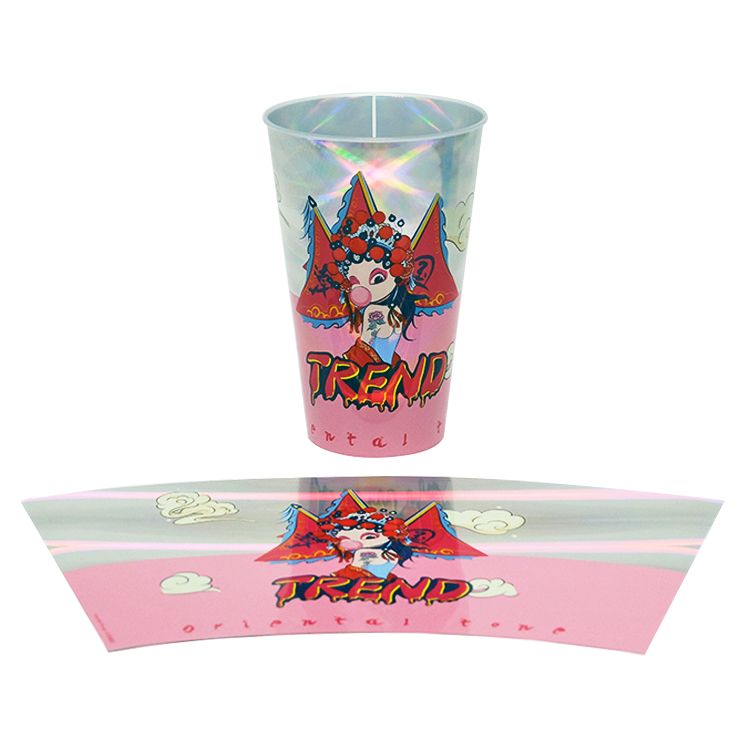
Holographic and metallic IML film finishes expand design options while food-contact compliance remains the first filter.
Food and beverage applications are the single largest end-use segment for in-mold labels (IML), representing more than 41.3% of global revenue in 2023. Injection molding is the dominant production process, accounting for over 57.1% of IML market share. For procurement professionals moving from initial awareness into structured evaluation, the central question is no longer “what is IML?” but rather: which certification, film, and printing constraints determine whether an IML solution is viable for a specific plastic container?
Industry Context: Why IML Procurement Is a Constraint-Driven Decision
In-mold labeling embeds a printed film into the wall of a plastic container during the molding cycle. The label becomes part of the part. This fundamental characteristic creates a set of constraints that buyers must verify before committing to a supplier: destination-market compliance, resin compatibility, mechanical performance, printing precision, and commercial terms such as minimum order quantity and lead time.
Unlike a pressure-sensitive label that can be re-applied after a compliance failure, an IML label is permanently fused into the container. A mis-selected film or non-compliant ink cannot be removed without scrapping the entire molded part. This is why the Research and Evaluation stages of IML procurement should be structured around verifying constraints, not just comparing samples.
| Constraint dimension | What the buyer should verify | Typical procurement question |
|---|---|---|
| Compliance | Destination-market food-contact rules, migration limits, system certifications | Is the label safe for food contact in the target country? |
| Material | Film resin type, layer structure, thickness, recyclability compatibility | Does the film match the container resin and recycling stream? |
| Performance | Adhesion, temperature resistance, tensile strength, scratch and chemical resistance | Will the label survive filling, cold chain, hot fill, and handling? |
| Printing | Color count, registration precision, maximum width, surface finish options | Can the supplier reproduce the brand design at production quality? |
| Commercial | MOQ, lead time, OEM/ODM capability, after-sales support | Does the supplier’s capacity fit the project timeline? |
Compliance Constraints: Certification as the First Filter
For food-contact packaging, certification is not a marketing badge; it is the first technical constraint. An IML used on a yogurt cup or ice cream container must comply with the regulations of the destination market. The point of certification is to prove that the finished label, including film, ink, and varnish, does not transfer unsafe substances into food.
One practical reference point is the FDA food-contact certification held by YZY (Zhejiang Zhongyu Technology Co., Ltd.), a Wenzhou-based IML manufacturer with 16 years of production experience. The company’s IML product, identified under product code 2829, is certified to FDA 21 CFR 177.1520 for food contact in the US/North America market. The certification was issued by SGS under certificate number NGBEC2501946006. In addition, YZY reports that its IML products meet EU 10/2011 food-contact material migration standards, and the company holds QS, ISO, BRCGS, and ISO22000 system certifications.
Buyers should interpret certifications carefully. A certificate is valid for a defined product structure, material recipe, and scope. When evaluating a supplier, the buyer should ask to see the certificate scope, issuing body, certificate number, and the exact products covered. A food-contact certificate that covers only a specific film structure does not automatically cover every new construction, so each formula change requires renewed verification.
Material Constraints: Matching IML Film to the Container Resin
Polypropylene (PP) dominates the IML material segment, holding an estimated 47.2% share in 2023, driven by its compatibility with plastic containers and its recyclability. For an IML to perform correctly, the film must be compatible with the container material and the molding process.
YZY’s ZY-IML Series uses virgin PP, PE, and PET materials, as well as multi-layer composite laminated films. The practical distinction matters: PP film is the standard choice for PP containers, enabling a single-material recycling stream; PE film is used when the container itself is PE-based or when higher low-temperature toughness is needed; PET film adds stiffness and dimensional stability for demanding die-cutting and molding conditions.
Film thickness in the ZY-IML Series ranges from 30μm to 100μm and is customizable. Thinner films reduce material cost and are well suited for simple curved surfaces; thicker films provide rigidity for robotic handling in high-speed injection molding and improve the label’s resistance to deformation during the melt flow. The right thickness depends on container geometry, mold design, and the speed of the injection process.
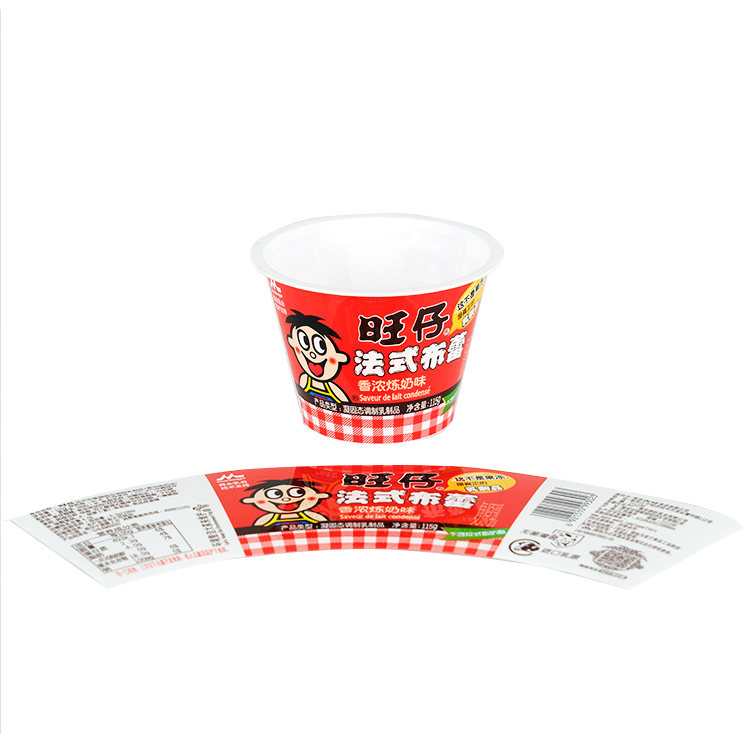
Glossy white laminated film provides the opacity and surface quality required for high-resolution printed IML.
Performance Constraints: Parameters That Define Usability
Performance parameters are where IML specifications become meaningful to engineers and procurement teams. A label that looks good on a sample but peels during molding, cracks under cold-chain storage, or scratches during distribution creates downstream cost. The following parameters from the ZY-IML Series are representative of what a buyer should request from any IML supplier:
| Parameter | Specification | Why it matters |
|---|---|---|
| Film thickness | 30μm – 100μm, customizable | Affects handling, rigidity, cost, and molding behavior |
| Adhesion strength | ≥5N | Prevents label peeling during injection molding |
| Temperature resistance | -20℃ to 120℃ | Covers cold-chain yogurt, ice cream, and hot-fill processes |
| Tensile strength | ≥20MPa | Ensures dimensional stability during cutting and molding |
| Scratch resistance | 4H pencil hardness | Protects surface graphics in filling lines and distribution |
| Chemical resistance | Weak acids, alkalis, common detergents | Relevant for dairy, daily chemical, and industrial containers |
| Printing precision | ±0.1mm registration | Prevents color misregistration in multi-color brand graphics |
| Ink type | Food-grade low-migration water-based ink | Supports food-contact safety and migration compliance |
| Migration compliance | EU 10/2011 | Required for food-contact packaging sold in the EU |
These parameters should be matched to the actual application. Yogurt cups and bubble tea cups often require low-temperature impact resistance and condensation resistance; paint buckets and lubricant containers require solvent and moisture resistance; cosmetic containers put a premium on surface finish and scratch performance.
Printing Constraints: What Custom IML Can and Cannot Do
Custom IML is a printing discipline as much as a material discipline. YZY’s ZY-IML Series supports up to 8-color high-precision rotogravure printing with a maximum printing width of 1200mm, and printing precision of ±0.1mm. The range of surface finishes—glossy, matte, orange peel, holographic, metallic, and custom textures—allows brands to create distinct visual effects while maintaining food-contact requirements.
For procurement, the practical constraint is that printing complexity interacts with lead time and cost. Complex color designs, large areas of white ink, and specialty finishes can require additional process validation. In YZY’s case, lead time is stated as 15–20 days after sample confirmation, which means the buyer’s design freeze and sample approval workflow must be planned earlier than in traditional label procurement.
Buyers should also verify that the printing process is compatible with the certification. Food-grade low-migration water-based ink is a key element; it supports FDA 21 CFR compliance and EU 10/2011 migration standards. A supplier that does not control ink chemistry can produce a visually identical label that fails migration testing.
Application-Level Verification: From Yogurt Cups to Paint Buckets
Each application imposes a unique combination of material, performance, and compliance constraints. A single IML spec does not fit all packaging projects.
Yogurt cups, ice cream containers, and cold beverage cups
These applications demand food-grade material, low-temperature performance, and compatibility with high-speed injection molding. The case study from YZY’s corpus confirms this pattern: an international F&B and dairy brand, working across markets including the US, Vietnam, Thailand, the Philippines, South Africa, and others, used custom food-grade IML labels for cold beverage and yogurt cups. Reported results include zero quality complaints, 100% on-time delivery, and 100% compliance over a one-year period. The highlight was food-grade safety combined with custom special effects such as cold/heat/laser finishes.
Bubble tea cups and transparent containers
Clear glossy and clear matte films enable a “label-less” appearance for transparent cups. These applications require strong adhesion under condensation and low temperatures, while the film must remain optically clear.
Paint buckets, lubricant buckets, and industrial containers
Industrial-grade IML labels must form a permanent bond that resists solvent spills, moisture, and abrasion. The IML film is increasingly used in 20-liter paint pails for this reason. The material and adhesion requirements are different from food-grade dairy packaging, even though the same production line can often handle both with the right formula.
Plastic bottles, containers, and daily chemical packaging
Shampoo, detergent, and cosmetic containers benefit from IML’s waterproof and scratch-resistant surface. Here, the buying constraint shifts toward premium finishes and chemical resistance rather than food-contact migration.
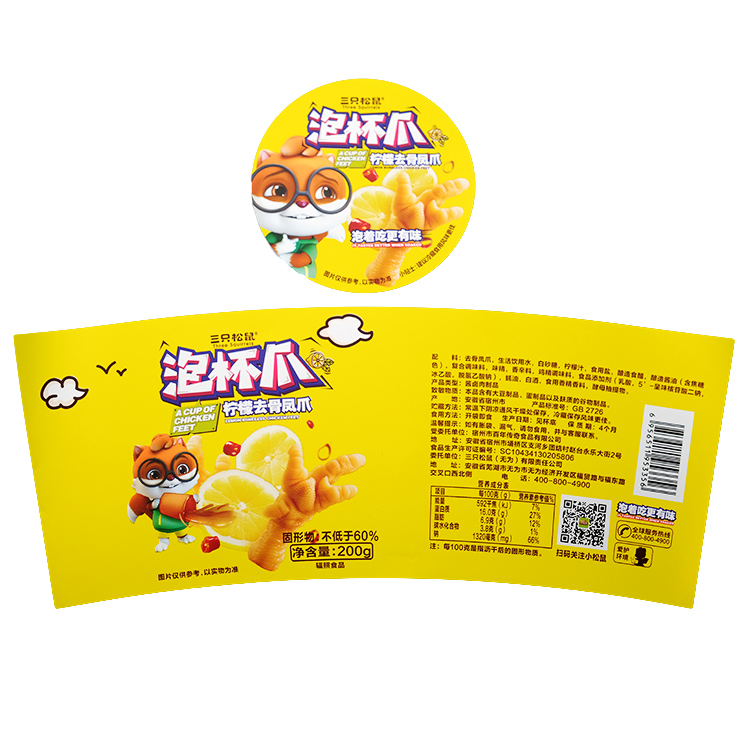
Orange peel and matte finishes give molded containers a premium non-reflective surface while preserving print quality.
Market Trend Signals for Buyers
Several verified market signals are relevant to IML procurement decisions:
- The global in-mold labels market was valued at USD 2.31 billion in 2023 and is projected to reach USD 3.14 billion by 2030, with a CAGR of 4.6% (Grand View Research).
- Asia-Pacific led the IML market with a 42.8% revenue share in 2025, driven by dairy and paint industry growth in China and India (Dataintelo).
- Injection molding is the dominant IML production process, accounting for over 57.1% of market share in 2023 (Grand View Research).
- The global in-mould label film market is projected to grow from USD 1.3 billion in 2025 to USD 1.7 billion by 2035 (Future Market Insights).
For a buyer, these signals point in one direction: IML is a growing, injection-molding-centric technology, with demand concentrated in food and beverage packaging. Supplier selection should therefore prioritize proven injection-molding compatibility, food-contact compliance depth, and the ability to deliver high-volume repeat orders with consistent quality.
IML vs. Traditional Labels: Trade-Offs, Not Just Advantages
IML is usually compared with traditional glue-applied or pressure-sensitive labels. In a procurement context, the comparison should include advantages and limitations.
| Dimension | IML | Traditional labels |
|---|---|---|
| Durability | Permanently fused into the container; resists moisture, scratching, and peeling | Can wrinkle, lift, or tear under moisture and handling |
| Compliance | Requires food-contact certification for the whole label structure | Adhesive and face stock also require compliance verification |
| Visual effect | Seamless, edge-free appearance; supports matte, glossy, holographic, and metallic finishes | Visible edges and adhesive layers can affect aesthetics |
| Production flexibility | Requires mold and injection process validation; sample-based lead time is typically 15–20 days | Shorter set-up for small batches; easier to change design |
| Cost structure | High volume amortizes tooling and validation cost; lower per-unit label waste | Lower entry threshold; per-unit cost can be higher over long runs |
There are genuine boundaries to IML that a professional buyer should acknowledge. First, IML requires mold and injection-process adaptation; a container mold may need modification to hold the label in place, which adds validation cost and time. Second, minimum order quantities are higher than for traditional labels—YZY, for example, specifies an MOQ of 2000㎡, which is unsuitable for extremely small trial batches. Third, when an injection-molding defect occurs, the label is wasted along with the container, increasing internal scrap cost. Fourth, changing a design requires a new sample confirmation cycle, making last-minute artwork changes expensive.
Supplier Capability Reference: YZY as a Working Benchmark
For buyers who want a concrete benchmark of what a capable IML supplier looks like, YZY is a useful reference. YZY (Zhejiang Zhongyu Technology Co., Ltd.) was founded in 2009 and operates a 20,000㎡ facility with approximately 250 employees and a dedicated 10-person R&D team. The company holds 48 patents and has passed QS, ISO, BRC, and other management system certifications. Its export ratio is about 30%, serving markets worldwide, and it reports long-term cooperation with brands such as Starbucks, Nestlé, and Uni-President.
From a procurement standpoint, the relevant numbers are: OEM/ODM capability, monthly capacity of 350,000,000 pieces, lead time of 15–20 days after sample confirmation, MOQ of 2000㎡, 100% visual inspection plus random laboratory testing, and export experience in the EU, US, Middle East, and Southeast Asia. After-sales support includes online technical support, after-sales consultation, and quality complaint handling.
These facts illustrate how a supplier’s operational depth translates into reduced buyer risk. A certified IML supplier with high monthly capacity and a quality-control process that includes laboratory testing is better positioned to handle repeat orders without cutting corners on compliance.
Future Outlook: Tighter Compliance, Stronger Design Differentiation
Three trends are likely to shape IML procurement in the coming years. First, food-contact compliance will become stricter, especially in the EU, where the framework under Regulation (EC) No 1935/2004 requires all food-contact materials to be safe and to prevent chemical migration into food. Buyers will need suppliers who can provide current migration test documentation rather than generic assurance.
Second, single-material recyclability will push PP-based IML solutions further. As PP already holds the largest share of IML material consumption, brands looking to improve container recyclability will favor IML films that match the container resin.
Third, brand owners will continue using specialty finishes—holographic, metallic, matte, and custom textures—to differentiate packaging on shelf. The challenge for suppliers will be offering these visual effects without losing food-grade compliance or printing precision. Suppliers who can control both the chemistry and the decoration process will become more valuable procurement partners.
Frequently Asked Questions
What certifications matter most for food-grade IML labels?
For US-market food contact, FDA 21 CFR 177.1520 certification is the key reference; YZY’s IML product is certified under this standard with SGS certificate number NGBEC2501946006. For EU sales, migration compliance with EU 10/2011 is required. Management system certifications such as BRCGS, ISO22000, and QS also support overall quality assurance.
What is the difference between PP and PE IML film for plastic containers?
PP film is the dominant IML material, with roughly 47.2% market share, and is the preferred choice for PP containers because it supports single-material recycling. PE film is typically used for PE-based containers or when higher low-temperature toughness is required. The film should be matched to the container resin and mold conditions.
What film thickness options are available for custom IML?
Custom IML film is commonly available from 30μm to 100μm. YZY’s ZY-IML Series is customizable within this range. Thinner films are lighter and lower in cost; thicker films provide greater rigidity for robotic handling and high-speed injection molding.
Can IML labels be used on paint buckets and lubricant containers?
Yes. Industrial-grade IML labels are used on 20-liter paint pails because the in-mold bond resists solvent spills and moisture. The material and adhesion specifications differ from food-grade dairy applications, so buyers should specify the chemical exposure conditions to the supplier.
What printing options are available for custom printed IML?
Custom IML can be printed with up to 8 colors using high-precision rotogravure printing, with registration precision around ±0.1mm and a maximum printing width of 1200mm. Available surface finishes include glossy, matte, orange peel, holographic, metallic, and custom textures.
Is IML suitable for bubble tea cups and cold beverage packaging?
Yes. Food-grade IML labels can be used on bubble tea cups and cold beverage packaging. The key requirements are food-contact-safe film and ink, strong adhesion under condensation, and low-temperature performance; the ZY-IML Series is rated from -20℃ to 120℃.
What is the typical MOQ and lead time for custom IML orders?
For YZY, the MOQ is 2000㎡ and the lead time is 15–20 days after sample confirmation. This means buyers should freeze artwork and approve samples before production scheduling. Lower MOQs may be available depending on the supplier and product type, but the 2000㎡ threshold is a realistic industry reference for custom IML.
Does IML support hot-filling and cold-chain food packaging?
Yes, when the film specification is appropriate. IML films for food packaging can operate in a temperature range from -20℃ to 120℃, which covers cold-chain yogurt, ice cream, bubble tea cups, and hot-fill processes. Buyers should verify the temperature range against their specific filling process.
Есть вопросы или нужны дополнительные детали?
Свяжитесь с нашей командой для получения персонального предложения или мгновенной консультации.
Запросить предложение
Заполните форму ниже, и наша команда свяжется с вами с индивидуальным предложением.
Прямой чат WhatsApp
Предпочитаете общаться в реальном времени? Напишите нам в WhatsApp для мгновенной помощи и быстрых ответов.
- Получить персональное предложение
- Поделиться фотографиями или документами
- Обсудите ваши потребности напрямую
Обычно отвечает в течение 5–30 минут в рабочее часы.