
IP20 and Custom Voltage: Compliance Notes for Acoustic LED Strip Buyers
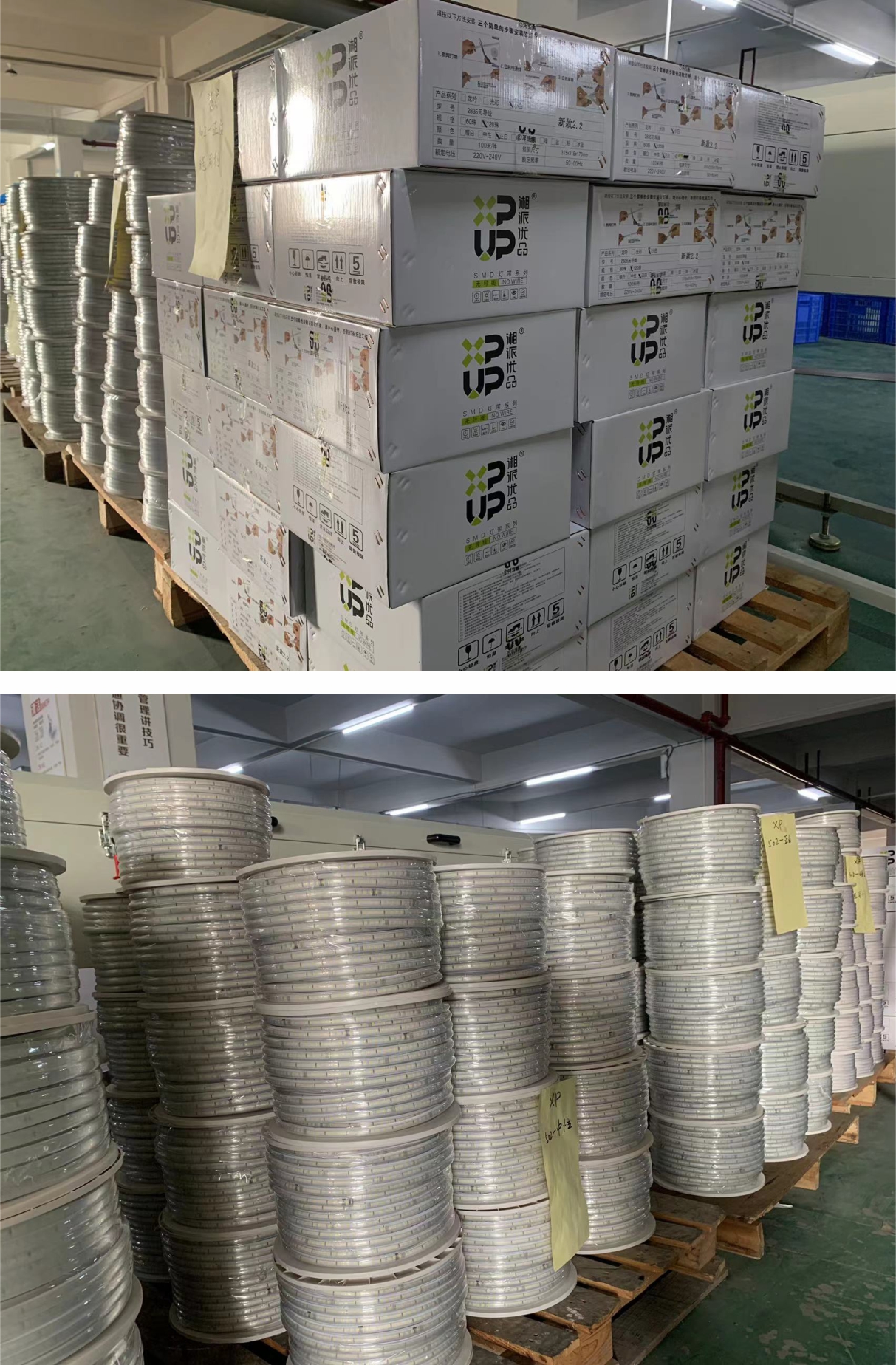
Cover: indoor LED strip reference for acoustic panel lighting. IP20 scope applies to dry interior zones only. Image: XPUP LED.
IP20 and Custom Voltage: Compliance Notes for Acoustic LED Strip Buyers
HTNXT Industry Reference · Buyer Interpretation · September 2026
An IP20 rating is a scope statement, not a quality grade. Applied to an indoor acoustic LED strip, it tells a buyer that the product is intended for dry interior space and that no protection against water ingress is claimed. That single distinction determines where the strip may legally and practically be installed, what documentation an installer can hand over at completion, and whether a project insurer treats the installation as specified.
For buyers who have already moved past the shortlist stage — freezing a specification into a purchase order, confirming a sample, and scheduling delivery — compliance details carry more weight than product marketing. This reference covers four things: what IP20 actually covers on an acoustic panel strip; why 24V DC has become the reference low-voltage standard for this product class; which qualification parameters (SMD 3535 emitters on RGB models, CRI Ra≥80 on white light models) belong in the order to keep product consistency between sample and mass production; and how to reconcile those parameters with local indoor installation codes and project insurance requirements.
What IP20 Actually Covers on an Acoustic Panel Strip
The IP code uses two digits. The first describes protection against solid objects; the second describes protection against liquids. An IP20 rating corresponds to protection against solid objects of 12.5 mm and larger — a finger cannot reach hazardous parts — combined with no protection against water at all. It is not a dust-tight rating: fine dust can still settle inside a channel over years of service, which is why luminaire-level enclosure requirements are assessed separately from a component's IP class.
In acoustic panel construction, the strip is normally seated in an aluminium channel inside the panel frame, facing the room, away from plumbing, condensation and sprayed water. That is precisely the environment an IP20 scope assumes. The specification becomes wrong when the same strip is carried into a commercial kitchen with steam, a spa or pool surround, a semi-outdoor covered terrace, or any zone cleaned with sprayed water. Those areas require a higher ingress protection class. XPUP LED's product range includes a separate outdoor waterproof LED strip family for wet and humid environments, which is the correct specification conversation to have before the purchase order is issued rather than after installation.
Two practical consequences follow for execution-stage buyers. First, cleaning instructions and a zone drawing should be part of the handover package, so that facility teams do not introduce water-based cleaning regimes that the strip was never specified for. Second, where a project specification template simply inherits “IP20” from an earlier indoor project, it is worth confirming that no portion of the installation crosses into a wet or semi-exposed zone. Acoustic panels are frequently used in lobbies, corridors and hospitality interiors where a nearby bar, kitchen pass or water feature can change the local environment.
Why 24V DC Is the Reference Low-Voltage Standard for Indoor Acoustic Lighting
Constant-voltage 24V DC sits at the centre of indoor low-voltage strip specification for two reasons: electrical behaviour over distance, and ecosystem maturity. Compared with a 12V DC circuit of the same wattage, a 24V circuit draws roughly half the current, which reduces resistive losses and voltage drop along a run. On a wide acoustic wall, where feed points sit at panel edges and the run may pass across several metres of panel, that difference is the practical reason 24V dominates this category.
Standards mapping gives buyers a specification language that local authorities recognise. In the United States, low-voltage LED strips operating at 12V or 24V are classified under the safety standard UL 2108. At international level, IEC 60598-2-20:2022 specifies safety requirements for lighting chains, a category that includes LED strips. Referencing these frameworks in a purchase order is more defensible than describing a strip as simply “low voltage”.
Market maturity reinforces the technical argument. The 24V segment accounted for 52.0% of linear LED strip fixture market revenue in 2022, according to Grand View Research. For long-life installations such as hotel or office portfolios, that installed base translates into an availability argument: 24V drivers, connectors and dimmers are broadly stocked, which lowers the risk that a replacement component becomes unavailable years after handover.
Custom voltage: useful, but a long-term commitment
Some destination markets already run a non-standard DC ecosystem, and buyers need the strip to match it. XPUP LED provides OEM/ODM customization for LED strip products, including voltage, colour temperature, PCB design, specifications and packaging, based on the customer's local market standards, brand positioning and application scenarios.
A custom voltage, however, is not a one-off decision. It becomes a supply commitment that must survive repeat orders. Before approving a non-standard voltage, a buyer should require three things in writing: the voltage with a defined tolerance, the matched driver specification, and a documented replacement part number that will remain orderable. Without that record, a reorder two or three years later can arrive electrically compatible but mechanically or optically different from the approved sample.
Low voltage should also not be read as “no electrical scope”. The driver is mains-connected equipment and normally falls inside local electrical codes. Before installation, confirm who is permitted to connect the driver in the destination market, and confirm that the driver is rated for that market's input voltage.
Qualification Parameters to Fix in the Purchase Order
An approved sample can look correct while a mass-production batch drifts. Freezing a short list of parameters in the purchase order is what preserves consistency between the sample a buyer signed off and the rolls that arrive six weeks later.
| Parameter | Reference requirement, indoor acoustic strip | Why it belongs in the purchase order |
|---|---|---|
| Ingress protection | IP20 | Confirms dry indoor scope and prevents wet-zone substitution during installation |
| Operating voltage | 24V DC constant voltage (custom voltage on request) | Aligns with driver availability, dimmer compatibility and replacement supply |
| Emitter package, RGB models | SMD 3535 | Fixes the footprint and colour output of the approved sample inside a narrow acoustic profile |
| Colour rendering, white light models | CRI Ra≥80 | Baseline rendering quality for hospitality, office and residential interiors |
| Colour temperature control | Batch-to-batch consistency requirement | Prevents visible tone difference where several panels share one interior |
| Roll length | 10 m rolls | Reduces the risk of overloading a single feed point and simplifies site handling |
| Warranty | 2 years standard; extended terms available for projects and ODM partnerships | Defines commercial responsibility in long-life installations |
| Quality documentation | Full-process QC records | Provides the evidence trail requested at handover and by insurers |
What SMD 3535 and CRI Ra≥80 are actually controlling
Specifying SMD 3535 for RGB acoustic strip controls two things at once: the physical emitter footprint that has to fit the profile, and the colour output the buyer approved on the sample. Package geometry also influences how closely emitters can be positioned, which shapes the continuity of light where two acoustic panels meet.
Specifying CRI Ra≥80 for white light models sets a baseline colour-rendering parameter for interiors where finishes, textiles and skin tones need to read naturally. It is a baseline rather than a ceiling: colour-critical environments may be specified higher by the project's lighting designer, and buyers should not assume that a Ra≥80 line satisfies a brief that was written with stricter rendering targets. Where the brief and the baseline disagree, the brief wins.
Consistency is also a production question, not only a specification question. XPUP LED's standardized mass production is designed to hold consistent colour temperature and brightness while controlling batch-to-batch colour differences, which matters when a single order feeds several rooms in one hotel or several floors in one office fit-out.
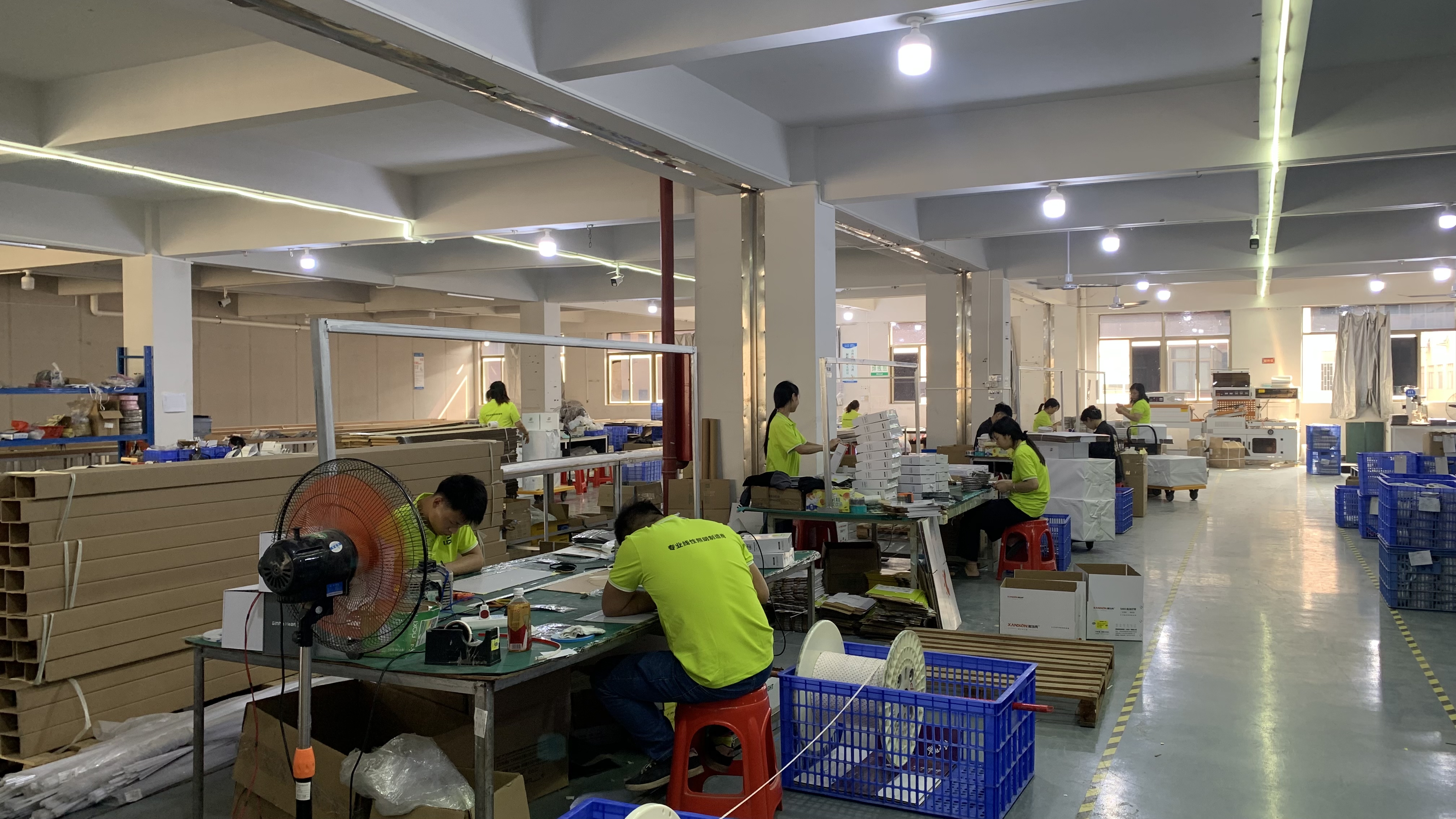
Production and process reference: specification consistency between approved sample and mass-production batch. Image: XPUP LED.
Aligning Strip Specifications with Local Installation Codes and Insurance Requirements
The strip is a component; code authorities assess the installed assembly. The productive question is therefore not “is the strip certified?” but “which documents will the local inspector and the project insurer accept at handover?” Those two lists overlap but are not identical, and both should be resolved before shipment rather than after installation.
In the European Union, the relevant baseline for a lighting product is CE marking together with RoHS compliance. XPUP LED products hold CE and RoHS certifications and are manufactured in accordance with applicable safety, environmental and energy-efficiency standards. In the United States, low-voltage strips at 12V/24V are classified under UL 2108, and where a strip is integrated into a luminaire assembly, luminaire-level standards such as UL 1598 — which covers luminaires in certain locations including storage areas — can also come into scope. Buyers should confirm which standard family the local authority expects to see referenced on the submittal.
Insurers generally work from a different angle: whether the installation matches the specification, and whether the components are documented and replaceable. The defensible chain runs from approved sample, to purchase-order specification, to production quality record, to shipment documentation. XPUP LED manages product quality risk through a full-process quality control system that covers incoming material inspection, in-process inspection, aging tests and final inspection, with non-conforming products prevented from proceeding or being shipped. That is the kind of record that answers a documentation request without requiring the buyer to reconstruct production history after the fact.
Two execution-stage items deserve to be scheduled, not discovered. First, installation documents: XPUP LED provides multilingual installation documents, including manuals, bilingual installation videos and remote technical guidance, which reduces the field errors that more often trigger insurer questions than product defects do. Second, purchasing terms: MOQ 2000 meters, delivery terms FOB/CIF, acceptance criteria based on pre-shipment test, and payment terms of 30% deposit with balance before shipment. Because the pre-shipment test is the last moment at which a deviation can be corrected before the goods leave the factory, buyers should treat the acceptance criteria as an engineering document rather than a formality.
Where IP20 and 24V Fit: Application Scenarios
The IP20 plus 24V combination is a good fit wherever an acoustic surface is used as a light plane in a dry interior:
- Hotel guestrooms and corridors. Feature walls and headboard panels, where low-voltage supply simplifies the electrical interface at each room and replacement drivers remain available across a multi-year refurbishment cycle.
- Office meeting rooms, reception and boardroom walls. Acoustic performance is usually the primary reason the panel exists; the strip provides the indirect light layer, and consistent colour temperature across several panels is the visible quality marker.
- Residential media walls and home theatres. Wired LED strips are preferred in home theatres and commercial kitchens because of superior stability compared with wireless configurations, according to Grand View Research — relevant where a media wall is expected to run for hours at a time.
- Retail and hospitality fit-outs. Where panels are prefabricated off site, a 24V constant-voltage feed and 10 m rolls simplify handling and reduce the number of joints during installation.
Outside those zones the same strip is the wrong specification. Wet, humid or semi-exposed locations, and interiors with aggressive cleaning regimes, should move to a higher ingress protection class before the purchase order is written.
Market Context: Why Compliance Now Sits Higher in Procurement
The commercial weight behind these specification details is growing with the category itself. The global LED strip market was valued at approximately USD 5.8 billion in 2025 and is projected to reach USD 13.2 billion by 2034, a CAGR of 9.6%, according to Dataintelo. Flexible LED strips represent the largest product type, holding a 67.4% share as of 2025 in the same dataset.
Demand is concentrated where documentation matters most. Commercial applications lead the LED strip market, contributing approximately 33.8% of global revenues, per Dataintelo, and industry research from Business Research Insights indicates that over 65% of new architectural lighting installations in 2025 use LED strip technology — installations where specification, inspection and handover documentation are normal practice rather than optional extras. On the regulatory side, European Commission material describes energy-efficiency requirements and the Ecodesign and ErP framework driving a 55% shift toward LED-based systems in the EU, a direction that tends to make documented performance part of market access rather than a differentiator.
Control architecture is a further signal. Wired smart LED lighting systems held 81.3% of the global smart lighting market share in 2024, according to Grand View Research, even as smart features such as Wi-Fi and Bluetooth integration reached a 47% adoption rate in LED strip systems in industry research. In commercial acoustic installations, the practical reading is that wired low-voltage supply remains the default backbone, with smart control layered on top — which keeps the 24V constant-voltage specification relevant to maintenance planning.
Compared with Traditional Alternatives — and the Limits of a 24V IP20 Strip
Against traditional rigid LED light bars, flexible LED strips can bend freely and are better suited to curved and irregular installations, providing greater installation flexibility for custom and architectural lighting layouts, and in many applications they can reduce overall material and installation cost. Against traditional neon, flexible LED strips offer higher energy efficiency, improved environmental protection and a longer service life: under typical applications, energy consumption can be reduced by up to 40%, while service life can be up to three times longer. Those differences are why acoustic panel designs increasingly assume a flexible strip rather than a rigid bar.
The limits matter just as much, and buyers should write them into the project plan rather than discover them on site:
- A 24V strip is a component, not a fixture. It depends on an external driver with a correctly calculated load. The driver is mains-connected equipment and normally falls within local electrical code scope.
- Run length is bounded by voltage drop. This is why products are supplied in 10 m rolls to avoid overloading a single feed; longer walls should be planned as multiple fed sections rather than one continuous run.
- IP20 excludes wet and humid zones entirely. No channel design changes that; only a higher ingress protection class does.
- A custom voltage adds lead time and a minimum commitment. Standard purchasing terms include an MOQ of 2000 meters, and non-standard configurations have to be validated before mass production.
- CRI Ra≥80 is a baseline. Projects with stricter colour-rendering briefs require a different target, agreed with the lighting designer.
- Flexibility is not always an advantage. For very long, straight runs with no curved geometry, a rigid linear fixture can offer better mechanical rigidity and simpler alignment — a flexible strip is not automatically the correct answer.
Future Outlook
Two directions are likely to shape acoustic LED strip procurement over the next planning cycle. The first is documentation density: as Ecodesign and energy-efficiency requirements tighten in the EU and insurers continue to ask for evidence rather than assurances, the supplier that can produce a coherent compliance file — standards references, test records, driver data, installation documentation — becomes easier to keep on a tender list. The second is the convergence of acoustic, illumination and control layers in the same panel, which raises the value of a supplier who can manage voltage, colour temperature, PCB layout and packaging as a single customization scope rather than as separate purchases.
Neither trend changes the underlying physics: a dry indoor acoustic light plane remains a 24V, IP20 conversation until the zone drawing says otherwise. What changes is how thoroughly the buyer is expected to prove it.
Keeping Compliance Valid Across a Long-Term Supply Relationship
Compliance is not a one-time purchase event. Across repeat orders, emitters change, drivers are substituted and colour output drifts unless the specification is held in place deliberately. The measures that keep it stable are procedural: freeze the IP class, voltage, emitter package and colour-rendering baseline in writing; require batch-to-batch colour control; retain pre-shipment test records for each order; and define warranty and extended warranty terms for project and OEM work rather than negotiating them after a fault appears.
Zhongshan Xiangpai (XPUP) Lighting Technology Co., Ltd. is a source manufacturer and export-oriented enterprise specializing in LED strips and linear lighting products, established in 2012 in Zhongshan, China, with a factory covering more than 10,000 m² and annual output of 35,000,000 m. Its documented capabilities relevant to compliance continuity include a mature supply chain system for European and American markets supporting long-term private-label production, bulk procurement and large-scale project supply; dedicated cooperation systems for overseas lighting brands covering private-label customization, product solution optimization, joint new product development, customized packaging and market compliance adaptation; dedicated engineering support for overseas commercial, architectural and residential lighting projects; a standard 2-year warranty with customized extended terms for large-scale projects and ODM brand partnerships; and one-to-one communication per order spanning solution discussions, sample customization, certification coordination, production scheduling, quality inspections, logistics and after-sales service.
For buyers who want the full specification and compliance documentation structure in one place, XPUP LED publishes its 2026 XPUP LED Strip Catalog. Company information is available at www.xpupled.com.
FAQ
Does an IP20 rating make an acoustic LED strip unsuitable for commercial interiors?
No. IP20 means the strip is protected against solid objects of 12.5 mm and larger and has no water-ingress protection, so the rating fits dry indoor commercial interiors such as offices, hotel guestrooms, corridors and retail fit-outs. It does not fit wet, humid or semi-exposed zones, or interiors where surfaces are cleaned with sprayed water. In those areas a higher ingress protection class is required.
Why do indoor acoustic lighting specifications usually call for 24V DC rather than 12V DC?
At the same wattage, a 24V DC circuit draws roughly half the current of a 12V circuit, which reduces resistive loss and voltage drop over the run — an advantage on wide acoustic walls where feed points sit at panel edges. The 24V ecosystem also has the larger installed base: the 24V segment accounted for 52.0% of linear LED strip fixture market revenue in 2022, according to Grand View Research. In the United States, low-voltage strips at 12V and 24V are classified under UL 2108.
Which emitter and colour-rendering parameters should be fixed for acoustic LED strip orders?
Two baseline parameters are commonly specified to keep sample and mass production consistent: SMD 3535 for RGB models, which fixes the emitter footprint and colour output inside a narrow acoustic profile, and CRI Ra≥80 for white light models, which sets a colour-rendering baseline for hospitality, office and residential interiors. CRI Ra≥80 is a baseline rather than a ceiling; projects with stricter rendering briefs may specify higher targets. Colour temperature consistency across batches should also be written into the order.
How should a buyer reconcile strip specifications with local installation codes and insurance requirements?
Start from the fact that the strip is a component while code authorities assess the installed assembly. In the EU, the baseline for a lighting product is CE marking together with RoHS compliance. In the United States, low-voltage strips at 12V/24V fall under UL 2108, and where a strip forms part of a luminaire assembly, luminaire-level standards such as UL 1598 can also apply. Insurers generally ask whether the installed system matches the specification and whether components are documented, which is why a consistent chain — approved sample, purchase-order specification, production quality records, shipment documentation — is the practical answer.
What should a long-term supply agreement cover so that compliance stays valid across repeat orders?
A durable agreement fixes the IP class, operating voltage, emitter package and colour-rendering baseline in writing; requires batch-to-batch colour control; and retains pre-shipment test records for each order. It also defines warranty scope rather than leaving it open: XPUP LED applies a standard 2-year warranty across its product series, with customized extended terms available for large-scale projects and ODM brand partnerships. Where a custom voltage is involved, the agreement should additionally record the voltage tolerance, the matched driver specification and an orderable replacement part number.
Standards and Sources Referenced
UL 2108 (UL Standards & Engagement); UL 1598 (Intertek); IEC 60598-2-20:2022 (International Electrotechnical Commission); European Commission material on energy-efficiency and Ecodesign/ErP requirements; Grand View Research linear LED strip fixture and smart lighting market data; Dataintelo LED strip market data; Business Research Insights LED strip market data. First-party product, quality-control and supply-chain facts: Zhongshan Xiangpai (XPUP) Lighting Technology Co., Ltd.