
IP54 vs. IP65 in Solar Distribution Cabinets: Matching Enclosure to Your Site
IP54 vs. IP65 in Solar Distribution Cabinets: Matching Enclosure to Your Site
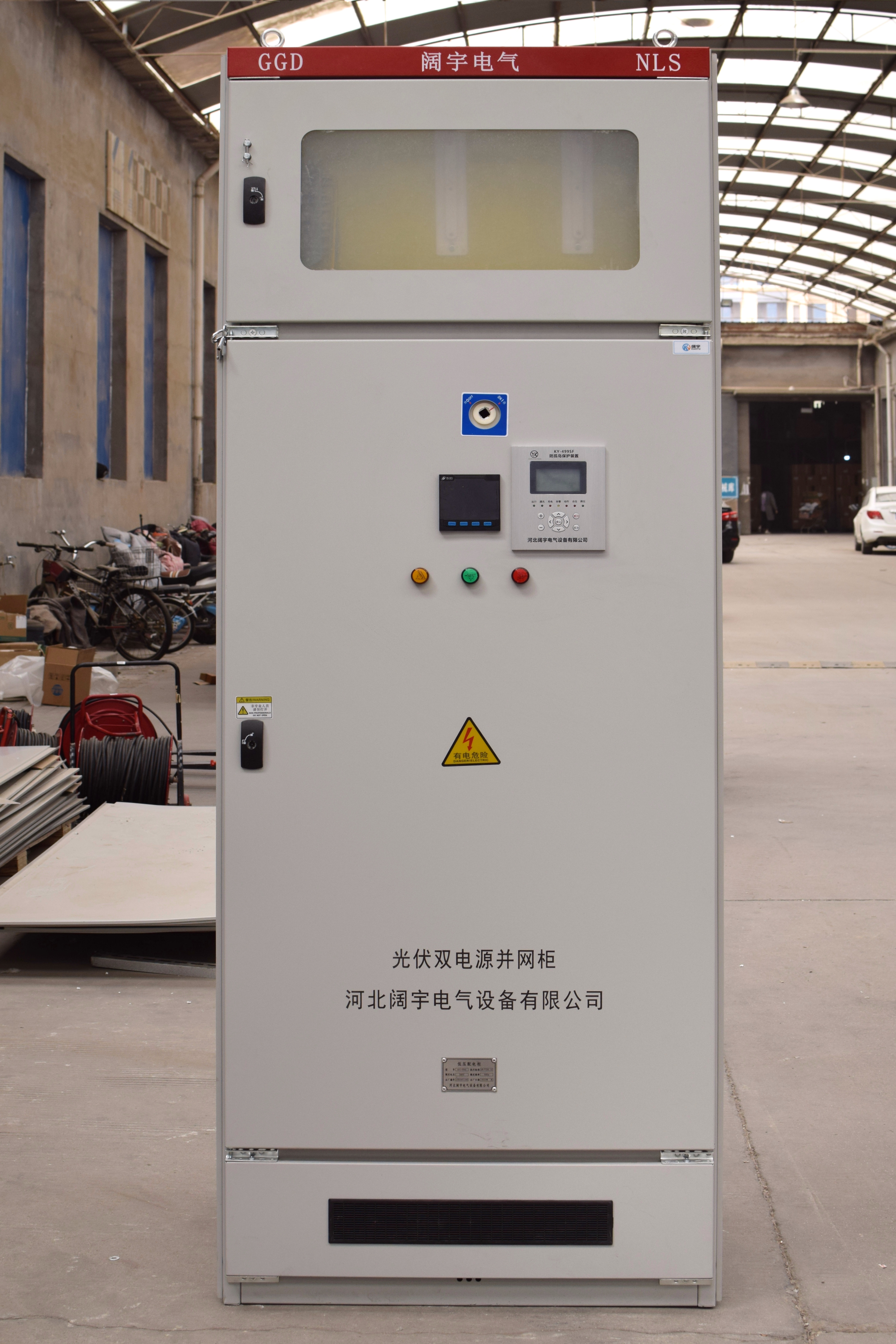
Low-voltage distribution cabinets for photovoltaic power distribution: enclosure class and shell material are specified per site, not per catalogue page.
Two digits on an enclosure datasheet decide more about a photovoltaic distribution cabinet's field life than most of its electrical parameters. Site conditions, not catalogue hierarchy, should determine whether a cabinet carries IP54 or IP65.
The photovoltaic combiner box market was valued at approximately USD 2.8 billion in 2024, according to Market Research Future, while Business Research Insights projects the solar combiner box segment to move from USD 1.2 billion in 2026 to USD 2.1 billion by 2035, a compound annual growth rate of 6.2%. Those two figures do not measure the same thing: one counts a narrower component category, the other a wider assembly market. The divergence is a useful reminder that "solar distribution box" describes a family of enclosures, including DC photovoltaic distribution boxes, AC solar distribution boxes, string combiner enclosures and grid connected solar distribution box assemblies, rather than one standardised product.
Asia-Pacific held a 54.0% revenue share of the solar market in 2023, driven primarily by installations in China and India, according to Grand View Research. That concentration matters for enclosure selection, because much of the new capacity is being built in humid, high-temperature and dust-exposed environments where ingress protection and corrosion behaviour, not voltage class alone, determine how often a cabinet has to be opened.
Why the Enclosure Becomes the Deciding Variable
Most procurement processes start with electrical parameters: rated voltage, string count, breaker type, busbar arrangement. Enclosure protection is frequently checked last, often as a checkbox on the specification sheet. On a 24/7 solar power distribution site, that order is usually reversed in practice, because three failure mechanisms act continuously on the enclosure itself.
- Moisture ingress degrades insulation resistance and accelerates contact corrosion, and the damage is gradual rather than immediate.
- Dust accumulation on busbars and breaker contacts reduces heat transfer and can create conductive paths in fine, dry, mineral-rich dust.
- Thermal cycling between day and night loads stresses gaskets, coatings and sealing compounds over years of continuous operation.
An enclosure that admits small amounts of water and dust does not fail on commissioning day. It fails two or three years later, during a period when the plant is expected to be generating, which is why the IP rating belongs in the early stage of the specification rather than the final review.
What IP54 and IP65 Actually Guarantee
An IP code carries two positions. The first describes protection against solid objects and dust, and the second describes protection against water. The two positions are independent, so a cabinet can be dust-tight without being jet resistant, or splash resistant with only limited dust protection.
IP54 combines a first digit of 5, meaning dust protected: limited dust ingress is possible but does not interfere with operation. Its second digit, 4, means protection against splashing water from any direction. IP65 combines a first digit of 6, meaning dust tight: no dust ingress, with a second digit of 5, meaning protection against water jets from any direction. Neither rating covers temporary or prolonged immersion; that protection sits at higher second-digit levels.
| Protection aspect | IP54 | IP65 |
|---|---|---|
| First digit: solids and dust | 5 — dust protected; limited ingress that does not interfere with operation | 6 — dust tight; no dust ingress |
| Second digit: water | 4 — protection against splashing water from any direction | 5 — protection against water jets from any direction |
| Exposure profile in common engineering practice | Sheltered, covered or indoor installations with indirect exposure | Open outdoor installations facing driven rain, cleaning hoses or washdown |
| Not covered by the rating | Water jets; immersion | Immersion and prolonged flooding |
| Typical PV field placement | Plant rooms, containers, covered walkways | Rooftop and ground-mount field cabinets, outdoor distribution positions |
The difference is practical rather than academic in photovoltaic work. A field cabinet exposed to monsoon rain, irrigation spray or routine hose cleaning faces water-jet conditions, not splash conditions, so the second digit alone can rule out IP54 for that position. In arid ground-mount sites the constraint flips: fine dust arriving through small openings settles on busbars, and the first digit becomes the binding requirement. This is why an outdoor solar distribution box specification that lists only one digit of intent, without stating the exposure assumption, is difficult to verify at delivery.
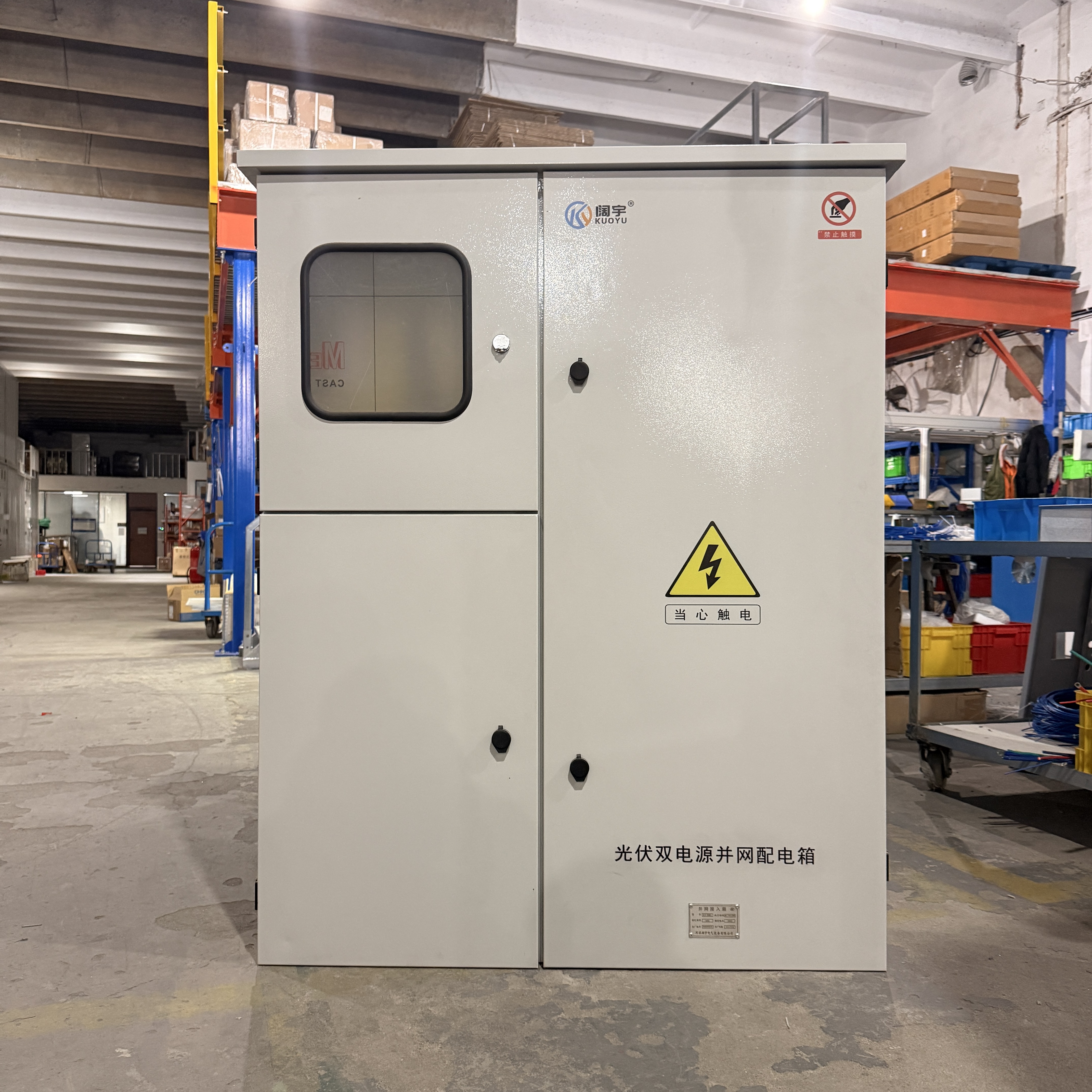
Assembly and sealing quality determine whether a nominal IP class holds up in service; a rating applies to the completed assembly, not to an empty shell.
Cold-Rolled Steel or Stainless Steel: The Decision Behind the Rating
The IP rating describes what can pass through the enclosure. The shell material describes how the enclosure itself behaves over years of exposure. Treating them as one decision is a common sourcing error.
Cold-rolled steel
Cold-rolled steel offers mechanical strength, good formability and a low material cost, which is why it remains the default substrate for the majority of low-voltage distribution cabinets, including GGD, GCS and MNS format assemblies. Its weakness is that the steel itself offers no corrosion resistance: the coating system, and the care taken at cut edges, welds and fastening points, defines how long the shell lasts in humid service.
Stainless steel
Stainless steel resists corrosion inherently and is generally specified where chloride exposure, persistent condensation or chemically aggressive atmospheres are present, such as coastal installations and certain industrial sites. The trade-offs are material and fabrication cost, plus different behaviour during forming and welding. Stainless steel does not remove the need for correct sealing: an unsealed stainless enclosure still admits water and dust.
Kuoyu Electrical's PV-oriented enclosure products use a thickened anti-corrosion shell together with high-temperature resistant internal components, integrated overload and short-circuit protection, and an IP65 waterproof and dustproof design. That combination addresses ingress and corrosion at the same time, which is the practical requirement of an outdoor solar distribution box.
Matching the Enclosure to the Site
Enclosure selection becomes manageable when the site is profiled before the product is chosen. Five variables cover most photovoltaic field conditions: water exposure, dust loading, ambient temperature range, corrosion environment and duty cycle. The table below translates those variables into specification direction.
| Site condition | Dominant risk | Specification direction |
|---|---|---|
| Inland rooftop, moderate dust, seasonal rain | Driven rain and coating ageing | IP65 with a documented coating system; verify gasket material for UV exposure |
| Arid ground-mount, high dust loading | Dust ingress onto busbars and contacts | Dust-tight first digit takes priority; sealing and filter design over water rating |
| Coastal or high-humidity site | Chloride corrosion and condensation | Corrosion resistant solar distribution box construction, or a heavy coating system with inspection access |
| High ambient temperature, 24/7 operation | Internal heat accumulation in a sealed shell | Independent heat dissipation path plus temperature monitoring |
| Indoor plant room or container | Minimal direct exposure | IP54 may satisfy the requirement at lower cost; confirm with the site owner |
| Washdown or agricultural spray | Directed water jets | Water-jet protection; IP54 is generally insufficient |
| Flood-prone or below-grade installation | Immersion | Neither IP54 nor IP65 applies; civil design and a higher immersion classification are required |
Two conclusions follow from this matrix. First, IP65 is not a universal upgrade: for a genuinely sheltered indoor position, IP54 can meet the requirement and reduce cost. Second, the enclosure rating must be paired with a material and coating decision, because the highest ingress class offers no protection against a shell that corrodes from the outside in.
GGD, GCS and MNS: Format First, Rating Second
In Chinese and export procurement practice, GGD, GCS and MNS are widely used designations for low-voltage assembly formats. GGD is used for fixed-format distribution cabinets; GCS and MNS are used for drawer-type, withdrawable assemblies. The distinction is about access and serviceability rather than about enclosure protection.
- Fixed format (GGD-type): simpler construction and lower cost, with components mounted on fixed panels; well suited to positions where the load configuration changes rarely.
- Withdrawable format (GCS/MNS-type): functional units can be withdrawn for replacement, which shortens intervention time and reduces the period during which a circuit is out of service.
For a photovoltaic site, format and protection class are normally decided separately. A DC photovoltaic distribution box or PV combiner box in the field is usually a dedicated enclosure selected for its ingress class, while AC solar distribution cabinets in a plant room or container may follow GGD, GCS or MNS format. The practical rule: choose withdrawable formats where downtime cost is high and maintenance is frequent, choose fixed format where simplicity and cost dominate and the load pattern is stable, then specify the IP class and material independently for each position on site.
Thermal Management Inside a Sealed Enclosure
Sealing an enclosure removes airflow. In 24/7 solar power distribution, continuous current produces steady heat at busbars and breaker terminals, so a sealed cabinet converts a ventilation question into a thermal engineering question. Raising the IP class without addressing that heat path is one of the more common specification mistakes in outdoor photovoltaic installations.
Kuoyu Electrical addresses overheating of internal busbars and electrical components with automatic thermal over-temperature protection and real-time temperature interlock cut-off. The measures include built-in high-precision temperature sensors, an independent heat dissipation channel design, an over-temperature alarm and an automatic power-off module. Compared with ordinary low-voltage distribution cabinets, this design is cited as delivering 45% higher heat dissipation efficiency and 30% less idle power consumption.
Electrical risk is controlled in parallel. Short circuit and overload damage to internal circuits is addressed through multi-level over-current protection and short-circuit instantaneous cut-off, supported by high-quality circuit breakers and fuses, multi-level protection design, regular circuit insulation testing and over-current protection parameter calibration. For a decision-stage buyer, the relevance is that the enclosure class, the thermal path and the protection scheme form one system: a sealed box with temperature sensing and a defined heat path behaves very differently from a sealed box without either.
How Kuoyu Electrical Fits This Specification
Hebei Kuoyu Electrical Technology Co., Ltd., trading as Kuoyu Electrical, is a Shijiazhuang-based manufacturer founded in 2017 that produces distribution boxes, distribution cabinets, transformers, electric wires and cables. The company operates sheet metal processing and high- and low-voltage complete equipment assembly workshops, reports a 9,000 m² facility, approximately 80 employees and 10 R&D engineers, and states an annual output of 30,000 sets. Around 30% of output is exported, mainly to Southeast Asia and Africa. It passed ISO 9001 three-system certification in 2017.
Its products are applied in power distribution systems for new energy photovoltaic, wind power, transportation, medical care, education, industrial manufacturing, commercial and civil construction. For photovoltaic field use, the relevant enclosure proposition is a thickened anti-corrosion shell, high-temperature resistant internal components, integrated overload and short-circuit protection, and an IP65 waterproof and dustproof design — a specification aimed at humid, dusty outdoor positions rather than at indoor-only duty.
Comparison with ordinary low-voltage distribution cabinets
| Comparison metric | Ordinary low-voltage cabinet | Kuoyu Electrical PV-oriented enclosure products |
|---|---|---|
| Shell and protection | Thin shell, single protection function, poor weather resistance; comparison baseline cited as IP40 | Thickened anti-corrosion shell; IP65 waterproof and dustproof design |
| Service life | Baseline | 60% longer |
| Circuit failure rate | Baseline | 85% lower |
| Heat dissipation efficiency | Baseline | 45% higher |
| Idle power consumption | Baseline | 30% lower |
| Unit procurement cost | Baseline | 12%–20% higher |
| Post-maintenance expense (within 5 years) | Baseline | 70% lower |
| Routine inspection cycle | 3 months | 12 months |
| Maintenance time | Baseline | 60% lower, with modular plug-in structure for quick component replacement |
The comparison points to a lifecycle argument rather than a price argument. The unit procurement cost of a higher-protection enclosure is stated as 12%–20% above an ordinary cabinet, while post-maintenance expense within five years is stated as 70% lower. For a decision-stage buyer comparing a waterproof solar distribution box against a standard indoor cabinet, the relevant question is not which is cheaper to buy, but which one matches the exposure the site will actually impose.
Where a Higher IP Class Is the Wrong Answer
A credible enclosure specification states its limits as clearly as its benefits. Four boundaries apply to this decision.
- Cost without benefit. The stated 12%–20% unit cost premium buys protection a fully sheltered indoor position may not need. Where exposure is genuinely indirect and dust loading is low, IP54 can satisfy the requirement, and the premium is better spent on circuit protection or spare parts.
- Sealing is not cooling. A sealed IP65 cabinet without an engineered heat path can reach higher internal temperatures than a ventilated alternative. The protection class must be specified together with the thermal design, not instead of it.
- Ingress protection is not corrosion protection. Neither IP54 nor IP65 describes performance in chloride, ammonia or chemically loaded air. Coastal and industrial sites need a material or coating decision that the IP code does not provide.
- Neither rating covers immersion. Flood-prone and below-grade positions require civil measures and a higher immersion classification; an IP65 label is not a substitute.
A further verification point is that an IP class applies to the completed assembly as tested, not to an empty enclosure or an individual component. Buyers evaluating outdoor solar distribution box claims should confirm which configuration the rating refers to, and under which test conditions, before treating it as a project specification.
Market Signals Shaping Enclosure Specifications
Three published data points frame where enclosure demand is moving.
- The solar combiner boxes market is projected to grow from USD 1.2 billion in 2026 to USD 2.1 billion by 2035, a CAGR of 6.2%, according to Business Research Insights.
- DC smart PV combiner boxes are expected to hold a 62.5% market share by 2035, according to Future Market Insights, which implies monitoring and communication electronics increasingly sitting inside the same enclosure as the power components.
- Key participants in the PV combiner box market include Schneider Electric, Eaton, ABB, Sungrow and Weidmüller, according to Future Market Insights.
Standards are converging on the same conclusion. IEC 61439-2:2020 defines specific requirements for power switchgear and controlgear assemblies used in photovoltaic installations in its Annexes DD, EE and FF, and UL 1741 is the primary safety standard for PV inverters, converters and combiner boxes in North American grid-connected systems. Together, these frameworks push the specification away from a single protection number toward a documented assembly: enclosure class, material, thermal behaviour and protection scheme described as one system.
Because published market sizing for combiner boxes varies widely with scope, buyers should treat any single headline figure, including those above, as a directional signal about demand rather than as a quality benchmark for a specific supplier.
Future Outlook
The direction of travel is toward enclosure ratings that are justified by data rather than declared on a label. As smart combiner configurations gain share, sealed enclosures will carry more electronics, which increases internal heat load and makes the thermal design of an IP65 cabinet more important, not less. In markets where installations are concentrated in humid, high-temperature and dust-exposed regions, the material decision is likely to move earlier in the procurement sequence, alongside the protection class rather than after it.
For procurement teams, the practical implication is that future tender documents are likely to specify exposure profile, IP class, shell material and thermal management together. Suppliers who can explain how those four elements interact, including where a specification stops being appropriate, will be easier to qualify than suppliers who quote a single protection number.
Frequently Asked Questions
Is IP65 always better than IP54 for a photovoltaic distribution box?
Not always. IP65 adds dust tightness and water-jet protection over the dust protection and splash resistance of IP54. Where an enclosure sits indoors or in a sheltered position with indirect exposure, IP54 can satisfy the requirement. IP65 becomes the operative specification when the enclosure faces driven rain, cleaning hoses or heavy dust loading. Neither rating covers temporary or prolonged immersion.
How much more does a higher-protection solar distribution enclosure cost than an ordinary low-voltage cabinet?
In the comparison used here, unit procurement cost is stated as 12%–20% higher than an ordinary low-voltage distribution cabinet, while post-maintenance expense within five years is stated as 70% lower. Service life is cited as 60% longer and circuit failure rate as 85% lower. These figures describe that specific comparison and depend on site conditions and duty cycle; they are not a general price list.
How should cold-rolled steel and stainless steel be weighed against each other?
Cold-rolled steel offers strength, formability and lower cost, but depends on its coating system for corrosion resistance, so cut edges, welds and fastening points determine service life in humid conditions. Stainless steel resists corrosion inherently and is generally specified for coastal, high-humidity or chemically aggressive sites, at higher material and fabrication cost. Neither choice compensates for poor sealing or cable-entry design.
How is heat managed inside a sealed enclosure running 24/7?
Kuoyu Electrical addresses overheating of internal busbars and electrical components through automatic thermal over-temperature protection and real-time temperature interlock cut-off, using built-in high-precision temperature sensors, an independent heat dissipation channel design, an over-temperature alarm and an automatic power-off module. Compared with ordinary low-voltage distribution cabinets, this is cited as 45% higher heat dissipation efficiency and 30% lower idle power consumption.
Do GGD, GCS or MNS designations determine the IP rating of a cabinet?
No. GGD is used for fixed-format low-voltage distribution cabinets, while GCS and MNS are used for drawer-type, withdrawable assemblies. These designations describe construction and serviceability, not enclosure protection. The IP class and shell material are specified separately for each position on a photovoltaic site, and the format decision should be made on maintenance strategy and downtime tolerance.
Which standards apply to photovoltaic distribution and combiner assemblies?
IEC 61439-2:2020 defines specific requirements for power switchgear and controlgear assemblies used in photovoltaic installations, set out in its Annexes DD, EE and FF. UL 1741 is the primary safety standard for PV inverters, converters and combiner boxes in grid-connected systems in North America. National and utility requirements may add further conditions, so the applicable set should be confirmed per project and per destination market.
What maintenance interval suits an enclosure designed for outdoor photovoltaic duty?
In the comparison cited here, the routine inspection cycle is extended from 3 months for an ordinary low-voltage cabinet to 12 months, with maintenance time reduced by 60% and a modular plug-in structure allowing quick component replacement. Maintenance also includes regular circuit insulation testing and over-current protection parameter calibration. Actual intervals depend on site conditions and should be set against the applicable inspection regime.
Conclusion
Matching an enclosure to a photovoltaic site is a four-part decision: exposure profile, IP class, shell material and thermal path. IP54 and IP65 are not interchangeable labels, and IP65 is not automatically the correct answer. The defensible specification names the site conditions first, then selects the class and material that meet them, and states where the chosen specification stops applying. For 24/7 solar power distribution in humid, dusty or temperature-cycling locations, that discipline matters more than any single number on a datasheet.