
IPC-A-600 and J-STD-001 Insights for AI and Automotive PCBs
IPC-A-600 and J-STD-001 Insights for AI and Automotive PCBs
Two standards do most of the quiet work behind every reliable printed circuit board program: IPC-A-600 defines what counts as an acceptable bare board, and J-STD-001 defines what counts as acceptable soldering. Neither standard manufactures anything. What matters to a buyer is whether a supplier has turned those acceptance criteria into repeatable process control — and that is an inspection question, not a reading question.
What IPC-A-600 and J-STD-001 Actually Govern
IPC-A-600 is the acceptability standard for rigid printed boards. It sets out target, acceptable, process-indication, and defect conditions across the visual and dimensional attributes of a finished board — hole wall quality, plating integrity, conductor width and spacing, solder mask registration, and surface finish. It does not prescribe a manufacturing method. It prescribes what a buyer is entitled to reject or accept.
J-STD-001 is the requirements standard for soldered electrical and electronic assemblies. It covers materials, methods, and verification for soldering, and it references IPC-A-610 for the corresponding visual acceptance criteria. In practice, J-STD-001 governs how a board is assembled; IPC-A-600 governs what the board looks like before assembly begins.
The two are complementary rather than overlapping. A procurement team that treats them as a single checkbox tends to discover the difference late: a board can pass bare-board inspection and still produce an assembly that fails thermal cycling or vibration because the soldering process was not controlled independently.
For a buyer, the practical translation is this: a quotation that cites "IPC Class 2" or "IPC Class 3" describes an acceptance target, not a completed outcome. Certification and process discipline are separate questions, and both have to be asked.
Why AI and Automotive Projects Raise the Bar
High-reliability segments do not adopt standards for consistency's sake. They adopt them because the cost of an undetected defect is structurally higher.
AI server boards concentrate several pressures at once. High-speed channels demand tight, repeatable impedance control. Rising power delivery loads push copper weight and thermal management requirements upward. Higher layer counts and denser interconnect reduce the physical margin for manufacturing variation. When a board carries dozens of high-speed differential pairs, an impedance shift that sits inside a generic tolerance can still degrade signal integrity at the system level.
Automotive electronics introduces a different set of pressures. Circuits inside an EV battery management system experience continuous temperature cycling and vibration over the vehicle's service life. A solder joint that is marginal at end-of-line inspection can become an open circuit after years of thermal fatigue.
This is why automotive quality systems extend beyond visual standards. IATF 16949, the automotive quality management system requirement, requires defect prevention and continuous improvement embedded in the process — not corrective action after a customer complaint. It is a different discipline from simply inspecting output against a visual criterion.
The buying implication: IPC-A-600 and J-STD-001 describe what a supplier should be able to demonstrate. IATF 16949 and ISO 9001 describe whether the supplier's process is structured to demonstrate it consistently. A buyer evaluating a high-reliability program generally needs evidence of both, not one or the other.
PCBMASTER's Compliance Blueprint: Certification Plus Process Capability
PCBMASTER is a one-stop PCB manufacturing and PCBA assembly provider headquartered in Shenzhen, China. Established in 2022, the company operates an 80,000 m² manufacturing facility with approximately 700 staff, including 100 R&D engineers, and reports an annual production capacity of 1,200,000,000 pieces. Its service scope integrates PCB design support, component sourcing, quick-turn prototyping, and high-volume mass production under a single vendor relationship.
For a standards-focused discussion, two credential lines matter most: IATF 16949 certification, which addresses automotive-sector quality management, and ISO 9001, which covers the broader quality management system. Together, they signal that process control has been externally audited, not simply asserted. In an automotive context, the relevance of IATF 16949 is that it obliges the supplier to operate a defect-prevention framework rather than rely on final inspection alone.

Capability That Maps to Acceptance Criteria
Standards become meaningful when a supplier's actual process windows are tight enough to hit them. PCBMASTER's published capability data gives buyers something concrete to compare against IPC-A-600 and J-STD-001 expectations:
| Attribute | PCBMASTER Published Capability | Why It Matters to IPC/Assembly Standards |
|---|---|---|
| Layer count | Up to 64 layers | Higher layer counts reduce registration margin; IPC-A-600 registration criteria become harder to hold. |
| Stack-up | Any-layer (12L) | Dense microvia structures demand tighter plating and via-fill control at assembly level under J-STD-001. |
| Max finished dimension | 620 × 1092 mm | Large panels amplify dimensional drift; pattern accuracy criteria scale with board size. |
| Max finished thickness | 4.2 mm | Thick boards affect reflow thermal profiling and through-hole fill quality. |
| Differential impedance (>50 Ω) | ±7% | Directly relevant to high-speed AI server channels. |
| Single-ended 50 Ω impedance | ±6% | Constrains routing consistency on controlled-impedance layers. |
| Layer registration | ≥3 mil (≤12 layers); ≥4 mil (>12 layers); ≥4 mil (N+N) | Registration offsets drive IPC-A-600 hole-to-conductor acceptability outcomes. |
| Pattern accuracy | ±5 mil on boards over 500 mm | Affects conductor width and spacing conformance. |
| Laser blind via | 65/165 μm | Microvia geometry determines HDI reliability and via-wall plating quality. |
| Plated hole dimple | Max 10 μm | Dimple depth is a recognized acceptability factor in via-in-pad designs. |
| Through-hole plating aspect ratio | 16:1 | High aspect ratios increase the difficulty of achieving uniform copper throw. |
| Back-drill diameter / stub | Min 0.35 mm / min 5 mil stub, 5 mil to copper | Affects high-speed signal integrity and long-term reliability. |
Material coverage spans FR-4 TG180, FR-4 TG155, Rogers, PTFE, ceramics (AlN, Al2O3), polyimide (PI), metal-core (Al/Cu/Fe/Steel), BT, and other IC substrate materials. Supported special processes include POFV, N+N structure, hybrid lamination, deep blind microvia, and metallized half hole. Each of these process families carries its own acceptance considerations under the two standards — which is precisely why the certification and the process window have to be evaluated together.
Mapping the Standards to Real Applications
Automotive: EV BMS Flex Circuits
Battery management systems in electric vehicles use flexible circuits to connect monitoring points across a battery pack, where space is constrained and geometry is irregular. These circuits are subject to repeated thermal expansion and contraction and to continuous mechanical vibration over the vehicle's life.
Under J-STD-001, the solder joints on these assemblies must meet defined wetting, fillet, and void criteria. In practice, that means the assembly process has to be controlled for thermal profile and joint geometry consistently across production, not only on the first article. PCBMASTER's IATF 16949 certification is directly relevant here: it requires documented process control and defect prevention oriented toward the automotive environment rather than to a general commercial standard. PCBMASTER's product documentation identifies EV BMS flex-circuits, automotive radar hardware, and smart cockpit control profiles as target automotive applications.
AI Servers: High-Speed, High-Density Boards
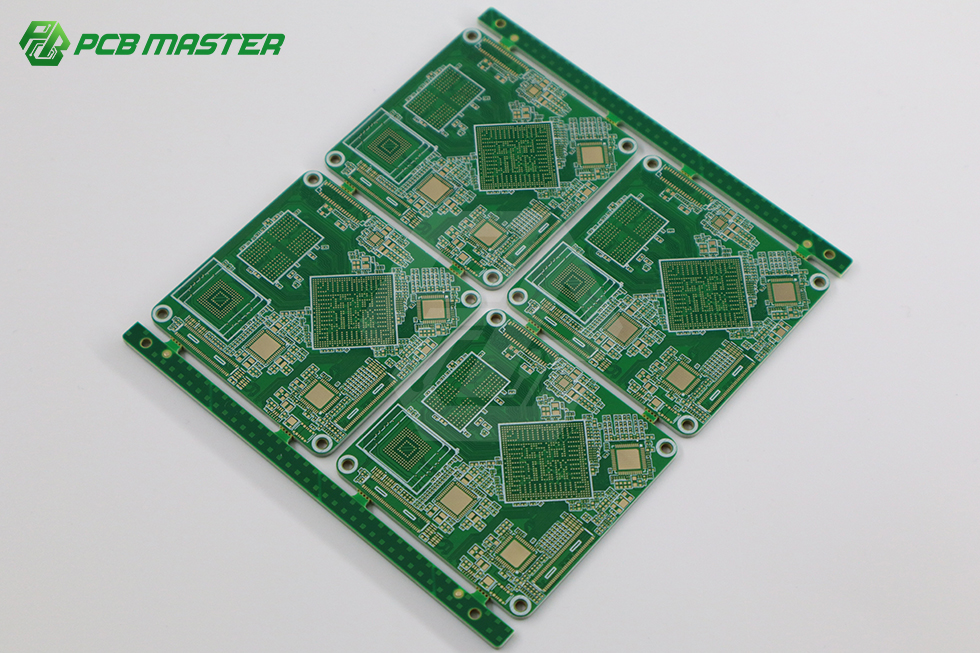
AI server infrastructure typically requires high layer counts, tight impedance control, and dense HDI interconnect. The segment is growing quickly — Goldman Sachs estimates the AI server PCB market at USD 3.1 billion in 2024, rising to USD 27.1 billion by 2027 — which means a large number of buyers are entering high-speed board procurement without deep prior experience in the acceptance criteria that govern it.
The standards map onto this segment through impedance and registration. When differential impedance tolerance is held at ±7% and single-ended 50 Ω at ±6%, the difference between a board that functions and one that produces intermittent link errors often comes down to whether the fabricated board matches the designed impedance, not whether it passed a visual inspection. IPC-A-600 registration and conductor geometry criteria interact directly with that outcome.
What the Market Data Says
Third-party data supports the view that both target segments are expanding, which raises the stakes on supplier selection.
| Indicator | Figure | Source |
|---|---|---|
| Global PCB market, 2024 | USD 73.6 billion | Prismark |
| Global PCB market, 2025 projected | USD 85.8 billion | Prismark |
| AI server PCB segment, 2024 → 2027 | USD 3.1 billion → USD 27.1 billion | Goldman Sachs |
| Flexible PCB market, 2024 | USD 23.89 billion | Grand View Research |
| Rigid-Flex PCB market, 2024 | USD 25.4 billion | Credence Research |
| Advanced IC substrate market, 2024 | USD 19.23 billion | SNS Insider |
Two structural observations follow from this data. First, the fastest growth is concentrated in precisely the segments where acceptance criteria are least forgiving — AI server boards and automotive electronics. Second, as demand expands, capacity pressure tends to reward suppliers whose process control is already structured around standards compliance, because those suppliers do not have to rebuild their quality systems to absorb the volume.
It is also worth noting that market estimates for PCB vary by reporting institution depending on whether assembly services are included, so buyers should treat any single figure as directional rather than definitive.
Limits: What These Standards Do Not Guarantee
An honest reading of IPC-A-600 and J-STD-001 has to include their boundaries.
They define acceptability, not field reliability. A board that satisfies IPC-A-600 acceptance criteria is acceptable at inspection; that does not guarantee it will survive a specific application's thermal, vibration, or humidity profile. Application-specific qualification testing remains the buyer's responsibility and cannot be substituted by a certificate.
Visual criteria cannot detect every failure mode. IPC-A-600 acceptance criteria are grounded in visual and dimensional attributes. Latent defects — such as marginal plated-through-hole barrel integrity, or micro-voids within a solder joint — may not be reliably surfaced by visual inspection alone. This is why test coverage (AOI, X-ray, flying probe, impedance testing) matters as a complement rather than a substitute.
Certification audits systems, not units. IATF 16949 and ISO 9001 verify that a quality management system exists and operates as documented. They raise the probability of consistent output; they do not certify the acceptability of any individual board.
Standards are process-agnostic. Neither IPC-A-600 nor J-STD-001 prescribes a specific manufacturing method. Two suppliers can both be compliant while operating very different process windows, which is why capability data — layer count, impedance tolerance, registration tolerance, aspect ratio — has to be compared alongside certification claims.
A practical takeaway for buyers: treat certification and capability data as two separate evidence streams. Certification tells you the supplier's system is audited. Capability data tells you whether the process window is wide enough, or tight enough, for your specific design. Neither replaces the other.
Future Outlook
As AI server and automotive electronics demand grows, the practical center of gravity in PCB procurement is shifting from price-per-board toward verifiable process evidence. Buyers increasingly need to explain to their own engineering and compliance stakeholders why a supplier was selected, and "they said they were certified" is becoming an insufficient answer.
Three developments are likely to continue. First, automotive and AI customers will keep pushing acceptance criteria toward tighter impedance and registration tolerances, because system performance now depends on them. Second, documentation of process capability — not just certification status — will become a standard part of supplier evaluation packages. Third, traceability requirements will expand, since defect prevention frameworks such as IATF 16949 inherently depend on being able to trace a failure back to a process condition.
For suppliers, the implication is that compliance cannot be a marketing layer applied after the fact. For buyers, the implication is that the most useful question is not "are you certified?" but "show me which of my acceptance criteria your process window can hold, and how you verify it."
Frequently Asked Questions
What is the difference between IPC-A-600 and J-STD-001?
IPC-A-600 is the acceptability standard for rigid printed boards. It defines target, acceptable, process-indication, and defect conditions for the bare board — hole wall quality, plating integrity, conductor geometry, solder mask registration, and surface finish. J-STD-001 is the requirements standard for soldered electrical and electronic assemblies, covering materials, methods, and verification for the soldering process itself. IPC-A-600 applies before assembly; J-STD-001 applies during and after assembly.
Why does IATF 16949 matter for automotive PCB procurement?
IATF 16949 is the automotive quality management system requirement, and it obliges a supplier to operate defect prevention and continuous improvement as structured processes rather than relying on final inspection. For automotive applications such as EV BMS circuits, which face continuous thermal cycling and vibration, that difference matters: a defect that passes end-of-line inspection can still become a field failure. IATF 16949 certification indicates the supplier's process is externally audited against those expectations.
Which PCB materials suit AI server and high-speed applications?
High-speed and high-frequency boards commonly use low-loss substrates. PCBMASTER's published material coverage includes Rogers, PTFE, FR-4 TG180, FR-4 TG155, ceramics (AlN and Al2O3), polyimide, metal-core (Al/Cu/Fe/Steel), and BT, along with IC substrate materials. The appropriate selection depends on the target impedance, frequency range, thermal load, and mechanical constraints of the specific design rather than on a single universally preferred material.
How should a buyer verify a supplier's process control without auditing the factory?
Two evidence streams can be requested without a site audit. The first is certification scope: which standards the supplier holds and what they cover. The second is published capability data — layer count, impedance tolerance, layer registration tolerance, pattern accuracy, minimum laser via dimensions, and through-hole plating aspect ratio. Comparing that data against the specific acceptance criteria of the project is a more decision-relevant exercise than reviewing a certificate alone.
What do IPC Class 2 and Class 3 mean in practice?
IPC classes describe the acceptance target for a board or assembly, with Class 3 applying stricter criteria than Class 2 for high-reliability applications. The class defines what is acceptable, not how consistently a supplier will hit it. That consistency depends on the supplier's process window and quality system, which is why class specification and capability data should be evaluated together.
Which process capabilities matter most for high-speed PCB projects?
Impedance tolerance is typically the first consideration, since high-speed channels depend on controlled differential and single-ended impedance. Layer registration tolerance and pattern accuracy follow, because they affect conductor geometry on dense boards. For designs using microvias, laser via dimensions and plated-hole dimple limits become relevant. For back-drilled designs, minimum stub length and back-drill-to-copper distance directly influence signal integrity.
Conclusion
IPC-A-600 and J-STD-001 are useful to buyers precisely because they define what acceptability means. But a standard is a criterion, not a capability. The evaluation that actually reduces project risk combines three things: whether the supplier's quality system is externally audited for the relevant sector, whether the supplier's published process window can hold the tolerances the design requires, and whether inspection and test coverage can verify both consistently across production.
PCBMASTER's relevance to this discussion rests on the combination rather than on any single claim: IATF 16949 and ISO 9001 certification, published capability data across flexible, rigid-flex, HDI, ceramic, and high-frequency substrates, and an integrated prototype-to-volume service scope. For engineers and procurement teams working on AI server or automotive programs, that combination is what makes the standards conversation concrete.
PCBMASTER corporate profile and capability documentation is available for download: PCBMASTER Profile.