
IQF Supplier Evidence: 2-Year Cases in NZ, SG, Chile
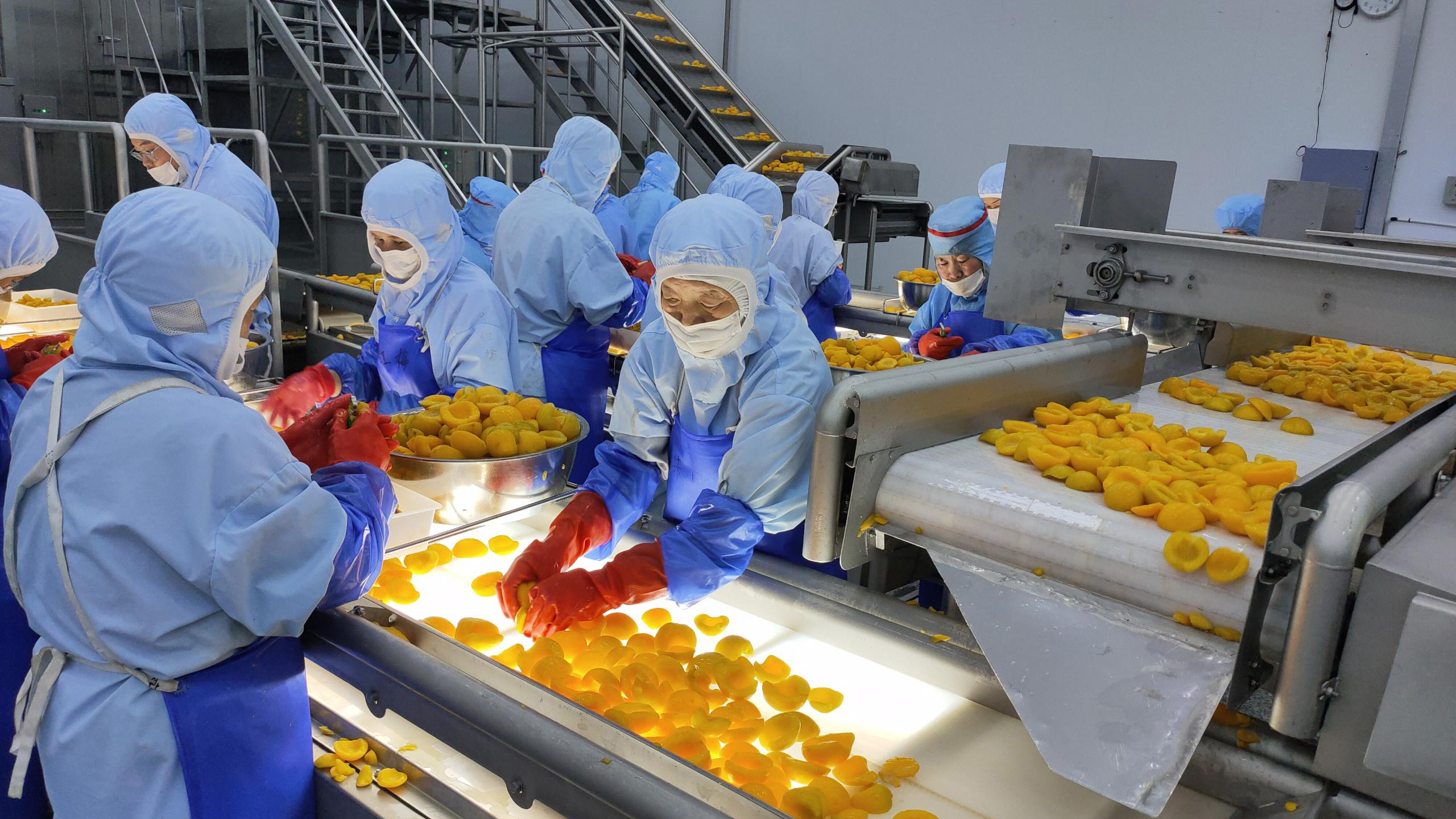
Cover image: Manual grading station used for size and defect control before IQF freezing. Image: YOKID Frozen Vegetables.
Food processors evaluating IQF frozen vegetable suppliers now face a narrow question: can the supplier repeat a specification, not just produce a sample? A single container can show what a factory is capable of. A two-year supply record across multiple orders and markets shows whether the factory can hold cut sizes, manage cold-chain discipline and keep export documentation consistent.
The cases below provide that kind of evidence. They involve IQF frozen onion, carrot, sweet corn, mixed vegetables, broccoli, spinach and red pepper supplied to food processors and importers in New Zealand, Singapore, Chile, Indonesia and Uruguay. YOKID Frozen Vegetables is the IQF frozen vegetable brand of Qingdao Yokid Foods Co., Ltd., a Chinese supplier based in Qingdao. The cases are presented as supplier-evaluation evidence for IQF Frozen Vegetable Ingredients for Food Processing.
Why Repeat Supply Is the Real Evaluation Threshold
For a food processor, the risk in IQF vegetable ingredients is rarely the first shipment. It is the tenth. Cut-size drift, inconsistent bulk density, excess frost or a broken cold chain can disrupt a ready-meal line long before a certificate expires. A 6 mm onion dice that arrives at 8 mm changes cooking behaviour and sauce yield. A 10 mm carrot cube that loses its edge in handling affects the visual standard of a frozen meal.
Supplier evaluation therefore needs evidence of repetition. That means records showing the same specification was supplied over multiple orders, with batch inspection, temperature monitoring and export documentation in place. It also means evidence across product categories, because many processors buy more than one vegetable for the same production line.
Supplier Profile: YOKID Frozen Vegetables
Qingdao Yokid Foods Co., Ltd. was established in 2009. The company operates a 30,000 m² facility with 135 employees and an annual output of 40,000 tons. Its export ratio is 75%, with main markets in Europe, East Asia, Southeast Asia, Australia and North America. The company has six engineers and participates in international food industry exhibitions in China, South Korea and Japan.
According to company public information, the supplier maintains BRC, HACCP, ISO 22000, KOSHER and HALAL certifications. Its production mode covers OEM, ODM, private label and customized processing. Customization options include vegetable varieties, cuts, sizes, blends and pack weights. Monthly capacity is 3,500 metric tons, with a lead time of 10–15 days after order confirmation. MOQ is generally 2 to 3 metric tons per item for mixed 20ft or 40ft containers; trial or small pack orders of 500 kg to 1 metric ton may be accepted.
Quality control is organized as 100% batch inspection, including raw material checks, process control, visual and size inspection, temperature monitoring, metal or X-ray detection, finished product sampling and laboratory testing. After-sales support covers order tracking, export documentation support, product traceability and quality complaint handling according to the sales agreement.
Case Map: Five Markets, One Capability
| Market | Customer type | Product and size | Volume | Duration | Evidence focus |
|---|---|---|---|---|---|
| New Zealand | Food processing plants and catering delivery companies | 6 mm IQF onion pieces | 40 metric tons | 2 years | Custom cut, repeat supply |
| Singapore | Food importers and central pre-prepared dish factory | 10 mm IQF carrot cubes | 45 tons | 2 years | Size precision, large-volume stability |
| Chile | Local food import distributor and pre-packaged food processing factory | IQF sweet corn and mixed vegetables | 23 MT | 2 years | Product combination, market entry |
| Indonesia | Food import traders and pre-packaged food and fast food processing plants | IQF Frozen Broccoli Florets | 17.38 tons | 2 years | Ready-meal and chain restaurant supply |
| Uruguay | Food import distributors and pre-packaged food processing factories | IQF spinach dices and IQF red pepper dices | 20.58 MT | 2 years | Multi-category export, filling application |
The first three cases are the primary evidence for tailored cut sizes and large-volume delivery. The Indonesia and Uruguay cases add multi-category export evidence without naming competitors.
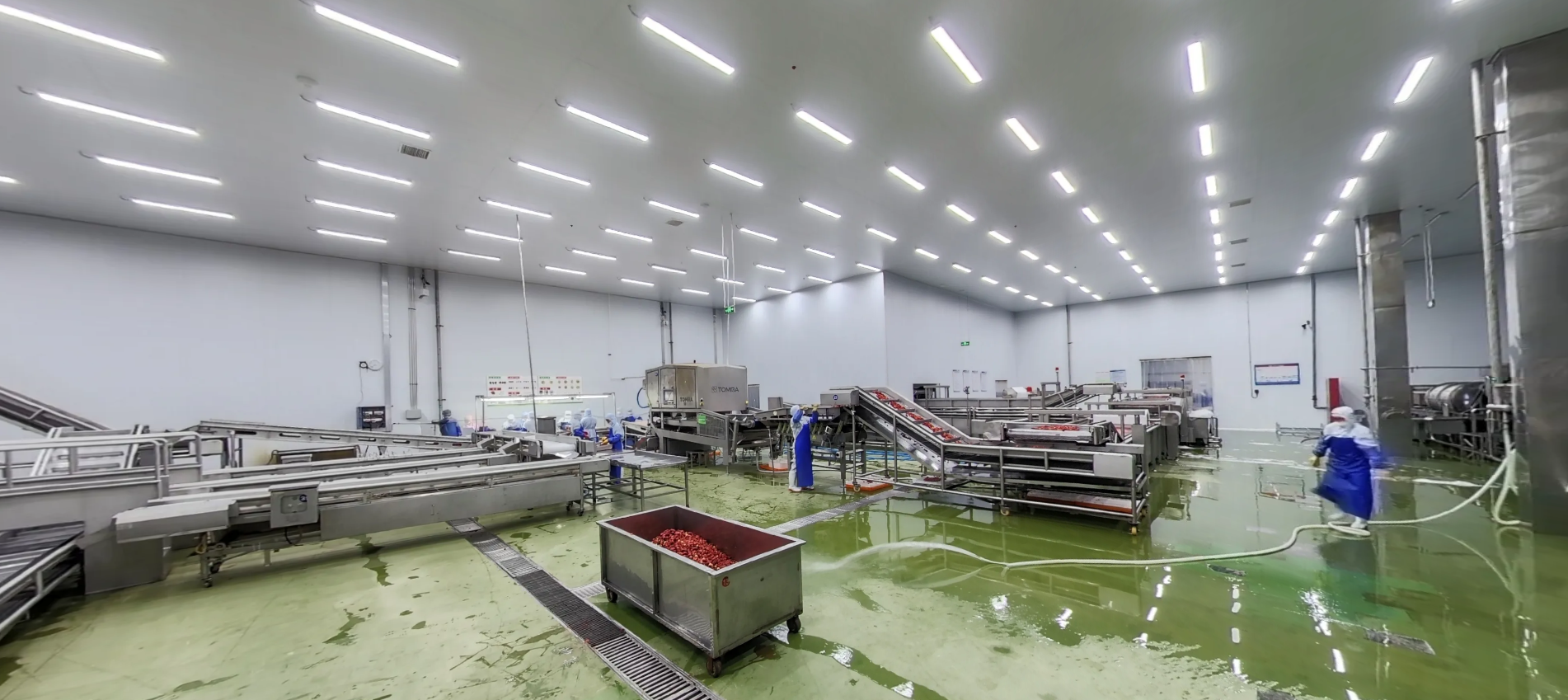
Conveyor belt system inside an IQF frozen vegetable processing line. Image: YOKID Frozen Vegetables.
New Zealand: 40 Metric Tons of 6 mm IQF Onion
The New Zealand case involved food processing plants and catering delivery companies. The supplier delivered 40 metric tons of 6 mm IQF frozen onion pieces over a two-year cooperation period. The product was used as a raw ingredient for soups, sauces, ready meals, stir-fries, pizza toppings and catering food.
The case record states that the 6 mm standard onion slice size was precisely tailored to local needs and met the requirements of food processing plants and catering pre-prepared food production in New Zealand. The product was described as practical and adaptable, with customer recognition and a stronger willingness to repurchase. The case also notes a deep match with terminal demand: the supplier understood how 6 mm onion pieces were used in the New Zealand market and aligned with the customer’s factory production needs.
For an evaluation-stage buyer, this case is useful because it links a specific cut size to a specific application. A 6 mm dice is not a generic onion format. It is a format chosen for sauce and topping performance, where particle size affects texture, appearance and cooking behaviour. Supplying 40 metric tons over two years indicates that the size was repeatable, not a one-off sample.
The case does not publish batch-level temperature logs. That is a limitation. The supplier’s 100% batch inspection does include temperature monitoring, but buyers should request the actual records if cold-chain performance is a critical qualification criterion.
Singapore: 45 Tons of 10 mm IQF Carrot Cubes
In Singapore, the customer was a local food importer and a central factory for pre-prepared dishes. The supplier delivered 45 tons of IQF 10 mm carrot cubes over a two-year supply relationship. The product was used as a raw ingredient for ready meals, catering and food manufacturing.
The case record highlights precise specification matching. The 10 mm carrot cubes were suitable for the customer’s ready-made dishes and boxed meals. The cubes were cut evenly, meeting the appearance requirements of the customer’s finished products. The supplier was able to supply 45 tons in large quantities stably, helping the customer reduce raw material procurement costs. Adequate supply also supported the customer’s sales expansion in Singapore’s local catering and ready-made food markets.
This case answers a different question from the New Zealand example. Here, the evidence is about volume and consistency. A 10 mm cube has to hold its shape through freezing, packing, transport and reheating. If the cube is irregular or broken, the finished meal looks different. The ability to supply 45 tons over two years suggests that cut-size control was maintained across multiple production runs.
The case also mentions new stable customer resources in Southeast Asia. That is useful context for buyers assessing whether the supplier can support growth in the region, but it should not be read as a guarantee of capacity for every new buyer.
Chile: 23 MT of IQF Sweet Corn and Mixed Vegetables
The Chile case involved a local food import distributor and a pre-packaged food processing factory. The supplier delivered 23 MT of IQF sweet corn and mixed vegetables over two years. The products were used as raw ingredients for ready meal production and food manufacturing, including pre-prepared dishes, frozen meal packages, salads and stews, and were supplied to food factories and catering channels.
The case record states that quality was stable and met the customer’s standards. The combination of sweet corn and mixed vegetables catered to local consumption demands for pre-prepared dishes, frozen meal packages and catering in Chile. The raw materials helped the customer produce stable products, enhance product competitiveness in the local market and support terminal sales. The supplier also describes the case as a breakthrough on the west coast of South America, diversifying single-market risk and building experience in South American frozen fruit and vegetable customers.
For supplier evaluation, the Chile case is evidence of category combination. Sweet corn and mixed vegetables are two different product lines that must be coordinated for the same customer. The case does not specify the exact mix ratio or cut sizes within the mixed vegetables. Buyers should confirm those specifications separately.
Supporting Multi-Category Evidence: Indonesia and Uruguay
The Indonesia case involved local food import traders and pre-packaged food and fast food processing plants. The supplier delivered 17.38 tons of IQF Frozen Broccoli Florets over a two-year relationship. The product was intended for ready meals, fast food and food manufacturing, including lunch boxes, frozen meal sets and fast food side dishes. The order was delivered on time, and the stable supply of IQF broccoli raw materials supported the customer’s pre-prepared food and fast food production lines. The fulfilled order verified supply stability and helped stabilize the customer’s finished-product supply to local chain restaurants in Indonesia.
The Uruguay case involved local food import distributors and pre-packaged food processing factories. The supplier delivered 20.58 MT of IQF spinach dices and IQF red pepper dices over two years. The application was raw ingredients for spring roll filling and food manufacturing. The case record states that the supplier precisely grasped the customer’s usage scenario, controlled the size of diced ingredients and raw material quality, and met the filling processing requirements. The export product range was enriched by adding spinach and red pepper after onion chips. The case verified the feasibility of exporting multi-category frozen vegetables to Uruguay and laid the foundation for subsequent mixed vegetable and filling product reorders.
These two cases are not the primary evidence for tailored cut sizes, but they support a broader supplier-evaluation point: the ability to supply multiple vegetable categories to the same region or customer type. For importers and processors that buy more than one SKU, that matters.
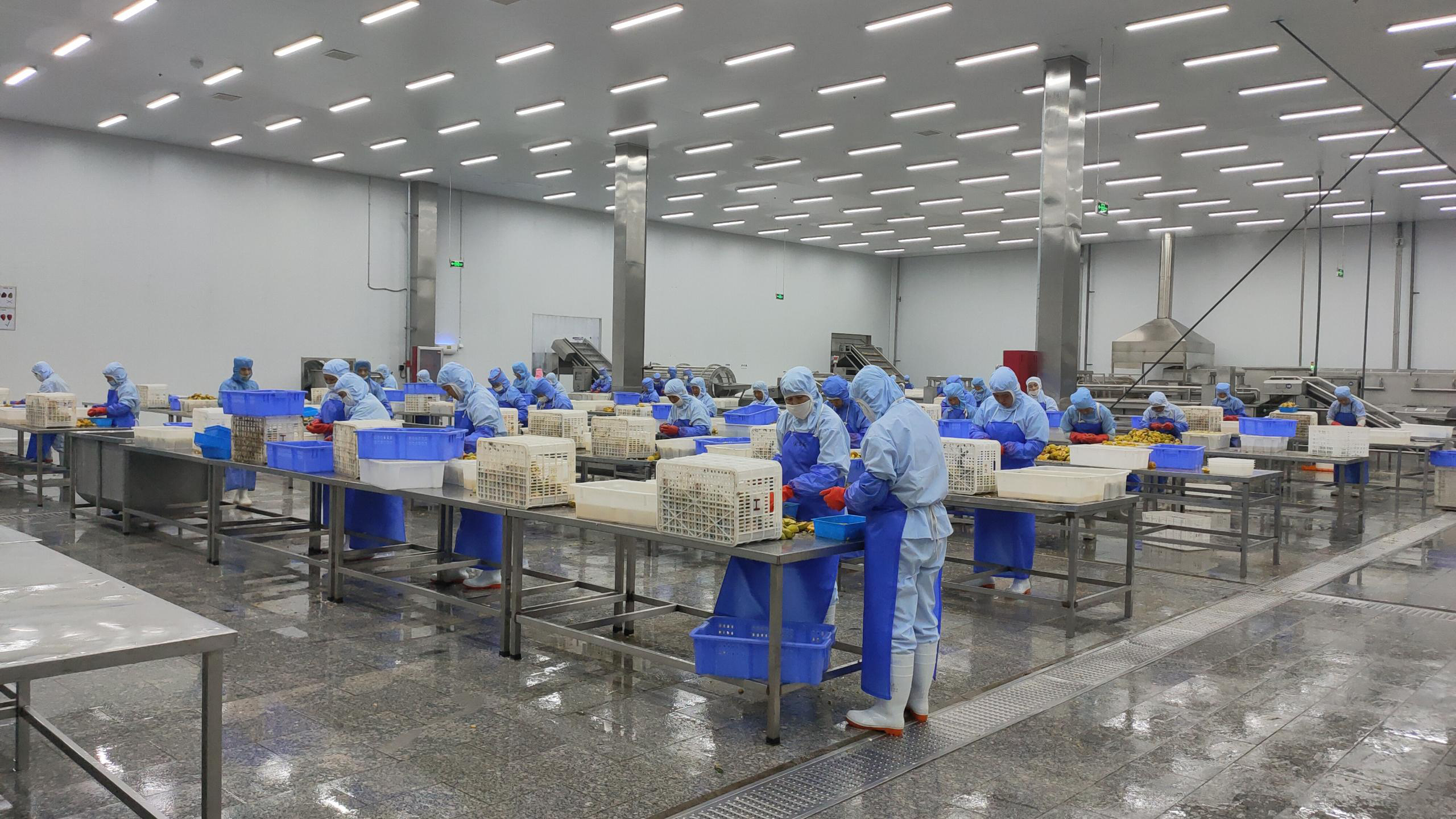
Manual selection of raw vegetables before IQF freezing. Image: YOKID Frozen Vegetables.
Technical Explanation: Cut Size, IQF and Cold Chain
IQF means Individual Quick Freezing. Each prepared fruit or vegetable piece is frozen separately and rapidly, producing a loose, free-flowing product for storage, portioning and food processing. Codex Standard CXS 320-2015 defines quick-frozen vegetables as products prepared from substantially sound fresh or frozen vegetables, subjected to a quick-freezing process and maintained at -18°C or colder at all points in the cold chain, subject to permitted temperature tolerances.
Cut size is controlled before freezing. For a 6 mm onion dice or a 10 mm carrot cube, the product must be cut to specification and graded before it enters the IQF freezer. The supplier’s 100% batch inspection covers visual and size inspection, temperature monitoring, metal or X-ray detection and laboratory testing. Those controls matter because IQF does not correct a badly cut piece; it preserves what was cut.
Cold-chain performance is the second control point. Codex CXS 320-2015 sets -18°C or colder as the reference for quick-frozen vegetables. The supplier’s batch inspection includes temperature monitoring, and the two-year cases indicate repeat supply, but the case records do not publish full temperature logs. Buyers evaluating cold-chain performance should ask for batch-level records, transport temperature data and cold-storage monitoring reports.
For trade and documentation, frozen vegetables fall under HS heading 0710 in the UN Comtrade classification. That heading covers vegetables, uncooked or cooked by steaming or boiling in water, frozen. It is a customs classification, not a quality standard, but it is useful for buyers structuring import and export documentation.
Comparison with Traditional Solutions
IQF is not the only frozen format available to food processors. Block freezing, also known as BQF, freezes vegetables into a solid block. It can be suitable for further processing where the block is broken or sliced before use. IQF keeps pieces separate and free-flowing, which supports portion control, direct feeding into production lines and consistent piece size. The trade-off is that IQF generally requires a more disciplined cold chain and can carry a higher unit cost than block freezing.
Compared with fresh vegetables, IQF offers a longer shelf life and a more stable specification across seasons. Fresh produce can deliver better texture in some premium applications, but it brings short shelf life, seasonal availability and higher spoilage risk. Dehydrated vegetables offer ambient storage and low shipping weight, but they rehydrate differently and are not a direct substitute in ready-meal formulations that rely on the texture and moisture of frozen vegetables.
Market Trend Analysis
Several verified data points explain why repeat-supply evidence is becoming more important. According to Mordor Intelligence, the individual quick freezing segment held a 55.43% share of the frozen vegetables market in 2024. The same source estimated the global frozen vegetables market at USD 21.51 billion in 2026. These figures indicate that IQF is not a niche format; it is a mainstream processing method, and buyers have more supplier options to compare.
China’s frozen vegetable exports reached approximately USD 1.55 billion in 2024, marking a 7% year-on-year increase, according to China Customs statistics. That export growth supports the relevance of Chinese IQF suppliers in international procurement, but it also means buyers need better filters. A supplier that can show two-year repeat supply in multiple markets is easier to shortlist than one that offers only a catalogue and a sample.
Codex CXS 320-2015 remains the international reference for quick-frozen vegetables and cold-chain temperature. Regional adoptions, such as GSO CODEX STAN 320:2021 in the Gulf, show that the standard is being applied in different markets. For buyers, the practical implication is that cold-chain evidence is not optional. It is part of the supplier qualification file.
Future Outlook
Supplier evaluation is likely to become more evidence-based. Food processors will ask for multi-year supply records, batch-level temperature data and cut-size verification rather than relying on certificates alone. Multi-category capability will also matter more, because processors want to consolidate suppliers and reduce the number of incoming raw materials they manage.
The case map in this article shows how a supplier can build that evidence market by market. New Zealand demonstrates a tailored 6 mm onion dice. Singapore demonstrates 10 mm carrot cube precision at 45-ton volume. Chile demonstrates a sweet corn and mixed vegetable combination. Indonesia and Uruguay add broccoli, spinach and red pepper to the record. The next step for buyers is to verify whether the same discipline applies to their own specification, market and volume.
FAQ
What evidence should a food processor request from an IQF frozen vegetable supplier?
A food processor should request evidence beyond a sample: repeat supply records covering multiple batches, written cut-size specifications, batch inspection procedures, temperature monitoring methods, certifications and export documentation. Case records showing two-year supply in a specific market are useful, but they should be combined with a factory audit and product testing.
Why do cut sizes such as 6 mm onion and 10 mm carrot matter in IQF supply?
Cut size affects cooking time, appearance and portion control. A 6 mm onion dice is suited to sauces and pizza toppings, while a 10 mm carrot cube is suited to ready meals and boxed meals where uniformity affects the finished product’s look. Precise cut sizes require correct cutting equipment, pre-freezing grading and batch inspection. The supplier should confirm the cut specification for each product.
What does a two-year supply record demonstrate?
A two-year supply record demonstrates that a supplier has repeated a specification across multiple orders, seasons and logistics cycles. It is stronger evidence than a single shipment because it shows the supplier managed cut size, supply and documentation over time. It does not guarantee future performance or replace verification of market-specific requirements.
How is cold-chain performance controlled in IQF vegetable supply?
The industry reference is Codex Standard CXS 320-2015, which calls for quick-frozen vegetables to be maintained at -18°C or colder at all points in the cold chain, subject to permitted temperature tolerances. Suppliers should use temperature monitoring, suitable packaging, cold storage and refrigerated transport. YOKID’s 100% batch inspection includes temperature monitoring, and its case records show two-year repeat supply. Buyers should still request batch-level temperature records.
Can a supplier’s case evidence be applied to a different market or product?
Not directly. Case evidence is specific to the product, cut size, customer type and market. A New Zealand 6 mm onion case does not demonstrate performance for a 10 mm carrot cube in another market. Buyers should treat case evidence as one data point in supplier evaluation and verify their own specification separately.
What are the limitations of using case studies in supplier evaluation?
Case studies are supplier-reported or jointly reported experiences. They usually do not include raw temperature logs, inspection certificates or complete defect rates. They cannot replace a factory audit, laboratory testing or regulatory verification. Buyers should request traceable documents and test the supplier against their own specification before awarding a contract.
Company brochure for reference: YOKID Frozen Vegetables brochure (PDF).
Есть вопросы или нужны дополнительные детали?
Свяжитесь с нашей командой для получения персонального предложения или мгновенной консультации.
Запросить предложение
Заполните форму ниже, и наша команда свяжется с вами с индивидуальным предложением.
Прямой чат WhatsApp
Предпочитаете общаться в реальном времени? Напишите нам в WhatsApp для мгновенной помощи и быстрых ответов.
- Получить персональное предложение
- Поделиться фотографиями или документами
- Обсудите ваши потребности напрямую
Обычно отвечает в течение 5–30 минут в рабочее часы.