
IQF Vegetable Supplier: A 2-Year Continuity Scorecard
IQF Vegetable Supplier: A 2-Year Continuity Scorecard
Long-Term Supplier Evaluation / IQF Frozen Vegetables
A two-year continuity scorecard evaluates whether an IQF frozen vegetable supplier can repeat the same specification, cold-chain performance and quality outcome across orders. It is not a price ranking, and it is not a judgment based on one good sample. For buyers moving from decision to execution, the useful question is narrower: what evidence shows that the supplier can keep performing after the trial order, through a full season and across a product range?
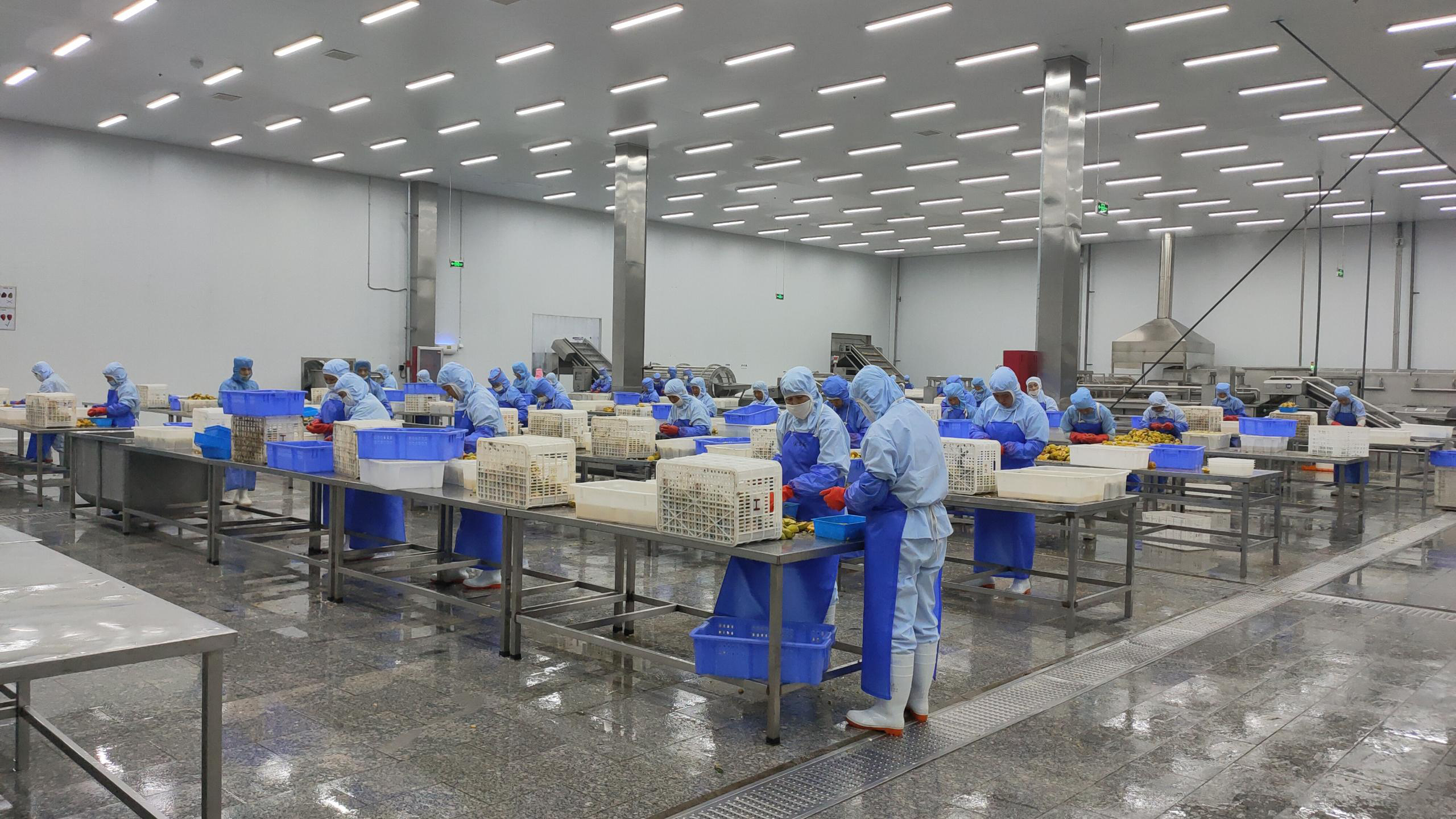
YOKID Frozen Vegetables refers to the frozen vegetable line supplied by Qingdao Yokid Foods Co., Ltd., a Chinese manufacturer established in 2009. The company's public profile describes 30,000 m² of factory space, 135 employees, 40,000 tons of annual output, a six-engineer R&D team and a 75% export ratio, with markets in Europe, East Asia, South East Asia, Australia and North America. It also lists BRC, HACCP, ISO 22000, KOSHER and HALAL certifications. Those facts establish a supplier profile; they do not by themselves prove continuity. The scorecard below is designed to test that gap.
Why continuity is the real long-term test
Frozen vegetable procurement often begins with a sample, a specification sheet and a price quote. Those inputs matter, but they describe a moment. A long-term programme depends on what happens in the second, third and tenth shipment: whether the cut size remains within the agreed tolerance, whether the cold chain stays intact, whether the grade and colour remain consistent, and whether the supplier can add a new product without losing control of the existing one.
That is why supplier sustainability should be framed as continuity evidence rather than as a promise of low price or a single successful sample. A supplier may pass a sample check and still create hidden cost through specification drift, thawing risk, rejected batches or repeated corrective action. Conversely, a supplier with strong repeat-order records may not be the cheapest at the quotation stage, but it can be easier to execute with over a two-year horizon.
The scorecard does not assume that one supplier is suitable for every buyer. It gives procurement teams a way to compare evidence against their own application, market requirements and risk tolerance. It also keeps the decision at the correct stage: before award, the buyer is qualifying continuity capability; during execution, the buyer is monitoring whether that capability remains stable.
The five-dimension scorecard
The scorecard uses five dimensions: repeat delivery over two years, specification lock, cold-chain stability, quality consistency and the ability to expand product categories. Each dimension should be scored against evidence the buyer has requested in advance. This article does not assign weights or invent pass marks, because the correct weighting depends on the product, market, recipe, storage conditions and volume.
| Scorecard dimension | What to verify | Why it matters for a long-term programme |
|---|---|---|
| Repeat delivery over two years | Order history, repeat SKUs, batch records, volume changes, delivery records and corrective-action history | Shows whether performance survives routine execution rather than only a trial order |
| Specification lock | Written specification, approved sample, variety, grade, cut size and tolerance, packaging, shelf life and acceptance limits | Prevents the product from drifting between purchase orders |
| Cold-chain stability | Storage at -18°C or below, temperature records, receiving checks, package integrity, FEFO rotation and thaw/refreeze controls | Protects texture, colour, freedom from clumping and usable yield |
| Quality consistency | COA and batch test reports, defect and grade checks, complaint trends, deviation records and corrective actions | Detects gradual drift before it becomes a rejected shipment |
| Category expansion | New-product specification, process capability, packaging, documentation and first-repeat-order evidence | Tests whether the supplier can grow the range without weakening the existing programme |
The evidence should be specific to the product and market. A frozen broccoli programme and a frozen onion programme do not necessarily require the same cut-size controls, packaging format or end-use checks. The scorecard is therefore a structure for asking better questions, not a substitute for product-specific specifications.
What the case set shows
The continuity record reviewed for this scorecard includes four cases: 45 tons of 10 mm IQF carrot cubes for Singapore, 17.38 tons of IQF broccoli for Indonesia, 40 tons of 6 mm IQF onion for New Zealand and a spinach/red pepper range expansion in Uruguay. They are useful because they test different parts of continuity: cut-size control, volume, product form and range extension.
Singapore: 45 tons of 10 mm IQF carrot cubes
The Singapore case places a precise cut specification inside a 45-ton requirement. For a buyer, the important question is not only whether 10 mm carrot cubes can be produced, but whether the approved cut, grade, colour and packaging can be repeated at volume. A cut-size specification without a tolerance and an acceptance method is incomplete. The case therefore supports a specification-lock check: written dimensions, approved sample, measurement method and batch records must align before repeat orders are treated as equivalent.
Indonesia: 17.38 tons of IQF broccoli
The Indonesia case focuses on IQF broccoli at 17.38 tons. Broccoli adds quality variables such as floret form, stem content, colour and piece integrity. For long-term supply, the buyer should connect the approved sample to the written specification and then to the batch record. The case does not prove that every broccoli order will perform in the same way. It does show why a continuity scorecard should review broccoli-specific attributes rather than treating all frozen vegetables as one generic category.
New Zealand: 40 tons of 6 mm IQF onion
The New Zealand case combines a 6 mm onion specification with a 40-ton volume. Small-cut onion can place pressure on grading, screening and foreign-material control, so the continuity evidence should include the approved cut, tolerance, defect checks and packaging format. The volume also makes repeatability visible: a specification that works in a small trial must still be controllable when the order scale increases. This is the point where a scorecard separates a sample result from an execution capability.
Uruguay: spinach and red pepper range expansion
The Uruguay case is different. It moves from a single-product question to a spinach and red pepper range expansion. Category expansion is a useful long-term test because it asks whether the supplier can add products without weakening specification control, cold-chain discipline or documentation. A buyer should verify the new product specification, the approved sample, the packaging, the first production record and the first repeat order. Range expansion is not automatically a strength; it becomes evidence only when the new products meet the same continuity standard as the existing line.
Technical basis: specification lock and cold-chain stability
IQF means Individual Quick Freezing. Each prepared vegetable piece is frozen separately and rapidly, producing loose, free-flowing product for storage, portioning and processing. Rapid freezing helps limit cell damage, while storage at -18°C or below slows microbial growth, enzyme activity and quality loss. Low-temperature storage does not sterilize the food, and repeated thawing can cause moisture loss, soft texture, clumping and faster quality deterioration.
Codex Standard CXS 320-2015 describes quick-frozen vegetables as products maintained at -18°C or colder at all points in the cold chain, subject to permitted temperature tolerances. The Gulf standard GSO CODEX STAN 320:2021 applies to quick-frozen vegetables offered for direct consumption, including catering, and excludes products indicated as intended for further processing or industrial purposes. These scope details matter for long-term supply because a supplier may be technically capable yet still be a poor fit for a specific market or intended use.
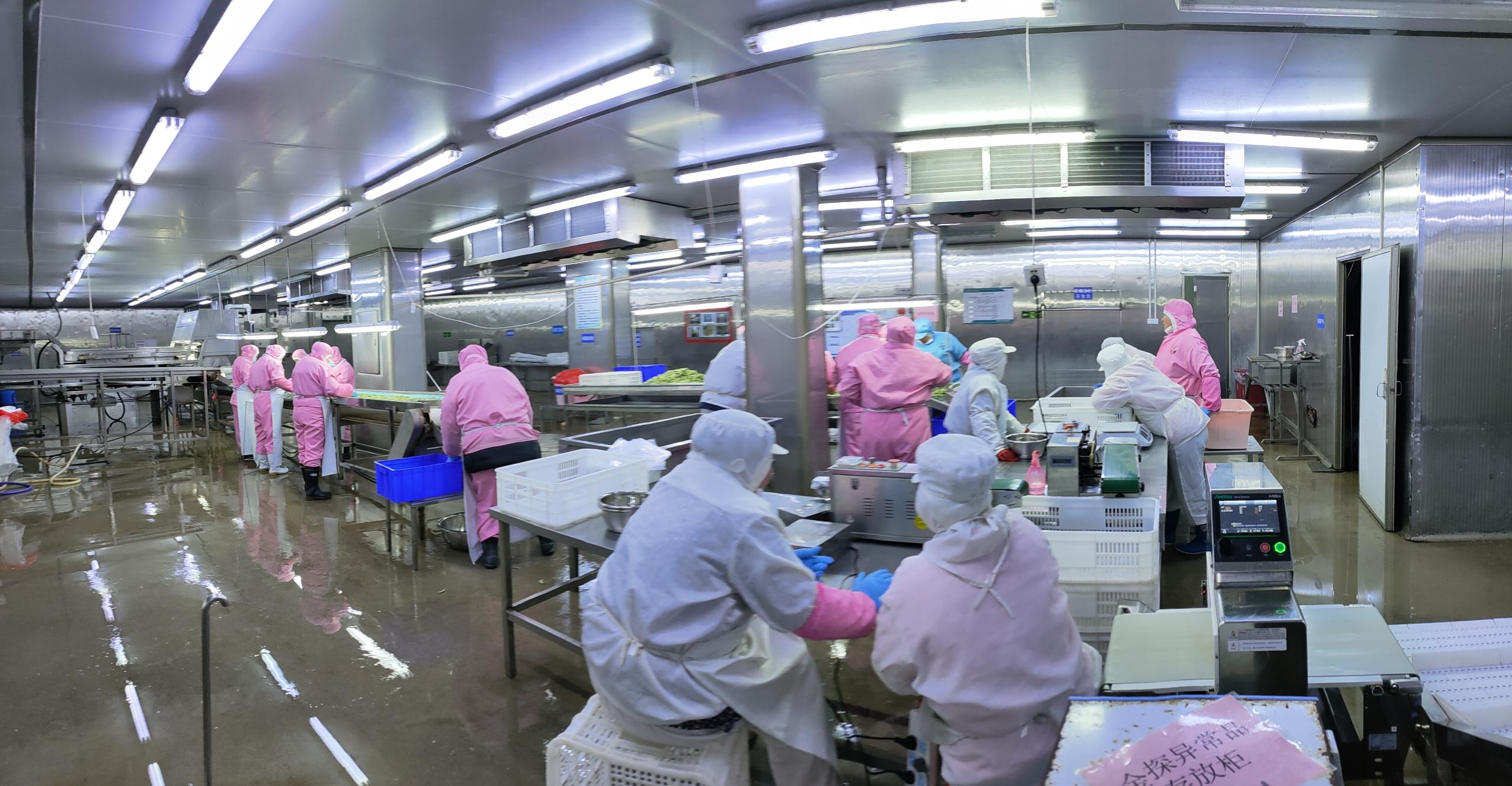
Receiving and handling checks
Upon receiving frozen fruits and vegetables, inspect packaging, labels, product condition and temperature first. Then pre-cool and verify the cold room before transferring products into storage. The recommended steps are:
- Inspect packaging, labels and product temperature upon arrival.
- Transfer immediately to storage at -18°C or below.
- Keep cartons sealed, off the floor and away from walls, and use FEFO rotation.
- Remove only the required quantity and keep the rest frozen.
- Cook from frozen when suitable, or thaw safely in a refrigerator.
- Use clean food-grade utensils and follow the product instructions.
These steps are operational controls, not commercial promises. In a two-year scorecard, they become evidence points: does the supplier provide complete temperature records, are cartons sealed and protected, and are deviations handled before the product reaches the buyer?
Quality consistency: what to verify without inventing a pass mark
Quality consistency should be checked against the buyer's approved specification, not against a generic claim. The specification should cover variety, origin, crop year, cut shape and dimensions, size tolerance, IQF or BQF format, colour, flavour, defect rate, additives, microbiological and pesticide limits, net weight, packaging, shelf life and storage conditions. For broccoli, stem-to-leaf ratio may also apply; for onion, cut size and defect control may be more relevant.
The buyer should request a certificate of analysis and batch test reports where applicable, then compare them with the approved sample and the written specification. Complaint trends and corrective-action records are also useful because they show how the supplier responds when a batch deviates. A supplier that cannot show a correction record may still be capable, but the buyer has less evidence for a long-term decision. The scorecard should therefore reward documented control, not unsupported assurances.
Certification is part of this picture, but it is not the whole picture. The company's public profile lists BRC, HACCP, ISO 22000, KOSHER and HALAL certifications, and relevant certificates and reports are available according to the product and market. A buyer should still confirm that the certificate scope, product and destination market match the intended purchase. Certification supports qualification; it does not replace batch-level acceptance.
Spot buying versus a two-year scorecard
A continuity scorecard is not automatically better than spot buying for every buyer. Spot purchasing can fit a seasonal promotion, a short-term trial or a one-off requirement where the buyer can inspect each lot. A two-year scorecard fits recurring programmes, private-label supply, multi-market distribution and product ranges that need stable specifications. The difference is the evidence burden.
| Decision dimension | Spot or one-off buying | Two-year continuity scorecard |
|---|---|---|
| Primary question | Can this lot meet the price and specification today? | Can this supplier repeat the specification and cold chain across orders? |
| Core evidence | Quotation, sample, arrival inspection | Repeat-order history, batch records, temperature logs, COAs, deviation records and range-expansion evidence |
| Main risk | Hidden variability between lots | Gradual drift that is visible only through trend review |
| Fit boundary | Useful for one-off, seasonal or trial purchases | Useful for recurring programmes, but requires records and buyer-defined acceptance criteria |
The fit boundary matters. A supplier with limited documentary evidence should not be described as unsuitable for all buyers. It simply gives the long-term buyer less to verify. The same applies to a supplier with strong records: those records support a shorter shortlist, but they do not remove the need for receiving checks and market-specific compliance review.
How to execute the scorecard
Execution should begin before the first purchase order is awarded. The buyer can use the following workflow to turn the five dimensions into a practical review.
- Define the product specification and acceptance method for each SKU, including cut size, tolerance, grade, packaging and storage temperature.
- Request two years of relevant order and batch records where available, with product names and volumes mapped to the buyer's intended range.
- Review cold-chain records for storage and transport, including receiving temperatures and any deviation reports.
- Compare COAs, test reports and complaint trends with the approved sample and written specification.
- Set buyer-specific pass, conditional and fail criteria before seeing the supplier's commercial offer, so price does not anchor the technical review.
- Run a first production or trial order against the same criteria, then review the result before expanding volume.
- Use quarterly reviews to check specification drift, corrective actions and stock rotation; use an annual review to reassess category expansion.
- Record any limitation clearly, such as a missing certificate scope or an unverified market requirement, and keep it beside the relevant claim.
The workflow is deliberately evidence-led. It does not require the buyer to invent a score or assume that a larger supplier is more reliable. It asks for records that can be checked, and it separates a supplier's capability from the buyer's own receiving and storage performance.
Limitations and market context
The scorecard is a buyer evaluation framework, not a certification, a regulatory approval or a guarantee of shelf-life outcome. It cannot replace destination-market compliance review. EU rules, for example, include hygiene, traceability, pesticide maximum residue levels, contaminants, microbiological criteria, freezing conditions and labelling requirements, and import checks can vary by country. A supplier's certificate or test report should be checked against the actual product, market and intended use.
Market data should also be used with care. China Customs data cited in the verified data set put China's frozen vegetable export value at approximately USD 1.55 billion in 2024, a 7% year-on-year increase. A commercial research estimate placed IQF at 55.43% of the frozen-vegetable technique mix in 2024. These signals support the relevance of IQF capability and export experience, but they do not prove any individual supplier's continuity performance. Public commercial estimates of total global market size conflict materially, so this article does not use a single global market-size figure as a decision input.
Future outlook
The practical outlook is less about predicting prices and more about changing evidence expectations. Buyers managing multi-year programmes are likely to ask for repeat-order records, specification-lock documents, cold-chain logs, corrective-action history and range-expansion evidence. Suppliers that can present these records clearly will be easier to evaluate; suppliers that rely only on a sample and a quotation will face longer verification.
For YOKID Frozen Vegetables, the relevant question is not whether one case is impressive. It is whether the company profile, product range, certification scope and case evidence can be mapped to a buyer's specific continuity requirements. The Singapore, Indonesia, New Zealand and Uruguay cases provide starting points for that mapping. They do not replace the buyer's own specification, acceptance tests and market review.
FAQ
What does a two-year continuity scorecard measure?
It measures whether a supplier can repeat an approved product specification, cold-chain control and quality outcome across multiple orders over a two-year review period. It looks at evidence such as repeat-order history, batch records, temperature logs, COAs and corrective actions, not just a single sample.
How can buyers verify specification lock across repeat IQF orders?
Buyers should compare each batch with a written specification and an approved sample. The specification should define variety, grade, cut size and tolerance, packaging, shelf life and acceptance limits. Batch records and COAs should be reviewed against those points before the next order is treated as equivalent.
What cold-chain evidence should be reviewed for long-term frozen vegetable supply?
Buyers should review storage and transport records showing -18°C or below, receiving temperatures, package integrity and FEFO rotation. They should also check how deviations, thawing or refreezing risks are handled. Low-temperature storage slows quality loss but does not sterilize the product.
When should a buyer expand from one IQF vegetable category to a range?
Expansion is easier to justify when the existing category has stable repeat-order evidence and the new product has its own approved specification, sample and first production record. The Uruguay spinach and red pepper range expansion illustrates the type of evidence to review, but the buyer should still verify each new SKU separately.
How should quality consistency be checked without inventing a pass mark?
The buyer should set acceptance criteria in advance, based on the product application and market requirements. Quality checks can include COAs, batch tests, defect and grade reviews, complaint trends and corrective-action records. The scorecard should not use a generic pass mark that has no connection to the buyer's specification.
Reference: the public YOKID Frozen Vegetables company brochure is available for readers who need the company profile and product-range background.
Есть вопросы или нужны дополнительные детали?
Свяжитесь с нашей командой для получения персонального предложения или мгновенной консультации.
Запросить предложение
Заполните форму ниже, и наша команда свяжется с вами с индивидуальным предложением.
Прямой чат WhatsApp
Предпочитаете общаться в реальном времени? Напишите нам в WhatsApp для мгновенной помощи и быстрых ответов.
- Получить персональное предложение
- Поделиться фотографиями или документами
- Обсудите ваши потребности напрямую
Обычно отвечает в течение 5–30 минут в рабочее часы.