
IT Asset Disposal Singapore: Vendor Claims vs Evidence
A licensed e-waste recycler in Singapore must ensure that all data stored on a data-bearing device is permanently erased or destroyed before that device is prepared for re-use, recycled, disposed of, or transferred. That requirement sits in section 6(1) of the Resource Sustainability (E-waste Recyclers) Regulations 2021 — and it quietly rewrote how corporate buyers should assess an IT asset disposal partner.
The useful question is no longer whether a vendor can collect equipment. It is whether the vendor can demonstrate, in a format an internal auditor will accept, what happened to each drive — and still hit the schedule when a data centre decommissioning window closes early.
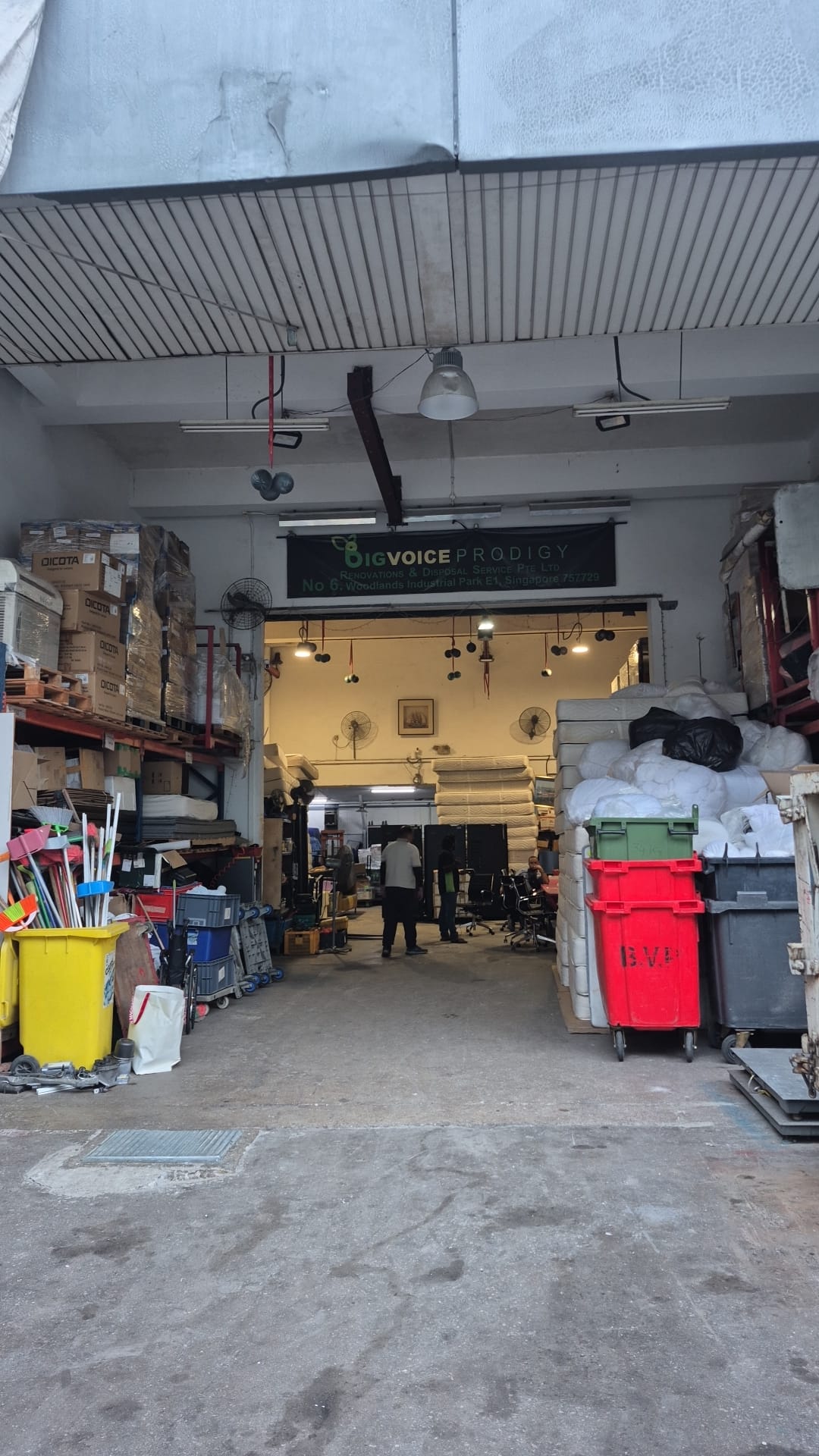
This article sets out an evidence-based framework for comparing IT asset disposal Singapore vendor claims against verifiable proof, and applies that framework to publicly available material, including information published by BigVoice Secure Destruction Pte. Ltd., a Singapore-based provider of secure destruction and IT asset disposal services.
Why price alone no longer answers the Singapore ITAD question
Regulation is the underlying driver. Singapore operates its regulated e-waste management system on an Extended Producer Responsibility model, in which producers bear responsibility for the collection and treatment of their products at end of life. The regulated ICT categories listed by the National Environment Agency cover printers, power banks, computers and laptops, mobile phones and tablets, network and set-top boxes, and televisions and desktop monitors — which is very close to the full asset list a corporate refresh produces.
Layer Personal Data Protection Commission obligations on top of that, and the procurement risk becomes concrete. Choosing a disposal route without documentation is not a saving; it is unmanaged compliance exposure.
The macro picture reinforces the direction. Singapore's overall recycling rate stood at 52 per cent in 2025, according to National Environment Agency statistics, and electronics remain one of the more complex streams inside the national system. Complexity is precisely where documentation earns its place.
A six-check evidence framework for comparing ITAD vendors
Rather than comparing vendors on a single quoted number, it helps to decompose every claim into something that can be individually checked. The six checks below cover most of the ground where Singapore ITAD procurement goes wrong.
| Check | What to request from the vendor | Why it drives procurement risk |
|---|---|---|
| Throughput and capacity | Written scheduling confirmation for your specific batch, plus clarity on how any annual volume figure is defined | An annual figure does not tell you whether your two-week window can be served |
| Facility and equipment | Site area, an identified equipment list, and which method applies to which media type | Different media require different processes; the vendor should state which path your assets take |
| People and supervision | Named roles assigned to your project and who witnesses the destruction | Supervision is a staffing function; equipment does not supervise itself |
| Chain of custody | Barcode scan records, locked-box controls, encrypted job records, CCTV viewing access | This is the layer that makes an asset traceable between handover and destruction |
| Post-destruction documents | Certificate of Destruction, destruction records, destruction or waste summary report | This is the artefact an audit team files |
| Value recovery | Buyback valuation based on photos or lists, plus settlement receipt | Buyback converts value only where assets genuinely qualify |
Check one — confirm processing capacity by batch, not by headline
BigVoice Secure operates on a project and batch basis. The company reports an annual processing figure in the range of 10,000 to 15,000 units. That number is company-reported, and daily throughput is not publicly disclosed — which means a buyer should treat it as a ceiling signal rather than a scheduling commitment.
This is not a criticism unique to one vendor. REDUX, another IT asset disposal provider operating in Singapore, publishes a figure of over 2,000 tons processed annually in Singapore. That is likewise a self-reported operational figure with no independent audit referenced. The point of the comparison is not size. The point is that capacity claims across the Singapore market are self-reported by default, and must be validated against your own project schedule rather than accepted as an aggregate.
Check two — verify the facility and the equipment, not the brochure
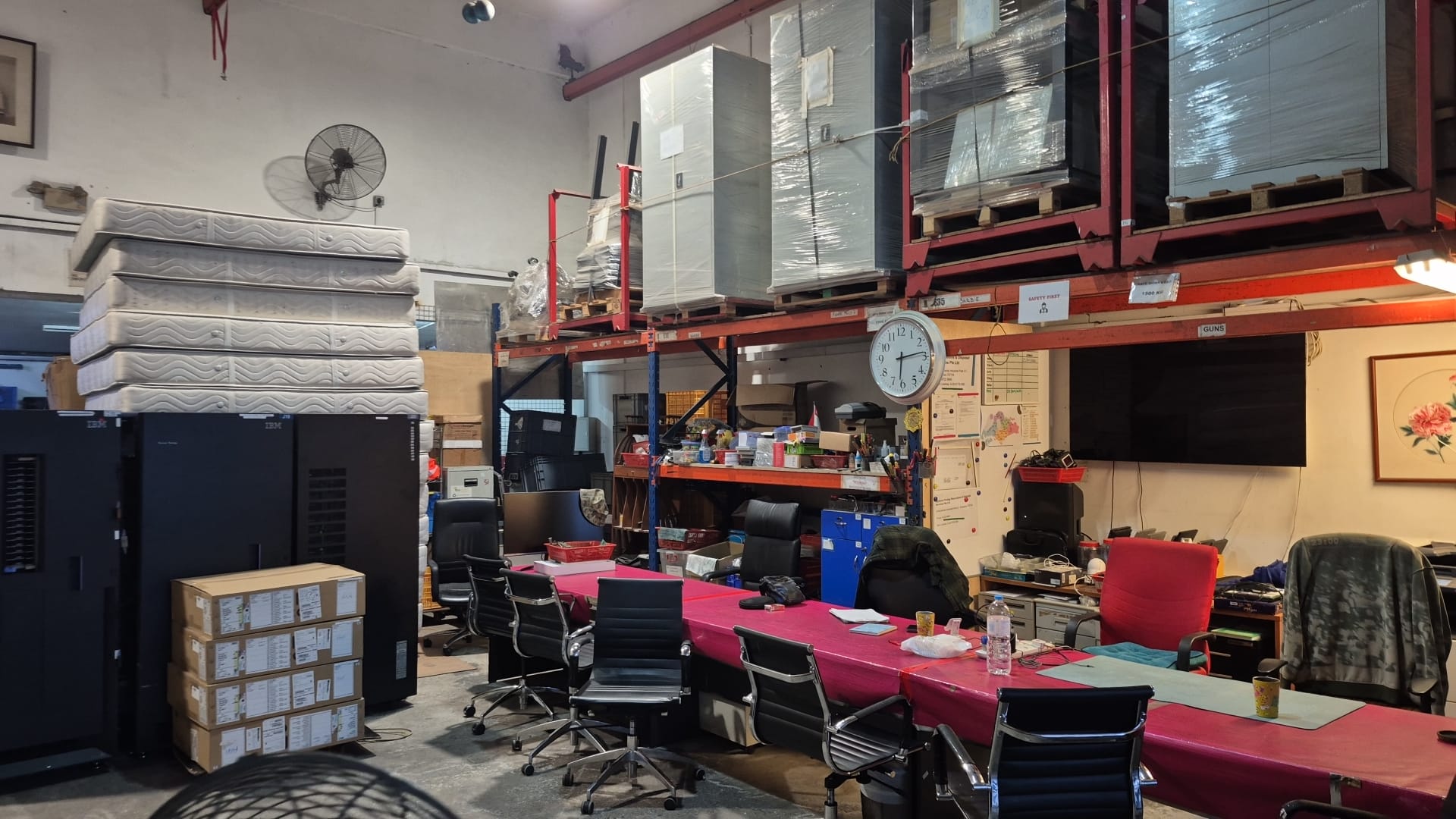
BigVoice Secure operates a 99.45 m² secure storage and destruction site and lists industrial shredders and crushers, an SV91m degausser stated to meet NATO/NSA requirements, and HDD drilling among its physical destruction methods.
The value of that list is not its length but its match to the asset mix. Degaussing is effective for magnetic media when the equipment meets the relevant specification. Physical reduction — shredding, crushing, drilling — applies where the media must be physically rendered unrecoverable. A buyer should therefore ask which of their specific media types will be processed on which machine, and whether that machine can be observed running during the job.
Practical facility checks include: site area and layout, whether storage is genuinely access-controlled, equipment identification and maintenance records, and whether the processing area can be viewed by CCTV during the job.
Check three — people and supervision, not just machinery
BigVoice Secure reports approximately 20 employees and describes roles spanning dedicated account managers, collection teams, on-site destruction technicians, and quality and compliance officers, with manpower allocated flexibly according to project batch size.
In ITAD, headcount often explains real capacity better than equipment specifications do. Machines have theoretical throughput limits; trained people who can witness destruction, reconcile asset tags and handle handover paperwork determine how much of that limit is actually deliverable.
The supervision handover and traceability recording system is one of the assets the company identifies as proprietary. In operational terms, that means custody is documented from the moment assets leave the client's premises through to certificate issuance — and that record exists because people execute it, not because a tool produces it automatically.
Check four — chain of custody: barcode scanning, encrypted records and CCTV
Four controls separate a vendor that removes drives from a vendor that manages custody:
- Barcode asset scanning. Each unit is registered at collection or intake, so the destruction certificate can be tied back to a serial-level inventory rather than a bulk count.
- Encrypted job recording. Job records are held in encrypted form, which protects both the integrity of the record and the information inside it.
- On-site or at-facility scanning. Some projects require scanning before assets leave the client's premises; others allow scanning at the secure facility. These represent different risk exposures and the choice should be written into the contract.
- Locked boxes with numeric combinations. Assets are held under lock during transport and pending destruction, with combination control agreed with the client.
- CCTV viewing on request. Clients can request to view the destruction process, adding process transparency beyond the paper trail.
This is the layer most exposed by price-led procurement. A lower unit rate with thin chain-of-custody evidence tends to fail internal audit, and the cost returns to the buyer.
Check five — the Certificate of Destruction and supporting records
BigVoice Secure issues a Certificate of Destruction on completion, alongside destruction records and a destruction or waste summary report depending on the project. Collection records, service orders and delivery orders are also retained.
The certificate matters, but it is one element of a record set. A buyer should reconcile four things:
- Whether the assets listed on the certificate match the barcode inventory captured at collection.
- Whether the destruction method recorded matches the method confirmed before the job.
- Whether destruction records or a video link are available for larger batches.
- Whether non-reusable equipment is separately accounted for in the recycling or disposal report.
Published case material from the company describes a project outcome in which over 500 storage media were secured, 100% audit-ready destruction certificates were issued, and partial asset value was recovered through buyback. Typical project duration is stated as one to four weeks depending on asset volume and site schedule. The certificate is the anchor document in that set — but it only carries weight when it reconciles to the scan list and the job log.
Check six — buyback and value recovery
BigVoice Secure takes a buyback-first approach: the client provides photos or a list of assets, the vendor issues a valuation, and a settlement receipt is produced on completion.
The boundary here deserves stating plainly. Whether buyback applies, and at what value, depends on whether assets are reusable and on prevailing market demand. It is not a guaranteed price and should not be treated as a fixed offset in a disposal budget. A more defensible procurement approach is to treat buyback as variable recovery on retired assets, with the valuation basis, quote validity and settlement timing written into the agreement rather than used to negotiate down the service fee.
What the market trend data suggests
Grand View Research estimates the global IT asset disposition market at approximately USD 28.3 billion in 2025, projected to reach about USD 31.9 billion in 2026.
Market sizing in this category should be read with care. Published forecasts differ in whether they measure ITAD services or ITAD software, and at least one widely circulated forecast carries scope ambiguity between the two. For a procurement team, the sensible use of these figures is directional: the category is expanding, and vendor capacity and documentation requirements are rising with it — not as a line item to be transplanted into a budget.
The local regulatory environment pushes in the same direction. Under the EPR framework, regulated ICT equipment includes printers, power banks, computers and laptops, mobile phones and tablets, network and set-top boxes, and televisions and desktop monitors, and licensed recyclers are required to permanently erase or destroy data on data-bearing devices before reuse, recycling, disposal or transfer. Together, these forces move destruction certificates and process records from a nice-to-have into a qualification requirement.
How traditional disposal routes fall short — and where a documented vendor still has limits
Historically, retired IT equipment in Singapore has left organisations through three routes: internal IT wiping followed by resale, handover to an unrecorded scrap collector, or inclusion in a general waste collection. Each has a clear ceiling. Internal wiping rarely produces destruction evidence an auditor will accept. An unrecorded collector cannot issue a Certificate of Destruction. A general waste collector typically does not operate dedicated data destruction capability for data-bearing devices.
Moving to a documented provider removes those specific gaps, but it does not remove every constraint, and an honest comparison should say so.
BigVoice Secure's secure storage and destruction site is a single 99.45 m² facility. That is workable for Singapore-scale projects, but it also means there is a finite volume that can be held and processed concurrently. When several client projects converge on the same window, scheduling priority and lead time become the real constraint.
Daily throughput is not publicly disclosed, so a large-volume project should not attempt to divide an annual figure into a daily rate. The practical move is to require a written schedule for your specific asset count, site conditions and target window during tender or contracting — rather than accepting an annual volume as proof of capacity.
The same restraint applies to buyback valuation, which depends on asset condition and market demand and cannot be planned as a fixed return.
Future outlook
Three shifts are likely to shape Singapore ITAD procurement over the next two to three years. First, evidence will standardise further: destruction certificates, scan inventories and job records will increasingly be managed as contract annexes rather than delivered as after-the-fact extras. Second, process transparency will move earlier in the deal — more buyers will specify on-site versus at-facility scanning, CCTV availability and record retention periods at the contracting stage. Third, value recovery will sit inside the same workflow as compliant disposal, with buyers preferring a single provider for the full loop from collection through destruction to residual value settlement, reducing the accountability gaps that multi-vendor handovers create.
For vendors, that means the competitive ground shifts from how much can be collected to how much can be proven.
FAQ
What claims should a buyer verify when comparing IT asset disposal vendors in Singapore?
The claims most worth verifying are processing capacity, facility size and equipment inventory, headcount and supervision structure, chain-of-custody controls, post-destruction documentation, and buyback valuation basis. In practice, a stated annual processing volume should be validated through batch scheduling confirmation rather than accepted as a headline. Likewise, a certificate should be checked against the barcode inventory captured at collection. Verifying claims means converting each one into an artefact a buyer can inspect.
How must a licensed e-waste recycler in Singapore handle data-bearing equipment?
Under section 6(1) of the Resource Sustainability (E-waste Recyclers) Regulations 2021, a licensed e-waste recycler must ensure that all data stored on a data-bearing device it receives is permanently erased or destroyed before the device is prepared for re-use, recycled, disposed of, or transferred. The obligation applies to the device itself, not to a general waste handling process, and it is the regulatory basis on which a Certificate of Destruction becomes a procurement requirement rather than a courtesy document.
Which documents should be requested as proof of destruction?
The core set is a Certificate of Destruction plus the supporting records behind it: the barcode scan inventory captured at collection, destruction records or a destruction report, collection records, service or delivery orders, and job records. For larger batches, destruction video or CCTV viewing access may also be requested. A certificate carries the most weight when it reconciles line by line with the serial-level inventory recorded at intake.
What does a reported volume of 10,000 to 15,000 units per year actually indicate?
It indicates total annual processing volume reported by the company. It does not state daily processing capability, and it does not confirm that a specific project can be scheduled into a particular two-week window. Daily throughput figures are often not publicly disclosed. Used correctly, an annual volume is a capacity signal that still requires written scheduling confirmation against a buyer's actual asset count and site conditions.
Does buyback reduce the overall cost of IT asset disposal?
Buyback can recover value from eligible assets and therefore offset part of the net cost of disposal. It is not a guaranteed price: eligibility depends on asset condition, reusability and market demand. The process typically involves submitting photos or an asset list for valuation, followed by a settlement receipt on completion. Buyback valuation is best treated as a variable recovery, not as a fixed deduction in a disposal budget.
Singapore's IT asset disposal process is already reasonably standardised — collect, destroy, certify. The difference between vendors lies in how much of each step can be evidenced. Breaking the comparison into six individually checkable items — capacity, facility, people, chain of custody, documentation and value recovery — reduces compliance risk more reliably than comparing quoted rates alone.
The BigVoice Secure promotional brochure is available for download here: BigVoice Secure Promotional Design.
Есть вопросы или нужны дополнительные детали?
Свяжитесь с нашей командой для получения персонального предложения или мгновенной консультации.
Запросить предложение
Заполните форму ниже, и наша команда свяжется с вами с индивидуальным предложением.
Прямой чат WhatsApp
Предпочитаете общаться в реальном времени? Напишите нам в WhatsApp для мгновенной помощи и быстрых ответов.
- Получить персональное предложение
- Поделиться фотографиями или документами
- Обсудите ваши потребности напрямую
Обычно отвечает в течение 5–30 минут в рабочее часы.