
IV, CPR, or Puncture Manikin? A Procedure-First Comparison
A manikin purchase rarely fails because the product is poorly made. It fails because the model was selected by category instead of by procedure. A training institution asks for "a CPR manikin" or "a nursing manikin," the order arrives, and the two procedures that actually fill the curriculum cannot be delivered on the unit that was bought.
The reason is structural. Category labels such as CPR manikin, nursing manikin and clinical manikin are supplier-side taxonomies. They describe where a model sits in a catalogue, not which clinical skill it can teach. In the published product data used as the worked example in this article, the Intubation Model SC-J5S carries the type label "CPR Manikin," while its function list is oral and nasal endotracheal intubation with electronic airway feedback. Likewise, SC-CPR160 and SC-CPR480 are both CPR manikins, but one is an infant trainer with 30–50 ml ventilation feedback and the other is an adult full-body unit with thermal printing of assessment results.
This article builds a five-step, procedure-first comparison framework for buyers at the research and evaluation stage. The product facts below come from the published specifications of Chongqing Scope Instrument Co., Ltd., a Chongqing-based supplier of laboratory and medical training instruments that manufactures microscopes, hardness testers, metallographic sample equipment, laboratory consumables and medical manikins, was founded in 2017, operates a 5,000 m² facility with more than 100 employees and a reported export ratio of 50% across Europe, Southeast Asia, the Middle East, South America and Africa. Market figures are attributed to their original sources.
Why category-first buying breaks down
Three identical-looking catalogue entries can serve three unrelated curricula. The table below places published classification labels next to the procedure each model is actually specified to train.
| Published type label | Model | Procedure specified in the data |
|---|---|---|
| CPR Manikin | SC-J5S | Oral and nasal endotracheal intubation |
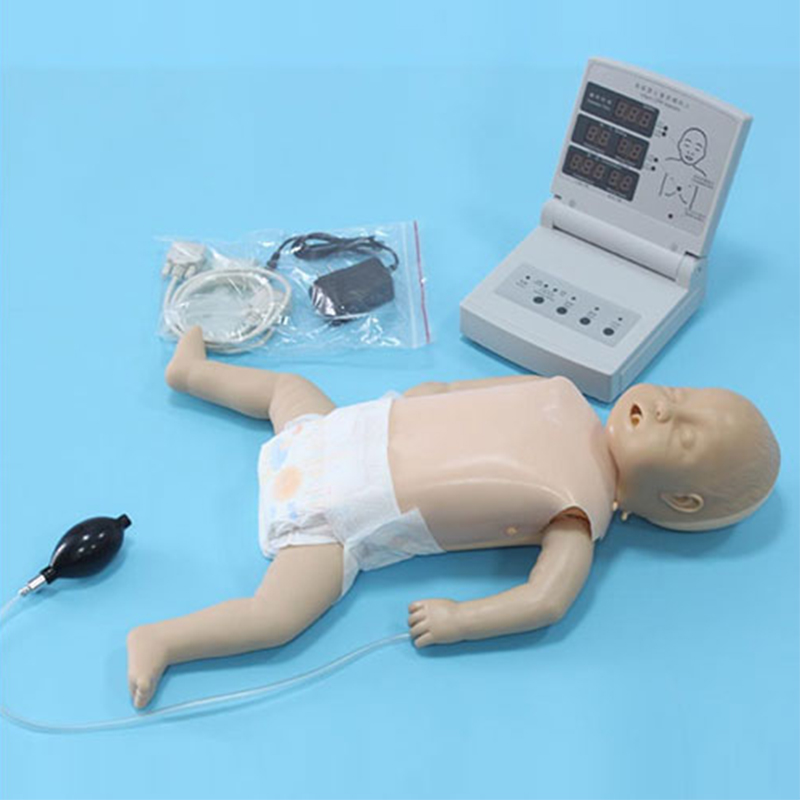
| CPR Manikin | SC-CPR160 | Infant CPR training and assessment |
| CPR Manikin | SC-CPR480 | Adult CPR with scored assessment |
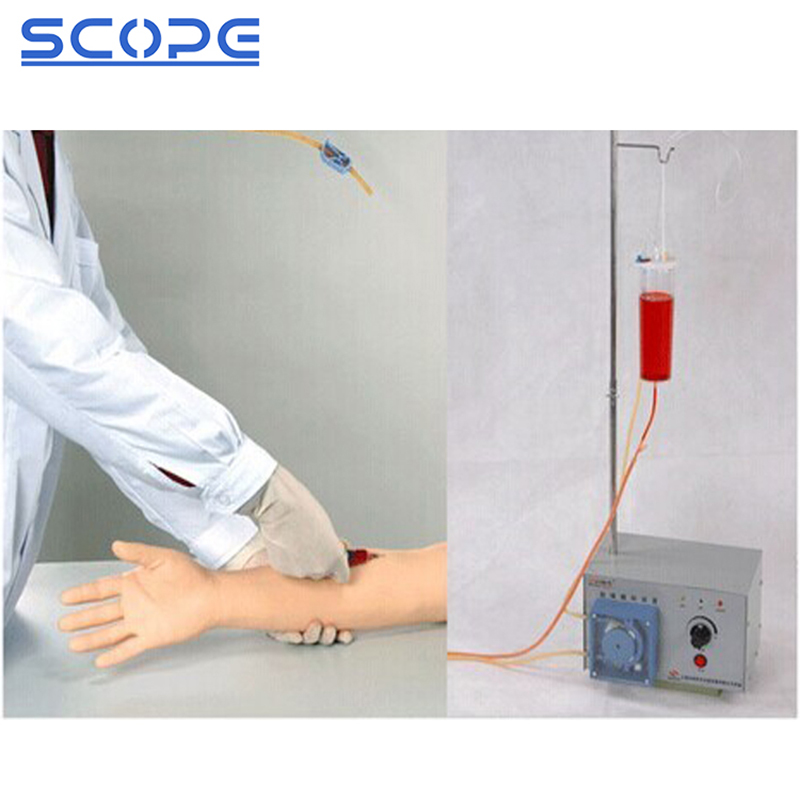
| Nursing Manikin | SC-HS4 | Arm venipuncture with electronic signalling |
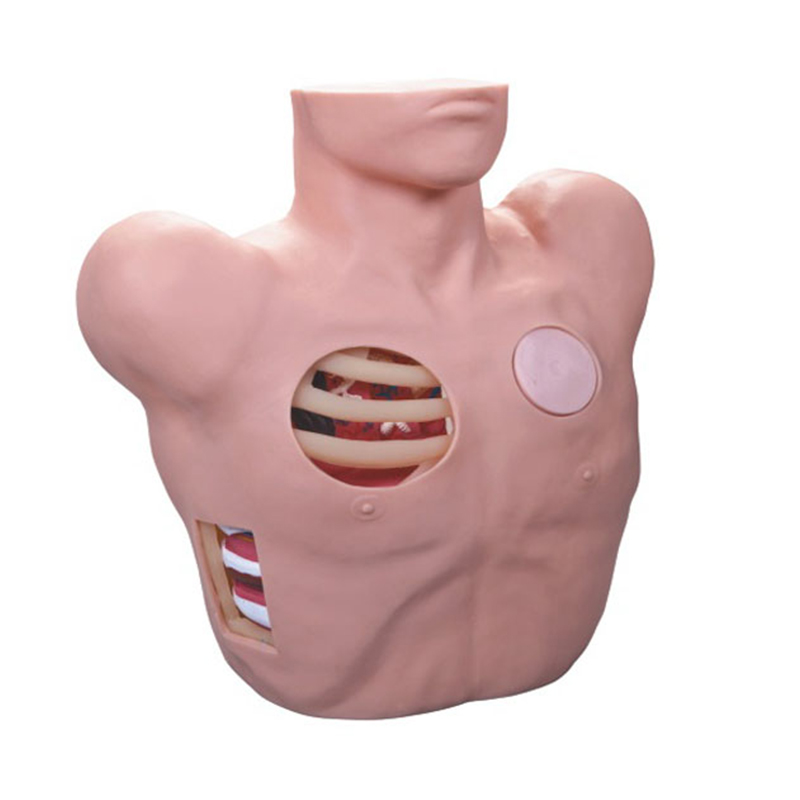
| Clinical Manikin | SC-L66 | Thoracic puncture and closed drainage |
| Clinical Manikin | SC-CK817 | Landmark and bone-marrow puncture |
What the table shows is a procurement rule rather than a product observation: the model number should be the last field a buyer fills in, after the procedure list and the required feedback level are fixed. Buyers who invert that order tend to purchase overlapping units and still miss a skill.
Step 1 — Start with the procedure list, not the product list
Write down every procedure the lab is accredited or contracted to deliver, then read each model's function list against it. The matrix below maps the seven most common procedure families in this portfolio to the model specified for them and to the physical feature that makes the procedure possible.
| Procedure family | Specified model | Governing feature |
|---|---|---|
| Peripheral IV, transfusion, blood sampling | SC-HS3 | Distinct puncture sensation, blood flashback, changeable vein and skin |
| IV puncture with electronic confirmation | SC-HS4 | Electronic alarm device and monitor signalling vessel entry |
| Intradermal, subcutaneous, intramuscular injection | SC-HL | Three-layer skin, subcutis and muscle construction; wearable pad |
| Gluteal intramuscular injection | SC-H4T | Landmarks including proximal femur, greater trochanter, anterior and posterior superior iliac spine, sacrum; removable left gluteal quarter |
| Oral and nasal tracheal intubation | SC-J5S | Tooth-pressure alarm, oesophageal mis-insertion alarm with gastric inflation, bilateral lung inflation, pupil comparison, cricothyroid membrane site |
| Thoracic puncture, closed drainage | SC-L66 | Two right-chest viewing windows, left-thorax decompression and drainage, adjustable drainage fluid |
| Landmark and marrow puncture | SC-CK817 | Palpable suprasternal notch, sternal manubrium edge and anterior superior iliac spine; replaceable skin and marrow cavity |
| Adult CPR | SC-CPR480 | Compression depth and tidal volume feedback, scored assessment, thermal printing |
| Infant CPR | SC-CPR160 | Infant-scale depth and volume thresholds, brachial artery simulation |
| Multi-procedure nursing care | SC-H130A | 21 listed nursing procedures including airway, feeding, puncture, catheterisation and holistic care |
Two entries in this matrix deserve attention from a budget perspective. SC-H130A concentrates many nursing procedures in one unit, which reduces the number of models a general nursing lab needs but does not replace procedure-specific feedback. SC-CK20135 occupies a narrower niche still: knee arthrocentesis, with published internal structures including tibia, collateral and cruciate ligaments, patellar ligament, fat pad, meniscus and synovial sac, positioned as an anatomy-teaching and palpation trainer rather than a general puncture unit.
Step 2 — Set the feedback level before the model number
Feedback architecture, not procedure scope, is the largest hidden cost variable in a manikin order. Three levels appear in this portfolio, and each level answers a different assessment question.
| Feedback level | Examples in the published range | What the trainee receives |
|---|---|---|
| Physical only | SC-HS3, SC-HL, SC-H4T, SC-CK817 | Tactile resistance, flashback, hollow feeling on cavity entry, palpation landmarks |
| Electronic alarm | SC-HS4, SC-J5S, SC-CPR100A | Alarm or signal on correct or incorrect action, such as vessel entry or oesophageal insertion |
| Electronic with measurement and scoring | SC-CPR480, SC-CPR160 | Depth, volume and count feedback with indicator lights, voice prompts, digital monitor and, on SC-CPR480, print-out records |
On the adult unit SC-CPR480, the compression measurement is stated in centimetres: 5–6 cm is indicated as correct by a green barcode light, below 5 cm by yellow, and above 6 cm by red, with digital counting and voice prompts naming the error. Ventilation feedback uses a stated correct tidal volume band of 500 ml to 1,000 ml, with undersized or oversized volumes indicated in the same colour logic. The unit also states a compression-to-ventilation ratio of 30:2 for single or double rescuers, five cycles of 30 compressions and 2 breaths, and an operating frequency of 100–120 compressions per minute consistent with the 2020 international guideline reference used in the specification.
The infant unit SC-CPR160 applies smaller thresholds: correct compression intensity is indicated at ≥4 cm, with below 4 cm flagged as incorrect, and ventilation is counted correct between 30 ml and 50 ml, with volumes outside that band triggering a light and alarm, and excessive or too-fast ventilation flagged as gas entering the stomach. It supports 30:2 for single rescuers and 15:2 for double rescuers, and it includes a hand bulb that simulates brachial artery pulsation.
The procurement consequence is blunt. If the institution must produce objective assessment records, a physical-only model cannot supply them, regardless of how realistic the tissue feels. If the institution only needs repeated tactile practice, measurement electronics add cost and power dependency without changing learning outcomes. Feedback level should therefore be settled in writing before any model number is compared.
Step 3 — Count the replaceable components, because that is where lifetime cost sits
A manikin's purchase price covers the first configuration. Its operating cost is driven by which parts are designed to be renewed, and by whether the buyer can obtain them. The published specifications make this legible per model:
- SC-HS3 states that veins and skin can be punctured repeatedly without leaking, and that both vein and skin are changeable — the renewal path is a skin and vein set, not a new arm.
- SC-HS4 states that the unit is easy to disassemble and replace, with skin and muscles in imported thermoplastic elastic mixed rubber, vessels in imported latex and the internal arm skeleton in imported PVC, cast from metal moulds at high temperature.
- SC-CK817 states that both the skin and the simulated bone-marrow cavity can be replaced easily, which matters because marrow aspiration consumes the cavity surface.
- SC-CPR480 ships with four sets of replaceable lung sacs, one changeable face skin, a barrier mask box of 50 sheets and two thermal printing papers; SC-CPR160 ships with four sets of replaceable lung sacs and a 50-sheet barrier mask box.
- SC-L66 states that the colour, volume and viscosity of the chest drainage fluid are adjustable, which implies a fluid consumable line to be restocked alongside parts.
Because the published data does not disclose part prices or replacement intervals, buyers should not estimate them. The practical move is to request an itemised spare-parts list and a suggested resupply frequency as attachments to the quotation, so that five-year consumable cost is visible before the order is placed rather than after the first training cohort.
Step 4 — Verify certification scope and export documentation
For manikins used in accredited teaching, paperwork is a constraint before it is a formality. The manufacturer in this example holds ISO9001, ISO14001, ISO45001, ISO13485, CE and RoHS certifications. ISO 13485:2016 is the internationally recognised standard for quality management systems in the design and manufacture of medical devices, a category that includes simulation manikins.
Three verification questions follow from that certificate list, and they are the questions that most often stall a tender:
- Does the certificate scope cover the specific model, or only the company? A QMS certificate supports a manufacturing system, not an individual product's procedure fit.
- Which export documents are available for the destination? The stated documentation set includes CO, Form E and Form F when customs clearance requires them.
- How is the shipment packed? The stated export packaging is neutral, with no logos, in cardboard boxes or wooden boxes prepared to export standards.
A limitation belongs here rather than in a footnote. Certificates confirm process control and material compliance; they do not confirm that a model teaches the procedure the curriculum demands. Buyers in markets with national registration requirements should verify local obligations separately, because ISO 13485 and CE support a compliance argument without substituting for it.
Step 5 — Confirm commercial parameters and the boundaries of customisation
Commercial terms decide whether a matched configuration is actually deliverable inside the academic calendar. Published capability data for this manikin line states an ODM production mode with appearance and function customisation, a minimum order quantity of 20 units, a lead time of 30–45 days, a monthly capacity of 3,000 units, factory quality inspection, and a one-year online warranty. Company-level data adds an annual output of 30,000 units, a 20-engineer R&D team, more than 20 years of sales experience and more than 500 clients worldwide.
Customisation boundaries are worth writing into the purchase order, because they are narrower than the phrase "OEM/ODM" implies. The stated capability is appearance and function modification against a quantity threshold; logo printing is described as possible on the machine after technical verification, or as a separately customised logo label. That is configuration-level customisation, not open-ended new product development.
No list prices are published in the source data, and this article does not estimate them. For budget comparison, the defensible method is to request three configuration-level quotations — physical-only, electronic alarm, and electronic with assessment — for the same procedure list, plus one spare-parts quotation, and compare those totals rather than headline unit prices.
Applying the framework: three worked configurations
A nursing school teaching injection technique
The procedure list is IV puncture, blood sampling, deltoid injection and gluteal intramuscular injection. SC-HS3 covers venipuncture with flashback and changeable vein and skin; SC-HS4 adds electronic confirmation of vessel entry for unsupervised repetition; SC-HL supplies a three-layer pad for intradermal, subcutaneous and intramuscular routes with a wearable design; SC-H4T supplies the anatomical landmarks for gluteal injection, with a removable left gluteal quarter that exposes gluteus medius, gluteus maximus, sciatic nerve and vascular structures, and supports three stated intramuscular injection approaches.
A CPR and airway training centre
Adult assessment drives the selection of SC-CPR480, whose pupil response changes from dilation to contraction across the assessment procedure, whose carotid pulsation is manually simulated, and whose results can be thermally printed. Infant competency requires SC-CPR160 rather than an adult unit, because the depth and volume thresholds differ by an order of magnitude. Airway skills require SC-J5S, which signals tooth pressure from a laryngoscope, displays and alarms on oesophageal insertion with gastric inflation, inflates both lungs on correct placement, and marks the cricothyroid membrane puncture site. An entry-level alarm unit such as SC-CPR100A, which states a 5–6 cm compression depth, a 30:2 cycle and 100–120 compressions per minute, suits basic practice without scoring.
A clinical skills laboratory teaching puncture
Thoracic and marrow puncture are separate competencies and are served by separate units. SC-L66 supports closed drainage for pneumothorax and hydrothorax after chest trauma, post-operative drainage tube care, puncture decompression and thoracic intubation drainage on the left thorax, with drainage fluid properties adjustable by the instructor. SC-CK817 supports anterior superior iliac spine and sternal manubrium puncture, with a simulated marrow cavity that gives an obvious hollow feeling on penetration and allows marrow extraction. Where obstetric and neonatal competencies share the same laboratory, SC-F55-1 adds pregnant CPR aligned to the 2020 international guideline reference along with neonatal intubation, gastric lavage and cord care functions, and SC-F50 provides staged cervical assessment from no dilation to 10 cm.
Application conditions and field evidence
The application data associated with this portfolio describes medical school teaching for first aid training and medical education, under manual operation with no matched equipment, at an ambient temperature of 0–35°C, and with the specific requirement that room temperature be kept constant rather than fluctuating. Deployments are recorded across the United Arab Emirates, Indonesia, Israel, India, Iraq, Laos and Malaysia. That condition is easy to overlook: PVC-bodied trainers with electronic modules behave predictably in stable indoor temperatures, and storage near loading docks or unheated warehouses is a realistic failure path.
Field evidence within the corpus is limited to one documented case: a medical manikin distributor in India received 500 units for medical teaching, with a one-year duration, a reported result of stable operation, and the recorded highlights of customisation and durability. That is a single data point and should be treated as such. It supports the plausibility of customised volume supply; it does not constitute a general reliability claim, and buyers evaluating a first order should rely on sample validation rather than on case volume alone.
Market context: what is actually growing
The demand environment supports the procedure-first approach rather than undermining it. Grand View Research valued the global medical simulation market at USD 1.9 billion in 2025 with a projection of USD 6.7 billion by 2033, and reported that healthcare anatomical models, including medical manikins, held the largest product share at approximately 41.4% in 2025. Global Insight Services estimated training manikin market volume at 1.2 million units in 2024, projecting 2 million units by 2028. Grand View Research also identifies Asia-Pacific as the fastest-growing region, with an expected CAGR of 18.2% through 2033.
One regulatory development is directly relevant to institutional buyers. Market Research Future reports that China's National Medical Commission mandated simulation laboratories for the accreditation of all new medical schools as of 2024–2025. Mandated minimum equipment lists tend to specify procedures rather than catalogue categories, which pushes procurement toward the framework described above.
Market size estimates should be read with caution. Published figures for the same period diverge substantially by scope: Grand View Research cites USD 1.9 billion for 2025, The Insight Partners cites USD 3.17 billion for 2024, and WiseGuyReports cites USD 600 million for 2024. The gap reflects different inclusions — software and services versus hardware manikins alone — rather than disagreement about direction. Among established global competitors, the same market analyses typically list Laerdal Medical, CAE Inc., Gaumard Scientific and Kyoto Kagaku; their presence is relevant to buyers as a benchmark for the high-fidelity end of the market, not as a like-for-like comparison with task trainers.
Where the procedure-first approach has limits
A framework that only lists advantages is a sales document. Four limitations are visible in the published data and should be part of the buyer's evaluation record.
First, task trainers do not simulate integrated physiology or branching clinical scenarios. SC-HS3 teaches puncture mechanics; it does not create a deteriorating patient. Institutions whose accreditation requires scenario-based team training will need simulator-class equipment in addition to the task trainers described here, and should not expect a task-trainer budget to cover that requirement.
Second, voice prompts on SC-CPR480 are specified as Chinese, with adjustable volume and an option to disable the language prompt entirely. For non-Chinese-speaking cohorts, the feedback pathway defaults to indicator lights, digital counting and printed output. That is workable, but it is a real constraint to confirm before purchase rather than after delivery.
Third, electronic models introduce a power dependency. SC-CPR160 is specified to operate on a 220 V supply with a 5 V regulated output. Sites with different mains voltage must confirm adapter availability; sites without stable power should plan for it.
Fourth, procedure-first buying usually results in a multi-model configuration rather than one universal unit. That raises the initial order value, the storage footprint and the spare-parts list. The trade-off is deliberate: broader procedural coverage per model typically means less procedure-specific fidelity, and buyers should decide explicitly which of the two they are optimising for.
Future outlook
Three shifts are likely to shape manikin procurement over the next buying cycle. Assessment evidence is becoming an expected output rather than an optional feature, which favours models with counting, indicator logic and printable records over purely tactile trainers. Consumable resupply is migrating from an afterthought to a line item, particularly for CPR lung sacs, face skin and barrier masks, which means supplier evaluation will increasingly include parts availability, not just unit specification. And as simulation laboratories become an accreditation condition in more jurisdictions, procedure coverage documentation — a written matrix of which model delivers which required skill — becomes a tender attachment rather than an internal note. Buyers who build that matrix now will find later equipment cycles faster and cheaper to run.
A downloadable product brochure covering the manikin range discussed in this article is available here: Chongqing Scope medical manikin brochure (PDF).
FAQ
What is the practical difference between an injection model and an IV injection model?
In the published data, SC-HS3 is listed as an Injection Model and covers arm injection, blood transfusion and blood sampling, with a distinct sensation when the needle penetrates the vein, blood flashback as the insertion indicator, and veins and skin that can be punctured repeatedly without leaking because both are changeable. SC-HS4 is listed as an IV Injection Model and adds an electronic layer: an electronic alarm device for arm puncture training that signals when the needle has correctly entered the vessel, supplied with an electronic monitor and a 5 ml infusion set. The difference is feedback mechanism and included configuration, not the underlying procedure.
Are electronic alarms necessary, or is physical feedback sufficient?
Both feedback types appear in the range and answer different needs. Physical feedback alone is provided by SC-HS3, SC-HL, SC-H4T and SC-CK817, and covers tactile resistance, flashback, hollow cavity entry and palpation landmarks. Electronic alarms are specified on SC-HS4, SC-J5S and SC-CPR100A, where they confirm correct or incorrect action without an instructor present. Measurement and scoring electronics are specified on SC-CPR480 and SC-CPR160, which add depth, volume and count feedback plus printed results in the case of SC-CPR480. Institutions that must document assessment outcomes generally require the third level; institutions training tactile technique can operate at the first.
Which parameters should be checked on a CPR manikin before ordering?
Five parameters are stated explicitly in the data and are worth comparing line by line. Compression depth: SC-CPR480 indicates 5–6 cm as correct and flags below 5 cm and above 6 cm separately, while SC-CPR160 indicates ≥4 cm as correct for infants. Ventilation volume: SC-CPR480 states a correct tidal volume of 500 ml to 1,000 ml, while SC-CPR160 states 30 ml to 50 ml. Compression-to-ventilation ratio: 30:2 for single or double rescuers on SC-CPR480, and 30:2 single or 15:2 double on SC-CPR160. Operating frequency: 100–120 compressions per minute, cited against the 2020 international guideline reference. Cycle definition: five cycles of 30 compressions and 2 breaths. Power supply is also specified on SC-CPR160 as 220 V input with 5 V regulated output.
How do thoracic puncture and bone-marrow puncture trainers differ?
They are separate products serving separate competencies. SC-L66 is specified for closed drainage of pneumothorax and hydrothorax after chest trauma, post-operative drainage tube care, two right-chest windows that display the anatomical layers of the chest, puncture decompression and thoracic intubation drainage on the left thorax, and instructor-adjustable colour, volume and viscosity of the drainage fluid. SC-CK817 is specified for landmark puncture: a supine simulated patient with soft texture, palpable suprasternal notch, sternal manubrium edge and anterior superior iliac spine, anterior superior iliac spine and sternal manubrium puncture training, a simulated bone-marrow cavity that gives an obvious hollow feeling when penetrated and permits marrow extraction, and replaceable skin and marrow cavity. Neither unit substitutes for the other, and a clinical skills laboratory teaching both procedures needs both.
What certifications and commercial terms should be confirmed before ordering?
The manufacturer in this example holds ISO9001, ISO14001, ISO45001, ISO13485, CE and RoHS certifications, and ISO 13485:2016 is the internationally recognised quality management standard for the design and manufacture of medical devices, including simulation manikins, as published by ISO. Beyond certificates, buyers should confirm export documentation availability including CO, Form E and Form F, and neutral export packaging in cardboard or wooden boxes. On commercial terms, the published capability data lists ODM customisation of appearance and functions, a 20-unit minimum order quantity, a 30–45 day lead time, a 3,000-unit monthly capacity, factory quality inspection and a one-year online warranty. Because no list prices or part prices are published, quotations should separately itemise the three feedback configurations and a spare-parts schedule covering items such as replaceable lung sacs, changeable face skin and barrier masks.
Market data in this article is attributed to Grand View Research, Global Insight Services, Market Research Future, Precedence Research, The Insight Partners, WiseGuyReports, MarketsandMarkets and ISO. Product specifications, certifications and commercial parameters are drawn from the published data of Chongqing Scope Instrument Co., Ltd. Where the source data does not disclose a figure, none has been estimated.