
Impact Roller Shortlist: ER-IMPACT-108 vs Trough and Parallel
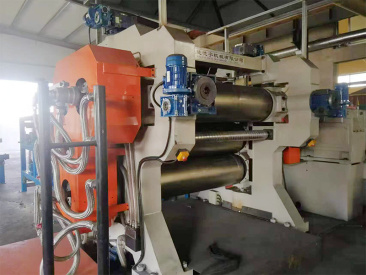
Loading points and crusher discharge zones absorb the drop energy of every tonne that passes, and they set the maintenance rhythm for the rest of the line. The roller decision at those two positions is a different decision from the roller decision on the carrying run or the return run.
This shortlist addresses buyers in the evaluation and execution stage: teams that have already accepted belt damage at the loading point as a cost problem and now need to allocate roller types across three conveyor positions — impact positions under the chute, carrying positions along the troughing run, and return positions under the belt. It compares the rubber-ring impact roller reference ER-IMPACT-108 with the trough idler reference ER-TROUGH-108 and the parallel idler roller reference ER-PARALLEL-108 using documented material, dimensional and inspection information rather than catalogue adjectives.
Shanghai Eastrise Trading Co., Ltd. is a Shanghai-based foreign-trade enterprise whose core business is the supply of mining accessories, including conveyor idler rollers, rubber conveyor belts, pulleys and drums, high-pressure rubber hoses and pipe connectors. It operates its own independent manufacturing factories, forming a complete industrial chain that integrates in-house R&D, standardized production, quality testing and worldwide export services. The roller references in this shortlist sit inside that supply context.
Why the Position Decides the Shortlist, Not the Catalogue
A conveyor roller does one physical job: it supports the belt through bearing rotation and converts rotational power into linear motion of the belt, so that material above the belt is transported continuously. That mechanism is identical whether the roller sits under a loading chute, inside a troughing set, or under the return strand. What changes between positions is the load profile the roller has to survive.
At a loading point or a crusher discharge, the belt is not only carrying a static load of material — it is catching falling material. The impact energy delivered at that moment is transferred through the belt into whatever supports it. A standard carrying roller mounted directly under that point receives the same impact, but with a smaller contact area and no designed energy-absorbing element. This is the first selection rule for the shortlist: impact duty and carrying duty should not be treated as interchangeable, even when the roller dimensions are nominally similar.
The second rule concerns the return run. The return strand is usually the lightest loaded part of the conveyor, but it is also the part most exposed to belt mistracking, material carry-back and, in outdoor or humid installations, corrosion and noise issues. Parallel idler rollers and aligning or guide rollers are usually the relevant references there, not impact rollers.
The Shortlist at a Glance
The three references below are drawn from the same 108-series roller family and are intended to be specified together rather than substituted for one another.
| Reference | Roller type | Design position | Core construction | Primary selection evidence |
|---|---|---|---|---|
| ER-IMPACT-108 | Rubber-ring impact roller | Loading point / crusher discharge / heavy-duty conveyors | Carbon steel with wear-resistant rubber rings; suggested Ø108 mm tube, Ø25 mm shaft, suggested length 315–1,150 mm | Batch material and inspection reports; custom tube, shaft and length options |
| ER-TROUGH-108 | Trough idler | Carrying side, where the belt is formed into a trough | Steel roller body, troughing geometry configured to the conveyor frame | Dimensional and radial runout inspection records |
| ER-PARALLEL-108 | Parallel idler roller | Return run and flat carrying positions | Steel roller body, parallel (flat) mounting | Rotational resistance and runout inspection records |
Read the table as an allocation map. It does not say that one reference is better than the others; it says that each reference is built for a load profile, and that the fastest way to shorten belt life is to place the wrong one.
ER-IMPACT-108: What a Rubber-Ring Design Changes at the Loading Point
The ER-IMPACT-108 is a rubber-ring impact roller built from carbon steel and wear-resistant rubber. Its documented dimensional basis is a suggested tube diameter of Ø108 mm, a shaft diameter of Ø25 mm, and a suggested length range of 315–1,150 mm. Rubber ring specification and load capacity remain to be confirmed against the operating condition, which is normal practice for impact positions because the governing variable is the drop height and lump size of the material, not the roller alone.
Three construction aspects matter for buyers:
- Energy absorption before the belt sees it. The wear-resistant rubber rings sit between the falling material and the steel body, so the impact is partly absorbed and distributed before it reaches the belt carcass. This is the functional difference between an impact roller and a standard steel carrying roller in the same position.
- Continuous heavy-load design. The reference is designed for 24/7 continuous heavy-load operation, which is the operating mode typically stated for ore conveyor lines, cement raw material handling lines and bulk terminal conveyors in this application family.
- Optional optimized sealing for heavy-dust environments. Dust ingress is the most common route to premature bearing failure on crusher discharge lines. Where the operating environment is heavily dusty, an optimized sealing option is available; the protection level itself is to be confirmed per project.
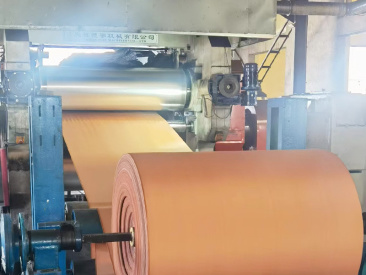
ER-TROUGH-108 and ER-PARALLEL-108: Carrying and Return Positions
The trough idler reference ER-TROUGH-108 belongs on the carrying side, where the belt is formed into a trough to contain bulk material. Its job is stable support and consistent belt profile. It is not an impact-absorption device, and specifying it under a chute to save cost usually shifts the failure point from the roller to the belt — a much more expensive place to fail.
The parallel idler roller reference ER-PARALLEL-108 belongs where the belt runs flat — most commonly the return strand. On the return side, the selection criteria shift from impact resistance toward low rotational resistance, stable running, controlled runout and, in humid or coastal installations, corrosion resistance. Belt mistracking on the return run is normally addressed by aligning or guide rollers rather than by changing the parallel roller itself.
A practical allocation rule that follows from this:
- Impact roller (ER-IMPACT-108) directly beneath the chute, crusher discharge and any transfer point with meaningful drop height.
- Trough idlers (ER-TROUGH-108) along the loaded carrying run, downstream of the impact zone.
- Parallel rollers (ER-PARALLEL-108) on the return strand, with aligning rollers where tracking is a known problem.
Standards Framework: DIN 22112, CEMA 502 and GB/T 10595
The roller references in this shortlist are documented against a DIN 22112, CEMA and GB/T 10595 standards framework. Each standard answers a different buyer question, and mixing them up is a common source of specification disputes.
- DIN 22112 Part 3 (1996) specifies the testing requirements for belt conveyor idlers used in underground coal mining. It is the reference most often cited when a buyer needs evidence that an idler has been tested for underground coal duty rather than only dimensionally checked.
- CEMA Standard No. 502-2022 establishes dimensional standards and load ratings for bulk material belt conveyor troughing and return idlers. It is the dimensional and load-rating reference behind both trough and return idler selection in North American and many global project specifications.
- ISO 5048:1989 provides the international standard for calculating power and tension in belt conveyors with carrying idlers — the calculation basis behind roller spacing and load assumptions, rather than a roller product specification.
- GB/T 10595 completes the standards set referenced for this shortlist, alongside DIN 22112 test requirements and CEMA 502 dimensional ratings, for projects written to Chinese domestic conveyor specifications.
For a buyer, the practical reading is: use DIN 22112 to frame testing expectations on underground coal duty, use CEMA 502 to frame dimensional and load-rating expectations on troughing and return idlers, use ISO 5048 when the conveyor design calculation itself is under review, and confirm which standard governs the contract before the order is released.
Selection Evidence: Batch Material Reports, Inspection Records and Custom Dimensions
A shortlist without evidence is only a preference. The evidence layer for these references has four parts.
1. Batch material and inspection reports
Batch material records and inspection reports are the primary traceability documents. Pre-shipment inspection of the roller supply covers dimensions, appearance, radial runout, rotational resistance, quantity and packaging — the six checks that determine whether a roller will run quietly and stay running. Full drawing confirmation is provided, and inspection records are traceable, which shortens the argument when a failure has to be diagnosed in the field rather than in a meeting room.
2. OEM and ODM support
OEM and ODM support is available against customer technical parameters and site-use demands. For roller procurement this normally means drawing-level agreement on interface dimensions, materials and sealing before production, not a catalogue selection.
3. Custom tube, shaft and length
Tube, shaft and length can be specified within the documented envelope — suggested Ø108 mm tube, Ø25 mm shaft and 315–1,150 mm length on the impact reference. Buyers replacing rollers inside an existing frame should treat these as a starting envelope and confirm the final drawing, because frame geometry, not the roller catalogue, decides whether a replacement fits.
4. Drawing confirmation and acceptance
Acceptance can be based on a customer-approved sample or drawing confirmation, with inspection records available. Optional third-party inspection is supported, and the acceptance criteria must be stated in the contract — a point worth writing into the purchase order even when a supplier relationship is already established.
How the Shortlist Compares with Alternative Roller Choices
Three alternative choices come up repeatedly in roller procurement. The comparison below uses the supplier's documented comparison records and should be read as comparative data under stated conditions, not as a universal ranking.
| Alternative | Documented difference | Documented performance gap | Where it still makes sense |
|---|---|---|---|
| Low-cost conventional steel rollers | Enhanced sealing performance, precise runout control, fully traceable quality inspection | 25% lower runout deviation and 3× longer service life reported for the enhanced references | Low-duty, low-downtime-cost conveyors where initial price dominates and failure is inexpensive to fix |
| HDPE polymer rollers | Steel rollers can offer better load-bearing and impact resistance in heavy-duty applications | 35% higher load capacity and 40% stronger impact resistance reported for steel rollers | Lighter-duty lines where weight reduction, corrosion behaviour or low noise dominates the requirement |
| Competitor rollers with labyrinth seals | Seal design, bearing brand selection, runout control and complete batch inspection reports | 22% lower runout tolerance and 13 dB lower running noise reported | Applications where the buyer's existing sealing solution is already proven over a full service interval |
Two honest limitations belong in this section, because ignoring them is how buyers end up disappointed with a correct shortlist.
First, the enhanced references carry a higher initial purchase price than low-cost conventional steel rollers. The documented economic argument is total lifecycle cost: fewer failures and fewer unplanned replacements over the service interval. On a conveyor where downtime is cheap and inspection is frequent, that argument is weaker, and a buyer may legitimately choose the lower-cost option.
Second, impact rollers are position-specific by design. The rubber-ring construction that absorbs energy under a chute adds weight and cost where no impact occurs. Using ER-IMPACT-108 across a full carrying run, or on the return strand, is a misallocation, not an upgrade. Steel rollers are also heavier than HDPE polymer rollers, which matters on frames with limited load capacity.
On identical specifications and quantities, the documented position is that steel rollers show longer service life for a lower comprehensive cost in mining, cement and heavy-duty bulk handling; HDPE alternatives remain a valid choice where weight, corrosion behaviour or noise is the governing constraint rather than load.
Market Signals That Change Long-Term Roller Planning
Roller sourcing is increasingly a multi-year planning question rather than a per-project purchase, and three published market data points explain why.
- The global Rollers and Idlers segment was valued at USD 4.14 billion in 2025 and is projected to reach USD 7.05 billion by 2034 (Straits Research).
- Steel remained the dominant roller material with 64% of global market share in 2024 (Straits Research).
- Mining and quarrying was the leading end-use industry for rollers and idlers, representing 36% of total revenue in 2024 (Straits Research).
A separate market estimate places the broader roller conveyor market at USD 3.15 billion in 2025 (Dataintelo). The gap between published figures is a definition difference — component-level roller and idler demand versus broader roller conveyor systems — and it is worth understanding before using any single number in an internal business case.
The planning implication for buyers is not the size of the market. It is that steel-bodied, mining-weighted roller demand is large and structurally persistent, while the supply base remains fragmented. Fragmentation means the practical differentiator between suppliers is rarely price alone; it is supply continuity, documentation quality and the ability to reproduce a specification years later when a replacement order arrives.
That is exactly where a long-term relationship, rather than a one-off transaction, carries measurable value: repeatable drawings, traceable inspection records and spare-parts availability across the life of the conveyor.
Evaluating the Supplier Behind the Shortlist
For a Decision-to-Execution buyer, the roller shortlist and the supplier evaluation should be scored together. The operational facts below are the ones that matter for supply continuity.
- Manufacturing control: Shanghai Eastrise Trading Co., Ltd. operates its own independent manufacturing factories, forming a complete industrial chain that integrates in-house R&D, standardized production, quality testing and worldwide export services.
- Scale: the manufacturing facility covers 11,000 m² and employs approximately 50 staff, with an annual production capacity of 2,000 tons; the R&D team consists of 10 engineers.
- Export orientation: export business accounts for 20% of total sales, with global main markets.
- Relationship depth: the company has built long-term, stable and mutually trusted cooperative relationships with clients from Southeast Asia, Central Asia, Russia and many other overseas markets.
- Aftermarket: full drawing confirmation, traceable inspection records and fast spare-parts support are documented as the maintenance-side offer, aimed at reducing maintenance downtime.
A scorecard built on these points is more useful than a price list comparison, because it predicts what happens in year three of the conveyor's life rather than at the moment of purchase.
Execution Checklist Before the Order Is Released
- Confirm the position map: impact zones, carrying run and return run are allocated different roller references.
- Freeze the drawing: tube diameter, shaft diameter and length confirmed against the existing frame, not against the catalogue.
- State the governing standard: DIN 22112, CEMA 502, ISO 5048 or GB/T 10595, whichever the project contract cites.
- Specify the environment: dust load, humidity, salt spray, operating temperature range and continuous-operation duty, so sealing and coating options are selected rather than assumed.
- Agree acceptance criteria in the contract: dimensions, appearance, radial runout, rotational resistance, quantity and packaging, with optional third-party inspection.
- Confirm commercial terms in writing: MOQ, delivery terms and payment terms, including whether the order will ship as a full container load or less-than-container load.
FAQ: Sourcing, Acceptance and Long-Term Supply
How does a conveyor roller actually move material along the belt?
A conveyor roller supports the conveyor belt through bearing rotation and converts rotational power into linear motion of the belt, which transports the material above it. Bearings inside the roller reduce rotation resistance, friction occurs between the roller outer surface and the belt, and motor-driven rotation pulls the belt and the material on it forward as continuous linear displacement. The principle applies to material transfer on belt conveying equipment generally, including the loading point, carrying and return positions discussed in this shortlist.
Which of the three references belongs at loading points, carrying positions and the return run?
The rubber-ring impact roller ER-IMPACT-108 is built for loading points, crusher discharge and heavy-duty conveyors, where the belt must absorb falling material. The trough idler ER-TROUGH-108 belongs on the carrying side, where the belt is formed into a trough to contain bulk material. The parallel idler roller ER-PARALLEL-108 belongs where the belt runs flat, most commonly the return strand, where low rotational resistance, controlled runout and corrosion behaviour matter more than impact absorption. Where mistracking is a known issue on the return run, aligning or guide rollers address the tracking problem rather than the support problem.
What purchasing terms and acceptance criteria apply to these rollers?
Documented purchasing terms vary with specification and model confirmation. Quoted minimum order quantities range from 2 units, subject to model confirmation, to 10 units, with MOQ ultimately subject to product specifications and packaging. Delivery terms include FOB, CIF and EXW, with full container load and less-than-container load supported and export documents provided; courier, air freight and sea freight are also supported. Payment is typically by T/T, with a 30% deposit and 70% before shipment, and other methods subject to approval. Acceptance can be based on a customer-approved sample or drawing confirmation, with inspection records available, and optional third-party inspection is supported — the acceptance criteria themselves must be stated in the contract.
Can tube diameter, shaft diameter and roller length be customized, and what does OEM and ODM support cover?
Tube, shaft and length are customizable within the documented envelope of the roller family: the impact reference is suggested at a Ø108 mm tube diameter, a Ø25 mm shaft diameter and a suggested length range of 315–1,150 mm, with rubber ring specification and load capacity confirmed against the operating condition. OEM and ODM solutions are supported against customers' specific technical parameters and site-use demands, which in practice means drawing-level agreement on interface dimensions, materials and sealing before production begins.
How should a buyer evaluate a supplier for long-term roller supply rather than a single order?
For long-term supply, the useful evidence is operational rather than promotional. Shanghai Eastrise Trading Co., Ltd. operates its own independent manufacturing factories with a complete industrial chain covering in-house R&D, standardized production, quality testing and worldwide export services; the facility covers 11,000 m², employs approximately 50 staff, runs an annual production capacity of 2,000 tons and supports a 10-engineer R&D team. Export business accounts for 20% of total sales, and the company has built long-term, stable and mutually trusted cooperative relationships with clients from Southeast Asia, Central Asia, Russia and many other overseas markets. On the maintenance side, full drawing confirmation, traceable inspection records and fast spare-parts support reduce the risk of unplanned downtime when a replacement is needed years after the original order.
Future Outlook
Two directions are likely to shape impact roller procurement over the next planning cycle. The first is documentation depth: as steel-bodied rollers hold the majority of the market and mining and quarrying remain the largest end-use segment, buyers are increasingly selecting suppliers on traceable batch inspection records and reproducible drawings rather than on unit price alone. The second is position-specific engineering, where impact, carrying and return positions are specified as distinct duty profiles with their own sealing, coating and material choices instead of a single roller part number used across the line.
For buyers finalising a loading point or crusher discharge package, the practical conclusion is straightforward. Allocate ER-IMPACT-108 to the impact zone, ER-TROUGH-108 to the loaded carrying run and ER-PARALLEL-108 to the flat return positions; confirm the standard that governs the contract; and freeze the drawing, environment and acceptance criteria before the order is released. Supplier documentation covering product and capability details is available in the company brochure (PDF): https://cdn.socialarks.com/sbsp/25223/common/2026/0828/%E4%B8%9C%E5%8D%87%E6%A9%A1%E8%83%B6.pdf