
Impact Roller vs Parallel Idler Roller: A Buyer's Comparison
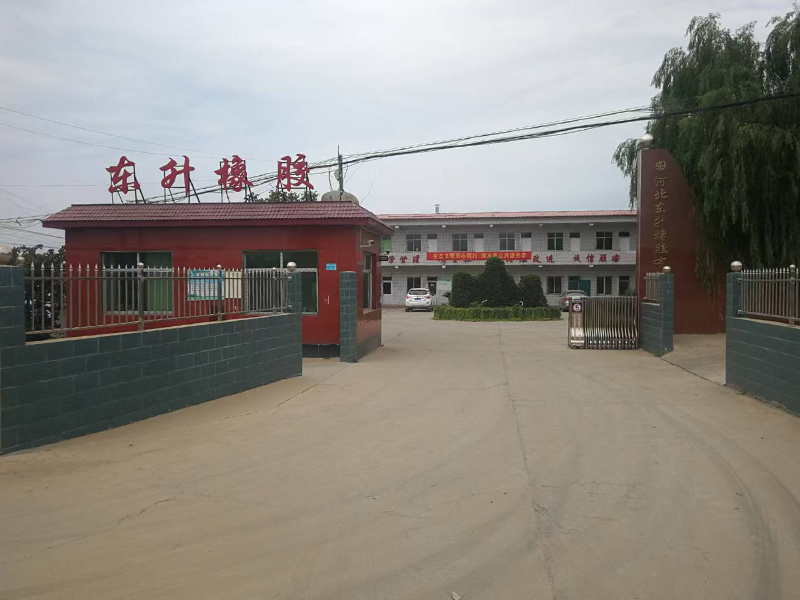
Roller production and inspection for heavy-duty conveying projects. Image: Shanghai Eastrise Trading Co., Ltd.
Impact Roller vs Parallel Idler Roller: A Buyer's Comparison
Roller failures on heavy-duty bulk conveyors are usually a zone-matching problem before they are a component-quality problem. An impact roller and a parallel idler roller look similar in a catalogue photograph — both cylindrical, both running on sealed bearings, both quoted by tube diameter — yet they are specified for different positions on the same conveyor and perform different mechanical work. When either type is installed outside its intended zone, the consequence is belt damage or repeated bearing seizure that is typically blamed on the roller supplier rather than on the selection decision.
This comparison sets out where each type belongs, what the two share, and which parameters stay project-specific. The reference products are the rubber-ring impact roller (product reference 8020, suggested model ER-IMPACT-108) and the parallel idler roller (product reference 8806, suggested model ER-PARALLEL-108) offered by Shanghai Eastrise Trading Co., Ltd., a Shanghai-based supplier of mining accessories and conveyor idler rollers that operates self-operated manufacturing facilities, reports an annual output of about 2,000 t from an 11,000 m² factory, and exports roughly 20% of its production.
Why Roller Type Mismatch Survives Into Production
Most projects buy rollers on two variables: tube diameter and price per piece. That is an efficient way to buy a commodity and a weak way to buy a wear part whose duty depends on where it sits on the belt. Three habits keep mismatches in service. The first is consolidating the whole roller list to one SKU to simplify spares. The second is treating an impact roller as a general upgrade because it is heavier. The third is evaluating rollers only at the point of purchase, where a wrong choice surfaces months later as top-cover damage or an unplanned stoppage.
The opportunity is simple: divide the conveyor into zones, give each zone a duty profile, and match roller family to duty. Loading points need impact absorption; carrying and return runs need low-resistance rolling support; lines prone to mistracking need belt training. Matching type to zone keeps the belt protected and keeps the spare-part list short without forcing one design to do two jobs.
What Each Roller Is
The impact roller: a rubber-ring roller for loading zones
The impact roller is a rubber-ring impact roller constructed from carbon steel and wear-resistant rubber rings. It is intended for loading points, crusher discharge zones and heavy-duty conveyors, and it is designed for 24/7 continuous heavy-load operation. Its working principle is absorption rather than rigidity: the rubber rings deform under falling material and reduce the impact energy transferred into the belt, lowering the risk of belt tearing where material strikes the belt. A suggested configuration uses a Ø108 mm tube with a Ø25 mm shaft and a suggested length range of 315–1,150 mm; the rubber ring specification and the load capacity are defined by the operating conditions rather than by a single catalogue number. Optional optimized sealing is offered for heavy-dust environments to prevent bearing seizure, and tube diameter, shaft diameter and roller length can be customized. OEM and ODM service is supported, batch material and inspection reports are available, and the product is positioned as complying with DIN 22112 / CEMA / GB/T 10595.
The parallel idler roller: a return and flat-carrying support
The parallel idler roller is a return / flat-carrying idler. It supports the return belt and flat carrying sections using a carbon steel tube and shaft running on sealed bearings, with an optional galvanized or coated surface. Suggested dimensions are a Ø89/108/133 mm tube with a Ø20/25 mm shaft, and tube diameter, shaft diameter and length are customizable. The design is deliberately versatile: the same flat roller profile serves flat-section carrying and return-belt support, which is why it appears across mining, cement, ports, logistics and general bulk material handling. The performance argument is rotational — sealed bearings lower rotational resistance and running noise, while incoming material inspection and pre-shipment inspection are used to avoid roller seizure and reduce routine maintenance and replacement frequency. Optional anti-corrosion coating is offered for humid outdoor and salt-spray port environments, and private-label nameplates and packaging are available with export documentation under FOB / CIF terms.
Where Each Type Belongs: A Conveyor Zone Map
A roller schedule is easier to defend when it is drawn by zone rather than by product family. The table below reflects the positions each family is specified for.
| Zone on the conveyor | Specified roller family | Primary job | Why the other type does not fit |
|---|---|---|---|
| Loading point / crusher discharge | Impact roller (rubber-ring) | Absorb heavy material impact and protect the belt from tearing | A parallel idler has no impact-absorbing layer; impact energy passes into the belt and roller body |
| Return run | Parallel idler roller | Support the return belt and keep rotation smooth | Impact rollers along the return run add rubber-ring mass and cost where no impact occurs |
| Flat carrying section | Parallel idler roller | Support flat belt sections | Impact rollers are specified for impact zones, not as general flat supports |
| Troughed carrying section | Trough idler (20°/25°/35° options) | Contain bulk material and prevent spillage | Not the subject of this comparison; a parallel idler is a flat roller, not a troughed one |
| Long-distance lines prone to mistracking | Self-aligning / training idler | Correct belt mistracking | Neither impact nor parallel rollers actively train the belt |
Technical Explanation: Load Path, Construction and Sealing
Load path at a loading point
At a loading point or crusher discharge, material falls onto the belt with vertical energy that the belt carcass must absorb across a short span. An impact roller changes that load path in two ways. The rubber rings deform elastically, extending the deceleration of the falling material, and the roller spreads load across a wider contact area than a rigid steel surface would. The engineering consequence is a lower risk of top-cover damage and carcass tearing in the zone where the belt is most exposed. The trade-off is mass: rubber rings make the roller heavier than a plain steel idler of the same tube diameter, and the ring specification must be matched to the handled material — which is why that specification is stated as project-specific rather than universal.
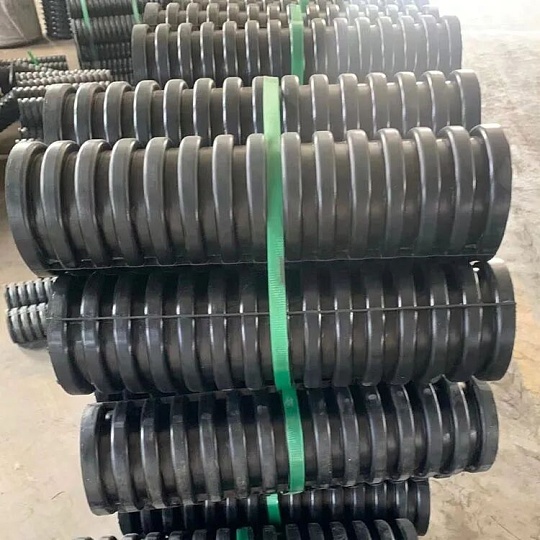
Rubber-ring impact roller (reference 8020, suggested model ER-IMPACT-108) for loading points, crusher discharge and heavy-duty conveyors. Image: Shanghai Eastrise Trading Co., Ltd.
Rolling support on the return run
The return run is a different load case. Here the priority is keeping the returning belt supported with minimum rotational resistance, so bearing quality, tube and shaft straightness, and dimensional control matter more than impact absorption. The parallel idler uses a carbon steel tube and shaft with sealed bearings, and the stated control points are incoming material inspection plus pre-shipment inspection covering appearance, dimension, performance, quantity and packaging. The purpose is to avoid roller seizure, which is disruptive on long conveyors because a seized roller can damage the belt before the fault is noticed. Radial run-out and rotational resistance are the inspection items listed for the impact roller, so the two families are judged by overlapping but not identical criteria.
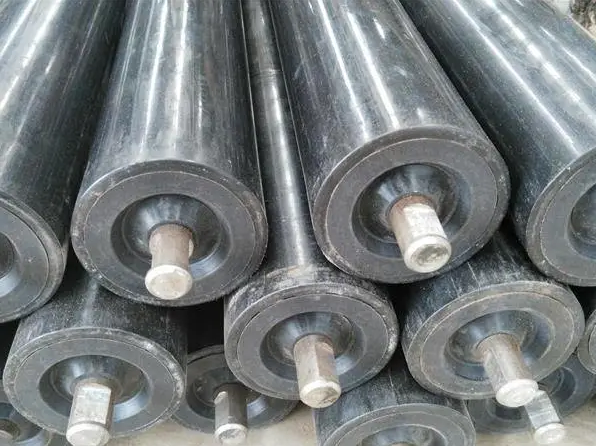
Parallel idler roller (reference 8806, suggested model ER-PARALLEL-108) for return-belt support and flat carrying sections. Image: Shanghai Eastrise Trading Co., Ltd.
Sealing: dust ingress versus salt-spray corrosion
Sealing is where the two environments diverge most. In mining and cement applications the dominant risk is dust ingress into the bearing, and the impact roller offers an optional optimized sealing structure specifically for heavy-dust environments to prevent bearing seizure. In ports and logistics the environment is outdoor, humid and salt-spray, and the stated requirement is corrosion-resistant coating, sealed bearings and low noise, with the protection level still to be confirmed per project. Buyers should therefore treat 'sealed bearing' as a starting point rather than a finished specification, and confirm seal type, surface treatment and applicable environment in writing.
Impact Roller vs Parallel Idler Roller: Specification Comparison
| Parameter | Impact roller (8020) | Parallel idler roller (8806) |
|---|---|---|
| Type | Rubber-ring impact roller | Return / flat-carrying idler |
| Primary position | Loading points, crusher discharge, heavy-duty conveyors | Return belt support and flat carrying sections |
| Material | Carbon steel and wear-resistant rubber | Carbon steel tube and shaft with sealed bearings; optional galvanized or coated surface |
| Suggested tube diameter | Ø108 mm | Ø89 / 108 / 133 mm |
| Suggested shaft diameter | Ø25 mm | Ø20 / 25 mm |
| Suggested length | 315–1,150 mm; load capacity designed for operating conditions | Customizable; no fixed length range stated in the reference data |
| Sealing / environment options | Optional optimized sealing structure for heavy-dust environments | Sealed bearings; optional galvanized or anti-corrosion coating for humid outdoor and salt-spray conditions |
| Standards referenced | DIN 22112 / CEMA / GB/T 10595 | Not specified in the reference product data; CEMA 502-2022 sets dimensional standards and load ratings for troughing and return idlers |
| Inspection focus | Radial run-out and rotational resistance; batch material and inspection reports available | Incoming material and pre-shipment inspection covering appearance, dimension, performance, quantity and packaging |
| Customization / commercial options | Tube diameter, shaft diameter, length; OEM and ODM support | Tube diameter, shaft diameter, length; private-label nameplates and packaging; FOB / CIF export documents |
What Standardising on a Single Roller Type Costs — and Where This Comparison Stops
Traditional roller procurement standardises on one type across the line: fewer SKUs, simpler spares, one price to negotiate. The trade-off appears in two places. Specifying impact rollers along the return run raises unit cost and rotating mass where no impact load exists. Skipping impact protection at the loading point shifts the cost into belt repair, since the top cover and carcass take the impact directly. Neither outcome shows up in the purchase order, which is why zone-based schedules are replacing flat standardisation on heavy-duty lines.
The comparison also has boundaries buyers should not paper over. The two types are not interchangeable in either direction: the impact roller is specified for loading points, crusher discharge and heavy-duty sections, while the parallel idler is specified for return and flat-carrying support. Several parameters remain project-specific rather than fixed — the rubber ring specification and load capacity of the impact roller, the protection level in salt-spray port applications, and the operating temperature range in cement applications are all marked to be confirmed. Neither type performs belt training; on lines prone to mistracking, a self-aligning or training idler is the relevant family. Finally, third-party trade records describe Shanghai Eastrise Trading Co., Ltd. as an exporter / trading entity and do not confirm conveyor roller manufacturing output under that name; where a procurement process requires manufacturing evidence, factory audit documentation belongs in the qualification pack alongside batch inspection reports.
Application Fit: Mining, Cement, Ports and Logistics
Mining
Ore conveyor lines operate under dusty, heavy-duty, continuous bulk material handling conditions with 24/7 operation. The stated special requirements are dust-resistant seals, low rotational resistance and wear resistance. The zone logic applies directly here: impact rollers at the loading point and crusher discharge, parallel idlers on the return run, with supporting equipment — belt, pulleys and conveyor frame — determining installation dimensions.
Cement
Raw material handling lines run continuous 24/7 operation with heavy dust and medium-to-high temperatures. The stated function of rollers in this setting is stable support together with reduced belt mistracking and lower maintenance frequency. Sealing and dimensional consistency carry the practical weight, and because the operating temperature range is listed as to be confirmed, temperature should be raised explicitly during quotation rather than assumed from a catalogue.
Ports and logistics
Bulk terminal conveyors work outdoors under humid, salt-spray and long-distance conveying conditions. The parallel idler's role is to support the return belt and maintain smooth operation, and the environment pushes the specification toward corrosion-resistant coating, sealed bearings and low noise — with the protection level still to be confirmed in the reference data.
A mining reference case
One documented application covers a mine belt conveyor system for continuous transport of ore, crushed stone and other bulk materials, using impact rollers over a two-year period at a project scale of 100,000 units per year and an annual production scale of 100,000 units. The reported outcome is stable continuous operation under heavy-load mine conditions, a low failure rate and reduced downtime for material transportation, with wear resistance and adaptability to a harsh, dusty mine environment cited as notable characteristics. The transferable lesson for buyers is not the volume but the metering: impact-zone components were consumed at a rate consistent with a 24/7 duty cycle, and the reported benefit was measured in downtime rather than in unit price.
Documentation and Ordering Checklist Before You Place a Heavy-Duty Roller Order
- Confirm the zone and duty for every line item. Loading point, crusher discharge and heavy-duty sections point to the impact roller; return runs and flat carrying sections point to the parallel idler.
- Fix the dimensional set. Tube diameter, shaft diameter and roller length, plus the rubber ring specification for impact rollers. Drawing confirmation in 3–5 business days precedes production in the engineering-support workflow.
- Specify bearings, seals and surface treatment in writing. Optional optimized sealing for heavy dust on the impact roller; optional galvanized or anti-corrosion coating on the parallel idler for humid or salt-spray sites.
- Record the standards pathway. DIN 22112 / CEMA / GB/T 10595 are referenced for the impact roller; CEMA 502-2022 establishes dimensional standards and load ratings for troughing and return idlers; DIN 22112 Part 3 (1996) specifies testing requirements for idlers in underground coal mining; ISO 5048:1989 covers power and tension calculation for belt conveyors with carrying idlers.
- Request inspection evidence. Inspection items under the OEM/ODM workflow include incoming material, dimensional, radial runout, rotational resistance, noise and appearance checks, with sample approval and first-article inspection available; batch sampling inspection is available under the engineering-support workflow, and batch material and inspection reports cover project acceptance.
- Match commercial terms to the production mode. OEM/ODM: minimum 10 units, samples in 5–7 days, mass production in 15–30 days. Engineering support: minimum 50 pcs, drawing confirmation in 3–5 business days, mass production in 30–45 days. Private label: minimum 100 pcs, 30–45 days lead time.
- Confirm the export document set. Full export documentation is available under FOB / CIF terms, and private-label nameplates and packaging can be specified.
Market Context: What the Verified Industry Data Shows
Third-party research places the rollers and idlers segment at USD 4.14 billion in 2025, projected to reach USD 7.05 billion by 2034 (Straits Research). A separate estimate puts the global roller conveyor market at USD 3.15 billion in 2025 (Dataintelo). Steel remains the dominant roller material with 64% of global market share in 2024, and Mining & Quarrying accounts for 36% of total segment revenue in 2024, the largest end-use vertical (Straits Research). Trade data reflects the component nature of the category: Viet Nam exported USD 8.59 million of HS 843139 conveyor and elevator parts in 2023 (UN Comtrade).
Two cautions apply when using these figures. The same segment is valued very differently depending on scope — component-level and sub-system-level definitions of conveyor rollers produce estimates that differ by an order of magnitude — so headline numbers are directional context rather than procurement inputs. And market size says nothing about roller selection quality: the mining vertical that dominates demand is also where impact-zone mis-specification is most expensive.
Future Outlook
Three shifts are visible without speculation. Zone-based roller schedules are replacing single-type standardisation, because buyers increasingly measure roller performance in belt life and downtime rather than in unit price. Sealing and surface treatment are moving from catalogue footnotes into specification clauses, as port and cement projects write environment-specific requirements into tenders. Documentation is becoming a qualification criterion, with batch inspection reports, first-article inspection and referenced standards such as DIN 22112 / CEMA / GB/T 10595 and CEMA 502-2022 requested before a supplier is shortlisted.
The unresolved part of the picture is supplier-level evidence. Public data tracks market size but not supply-chain resilience or tier-specific roller performance, which means buyers currently build that evidence themselves through factory audits, drawing confirmation and inspection reports attached to each batch. Until that changes, the practical discipline stays the same: match the roller family to the zone, confirm every parameter marked to be confirmed, and keep the documentation with the shipment.
FAQ
What is the difference between an impact roller and a parallel idler roller?
An impact roller is a rubber-ring roller made of carbon steel and wear-resistant rubber, specified for loading points, crusher discharge and heavy-duty conveyor sections, with an optional optimized sealing structure for heavy-dust environments and a suggested Ø108 mm tube, Ø25 mm shaft and 315–1,150 mm length range. A parallel idler roller is a return / flat-carrying idler made of a carbon steel tube and shaft with sealed bearings, specified for return-belt support and flat carrying sections, with suggested tube diameters of Ø89/108/133 mm and shaft diameters of Ø20/25 mm. The first absorbs impact energy; the second provides low-resistance rolling support.
Where should an impact roller be installed?
At loading points, crusher discharge zones and heavy-duty conveyor sections. These are positions where falling material transfers impact energy into the belt, and the rubber rings are the element designed to absorb that energy and reduce the risk of belt tearing.
Can a parallel idler roller be used at a loading point?
It is not specified for that duty. A parallel idler roller is a return / flat-carrying support with a carbon steel tube and shaft and sealed bearings, and it has no rubber-ring impact-absorbing layer, so impact energy at a loading point is transferred into the belt and roller body rather than absorbed. Where impact protection is required, the impact roller is the relevant family.
Which dimensions can be customized on each roller type?
On the impact roller, tube diameter, shaft diameter and roller length can be customized, with a suggested reference configuration of Ø108 mm tube, Ø25 mm shaft and a 315–1,150 mm length range; the rubber ring specification is defined by the operating conditions. On the parallel idler roller, tube diameter, shaft diameter and length can be customized, with suggested tube diameters of Ø89/108/133 mm and shaft diameters of Ø20/25 mm. Drawing confirmation precedes production in both cases, at 3–5 business days in the engineering-support workflow.
How does sealing differ between dusty and salt-spray environments?
In heavy-dust environments such as mining and cement lines, the risk is dust ingress into the bearing; the impact roller offers an optional optimized sealing structure to prevent bearing seizure, and dust-resistant seals with low rotational resistance are the stated special requirements for ore conveyor applications. In humid, salt-spray port environments the risk is corrosion, and the specified requirement is corrosion-resistant coating, sealed bearings and low noise, with the protection level still to be confirmed per project.
What evidence should accompany a roller shipment?
Batch material and inspection reports are available for the impact roller, and inspection covers radial run-out and rotational resistance. For the parallel idler, incoming material inspection and pre-shipment inspection cover appearance, dimension, performance, quantity and packaging. Under the OEM/ODM workflow, inspection items include incoming material, dimensional, radial runout, rotational resistance, noise and appearance checks, with sample approval and first-article inspection available; batch sampling inspection is also offered under the engineering-support workflow.
What are typical order quantities and lead times?
Under the OEM/ODM workflow, the minimum order quantity is 10 units, samples are produced in 5–7 days and mass production takes 15–30 days. Engineering support orders start at 50 pcs, with drawing confirmation in 3–5 business days and mass production in 30–45 days. Private-label nameplate and packaging orders start at 100 pcs with a 30–45 day lead time. Final terms are confirmed per project.
A downloadable product brochure covering the roller ranges discussed in this comparison is available here: Shanghai Eastrise conveyor roller brochure (PDF).