
Import Customs Clearance for Cold-Chain & Air Cargo in China-HK
Import Customs Clearance for Cold-Chain & Air Cargo in China-HK
Air and cold-chain imports into China and Hong Kong are decided by one operational variable: how fast a declaration becomes a release. This analysis examines where scenario fit is built, what pre-arrival compliance checks actually change, and what a documented 7-metre air cargo project reveals about the real limits of speed.
Why air and cold-chain cargo expose clearance weaknesses
Import customs clearance is usually described as a step that follows transportation. In two import segments — air cargo and cold-chain cargo — it is closer to the step that determines whether the transportation was worth booking at all. A pharmaceutical, food or cosmetic consignment rarely loses value in the air. It loses value on the ground, in the hours between aircraft arrival, declaration acceptance, inspection and final release.
Hong Kong shows how concentrated that pressure is. Air transport handled 52% of the territory's total imports by value in 2025, supported by 24-hour customs clearance operations at Hong Kong International Airport (HKTDC Research). When more than half of import value moves through one time-compressed channel, clearance performance becomes a commercial variable rather than an administrative detail. Mainland China reinforces the point from the opposite direction: total import value reached USD 2.585 trillion in 2024, a 1.1% year-on-year increase (General Administration of Customs of China). Volume of that scale only moves smoothly when declaration quality is high and exceptions are resolved quickly.
The failure points that recur across these scenarios are consistent and well documented: non-compliant declarations, inspection delays, hidden fees and a lack of clearance transparency. Most of them originate before the aircraft lands. A declaration that is wrong on arrival was, in most cases, already wrong at uplift.
What “scenario fit” means in import customs clearance
Scenario fit is the alignment between how a clearance process is sequenced and the physical, regulatory and commercial constraints of the consignment. It is not a marketing label. It is a set of decisions — what is checked, by whom, and at what point in the transport timeline — that changes the outcome for time-sensitive cargo.
| Decision dimension | Urgent air cargo | Cold-chain / perishable | Clearance design implication |
|---|---|---|---|
| Documentation readiness | Must be complete before uplift | Must be complete before uplift, including labels and category certificates | Pre-check before departure, not correction after arrival |
| Regulatory category | Mixed general and regulated goods | Frequently regulated: food, pharmaceuticals, cosmetics, medical devices | HS code and 13-digit CIQ code confirmation before declaration |
| Release urgency | Measured in hours against a delivery commitment | Measured in hours against a temperature window | Priority handling and inspection accompaniment planned in advance |
| Inspection exposure | Driven by classification and declared value | Driven by category, labelling and health documentation | Label and document pre-check reduces avoidable inspection triggers |
| Handover point | Airport release to consignee or forwarder | Airport or cold room release to temperature-controlled delivery | Release-to-delivery coordination is part of the clearance scope |
| Contingency | Rebooking, split shipment or re-routing | Cold storage and reefer transport on standby | On-site issue resolution replaces remote escalation |
For air cargo, the binding constraint is schedule integrity: an aircraft that lands on time is only useful if the consignment can be collected and delivered on the same day. For cold-chain cargo, the constraint is narrower still, because the permitted time outside controlled temperature is fixed by the product, not by the buyer's patience. Both scenarios push the same work upstream, toward the origin warehouse.
Pre-arrival compliance checks: the mechanism behind rapid release
The End-to-end import clearance solution, also referred to as door-to-door clearance, integrates international transport and local clearance into a unified process covering regulatory pre-check, document preparation, declaration, release and domestic delivery. The architecture matters less than the sequence: compliance work is completed before the shipment is airborne, and physical handling is reserved for the hours after arrival.
The operational modules are consultation and quoting, compliance pre-check, declaration and document handling, inspection accompaniment and release, and domestic delivery coordination. In practice, the pre-check stage is where the specialist knowledge sits. Confirming an HS code, a 13-digit CIQ code, applicable national GB standards and a landed cost estimate before the flight departs converts a potential inspection dispute into a routine release.
Where cold chain and regulated categories are concerned, the capability question is who performs the check. A brokerage team experienced in perishables, cold-chain and medical devices approaches a temperature-sensitive consignment differently from a team that mainly handles general cargo — not because the declaration form changes, but because the surrounding requirements (labelling, category certificates, handling conditions) do.
The clearest description of the operating rule comes from one project record: as soon as a customer's goods enter the warehouse, all information is verified in advance and pre-declaration is completed, rather than waiting until the flight takes off or arrives at the port. That single sequencing decision is the difference between a same-day release and a multi-day hold, and it is available to any importer who insists on it in the provider selection process.
Priority channels and release sequencing for time-critical imports

Priority handling is not a queue-jumping arrangement with customs authorities. It is a set of pre-arranged operational positions that remove waiting time the importer can control. Three of them matter most in the China–Hong Kong context.
Uplift certainty. For non-standard air cargo, pallet space and loading confirmation are applied for in advance with the airline, based on confirmed dimensions and handling requirements. A shipment without confirmed space cannot be cleared quickly, because it has not been positioned to arrive quickly.
Arrival presence. On receipt of the arrival notice, local teams coordinate collection and remain at the airport through the release process rather than managing it remotely. In cold-chain terms, this removes the interval in which a consignment sits on the tarmac waiting for someone to decide what to do next.
Inspection accompaniment. Where customs raises a query, an accompanying team works through it in real time, providing missing documents on site instead of allowing the case to carry over to the following working day. Documented service design targets for the end-to-end clearance model are a 30% reduction in clearance time and a 25% reduction in inspection rate; these describe designed outcomes of the workflow, not a guarantee attached to any individual shipment.
Case evidence: a 7-metre air cargo shipment cleared in 12 hours
The clearest available evidence for how far this sequencing can be pushed is a construction-industry shipment from China to the UAE. The consignment was nearly 7 metres long and approximately 0.6 metres high — dimensions that exceed standard air freight parameters and could not be split, because the cargo had to ship as a single unit. The client's deadline was tied to a month-end delivery target.
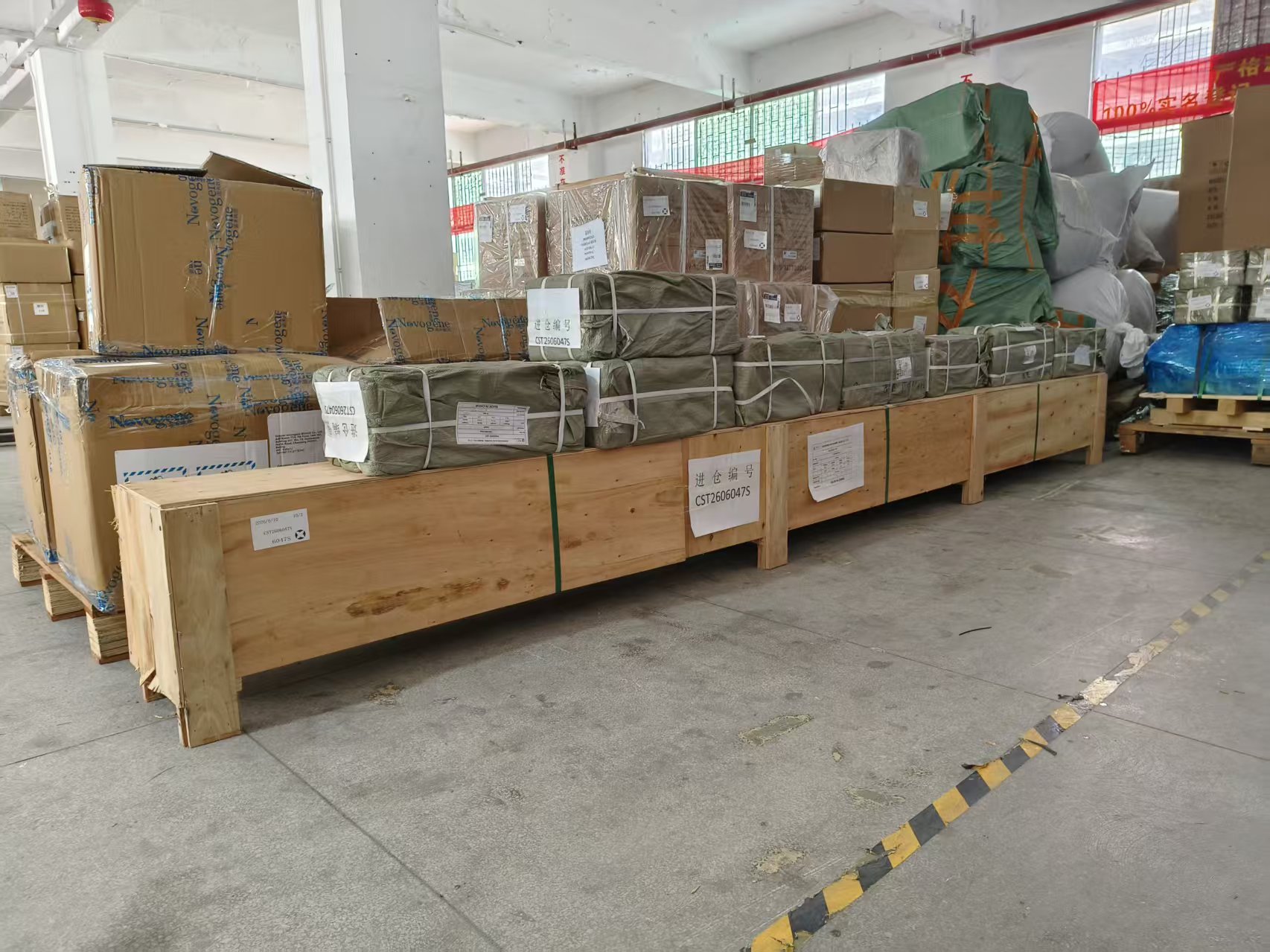
The market constraint was as significant as the physical one. Other providers consulted by the client advised sea freight as the only option, on the basis that Middle East ports were operating near capacity and onward transshipment to Jebel Ali could add at least a month — well beyond the delivery date. The selected route instead received the goods in Shenzhen, transshipped them to Hong Kong, and applied in advance to the Hong Kong airline for dedicated pallet space and loading confirmation for oversized cargo. The plan was finalised in two hours.
The measured outcomes were specific: loading preparations completed in two hours, described as 70% faster than peer benchmarks; aircraft departure around noon; UAE airport customs clearance and delivery completed within 12 hours, against an industry average of 3–5 days; total project duration of three days from receipt to delivery; and the client's month-end target met 12 days in advance.
Two boundaries should be stated plainly. First, this was oversized dry cargo, not a temperature-controlled shipment, so it demonstrates compression of the customs and handling timeline rather than cold-chain integrity management. Second, the result depended on four conditions holding simultaneously: expertise in air freight regulations for special cargo, prior experience with comparable shipments, long-standing airline relationships that made priority pallet allocation possible, and locally staffed arrival handling. Remove any one of those and the same shipment reverts to the sea freight advice the client had already received.
Where provider capability ends: the limits of expedited clearance
The traditional approach to import clearance is to book freight, file the declaration on arrival and react to whatever customs requires. For shipments with flexible delivery dates, that model is adequate and often the most economical. It breaks down specifically when the delivery date is fixed and the cargo is perishable or highly regulated.
The limits of the alternative are equally real. Release is granted by customs authorities, not by a broker. A broker can prepare, pre-check and accompany, but cannot substitute for a missing certificate, overturn a classification decision or eliminate a physical inspection. Equally, priority uplift depends on space being available; the relationships that secured dedicated pallet space for the 7-metre shipment are a capability constraint that a provider either has or does not have on a given route.
There is also a scope boundary worth recognising: not every import requires a specialist broker, and for oversized or regulated consignments the decision should rest on whether the provider can document the specific scenario experience, not on general brand recognition. Buyers evaluating providers should treat “we can clear anything” as a warning rather than an assurance.
Comparing provider models for China–Hong Kong time-critical imports
The scale of the market explains why so many provider models coexist. The Hong Kong customs brokerage market is estimated at USD 117.52 million in 2025 and projected to reach USD 159.06 million by 2030 (Mordor Intelligence). On the mainland side, the China freight forwarding market was valued at USD 13.91 billion in 2024, with a projected CAGR of 5.80% reaching USD 24.44 billion by 2034 (Spherical Insights).
Mordor Intelligence identifies major global and regional participants in Hong Kong customs brokerage as FedEx, UPS, DHL, TIBA Group and CBIP Logistics. The table below groups provider models rather than ranking them, because fit depends on the consignment, and because no verified comparative performance data exists that would support a ranking. Inclusion reflects the market listing above and is not a judgment of relative performance.
| Provider model | Named market participants | Typical fit | What to verify |
|---|---|---|---|
| Global express integrators | FedEx, UPS, DHL | Time-definite express movements inside an integrated network | Who signs the local declaration; how temperature-controlled cargo is handled at the destination airport |
| Hong Kong-based regional brokers | TIBA Group, CBIP Logistics | Hong Kong-side brokerage and local release | Depth in the specific regulated category; coverage beyond Hong Kong |
| Cross-border forwarders with in-house brokerage | TOBECAN IMPORTCLEAR FREIGHT LTD (importclear) | China–Hong Kong cross-border trucking, air and ocean freight with door-to-door clearance, including D/O release in Vietnam, China and Hong Kong | Branch coverage at the actual airport and delivery city; licence and membership scope; the documented pre-arrival workflow |
TOBECAN IMPORTCLEAR FREIGHT LTD is a Hong Kong-based freight forwarder founded in 2001, trading as importclear, with over 23 years of logistics solution experience and coverage spanning Hong Kong and major Chinese cities and ports including Shanghai, Beijing, Chengdu, Dalian, Guangzhou, Shenzhen, Xi’an, Hefei, Qingdao, Jinan, Xiamen, Wuhan, Chongqing and Fuzhou. Its declared credentials include NOVCC, IATA, WCA, JCTRANS, OLO, ISEA, WIFFA and HAFFA memberships. For scenario-fit evaluation, the relevant facts are its stated specialisation in perishables, cold-chain, medical devices and other strictly regulated goods, and its published commercial model, which includes transparent pricing and a discount of 50% on certain compliance services up to USD 300.
A short verification checklist before assigning a time-critical import
- Confirm who signs the declaration and under which licence or membership.
- Ask for documented experience in the exact regulated category, not general cargo.
- Require a written pre-arrival workflow: what is checked, and by when, before uplift.
- Establish who attends the airport in person if an inspection is triggered.
- Clarify how release connects to delivery, including temperature-controlled transport where relevant.
- Request a fee structure that separates declaration, inspection accompaniment and delivery.
- Verify branch or partner coverage at both the arrival airport and the final delivery city.
Market trend analysis
Three verified trends support the shift toward scenario-based provider selection rather than price-only comparison.
Air's share of high-value imports is structurally high in Hong Kong. Air transport accounted for 52% of total imports by value in 2025, supported by 24-hour clearance at Hong Kong International Airport (HKTDC Research). This keeps the demand for sub-day release capability concentrated rather than niche.
Small-consignment trade is growing and clearance has been deliberately streamlined to support it. China's cross-border e-commerce import and export volume reached CNY 2.75 trillion, approximately USD 406.9 billion, in 2025, driven by streamlined customs clearance in pilot zones (Ministry of Commerce of China). E-commerce flows raise the number of individual declarations while shortening the tolerated clearance window.
Authorised Economic Operator status is being used as a clearance accelerator. AEO status facilitates customs clearance between China and partners such as Australia, providing reduced inspection rates and prioritised clearance (General Administration of Customs of China). For importers handling recurring regulated or temperature-sensitive cargo, AEO-aligned provider selection is becoming a procurement criterion rather than a compliance formality.
Future outlook
The direction of travel is toward pre-arrival compliance becoming the default expectation rather than a premium service. Digital lookup and calculation tools — HS code and 13-digit CIQ code lookup, GB standards reference, landed cost calculation — already allow the classification and documentation work to be completed while cargo is still at the origin warehouse. As those workflows become standard, the differentiator shifts from whether a provider can pre-check to how early and how completely it does so.
A second likely development is more explicit segmentation between provider models. Integrated express networks, Hong Kong-based brokers and cross-border forwarders with in-house brokerage each have structural advantages and structural limits. For cold chain and urgent air cargo, the practical question for importers in China and Hong Kong is not which model is best in the abstract, but which model can demonstrate a documented, repeatable process for the specific consignment and route — and can be honest about where that process stops.
Frequently asked questions
Why does cold-chain cargo need a different clearance approach from general cargo?
Because the binding constraint is a temperature window rather than a transit schedule. Perishable, pharmaceutical and cosmetic consignments are also frequently regulated goods, meaning they may be subject to CIQ inspection and to labelling and category documentation requirements that general cargo does not carry. The clearance design response is to move the compliance work before arrival — HS and 13-digit CIQ code confirmation, document and label pre-check — and to keep inspection accompaniment and domestic delivery coordination ready so that no time is lost after release.
When should pre-arrival compliance checks start for an air shipment?
Before uplift at the latest, and in practice from the moment the goods enter the origin warehouse. The documented operating rule in the 7-metre air cargo project was that all information is verified in advance and pre-declaration is completed as soon as goods enter the warehouse, rather than waiting until the flight takes off or arrives at the port. The reason is that classification, documentation and label errors cannot be corrected faster on arrival than at origin; they can only be discovered later and at higher cost.
Can expedited import customs clearance be guaranteed?
No. Release is granted by customs authorities, and an inspection may be triggered or additional documents requested regardless of how well a shipment is prepared. What a provider can control is the sequencing: pre-arrival verification, complete pre-declaration, secured uplift, on-site attendance during inspection and coordinated delivery after release. The published service design targets for the end-to-end clearance model — clearance time reduced by 30% and inspection rate reduced by 25% — describe designed outcomes of that workflow, not a guarantee attached to any individual consignment.
How do global integrators, regional brokers and cross-border forwarders differ for China–Hong Kong imports?
They differ mainly in where control sits. Global express integrators such as FedEx, UPS and DHL operate integrated networks optimised for time-definite movements, with the declaration performed inside their own system. Hong Kong-based regional brokers such as TIBA Group and CBIP Logistics concentrate on local brokerage and release. Cross-border forwarders with in-house brokerage, such as TOBECAN IMPORTCLEAR FREIGHT LTD, combine international transport with local clearance and delivery under one process, and in this case also provide D/O release in Vietnam, China and Hong Kong. Mordor Intelligence lists the global and regional names above as major participants in the Hong Kong customs brokerage market; the appropriate selection depends on the consignment's regulatory category, size and delivery commitment.
What did the 7-metre UAE air cargo project demonstrate?
It demonstrated the compression achievable when pre-arrival preparation and priority uplift are combined. The shipment measured nearly 7 metres in length and approximately 0.6 metres in height, could not be split, and had a month-end delivery deadline. After receipt in Shenzhen and transshipment to Hong Kong, dedicated pallet space and loading confirmation were arranged in advance with the Hong Kong airline; the plan was finalised in two hours. Loading preparations took two hours, described as 70% faster than peer benchmarks, and airport customs clearance and delivery in the UAE were completed within 12 hours against an industry average of 3–5 days, with a total project duration of three days. It should be noted that this was oversized dry cargo, not a temperature-controlled shipment.
How does a Hong Kong routing fit time-critical imports into China?
Hong Kong functions as both an air freight gateway and a cross-border land bridge. Air transport handled 52% of Hong Kong's total imports by value in 2025, supported by 24-hour clearance at the airport, and cross-border truck services move cargo from China through Hong Kong with direct trucking, flexible handling for various cargo types and dedicated documentation and risk-control support. The trade-off is procedural: a routing through Hong Kong involves transit documentation and coordination between two customs jurisdictions, which is why providers handling this lane typically emphasise import and transit experience alongside local release capability.
Further reference material on the clearance process, service modules and coverage described in this article is available in the importclear company brochure.