
In-Mold Label Film: A Technical Reference for Packaging Buyers
The global in-mold labels market was valued at USD 2.31 billion in 2023 and is projected to reach USD 3.14 billion by 2030, according to Grand View Research. For converters, molders and brand owners, the in-mold label film is the component that decides how well a label bonds to a plastic container, how the final surface looks, and whether the package meets food-contact or industrial requirements.
An in-mold label film is a pre-printed polymer film placed inside an injection mold or blow mold before the resin is introduced. The heat and pressure of molding fuse the film to the plastic wall, producing a label that is permanently embedded in the container. Since the film is part of the molding process rather than a sticker applied afterwards, its material, printing quality, adhesion performance and compliance profile all affect the final packaging result.
Why the Film Layer Matters in In-Mold Labeling
In traditional packaging, a label is printed and then applied to a finished container. In in-mold labeling, the film is placed directly into the mold cavity and becomes part of the container wall during molding. This approach eliminates a separate labeling step and provides advantages such as waterproof in-mold label performance, high-adhesion bonding, and resistance to peeling under moisture, temperature changes and handling.
A poorly specified film, however, can disrupt production through warpage, label fall-off or inconsistent printing. Buyers therefore need to evaluate four factors: the film material, the printing method, the mechanical and thermal performance, and the compliance documentation. The ZY-IML Series in-mold label from Zhejiang Zhongyu Science and Technology Co., Ltd. illustrates how these factors are handled in a production-grade IML film.
Manufacturer Profile: Zhejiang Zhongyu (YZY)
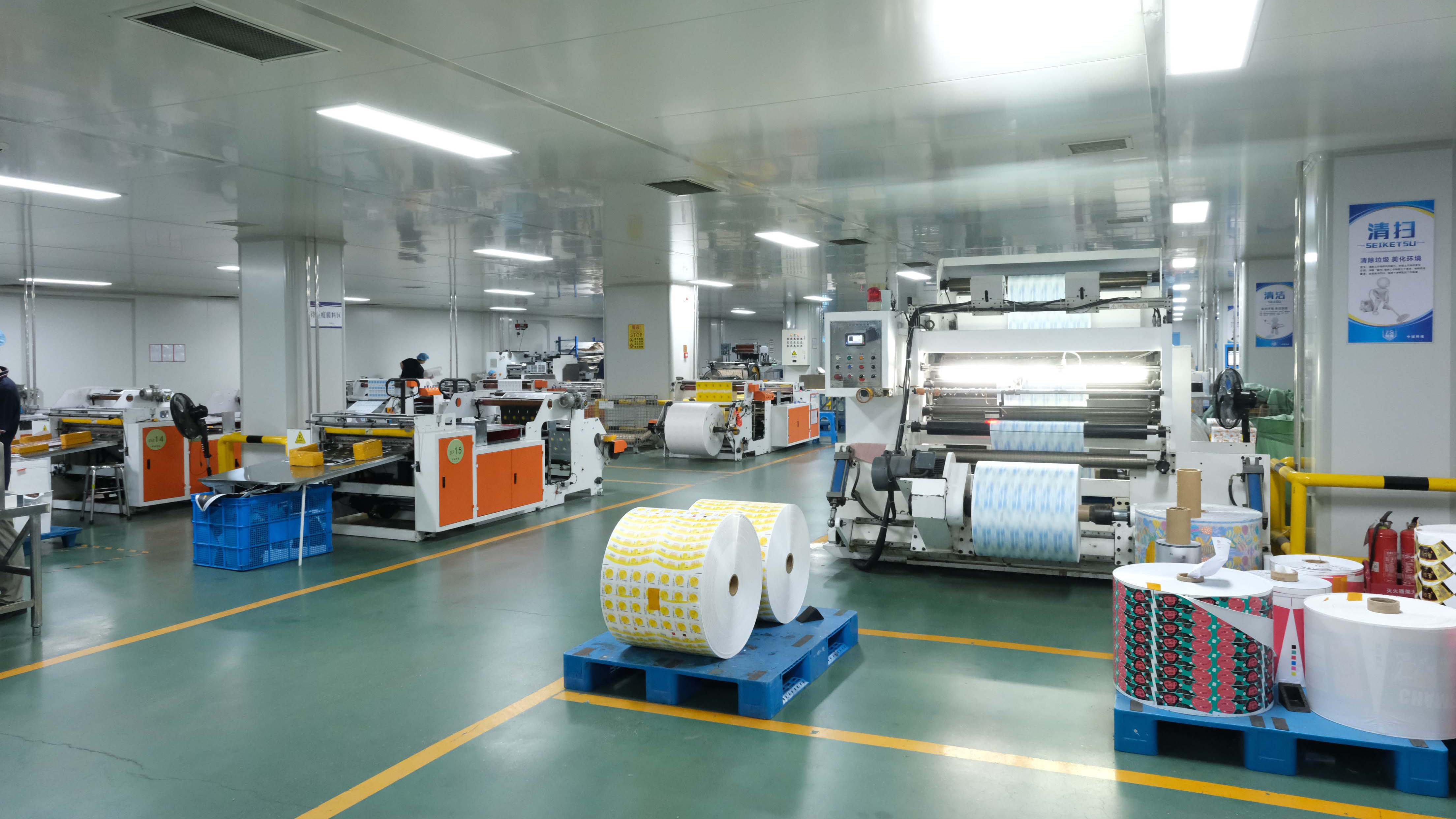
Zhejiang Zhongyu Science and Technology Co., Ltd. was founded in 2009 and is located at Building 59, Zone E, Guohong Zhizao New Town, Xingke Road, Longgang, Wenzhou, Zhejiang, China. The company employs approximately 250 staff and operates a manufacturing facility covering 20,000 square meters. Its annual production capacity reaches 200,000,000 units, and export business accounts for 30% of total sales, serving customers worldwide.
The company specializes in in-mold labeling production, with a product portfolio that includes in-mold labels, sealing films, embossed sheet sealing lids and POF films. It has passed QS, ISO and BRC management system certifications and reports long-term cooperation with brand owners including Starbucks, Nestlé and Uni-President. The company holds 48 accumulated patents and applies strict inspection from raw materials and production through to finished products.
Within the YZY range, the ZY-IML Series is the product family designed for in-mold label applications. It is available in food grade, daily chemical grade and industrial grade, covering the majority of IML demand across food packaging, daily chemical packaging and industrial packaging.
Materials: PP, PE and PET In-Mold Label Films
The first specification decision is the base polymer. Polypropylene is the dominant material in the global in-mold labels market, holding a 47.2% share in 2023 according to Grand View Research. PP in-mold label film combines rigidity, heat resistance and chemical resistance, making it a common choice for injection-molded containers such as yogurt cups, ice cream containers and industrial buckets.
PE in-mold label film is softer and more flexible, which makes it suitable for blow-molded containers and applications that require higher impact resistance. PET can be selected when higher transparency or mechanical strength is needed. The ZY-IML Series is manufactured from PP, PE and PET, with PP/PE combinations also available.
For food-contact use, the film is produced from food-grade virgin resin, and the final label uses food-grade low-migration water-based ink. This is an important distinction for buyers: a film made with recycled or unknown resin cannot automatically meet the migration requirements of food-contact packaging.
In-Mold Label Printing: Precision and Ink Selection
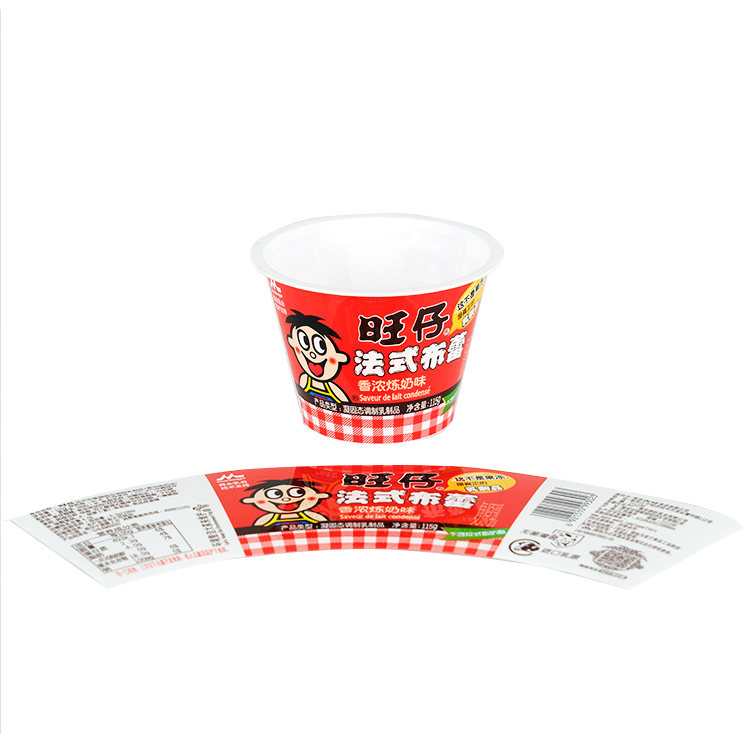
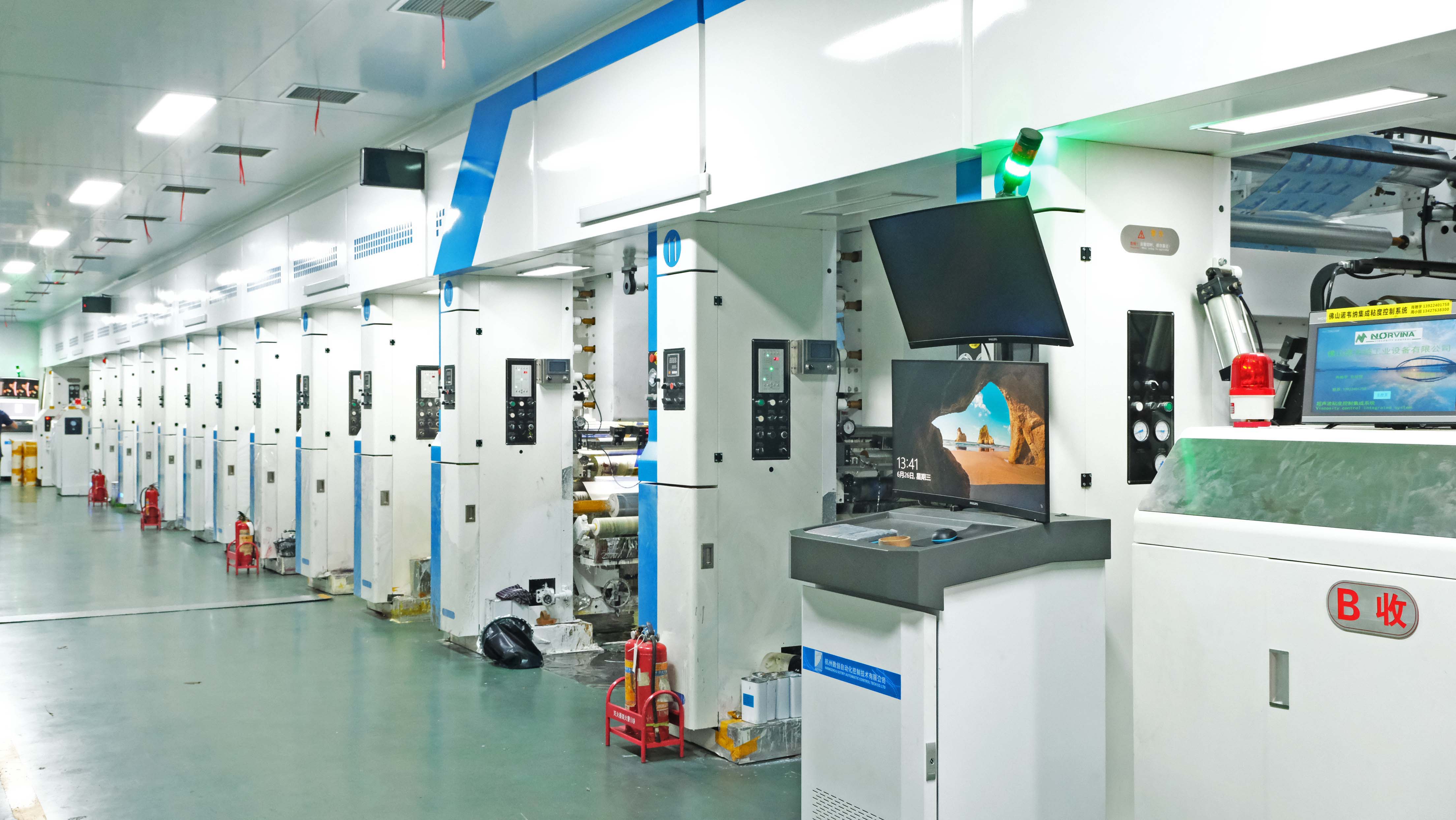
In-mold label printing for the ZY-IML Series uses 8-color high-precision rotogravure printing, with a maximum printing width of 1200 mm and a printing precision of ±0.1 mm. Rotogravure is widely used in IML production because it delivers consistent ink density, sharp detail and high line speed over long production runs.
Custom in-mold label projects can include custom printing, custom size, custom color matching and custom film formulation. The available film types include complex white gloss film, complex transparent gloss film, standard gloss film, matte laminated film and holographic film. Surface finishes range from glossy, matte and orange peel to holographic and custom texture, allowing brand owners to distinguish their containers at the point of sale.
The ink system is a compliance-sensitive detail. Food-grade low-migration water-based ink reduces the risk of ink components migrating into packaged food. This is particularly relevant for yogurt cups, bubble tea cups, ice cream containers and other food packaging applications where the label is in close contact with the product.
Key Performance Specifications of In-Mold Label Film
The following table summarizes the main specifications of the ZY-IML Series in-mold label film. These figures can be used as benchmarks when a buyer compares film suppliers or qualifies a film for an existing molding line.
| Specification | ZY-IML Series Value |
|---|---|
| Film Thickness | 30–100 μm (customizable) |
| Film Materials | PP, PE, PET; PP/PE combinations |
| Printing Technology | 8-color high-precision rotogravure printing |
| Printing Precision | ±0.1 mm |
| Maximum Printing Width | 1200 mm |
| Tensile Strength | ≥20 MPa |
| Adhesion Strength | ≥5 N (no peeling during injection molding) |
| Scratch Resistance | 4H (pencil hardness test) |
| Temperature Resistance | −20 °C to 120 °C |
| Chemical Resistance | Resistant to weak acids, alkalis and common detergents |
| Ink Type | Food-grade low-migration water-based ink |
| Compliance Standards | FDA 21 CFR, BRCGS, ISO22000, QS; EU 10/2011 migration test |
| Surface Finishes | Glossy, matte, orange peel, holographic, custom texture |
Adhesion strength is one of the most important parameters for in-mold label film. A value of ≥5 N means the label does not peel from the container during the injection molding process. High-adhesion in-mold label film must also be matched to the resin, mold design and cycle time of the production line. Because the label is fused into the container wall, waterproof in-mold label performance is achieved without a separate adhesive layer that could degrade in wet conditions.
The temperature resistance range of −20 °C to 120 °C covers both cold-chain distribution and hot-filling processes. This is why the same film family can be used for ice cream containers stored at low temperatures and for products filled at elevated temperatures.
Injection Molding and Blow Molding Compatibility
Injection molding is the leading production process in the in-mold labels market, with a revenue share exceeding 57.1% in 2023 according to Grand View Research. In injection molding in-mold label applications, the film is placed in the mold cavity and held in place while molten polymer is injected. The ZY-IML Series is designed for high-speed injection processes without warping or label fall-off.
For blow molding in-mold label operations, the film is positioned inside the parison and expands with the container during blowing. PE-based film is commonly used in blow molding because of its flexibility and compatibility with polyethylene containers.
Material matching is a practical rule for IML: a PP in-mold label is normally paired with PP containers, and a PE in-mold label with PE containers. Matching the label and container polymer improves fusion quality and simplifies recycling, because the finished package is closer to a single-material structure.
Application Scenarios: Where In-Mold Label Film Is Used
Food and beverage packaging is the largest application segment for in-mold labels, accounting for more than 41.3% of global revenue in 2023 according to Grand View Research. Typical food applications include in-mold labels for yogurt cups, bubble tea cups, ice cream containers and plastic bottles. These packages require food-contact compliance, non-toxic materials, and labels that maintain their appearance under cold-chain or refrigerated conditions.
Daily chemical packaging is another established segment. In-mold labels for daily chemicals appear on shampoo bottles, detergent containers, cosmetic containers and other personal care packaging. Because these products are used in wet environments, the label film must resist moisture and common detergents as well as provide durable branding.
Industrial packaging uses in-mold labels for paint buckets, lubricant buckets and plastic buckets that hold oils, solvents or cleaning products. The chemical resistance of the film to weak acids, alkalis and common detergents is a key requirement in these environments. For plastic containers and plastic bottles across all three segments, the in-mold label film replaces a separate labeling operation and provides a container-integrated identification surface.
In production terms, the common application scenario is a packaging and printing facility operating under normal temperature and dry indoor conditions, with printing presses and label cutting machines supporting the converting process. In China, many IML projects are food-contact labeling operations where FDA/GB compliance and non-toxic materials are required.
Food Contact and Compliance Requirements
Food-grade in-mold label film is subject to stricter requirements than general packaging film. In the United States, FDA 21 CFR Part 177 regulates polymers such as PE and PP for direct food contact. In the European Union, plastic materials intended to come into contact with food must comply with Regulation (EU) No 10/2011, including migration limits.
Manufacturers in the food packaging chain also pursue management-system certifications such as BRCGS packaging materials, ISO22000 food safety management and national QS certification. For the ZY-IML Series, the compliance framework includes FDA 21 CFR, BRCGS and QS, with migration testing performed according to EU 10/2011. Food-grade formulations use food-grade virgin resin and low-migration water-based ink.
Buyers should request the relevant certificates and test reports when qualifying a supplier. Documentation alone, however, is not sufficient: the film, ink, printing process, slitting and packaging must all remain consistent with the compliance status over time.
Market Trends in In-Mold Label Film
Multiple market research firms track the in-mold labels sector, and their estimates vary because of differences in segmentation and methodology. Grand View Research valued the global in-mold labels market at USD 2.31 billion in 2023, with a projection of USD 3.14 billion by 2030. Market Research Future estimated the market at USD 2.72 billion in 2024, and projects a CAGR of 3.94% to reach USD 4.16 billion by 2035. Although the absolute numbers differ, the growth direction is consistent.
By material, polypropylene leads with a 47.2% market share in 2023. By process, injection molding accounts for more than 57.1% of revenue. Geographically, Asia Pacific is the largest and fastest-growing regional market for in-mold labels as of 2024, according to Mordor Intelligence.
At the global level, major in-mold labeling players include CCL Industries, Multi-Color Corporation and Huhtamaki, according to Future Market Insights. Alongside these global converters, specialized Chinese manufacturers such as Zhejiang Zhongyu offer vertically integrated film printing and finishing, with export production serving brand owners and molding companies worldwide.
In-Mold Label Film vs. Traditional Labeling Solutions
In-mold label film competes with pressure-sensitive labels, shrink sleeves and glue-applied paper labels. The comparison below summarizes the main differences from a buyer's perspective.
| Comparison Factor | In-Mold Label Film | Traditional Applied Labels |
|---|---|---|
| Bonding Method | Fused with the container wall during molding | Adhesive applied to a formed container |
| Durability | High resistance to peeling, moisture and scratching | Risk of edge lifting, scuffing or soaking in wet conditions |
| Production Process | Labeling integrated into molding; no separate labeling step | Separate labeling or sleeving operation after molding |
| Appearance | Seamless, edge-free decoration | Visible label edges are possible |
| Recycling | Easier when label and container share the same polymer | Label separation is often required |
| Tooling Investment | Molds must accommodate the film; higher initial cost | Lower conversion cost for existing container lines |
| Run Size Suitability | Best suited to medium and large production runs | More flexible for short runs and frequent design changes |
The main limitation of in-mold label film is the initial investment. In-mold labeling requires molds that can hold the label securely, which increases tooling cost compared with standard molds for unlabeled containers. For very small batches or brands that change packaging frequently, the tooling and setup cost may not be economical. In addition, the film formulation must be matched to the container resin and molding parameters. A PP-based film optimized for injection molding will not necessarily behave the same way in a PE blow-molding process. These constraints should be part of any supplier evaluation.
Future Outlook
Sustainability is likely to reinforce the position of in-mold label film. When the label and container are made of the same polymer family, the finished package approaches a mono-material structure. PP containers with PP in-mold labels, for example, can enter PP recycling streams without a separate label-removal stage. This is becoming more valuable as packaging regulations in the EU and other markets tighten.
Demand for higher print resolution and richer surface effects is also expected to grow, alongside stronger documentation requirements for food-contact compliance. With Asia Pacific acting as the largest and fastest-growing regional market, brand owners will continue to have access to high-volume, cost-efficient in-mold label film manufacturing with international certifications.
Frequently Asked Questions About In-Mold Label Film
What is an in-mold label film?
An in-mold label film is a pre-printed polymer film, typically made of PP, PE or PET, that is placed inside a mold cavity before plastic injection or blow molding. When molten resin contacts the film, the two fuse into a single structure. The result is a container with a permanent label that cannot peel off without damaging the container.
What materials are used in in-mold label film?
The dominant materials are polypropylene (PP) and polyethylene (PE), with PET also available. PP held a 47.2% share of the in-mold labels market in 2023, according to Grand View Research. For food-contact applications, manufacturers use food-grade virgin resin and food-grade low-migration water-based ink.
How does in-mold label film work in injection molding?
The film is cut to the label shape and placed against the mold cavity wall, usually held by static electricity or vacuum. Molten plastic is then injected into the cavity. The heat and pressure melt the inner layer of the film, bonding it to the container. After cooling, the container is ejected with the label fully integrated. Injection molding represented more than 57.1% of in-mold labels market revenue in 2023.
What are the key specifications of in-mold label film?
Typical specifications for the ZY-IML Series include a film thickness of 30–100 μm, tensile strength of ≥20 MPa, adhesion strength of ≥5 N, scratch resistance of 4H, and temperature resistance from −20 °C to 120 °C. Printing precision is ±0.1 mm using 8-color rotogravure printing, with a maximum printing width of 1200 mm.
What is the difference between PP and PE in-mold label film?
PP-based film offers higher rigidity, heat resistance and chemical resistance, making it common for injection-molded containers such as yogurt cups, ice cream containers and industrial buckets. PE-based film is softer and more flexible, which suits blow-molded containers. Both can be produced in food-grade versions with food-safe inks.
Is in-mold label film food-safe?
Food-grade in-mold label film must meet material and migration requirements. Applicable standards include FDA 21 CFR for polymers in direct food contact, EU Regulation (EU) No 10/2011 for plastic food-contact materials, and management-system certifications such as BRCGS, ISO22000 and QS. Buyers should verify that the film, ink and finished label are covered by these compliance frameworks.
What are the typical applications of in-mold label film?
Major applications include food packaging (yogurt cups, bubble tea cups, ice cream containers, plastic bottles), daily chemicals (shampoo, detergent, cosmetics) and industrial packaging (paint buckets, lubricant buckets, plastic containers). The food and beverage segment accounted for more than 41.3% of global in-mold labels revenue in 2023.
Can in-mold label film be custom printed?
Yes. Custom in-mold label production covers custom printing, custom size, custom color matching and custom film formulation. The ZY-IML Series offers film types including glossy white, transparent, matte, holographic and custom-texture surfaces, with printing up to 8 colors.
Manufacturer Reference. This article uses the ZY-IML Series in-mold label film of Zhejiang Zhongyu Science and Technology Co., Ltd. (YZY) as a technical reference. Company information is available at www.inmoldlabel.net. The manufacturer's brochure can be downloaded here: YZY brochure (PDF). Direct inquiries: yzy@inmoldlabel.net; +86 182 6778 1866.
Есть вопросы или нужны дополнительные детали?
Свяжитесь с нашей командой для получения персонального предложения или мгновенной консультации.
Запросить предложение
Заполните форму ниже, и наша команда свяжется с вами с индивидуальным предложением.
Прямой чат WhatsApp
Предпочитаете общаться в реальном времени? Напишите нам в WhatsApp для мгновенной помощи и быстрых ответов.
- Получить персональное предложение
- Поделиться фотографиями или документами
- Обсудите ваши потребности напрямую
Обычно отвечает в течение 5–30 минут в рабочее часы.