
In Mold Label Qualification Audit: What FDA 21 CFR, BRCGS, ISO22000, QS and SGS Actually Cover
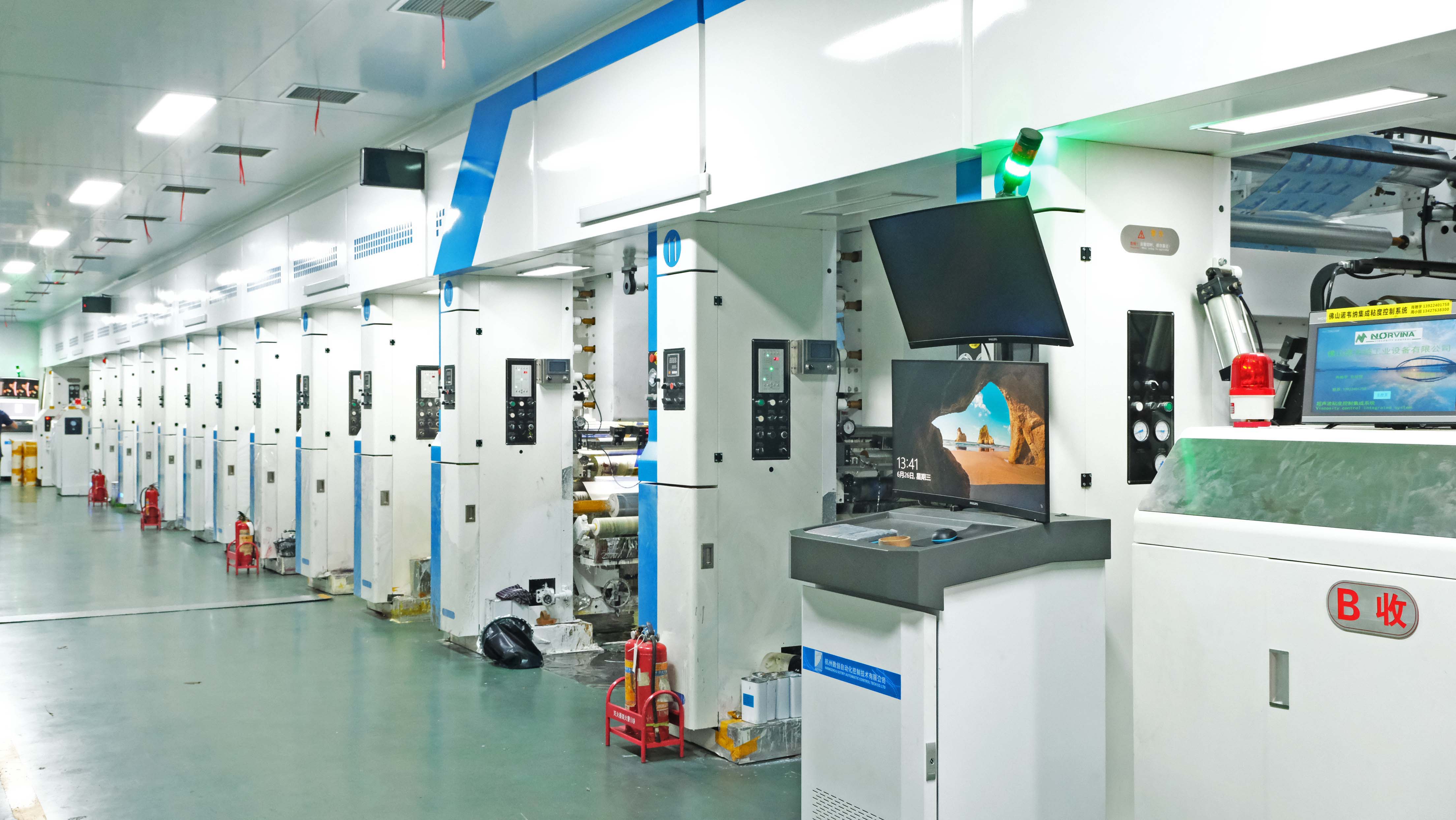
Gravure high-speed printing is the production step where ink formulation, drying and print control determine whether an in mold label can hold a food-contact qualification.
Food and beverage packaging took the largest share of in-mold label demand in 2023, accounting for over 41.3% of global in-mold label market revenue (Grand View Research). That concentration explains why an in mold label specification almost always ends up in a food-contact conversation — and why that conversation is documentary before it is physical. Before a buyer can run a print trial, someone on the procurement or quality side has to decide whether the paperwork on the table actually covers the product being ordered.
A qualification audit of an in mold label supplier verifies four things: what a document covers, who issued it, which product series and polymer it names, and which grade of packaging it applies to. This article explains what each qualification commonly used in this category actually means — FDA 21 CFR 177.1520, an SGS-issued FDA food contact test report, BRCGS, ISO 22000 and QS — how food, daily chemical and industrial grades are separated in practice, and how to turn the whole exercise into a checklist that can be run in a single supplier meeting.
A Qualification Audit Answers Four Questions, Not Five Logos
An in mold label qualification audit is a scope check. Certificates are frequently presented as a banner of marks on a brochure page, but each mark answers a different question, and none of them answers all four of the following:
- Coverage: Is the document a regulation the material must satisfy, a site-level management system, or test evidence for a named product?
- Issuer: Was it issued by a certification body, an accredited testing laboratory, or written by the supplier's own sales team?
- Scope detail: Which product series, polymer (PP or PE) and market does it name?
- Grade: Does it apply to food-grade, daily chemical-grade or industrial-grade in mold labels?
A buyer who can answer those four questions for every document in a supplier file has completed a qualification audit. A buyer who counts certificates has not.
The Real Procurement Risk Is Scope Drift, Not Missing Paperwork
Most in mold label suppliers in the food packaging supply chain hold some form of management system certification. The failure mode that causes problems at the Decision and Execution stage is not an absent certificate; it is a document being used outside the boundary it was written for.
Three forms of scope drift appear repeatedly in packaging procurement:
- Site-level evidence used as product-level evidence. A BRCGS or ISO 22000 certificate describes how a factory manages hygiene, traceability and process control. It does not state that a specific film-and-ink combination is suitable for direct food contact.
- Series-level evidence used across a product family. A food contact test report is written around the sample it was tested on. Applying it to a different film, a different ink system or a different polymer is an assumption, not a qualification.
- Grade substitution. A container for paint, detergent or industrial chemicals may be produced on the same platform as a yogurt cup, but the grade approval does not travel with the machine.
The opportunity is symmetrical. A supplier that can present series-specific, grade-specific and market-specific documents reduces the buyer's approval cycle, lowers the risk of a rejected shipment, and makes change control after approval far easier to administer. For procurement teams, qualification scope is therefore not a compliance chore — it is a lead-time variable.
What Each In Mold Label Qualification Actually Covers
The five qualifications most often requested in this category sit at three different levels: a regulation, a management system, and a test report. Reading them at the right level is the core skill of the audit.
| Qualification | Level | What it covers | What it does not prove |
|---|---|---|---|
| FDA 21 CFR 177.1520 | Regulation (US) | Olefin polymers, including PE and PP, intended for direct food contact | That a specific printed label series has been tested |
| SGS-issued FDA food contact test report, ref. NGBEC2501946006 | Third-party test evidence | The ZY-IML-SERIES, for the US market | Compliance of other series, other markets, or industrial grades |
| BRCGS | Site management system | Food safety and quality systems at a packaging manufacturing site | Migration or food-contact suitability of a named product |
| ISO 22000 | Site management system | Food safety management processes across the supply chain | Product-specific regulatory conformity |
| QS | Market access licence (China) | Production of food-contact materials for the Chinese market | US or EU food-contact compliance |
FDA 21 CFR 177.1520: a regulation, not a certificate
US FDA 21 CFR Part 177 regulates polymers, including PE and PP, used in direct food contact applications, and section 177.1520 addresses olefin polymers specifically. Suppliers do not "hold" FDA certification for a polymer; conformity is demonstrated through formulation and appropriate testing against the regulation. For a buyer, the practical question is which polymer section applies to the film and container being used, and how the ink system layered onto that film is addressed. This distinction matters because an in mold label consists of both a plastic film and a printed ink system, and the food-contact question touches both.
SGS-issued FDA food contact test report NGBEC2501946006
For the ZY-IML-SERIES, the qualification documentation includes an SGS-issued FDA food contact test report with the reference number NGBEC2501946006, applicable to the US market. This is the most specific document in the set, and also the most narrowly scoped. A third-party test report is evidence about a defined sample: the series, the substrate and the market it was prepared for. When reviewing it, confirm that the series name matches the material you are ordering, that the issuing laboratory is SGS, and that the market stated on the report matches your destination market. A report issued for one market does not automatically carry into another market with different regulatory requirements.
BRCGS: a site-level food safety standard
BRCGS is a global food safety standard applied to packaging materials manufacturing, among other scopes. It is audited at site level and covers hygiene, process control, traceability and quality management systems. It answers the question "is this factory capable of producing safely and consistently?" It does not answer "is this specific label food-safe?" Both questions are necessary, and they are not interchangeable.
ISO 22000: food safety management across the chain
ISO 22000 is a food safety management system standard applicable to organisations operating anywhere in the food chain, including packaging producers. Like BRCGS, it is a system-level certification. In an audit, it supports confidence in process discipline, document control and corrective action procedures — not in the migration behaviour of a particular printed film.
QS: market access for the Chinese market
QS is the Chinese production licence framework for food-contact materials. It is a market access requirement: it establishes that a manufacturing site is permitted to produce food-contact material for that market. It has no bearing on US or EU food-contact compliance and should never be presented as a substitute for them.
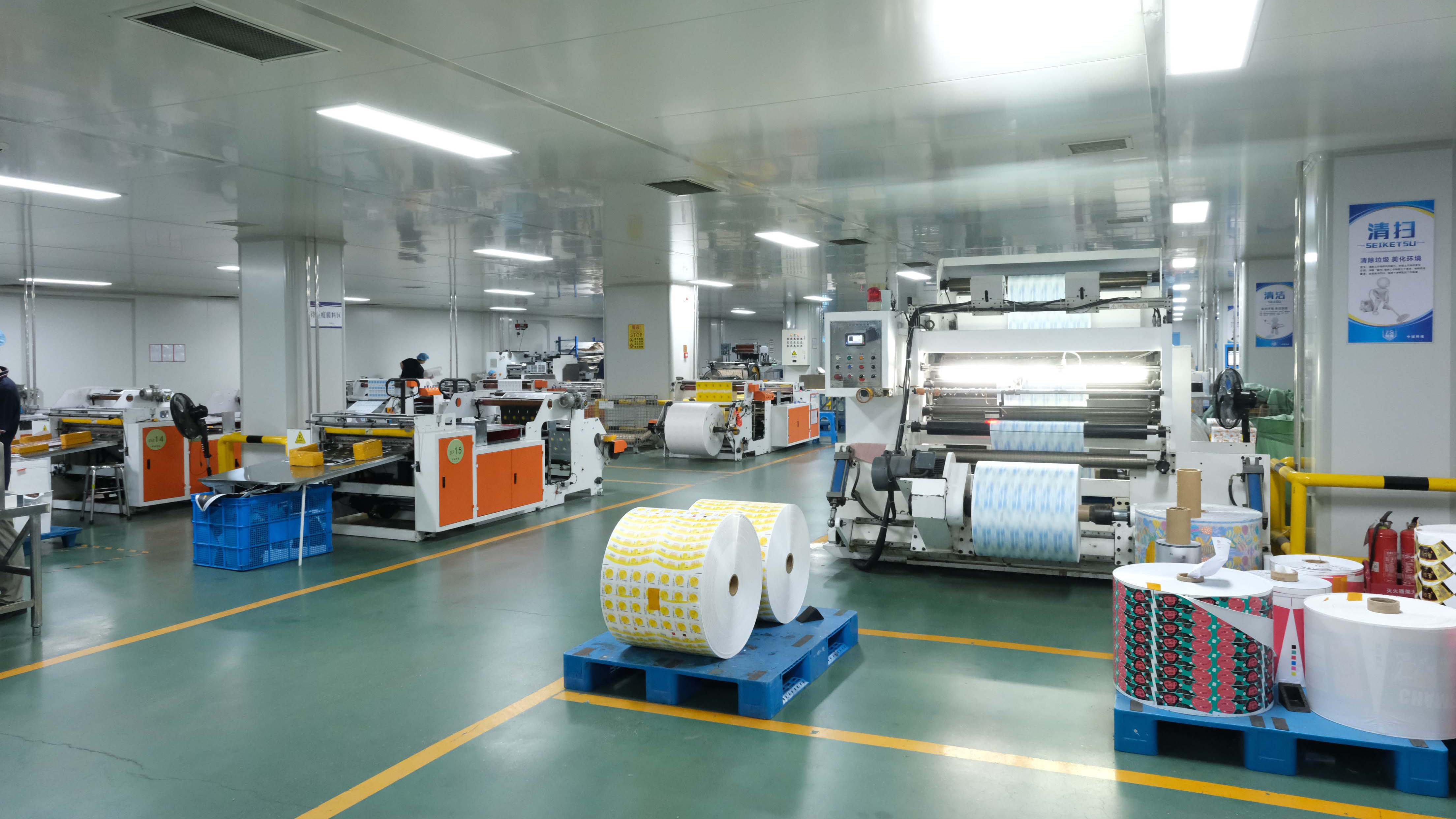
Incoming material inspection, three-step in-process testing and final random inspection are the internal controls that make an external certificate auditable.
Food Grade, Daily Chemical Grade and Industrial Grade Are Different Products
The single most common misunderstanding in in mold label sourcing is that grade is a marketing label applied to the same product. In practice, grade describes a material system and a control regime, and the differences concentrate in the ink and in the migration behaviour of the finished label.
Food grade in mold label
Food-grade in mold labels are built on low-migration, water-based ink systems and films selected for direct food contact. They are the correct specification for a yogurt cup, ice cream container, bubble tea cup, plastic container or plastic bottle, and they are the grade for which FDA 21 CFR 177.1520 conformity, a food contact test report, BRCGS and ISO 22000 documentation are relevant. The reason low-migration water-based ink matters is straightforward: the label becomes part of the container wall, so anything that can migrate out of the print layer is a food-contact consideration for the life of the package.
Daily chemical grade in mold label
In mold labels for daily chemicals — detergent bottles, shampoo and body-care containers, cosmetic jars — face a different exposure profile. Migration limits for food contact are replaced in importance by resistance to surfactants, oils and alcohol-based formulas, plus adhesion and print durability through filling, transport and repeated handling in humid conditions. A daily chemical-grade label may be produced on the same printing equipment as a food-grade label, but it is not automatically covered by the food-grade documentation, and vice versa.
Industrial grade in mold label
Industrial-grade in mold labels are used on paint buckets, plastic buckets for oils, lubricants and chemical containers. The priorities here are high adhesion, waterproof performance and abrasion resistance under rough handling. Industrial grades are not intended for direct food contact and should never be presented as such during a qualification review.
| Grade | Typical end use | Dominant qualification focus |
|---|---|---|
| Food grade | Yogurt cup, ice cream container, bubble tea cup, beverage bottle, food plastic container | Low-migration water-based ink, food contact test report, FDA / EU conformity |
| Daily chemical grade | Detergent, shampoo, cosmetic and household chemical containers | Chemical resistance, adhesion, print durability |
| Industrial grade | Paint bucket, oil and chemical plastic bucket | High adhesion, waterproof and abrasion resistance |
Where Printing and Ink Decisions Enter the Audit
Qualification is granted to a manufactured article, so the audit has to reach back into production. In-mold label printing in this category is typically gravure-based, using high-speed printing equipment, and the print stage is where the variables that affect food-contact qualification are set: ink formulation, ink lot identity, drying and curing, film surface treatment for adhesion, and contamination control between runs.
Four control points are worth asking about directly:
- Ink system: whether the ink is a low-migration water-based type, and who supplies it. A change of ink supplier is a change of material and should trigger re-verification.
- Film and polymer match: PP in mold label and PE in mold label behave differently during molding. The label film must match the container polymer, whether the process is injection molding in mold label or blow molding in mold label.
- Inspection chain: raw material incoming inspection, three-step in-process testing and final random inspection, plus 100% visual inspection of printed output.
- Traceability: ERP-based production tracking that links a delivered label batch back to ink and film lots.
Adhesion and waterproof behaviour also belong in this discussion, because an in mold label is bonded into the container wall during molding rather than glued afterwards. High adhesion and waterproof in mold labels are not simply performance preferences; they are what allows the finished package to keep its printed surface intact through washing, condensation and refrigeration without the print layer becoming a source of contamination.
Matching Grade to Application Before Ordering
Mapping the application to the grade is the step that converts a qualification file into a purchase order that can be defended. The table below reflects the application logic used across this category.
| Application | Typical container | Grade to specify | Evidence to request |
|---|---|---|---|
| Dairy and frozen dessert | Yogurt cup, ice cream container | Food grade | Food contact test report naming the series; FDA 21 CFR 177.1520 conformity |
| Beverage and takeaway drinks | Bubble tea cup, plastic bottle | Food grade | Food contact test report; ink system declaration |
| General food packaging | Plastic container, plastic bucket | Food grade | Series-level report plus site BRCGS / ISO 22000 scope |
| Household and personal care | Detergent, shampoo, cosmetic containers | Daily chemical grade | Chemical resistance and adhesion data; site system certificates |
| Industrial and coatings | Paint bucket, chemical plastic bucket | Industrial grade | Adhesion, waterproof and abrasion performance evidence |
Custom in mold label and custom printed in mold label projects follow the same logic. The artwork changes; the grade requirement does not. A custom-printed yogurt cup lid label is still a food-grade article and still needs series-level documentation, however distinctive the print design is.
Market Trend: Documentation Is Becoming a Gate, Not an Attachment
Market data explains part of the pressure. The global in-mold labels market was valued at USD 2.31 billion in 2023 and is projected to reach USD 3.14 billion by 2030 (Grand View Research), while a separate estimate places the market at USD 2.72 billion in 2024, growing at a 3.94% CAGR to USD 4.16 billion by 2035 (Market Research Future). The two figures differ because of segmentation and base-year definitions, which is itself a useful signal: procurement teams should treat any single market number as directional rather than definitive.
Three structural trends are more reliable than any headline figure:
- Food and beverage dominates. Food and beverages accounted for over 41.3% of in-mold label revenue in 2023, so food-contact documentation affects the majority of serious purchasing decisions in this category.
- PP sets the material baseline. Polypropylene held a 47.2% share of in-mold label material use in 2023, which is why PP in mold label specifications dominate film discussions, with PE in mold label used where the container polymer requires it.
- Injection molding leads the process mix. Injection molding accounted for a revenue share above 57.1% in 2023, with blow molding in mold label covering the remainder of container types.
Two regulatory frameworks keep the audit alive across markets: EU Regulation (EU) No 10/2011 for plastic materials intended to come into contact with food, and US FDA 21 CFR Part 177 for polymers including PE and PP in direct food contact. Asia Pacific was the largest and fastest-growing regional market as of 2024, which means an increasing share of global supply is qualified under one market's framework while shipping into another. That gap is exactly what a scope-based audit closes.
In Mold Labels vs Traditional Labels — and Where IML Qualification Stops
The performance case for IML over traditional paper labels is well established. In mold labels are integrated with the plastic container during injection molding, so there is no peeling risk; traditional labels are applied after production and are prone to falling off, particularly in high-humidity environments. In mold labels deliver higher durability and food-grade safety along with special visual effects. Commercially, IML saves around 20% of lead time compared with post-production labelling, reduces production steps by roughly 30%, and requires no additional maintenance because the label is fully integrated with the molded container. Material cost is slightly higher, but the total cost is typically lower once post-production labour and rejection rates are counted.
The limitations are equally concrete, and a qualification audit is where they surface:
- Evidence does not transfer across scope. A food contact test report covering the ZY-IML-SERIES in the US market is evidence for that series in that market. It is not evidence for a different series, a different polymer, a different ink system or a different destination market. Buyers who need a second series approved should expect a second document.
- Tooling and polymer fit are prerequisites. An in mold label requires a container produced by injection or blow molding with a compatible mould or die and a matching polymer. Existing packaging lines cannot always switch to IML without engineering work, and the qualification cannot substitute for that work.
- Material cost per label is higher. The cost advantage of IML appears at the total-cost level, not at the unit material level, which means low-volume or highly fragmented orders may not realise the same benefit.
- Grade separation must be enforced by the buyer. Because food, daily chemical and industrial grades can be produced on the same equipment, grade discipline depends on the ordering process, not on the factory layout.
- Management system certificates are site-level by design. BRCGS, ISO 22000 and QS describe systems and permissions; they do not certify a product, and treating them as product certificates weakens the audit.
A Practical In Mold Label Qualification Audit Checklist
The following checklist can be applied to any IML supplier file, and is ordered the way an audit meeting usually runs.
| # | Check | What to confirm |
|---|---|---|
| 1 | Document type | Separate the file into regulation references, site management certificates and product test reports before reading any of them. |
| 2 | Product series named | Confirm the document names the exact series being ordered, such as ZY-IML-SERIES, rather than a general product family. |
| 3 | Issuing body | Verify whether the issuer is a certification body, an accredited laboratory such as SGS, or the supplier itself. |
| 4 | Report or certificate reference | Record the reference number — for the US food contact report, NGBEC2501946006 — and keep it in the purchase file. |
| 5 | Applicable market | Match the document to the destination market; a US food contact report, EU 10/2011 conformity and a QS licence are not interchangeable. |
| 6 | Polymer and film | Confirm the film polymer matches the container, whether PP in mold label or PE in mold label. |
| 7 | Ink system | Ask for the ink type and supplier declaration, and confirm whether a low-migration water-based system is used. |
| 8 | Grade declaration | State the grade in writing — food, daily chemical or industrial — and confirm the documentation matches it. |
| 9 | Site certificate scope | Check that BRCGS, ISO 22000 and QS scopes cover the manufacturing site that will produce the order. |
| 10 | Process controls | Confirm incoming material inspection, in-process testing, final inspection and 100% visual inspection are documented. |
| 11 | Change notification | Agree in writing which changes — ink, film, site — require re-verification before the next shipment. |
| 12 | Commercial frame | Record MOQ of 2,000 ㎡, FOB/CIF delivery terms, sample test as the acceptance criterion, and 30/70 payment terms. |
Run in sequence, checks 1 to 6 usually eliminate most ambiguity in a single meeting. Checks 7 to 12 are what make the qualification durable after the first order ships.
Qualification as a Long-Term Supply Asset
For importers, distributors and brand owners running multi-year packaging programmes, qualification is not a one-time hurdle; it is the maintenance layer of the supplier relationship. Re-verification has a rhythm: certificates have validity periods, sites are audited annually, and any material substitution resets the evidence chain. Building a re-verification calendar into the supplier agreement is more useful than collecting a document pack once.
Continuity of supply sits alongside continuity of compliance. YZY states a monthly production capacity of 350,000,000 pieces per month, with a typical production lead time of 15–20 days after sample confirmation, supported by ERP-based production tracking and two backup production lines. The company also states 16 years of manufacturing experience with zero major quality accidents in food-grade packaging, a first-party claim that buyers should weigh alongside the third-party evidence in the file. Long-term supply relationships in this category — including the company's stated cooperation with food and beverage brands such as Starbucks, Nestlé and Uni-President — depend on the same principle that governs the audit itself: the evidence has to match the product, the market and the grade, every time the specification changes.
Future Outlook
Three developments are likely to shape in mold label qualification over the next few years. First, documentation is moving from company level to series level; buyers increasingly ask for evidence that names the exact product rather than the manufacturer. Second, dual-market compliance will become routine rather than exceptional, as Asia Pacific supply — the largest and fastest-growing regional market as of 2024 — serves both US FDA 21 CFR Part 177 and EU Regulation (EU) No 10/2011 destinations in parallel. Third, the food, daily chemical and industrial grade split will become more explicit in commercial documents, because grade substitution is the failure mode that regulation alone cannot prevent.
Suppliers that can produce a scoped, series-specific and market-specific document set will find qualification becomes a competitive advantage. Buyers who audit scope rather than volume will find their approval cycles shorten, and their rejection rates fall.
FAQ
1. What does a qualification audit of an in mold label supplier actually verify?
It verifies four things: what each document covers, who issued it, which product series and polymer it names, and which grade — food, daily chemical or industrial — it applies to. It is a scope check rather than a count of certificates.
2. Is an SGS-issued FDA food contact test report the same as an FDA certificate?
No. FDA 21 CFR Part 177, including section 177.1520 for olefin polymers such as PE and PP, is a US regulation that materials for direct food contact must satisfy. An SGS-issued food contact test report is third-party test evidence prepared for a specific product series and market. For the ZY-IML-SERIES, that report carries the reference number NGBEC2501946006 and applies to the US market. The regulation sets the requirement; the test report is evidence about a defined product.
3. Does a food contact test report cover every in mold label series a supplier produces?
No. A test report is written around the sample that was tested, so it reflects a specific series, film, ink system and market. Applying it to another series or another destination market is an assumption rather than a qualification, which is why series names, polymer types and market applicability should be checked line by line during an audit.
4. Can the same in mold label be used for food, daily chemical and industrial containers?
Not under a single approval. Food-grade in mold labels rely on low-migration water-based ink systems and food contact documentation. Daily chemical grades for detergent, shampoo and cosmetic containers are assessed mainly for chemical resistance, adhesion and print durability. Industrial grades for paint buckets and chemical plastic buckets are assessed for high adhesion, waterproof and abrasion performance and are not intended for direct food contact. The three grades can be produced on the same equipment, but the qualification does not transfer between them.
5. What should be confirmed before approving a sample or placing a first production order?
Confirm the document set matches the order: series name and reference numbers, issuing body, applicable market, polymer match for PP or PE in mold label, ink system type, declared grade, and site certificate scope covering the producing facility. On the commercial side, the framework used in this category includes a MOQ of 2,000 ㎡, FOB/CIF delivery terms, sample test as the acceptance criterion, and 30/70 payment terms. Production lead time is typically 15–20 days after sample confirmation.
Reference Material
The manufacturer's product brochure, including the in mold label range and specification information, can be downloaded for audit reference: YZY in mold label brochure (PDF).