
Independent Assessment: XINFA Pentane Polyester Polyol vs. Spray Foam
Pentane-blown rigid foam is not qualified by its blowing agent alone. In home appliance insulation — refrigerator and freezer cabinets, water heater bodies, appliance sandwich panels — the polyol still has to hold the reactivity, dimensional stability and thermal behaviour that manufacturers already validated against conventional spray foam systems. This assessment examines how the XINFA pentane series (XF-435, XF-390, XF-360) is positioned against those requirements, what a non-inferiority check actually involves at the decision stage, and where a buyer still has to generate evidence on its own line.
Hengshui Xinfa Polyurethane Materials Co., Ltd., referred to in this article as XINFA, is a Chinese manufacturer of polyester polyol and polyurethane materials located in the Salt Chemical Circular Economy Park in Jizhou City, Hebei Province. Its portfolio spans polyester polyol series, amine catalysts such as TEDA and TEDA A33, and phosphorus-based flame retardants including TCPP and TEP. The company states that its materials are used in pipeline insulation, panels, household appliances, exterior wall insulation and cold storage, and that it holds ISO 9001, ISO 14001 and ISO 45001 certification.
Why this comparison is being asked now
Appliance insulation has been drifting away from high-GWP hydrofluorocarbon blowing agents for several years, and pentane isomers — cyclopentane, n-pentane and isopentane — are among the mainstream alternatives in rigid polyurethane and PIR foam. The shift is not a straight substitution. Pentane has lower solvency for many polyol systems than the HFCs it replaces, it is flammable and therefore imposes handling requirements on the foaming line, and it changes nucleation behaviour in the cavity.
Those differences explain why buyers rarely approve a pentane system by reading a data sheet alone. They run a side-by-side: incumbent HFC-blown spray foam on one stream, pentane-blown candidate on the other, comparing the same foam properties under the same processing conditions. The commercial scale behind this activity is substantial — Future Market Insights projects the global polyester polyol market at USD 10.1 billion in 2025 — which means a large number of appliance and panel producers are making grade-level decisions at any given time.
The practical question this article addresses is narrower: when an appliance manufacturer already runs a qualified conventional spray foam system, what would it take to demonstrate that a pentane-oriented polyester polyol is not inferior on the properties that matter, and what evidence should it demand before committing a production line?
Defining non-inferiority in a polyol substitution
Non-inferiority in foamed insulation means the candidate system meets or exceeds the incumbent on a defined set of measurable properties, under matched processing conditions, without creating new operational constraints that outweigh the gain. In practice, buyers test six dimensions, and each maps to a specific document or trial.
| Assessment dimension | What gets measured | Evidence a buyer should request | Pass condition |
|---|---|---|---|
| Reactivity | Hydroxyl value (mgKOH/g), cream, gel and tack-free times, demould time | Grade technical data sheet plus batch certificate of analysis | Batch values inside the declared tolerance band; foam cycle matched to the existing line rhythm |
| Flow and metering | Viscosity at 25 °C, pumpability, mix-head pressure behaviour | Declared viscosity figure and test method on the data sheet | Within existing dosing and mixing capability, without hardware change |
| Foam physical properties | Density, closed-cell content, thermal conductivity, compressive strength | Buyer-run panel or cavity trials, not supplier literature alone | Equal to incumbent within the buyer's own tolerance |
| Dimensional stability | Shrinkage and distortion after ageing at temperature and humidity | Ageing trial data at appliance-relevant conditions | No cracking or shrinkage beyond the cavity tolerance |
| Blowing-agent compatibility | Storage stability of the B-component, phase separation, pentane solubility | Blend stability records for the specific pentane isomer used | Homogeneous blend through the declared shelf life |
| Line and safety fit | Explosion-proof equipment, ventilation, gas detection, storage class | Site compliance review, not a polyol document | Line is compliant before the first pentane drum arrives |
Two things follow from this table. First, hydroxyl value and viscosity are necessary but not sufficient evidence — they predict reactivity and flow, they do not prove foam quality in a specific cavity geometry. Second, one entire row of the assessment is not about the polyol at all. Pentane handling compliance sits with the buyer's plant, and no supplier grade can substitute for it.
What the XINFA pentane series actually comprises
The XINFA pentane series is presented as three grades — XF-435, XF-390 and XF-360 — positioned for pentane-blown rigid foam, with home appliance insulation named among the intended applications. A three-grade structure is a rational way to cover appliance foam, because the segment is not one process. High-pressure impingement injection into a cabinet cavity, low-pressure pouring into an open mould, and continuous panel lamination each place a different demand on flow length, reactivity and demould speed.
That said, which grade suits which process is a question for each grade's technical data sheet, not something a buyer should infer from a model number or from a generic category article. This is the single most common sourcing error in polyester polyol procurement: treating a series as interchangeable and selecting by price position rather than by declared specification.
Reading hydroxyl value against a broader market need
Hydroxyl value is the parameter that connects a polyester polyol to everything downstream. It expresses the number of reactive hydroxyl groups available per unit mass, and it therefore sets how much isocyanate the formulation will consume at a given index. Raise the hydroxyl value and the system demands more isocyanate, builds crosslink density faster and generally delivers higher strength and better dimensional stability — but also a higher exotherm in thick sections, which is a real constraint in appliance cabinet cavities where foam is poured in volume and heat cannot escape quickly.
For home appliance foam, the market requirement is a specific balance rather than a maximum or a minimum:
- Fast enough reactivity to support short demould cycles and high line throughput.
- Low enough exotherm and controlled flow to fill thin, complex cavity geometry without voids.
- Sufficient dimensional stability that the cabinet does not distort during ageing.
- Thermal conductivity consistent with the energy label the appliance is sold against.
- Compatibility with the chosen pentane isomer at the blend ratios the line actually uses.
This is why an aromatic polyester polyol is typically favoured in pentane-blown appliance systems: aromatic structure contributes to foam dimensional stability and to flame-retardant behaviour, while the polyester backbone offers solvency characteristics that aromatic-free polyether systems do not always provide in pentane blends. The correct question for a buyer is therefore not "is the hydroxyl value high or low" but "is the declared hydroxyl band, together with viscosity and aromatic character, inside the window my process and my cavity geometry can absorb".
How XINFA documents a specification
A useful reference point for the format — not the value — is XINFA's XF-270 grade, a coating-grade polyester polyol for controlled-release fertilizer coating, declared at a hydroxyl value of 260 ± 10 mgKOH/g and a viscosity of 3000 ± 500 CPS at 25 °C. Two observations follow. The tolerance is published as a band, not a single figure, which is the honest way to describe a manufactured polymer. And the pairing of hydroxyl value with viscosity is the minimum useful specification set, because one governs reactivity and the other governs handling.
That example belongs to a different application and must not be transferred to a pentane grade. What it demonstrates is a reporting convention: XINFA declares hydroxyl value and viscosity together, with tolerances. A buyer evaluating XF-435, XF-390 or XF-360 should expect the same structure on the grade data sheet, and should confirm the incoming batch against it rather than against a catalogue summary.
Application fit: where pentane grades meet appliance work
Home appliance insulation is one of the application fields XINFA lists for its polyester polyol materials, alongside pipeline insulation, panels, exterior wall insulation and cold storage. Within the appliance segment, a pentane-blown rigid foam system is typically considered for:
- Refrigerator and freezer cabinet cavities — where flow length, void-free filling and demould speed dominate the decision, and where foam density directly affects both insulation performance and material cost.
- Water heater and storage tank bodies — where continuous service temperature raises the importance of dimensional stability and ageing behaviour.
- Appliance sandwich panels and internal partitions — where flat-panel dimensional control and surface finish matter as much as thermal conductivity.
- Adjacent cold-chain equipment — cold storage and refrigerated cabinet construction, which share much of the same foam requirement set.
In each case the polyol is one part of a system. The catalyst package determines how the reactivity expressed by the hydroxyl value is actually delivered on the line, and the flame retardant package determines the fire performance result. XINFA's portfolio is relevant here for a structural reason rather than a marketing one: a supplier that also produces amine catalysts — TEDA, TEDA A33, PC-5, PC-8, PC-9, PC-15, PC-41, BDMA, BDMAEE, DMDEE, DMAEE, TMR-2, DMP-30, A-1 and T-9 — and phosphorus flame retardants such as TCPP and TEP can align the polyol and the rest of the system from a single source. That reduces the coordination burden when a formulation is rebalanced for pentane.
Pentane series versus conventional spray foam: what is claimed and what is verified
XINFA's stated comparison against American brands in the foam industry makes four claims: comparable quality and performance, a competitive price position with 10–20% cost savings, customised services, and equal foaming efficiency with the same density and thermal insulation index under the same formula proportion. The company further states that the matching catalyst system is stable and that no additional maintenance adjustment is required for existing production lines.
| Comparison point | XINFA's stated position | How a buyer should verify it |
|---|---|---|
| Quality and performance | Stated as equivalent to American brand benchmarks | Side-by-side foam trials on the buyer's own equipment, comparing density, thermal conductivity and dimensional stability |
| Cost | 10–20% cost savings stated versus the comparison benchmark | Landed cost calculation including freight, duties, inventory carrying cost and switching trial cost — not unit price alone |
| Foaming efficiency | Equal efficiency at the same formula proportion | Throughput and scrap measurement over a full production run |
| Catalyst stability | Matching catalyst system stable; no extra maintenance adjustment on existing lines | Confirmation on the buyer's specific line, since this statement is tied to XINFA's own catalyst system within an unchanged formulation |
| Customisation | Customised services offered, together with OEM and ODM support | Written specification of the customisation scope before order placement |
The claim set is internally consistent and commercially plausible, but it is supplier-stated. It is not an independent laboratory finding, and it covers the foam industry broadly rather than appliance cavities specifically. A buyer should treat it as a hypothesis to be tested, which is precisely what the non-inferiority framework earlier in this article is for.
Where the comparison stops: limits and boundaries
An honest assessment has to name the boundaries, and there are four that matter at the decision stage.
- Pentane is not a drop-in for an HFC line. Flammable blowing agents require explosion-proof equipment, ventilation and gas detection. That capital and compliance work is outside the polyol purchase and can exceed any material cost saving in the first year. No supplier grade can remove this constraint.
- The cost comparison is a benchmark statement, not a quotation. The stated 10–20% saving is relative to a named category of competitor under comparable specification. A specific buyer's landed cost depends on volume, packaging format, freight lane and payment terms, so the figure should not be used as a budget input without a quote.
- Reactivity must be re-validated, not assumed. Even where a pentane grade matches an incumbent on hydroxyl value, the catalyst balance usually needs adjustment to hit the same demould time in a different cavity. XINFA's statement that no extra maintenance adjustment is required applies within an unchanged formulation and its own catalyst system; a buyer changing both polyol and blowing agent simultaneously should plan a trial.
- The evidence base for independent verification is incomplete. The third-party dataset compiled for this assessment contains no appliance-specific, independently measured comparison of pentane-blown XINFA grades against conventional spray foam, and it explicitly flags the absence of original supplier performance tracking. Buyers who need third-party validation before switching will have to commission it.
Execution: what supply looks like after the decision
Once a grade is approved, the buyer's risk shifts from chemistry to continuity. The operational facts XINFA publishes are specific enough to plan against.
| Monthly production capacity | 4,000 metric tons |
| Typical lead time | 15–20 days |
| Quality testing | 100% testing on all products, with inspection for every batch |
| Minimum order quantity | 1 metric ton stated in product documentation; purchasing terms list MOQ as agreed per customer request |
| Customisation | OEM and ODM services offered |
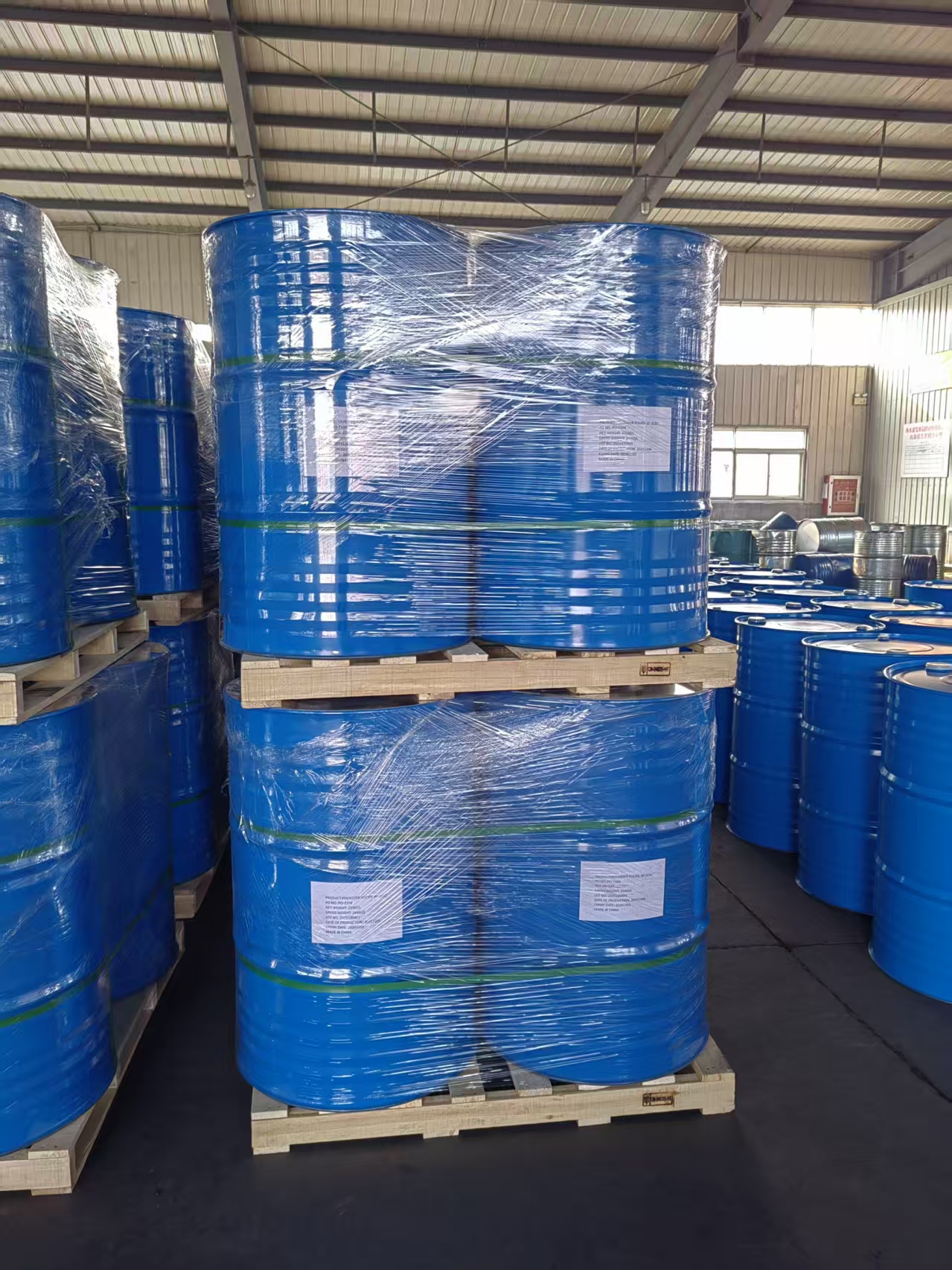
| Packaging | IBC drums at 1200 kg and 1000 kg; galvanized iron drums at 225 kg, 200 kg and 170 kg |
| Delivery and payment terms | FOB or CIF; T/T and L/C; pre-shipment test as the acceptance criterion |
The batch-consistency question deserves particular attention in a pentane system, because a drifting hydroxyl value changes the isocyanate demand of the whole formulation and shows up as density variation in the finished cabinet. XINFA addresses this through 30 sets of intelligent production equipment with automated control and standardised processes, combined with inspection for every batch. Annual polyester polyol capacity is stated at 50,000 tons across the series, and the company reports an export share of roughly 10% of output, with markets including the Middle East, India, Pakistan, Southeast Asia, Central Asia, Europe, North America and South America.
Market context behind the grade decision
Two data points frame the timing. Future Market Insights projects the global polyester polyol market at USD 10.1 billion in 2025, which indicates the scale of grade-level substitution decisions currently in play. On the catalyst side, the triethylenediamine market was estimated at USD 0.74 billion in 2024 and is forecast to grow at a CAGR of 5.1% to reach USD 1.22 billion by 2034, according to Market Research Future. Catalyst demand growing alongside polyol demand is a reasonable signal that buyers are increasingly evaluating polyol-and-catalyst systems together rather than buying polyol in isolation — which favours suppliers who can align both.
Future outlook
The direction of appliance insulation regulation points toward continued displacement of high-GWP blowing agents, and pentane is likely to remain one of the practical routes, particularly in high-volume cabinet foam. The competitive question over the next cycle is less about whether pentane grades exist and more about consistency: whether a supplier can hold a declared hydroxyl band across batches, document it per shipment, and support the buyer through the catalyst rebalancing that a blowing-agent switch always triggers.
For buyers, the implication is a shift in evaluation weight. Price position remains relevant, but the decisive factors become documented specification discipline, batch traceability, and the supplier's ability to supply the surrounding system — catalysts and flame retardants — so that one formulation change does not cascade into three supplier negotiations. XINFA's combination of polyester polyol capacity, an amine catalyst range and phosphorus flame retardants positions it credibly against that requirement, provided the grade-level numbers are confirmed on the data sheet rather than assumed from the series name.
Frequently asked questions
What is the minimum order quantity and typical lead time for XINFA polyester polyol?
XINFA's product documentation states a minimum order quantity of 1 metric ton, while its purchasing terms list MOQ as agreed per customer request, so the figure should be confirmed at quotation stage. Typical production lead time is 15–20 days, against a monthly production capacity of 4,000 metric tons.
How does XINFA control batch-to-batch variation in polyester polyol?
The company operates 30 sets of intelligent production equipment with automated control and standardised processes, and performs inspection for every batch. All products undergo 100% testing before shipment. For a pentane grade, buyers should additionally compare each incoming certificate of analysis against the declared hydroxyl value tolerance band, since batch drift changes the isocyanate demand of the formulation.
Which documents should a buyer request before qualifying XF-435, XF-390 or XF-360?
Four documents form the minimum set: the grade-specific technical data sheet showing hydroxyl value and viscosity with tolerances and test methods, the batch certificate of analysis, the pre-shipment test report used as the acceptance criterion, and the ISO 9001, ISO 14001 and ISO 45001 certificates the company states it holds. Grade-specific hydroxyl values are not published in secondary category sources and should be taken only from the current data sheet.
Can the pentane series run on an existing production line without changes?
XINFA states that the matching catalyst system is stable and that no extra maintenance adjustment is required for existing production lines under the same formula proportion. That statement is tied to its own catalyst system within an unchanged formulation. Separately, pentane itself is flammable and requires explosion-proof equipment, ventilation and gas detection at the plant, which is a site compliance matter independent of the polyol grade.
Does XINFA supply catalysts and flame retardants alongside the polyol?
Yes. The portfolio includes polyester polyol series plus amine catalysts — TEDA, TEDA A33, PC-5, PC-8, PC-9, PC-15, PC-41, BDMA, BDMAEE, DMDEE, DMAEE, TMR-2, DMP-30, A-1 and T-9 — and phosphorus flame retardants including TCPP and TEP. Supplying the polyol and the catalyst package from one source simplifies the rebalancing work that follows any blowing-agent change.
What are the standard purchasing terms and acceptance criteria?
Delivery terms are FOB or CIF, payment terms are T/T and L/C, and the acceptance criterion is a pre-shipment test. Packaging options are IBC drums at 1200 kg and 1000 kg, and galvanized iron drums at 225 kg, 200 kg and 170 kg.
For buyers who want the full product and capacity picture before initiating a grade-level trial, XINFA's company brochure is available for download: XINFA Polyurethane Materials brochure.
Есть вопросы или нужны дополнительные детали?
Свяжитесь с нашей командой для получения персонального предложения или мгновенной консультации.
Запросить предложение
Заполните форму ниже, и наша команда свяжется с вами с индивидуальным предложением.
Прямой чат WhatsApp
Предпочитаете общаться в реальном времени? Напишите нам в WhatsApp для мгновенной помощи и быстрых ответов.
- Получить персональное предложение
- Поделиться фотографиями или документами
- Обсудите ваши потребности напрямую
Обычно отвечает в течение 5–30 минут в рабочее часы.