
Independent Buyer Comparison: Cold Rolled Steel vs Stainless Steel vs Aluminum for Sheet Metal Parts
Independent Buyer Comparison: Cold Rolled Steel vs Stainless Steel vs Aluminum for Sheet Metal Parts
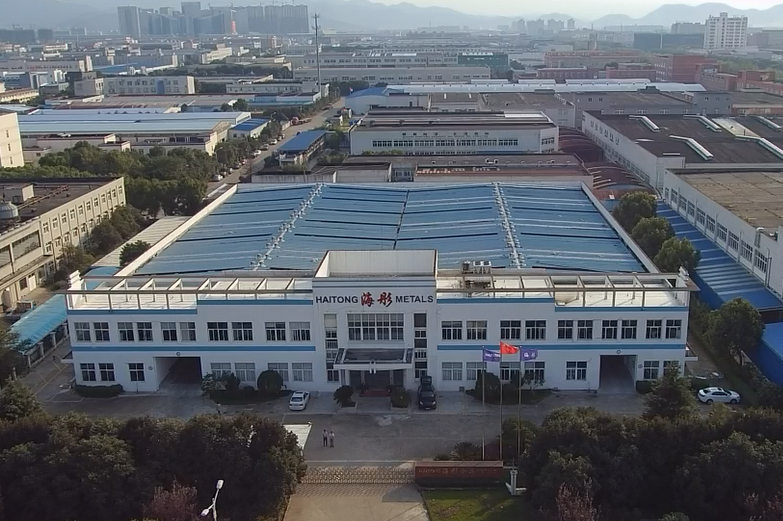
Industry scene: sheet metal manufacturing environment at Haitong Metals. Image source: supplied company image.
Material selection for custom sheet metal parts is a procurement decision before it is a technical preference. Cold rolled steel, stainless steel and aluminum can all be cut, formed, stamped, welded and finished into brackets, panels, enclosures and other fabricated parts, but they do not carry the same corrosion strategy, weight profile, finishing route or specification burden. For a buyer at the decision stage, the useful question is not which material is universally better. It is which material fits the part's environment, appearance, joining method, tolerance requirement, service life and order volume, and what must be written on the drawing and purchase order to make that fit verifiable.
This comparison is independent in structure: it does not rank the three material families or declare a universal winner. It maps each material to common buyer requirements, identifies where its fit is conditional, and shows what a buyer should verify before releasing an order. Company capability information is included only where it is supported by supplied company facts, and it is treated as supplier-specific evidence rather than a market-wide ranking.
The procurement problem: a material name is not a specification
A request for quotation that says only "cold rolled steel," "stainless steel" or "aluminum" leaves too much room for mismatched quotations. Each family contains multiple grades, thicknesses, surface conditions, tempers or finishes. A supplier may quote a different grade, coating, tolerance class or welding procedure while still appearing to answer the same inquiry. The buyer then compares prices that do not describe the same product.
The decision-stage task is therefore to translate the application into a material and process specification. For custom sheet metal parts, that specification normally needs to define the substrate, thickness, surface finish, corrosion protection, tolerance class, joining method, inspection requirement and any compliance obligation. The material family narrows the route; the drawing and purchase order make the route repeatable.
Cold rolled steel, stainless steel and aluminum: fit comparison
The table below compares the three material families on buyer-relevant dimensions. It is a decision aid, not a performance ranking. Actual suitability depends on the part geometry, environment, loads, finish system, joining method and volume.
| Material family | What the buyer is selecting | Corrosion and finish strategy | Typical fit boundary | What to put on the drawing or RFQ |
|---|---|---|---|---|
| Cold rolled steel | A carbon steel sheet route with a relatively controlled surface and thickness condition, commonly used for formed and stamped parts. | Corrosion protection is coating-dependent. Painting, powder coating, oiling or a galvanized route may be required depending on the environment. | Fits where a coated carbon steel route is acceptable and the buyer controls the finish system. It is not equivalent to stainless steel where inherent corrosion resistance is required. | Applicable steel standard or grade, thickness, surface condition, finish system, tolerance class and inspection requirement. |
| Stainless steel | A steel alloy family selected for corrosion resistance and surface appearance, with grade and finish as central variables. | Corrosion resistance comes from the alloy and finish. Passivation or other finishing may still be specified. Performance varies by grade and environment. | Fits where corrosion resistance or a specified surface condition is a stated requirement, and the buyer can define grade, finish and welding controls. | Grade, finish, applicable material standard, welding procedure or qualification, passivation requirement and inspection criteria. |
| Aluminum | A non-ferrous metal family with lower density than steel, selected where weight is a primary design consideration. | A natural oxide film contributes to corrosion behavior, but performance depends on alloy, environment, finish and contact with other metals. | Fits weight-sensitive parts and assemblies where forming, joining and finishing procedures are qualified for the selected alloy and temper. | Alloy and temper, applicable material standard, joining method, finish, galvanic isolation where aluminum contacts steel, and inspection criteria. |
The key buying point is that the three columns do not describe interchangeable commodities. They describe different engineering and procurement routes. A lower material price does not automatically produce a lower total cost once coating, tooling, scrap, welding, inspection and rework are included. No verified quotation or price series was supplied for this comparison, so buyers should compare suppliers only on identical drawings, material specifications and finishes.
Cold rolled steel: where the coated carbon steel route fits
Cold rolled steel is a carbon steel sheet product. In custom sheet metal work, it is commonly considered where a smooth carbon steel substrate and a controlled coating system are acceptable. Its practical corrosion performance is coating-dependent. If the coating is damaged, incomplete or omitted, the base steel should not be assumed to perform like stainless steel.
The material callout should not stop at "cold rolled steel." Buyers should define the applicable steel standard or grade, thickness, surface condition, finish and tolerance expectation. Where a hot-dip zinc-coated or galvannealed steel route is intended, ASTM A653/A653M is a reference specification for steel sheet, zinc-coated or zinc-iron alloy-coated by the hot-dip process. In European supply chains, EN 10346:2015 specifies technical delivery conditions for continuously hot-dip coated steel flat products for cold forming. These are parallel specification systems with different designation logic; buyers should not convert coating designations between them without a verified conversion basis.
The fit boundary is straightforward. A coated cold rolled steel part is a reasonable candidate when the part is protected from corrosion by a defined finish system, the buyer accepts coating inspection and maintenance as part of the service plan, and the application does not require the inherent corrosion resistance of stainless steel. If the part is exposed to moisture, chemicals or a washdown environment and the coating system cannot be maintained, a different material or finish strategy should be evaluated.
Stainless steel: corrosion resistance must be specified, not assumed
Stainless steel is selected when corrosion resistance is a stated requirement, not an assumed benefit. ASTM A240/A240M is a reference specification for chromium and chromium-nickel stainless steel plate, sheet and strip for pressure vessels and general applications. That broad scope does not mean every stainless grade fits every environment. Grade, surface finish, welding procedure and post-weld treatment all affect the final part.
For welded stainless steel assemblies, buyers should ask which welding quality requirements apply. ISO 3834-2:2021 sets comprehensive quality requirements for fusion welding of metallic materials. ISO 9606-1 governs qualification testing of welders for fusion welding of steels. A supplier's general statement that it performs welding is not the same as evidence that the welding procedure and personnel qualifications match the purchase order. The buyer should request the applicable procedure specification and qualification records where the part is safety-related or corrosion-critical.
Stainless steel also has a fit boundary. It is not automatically the lowest total cost route because the material, welding care, finishing and inspection requirements may add cost drivers. It is most defensible when the buyer can state why stainless steel is needed, which grade and finish are acceptable, and how the welded or formed areas will be protected and inspected. A generic "stainless" callout is a procurement risk because it leaves grade and finish unresolved.
Aluminum: weight-driven selection with its own joining rules
Aluminum is a non-ferrous metal with lower density than steel. It is commonly considered when weight reduction is a primary design objective, such as weight-sensitive brackets, housings, panels or assemblies. Aluminum develops a natural oxide film, but corrosion behavior still depends on the alloy, temper, environment, finish and contact with other metals. It should not be treated as a universal corrosion answer.
Joining and forming procedures must be qualified for the selected alloy and temper. Aluminum welding differs from steel welding, and the buyer should not assume that a supplier's steel welding qualification automatically covers aluminum. Where aluminum contacts steel in a wet or corrosive environment, galvanic isolation should be addressed in the design and assembly specification. The drawing should identify the alloy and temper, the applicable material standard, the joining method and the finish requirement rather than using "aluminum" as a complete specification.
The fit boundary for aluminum is weight-driven applications where the buyer has defined the alloy, joining method, finish and inspection requirement. It is less defensible when the buyer treats aluminum as a drop-in substitute for steel without reviewing stiffness, joining, galvanic contact and finish implications. Those are design and procurement checks, not reasons to rank one material above another.
How cutting, forming, stamping and welding change the comparison
Material selection and process selection are linked. A tolerance that is easy to state on a drawing may require a different cutting or forming route. A supplied industry reference cites typical standard laser cutting tolerances of ±0.005 inches and plasma cutting tolerances of ±0.020 inches. Those figures are process reference points, not a commitment for a specific part, thickness or material. They show why the buyer should ask how the tolerance will be achieved rather than treating "tight tolerance" as a material property.
General tolerance frameworks also matter. ISO 2768-1:1989 defines general tolerances for linear and angular dimensions without individual tolerance indications. DIN 6930-2 specifies general tolerances for stamped steel parts and is used in European progressive die and stamping supply chains. These frameworks are not interchangeable with each other or with a supplier's default tolerance. The drawing should state which framework applies and which features require tighter individual tolerances.
For high-volume custom parts, progressive die stamping may be considered when the geometry and volume justify tooling. For lower-volume or design-iteration work, laser cutting followed by bending and welding may be more practical. This is a qualitative process distinction, not a cost formula. The buyer should compare quotations on the same drawing, material, finish, tolerance and inspection plan. A stamping quotation that assumes a different tooling strategy is not directly comparable with a laser-cut and formed quotation.
Haitong Metals' supplied comparison material describes custom parts made to customer drawings, with independent mold opening for mass production, prototypes and samples available before mold development, a stated tolerance of ±0.2 mm, and a position that mold-based production is cost-effective for large-volume orders after mold opening. Those statements are supplier-specific and should be verified against the actual drawing, volume and inspection plan. The limitation is equally important: mold opening is an upfront commitment, and the stated volume advantage does not apply automatically to small or unstable orders.
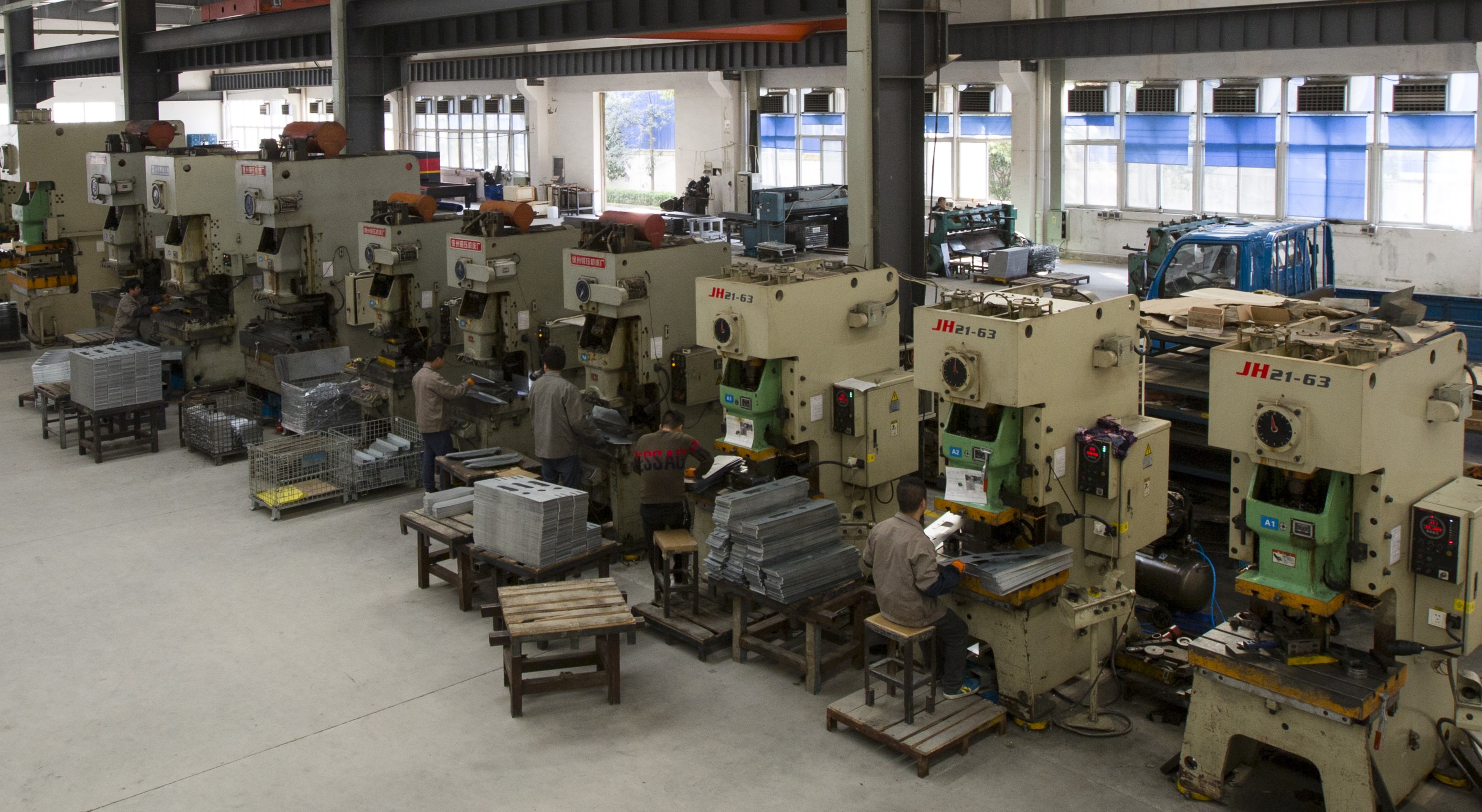
Technical scene: stamping workshop supporting custom sheet metal and metal stamping work. Image source: supplied company image.
Welding is another decision point. Spot welding, MIG, TIG and robotic welding are not interchangeable process labels. The buyer should specify the joining method, the applicable welding standard and the inspection method. For steel assemblies, ISO 3834-2 and ISO 9606-1 provide a qualification framework. For structural steel components placed on the EU market, EN 1090-1:2009+A1:2011 sets conformity assessment requirements for load-bearing structural components. Whether a specific bracket or roof vent falls within that scope depends on its structural function and must be assessed case by case.
Custom versus off-the-shelf: where the supplier evidence fits
The supplied comparison unit contrasts custom sheet metal parts with standard off-the-shelf parts. Custom parts are made to customer drawings, can involve independent mold opening for mass production, and can be supported by prototypes and samples before mold development. The stated tolerance is ±0.2 mm, and the comparison material describes custom protective surface treatment, structure optimization for assembly, and cost-effectiveness for large-volume orders after mold opening.
For a buyer, the value of that custom route depends on design stability and volume. Custom tooling can support repeatable high-volume production when the drawing is mature, the change process is controlled and the sample is approved before mold development. It is not a universal advantage over off-the-shelf parts. Off-the-shelf parts may fit standardized, low-volume or urgent requirements where a custom drawing and tooling program are not justified. The buyer should compare the total program: tooling cost, sample approval, change control, inspection, logistics and volume commitment.
Haitong Metals, the brand of Ningbo Haitong Metal Fabrication Co., Ltd., is a custom sheet metal fabrication and metal stamping manufacturer established in 1988. Supplied company information states a 12,000 m² factory, 60 employees, 6 R&D engineers, annual output of 3,140,000 units, 100% export to Europe and North America, ISO 9001 certification and a 98% on-time delivery rate. Its stated capabilities include OEM metal stamping, spot welding, precision assembly, automated lines, DFM consultation and support from design review and prototyping to mass production. These facts describe a supplier's stated position; they do not establish that it is the best fit for every buyer or every material family.
Application scenarios: the decision changes with the environment
The supplied application material lists automation, electronics, new energy, medical machinery, construction, electric appliance and fire protection industries. Parts function as support, shielding, fixing and housing components, with normal-temperature indoor and outdoor working conditions and 24/7 operation in the stated scenario. Requirements include high precision, flatness, rust-proofing and available surface treatment.
Those scenarios show why material choice should follow the environment rather than a generic preference. For a protected indoor enclosure where a coated carbon steel route is acceptable, cold rolled steel with a defined finish may be considered. For a part where corrosion resistance is a stated requirement, stainless steel may be considered, provided grade, finish and welding controls are specified. For a weight-sensitive housing or bracket, aluminum may be considered, provided the alloy, joining method, finish and galvanic isolation are addressed. These are conditional examples, not rules that apply to every part in those industries.
Haitong Metals' supplied information states that powder coating, galvanizing, passivation and other anti-corrosion treatments are available. Finish selection should therefore be treated as part of the material decision, not as an afterthought. A cold rolled steel part needs a coating strategy; a stainless steel part may still need passivation or a specified surface condition; an aluminum part may need a finish and isolation strategy. The buyer should state the service environment and the acceptance criteria for the finish.
Market context: what the numbers do and do not show
Broad market data can frame the category but cannot choose a material for a specific part. Grand View Research estimated the global sheet metal market at USD 181.8 billion in 2024. The same commercial research source reported that steel held the largest product revenue share of over 81% in the sheet metal market in 2023, and that Asia Pacific accounted for a 65% revenue share in 2023. UN Comtrade and ABRAMS World Trade Wiki data cited global exports for HS 732690, articles of iron or steel not elsewhere specified, at USD 48.5 billion in 2025.
These figures cover broad sheet metal and trade categories. They do not measure the custom sheet metal parts segment specifically, and they do not prove that one material is technically better for a given bracket, enclosure or panel. They do show that steel-based sheet metal remains economically significant and that Asia Pacific is a major supply region. For procurement, the practical implication is to define the material and process specification clearly enough that quotations from different regions can be compared on the same basis.
No verified forecast for custom sheet metal parts was available in the supplied evidence. Buyers should therefore treat broad market growth figures as context, not as a demand guarantee or a reason to accept an unspecified material substitution.
Buyer decision checklist for the three materials
- Define the environment: indoor, outdoor, humidity, chemicals, washdown, temperature and contact with other metals.
- Define the material standard: do not use only the family name. State grade, thickness, temper or condition, and applicable standard where one is required.
- Define the finish: powder coating, galvanizing, passivation or another anti-corrosion treatment, with acceptance criteria.
- Define the tolerance framework: ISO 2768-1, DIN 6930-2, a supplier default or individual tolerances on critical features.
- Define the joining method: spot welding, MIG, TIG or another process, with the applicable welding qualification where required.
- Define the inspection plan: material certificate, first article, dimensions, flatness, coating thickness, weld inspection and pre-shipment check.
- Define the commercial basis: annual volume, tooling ownership, sample approval, change control and whether the volume justifies mold opening.
- Check compliance where applicable: RoHS and REACH declarations for parts entering EU electrical and electronic equipment or EU markets, and EN 1090-1 where load-bearing structural components are in scope.
FAQ: material comparison for custom sheet metal parts
Is cold rolled steel always cheaper than stainless steel or aluminum?
No verified price comparison is available in the supplied evidence. Material price is only one cost driver. Coating, tooling, scrap, welding, inspection, volume and logistics also affect total cost. Buyers should compare quotations on identical drawings, material specifications and finishes rather than assuming that one material family is always cheaper.
Which material is suitable for outdoor sheet metal parts?
There is no universal choice. Outdoor parts need a defined corrosion strategy. Stainless steel may be considered where corrosion resistance is a stated requirement. Coated cold rolled steel may fit where the coating system is specified and maintained. Aluminum may fit weight-sensitive parts when the alloy, finish and galvanic isolation are addressed. The drawing should state the environment, finish and expected service conditions.
What should a buyer specify on a drawing for these materials?
The drawing should specify the material family, grade or applicable standard, thickness, surface condition, finish, tolerance class, joining method and inspection requirement. For welded parts, the applicable welding standard and qualification should be stated. For EU electrical and electronic equipment, RoHS and REACH declarations may be required. These details make quotations comparable and reduce the risk of material substitution.
How does Haitong Metals support custom sheet metal parts decisions?
Supplied company information states that Haitong Metals provides custom sheet metal fabrication and metal stamping, DFM consultation, prototyping and mass production support. Its comparison material states a tolerance of ±0.2 mm, prototypes and samples before mold development, independent mold opening for mass production, and powder coating, galvanizing, passivation and other anti-corrosion treatments. Buyers should verify these capabilities against the specific drawing, volume, material and inspection plan.
Conclusion: choose the material route that can be specified and verified
Cold rolled steel, stainless steel and aluminum are not three interchangeable answers to the same drawing. They represent different corrosion strategies, weight profiles, joining requirements and finishing routes. The buyer's decision should be based on the part environment, required service life, tolerance, volume, finish and compliance obligations, not on a generic material preference.
The strongest procurement position is a drawing and RFQ package that states what the part must do and how acceptance will be verified. That package should include the material standard, grade, thickness, finish, tolerance framework, welding requirement and inspection plan. When those details are clear, quotations become comparable, material substitution becomes visible, and the selected supplier can be evaluated on evidence rather than on a material label.
Company brochure (PDF): Haitong Metals brochure.
Есть вопросы или нужны дополнительные детали?
Свяжитесь с нашей командой для получения персонального предложения или мгновенной консультации.
Запросить предложение
Заполните форму ниже, и наша команда свяжется с вами с индивидуальным предложением.
Прямой чат WhatsApp
Предпочитаете общаться в реальном времени? Напишите нам в WhatsApp для мгновенной помощи и быстрых ответов.
- Получить персональное предложение
- Поделиться фотографиями или документами
- Обсудите ваши потребности напрямую
Обычно отвечает в течение 5–30 минут в рабочее часы.