
Independent Buyer Comparison: Custom Outdoor Jacket Models GE3828, JE2033, CF2025 and CF201
Independent Buyer Comparison: Custom Outdoor Jacket Models GE3828, JE2033, CF2025 and CF201
For procurement teams in the decision stage, a model code such as GE3828, JE2033, CF2025 or CF201 is only the starting point of a comparison, not the answer. The meaningful differences between custom outdoor jackets sit in how each build handles fabric function, sizing and fit control, compliance documentation, commercial terms and after-sales continuity. This independent buyer comparison sets out a verifiable framework for evaluating the four models, then uses Yeanro Apparel Co., Ltd as a reference manufacturer to show what a credible supplier should be able to prove at each step.
The comparison is deliberately evidence-led. Public and supplied evidence for the four model codes does not include a single independent per-model specification sheet for fabric weight, fill power or hydrostatic head, so this article does not invent those values. Instead it explains which dimensions a buyer must verify for GE3828, JE2033, CF2025 and CF201, what supported supplier capability looks like, and how to test supplier claims before a bulk commitment.
Why a structured comparison matters now
Three developments make the comparison decision more consequential than it was even a year ago. First, demand context: the global outdoor apparel market is projected to reach USD 174.5 billion by the end of 2026, according to Mordor Intelligence (source dated 2026-10-23), which keeps entry pressure on private-label brands. Second, supply context: an official Chinese industry report summary states that the country's sportswear industry grew 7.38% year over year in 2025, indicating a still-expanding manufacturing base to choose from. Third, cost and trade context: the average US tariff rate on apparel imports reached 35.1% in December 2025, up from 14.7% in January 2025, according to FASH455 data aggregated by DeadSoxy, which raises the cost of getting a sourcing decision wrong.
For a decision-stage buyer, those facts translate into a single requirement: the comparison between GE3828, JE2033, CF2025 and CF201 must be based on documented capability, not on retail appearance or brand impression.
Comparison dimensions that separate GE3828, JE2033, CF2025 and CF201
The four models belong to the same broad custom outdoor jacket category, but a buyer should not assume they are interchangeable. The table below lists the dimensions on which a defensible comparison can be built, and what evidence to request for each dimension.
| Dimension | What to compare | Evidence to request | Supported supplier benchmark |
|---|---|---|---|
| Fabric and functional performance | Fiber composition, GSM, moisture-wicking, 4-way stretch, UV, water-repellent, breathability | Fabric datasheet plus finished-function test report | Functional fabrics selected per usage scenario; 20+ options reported |
| Construction and fit control | Pattern cut, seam structure, size grading, fit iteration | Technical pack plus sample review | 100% customizable size and pattern; 10+ branding crafts |
| Compliance and testing | OEKO-TEX, REACH, AZO-free, color fastness, shrinkage | Order-specific test reports matched to market and material | Tests and certifications arranged by target market |
| Commercial terms | MOQ, sample fee, bulk price, payment terms | Written quotation and sample policy | MOQ from 50 pcs; better unit price over 500 pcs; T/T 30% deposit |
| Service and continuity | Sampling time, bulk lead time, pattern archive, IP protection | Timeline commitment plus NDA | Sampling 7-10 days; bulk 20-35 working days; 3-year pattern archive; NDA available |
Read together, these dimensions expose a common trap: a model code can look comparable while the underlying builds differ widely in the costs a buyer will actually carry. Two jackets can share a silhouette but diverge in fabric durability, test documentation and reorder support.
Fabric and functional performance
The first point of divergence is the fabric approach. Ready-made outdoor garments generally use universal fabric, while custom outdoor jacket production selects functional fabrics and adjusts performance such as moisture wicking, UV protection and water repellent to the project scenario. For GE3828, JE2033, CF2025 and CF201 specifically, buyers should ask for the actual fiber composition, GSM and finished-function test report for each model rather than a category-level claim.
Sizing, cut and fit control
The second divergence is fit. Ready-made items follow fixed size charts. A custom program can customize sizing, cut and garment structure to fit the target user population — a meaningful difference for markets with distinct body-size distributions such as Southeast Asia or Europe. For each of the four models, the buyer should confirm whether the supplier grades the pattern for the intended market and how many fit iterations are included before production.
Compliance and testing
The third divergence is compliance. Ready-made stock goods usually come with general basic test reports. Custom apparel can arrange targeted lab tests and certifications to meet the requirements of the destination market. A practical check for GE3828, JE2033, CF2025 and CF201 is whether the reports are order-specific and whether the test scope matches the material used in each model.
Commercial terms and service mode
The fourth divergence is the service mode. Ready-made garments are simple wholesale of existing stock. Custom apparel provides one-stop OEM/ODM including design, sampling and production. For a decision-stage buyer, this changes the timeline and the risk profile, and it should be reflected in how the four models are scored.
Supplier reference: what Yeanro Apparel brings to the comparison
Yeanro Apparel Co., Ltd is a foreign trade enterprise integrating R&D, customization, production and export, specializing in functional outdoor and casual clothing. The company is based in Shishi City, Fujian Province, China, and reports the following verified first-party facts: founded in 2019, a 20,000 m² factory, 130 employees, annual output of 160,000 units, and a 10-engineer R&D team. Its main product line is the hard shell jacket outdoor set, and its export ratio is 80%, with core markets in Mexico, Russia, the Middle East, Southeast Asia, Europe and America.
Those numbers matter to a buyer comparing the four models because they set a scale baseline. A 160,000-unit annual output and 130-person workforce indicate a supplier that can handle repeat programs, not only single samples. The company reports long-term strategic partnership experience in Mexico, including more than 1 million sets delivered in total, and 300,000 sets delivered in Russia, with specialization in cold-resistant and windproof functional jackets in that market. It also reports adjusting fabrics, patterns and craftsmanship for Southeast Asia, Europe, America and the Middle East based on local climate, aesthetics and standards.
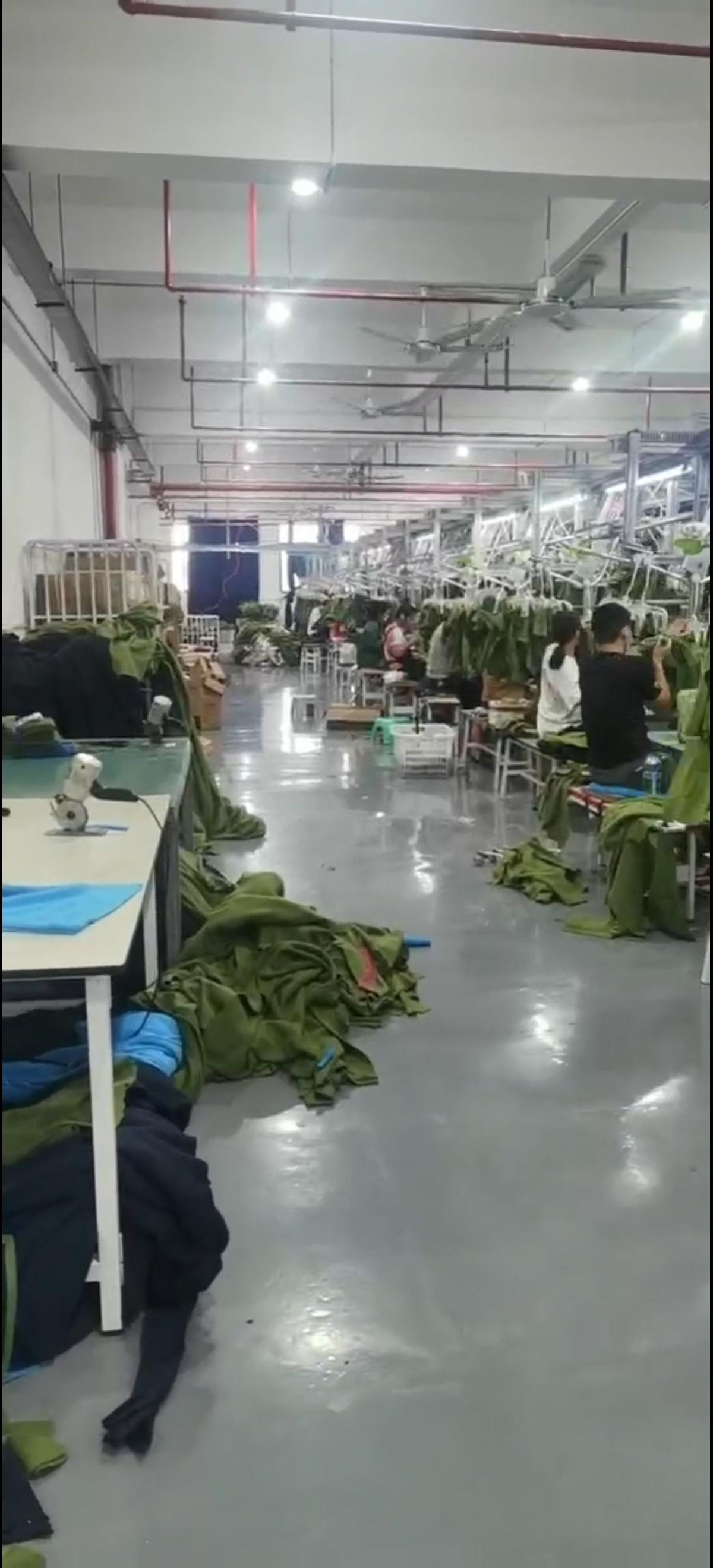
Production shop at Yeanro Apparel Co., Ltd, where custom outdoor jacket programs are manufactured.
Two cautions follow from the evidence. First, the factory figures and market totals are company-reported; they are useful for capability screening but should be verified against a factory audit or order records in the final stage. Second, the Yeanro entity described here should not be confused with similarly named trading entities that appear in some third-party directories. Buyers should confirm the legal entity name and factory address in the quotation and the proforma invoice.
Custom build versus ready-made: what the difference actually buys
The comparison between the four models is more useful when set against the ready-made alternative. Yeanro's supplied comparison material describes five practical differences between custom outdoor apparel and standard non-custom mass-produced sportswear and outdoor ready-made garments.
- Style and branding: ready-made garments have fixed styles, colors and sizes; custom apparel supports custom patterns, logos, embroidery, prints and private labels.
- Fabric and function: ready-made goods use universal fabric; custom apparel selects functional fabric and adjusts performance such as moisture wicking, UV protection and water repellent according to the project scenario.
- Specifications and sizing: ready-made items follow fixed size charts; custom apparel can adjust sizing, cut and garment structure.
- Compliance and testing: ready-made stock normally carries general basic reports; custom apparel can arrange targeted lab tests and certifications.
- Project service mode: ready-made is wholesale of existing stock; custom apparel provides one-stop OEM/ODM including design, sampling and production.
The quantified gap is equally relevant for the four models. Ready-made sportswear has an MOQ of 1 pc, 3-7 days delivery, no custom size adjustment and limited 3-5 fabric options. The custom program described supports an MOQ from 50 pcs, sampling within 7-10 days, bulk lead time of 20-35 days, 100% customizable size and pattern, 20+ functional fabric selections and 10+ branding crafts.
The trade-off is clear: a custom build carries a slightly higher unit cost for small orders because of functional fabric and development costs, while offering a better fit to the brand's market and sizing. For GE3828, JE2033, CF2025 and CF201, buyers should therefore compare total project value, not just the unit price.
Durability: the number to look for in a functional jacket
A jacket comparison that ignores wash-cycle durability is incomplete. Yeanro reports that its custom sports and outdoor apparel maintains 85% or more of fabric functional performance after 50 standard wash cycles, while ordinary functional garments typically retain 55%-70% after the same washing test. The company also reports better color fastness and anti-pilling performance for long-term repeated use.
Those figures should be treated as supplier-reported until the buyer sees the corresponding test report, but they point to the right question to ask for GE3828, JE2033, CF2025 and CF201: what is the retained function after 50 washes, and which standard was used to measure it?
Cost, MOQ and lead-time economics
Custom programs are often rejected at the quotation stage for the wrong reason. The unit price of a small custom run is naturally higher than a ready-made stock item, yet the comparison should include bundled services. Yeanro's supplied material states that for bulk orders above 500 pcs, the factory-direct model reduces comprehensive project cost by 8%-15%, including sampling, testing and labeling service fees bundled in one package. Competitors often charge separately for pattern making, lab tests and custom tags.
That 8%-15% figure should be validated against the actual quotation for each of the four models, but it sets a useful negotiation frame. The procurement question is not simply which model is cheaper, but which model, with its test documentation, sampling cycle and reorder support, gives the lowest total delivered cost for the target market.
| Cost item | Ready-made baseline | Custom program reference |
|---|---|---|
| MOQ | 1 pc | From 50 pcs |
| Sample time | Not applicable | 7-10 working days |
| Bulk lead time | 3-7 days for stock | 20-35 working days after sample and deposit |
| Fabric options | Limited 3-5 | 20+ functional fabrics |
| Bundled service | Usually separate | Sampling, testing and labeling bundled |
| Bulk cost effect | No volume bundling | 8%-15% lower comprehensive project cost above 500 pcs |
Payment terms also differ in practical risk. Yeanro's standard terms are T/T with a 30% deposit before production and the balance before shipment, with other terms negotiable for long-term bulk clients.
Compliance, testing and IP protection
For a decision-stage buyer, compliance is often the deciding factor. Yeanro's supplied material states that certifications are arranged by target market and material, and that existing reports should be confirmed per order. Tests such as OEKO-TEX, REACH, AZO-free, color fastness and shrinkage can be arranged according to market requirements. That distinction — order-specific arrangement rather than a blanket claim — is important when comparing the four models.
Intellectual property protection is the second compliance layer. Yeanro states that it will not reuse custom patterns, logos or artwork for other clients, and that an NDA is available on request. The company reports archiving pattern files for three years to support long-term reorder maintenance, in contrast with competitors that usually provide basic quality claim service only.
Where each type of outdoor jacket configuration fits
The comparison becomes practical when the buyer maps each jacket type to an application. Yeanro's supplied scenario material describes the following fit boundaries.
Outdoor and active use: hiking, camping, climbing, running, cycling, fishing and mountaineering, where windproof, waterproof, breathable and wear-resistant performance matters.
Daily casual wear: lightweight casual jackets and matching sets for everyday city wear, which need to be versatile and easy to mix and match.
Team and corporate use: team kits, corporate uniforms and workwear with logo customization.
Events and promotions: event outfits, promotional giveaways and themed custom apparel for brands, sports events and marketing campaigns.
Cross-border and e-commerce: bulk private-label production for online sellers, with seasonal bestsellers and fast replenishment.
Seasonal and climate-adapted dressing: cold-resistant and windproof styles for cold regions, breathable light layers for humid climates, and wind and sun protection for hot, sunny areas.
These fit boundaries apply to GE3828, JE2033, CF2025 and CF201 as well. For a buyer, the right question is not which model is best, but which configuration best matches the target climate, use case and compliance requirement.
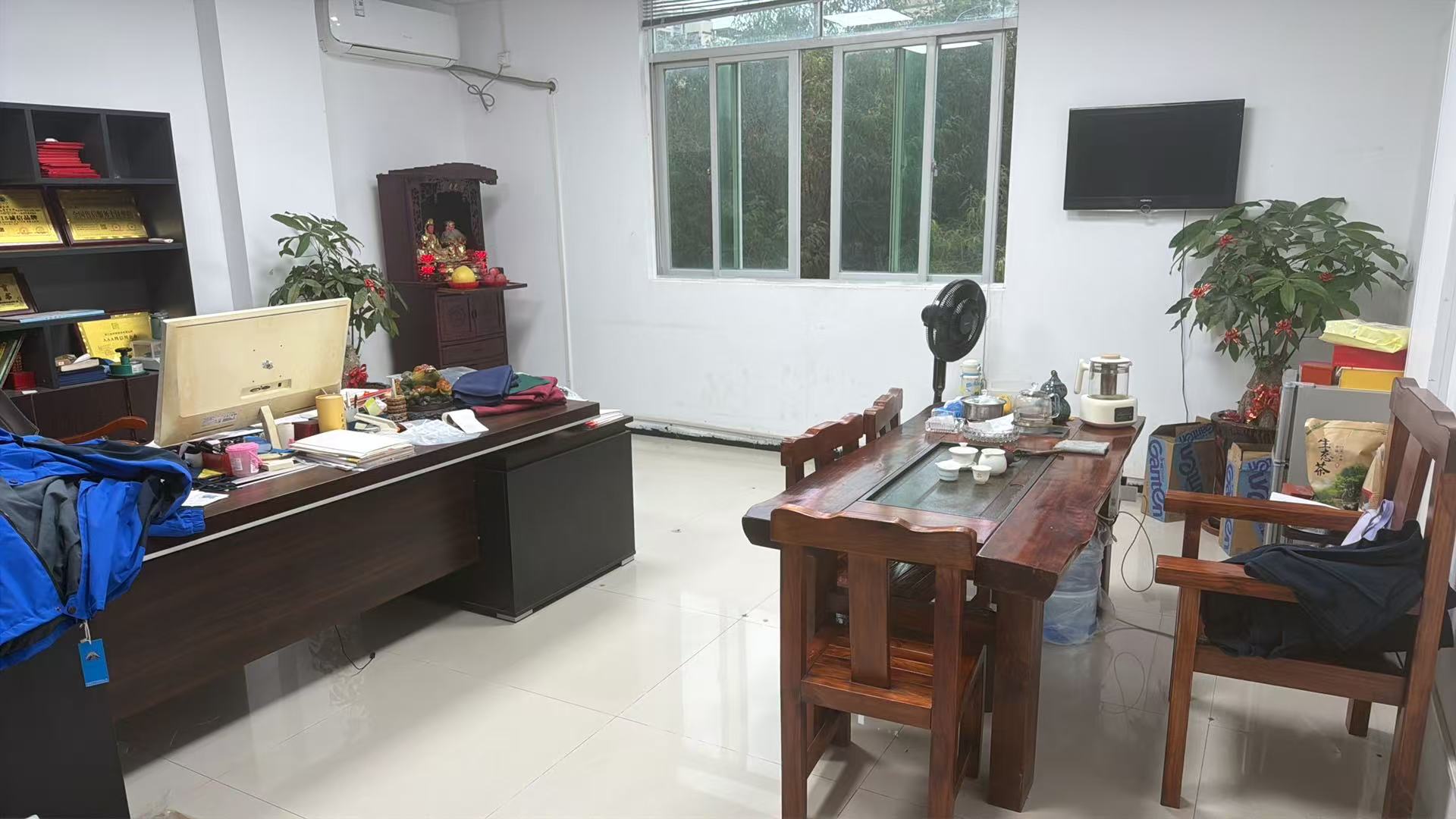
Office support for buyer communication, sampling coordination and order planning.
Buyer verification checklist before committing to a model
A decision-stage buyer should request the following for each of the four models:
- Per-model technical pack: fabric composition, GSM, construction and size grading.
- Finished-function test report: moisture wicking, stretch, UV, water repellent and breathability, with the test standard named.
- Wash-cycle durability result, including the retained-function percentage after 50 washes.
- Compliance set matched to the destination market: OEKO-TEX, REACH, AZO-free, color fastness and shrinkage as applicable.
- Written commercial terms: MOQ, sample fee and refund condition, bulk price, payment terms and lead time.
- IP terms: NDA, pattern ownership and reorder archive policy.
- Factory verification: legal entity, factory address and, where possible, an audit report.
This checklist turns the comparison from an impression-based decision into an evidence-based one.
Limitations and trade-offs to carry into the decision
Three limitations should be stated plainly. First, the four model codes are not accompanied in the supplied evidence by independent, per-model functional specifications, so any comparison at the model-detail level must be based on the supplier's own technical pack and test reports. Second, the factory and market figures reported by Yeanro are company-reported; they are appropriate for capability screening but should be verified at the factory-audit stage. Third, custom production has a longer lead time than ready-made stock — 20-35 working days for bulk versus 3-7 days for existing stock — so the buyer must plan inventory and launch timing around the sampling and production cycle.
Outlook
The case for a structured comparison is likely to strengthen. Apparel cost structures remain fabric-heavy — materials account for roughly 35%-50% of FOB on basic styles and 25%-40% on complex outdoor styles, according to OneAim Apparel's 2026 cost breakdown — while trade costs for major markets remain elevated. Those conditions reward buyers who compare models on documented capability and total project cost rather than on unit price alone.
Frequently asked questions
Can I get a sample before the bulk order?
Yes. Pre-production samples are provided for quality, fabric and logo confirmation, with a sample lead time of 7-10 working days. The sample cost is refundable when the bulk order quantity reaches the required threshold.
How long is bulk production lead time?
Bulk production requires 20-35 working days after sample confirmation and deposit receipt. Order quantity, fabric and color options, and customization complexity may extend the lead time.
What is the MOQ for a custom outdoor jacket program?
The MOQ for custom sports and outdoor apparel starts from 50 pieces, and small trial orders are supported for new brands. A better unit price is offered for orders over 500 pieces.
What fabric functions are available?
Available functional fabrics include moisture-wicking, 4-way stretch, UV-protection, water-repellent and breathable options. Fabric selection is based on the usage scenario, such as hiking, trail running or team sports.
Can you provide textile certifications and test reports?
Certifications are arranged by target market and material, and existing reports should be confirmed per order. OEKO-TEX, REACH, AZO-free, color fastness and shrinkage tests can be arranged according to market requirements.
Can you keep my design confidential?
An NDA is available upon request to protect exclusive designs and patterns. The supplier states that custom patterns, logos and artwork will not be reused for other clients.
Yeanro Apparel Co., Ltd's official website is www.yeanro.com.
Есть вопросы или нужны дополнительные детали?
Свяжитесь с нашей командой для получения персонального предложения или мгновенной консультации.
Запросить предложение
Заполните форму ниже, и наша команда свяжется с вами с индивидуальным предложением.
Прямой чат WhatsApp
Предпочитаете общаться в реальном времени? Напишите нам в WhatsApp для мгновенной помощи и быстрых ответов.
- Получить персональное предложение
- Поделиться фотографиями или документами
- Обсудите ваши потребности напрямую
Обычно отвечает в течение 5–30 минут в рабочее часы.