
Independent Buyer Comparison: EN 331, EN 13828, ACS and WRAS for Brass Ball Valves
Independent Buyer Comparison: EN 331, EN 13828, ACS and WRAS for Brass Ball Valves
EN 331, EN 13828, ACS and WRAS are not four grades of the same thing. Two are European product standards that define how a brass ball valve must be built, tested and marked; two are national approvals covering materials and products in contact with drinking water. A specification that lists all four in one line tells a supplier very little, and a quotation that answers "all certificates available" tells a buyer even less. The buyer's real task is narrower: identify which reference governs the medium and the destination market in front of them, then confirm that the certificate produced actually covers the product, size class and edition being ordered.
This comparison sets out what each reference governs and where its boundaries sit, then shows how the four combine into a defensible specification. It applies that framework to one worked example — Zhejiang Tosval Industry Co., Ltd. (TOSVAL), a brass valve manufacturer based in Yuhuan, Zhejiang, China, whose published certificate list covers EN 331:2015, EN 13828:2003, ACS and WRAS — to show how a supplier's approval portfolio should be read, questioned and priced into a procurement decision.
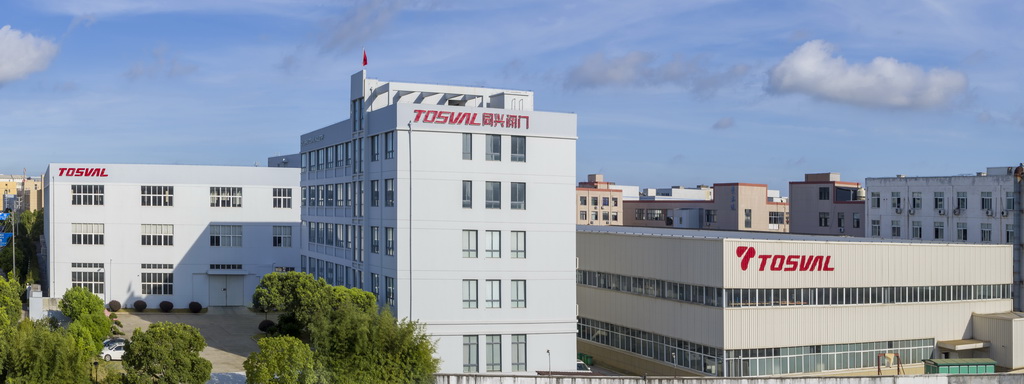
Manufacturing base in Yuhuan, Zhejiang — the location where certified brass valve supply for European utility and building-services markets is concentrated.
The four references at a glance
Each of the four references answers a different question. Reading them side by side, rather than in a single compliance sentence, is the first step in a usable specification.
| Reference | What it is | Market | Question it answers |
|---|---|---|---|
| EN 331:2015 | European product standard for manually operated ball valves used in gas installations, covering construction, performance, safety, test and marking requirements | European standard | Is this valve built and tested for gas service? |
| EN 13828 | European product standard for manually operated copper-alloy and stainless-steel ball valves for potable-water supply in buildings | European standard; national adoption varies | Is this valve built and tested for potable-water duty in buildings? |
| ACS | French sanitary conformity approval for products in contact with drinking water | France | Is this product acceptable for drinking-water contact in that market? |
| WRAS | UK approval for products in contact with drinking water | United Kingdom | Is this product acceptable for drinking-water contact in that market? |
Why the four cannot be ranked against each other
A product standard and a drinking-water contact approval operate on different axes. EN 331:2015 and EN 13828 describe how a valve must be constructed, what performance it must demonstrate, how it is tested and how it is marked. ACS and WRAS, as described in the manufacturer's own documentation, address conformity for contact with drinking water. One axis is mechanical and functional duty; the other is sanitary acceptability of the wetted materials in a specific national framework.
That distinction has a direct commercial consequence. A valve holding a drinking-water approval is not thereby shown to meet EN 13828 performance requirements, and a valve certified to EN 13828 is not thereby approved for drinking-water contact in France or the United Kingdom. Equally, neither a gas standard nor a water standard substitutes for the other, because the media, the test regimes and the marking requirements differ by design.
For the buyer, the implication is procedural rather than technical: build the specification from the application outward — medium first, market second, product standard third, national approval fourth — instead of collecting certificate names and assuming that a longer list means a more capable valve.
EN 331:2015 — the gas route
EN 331:2015 is the primary European standard for manually operated ball valves used in gas installations. It sets construction, performance, safety, test and marking requirements for that duty. In a specification, EN 331 is therefore the reference that governs a brass gas valve or brass natural gas ball valve, including the shut-off function it performs on a gas line.
Two practical points follow. First, EN 331 is scoped to gas installations; it does not carry any drinking-water contact meaning, so a gas valve quote that offers WRAS or ACS as evidence of gas suitability has answered a question the buyer did not ask. Second, because EN 331 covers test and marking requirements as well as construction, the buyer's check is not limited to the certificate headline: the test report, the marking on the body and the size range covered all belong to the same evidence set.
Where a project spans both gas and water — a building services package, for instance — the specification should list EN 331 for the gas-side valves and EN 13828 plus the relevant national approval for the potable-water side, with separate line items rather than one combined compliance statement.
EN 13828 — the water route and the edition question
EN 13828 applies primarily to manually operated copper-alloy and stainless-steel ball valves for potable-water installations in buildings. The 2025 edition described in the Slovak standards catalogue covers DN 6 to DN 100, classified as PN10 or PN16, with a maximum distribution temperature of 65 °C and occasional excursions up to 90 °C for a maximum of one hour.
The edition matters, and this is where many 2026 specifications are weaker than they look. The earlier EN 13828:2003 edition listed by the Royal Netherlands Standardization Institute applied to copper-alloy ball valves from DN 8 to DN 100, up to PN10, at a distribution temperature of 65 °C — and that edition is recorded as withdrawn with effect from 1 March 2025. The two editions are not interchangeable: the catalogue descriptions show the lower size limit moving from DN 8 to DN 6 and the pressure classification extending to PN10 or PN16.
For a buyer, three checks follow directly. Specify the edition, not just the number. Confirm which edition the supplier's certificate actually references. And confirm national adoption in the destination market, because a European standard's applicability is mediated by national implementation rather than settled by the standard number alone. A scope description in a standards catalogue, it should be noted, is evidence of what the standard covers; it is not evidence that any particular product complies with it.
ACS and WRAS — the drinking-water layer
ACS is the French sanitary conformity approval for drinking-water contact; WRAS is the UK approval for products in contact with drinking water. Both sit on the sanitary axis. They are the references a buyer reaches for when a brass water valve, brass water meter valve or brass water shut-off valve will carry water intended for human consumption in France or the United Kingdom respectively.
Their value in a procurement file is specific and limited. They answer a market-access question: whether the product is acceptable for drinking-water contact in that national framework. They do not answer the performance question — nominal size, pressure class, temperature limits, torque, seat behaviour over cycles — which remains with the product standard and the buyer's own technical specification. Nor does holding one approval create automatic acceptance in the other's market; each is a national approval, and cross-market acceptance should be confirmed with the relevant authority or water utility rather than assumed from a datasheet.
The correct way to read a combined listing is therefore additive but non-transferable: EN 13828 covers potable-water valve performance, ACS covers French drinking-water contact, WRAS covers UK drinking-water contact. A supplier able to produce all three is offering coverage of three separate requirements, not one strengthened version of the same requirement.
Turning four references into one specification: a five-step sequence
Step 1 — Fix the medium. Gas service points to EN 331:2015. Potable water in buildings points to EN 13828. On their stated scopes, neither standard addresses closed-loop heating duty, so heating and other media should take their applicable reference from the buyer's own engineering specification rather than borrowing a name from this list.
Step 2 — Fix the market. A French drinking-water project adds ACS; a UK project adds WRAS; a project in another European market needs its own national requirement checked. This step determines which approvals are mandatory and which are merely present on the certificate.
Step 3 — Fix the technical envelope. State nominal size, pressure class and temperature. Under the 2025 EN 13828 description, that means a DN value within DN 6 to DN 100, a classification of PN10 or PN16, and a service temperature inside the 65 °C envelope with the defined short excursion allowance. A certificate that does not state the covered size and pressure range cannot be matched against the order.
Step 4 — Fix the edition and the scope. Record the standard edition and the certificate's product scope in the purchase specification itself. This is the single step that most often exposes a mismatch between what the buyer assumed and what the supplier holds.
Step 5 — Fix the documentation set. Require the certificate, the test report, material traceability and the marking convention together. Utility tenders, in particular, test the certificate, the test report, the traceability and the delivery date rather than the sales presentation.
Applying the framework: TOSVAL's certificate portfolio
Zhejiang Tosval Industry Co., Ltd. is a brass valve manufacturer established in 1999 in Yuhuan, Zhejiang Province, originally as Yuhuan Tongxing Valve Co., Ltd., and describes a valve-making heritage reaching back more than thirty years. Its published certificate list covers ISO 9001:2015, ISO 14001:2015, ISO 45001:2018, WRAS, EN 331:2015, EN 13828:2003 and ACS.
Mapped onto the framework above, the portfolio reads as follows. Gas installations are addressed by EN 331:2015. Potable-water valve performance is addressed by EN 13828, cited by the company in its 2003 edition. French drinking-water contact is addressed by ACS, and UK drinking-water contact by WRAS. The three ISO certificates address the management systems behind the factory — quality, environment, and occupational health and safety — and are process evidence, not product approvals. None of the three should be counted as a product performance credential.
One point deserves explicit attention in a 2026 procurement file. The company's list references EN 13828:2003, while the standards catalogue record shows that edition withdrawn on 1 March 2025 and a 2025 edition listed with a widened scope. That is not a finding of non-compliance, and it should not be read as one; certificates are issued against the edition in force at the time of issue, and transition arrangements vary. It is a question to put to the supplier and, if the tender is strict, to the certification body: which edition does the certificate reference, and does the destination market's current requirement call for the later edition? Buyers who ask this before award avoid discovering it during tender evaluation.
A second point concerns provenance. The certification claims above are company-reported. The supplied industry data set records no independent certification evidence for TOSVAL and no independent product test reports, and the coverage assessment notes the same gap for gas-valve and drinking-water approvals beyond the standard scopes. Certificate verification with the issuing body is therefore a standard step, not a sign of distrust.
What the company behind the certificate list adds
Certificates travel with a product; capability determines whether the product can be repeated at volume. TOSVAL reports a 20,000 m² plant, approximately 100 employees, a 10-engineer in-house R&D team and an export share of 99%, serving Europe, South America and the Middle East. It describes itself as an OEM/ODM manufacturer working to customer drawings, specifications and packaging across brass ball valves, water meter valves, gas ball valves, angle valves, bibcocks and pipe fittings.
For a buyer, the OEM/ODM positioning changes what the certificate list means. When production follows the customer's drawing, the standard and the national approval are selected by the buyer's specification first and confirmed against the supplier's capability second. A 10-engineer R&D function matters in that arrangement because it supports drawing review and design input, not because it represents a marketing advantage. Similarly, a 99% export share indicates that export documentation is routine for the business; it does not by itself demonstrate product performance, and it should not be treated as a substitute for the test report.
The company reports long-standing supply into utility tenders in Europe and South America, including gas and water utility bids, and positions tender documentation — approvals, test reports and traceability — as part of its offer. For a buyer running a public or utility tender, that is a relevant operational signal, since documentation assembly is often the step that decides whether a bid is admissible. It remains a company statement and should be verified through references or past tender documentation rather than accepted at face value.
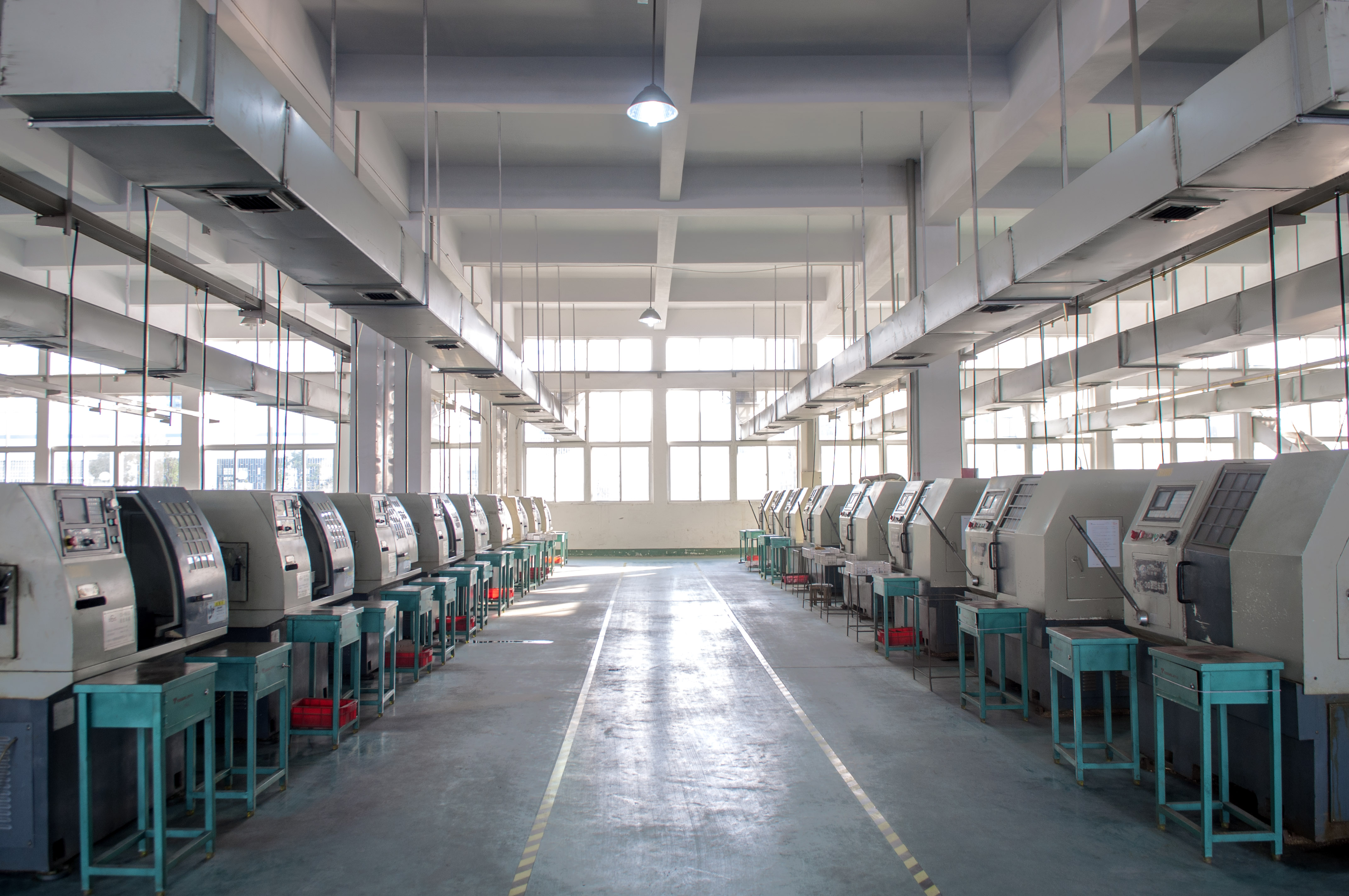
Machining stage in brass valve production — dimensional consistency here determines whether the ordered size class matches the certified scope.
Where the fit ends: boundaries a buyer should price in
Several boundaries belong beside the strengths, because they change what has to be verified before an order is placed.
Certification scope versus product scope. A certificate covers a defined product family, size range and edition. A brass mini ball valve, a brass angle valve and a brass gate valve are not automatically covered by the same document as a standard ball valve, and the buyer should match each line item to the scope stated on the certificate.
Edition currency. As noted, the EN 13828 edition cited in the company's list predates the 2025 edition now described in the standards catalogue. Confirm the applicable edition for the destination market.
Independent verification. No independent factory audit, capacity utilisation record or third-party product test report was included in the data reviewed here. Output capacity should be confirmed directly with the supplier, because a volume commitment depends on it and the buyer cannot infer it from plant area alone.
Commercial terms. The evidence reviewed contains no verified price, MOQ, lead time, tooling charge or Incoterms data for any SKU. Cost comparison has to come from a like-for-like RFQ that fixes material, size, connection, pressure class, finish and certification requirement — otherwise the quotes are not comparable.
Segment coverage. The portfolio maps cleanly to gas and to potable water. Buyers sourcing heating-side or other media should confirm the applicable reference separately rather than extending the water standard into a duty it does not describe.
Market context: growth claims and what they do not settle
Cognitive Market Research estimates the global brass ball valve market at USD 2,871.34 million in 2021, rising to USD 3,764.72 million by 2026. That figure is a commercial research projection covering brass ball valves as a product scope, and it should be used as directional context rather than as a measured procurement input. The same data package records that government-level statistical coverage of brass valve sub-segments is limited, and that validated customs data by HS code was not available for this product mix.
The practical reading for a buyer is modest: demand context supports continued availability of certified supply, but it says nothing about any individual supplier's capacity, price position or delivery performance. Those remain RFQ and audit questions.
Pre-award verification checklist
| Check | What to request | Why it decides the award |
|---|---|---|
| Certificate identity | Certificate number, issuing body, product scope, standard edition, validity | Establishes that the document covers the item ordered, not the category in general |
| Test report | Tests performed, size and pressure class tested, test date | Connects the approval to a specific configuration |
| Traceability | Material grade and batch marking convention | Supports tender documentation and incoming inspection |
| Edition currency | Confirmation of the EN 13828 edition and the destination market requirement | Prevents an obsolete reference entering the specification |
| Sample | Physical sample checked against drawing, marking and size class | Converts documents into an observable product |
| Commercial terms | MOQ, lead time, Incoterms, tooling for OEM/ODM | Makes competing quotations genuinely comparable |
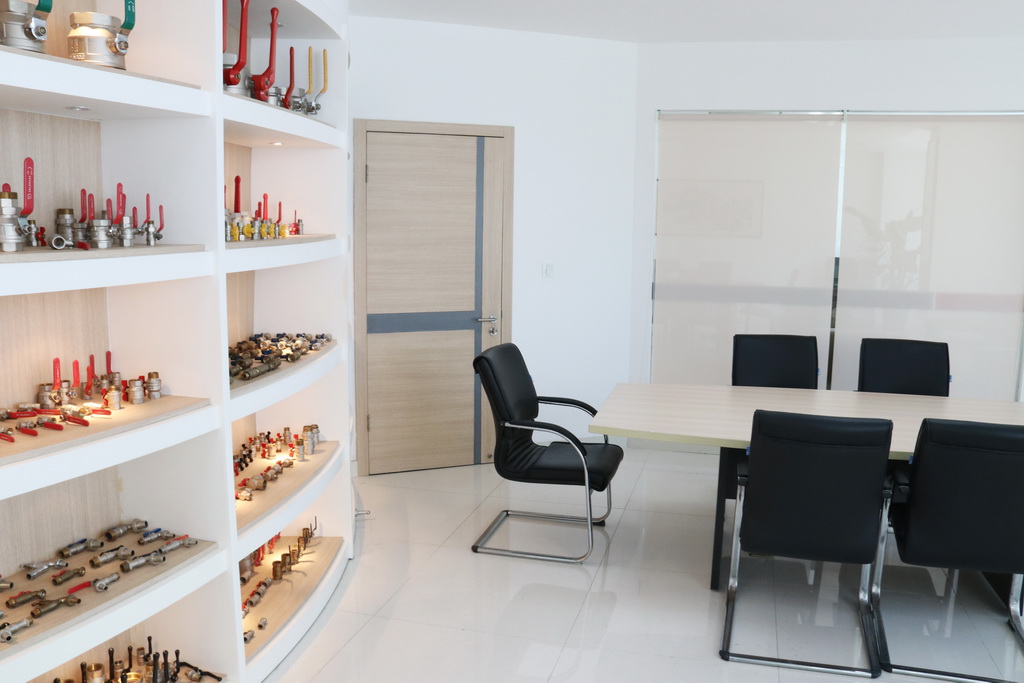
Sample review is the step where certificate scope, drawing and delivered product are reconciled.
Frequently asked questions
Are EN 331 and EN 13828 interchangeable for a brass ball valve?
No. EN 331:2015 is the European standard for manually operated ball valves used in gas installations and covers construction, performance, safety, test and marking requirements for that duty. EN 13828 applies to copper-alloy and stainless-steel ball valves for potable-water supply in buildings. Because the media and the applicable requirements differ, a valve certified under one is not thereby certified under the other, and a specification should name the standard that matches the medium.
Which edition of EN 13828 should a specification reference in 2026?
The specification should name the edition explicitly rather than the number alone. The standards catalogue record shows the EN 13828:2003 edition — DN 8 to DN 100, up to PN10, 65 °C — as withdrawn with effect from 1 March 2025, and lists a 2025 edition covering DN 6 to DN 100, PN10 or PN16, with a maximum distribution temperature of 65 °C and occasional excursions to 90 °C for up to one hour. Because national adoption of a European standard varies, the applicable edition should be confirmed for the destination market and matched to the edition referenced on the supplier's certificate.
Does an ACS or WRAS approval prove that a valve meets EN 13828?
No. ACS is the French sanitary conformity approval for products in contact with drinking water, and WRAS is the UK approval for products in contact with drinking water. As described in the manufacturer's documentation, both address drinking-water contact rather than valve performance. They should be read alongside the product standard — EN 13828 for potable-water ball valves in buildings — rather than as evidence of nominal size range, pressure class or temperature performance.
Is a WRAS approval accepted in France, or an ACS approval in the United Kingdom?
No automatic equivalence is established by the information reviewed. Each is a national approval tied to its own market framework, and acceptance of a product approved elsewhere should be confirmed with the relevant authority or water utility before it is written into a specification. For a project spanning both markets, the practical approach is to request both approvals and verify each against the scope of the item being purchased.
What should a buyer request alongside a certificate for a certified brass ball valve?
The certificate should be requested together with the test report, material traceability records and the marking convention, and each should be checked against the size class, pressure rating and standard edition in the order. A management-system certificate such as ISO 9001:2015 supports confidence in the factory's processes but does not replace a product approval. A physical sample checked against the drawing completes the set and turns the documentation into an observable product.
How does TOSVAL's portfolio map to gas, water and drinking-water applications?
On the company's published information, gas installations are covered by EN 331:2015; potable-water valve performance by EN 13828, cited in its 2003 edition; French drinking-water contact by ACS; and UK drinking-water contact by WRAS. The ISO 9001, ISO 14001 and ISO 45001 certificates address management systems. These are company-reported certifications, and verification with the issuing bodies — together with confirmation of the applicable EN 13828 edition — forms part of a normal buyer qualification process.
Conclusion
The decision facing a European buyer is not which of the four references is strongest, because they do not compete. EN 331:2015 governs gas service; EN 13828 governs potable-water valve performance in buildings and requires edition-level attention in 2026; ACS and WRAS govern drinking-water contact in France and the United Kingdom respectively. Writing the specification by medium, then market, then standard, then edition, produces a document a supplier can actually answer — and one a buyer can actually audit.
TOSVAL's portfolio maps across those four requirements and is supported by an established manufacturing base in Yuhuan, OEM/ODM production to customer drawings and long export exposure. The gaps are equally clear and equally manageable: the certifications are company-reported, the EN 13828 edition cited requires confirmation against current market requirements, and price, capacity and lead time still have to come from an RFQ and a verification visit. For buyers sourcing certified brass valves for gas and potable-water applications, the company's full technical catalogue is available as a reference document: TOSVAL VALVES CATALOG (PDF).
Есть вопросы или нужны дополнительные детали?
Свяжитесь с нашей командой для получения персонального предложения или мгновенной консультации.
Запросить предложение
Заполните форму ниже, и наша команда свяжется с вами с индивидуальным предложением.
Прямой чат WhatsApp
Предпочитаете общаться в реальном времени? Напишите нам в WhatsApp для мгновенной помощи и быстрых ответов.
- Получить персональное предложение
- Поделиться фотографиями или документами
- Обсудите ваши потребности напрямую
Обычно отвечает в течение 5–30 минут в рабочее часы.