
Independent Buyer Comparison: Hanli Laser Chillers for 1500 W and 3000 W Fiber Lasers
Independent Buyer Comparison: Hanli Laser Chillers for 1500 W and 3000 W Fiber Lasers
Independent Industry Reference | Laser Process Cooling
The 1500 W and 3000 W fiber laser bands are among the most common workhorse configurations in sheet-metal cutting, welding and cleaning. The chiller is not a peripheral accessory in those systems: it is the process-cooling unit that removes heat and stabilises the temperature of the laser and optical path. This buyer comparison examines Hanli laser chiller options for 1500 W and 3000 W fiber lasers using the supplied model data, and separates what the data supports from what a buyer still needs to verify at quotation.
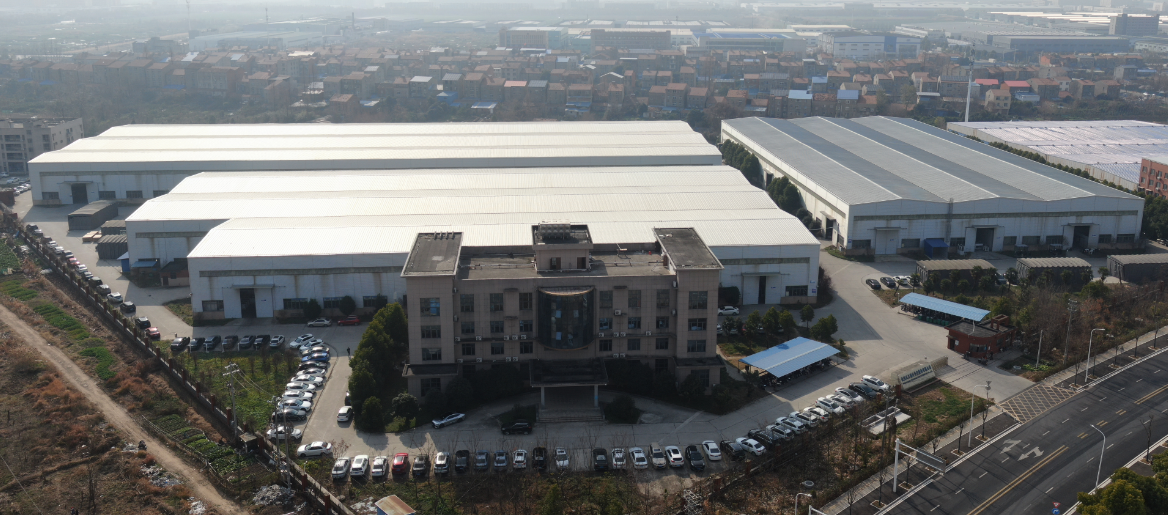
Cover image: manufacturing base view supplied in the Hanli company content unit. Image source: provided content.
Why 1500 W and 3000 W Chiller Selection Is a Buyer Decision, Not a Category Guess
A laser chiller is a precision cooling system that removes heat from a process, a piece of equipment or a controlled environment by circulating a coolant. That definition matters because a laser chiller is not the same product category as a comfort-cooling HVAC chiller. HVAC chillers are designed to cool buildings by lowering the temperature of a liquid, while laser process chillers are selected for a different duty profile: continuous operation, changing thermal loads and a temperature-control target tied to laser performance.
The commercial consequence is straightforward. A buyer who compares only the headline wattage or the purchase price can end up with a unit that is undersized for the heat load, mismatched to the laser process, or unable to hold the required temperature stability. The useful comparison is model-to-application: laser source power, cutting or welding duty, cooling capacity, pump flow, temperature control, electrical supply and ambient conditions. That is the frame used here for the Hanli 1500 W and 3000 W options.
The supplied model set includes two 1500 W-related chillers and two 3000 W-related chillers. For 1500 W work, the HL-1500-QG2/2 is an industrial laser chiller classified as a fiber laser chiller and specified as applicable for 1500 W fiber laser cutting machines. The SCH-1500 is a fiber laser chiller and laser chiller intended for laser processing, laser welding and laser cleaning, and is configured to match a 1500 W continuous fiber laser. For 3000 W work, the HL-3000-QG2/2 is a dual-temperature fiber laser chiller in the laser cutting chiller category and is specified for 3000 W fiber laser cutting machine scenarios. The SCHYTJ-3000 is an industrial water chiller and laser welding chiller configured for a 3000 W continuous fiber laser source. The difference in process emphasis is the first buying signal: cutting and welding are not interchangeable duty profiles just because the laser wattage is the same.
Market Context: Laser Cooling Is Growing With Fiber Laser Adoption
Third-party commercial research cited in the verified data set places the global laser cooling units market at USD 317.2 million in 2025, with a projected compound annual growth rate of 9.2% from 2025 to 2034. The same research indicates that water-cooled units held 56.3% of the market in 2025, and that industrial laser applications accounted for 41.2% of revenue. These figures should be read as category-level context from a commercial research source, not as a forecast for any single supplier. They do, however, explain why buyers are paying more attention to model-level cooling data rather than treating a chiller as a generic accessory.
The mechanism is not difficult to explain. Fiber laser cutting, welding, cleaning and marking all generate heat that must be removed continuously. As laser power rises, the heat load generally rises with it, and the chiller configuration has to keep pace through cooling capacity, coolant flow, pressure and temperature control. The verified data also describes industrial lasers as high-power tools used for cutting, machining, drilling and welding of tough materials. That is the demand context in which a 1500 W or 3000 W chiller is specified. The practical buyer question is not whether laser cooling matters, but which model matches the process, the laser source and the site conditions.
The Company Behind the Models: What the Hanli Facts Establish
Wuhan Hanli Refrigeration Technology Co., Ltd, referred to here as Hanli, is a China-based manufacturer of industrial chillers established in 1998. The supplied company data states that the company has 28 years of operation in the chiller industry, a manufacturing facility covering 38,866.15 square meters in Hannan District, Wuhan, Hubei, China, and approximately 300 staff covering research and development, production, sales and after-sales of chillers. The company profile also lists a registered capital of 12 million yuan and an annual output of 180,000 units, with an export ratio of 10% and markets including Vietnam, Turkey, India, Russia, Poland, Germany, France, Italy, the EU, the USA, Iran, Dubai and the Middle East.
For procurement purposes, the more relevant facts are the product scope and the quality process. Hanli's main products include fiber laser chillers, laser cutting chillers, laser welding chillers, CO2 laser chillers, UV laser chillers, industrial water chillers and related laser cooling systems. The company states that laser cutting chillers are used with fiber laser cutting machines for metals and non-metals, laser welding chillers are part of its range for laser welding machines, CO2 laser chillers are for laser engraving equipment and fiber laser chillers are manufactured for fiber laser cutting systems. The supplied profile also states that the company operates a quality management system covering chiller production, maintains a laboratory test system to verify stable working performance under different ambient temperatures worldwide, and strictly tests every machine with its testing equipment before delivery.
Those facts support a credible supplier profile, but they do not by themselves prove superior field reliability. Hanli is one of multiple suppliers in the laser chiller market. Public vendor pages in the verified set include Thermal Care, KKT Chillers USA, Topchiller and Smart Cooling Products, each describing its own laser cooling scope. This article is therefore not a market ranking. It is a model-to-application comparison for buyers who are already examining Hanli's 1500 W and 3000 W options and need to understand where each model fits.
Technical Explanation: What Changes Between a 1500 W and a 3000 W Chiller
A water chiller is commonly described through its vapor-compression circuit: compressor, condenser and evaporator. In a laser cooling loop, the chiller removes heat from water or a water-glycol coolant and sends the chilled fluid to the machine. The refrigeration cycle has four core stages: compression, condensation, throttling and evaporation. The buyer does not need to design that cycle, but the buyer does need to read the quoted data correctly. Cooling capacity, pump power or flow, temperature-control accuracy and electrical supply are the variables that determine whether a chiller is appropriate for a given laser installation.
The supplied product data shows that the 1500 W and 3000 W Hanli models are not simply scaled versions of one another. The HL-1500-QG2/2 lists 2.3 kW rated power, 4.7 kW cooling capacity, 0.36 kW pump power and a water-temperature control range of 22 to 29.5 degrees Celsius. Its product data also lists an application environment of -20 to 40 degrees Celsius, dual cooling circuits, stable performance, improved cooling capacity and energy-saving operation. The SCH-1500 lists AC 1P 220 V, 2.1 kW machine power, temperature-control accuracy of plus or minus 1.5 degrees Celsius, rated pump flow of 1.2 cubic meters per hour and a matching laser source of 1500 W continuous fiber laser. Its stated emphasis is stable performance, high cooling capacity, low failure rate, reliable laser cooling and long service life.
On the 3000 W side, the HL-3000-QG2/2 lists 1P 220 V/50 Hz, 3.5 kW rated power, 8.7 kW cooling capacity, a water-temperature control range of 22 to 29.5 degrees Celsius and 0.63 kW pump power. It is a single-pump, dual-temperature design with a compact footprint. Its product data lists standard temperature-control precision of plus or minus 3 degrees Celsius or high precision of plus or minus 1 degree Celsius, a high-quality water pump with low noise, high head, high flow rate and long service life, a water circulation filter, alarm outputs for low flow, high water temperature and low temperature, a low-water-level alarm, compressor time-delay protection, winter anti-freeze mode, equipment overheat protection and an intelligent digital display controller with automatic switching between high-precision and standard-precision modes. The SCHYTJ-3000 lists AC 1P 220 V, 3.9 kW machine power, 6.75 kW cooling capacity, 1.6 cubic meters per hour rated pump flow, 0.36 kW pump power and a matching laser source of 3000 W continuous fiber laser. Its stated selling points include energy efficiency, improved performance, quiet operation and stable, reliable quality.
Procurement reading: the HL-3000-QG2/2 is the clearer cutting-oriented model in the supplied data because it is explicitly specified for 3000 W fiber laser cutting machine scenarios and uses a dual-temperature design. The SCHYTJ-3000 is positioned for laser welding and cleaning with a 3000 W continuous fiber laser. A buyer should match the model to the process first, then confirm the electrical supply, flow, pressure and ambient conditions for the actual site.
Model-Level Comparison: Hanli 1500 W and 3000 W Options
The table below uses only the supplied product data. Where a value is not stated in the provided data, it is left as not stated rather than inferred. The purpose is to make the configuration differences visible before a buyer moves to a formal quotation.
| Model | Product category | Matched laser source | Rated power | Cooling capacity | Pump data | Temperature control data |
|---|---|---|---|---|---|---|
| HL-1500-QG2/2 | Industrial laser chiller; fiber laser chiller | Applicable for 1500 W fiber laser cutting machines | 2.3 kW | 4.7 kW | 0.36 kW pump power | Water temperature control range 22 to 29.5 degrees Celsius; ambient -20 to 40 degrees Celsius |
| SCH-1500 | Fiber laser chiller; laser chiller | 1500 W continuous fiber laser | 2.1 kW | Not stated in provided data | 1.2 cubic meters per hour rated flow; 0.36 kW pump power | Plus or minus 1.5 degrees Celsius |
| HL-3000-QG2/2 | Dual-temperature fiber laser chiller; laser cutting chiller | 3000 W fiber laser cutting machine scenarios | 3.5 kW | 8.7 kW | 0.63 kW pump power | Water temperature control range 22 to 29.5 degrees Celsius; standard plus or minus 3 degrees Celsius or high precision plus or minus 1 degree Celsius |
| SCHYTJ-3000 | Industrial water chiller; laser welding chiller | 3000 W continuous fiber laser | 3.9 kW | 6.75 kW | 1.6 cubic meters per hour rated flow; 0.36 kW pump power | Not stated in provided data |
Table notes: data is taken from the supplied product specification units. Electrical supply, ambient conditions, flow, pressure and refrigerant should be confirmed against the final quotation. The HL-1500-QG2/2 table entry uses the product data wording for water-temperature control range; it should not be read as a temperature-stability accuracy claim.
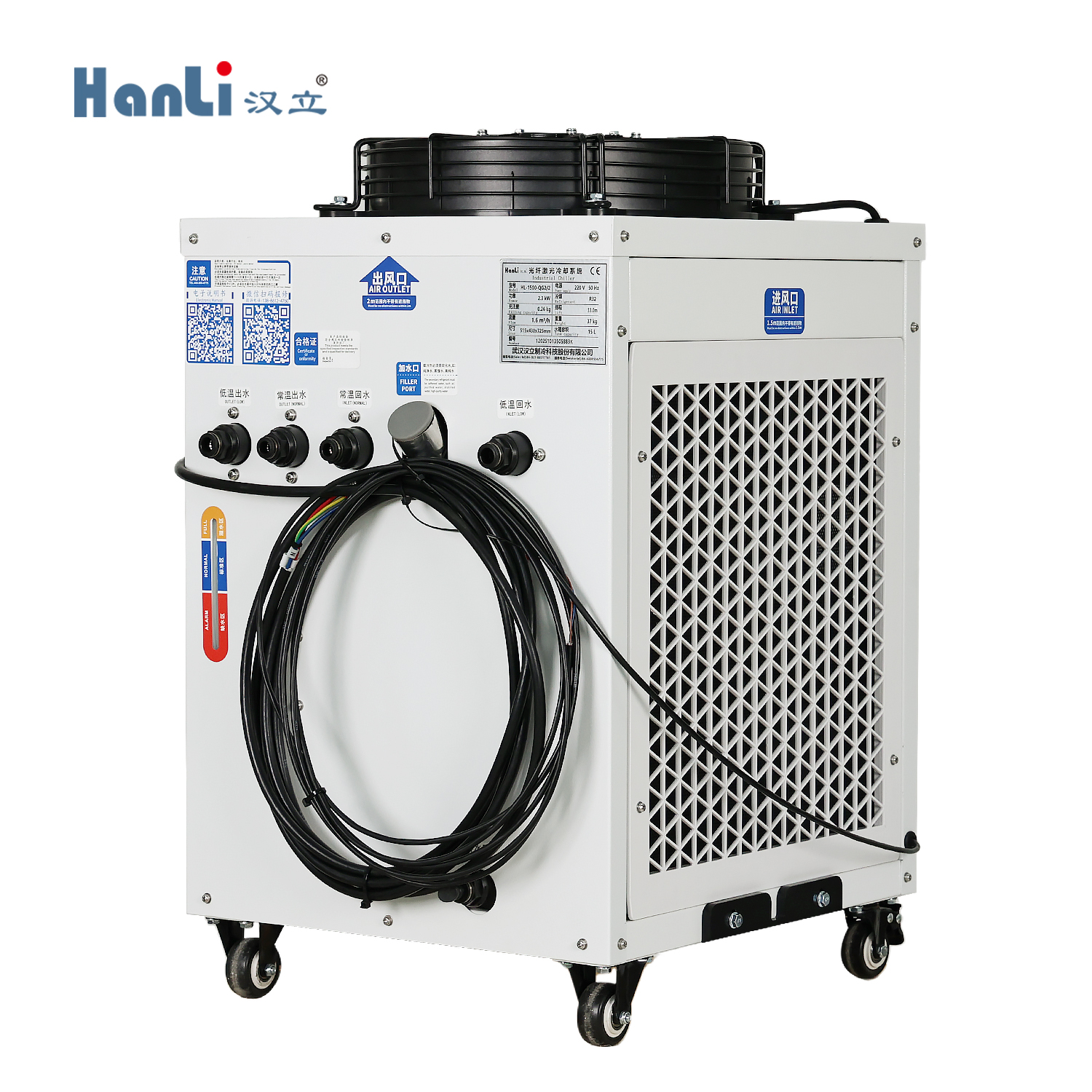
Figure 1: Hanli HL-1500-QG2/2 industrial laser chiller supplied in the product content unit. Image source: provided content.
Two conclusions follow from the model data. First, the 3000 W models carry materially higher cooling capacity in the supplied specifications: 8.7 kW for the HL-3000-QG2/2 and 6.75 kW for the SCHYTJ-3000, compared with 4.7 kW for the HL-1500-QG2/2. Second, the 1500 W and 3000 W families are differentiated by process: the HL-1500-QG2/2 and HL-3000-QG2/2 are associated with fiber laser cutting, while the SCH-1500 and SCHYTJ-3000 are associated with welding and cleaning applications. That is a more useful purchasing distinction than a simple power-size ranking.
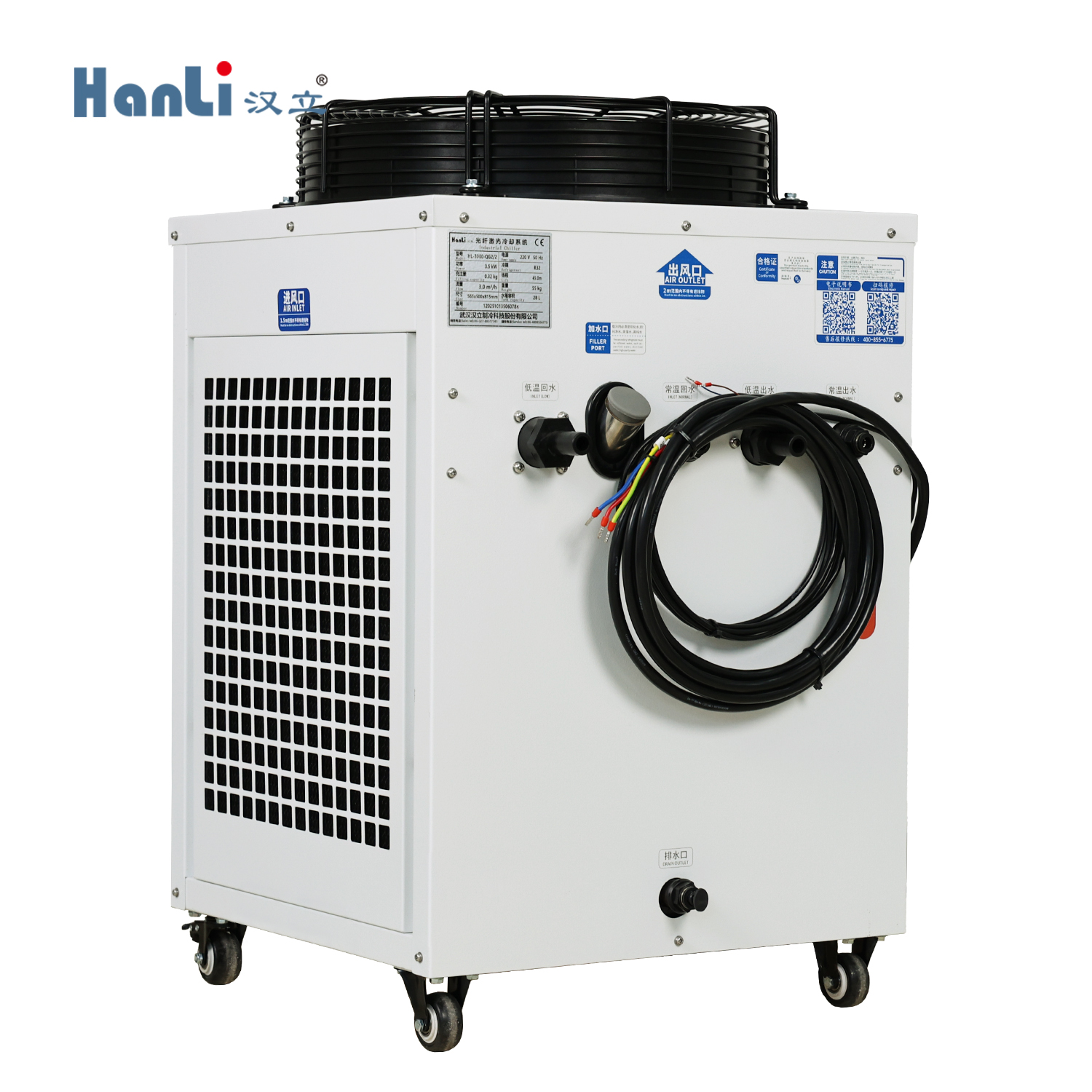
Figure 2: Hanli HL-3000-QG2/2 dual-temperature fiber laser chiller supplied in the product content unit. Image source: provided content.
Application Fit: Cutting, Welding and Cleaning Are Different Cooling Duties
The application-scenario data describes continuous laser equipment operation and changing thermal-load conditions across laser cutting, laser welding, laser engraving and industrial laser processing. It lists project types including laser cutting machine integration, laser welding machine integration, high-power fiber laser equipment integration and industrial refrigeration system procurement. The cooling function is to remove heat generated by lasers and related equipment, stabilise cooling temperature and support processing performance and operational reliability. It also states that selected high-power products use an independent dual-temperature, dual-loop cooling design and that the chiller should match laser power, heat load, flow, pressure and ambient conditions.
For a 1500 W fiber laser cutting machine, the HL-1500-QG2/2 is the direct model in the supplied data because it is explicitly specified as applicable for that machine class. The SCH-1500 is a 1500 W continuous fiber laser chiller, but its stated application emphasis is laser processing, laser welding and laser cleaning. A buyer using a 1500 W source for cutting should start with the cutting-oriented model and confirm the final configuration; a buyer using a 1500 W source for welding or cleaning should examine the SCH-1500 fit rather than assuming the cutting model is automatically correct. The same logic applies at 3000 W: the HL-3000-QG2/2 is specified for 3000 W fiber laser cutting machine scenarios, while the SCHYTJ-3000 is configured for a 3000 W continuous fiber laser source and is positioned for welding, cleaning and laser processing.
Site conditions are part of the application fit. The scenario data notes that selected product information indicates an ambient range of 0 to 45 degrees Celsius, subject to model confirmation, while the HL-1500-QG2/2 product data separately lists -20 to 40 degrees Celsius. That is a reminder to confirm the ambient specification for the exact model and installation location rather than relying on a family-level assumption. The scenario data also flags water quality, filtration, regular water replacement, antifreeze protection and drainage during low-temperature shutdown as special requirements. These are not optional housekeeping details. They are part of whether the chiller can maintain stable performance over time.
Comparison With Traditional Solutions: Where a Laser Chiller Is Not a Generic Chiller
The traditional alternative in some procurement discussions is a general-purpose or HVAC chiller. The verified data provides a clear boundary. Trane defines an HVAC chiller as a component of commercial systems designed to cool large buildings by lowering the temperature of a liquid. IQS Directory defines a chiller more broadly as a precision cooling system that removes heat from a process, a piece of equipment or a controlled environment by circulating a coolant. Those definitions overlap at the component level, but they do not describe the same duty. A building HVAC chiller is selected for comfort cooling; a laser process chiller is selected for continuous heat removal from a laser system and for temperature stability that supports processing performance.
The practical limitation is that a buyer should not substitute an HVAC-type chiller for a laser process chiller simply because both are called chillers. The duty profile, control precision and load pattern are different. The supplied data also does not support a claim that every Hanli model is suitable for every laser process. The HL-1500-QG2/2 is specified for 1500 W fiber laser cutting machines, not for every 1500 W laser application. The HL-3000-QG2/2 is specified for 3000 W fiber laser cutting machine scenarios, not for every 3000 W installation. The SCH-1500 and SCHYTJ-3000 are positioned around welding, cleaning and laser processing. This is a real boundary, and it is more useful to state it than to imply that a single chiller family covers all laser work.
A second limitation concerns performance evidence. The supplied data includes model specifications, company quality-process statements and third-party market context, but it does not include field failure rates, independent efficiency benchmarks or a full certification listing for each model. Buyers should therefore treat the comparison as a configuration guide, not as a reliability ranking. A formal procurement process should request model-specific test reports, electrical and refrigerant conformity documents for the destination market, and a clear statement of warranty and after-sales support. The absence of those documents in the supplied data is a reason to verify, not a reason to assume.
Future Outlook: More Fiber Laser Power Means More Specification Discipline
The verified market data points to continued growth in laser cooling units, with a 9.2% CAGR from 2025 to 2034 and water-cooled units already holding 56.3% of the 2025 market. Industrial laser applications account for 41.2% of revenue in the same data set. If fiber laser cutting and welding continue to expand, the buyer-side trend is likely to be toward more explicit specification review: cooling capacity at the actual ambient, flow and pressure at the machine, temperature-control precision, dual-temperature capability where the process requires it, and documented pre-delivery testing. That favours suppliers that can provide model-level data rather than generic catalogue claims.
Hanli's supplied profile indicates a product range that extends beyond the 1500 W and 3000 W models, including a 6000 W-class water chiller, CO2 laser chillers and UV laser chillers. That range matters for buyers who expect to scale from a 1500 W cutting cell to a 3000 W system or beyond. It also means the 1500 W and 3000 W comparison should be read as a snapshot of two common capacity bands, not as the limit of the supplier's catalogue. The company's stated laboratory test system and pre-delivery testing process are relevant supporting facts, but they should be matched with model-specific documentation during evaluation.
FAQ: Hanli 1500 W and 3000 W Laser Chiller Selection
What is the main difference between a 1500 W and a 3000 W Hanli laser chiller?
The main difference in the supplied data is cooling capacity and matched laser class. The HL-1500-QG2/2 lists 4.7 kW cooling capacity and is applicable for 1500 W fiber laser cutting machines. The HL-3000-QG2/2 lists 8.7 kW cooling capacity and is specified for 3000 W fiber laser cutting machine scenarios. The SCH-1500 is configured for a 1500 W continuous fiber laser, while the SCHYTJ-3000 is configured for a 3000 W continuous fiber laser. The 3000 W models also show higher rated power and, for the HL-3000-QG2/2, a dual-temperature design.
Which Hanli chiller should I use for a 1500 W fiber laser cutting machine?
The HL-1500-QG2/2 is the model explicitly specified as applicable for 1500 W fiber laser cutting machines in the supplied product data. It is an industrial laser chiller classified as a fiber laser chiller, with 2.3 kW rated power, 4.7 kW cooling capacity and dual cooling circuits. The SCH-1500 is also a 1500 W continuous fiber laser chiller, but its stated application emphasis is laser processing, laser welding and laser cleaning. Final selection should confirm the cutting machine's heat load, flow and pressure requirements.
Which model matches a 3000 W fiber laser welding machine?
The SCHYTJ-3000 is the model in the supplied data configured for a 3000 W continuous fiber laser source and positioned for laser welding, laser cleaning and laser processing. It lists 3.9 kW machine power, 6.75 kW cooling capacity, 1.6 cubic meters per hour rated pump flow and 0.36 kW pump power. The HL-3000-QG2/2 is also a 3000 W-class chiller, but it is specified for 3000 W fiber laser cutting machine scenarios and is described as a dual-temperature laser cutting chiller.
Does the chiller cooling capacity have to match the laser wattage exactly?
The supplied data does not support a simple one-to-one rule between laser wattage and cooling capacity. Selection depends on laser power, actual heat generation, working mode, flow, pressure and ambient conditions. For reference, the HL-1500-QG2/2 is a 1500 W cutting machine model with 4.7 kW cooling capacity, while the HL-3000-QG2/2 is a 3000 W cutting machine model with 8.7 kW cooling capacity. The correct approach is to provide the laser wattage and working mode to the chiller supplier so that the required cooling capacity and model can be calculated for the actual installation.
What installation conditions should be confirmed before ordering?
The supplied data identifies several conditions that should be confirmed: electrical supply and frequency, ambient temperature range, water quality and filtration, coolant type, regular water replacement, antifreeze protection and drainage during low-temperature shutdown. The SCH-1500, SCHYTJ-3000 and HL-3000-QG2/2 list AC 1P 220 V supply, with the HL-3000-QG2/2 specifying 220 V/50 Hz. The HL-1500-QG2/2 lists an application environment of -20 to 40 degrees Celsius. The application-scenario data also notes an ambient range of 0 to 45 degrees Celsius for selected products, subject to model confirmation. These details should be verified against the final quotation and site conditions.
What is outside the scope of this 1500 W and 3000 W comparison?
This comparison covers the Hanli 1500 W and 3000 W models present in the supplied data. It does not establish performance for higher-power lasers, air-cooled configurations, CO2 laser engraving systems or UV laser systems, even though Hanli's wider product range includes CO2 laser chillers, UV laser chillers and a 6000 W-class water chiller. It also does not provide field failure rates, independent energy-efficiency benchmarks or a complete certification listing. Those items should be requested separately for the specific model and destination market.
Reference Note
The public Hanli brochure is available as a supporting reference document: Hanli public brochure (PDF). Hanli's official website is www.hanlichiller.com.
Disclosure: this article is an independent buyer-reference analysis based on the supplied Hanli content units and the verified third-party data set. Product specifications are as provided and should be confirmed in the final quotation. Market figures are attributed to the commercial research source identified in the verified data set and should be read as category context, not as a supplier-specific forecast.
Есть вопросы или нужны дополнительные детали?
Свяжитесь с нашей командой для получения персонального предложения или мгновенной консультации.
Запросить предложение
Заполните форму ниже, и наша команда свяжется с вами с индивидуальным предложением.
Прямой чат WhatsApp
Предпочитаете общаться в реальном времени? Напишите нам в WhatsApp для мгновенной помощи и быстрых ответов.
- Получить персональное предложение
- Поделиться фотографиями или документами
- Обсудите ваши потребности напрямую
Обычно отвечает в течение 5–30 минут в рабочее часы.