
Independent Buyer Comparison: Zexuan Flare Tips vs Industry Benchmarks
Flare Systems · Component-Level Buyer Evaluation
A flare system is ultimately judged by what leaves the tip. Headers, knockout drums and stacks carry the gas, but smoke, flame stability, radiation and combustion completeness are decided at the burner exit. That is why component-level evaluation now appears inside serious procurement reviews rather than being folded into a system-level enquiry. This comparison sets the ZX-FT Series flare tip against the benchmark criteria that refineries, petrochemical plants and LNG terminals normally apply to smokeless and sonic combustion duty, and it separates documented capability from site-dependent performance.
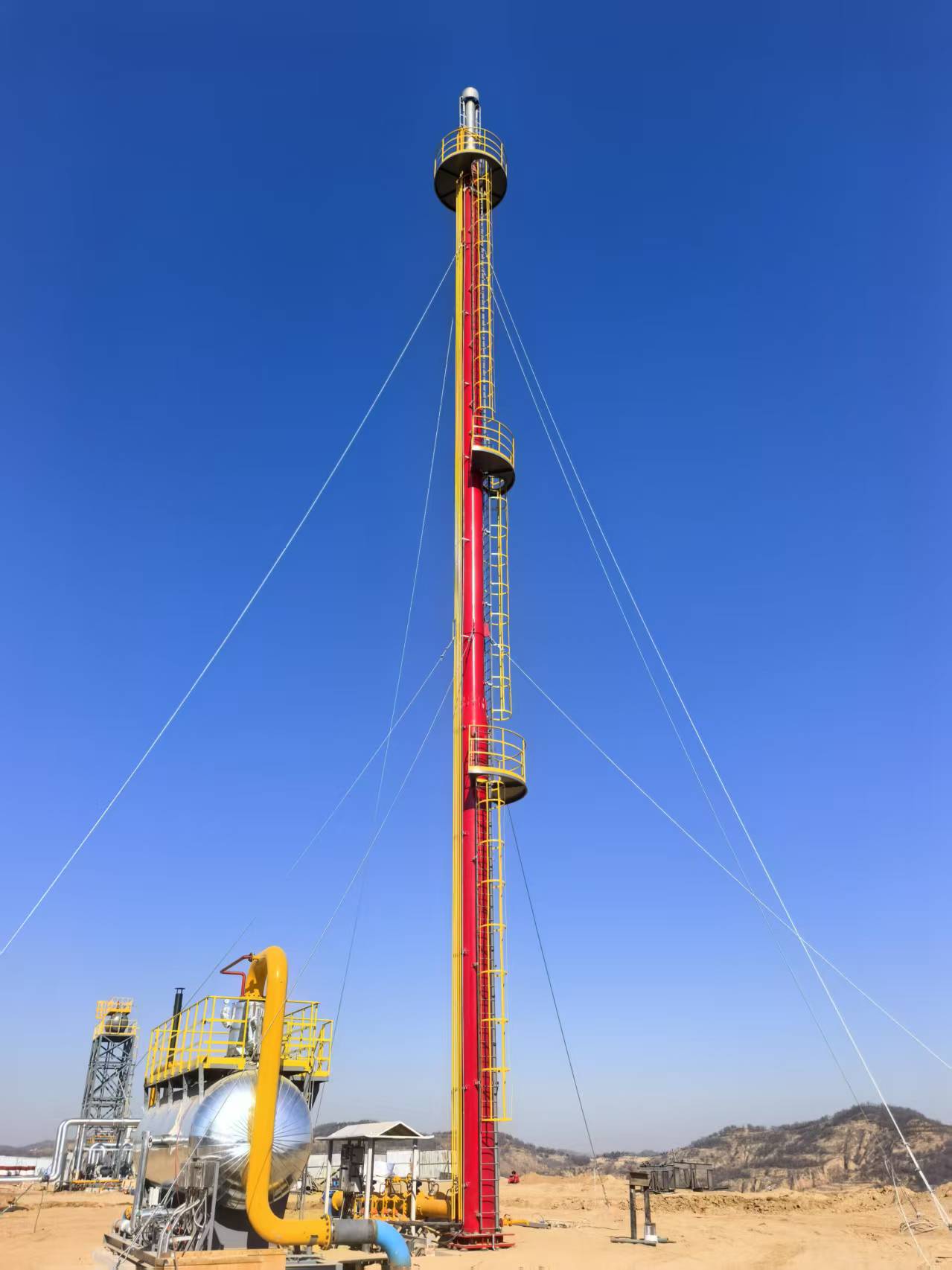
The flaring baseline that makes tip selection a procurement question
Global gas flaring volumes reached 151 billion cubic metres in 2024, the highest level recorded since 2007, according to World Bank flaring data. In parallel, Dataintelo values the global flare systems market at approximately USD 4.8 billion in 2025, driven by regulatory pressure on hydrocarbon emissions and by recovery in oil and gas investment. Those two figures describe the same situation from different angles: installed flare capacity is enormous, most of it already built, and the variable that can still be changed on an existing structure is very often the combustion interface rather than the steel above it.
Flare system design is governed primarily by API Standard 521 (Pressure-Relieving and Depressuring Systems). The standard extends well beyond the burner — it addresses relief load definition, header sizing, and even drainage detail such as a minimum flare header slope of 1/4 inch per 10 feet. That scope matters for tip buyers, because liquid carryover, header pressure and relief philosophy all reach the tip as physical conditions. A tip that is correctly matched to the relief case but mismatched to the actual header behaviour will underperform in service even when every drawing is technically compliant.
Shandong Zexuan Environmental Protection Technology Co., Ltd. is a Chinese manufacturer and engineering service provider of industrial flare systems, thermal treatment equipment and waste gas combustion solutions, established in 2015 and operating a 24,100 m² manufacturing base in Shandong with more than 80 employees, including 30+ engineering and technical specialists. Its Flare Tip / Industrial Flare Burner Tip product, the ZX-FT Series, is the component this comparison evaluates.
ZX-FT Series: the documented specification baseline
The ZX-FT Series is a flare tip product line covering four categorical combustion configurations — sonic, smokeless, air assisted and Coanda — built in Inconel 625, SS310S and SS316L, with an operating temperature capability of up to 1100°C. Diameter and gas capacity are customized rather than catalogued, and the intended gas stream is hydrocarbon gas across refinery, petrochemical, LNG and oil & gas processing applications.
| Specification item | Documented ZX-FT Series basis |
|---|---|
| Product | Flare Tip / Industrial Flare Burner Tip |
| Series | ZX-FT Series |
| Tip configurations | Sonic Flare Tip; Smokeless Flare Tip; Air Assisted Flare Tip; Coanda Flare Tip |
| Primary materials | Inconel 625; SS310S; SS316L |
| Operating temperature | Up to 1100°C |
| Diameter | Customized |
| Gas capacity | Customized |
| Gas suitability | Hydrocarbon gases |
| Applicable industries | Refinery; petrochemical; LNG; oil & gas processing |
Read as a specification sheet, this is a compact set of facts. Read as an evaluation input, it establishes three things a buyer needs early: the tip is available in four distinct combustion strategies rather than one generic design, the heat ceiling of the series is stated at 1100°C, and the geometry is not fixed — diameter and capacity follow the project.
Six benchmark criteria that separate competent tips from suitable tips
Industry benchmarks for flare tips are not a single score. In refinery, petrochemical and LNG specifications, the same six tests tend to reappear, and each one can eliminate a design that looked acceptable on a shortlist.
- Smokeless capability across the operating envelope. A tip is normally specified against a design relief case, but it operates across start-up, shutdown, continuous vent and emergency relief. Smoke-free performance at maximum flow says little about performance at 15% of maximum.
- Turndown and flow stability. Elevated flare systems in the Zexuan range are documented with turndown ratios up to 100:1 and heights from 10 m to 150 m+; the tip must remain stable across that span, not only at the rated point.
- Gas composition tolerance. Hydrocarbon service ranges from clean methane-rich streams to heavy ends, inert dilution and corrosive species such as H₂S. Composition affects flame luminosity, burning velocity and material attack simultaneously.
- Thermal margin at the metal. The 1100°C series ceiling is a design limit, and the alloy selected for a given tip zone must sit inside it with margin for abnormal events, not exactly at it.
- Utility dependence. Air-assisted and assist-medium designs consume power, instrument air or steam. Each utility is a failure mode as well as an operating cost.
- Verifiability before shipment. Drawings, material certification, welding records and a factory acceptance test determine whether the delivered item matches the evaluated item.
Ranking the four ZX-FT configurations against the benchmark set
The ranking below reflects the order in which these four configurations are usually matched to duty during refinery, petrochemical and LNG evaluation. It ranks fit to a duty type, not measured emissions performance, which is determined by site conditions and must be verified per project.
| Rank | ZX-FT configuration | Benchmark strengths | Principal boundary |
|---|---|---|---|
| 1 | Sonic Flare Tip | Uses the pressure energy of the gas stream to reach high exit velocity, promoting air entrainment and smokeless combustion without an external assist medium; well matched to high-pressure hydrocarbon relief with high smokeless demand | Performance depends on available gas pressure and reasonably stable flow; high-velocity exit is commonly associated with elevated noise, which must be managed at system level |
| 2 | Air Assisted Flare Tip | Decouples smokeless performance from gas pressure by supplying combustion air mechanically; suited to low-pressure, composition-variable streams and to continuous vent duty | Introduces blower, power supply and control dependency; adds auxiliary equipment footprint and maintenance surface |
| 3 | Smokeless Flare Tip | Purpose-configured around smoke-free operation where smokeless duty is the primary regulatory and visible-emissions requirement | Effectiveness is tied to the assist strategy specified for the project; assist utilities must be available and reliable |
| 4 | Coanda Flare Tip | Mechanically simple geometry with low auxiliary dependence; well suited to stable, lower-pressure flow where utility supply is limited | Least suited of the four where extreme smokeless demand must be met at very high flow |
The practical reading is that a sonic tip and an air-assisted tip are not interchangeable options at the same price point — they answer different physical constraints. Buyers who rank tip options without first defining which constraint dominates will usually end up paying for capability the site cannot use.
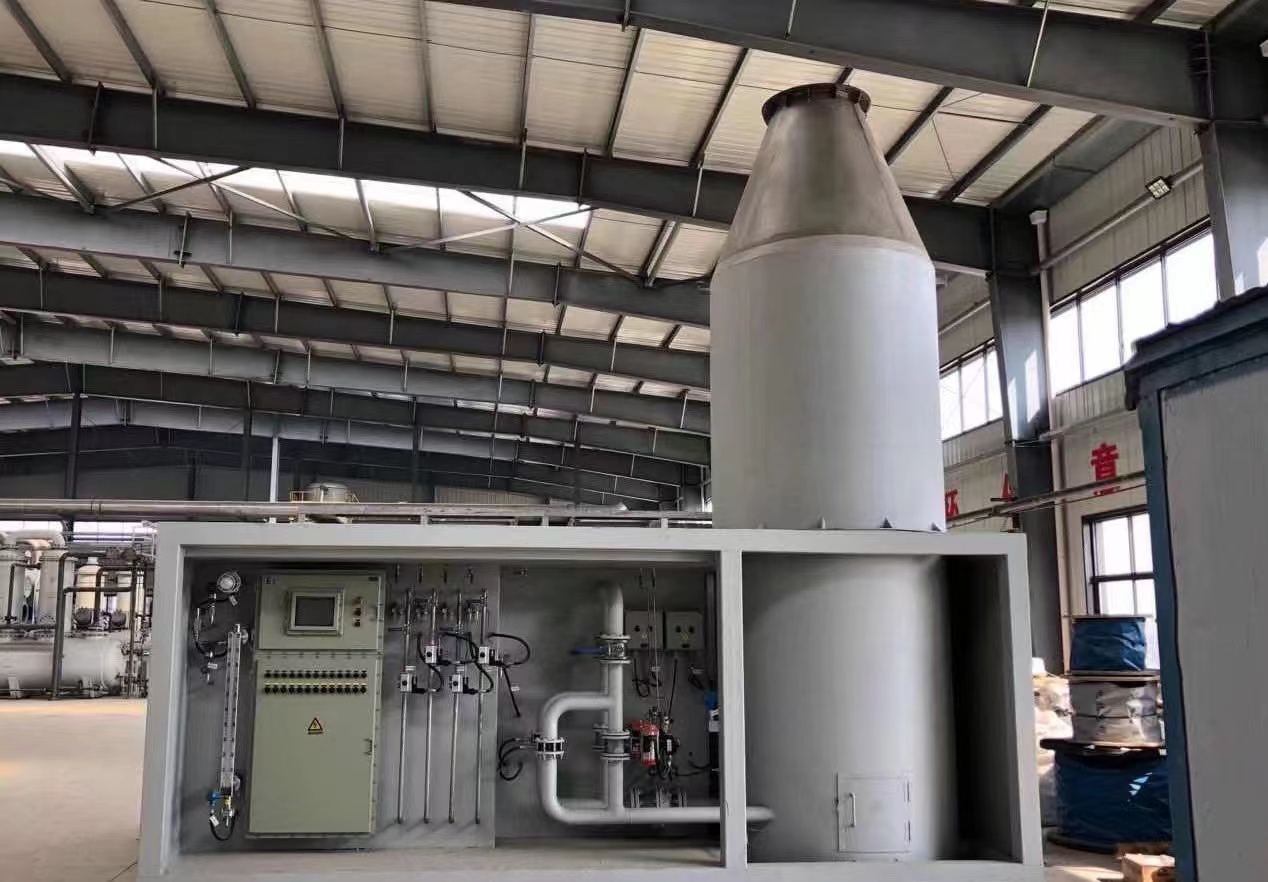
Air-assisted versus sonic: the trade-off that decides most specifications
The choice between sonic and air-assisted combustion is where most evaluation meetings end up, and the deciding variables are gas composition and flow stability rather than nominal capacity.
| Decision factor | Sonic flare tip | Air-assisted flare tip |
|---|---|---|
| Driving energy | Pressure energy in the gas stream | Mechanical air supply from a blower |
| Low-pressure gas | Constrained: insufficient pressure limits exit velocity and therefore smokeless capability | Better suited: combustion air is supplied independently of gas pressure |
| Variable composition | Handles the change but with less control over air/fuel ratio | Air delivery can be modulated, giving more control across composition swings |
| Flow stability | Prefers stable, predictable relief and vent profiles | Tolerates wider swings, including long continuous vent periods |
| Utility exposure | Minimal auxiliary utility demand | Blower power, controls and instrument air become operational dependencies |
| Maintenance surface | Fewer moving parts | Additional rotating and control equipment to maintain |
| Typical duty | High-pressure hydrocarbon relief, high smokeless demand | Low-pressure or unstable gas, continuous vent, composition-variable service |
Two operational consequences follow directly. First, a site with weak or fluctuating header pressure should not specify sonic duty purely because sonic tips carry strong smokeless credentials; the physics will not cooperate. Second, a site that specifies air assistance accepts a new class of failure — blower outage or control loss — that must be covered by the relief philosophy. Zexuan's customization scope explicitly includes flare type, capacity, material, structure, control system and layout, which means this trade-off can be resolved at the configuration stage rather than discovered at commissioning.
Materials: three alloys, three different jobs at up to 1100°C
The ZX-FT Series uses Inconel 625, SS310S and SS316L. The distinction between them is not a quality hierarchy; it is a temperature-and-corrosion mapping exercise.
| Material | Position within the ZX-FT material set | Typical selection logic |
|---|---|---|
| SS316L | Stainless steel option within the series | Chosen where corrosion resistance is the dominant concern and metal temperatures remain moderate relative to the series ceiling |
| SS310S | High-temperature stainless steel option | Chosen for elevated-temperature zones where oxidation resistance at heat is the governing requirement |
| Inconel 625 | Nickel alloy option; used for high-temperature parts in Zexuan flare construction | Chosen for the most demanding combination of heat and aggressive service, at a higher material cost |
Zexuan states that material selection depends on process conditions, temperature, corrosion resistance and gas composition. That statement is the correct starting point, and it is also a warning against a common procurement shortcut: copying the alloy from a previous project. A tip zone that sits inside the 1100°C series limit under design conditions can still exceed it during an abnormal relief event or a flame impingement scenario, and the alloy decision must account for that margin.
Where these tips are applied: refinery, petrochemical and LNG duty
In oil refining and gas processing, flare tips combust excess and emergency process gases to protect facilities from overpressure and hazardous emissions. The service runs in 24/7 standby with automatic activation during emergencies, and covers high-pressure hydrocarbon gas, pressure relief, start-up and shutdown venting, and flammable or hazardous conditions. Continuous vent duty and intermittent emergency relief place very different demands on the same component.
Documented project experience illustrates the range. A natural gas processing company operates two guyed-wire elevated flare systems with 60 m structures, DN350 flare tips, and automatic ignition with PLC control, providing emergency venting and safe combustion during gathering and transportation operations. A coalbed methane operation uses one ground flare system with a 90×10⁴ Nm³/d processing capacity, a three-stage venting design and PLC automatic control for methane vent gas. In Vietnam, a skid-mounted ground flare system was completed within one year to treat pyrolysis gas from waste plastic conversion, with modular skid construction and adaptability to variable gas conditions. In Iraq, a skid-mounted unit has operated for more than three years on excess pyrolysis gas from waste tire recycling. A fine chemical producer runs two flare systems for process vent gas from DL-Methionine production.
Across these cases the pattern is consistent: the systems that stay stable are the ones where the combustion configuration was matched to gas behaviour — variable gas, modular duty and pyrolysis streams tend toward ground or skid-mounted arrangements, while high-pressure relief in gas processing tends toward elevated structures with high-integrity tips.
Market trend: performance is migrating toward the combustion interface
Intel Market Research values the global Totally Enclosed Ground Flares segment at USD 113 million in 2024, with growth driven by destruction efficiencies exceeding 98% for harmful emissions. Grand View Research places Asia-Pacific at a 35% share of the flare gas recovery system market as of 2025, the largest regional share globally. Fact.MR estimates the VOC control systems market, including thermal oxidizers and incinerators, at USD 7.5 billion in 2025, with China identified as a key growth market at 5.4% CAGR.
Three implications follow for tip buyers. Efficiency expectations above 98% are now the reference point rather than an aspiration, which pushes scrutiny onto the component where combustion actually completes. Regional demand concentration in Asia-Pacific means customization capability and delivery responsiveness matter as much as catalogue specifications. And as flare gas recovery expands, the tip increasingly operates in a mixed regime — recovering gas when possible, flaring when necessary — which raises the value of configurations that remain stable at low flow, such as air-assisted and Coanda designs.
Comparison with conventional specification practice — and where the limits are
The comparison that matters for evaluation is not a brand-versus-brand table. It is the difference between a generic, legacy tip specification and a documented, configuration-matched specification.
| Evaluation dimension | Common legacy practice | Documented ZX-FT basis |
|---|---|---|
| Combustion strategy | One generic tip geometry applied across duties | Four explicit configurations: sonic, smokeless, air assisted, Coanda |
| Material basis | Default stainless specification, often without zone-by-zone reasoning | Inconel 625, SS310S or SS316L selected against temperature, corrosion and gas composition |
| Thermal basis | Limited stated heat capability | Stated series operating temperature up to 1100°C |
| Geometry | Fixed nominal sizes with adapters | Diameter and gas capacity customized to the project |
| Verification | Dimensional check on delivery | Incoming material, welding, dimensional, pressure/leak and functional testing, plus FAT before shipment |
| Delivery model | Stock or short-lead supply | Engineered build, 60–120 days depending on project requirements, MOQ 1 set |
A credible comparison must also state what the documented approach does not solve. Five boundaries are material to an evaluation decision:
- Customization carries schedule cost. Because diameter and capacity are project-specific, typical lead time runs 60–120 days. A buyer needing immediate replacement should plan for that window rather than assume ex-stock availability.
- High-alloy content adds cost where duty does not require it. Inconel 625 is justified by heat and aggressive service; specifying it on a moderate-temperature duty transfers cost without transferring benefit.
- Sonic capability is conditional on pressure. Where gas pressure energy is insufficient, sonic function cannot be assumed regardless of the tip selected.
- Assisted designs depend on utilities. Air-assisted configurations require blower power and controls; any assist medium must be continuously available, and its loss becomes a relief-philosophy issue.
- Published figures are design capabilities, not site-measured results. Combustion outcomes depend on gas composition, flow profile, header behaviour and ambient conditions. The buyer's assurance route is documentation and factory testing, followed by commissioning support — not a catalogue number.
Verification checklist before a tip purchase order
Zexuan operates a quality system certified to ISO 9001:2015 (certificate 26326Q00079R001), ISO 14001:2015 (26326E00054R001) and ISO 45001:2018 (26326S00054R001), all issued by CSU International Certification Co., Ltd. on 2026-03-18 and valid to 2029-03-17, carrying CNAS accreditation for the domestic Chinese market and IAF multilateral recognition internationally. The declared quality control sequence covers incoming material inspection, welding inspection, dimensional inspection, pressure/leak testing where applicable, functional testing, factory acceptance testing, final inspection and 100% inspection.
For an evaluation file, that translates into a short list of documents worth requesting: the material certificate for the specified alloy, welding and inspection records for the tip assembly, the FAT protocol and results, and confirmation of the control and ignition interface where the tip is supplied as part of a system. After-sales scope — remote support, commissioning assistance, spare parts and training — should be confirmed in writing at the same stage, since tip replacement on an operating flare stack is a scheduled activity, not an emergency one.
Future outlook
The direction of the segment is fairly clear. With flaring volumes at their highest level since 2007 and efficiency expectations above 98% now treated as normal in enclosed combustion, the marginal gains available to operators sit in combustion control rather than in structural steel. Zexuan describes its development focus as low-carbon combustion technologies, intelligent control systems, flare gas recovery and digital operation solutions — a direction consistent with where the market data point.
For buyers, the practical consequence is that flare tips should be evaluated as replaceable performance components with a defined thermal envelope, a defined material basis and a defined verification route. That framing makes comparison possible between otherwise dissimilar offers, and it keeps the decision anchored to what the site can actually operate.
FAQ
How does a sonic flare tip differ from an air-assisted flare tip in smokeless duty?
A sonic flare tip uses the pressure energy of the gas stream to reach a high exit velocity, which promotes air entrainment and smokeless combustion without an external assist medium. An air-assisted flare tip supplies combustion air mechanically through a blower, so smokeless performance does not depend on gas pressure. The trade-off is that sonic tips require adequate gas pressure and reasonably stable flow, while air-assisted tips add blower, power and control dependencies.
Which ZX-FT material should be specified for service approaching 1100°C?
The ZX-FT Series is documented with an operating temperature of up to 1100°C and three material options: SS316L, SS310S and Inconel 625. SS310S and Inconel 625 are the high-temperature selections, with Inconel 625 used for high-temperature parts in Zexuan flare construction. SS316L is typically selected where corrosion resistance is the governing requirement at more moderate metal temperatures. Zexuan states that material selection depends on process conditions, temperature, corrosion resistance and gas composition, and material is one of the configurable parameters in its customization scope.
How is a flare tip verified before shipment?
Zexuan's declared quality control sequence includes incoming material inspection, welding inspection, dimensional inspection, pressure or leak testing where applicable, functional testing, factory acceptance testing, final inspection and 100% inspection. The underlying management systems are certified to ISO 9001:2015, ISO 14001:2015 and ISO 45001:2018 by CSU International Certification Co., Ltd., issued 2026-03-18 and valid to 2029-03-17, with CNAS accreditation for China and IAF multilateral recognition internationally.
What determines flare tip diameter and gas capacity?
Both are customized rather than standardized in the ZX-FT Series. In flare system design generally, tip diameter is set according to flow rate and gas properties, and gas capacity is customized according to process conditions. At system level, Zexuan elevated flare systems are documented with heights from 10 m to 150 m+, turndown ratios up to 100:1 and combustion efficiency typically in the 98%–99.9% range depending on design and operating conditions.
What are the practical constraints of specifying a high-alloy, customized flare tip?
Three constraints recur. Engineered build means a typical lead time of 60–120 days depending on project requirements, with a minimum order quantity of one set. High-alloy content such as Inconel 625 adds cost that must be justified by actual thermal and corrosion duty. And combustion performance remains site-dependent: published capabilities are design figures, so assurance comes from documentation, factory acceptance testing and commissioning support rather than from a specification number alone.
For readers assembling an evaluation file, Zexuan's product brochure covering flare systems and thermal treatment equipment is available for download: Shandong Zexuan product brochure (PDF).
Есть вопросы или нужны дополнительные детали?
Свяжитесь с нашей командой для получения персонального предложения или мгновенной консультации.
Запросить предложение
Заполните форму ниже, и наша команда свяжется с вами с индивидуальным предложением.
Прямой чат WhatsApp
Предпочитаете общаться в реальном времени? Напишите нам в WhatsApp для мгновенной помощи и быстрых ответов.
- Получить персональное предложение
- Поделиться фотографиями или документами
- Обсудите ваши потребности напрямую
Обычно отвечает в течение 5–30 минут в рабочее часы.