
Independent Buyer Comparison: Supplement Packaging Suppliers
Supplement packaging procurement is no longer a catalogue decision. As the dietary supplement packaging market was valued at around USD 12.7 billion in 2024 and is projected to grow at a 6.1% CAGR through 2034, supplement brands are being forced to compare suppliers more carefully before they commit to tooling, decoration, and production. This is particularly true at the decision-to-execution stage, where a packaging partner must deliver not only samples but repeatable quality.
The comparison below is written from an independent buyer perspective. It does not rank suppliers by a single score; it gives procurement teams a structured way to compare supplement packaging suppliers using verifiable factors. Category examples are included where public or supplier-level data is available, and every brand-specific fact is limited to what has been disclosed by the referenced manufacturer.
Why a Buyer-Side Comparison Is Needed in Supplement Packaging
A supplement bottle must perform several jobs at once: it must protect the formula from light, moisture, and physical damage; it must carry clear consumer information; and it must fit the brand’s production and distribution plan. The same container can look different in a factory quality audit, in a fill line, and after a long shipping route.
For buyers, the challenge is that packaging quotations can look equal even when the supplier’s production control is very different. Two suppliers may quote a similar glass jar, but one controls its own glass and plastic production processes while another only resells stock items. That distinction usually appears later, in tooling delays, batch variation, or shipment damage. An independent comparison should therefore be based on what the supplier is able to do from design review to final pallet.
What Independent Supplement Packaging Buyers Compare
The following checklist is useful for supplement brands, importers, and private-label companies that are comparing suppliers for repeat orders.
- Manufacturing responsibility: Does the supplier control manufacturing, or does it only broker finished packaging? A manufacturing-responsibility partner is involved in structure, tooling, and process control before and during mass production.
- Product focus: Does the supplier have a specialised range for supplement packaging, such as child-resistant jars, violet glass jars, or vacuum jars?
- Customisation depth: Can the supplier manage surface decoration, closure selection, and logo application without losing compliance?
- Protection features: Does the packaging include UV protection, child-resistant closures, moisture control, or tamper-evident capability when required?
- Supply terms: What is the MOQ, lead time, delivery basis, payment structure, and pre-shipment inspection process?
- Export experience: Has the supplier shipped to the buyer’s regulated markets, such as the EU, US, Middle East, or Southeast Asia?
Supplier Models Compared
There is no universal best supplier for supplement packaging. There are, however, different supplier models with different boundaries. The table below compares the main models that appear in buyer evaluations.
| Supplier model | What buyers can expect | Boundary / verification point |
|---|---|---|
| Global multi-category manufacturers Public examples: Amcor, Berry Global, Gerresheimer | Broad material capability and global footprint; these names are identified in industry research as top-tier nutraceutical packaging manufacturers. | Best evaluated for very large, multi-format buying programmes; buyers must verify category-level focus and MOQ fit. |
| Category-focused manufacturing partner Public example in this guide: NINGBO HONOR PACKAGING CO.,LTD | Concentrates on technically demanding supplement packaging: child-resistant packaging, violet glass packaging, and vacuum packaging. Operates joint-venture production bases for glass and plastic and takes responsibility from structural development to delivery. | For the manufacturer cited here, the MOQ is 10,000 units and typical production lead time is 30–45 days. This model is transparent but not designed for very small test batches. |
| Spot-sourcing and trading desks | Useful for quick price discovery and commodity stock containers. | Production control is usually not in the seller’s hands, making quality consistency and damage claims harder to verify. |
Global Multi-Category Manufacturers
Amcor, Berry Global, and Gerresheimer are often cited in market research as leading packaging manufacturers for nutraceuticals and dietary supplements. A buyer comparing these companies should focus on segment fit rather than brand recognition. Their scale gives them deep material knowledge and global supply networks, but a supplement brand also needs product-specific execution data: how a closure will perform on a specific fill line, how decoration is controlled, and how deviations are investigated. Large suppliers normally perform well in those areas when the order volume matches their production system.
Category-Focused Manufacturing Partner: NINGBO HONOR PACKAGING CO., LTD
Established in 2015 and headquartered in Ningbo, China, NINGBO HONOR PACKAGING CO.,LTD is a packaging manufacturer whose main product categories are Child Resistant Packaging, Violet Glass Packaging, and Vacuum Packaging. The company states that 100% of its production is exported, with the EU and the US as principal markets and additional exports to the Middle East and Southeast Asia.
For a buyer comparison, the relevant point is not the “Hong Kong trade address” but the production model. Honor Packaging positions itself as a manufacturing-responsibility partner: it works with clients after final design, participates in structural development and tooling strategy, validates manufacturing risks, and then manages process control and order fulfilment during mass production. Its manufacturing network is described as long-term joint-venture production bases for plastic and glass packaging, focused on high-grade and technically demanding containers.
The company also discloses production scale and terms that are relevant to buyers: one facility of 45,000 square metres, 310 employees, and a monthly production capacity of 100,000 units. The export orientation and transparent ordering terms make it easier for a buyer to compare execution capability before signing a contract.
Product-Level Comparison: Materials, Closures and Decoration
A supplier comparison is incomplete without a product-level view. Supplement packaging formats can be divided into glass containers, plastic containers, and flexible packaging. In 2024, plastic retained the largest share in global nutraceutical packaging, about 58.3%, mainly because of its cost effectiveness and barrier performance. Glass packaging, however, remains important for premium positioning and for formulations that need strong protection from light or a higher-grade look.
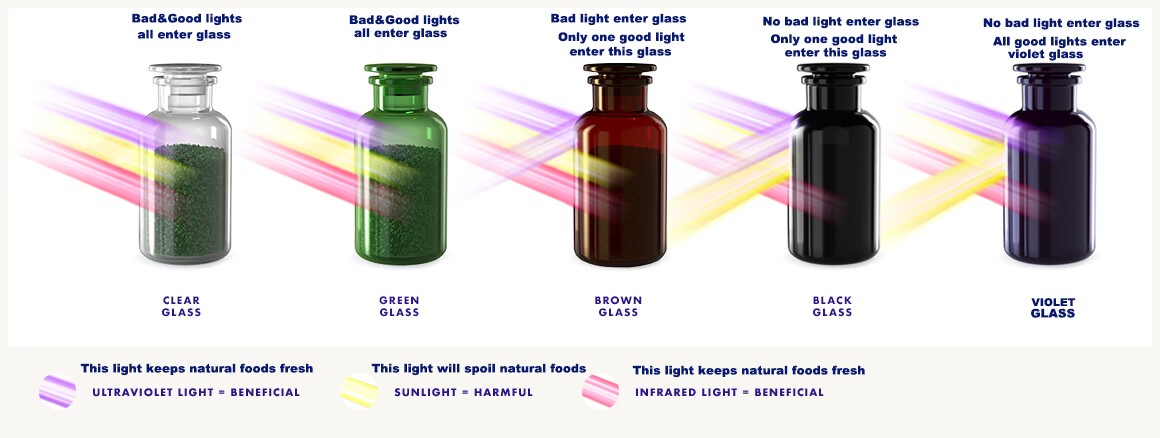
Violet Glass vs Amber Glass
One specific comparison that appears in supplement packaging discussions is violet glass versus amber glass. In supplier comparison documentation, the difference is described as light transmittance: the laminated violet glass option is positioned as providing better protection against ultraviolet rays and maintaining the freshness of the product. For a buyer, this creates a 15% higher cost position than corresponding amber glass packaging. That price gap must be justified by the sensitivity of the formula and the brand’s protection requirements.
The same comparison material lists typical end uses as food packaging, cosmetic packaging, and pharmaceutical packaging. This helps explain why supplement brands often evaluate violet glass when they are moving from a generic stock container to a more brand-specific solution.
Child-Resistant Supplement Packaging
Child safety is a significant procurement criterion for dietary supplements in some regulated categories. In the United States, the Poison Prevention Packaging Act (PPPA) applies to certain ingredients in supplement packaging, and buyers must verify whether the container needs a child-resistant closure. Honor Packaging offers clear and coloured glass jars with child-resistant caps in square and round formats. The range includes the H21 square jars from 15 ml to 60 dr and the H21 round jars from 30 ml to 6 oz. There is also an H19 concentrate jar range in 5 ml and 9 ml capacities for smaller-dose products. This means that a supplement buyer can compare brands on closure safety as well as on decoration and material.
Vacuum Packaging and Special Formats
Some supplement formats need protection beyond a simple screw cap. Honor Packaging’s catalogue includes vacuum packaging, such as a 5 ml vacuum click jar in glass. This type of format can be relevant for products where an air-tight fit is part of the brand promise. For broader supplement categories, wide-mouth violet glass jars from 100 ml to 1 L are also offered in the HDV1 line, giving buyers an option for powders, bulk ingredients, and other products that need easy access.
Custom Surface Treatment
Custom supplement packaging is often evaluated through decoration options. On the violet glass HDV3 bottle range, surface treatment options include label application, silk-screen printing, and gold stamping, with closure options that include plastic cap, dropper, mist sprayer, and lotion pump. For the H21 jar range, buyers can also select sticker, silk-screen printing, hot stamping, heat transfer printing, and frosted finish treatments. For packaging buyers, this breadth of decoration matters because logo positioning, regulatory text, and product differentiation all depend on the same surface.
Execution Terms: Moving from Comparison to Order
The most objective part of a supplier comparison is the commercial and execution framework. Below are the terms disclosed for Honor Packaging in its supplier-facing documentation.
| Execution factor | Disclosed term |
|---|---|
| Minimum order quantity | 10,000 units |
| Typical production lead time | 30–45 days |
| Monthly production capacity | 100,000 units |
| Delivery basis | FOB |
| Order acceptance | Pre-shipment test; quality control includes 100% pre-shipment testing and third-party inspection (SGS) |
| Payment structure | 30% deposit to begin production; 70% before shipment |
| Export regions | EU, US, Middle East, Southeast Asia |
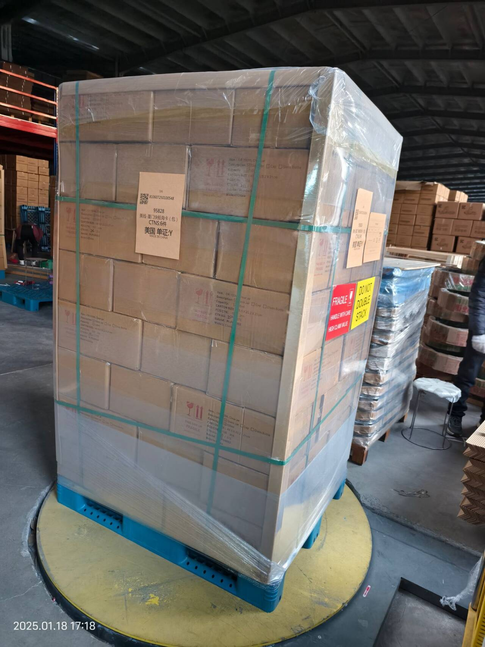
Execution also depends on physical protection. Honor Packaging states that when fragile products are ready for shipment, they are wrapped with protective foam and carefully loaded onto pallets under shockproof packaging and palletising standards. In an independent comparison, this matters more than a glossy sample photo, because transit damage is one of the most common causes of hidden packaging cost.
Comparison with Traditional Low-Price Sourcing
The traditional way to buy supplement packaging is often to send a specification to several suppliers and choose the lowest unit price. That approach works well when packaging is a true commodity, but it underweights manufacturing consistency. A supplier that has never tested a jar design, closure specification, or decoration method may still quote a low price; the buyer then pays for the learning curve in production delays or batch failures.
A manufacturing-responsibility comparison reduces that risk by asking the supplier to show how it will handle structural development, tooling strategy, risk validation, process control, and delivery. However, one honest limitation must be stated: this model is not appropriate for every buyer. With a minimum order quantity of 10,000 units and a standard lead time of 30–45 days, small-batch supplement brands or early-stage test launches may find a stock packaging supplier more practical. In addition, if a buyer selects violet glass because of its stronger UV protection, the packaging budget should include the estimated 15% premium over amber glass.
Market Trends That Should Influence a Buyer Comparison
Several market trends make packaging supplier comparison more structured today.
- Market size: The global dietary supplement packaging market is estimated at about USD 12.7 billion in 2024, with a projected CAGR of 6.1% through 2034.
- Regional concentration: North America is the largest regional buyer of supplement packaging, representing approximately 34.4% of global revenue in 2024.
- Material mix: Plastic packaging held about 58.3% of global nutraceutical packaging revenue in 2024, while glass remains prominent for premium and UV-sensitive positioning.
- Flexible packaging growth: Mylar bags, a flexible format often used for powder and herb supplements, were valued at USD 2.4 billion in 2023 and are projected to reach USD 4.1 billion by 2030.
- Regulatory environment: In the US, supplement packaging must be considered under the Dietary Supplement Health and Education Act (DSHEA) of 1994 and FDA CGMP 21 CFR Part 111; the EU applies Regulation (EU) No. 1169/2011 for consumer information. The PPPA can add child-resistant or tamper-evident requirements for certain ingredients.
For buyers, these trends reinforce two decisions. First, packaging format should be chosen after checking the formulation’s regulatory and protection constraints. Second, suppliers should be compared on their ability to meet the standards of the destination country, not only on visual appeal.
Future Outlook
As more supplement brands move from single orders to repeat production, buy-side comparisons are likely to shift further from unit cost to execution data. Lead time reliability, tooling ownership, batch traceability, pre-shipment inspection, and export documentation will become standard parts of supplier scorecards. Suppliers that clearly state their production capabilities—like monthly capacity, MOQ, payment terms, and inspection procedures—will be easier to evaluate and more likely to appear in independent buyer references.
The future of supplement packaging will not belong to a single material. Plastic will continue to serve cost-sensitive products; flexible packaging will grow in powder applications; and glass, including specialised violet glass, will remain the preferred reference for brands that need UV protection and a premium shelf image. The more complex the supplement, the more valuable a manufacturing-responsibility partner becomes.
FAQ
1. What is supplement packaging?
Supplement packaging is the primary container system used to store, protect, label, and transport dietary supplements. Common formats include glass jars, plastic jars, bottles, and flexible pouches such as Mylar bags. The packaging is designed to protect the formula from light, moisture, air, and physical damage while carrying legally required consumer information.
2. What should I compare when sourcing custom supplement packaging?
Buyers should compare the supplier’s manufacturing responsibility, product specialisation, MOQ, lead time, payment terms, pre-shipment testing procedure, decoration options, and export experience. For regulated markets, buyers should also verify whether the packaging can meet child-resistant or tamper-evident requirements that apply to the product ingredients.
3. Is glass or plastic better for supplement packaging?
There is no universal answer. In 2024, plastic held the largest share of nutraceutical packaging at about 58.3%, reflecting its cost efficiency and barrier performance. Glass is often used for premium positioning and for formulas that need stronger light protection. The final choice depends on the formulation’s sensitivity, the brand’s target market, and the cost structure of the product.
4. What is the difference between violet glass and amber glass supplement packaging?
According to supplier comparison data, the key difference is light transmittance. Violet glass is described as offering better protection against ultraviolet rays and helping to maintain the product’s freshness. The cost difference is approximately 15% higher than amber glass packaging. Amber glass remains a widely used option, but violet glass is compared when UV risk is a primary concern.
5. What are the MOQ, lead time, and payment terms for supplement packaging from NINGBO HONOR PACKAGING?
For NINGBO HONOR PACKAGING CO.,LTD, the minimum order quantity is 10,000 units. Typical production lead time is 30–45 days, and the monthly production capacity is 100,000 units. The delivery basis is FOB. Production starts after a 30% deposit, and the remaining 70% is paid prior to shipment. Quality control includes pre-shipment testing and third-party inspection such as SGS.
6. Can supplement packaging include child-resistant caps?
Yes. Child-resistant caps are available on multiple glass jar formats. NINGBO HONOR PACKAGING offers square H21 jars from 15 ml to 60 dr, round H21 jars from 30 ml to 6 oz, and H19 concentrate jars in 5 ml and 9 ml capacities with child-resistant closures. Buyers should confirm whether the specific supplement ingredient requires child-resistant packaging under the regulations of the destination country.
For a full specification and reference document, download the NINGBO HONOR PACKAGING brochure: PDF brochure.
Есть вопросы или нужны дополнительные детали?
Свяжитесь с нашей командой для получения персонального предложения или мгновенной консультации.
Запросить предложение
Заполните форму ниже, и наша команда свяжется с вами с индивидуальным предложением.
Прямой чат WhatsApp
Предпочитаете общаться в реальном времени? Напишите нам в WhatsApp для мгновенной помощи и быстрых ответов.
- Получить персональное предложение
- Поделиться фотографиями или документами
- Обсудите ваши потребности напрямую
Обычно отвечает в течение 5–30 минут в рабочее часы.