
Independent Buyer Guide: Verifying Honed Tube and Chrome Rod Quotes
Independent Buyer Guide: Verifying Honed Tube and Chrome Rod Quotes
Two quotations for the same cylinder bore can look identical on price and still describe different products. The difference sits in what the document specifies, and in what it leaves out.
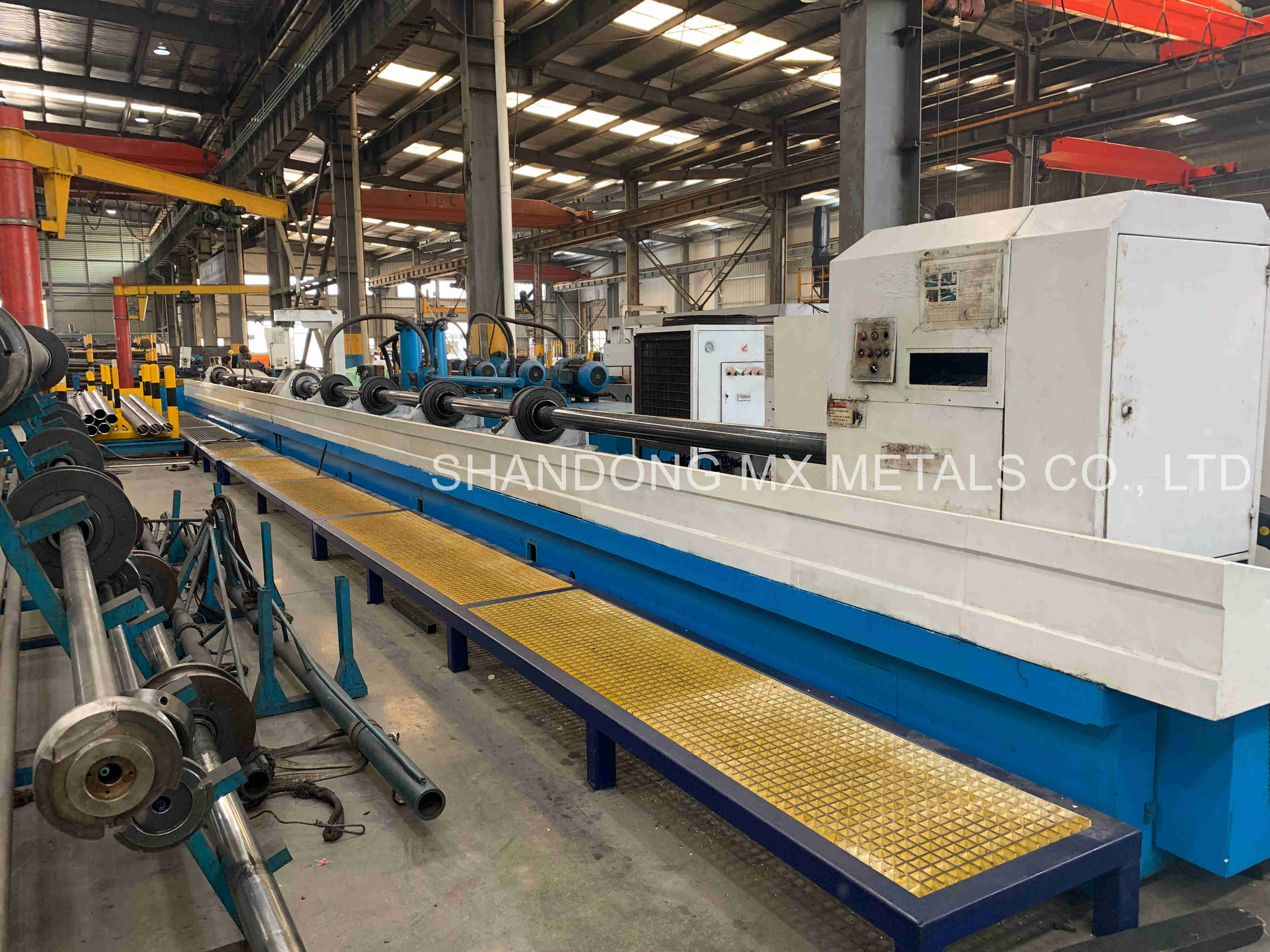
A honed tube for a hydraulic cylinder is not a standard tube with a smoother bore. It is a precision component in which bore diameter, tolerance class, straightness, wall thickness and surface roughness are all specified so that a piston seal can run against the surface for the service life of the cylinder. The same discipline applies to the piston rod: a hard chrome plated rod is defined by its base material, chrome layer thickness, hardness and straightness, not by its diameter alone.
Quote verification is therefore the first quality step in a cylinder build, not an administrative one. Two quotations for the same nominal bore can look similar on price and still describe different products: one naming a material grade without a standard, the other naming both; one stating H8 without a measurement basis, the other stating the instrument and the sampling; one listing chrome plating, the other stating a layer thickness in micrometres. Until those fields are aligned, the prices are not comparable.
This reference examines that comparison from the bore side, with particular attention to skived and roller burnished tube, the finishing route behind a large share of honed tube supply for hydraulic cylinder barrels. It then applies the same verification logic to hard chrome plated rod, because most cylinder purchases combine both in a single order.
Why the quotation, not the price list, sets cylinder quality
In hydraulic cylinder service, the bore and the rod are wear surfaces. The working conditions are specific and demanding: heavy-load and high-pressure operation, dusty, humid and variable-temperature sites, harsh outdoor environments, and continuous reciprocating movement. The listed special requirements for these components are strict dimensional tolerance, a smooth inner surface, and wear and corrosion resistance. A quotation that does not translate those requirements into measurable fields gives the buyer no way to check delivered material against the intent of the design.
The risk is asymmetric. An out-of-band bore tolerance, a roughness value above specification or a thin chrome layer rarely fails at goods-in. It fails in the field, as seal leakage, rod scoring or premature gland wear, at a point where the cylinder is already assembled and often already installed. Verification at quotation stage is cheaper than rework after assembly, and it is the last stage at which changing supplier is still a low-cost decision.
A practical rule follows from this: a quotation is comparable only when material grade, standard, process route, dimension and tolerance, surface parameter, straightness, inspection document, packing and delivery terms are all stated. Missing fields are not neutral. They are unpriced risk transferred to the buyer.
What skived and roller burnished tube actually specifies
Skived and roller burnished tube is a honed tube whose bore is produced by skiving followed by roller burnishing, rather than by abrasive honing. In the product listing it is classified as a skived and roller burnished tube with a skived and roller burnished bore, an inner diameter range of 30 to 500 mm, and intended use in hydraulic cylinder barrels for the hydraulic and construction machinery industries.
The distinction matters commercially. Skiving removes material with a cutting tool; roller burnishing then cold-works the bore surface to its final dimension and finish. The commercial category name on the market is still honed tube, but the process behind the price is different, and so is the surface texture left in the bore. A buyer comparing an abrasive-honed quotation with a skived and roller burnished quotation is comparing two operations, not two prices for one operation.
The practical consequence is simple: ask which route the price covers. A quotation that says only honed tube, without naming the bore process, cannot be benchmarked against a competitor that does name it.
| Specified property | Listed value | What the buyer is checking |
|---|---|---|
| Inner diameter | 30 – 500 mm | Whether the bore sits inside the standard range or requires a custom quotation |
| ID tolerance | H8 | Seal clearance and the fit of the piston assembly |
| ID roughness | ≤ 0.2 μm | Seal life, friction and internal leakage |
| Straightness | ≤ 0.5 / 1000 mm | Machining allowance and rod alignment in the assembled cylinder |
| Tensile strength | ≥ 600 MPa | Pressure containment of the barrel wall |
| Yield strength | ≥ 520 MPa | Threshold for permanent deformation under load |
| Elongation | ≥ 14% | Toughness under shock and cyclic loading |
| Applicable standards | DIN 2391, EN 10305, GB/T 8713-88, GB/T 3639-2000 | Which edition governs the mechanical properties on the certificate |
| Material grades | ST52, E355, S355J0H, S355J2H, ST45, SAE1026, STKM13C, Q345B, Q345D, 16Mn, 27SiMn, 25Mn, AISI 304, AISI 316, AISI 431 | Strength level and corrosion behaviour for the working environment |
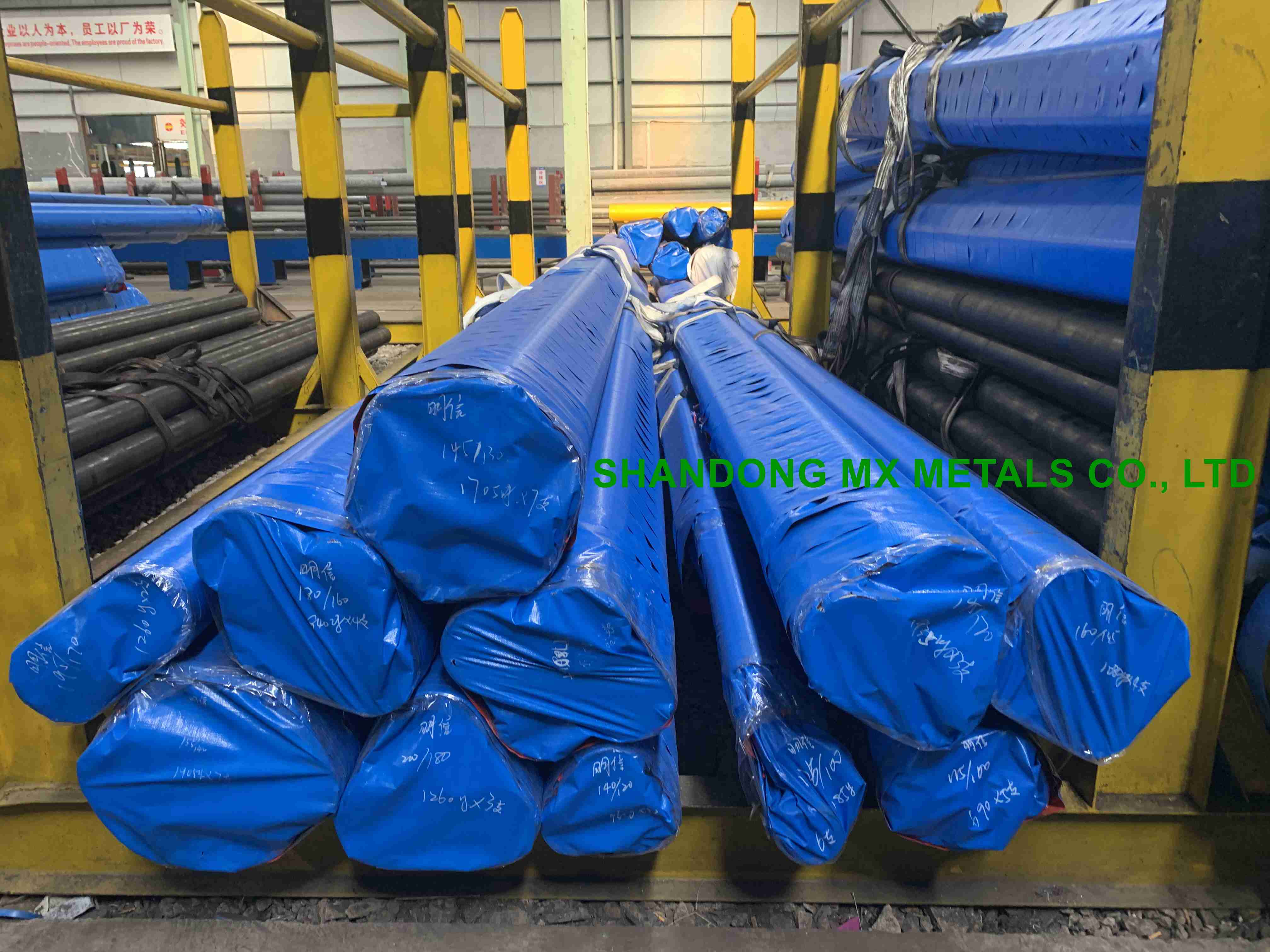
Eight checkpoints on a honed tube quotation
1. Material grade with its standard. The product specification lists ST52 against DIN 2391 and E355 against EN 10305. Standard mapping published by steel suppliers treats DIN 2391 St52-3 as equivalent to EN 10305-1 E355, and notes that DIN 2391 has been withdrawn while EN 10305-1 is the active standard. A quotation that names only the legacy designation is not wrong, but it should also name the current equivalent.
2. Bore process route. Skived and roller burnished, abrasive honed, or ready-to-hone are three different products with three different machining allowances. A ready-to-hone tube leaves the final bore operation to the buyer and shifts both cost and finishing risk downstream.
3. Bore diameter and tolerance class, with the measurement basis. H8 over 30 to 500 mm is a specification; it becomes verifiable only when the quotation or its accompanying inspection plan states where and how the bore is measured.
4. Surface roughness parameter and cut-off. The honed tube listing states an ID roughness of ≤ 0.2 μm. At company level, honing control is stated as H8/H9 with a maximum surface roughness of Ra 0.4 μm. Buyers should confirm which figure applies to the quoted size and whether the value is Ra or Rz, since the two are not interchangeable.
5. Straightness. The listing states ≤ 0.5 / 1000 mm. This value governs how much material must be removed in later machining and how well the barrel aligns with the rod in the assembled cylinder.
6. Wall thickness and wall tolerance. The bore range alone does not define the wall. Wall thickness and its tolerance affect roundness after machining, pressure capacity and weight, and should be stated explicitly rather than assumed from the outside diameter.
7. Length, end finish and protection. Cut length, deburring or chamfering, oiling and end capping determine how much handling damage the tube absorbs before it reaches the machining centre.
8. Inspection documents and batch traceability. A mill certificate, a dimensional and roughness record, and a packing list tied to the batch are what convert a quotation into an auditable supply. The manufacturer states that finished inspection is part of its integrated chain, which is the point at which those records are produced.
Quotations missing checkpoints 1 to 4 should be returned with a request for completion rather than compared on price. Filling those four fields usually changes the ranking of the offers.
Chrome rod quotations: the values that decide seal life
The rod side of the order carries its own verification logic. The hard chrome plated rod listing covers a diameter range of 6 to 300 mm, ISO f7 tolerance, a chrome layer of 25 (±5) μm, roughness ≤ 0.2 μm, hardness 900–1150 HV, straightness ≤ 0.2/1000 mm, and roundness equal to half of the diameter tolerance. Induction hardened versions are stated at 55–60 HRC with a hardened depth of 1.5–3.5 mm. Corrosion resistance is stated as a minimum of 200 hours neutral salt spray at rating 9, evaluated according to ISO 9227 and ISO 10289.
| Rod parameter | Listed value | Interaction with the cylinder |
|---|---|---|
| Diameter range | 6 – 300 mm | Rod sizing and gland selection |
| Tolerance | ISO f7 | Fit with the rod seal and guide bush |
| Chrome layer | 25 (±5) μm | Wear and corrosion reserve over service life |
| Surface roughness | ≤ 0.2 μm | Seal lubrication film and friction |
| Hardness | 900 – 1150 HV | Abrasion resistance against dust and contamination |
| Straightness | ≤ 0.2 / 1000 mm | Side load on the gland and seal |
| Roundness | Half of diameter tolerance | Leakage path across the seal |
| Corrosion resistance | Min. 200 h NSS, rating 9, per ISO 9227 / ISO 10289 | Outdoor and humid or coastal service |
Three fields deserve separate attention. First, chrome layer thickness is stated as a band, 25 μm with a tolerance of ±5 μm, so a buyer should confirm whether the guarantee applies to the nominal value or to the lower limit of the band; the difference is a real difference in wear reserve. Second, the base material must be named, because the same rod diameter can be supplied in DIN CK45, SAE1045, JIS S45C, SAE1026, ST52, 20MnV6, 42CrMo4, 40Cr or stainless grades such as AISI 304, AISI 316 and AISI 431, and the grade governs hardenability, strength level and corrosion behaviour. Third, hardness and case depth belong together when induction hardening is quoted.
Hollow rods follow a parallel specification. The hard chrome plated tube is supplied as a hollow piston rod with an outer diameter of 20 to 300 mm, ISO f7 or f8 tolerance, a chrome layer of 25 (±5) μm, roughness ≤ 0.2 μm, hardness 850–1150 HV and straightness ≤ 0.2/1000 mm.
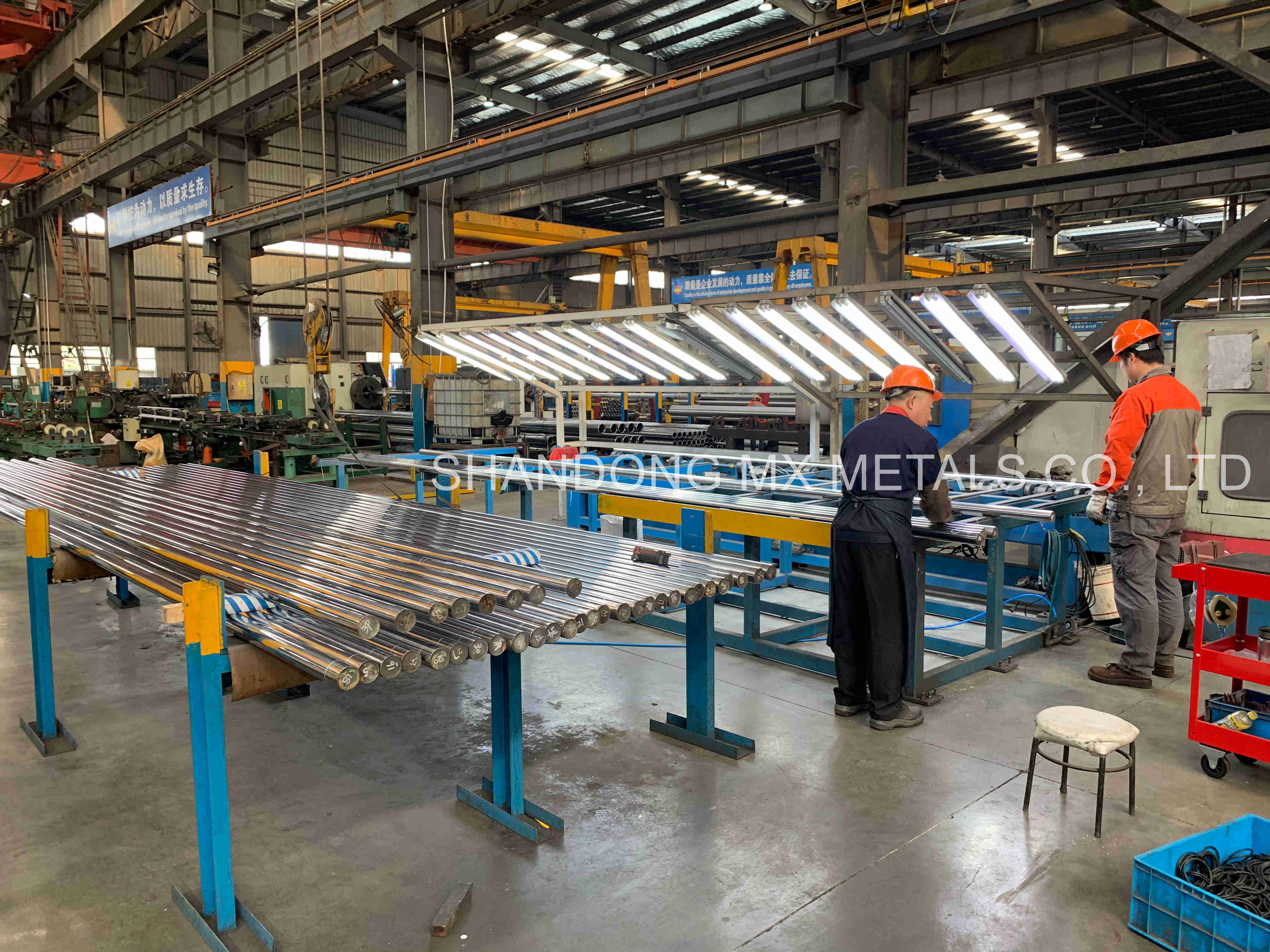
Where the quotation meets the factory
SHANDONG MX METALS CO., LTD is a manufacturer and exporter focused on skived and roller burnished tube, honed tube and hard chrome plated rod for hydraulic and pneumatic cylinder applications, operating from Liaocheng, Shandong Province, China. Company data records a founding year of 2015, a factory area of 20,000 m², 89 employees including 11 engineers, an annual output of 20,000 tons and an export ratio of 60%, with markets that include the EU, USA, Russia, Australia, Turkey, India, UAE, Thailand, Iran, Egypt, Brazil, South Korea, Indonesia and Saudi Arabia.
For quotation purposes, the relevant point is the scope of the chain rather than the size of the site. The company describes an integrated industrial chain covering raw material selection, precision machining, heat treatment, hard chrome plating, finished inspection and export delivery. Its core range includes precision honed tubes, skived and roller burnished tubes, ready-to-hone tubes, hard chrome plated piston rods, induction hardened piston rods, hollow chrome rods, and custom big cylinder tubes and piston rods. Honing control is stated as H8/H9 bore tolerance with a maximum surface roughness of Ra 0.4 μm; for rods, chrome layer thickness, straightness, surface roughness and dimensional stability are managed together.
That structure is what allows a single order to be verified in one place: bore, rod, heat treatment and plating are documented inside the same chain rather than across several sub-suppliers. It also defines the natural limits of what a buyer can assume, which the section on boundaries below sets out.
Application fit: where these values are tested
The listed applications are hydraulic cylinder barrels in the hydraulic industry and construction machinery, with the same components also specified for water conservancy projects. The working conditions named for these uses are heavy-load and high-pressure operation, dusty, humid and variable-temperature sites, harsh outdoor environments, and stable performance under continuous reciprocating movement. In that setting the bore roughness and tolerance govern seal life and internal leakage, while chrome thickness and rod hardness govern resistance to scoring and corrosion.
Size determines which product line a quotation should be built from. The standard honed tube covers a 30 to 500 mm inner diameter. Beyond that, the special custom big cylinder tube and rod line covers an inner diameter of 300 to 2000 mm with H8, H9 or H10 tolerance and lengths up to 15,000 mm, in materials that include ST52, E355, S355, CK45, 1045, 20MnV6, ST45 and STKM13A, for hydraulic cylinder, construction machinery and water conservancy applications. For non-bore parts, the cold drawn cold rolled precision seamless tube covers an outer diameter of 16 to 300 mm, wall thickness of 2 to 30 mm and a tolerance of ±0.05 mm, and is intended for precision machine parts, automotive components, hydraulic systems and engineering machinery.
A buyer sourcing a large-bore barrel should therefore expect the quotation to look different from a standard honed tube offer: bore tolerance class instead of a single H8 figure, an explicit length limit, and a material grade confirmed against the intended pressure and environment.
Market context: a large, Asia-Pacific-weighted supply base
Quote verification is becoming more consequential because the supply base is large and price dispersion is wide. Commercial research cited for the honed tube market puts global valuation at 3.6 billion USD in 2025, with a forecast period running from 2026 to 2035 (WiseGuyReports). Separate research on hydraulic tubing reports that Asia-Pacific accounts for 35% of that market, giving the region the largest single share (Data Insights Reports).
For buyers, the implication is structural rather than promotional. A concentrated regional supply base with many comparable-looking offers makes document-level differentiation the main defence against buying a lower grade at a competitive-looking price. It also explains why standard naming has become a live issue: as DIN 2391 gave way to EN 10305-1, quotations that still cite only the legacy designation require an explicit mapping before they can be compared with offers written against the current standard.
A second, quieter trend runs in the same direction: buyers increasingly ask for inspection records and batch traceability as part of the commercial terms rather than as an afterthought. That shift favours suppliers whose inspection sits inside their own process chain, and it penalises offers that cannot produce a roughness record for the actual lot.
Skived and roller burnished versus conventional honing: where the route stops
Skived and roller burnished tube is not a universal replacement for abrasive honing, and treating it as one is a common sourcing error. The two routes produce different surface textures, and some cylinder designs specify a honed bore finish. A buyer who assumes interchangeability without checking the drawing may approve a quotation that the cylinder design does not actually call for.
| Route | What it is | Where it fits | Where it stops |
|---|---|---|---|
| Skived and roller burnished | Bore cut by skiving, then cold-worked by roller burnishing to final size and finish | Barrel production within the 30–500 mm bore range where the drawing accepts the burnished surface texture | Not interchangeable with a specified honed finish; tooling is bore-size dependent, so small diameters and short runs may be served better by another route |
| Abrasive honing | Bore finished with abrasive stones after a prior boring or drilling operation | Drawings that specify a honed texture, and geometry correction where the bore deviates | Requires a preceding bore operation, so it is a separate step in the process chain rather than a single-pass route |
| Ready-to-hone tube | Pre-machined tube with the final bore operation left to the buyer | Buyers with in-house honing capacity who want to control the final finish | Shifts finishing cost, lead time and quality risk to the buyer |
| Cold drawn precision seamless tube | Dimensionally accurate seamless tube without a finished bore | Parts and further machining where a bore finish is not the requirement | Not a substitute for a finished cylinder bore |
A second boundary is documentary. Quotation verification confirms what the supplier has committed to in writing; it does not confirm that a particular batch meets those values. Only incoming measurement, and where relevant coating thickness and salt-spray evidence on the delivered lot, closes that gap. A verified quotation defines the acceptance criteria; it does not satisfy them.
A third boundary concerns claims. Stated capability, including tighter tolerances, better straightness, more uniform wall thickness, more uniform plating thickness, a thicker chrome layer and lower out-of-roundness, is a supplier statement until it is demonstrated on a specific batch record. The statement is a reasonable basis for shortlisting, not a substitute for the inspection report.
Future outlook
The direction of procurement in this category is towards documents rather than adjectives. As bore and rod specifications become more uniformly written across regions, the remaining differentiation between suppliers will sit in three places: whether the standard cited on the quotation is current, whether the tolerance and roughness values come with a stated measurement basis, and whether the batch record exists at delivery.
Two developments are likely to reinforce that. First, the transition from legacy national standards to current equivalents will continue to generate quotation mismatches, particularly where buyers and suppliers reference different editions of the same grade. Second, as large-bore and custom cylinder work grows in construction and water-conservancy projects, more orders will combine standard honed tube with custom big cylinder tube and rod, making a single verified document set more valuable than a set of individually competitive line prices.
For the buyer at the research stage, the practical conclusion is straightforward: build the comparison on fields, not on totals. A quotation that states process route, material and standard, tolerance class, roughness parameter, straightness, chrome thickness, inspection documents and delivery terms can be compared with another that does the same. One that cannot should be completed before it is ranked.
FAQ
What is the difference between a honed tube and a skived and roller burnished tube?
Honed tube is the commercial category for a precision tube with a finished bore used in hydraulic cylinder barrels. Skived and roller burnished describes the process route: the bore is produced by skiving followed by roller burnishing rather than by abrasive honing. A supplier can therefore list a product as a honed tube while the bore itself is skived and roller burnished. Buyers should confirm which route the quoted price covers, because the route determines the finishing operation, the resulting surface texture and the inspection method recorded on the certificate.
Which standard should a DIN 2391 ST52 or EN 10305-1 E355 honed tube quotation reference?
The product specification lists ST52 against DIN 2391 and E355 against EN 10305, with DIN 2391, EN 10305, GB/T 8713-88 and GB/T 3639-2000 among the applicable standards. Published standard mapping treats DIN 2391 St52-3 as equivalent to EN 10305-1 E355, and records that DIN 2391 has been withdrawn while EN 10305-1 remains active. A quotation naming ST52 should also name the standard edition being applied, so that the mechanical property requirements are unambiguous.
What should be verified first on a honed tube quotation?
Four fields determine whether two quotations describe the same product: the material grade together with its standard; the bore process route, since skived and roller burnished, abrasive honed and ready-to-hone tube are different operations; the bore diameter with its tolerance class, for example H8 across the 30 to 500 mm inner diameter range; and the surface roughness value with its measurement basis. Straightness, wall thickness, length and end finish complete the comparison. A quotation missing any of the first four cannot be ranked on price.
Why is chrome layer thickness specified as a band rather than a single figure?
Chrome layer thickness is the wear and corrosion reserve on the rod surface and is specified independently of diameter. The hard chrome plated rod listing states 25 (±5) μm, roughness ≤ 0.2 μm and hardness 900–1150 HV, with corrosion resistance stated as a minimum of 200 hours neutral salt spray at rating 9 under ISO 9227 and ISO 10289. Because the specification is a band, a buyer should confirm whether the quoted guarantee applies to the nominal value or to the lower limit, since the two correspond to different service reserves.
Can a verified quotation replace incoming inspection?
No. Quotation verification confirms what the supplier has committed to in writing: grade, standard, tolerance, surface parameter, chrome thickness, straightness and documentation. It does not confirm that a specific batch meets those values. That requires dimensional and roughness measurement and, where relevant, coating thickness and salt-spray evidence on the delivered lot. The two steps are complementary: the quotation defines the acceptance criteria that inspection then tests against.
Which bore sizes fall outside a standard honed tube quotation?
The standard honed tube is listed with an inner diameter range of 30 to 500 mm. Above that, the special custom big cylinder tube and rod line covers an inner diameter of 300 to 2000 mm with H8, H9 or H10 tolerance and lengths up to 15,000 mm. Requirements above or below those ranges, or outside the listed tolerance classes, cannot be assessed against a standard offer and require a specification-based quotation instead.
Technical data in this article is drawn from product specifications and public market sources; company figures are supplier-reported. Buyers should confirm current values and documentation requirements at the quotation stage.
The full MX Metals product range and specification tables are available in the MX Metals catalog (PDF).
Есть вопросы или нужны дополнительные детали?
Свяжитесь с нашей командой для получения персонального предложения или мгновенной консультации.
Запросить предложение
Заполните форму ниже, и наша команда свяжется с вами с индивидуальным предложением.
Прямой чат WhatsApp
Предпочитаете общаться в реальном времени? Напишите нам в WhatsApp для мгновенной помощи и быстрых ответов.
- Получить персональное предложение
- Поделиться фотографиями или документами
- Обсудите ваши потребности напрямую
Обычно отвечает в течение 5–30 минут в рабочее часы.