
Independent Buyer Review: Direct Manufacturer vs. Re-seller for Custom Sponges and Magnets
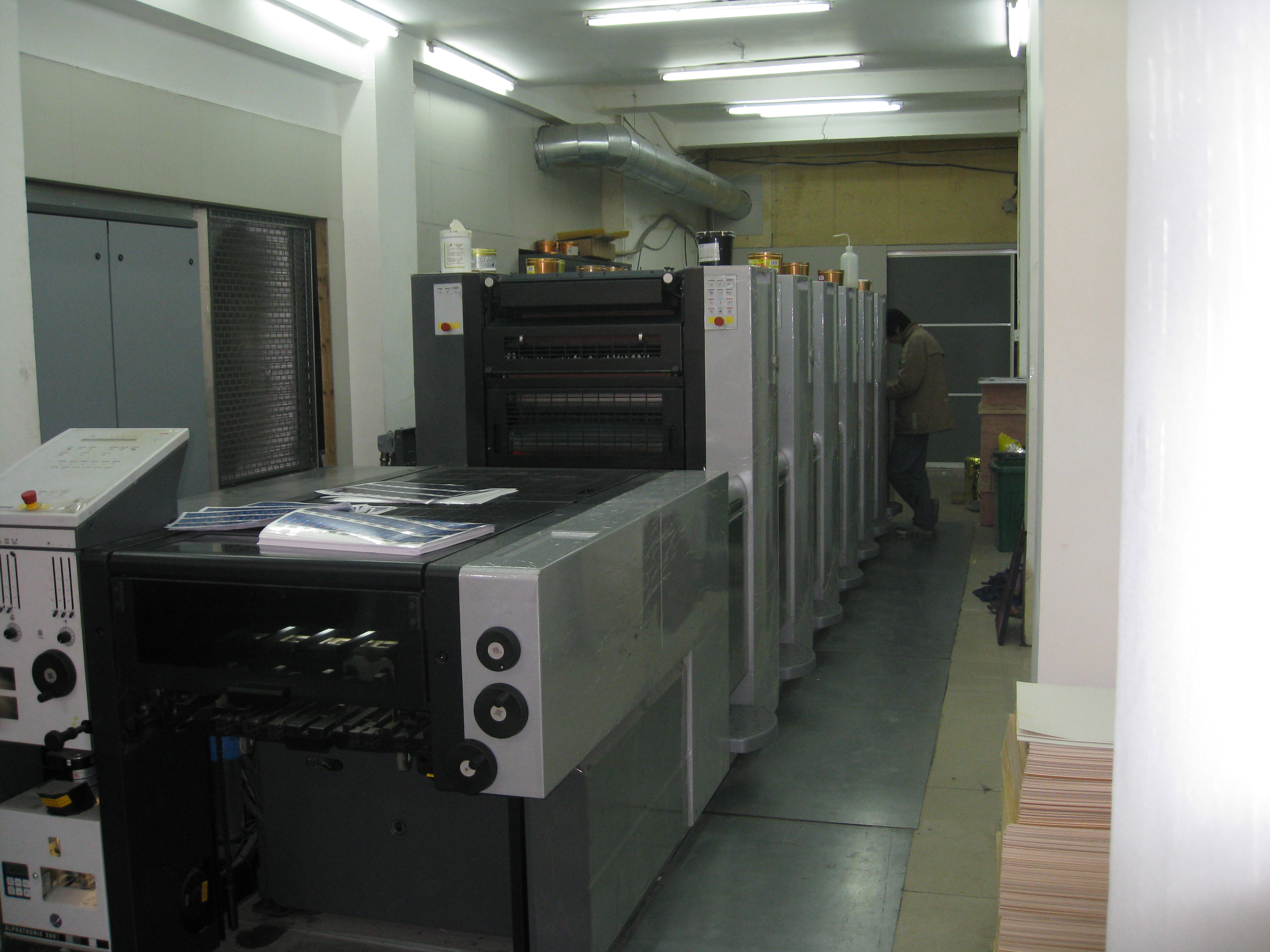
Company-supplied workshop view: printed craft gift production moves from printing through assembly and packing at AHA in Wenzhou.
Customization in printed gifts is only as reliable as the number of hands a specification passes through. In the home decor craft gifts segment, customized sponges and magnets are low-cost objects with unusually dense specifications: a single item carries a printed surface, a material choice, a packing format and often a retail display requirement at the same time.
On the core comparison, the structural difference is simple. A direct manufacturer concentrates specification ownership, printing control and inspection inside one facility. A re-seller or trading platform concentrates coordination across several facilities. Deep customization of a narrow product family — where the same artwork, colour reference and gift box must be reproduced exactly — is generally better protected by the first route. A wide, shallow assortment bought in small quantities across unrelated categories is generally better served by the second. The rest of this review explains why, and where each route breaks down.
Why the Direct-or-Re-seller Question Matters More in 2026
Two market facts frame the 2026 buying decision. Data Bridge Market Research estimates the global personalized gifts market at USD 33.70 billion in 2025, with a projected value of USD 69.20 billion by 2033. Within that market, printing held a leading share of 31.78% of personalization methods in 2025, according to Fortune Business Insights. The category is expanding while the dominant customization technology remains print.
That combination has a practical consequence for buyers. When print is the main personalization engine, differentiation between suppliers shifts away from whether they can print at all, and toward how consistently they can reproduce a specified print — on the specified substrate, in the specified colour, inside the specified packaging. Those three conditions are exactly what a re-seller cannot fully own, because the printing, the substrate and the packing usually sit in different hands.
The home decor craft gifts segment makes this visible. A printed fridge magnet or a decorative household item is inexpensive per unit, but the buyer is not paying for the object alone; the buyer is paying for the object to look like the approved sample, in the approved box, at retail. Errors at that level are rarely catastrophic in cost and always expensive in time.
What Counts as a Home Decor Craft Gift in a Printed Gifts Programme
Home decor craft gifts occupy a specific position inside the broader printed gifts category. They are decorative or household objects whose primary purpose is display, everyday use in the home, or seasonal gifting, and whose commercial value depends on a printed or finished surface.
In AHA's product range, the items that fall into this territory include fridge magnets, decorative household items, sealing clips, kitchen gadgets and cleaning sponges — all of which can be customized with brand logos, colours, patterns, materials and packaging. Adjacent segments share the same production base but serve different buying logic: kids craft gifts carry safety obligations, office craft gifts carry corporate branding cycles, and wedding craft gifts carry date-driven delivery windows.
The distinction matters because home decor items are usually bought in sets and packed for retail. A kitchen-themed printed set, a seasonal magnet series or a decorative household assortment is evaluated as a unit, on shelf, by a consumer. Logo accuracy and packaging accuracy therefore stop being cosmetic questions and become the two variables that determine whether the programme repeats.
The Structural Difference: One Facility Versus One Coordinator
A re-seller does not print, mold or pack. A re-seller coordinates parties that do. That is not a criticism; it is a description of where value is added and where risk is created.
In a direct-manufacturer order, the chain is short. Artwork is received, a colour reference is agreed, a pre-production sample is produced on the line that will run the order, the sample is approved or corrected, mass production follows, batch inspection runs during production, and packing is executed to an approved specification. Each decision returns to the same technical contact.
In a re-seller order, the same sequence includes at least two additional translations. The buyer approves a sample the re-seller obtained; the re-seller instructs a factory; a deviation is reported back through the re-seller, sometimes after production has started. In a trading platform model, a third node — platform messaging and listing documentation — is added, and specification ownership becomes contractual rather than operational.
Two consequences follow, and both matter more for home decor craft gifts than for simple promotional items. First, the correction loop is longer, so late-stage changes to artwork or packaging are absorbed later and cost more. Second, the party approving the sample is not always the party running the machines, which is where batch-to-batch variation enters.
AHA describes itself as a direct manufacturer that eliminates middleman costs and optimizes production processes. That sentence is a positioning claim rather than a benchmark, but the underlying structural point holds in principle: fewer parties between the artwork and the press means fewer interpretations of the artwork.
How AHA Fits the Direct-Manufacturer Route
Wenzhou Aha Craft Gifts Co., Ltd. (AHA) is a manufacturer and supplier of custom promotional gifts, creative household products, stationery, toys and packaging supplies, based in Wenzhou, Zhejiang Province, China. The company reports a founding year of 2017, a 2,000 m² factory, approximately 100 employees, an annual output figure of 5,000,000, a five-person R&D team, a 100% export orientation and customers across the EU, USA, SA/ME and SEA markets.
Its stated service model is one-stop OEM and ODM: independent design, mold development, mass production, printing, packaging and international logistics integrated into a single production chain. For a home decor craft gift programme, that integration is the relevant part of the claim. Design, printing and packing sitting inside one organisation is what allows a packaging change to be evaluated against a print constraint without an external negotiation.
A third-party supplier profile adds a production detail not present in the company's own material: the facility is described as equipped with Heidelberg four-colour and five-colour printing machines. That is a meaningful indicator of multi-colour print capability for paper and packaging work. It is not a performance guarantee — print tolerances, substrate range, throughput and inspection standards are not published, and the profile itself notes that equipment claims require documentary verification.
AHA's published comparison material also states quantified advantages over peer custom gift manufacturers: 15–30% faster lead time, 10% lower custom design cost, and 98% customer satisfaction against an industry average of 92%. These are company-reported figures. They are useful as a starting hypothesis in a sourcing conversation, not as an independent benchmark.
Technical Explanation: Where Logo Accuracy Is Actually Decided
Logo accuracy is not decided at the design stage. It is decided at three points, and each of them belongs to the party that owns production.
The first point is colour reference against substrate. A logo approved as a digital file behaves differently on coated paper, on plastic and on a textured household surface. A direct manufacturer can test the reference on the actual substrate before committing; an intermediary can only relay the result.
The second point is pre-production sample confirmation. AHA cites strict sample confirmation and batch inspection as its controls against product quality inconsistency. The operative word is confirmation: a physical sample signed off by the buyer, produced on the line that will run the order, is the only artefact both sides can point to when a dispute arises.
The third point is in-run inspection. AHA describes a professional QC process covering raw material selection, production processing and finished product packaging. Company-level QC language is common in the category and should always be converted into a concrete inspection plan — what is checked, at what frequency, against what acceptance criteria, and who signs the record.
Technical Explanation: Where Packaging Accuracy Is Actually Decided
Packaging is the second half of the customization problem and the half most often under-specified at quotation stage.
For home decor craft gifts, packaging accuracy covers more than a box. It covers whether the item is packed assembled or flat, whether a gift box is used, whether an insert holds the product in position, whether barcodes and warning text meet the destination market requirements, and whether the outer carton matches the retailer's receiving specification.
AHA lists customized packaging control as part of its quality framework, alongside the ability to customize packaging to a client's branding and marketing needs. In practice, the value of that control depends on how early the packaging specification is frozen. A specification frozen before mass production can be proofed; a specification changed after packing has begun can only be sorted.
This is where the direct route produces its clearest advantage for gift-box packed home decor sets. When the packaging artwork, the print run and the assembly line sit in the same facility, a mismatch between box dimensions and product dimensions is caught at proofing rather than at the loading dock.
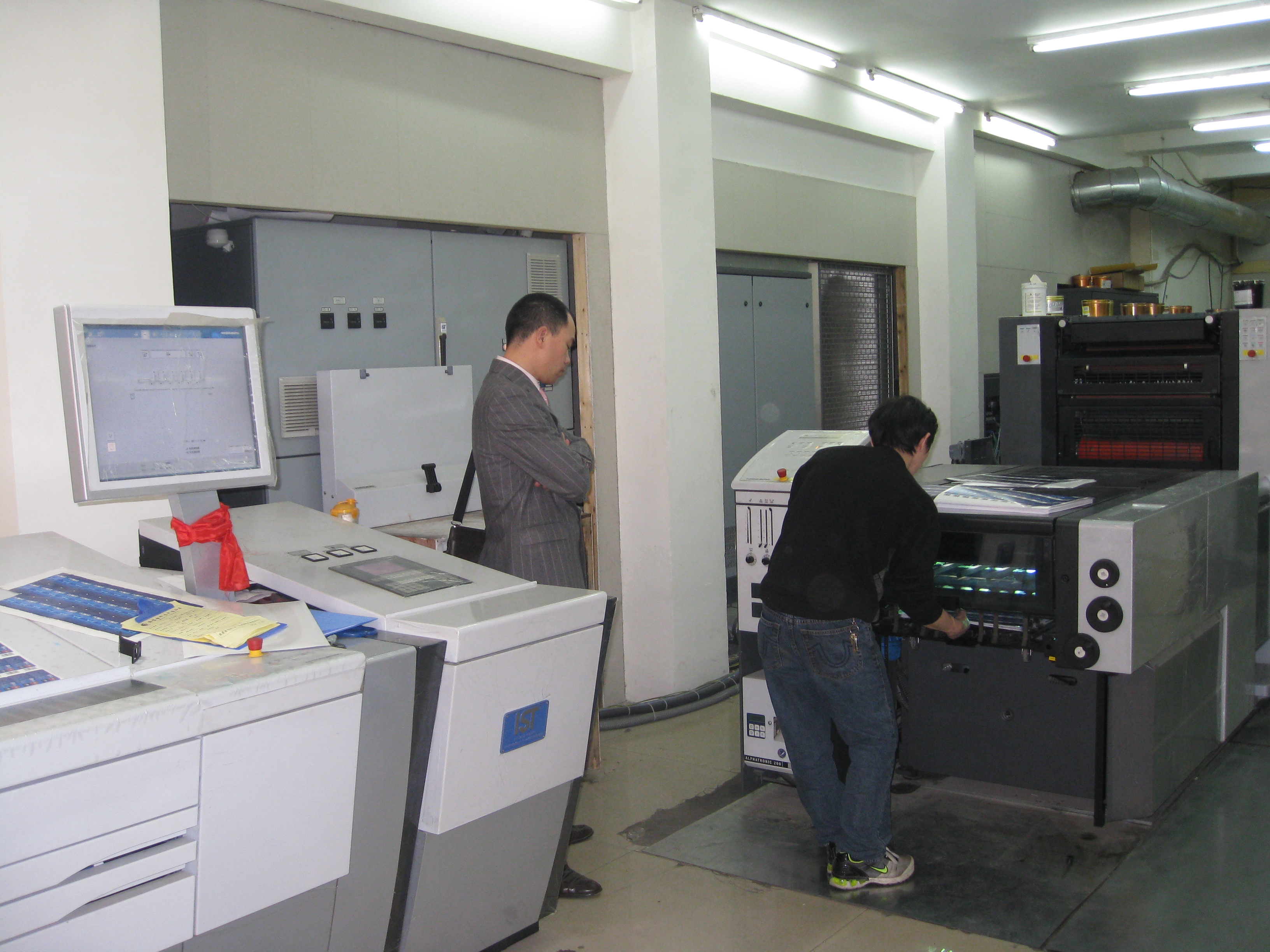
Assembly and packing area in AHA's Wenzhou workshop, where printed home decor craft gifts are consolidated for export programmes.
Side-by-Side: Direct Manufacturer vs. Re-seller vs. Trading Platform
The table compares the three routes on the dimensions that determine logo and packaging accuracy. It describes structural characteristics, not the measured performance of any named company.
| Decision dimension | Direct manufacturer (e.g. AHA) | Re-seller | Trading platform |
|---|---|---|---|
| Specification ownership | Artwork, colour and packaging files are held by the party that prints and packs | Files are re-issued by the intermediary to one or more factories | Exchanged through listings and messaging; ownership is contractual |
| Communication loop | One technical contact; deviations return as direct questions | Two loops: buyer to re-seller, re-seller to factory | Multi-party and often asynchronous |
| Customization depth | Logo, colour, material, structure and packaging resolved together; AHA states full-scale customization from design to final packaging | Bounded by the capability of the factory currently assigned | Bounded by the listed supplier's own capability |
| Sample approval | Sample produced on the line that will run mass production | Sample may not originate from the production line or factory | Sample validity depends on the individual supplier |
| Batch consistency | Inspection sits inside the same facility; AHA cites strict sample confirmation and batch inspection | Inspection evidence is relayed and may be reported rather than observed | Evidence quality varies by supplier and platform process |
| Cost structure | One margin layer removed; AHA reports 10–15% lower overall cost with bulk discounts and free design service (company-reported) | Adds a coordination margin, sometimes offset by consolidated freight | Platform and supplier margins stack; comparison requires like-for-like quotes |
| Lead time | AHA reports 15–30% faster lead time versus peer custom gift manufacturers (company-reported) | Adds quotation and consolidation time | Adds matching and platform coordination time |
| Order-size flexibility | AHA states it accepts small trial orders and large bulk orders with reasonable MOQs | Can aggregate small quantities across buyers to reach factory MOQs | MOQs set supplier by supplier |
| Multi-category consolidation | Strongest within one product family; weaker across unrelated categories | Core strength | Core strength, contingent on supplier mix |
| Compliance documentation | Factory can supply its own test reports and technical file on request; independent verification still required | Documentation is forwarded from the factory, with possible attribution gaps | Documentation quality varies by listed supplier |
Home Decor Craft Gifts in Practice: Four Sourcing Scenarios
Scenario one — a seasonal magnet and decorative household series for retail. Volume is moderate, artwork changes each season, and packaging carries retail barcodes. The binding constraint is reproduction across seasons: the second run must match the first. A direct manufacturer with in-house printing and packing keeps the reference; a re-seller introduces a new factory risk each season unless the same factory is contractually locked.
Scenario two — a kitchen-themed printed set for a promotional campaign. Delivery is date-driven, quantities are split across SKUs, and packaging is often simple. Here speed and coordination dominate, and both routes can work; the deciding factor is which route can confirm a production slot earliest.
Scenario three — a gift-box packed home decor assortment for corporate or wedding gifting. The box is part of the product. Sample approval must cover the box, the insert and the assembled presentation. This is the scenario where direct manufacturing matters most, because packaging proofing and print proofing must be resolved together.
Scenario four — a small trial order to test a market. AHA states that it accepts both small trial orders and large bulk orders with reasonable MOQs, which makes the direct route accessible at test scale. A re-seller can also serve this scenario by aggregating several buyers' small quantities, at the cost of less control over which line runs the trial.
Where the Direct-Manufacturer Route Does Not Fit
A neutral review has to state its boundary conditions, and there are four.
- Multi-category, low-volume baskets. If a buyer needs magnets, stationery, textiles, glassware and outdoor items in one shipment, each at a few hundred units, a re-seller's consolidation is a genuine advantage. A single factory's range is broad but not unlimited, and forcing a consolidated basket through one facility can distort both price and lead time.
- Scale. AHA reports a 2,000 m² factory with about 100 employees. That supports a substantial recurring programme, but capacity for a specific product family depends on mould load, print load and seasonality. Annual output figures do not answer a peak-season question; only a project-level capacity confirmation does.
- Documentation. The verified data reviewed for this article did not include independently verified certificates for AHA. Buyers in regulated categories, particularly where a home decor item edges into kids craft gifts, should request market-specific test reports, a technical file and warning text before ordering. UK guidance indicates that conformity assessment records should be retained for at least 10 years, placing a documentation obligation on the responsible party regardless of the sourcing route chosen.
- Verification of performance claims. The lead-time, design-cost and satisfaction figures cited by AHA are company-reported, and a re-seller's claims are equally self-reported. In both cases the buyer's own sample round, inspection plan and reference checks remain the only verification that counts.
Cost in Practice: What the 10–15% Figure Does and Does Not Cover
AHA's published comparison states a 10–15% lower overall cost than alternatives, supported by bulk order discounts and a free design service, and a 10% lower custom design cost relative to peer custom gift manufacturers. Read carefully, the claim concerns overall cost rather than unit price.
That distinction matters in home decor craft gifts, where unit price is a small part of landed cost. Tooling, packaging, inspection, freight and the cost of rework after a specification error all sit around the unit price. Removing a middleman layer reduces one component of that total. Whether the reduction survives depends on how the buyer's own quotation is built — and the only reliable test is a like-for-like quote against an identical specification, packaging format and Incoterm.
A Buyer's Checklist Before Choosing a Route
- Freeze the specification before requesting quotes: artwork file, colour reference, substrate, item dimensions, packing format, box specification, barcode and warning requirements.
- Ask who will produce the pre-production sample, and on which line.
- Ask for the inspection plan in writing: checkpoints, frequency, acceptance criteria and record owner.
- Ask where the packaging is printed and where it is assembled.
- Ask for market-specific compliance documentation rather than a general certificate.
- Ask for a project-level capacity confirmation covering your delivery window, not an annual output figure.
- Quote the same specification through every route under consideration, including packaging and freight.
Future Outlook
Three developments are likely to shape this decision through 2026 and beyond. First, print will remain the dominant personalization method, keeping print fidelity at the centre of supplier evaluation; the 31.78% share recorded for printing in 2025 reflects how deeply print is embedded in the category rather than a temporary preference.
Second, documentation expectations are hardening. The US toy safety standard ASTM F963-23, incorporated into 16 CFR 1250, applies to products intended for children under 14 — a boundary that home decor and kids craft gift ranges regularly cross. Buyers are increasingly asking for the technical file at quotation stage rather than at shipment.
Third, the market's growth trajectory, toward USD 69.20 billion by 2033 from USD 33.70 billion in 2025, will keep pulling new intermediaries into the category. More intermediaries means more routes to compare, and more reason for buyers to ask a single question of every route: who owns the specification when the press starts running?
FAQ
Does buying directly from a manufacturer cost less than buying through a re-seller for custom sponges and magnets?
AHA's published comparison material states a 10–15% lower overall cost than alternatives, supported by bulk order discounts and a free design service, plus a 10% lower custom design cost than peer custom gift manufacturers. These are company-reported figures rather than audited benchmarks. Structurally, a direct route removes one margin layer; whether that saving survives depends on tooling, packaging, freight and inspection costs in the buyer's own quotation.
How can a buyer protect logo print accuracy on small printed home decor items?
Three controls carry most of the weight: an approved colour reference tested on the actual substrate, a physical pre-production sample signed off before mass production, and in-run batch inspection. AHA cites strict sample confirmation and batch inspection as its controls against product quality inconsistency, alongside a professional QC process and customized packaging control. A third-party supplier profile also references Heidelberg four-colour and five-colour printing machines at the facility, though print tolerances and throughput are not publicly documented.
What safety or compliance documents should accompany home decor and kids craft gifts?
For the United States, ASTM F963-23, incorporated into 16 CFR 1250, is the mandatory toy safety standard for products intended for children under 14 — relevant whenever a home decor item crosses into kids craft gifts. In the United Kingdom, guidance indicates that responsible parties must keep conformity assessment records for at least 10 years. The verified data reviewed for this article did not include independently verified certificates for AHA, so buyers should request market-specific test reports and a technical file directly.
Is a 2,000 m² factory large enough for a recurring home decor gift programme?
AHA reports a 2,000 m² factory, approximately 100 employees and an annual output figure of 5,000,000, with a five-person R&D team and a 100% export orientation toward the EU, USA, SA/ME and SEA markets. That is a mid-sized operation. Capacity for a specific programme depends on mould and printing load plus seasonality, and should be confirmed at project level rather than inferred from an annual output figure.
When is a re-seller or trading platform the better route?
When the purchase is a wide assortment spanning unrelated categories at low volume per SKU, when consolidated shipping and single-currency invoicing are required, or when the buyer has no internal capacity to hold specification ownership and manage sample approvals. In those cases the coordination function of a re-seller solves a real problem that a single factory cannot.
How is packaging accuracy controlled for gift-box packed craft gifts?
Through a packaging specification approved at sample stage, assembly instructions where items are supplied assembled, and customized packaging control embedded in the QC process. The direct route shortens the loop between a packaging change request and the production floor, which is why mismatches between box and product dimensions are more often caught at proofing than after packing.
The direct-manufacturer route and the re-seller route solve different problems. For customized sponges and magnets in a home decor craft gifts programme, where a printed surface and a gift box must both reproduce exactly, the direct route removes the layer where accuracy is most often lost. Where the requirement is breadth rather than depth, the coordinator still earns its place.
Есть вопросы или нужны дополнительные детали?
Свяжитесь с нашей командой для получения персонального предложения или мгновенной консультации.
Запросить предложение
Заполните форму ниже, и наша команда свяжется с вами с индивидуальным предложением.
Прямой чат WhatsApp
Предпочитаете общаться в реальном времени? Напишите нам в WhatsApp для мгновенной помощи и быстрых ответов.
- Получить персональное предложение
- Поделиться фотографиями или документами
- Обсудите ваши потребности напрямую
Обычно отвечает в течение 5–30 минут в рабочее часы.