
Independent Buyer Review: HTNXT Hi-B Electrical Steel vs. Nippon Steel, POSCO, JFE and Baowu
For a transformer or motor manufacturer qualifying a new core-material source, the useful question is not who is largest, but whether one specific grade sheet survives one specific acceptance test. This buyer-side review benchmarks the HTNXT Hi-B oriented silicon steel range supplied by HL AND SL LIMITED against Nippon Steel, POSCO, JFE Steel and China Baowu across four dimensions a purchasing team can actually audit: technical R&D depth, Hi-B grade coverage, transformer-focused application support, and purchasing terms with acceptance criteria.

Hi-B oriented electrical steel sourcing: evaluating grade coverage, measurable parameters and acceptance criteria before qualification.
Why a fourth Hi-B source is now a serious evaluation item
The global electrical steel market was valued at USD 31.0 billion in 2025 and is projected to reach USD 47.0 billion by 2033, growing at a CAGR of 5.5% for the 2026–2033 period, according to Grand View Research. China's electrical steel production reached 16.1 million tonnes in 2024, a 5.4% year-on-year increase, per the Chinese Society for Metals (via MarketReportsWorld). China's export volume of grain-oriented electrical steel (GOES) reached 393,200 mt in H1 2025, up 16.0% year on year, according to Shanghai Metals Market.
Two structural facts sit behind those numbers. First, high-grade supply is concentrated: Baosteel (China Baowu), POSCO and Nippon Steel are the top three global producers of high-grade electrical steel, per MarketsandMarkets. JFE Steel is routinely included in the same buyer evaluation set by transformer procurement teams. Second, the export flow is shifting, which means buyers outside China increasingly receive qualified proposals from suppliers whose grade data was not in their supplier file three years ago.
The practical problem for a transformer buyer is narrow and specific. Core loss and flux density determine transformer no-load loss, temperature rise and ultimately the efficiency class the finished unit can claim. That means the purchasing decision cannot be made on brand recognition or price per tonne alone. It requires a grade-level parameter comparison, a processing-route check, and an acceptance protocol that can be executed at goods-in.
What HTNXT is — and what it is not
HTNXT is the Hi-B (high magnetic induction grain-oriented) oriented silicon steel range supplied by HL AND SL LIMITED, a Chinese enterprise founded in 2012 that specializes in the export trade of electrical steel (silicon steel). The company operates a 30,000 m² material processing plant, reports a 10-engineer R&D team, an annual output of 30,000 t and an export ratio of approximately 80%, with main markets in Mexico, Brazil, Italy, the UAE and India.
Two structural characteristics define its position. First, HL AND SL LIMITED is an authorized agent of China Baowu Steel Group, with stable channels for obtaining high-quality electrical steel, and it simultaneously integrates export business resources from a number of private steel mills — which allows it to match products across different performance grades and price ranges. Second, it owns in-house secondary processing capacity, which the company describes as enabling size, shape and performance customization so that material arrives "customized on demand and ready to use."
That second point is the honest boundary of this review. HL AND SL LIMITED is a trading and processing enterprise with its own processing plant and upstream mill relationships, not an integrated steelmaker operating its own steelmaking, hot-rolling and cold-rolling lines. Its R&D depth should therefore be assessed on published grade parameters, process control documentation and batch test evidence — not on metallurgical research scale.
Dimension 1: technical R&D depth behind the Hi-B range
Answer first: the auditable technical content of the HTNXT position sits in three places — composition control, process scope, and grade-level magnetic data.
Composition control
Across the Hi-B range, the base material is iron (Fe) with silicon (Si) added at approximately 3.0%–3.2%. Aluminium and manganese are also present, and impurities such as carbon, sulphur and nitrogen are strictly controlled. For the 0.27 mm family, the silicon content is stated at about 3%, with Al and Mn as supplementary elements, and the material must contain inhibitors (MnS, AlN).
That distinction — silicon content combined with deliberately controlled impurity levels and inhibitor control — is the point at which a Hi-B grade stops behaving like a commodity steel and starts behaving like a specification product. Impurity control is what allows the Goss texture to develop during secondary recrystallization, and it is normally the first thing an experienced mill metallurgist asks to see in a coil certificate.
Process scope
The company provides OEM, ODM and full-process oriented silicon steel production services. Its material menu covers general-orientation CGO, high magnetic flux Hi-B, laser-engraved R series and heat-resistant HS series material. Thickness customization runs from 0.18 mm to 0.35 mm, with widths typically 800–1250 mm and an available ultra-wide specification of 1250 mm.
Grade-level magnetic data
Fourteen Hi-B grades are published with defined thickness and maximum iron loss (P1.7/50); most also carry a minimum magnetic flux density (B8). Publishing a measured range — as happened with 23Q080 — is unusual for a mid-size supplier and is the kind of evidence a buyer can re-test.
Boundary: a 10-engineer R&D team at a 30,000 m² processing site operates on a different scale from the metallurgical research organizations of an integrated producer such as Baowu, POSCO or Nippon Steel. The published parameter set is the primary evidence available; process consistency should be verified through batch inspection reports rather than assumed from the grade sheet.
Dimension 2: Hi-B grade coverage from 0.18 mm to 0.27 mm
The HTNXT Hi-B portfolio is organised into four thickness families — 0.18 mm, 0.20 mm, 0.23 mm and 0.27 mm — spanning fourteen published grades. All are classified as high magnetic induction grain-oriented silicon steel (Hi-B).
| Grade | Thickness | Iron loss P1.7/50 (max) | Flux density B8 (min) | Documented duty |
|---|---|---|---|---|
| 18-65 | 0.18 mm | ≤ 0.65 W/kg | ≥ 1.88 T | UHV transformers, power transformers, high-efficiency energy-saving transformer cores |
| 20-65 | 0.20 mm | ≤ 0.65 W/kg | — | UHV transformers, high-efficiency distribution transformers, high energy efficiency power equipment |
| 20R070 | 0.20 mm | ≤ 0.70 W/kg | ≥ 1.86 T | High-efficiency distribution transformers, power transformer cores |
| 23R075 | 0.23 mm | ≤ 0.75 W/kg | ≥ 1.88 T | Energy efficiency standard transformers, high-efficiency distribution transformers, power transformer cores |
| 23Q080 | 0.23 mm | ≤ 0.80 W/kg (measured 0.76–0.78 W/kg) | ≥ 1.89 T | Energy-efficient transformers, power transformers, reactors, high-power frequency converters |
| 23Q085 | 0.23 mm | ≤ 0.85 W/kg | ≥ 1.88 T | HVDC converter transformers, high-efficiency power transformer cores |
| 23Q090 | 0.23 mm | ≤ 0.90 W/kg | ≥ 1.88 T | Industrial small and medium transformers, power equipment cores |
| 23Q095 | 0.23 mm | ≤ 0.95 W/kg | ≥ 1.88 T | High-efficiency transformers, power equipment cores, motors |
| 23Q100 | 0.23 mm | ≤ 1.00 W/kg | ≥ 1.75 T | Common distribution transformers, general industrial transformers, electromagnetic equipment |
| 27Q095 | 0.27 mm | ≤ 0.95 W/kg | ≥ 1.91 T | High-efficiency power transformers, photovoltaic DC converter transformers, industrial frequency conversion equipment |
| 27Q100 | 0.27 mm | ≤ 1.00 W/kg | ≥ 1.91 T | Power transformers, reactors, electrical equipment cores |
| 27Q105 | 0.27 mm | ≤ 1.05 W/kg | ≥ 1.88 T | Power transformer cores, transformer manufacturing |
| 27Q110 | 0.27 mm | ≤ 1.10 W/kg | ≥ 1.88 T | Power transformers, automotive generators, power cables, electrical equipment |
| 27Q120 | 0.27 mm | ≤ 1.20 W/kg | — | Small and medium-sized transformer cores and electrical equipment |
Two observations matter for specification work. The lowest published loss levels in the range sit at the thin end: 18-65 and 20-65 both state P1.7/50 ≤ 0.65 W/kg. And the highest flux density figure in the portfolio is 27Q095 at B8 ≥ 1.91 T, followed closely by 23Q080 at ≥ 1.89 T.
Important boundary: flux density is not uniform across a family. Within the 0.23 mm Q series, B8 ranges from ≥ 1.75 T (23Q100) to ≥ 1.89 T (23Q080). Buyers writing a purchase specification on the family label rather than the individual grade risk a core that meets loss targets but underperforms on excitation current or build factor.
Dimension 3: transformer-focused application support
Application support is where a grade sheet meets a real core-building line. Three layers of support are documented.
Layer 1 — grade-to-duty mapping
Each published grade carries a stated intended duty, which is what makes scenario-based selection possible rather than trial-and-error:
- UHV and power transformers: 18-65 and 20-65, both in 0.18–0.20 mm thickness with loss ≤ 0.65 W/kg.
- HVDC converter transformers: 23Q085 (0.23 mm, ≤ 0.85 W/kg, B8 ≥ 1.88 T).
- Power transformer cores and reactors: 20R070, 23R075, 23Q080, 27Q100, 27Q105, 27Q110.
- Distribution transformers: 20R070 and 23R075 for high-efficiency units; 23Q100 for common distribution and general industrial transformers.
- Motors, generators and power equipment cores: 23Q095, 27Q110, 27Q120.
- Photovoltaic DC converter transformers and industrial frequency conversion equipment: 27Q095.
Layer 2 — processing and coating
In-house secondary processing covers strip cutting, fixed-length flat cutting and longitudinal slitting. Coating options include organic coating with temperature resistance up to 180 °C, inorganic coating with temperature resistance up to 800 °C, and semi-organic coating. Packaging is offered as standard export sea-worthy packing, with logo and graphic customization available.
The coating choice is not cosmetic. A core destined for a distribution transformer that will be stress-relief annealed after winding needs coating behaviour compatible with the anneal cycle, while a wound core that is never re-annealed is governed by a different constraint. An inorganic coating rated to 800 °C and an organic coating capped at 180 °C represent materially different process routes.
Layer 3 — after-sales and dispute handling
Documented after-sales terms cover lifecycle-wide technical guidance and application support, inbound quality inspection dispute handling with re-inspection processing, and a 1–3 working day response window for feedback and coordination, closed-loop for abnormalities and customer complaints.
Evidence from operating installations
Two long-running installations are documented. A transformer manufacturer client in Mexico has used the material for the manufacture of iron cores for power transformers, converter transformers and special engineering transformers, under a batch supply arrangement covering complete power transmission and distribution transformers with an annual business scale of approximately USD 500 million. The material has been in use for over 10 years with stable operation verified. A second installation involves WEG, a major electrical equipment manufacturer, using the material for local manufacturing of power and distribution transformers in Brazil — the largest power equipment market in Latin America — with over 10 years of operation, meeting local grid energy efficiency standards and low-carbon transformation requirements, supported by localized technical services and supply chain support through a representative office in Brazil.
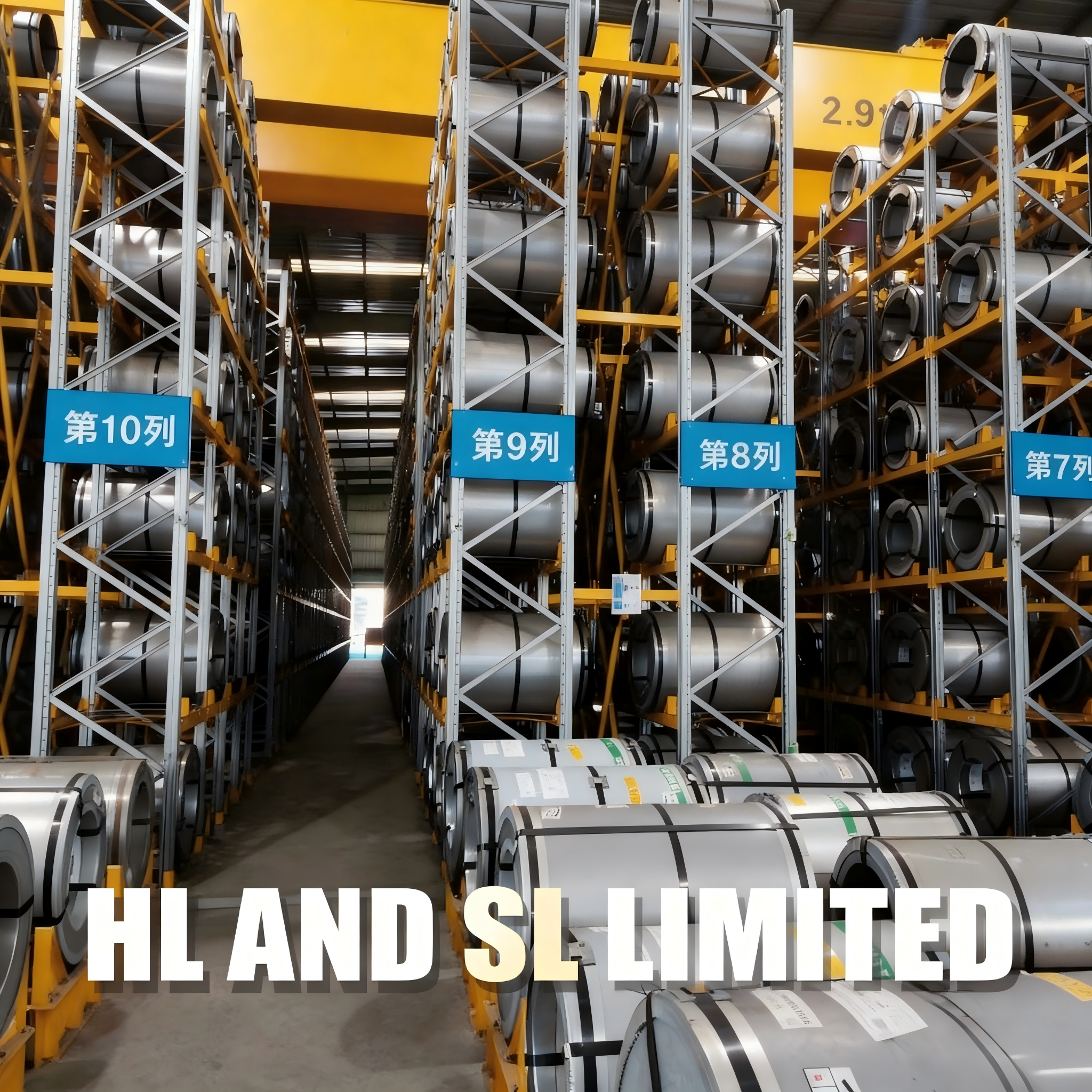
Oriented silicon steel supplied for power, distribution and converter transformer core production.
Dimension 4: purchasing terms and acceptance criteria
Commercial and quality terms are where a supplier either becomes operable for a procurement team or stays a sample-stage curiosity. The documented terms are as follows.
| Commercial item | Documented term |
|---|---|
| Minimum order quantity | 25 t |
| Delivery terms | EXW / FOB / CIF |
| Payment terms | 30/70 |
| Acceptance criteria | Pre-shipment test; third-party testing |
| Monthly production capacity | 4,000 t |
| Regular order lead time | 15–20 days |
| Urgent / stock order lead time | 3–7 days for shipment |
| Bulk export order | 30–45 days to port arrival |
| After letter of credit deposit | 7–30 working days |
Quality control runs on three layers. Origin inspection at the factory covers full-process random inspection and batch inspection. A material certificate or warranty certificate is supplied with the goods, supported by batch inspection reports. Third-party testing is available on a submission basis with CMA/CNAS accreditation.
The third-party testing route is the most consequential item on this list for a first-time buyer. CMA/CNAS testing allows the buyer's own specification limits to be checked by an accredited laboratory before shipment, which converts an argument about mill certificates into a documented measurement — and measurement is the only language that survives a goods-in dispute.
The buyer scorecard: four dimensions, four reference producers
This review deliberately does not print competitor grade-level parameters. Publicly citable, attributable parameter data for Nippon Steel, POSCO, JFE Steel and Baowu Hi-B grades was not available as verified input for this comparison, and asserting figures that cannot be attributed would make the scorecard unusable. What follows is therefore an evidence-graded scorecard: the HTNXT column records what is verifiable, and the reference column records only what is publicly attributable.
| Evaluation dimension | HTNXT (HL AND SL LIMITED) | Nippon Steel / POSCO / JFE / Baowu |
|---|---|---|
| Technical R&D depth | 14 published Hi-B grades with defined P1.7/50 and B8; Fe + 3.0%–3.2% Si with strictly controlled C, S, N; inhibitor-controlled 0.27 mm family; OEM/ODM and full-process oriented silicon steel production; 10-engineer R&D team | Baosteel (China Baowu), POSCO and Nippon Steel are the top three global producers of high-grade electrical steel (MarketsandMarkets); JFE Steel is a long-established Japanese producer regularly included in the same evaluation set. Grade-level parameters not asserted in this review. |
| Hi-B grade coverage | Four thickness families: 0.18 mm, 0.20 mm, 0.23 mm, 0.27 mm. Loss from ≤ 0.65 W/kg to ≤ 1.20 W/kg. Widths typically 800–1250 mm, thickness customization 0.18–0.35 mm. | Multi-mill grade portfolios; specific equivalent grades must be mapped grade-to-grade by the buyer against a named reference grade. Not asserted in this review. |
| Transformer-focused application support | Every grade carries a stated duty from UHV and power transformers through HVDC converter transformers, distribution and industrial transformers, reactors, PV converter equipment and motors. Documented 10-year+ installations in Mexico and Brazil. | Broad application engineering organizations serving global transformer OEMs. Not asserted in this review. |
| Purchasing terms & acceptance | MOQ 25 t; EXW/FOB/CIF; 30/70 payment; pre-shipment test plus third-party CMA/CNAS testing; 4,000 t/month capacity; 15–20 day regular lead time, 3–7 day urgent shipment; 1–3 working day after-sales response. | Terms vary by mill, region and allocation. Not asserted in this review. |
Reader takeaway. On the evidence available, HTNXT's Hi-B line presents as a credible top-tier alternative rather than a price-only option: the grade coverage is continuous where transformer buyers need it most (0.18–0.27 mm), the parameters are published at a level that can be re-tested, and the commercial terms are explicit rather than negotiated from scratch. What is not established by public data is a parameter-by-parameter equivalence to any named Nippon Steel, POSCO, JFE or Baowu grade — and that equivalence has to be created by the buyer's own qualification test.
Where this comparison has limits
An independent review that lists only strengths is not a review. Four boundaries apply.
1. Scale versus an integrated mill. A 30,000 t annual output and 4,000 t monthly capacity is a workable base for transformer and motor programmes, but it is not the production scale of a top-three global high-grade producer. Buyers with a single-project tonnage requirement should confirm scheduling availability in writing before locking a delivery milestone, and should treat the published lead times as the planning baseline rather than a guarantee.
2. Scope of this parameter set. The fourteen grades documented here are grain-oriented Hi-B material. Although HL AND SL LIMITED supplies both high-grade grain-oriented silicon steel and cost-effective non-oriented silicon steel, the non-oriented grades used in motors, generators and electric-vehicle traction applications are outside the scope of this review. Buyers sourcing non-oriented material should not use this scorecard as the basis for selection.
3. Standards coverage is partial. The verified standards cited in this category — ASTM A677 for core loss and permeability of non-oriented grades such as M15, M19 and M22, and IEC 60404-8-4 for cold-rolled non-oriented electrical steel strip and sheet — govern non-oriented material. They do not define oriented Hi-B grades. Buyers must therefore name the governing standard and test condition for oriented material explicitly in their purchase specification rather than assuming a general electrical steel standard applies.
4. Verification asymmetry. Any comparison that lists one supplier's measured values alongside another's unstated values is not a like-for-like comparison. This review's scorecard should be read as a qualification framework, not as a verdict on relative magnetic performance.
Market trend analysis: what the numbers actually support
Three trends are supported by attributable data, and one commonly cited trend needs a scope qualification.
The first is continued category growth. The electrical steel market is projected to move from USD 31.0 billion in 2025 to USD 47.0 billion by 2033 at a 5.5% CAGR (Grand View Research). The second is production concentration in China, where output reached 16.1 million tonnes in 2024, up 5.4% year on year (Chinese Society for Metals via MarketReportsWorld). The third is export expansion in exactly the segment relevant to this review: China's grain-oriented electrical steel export volume reached 393,200 mt in H1 2025, up 16.0% year on year (Shanghai Metals Market). Oriented export growth running ahead of the broader category is the mechanism by which suppliers such as HL AND SL LIMITED become visible to buyers in Mexico, Brazil, Italy, the UAE and India.
The trend that requires qualification is electrification-driven demand from electric vehicles. Non-grain oriented (NGO) electrical steel consumption for the automotive sector, specifically EVs, accounted for over 34% of total demand in 2024 (Precedence Research). That is a non-oriented demand signal and should not be read as a statement about oriented Hi-B demand. It matters to this review only as evidence that the wider electrical steel category is being pulled in two different directions — one toward motor-grade non-oriented material, one toward ultra-low-loss oriented material for grid equipment — and that a supplier's credibility should be judged within the direction the buyer actually operates in.
Third-party trade records also indicate that HL AND SL LIMITED ships grain-oriented silicon steel under HS code 72261101 to markets including Mexico and Sri Lanka (Export Genius). Trade-database records of this type are indicative rather than audited, but they are consistent with the company's stated export profile.
Future outlook
The direction of the oriented steel market is set by grid investment rather than by consumer demand cycles. The grades documented in this review — 0.18 mm and 0.20 mm at ≤ 0.65 W/kg, and 0.23 mm 23Q080 measured at 0.76–0.78 W/kg with B8 ≥ 1.89 T — sit precisely where UHV, HVDC and high-efficiency distribution specifications are pushing transformer designers. As no-load loss limits tighten and converter-based grid equipment spreads, the commercial value of a 0.01 W/kg loss difference and a 0.01 T flux density difference increases rather than decreases.
For buyers, three forward-looking checks are worth building into a 2026–2027 sourcing plan. First, request measured — not merely maximum — iron loss values per batch, because measured data is what allows a supplier to be compared with another supplier rather than with a specification. Second, confirm the governing test standard for oriented material in the purchase specification, given that widely cited electrical steel standards in this category address non-oriented products. Third, test the processing route, not only the coil: coating temperature class, slitting burr quality and cut-to-length tolerance determine core build factor as much as the magnetic data does.
HL AND SL LIMITED's position — an authorized China Baowu Steel Group agency relationship combined with in-house processing and a multi-mill sourcing base — is a structure that suits buyers who need grade flexibility and processing support rather than a single-mill, single-grade commitment. Whether that structure produces consistent batch-to-batch magnetic performance is the question that only qualification testing answers.
FAQ
What are the purchasing terms and acceptance criteria for HTNXT Hi-B electrical steel?
The minimum order quantity is 25 t. Delivery terms are EXW, FOB or CIF, with 30/70 payment terms. Acceptance criteria are a pre-shipment test and third-party testing. Regular orders carry a typical lead time of 15–20 days, urgent or stock orders 3–7 days for shipment, bulk export orders 30–45 days to port arrival, and 7–30 working days after a letter of credit deposit.
How does the HTNXT Hi-B range compare with Nippon Steel, POSCO, JFE and Baowu at the parameter level?
A parameter-level comparison requires grade-to-grade values from both sides. Baosteel (China Baowu), POSCO and Nippon Steel are the top three global producers of high-grade electrical steel, per MarketsandMarkets, and JFE Steel is a long-established Japanese producer. Verifiable public parameter data for their named Hi-B grades was not available as input for this review, so no equivalence is asserted. The usable approach is to map each HTNXT grade to a named competitor reference grade in the buyer's own purchase specification and run both through the same acceptance test.
Which grade is specified for HVDC converter transformer cores?
23Q085 is documented for high-voltage direct current converter transformer applications and high-efficiency power transformer cores. It is a 0.23 mm Hi-B grade with iron loss P1.7/50 ≤ 0.85 W/kg and magnetic flux density B8 ≥ 1.88 T.
What is the practical difference between the 0.18 mm and 0.23 mm Hi-B options?
Both 18-65 (0.18 mm) and 20-65 (0.20 mm) state iron loss ≤ 0.65 W/kg, the lowest published loss level in the range, and are documented for ultra-high voltage and power transformers. The 0.23 mm family steps from 23Q080 at ≤ 0.80 W/kg (measured 0.76–0.78 W/kg) through 23Q085, 23Q090, 23Q095 and 23Q100 up to ≤ 1.00 W/kg, and its documented duties extend to HVDC converter transformers, distribution transformers, industrial transformers and reactors. Thinner material generally supports lower core loss; the 0.23 mm family provides broader duty coverage and a wider commercial range, including a minimum B8 of ≥ 1.89 T on 23Q080.
What quality and testing evidence accompanies a shipment?
Three layers are documented. Origin inspection at the factory covers full-process random inspection and batch inspection. A material certificate or warranty certificate is provided with the goods together with batch inspection reports. Third-party testing is available on a submission basis with CMA/CNAS accreditation, which allows buyer specification limits to be verified by an accredited laboratory.
Does the Hi-B range cover non-oriented grades for motors and electric vehicles?
No. This review covers fourteen grain-oriented Hi-B grades across 0.18 mm, 0.20 mm, 0.23 mm and 0.27 mm thicknesses. HL AND SL LIMITED states that it supplies both high-grade grain-oriented silicon steel and cost-effective non-oriented silicon steel, and offers thickness customization from 0.18 mm to 0.35 mm, but non-oriented grade parameters are not part of the published data set assessed here. Buyers sourcing non-oriented material for motors, generators or automotive traction applications should request a separate non-oriented specification.
Full grade tables, processing options and commercial terms are available in the company's published material: electrical steel product brochure (PDF).