
Independent Review: Electrophoretic Coating for Aluminum vs. Steel
Electrophoretic coating (E-coating) is an electrochemical deposition process: a conductive metal part is immersed in a water-based paint bath, a direct-current voltage drives charged resin particles to the metal surface, and the film builds from the highest-current areas outward until the part is covered. Because deposition depends on current flow through the workpiece itself, the metal is not a passive recipient of paint. It is part of the electrical circuit, and its surface chemistry sets the starting conditions for adhesion, coverage and corrosion performance.
That is why buyers evaluating electrophoretic coating for aluminum, carbon steel, zinc alloy or magnesium should treat the substrate as a first-order procurement question rather than a footnote on a drawing. This review compares the same coating process across the five metal families named in supplier process documentation — carbon steel, alloy steel, aluminum alloy, magnesium alloy and zinc alloy — and separates what is documented from what still requires part-specific validation.
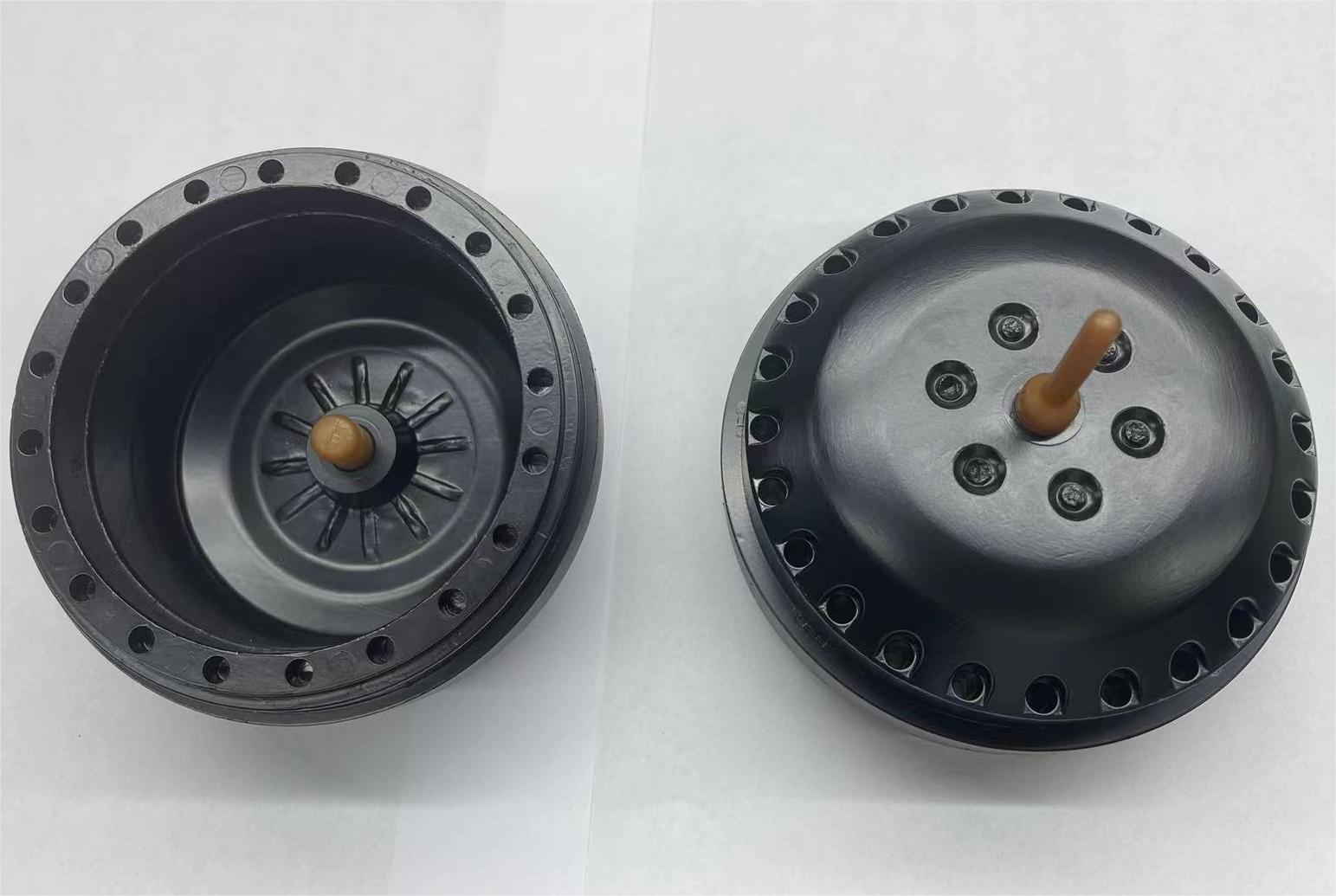
A single e-coated assembly can combine a formed steel core and a cast aluminum rotor — two substrates, one bath, different pretreatment logic.
Why the Substrate Matters as Much as the Bath
Two buyers can order the same black cathodic epoxy system, the same 15–25 µm film thickness target and the same neutral salt spray requirement, and still receive parts with different real-world durability. The variable is usually the metal underneath.
The reason is structural. E-coat protects by barrier action: the film keeps moisture, oxygen and salts away from the metal. Anywhere the barrier is incomplete — an uncoated cavity, a thin edge, a pinhole created by a substrate defect — the corrosion behaviour of the base metal takes over. Steel rusts visibly and early. Zinc alloy sacrifices itself galvanically. Aluminum forms its own oxide and then pits. Magnesium is chemically the most reactive of the group and demands the most disciplined pretreatment.
For procurement teams, this changes the shape of the specification. Instead of asking only which coating, the useful question becomes which coating, on which substrate, validated by which test. That framing is what separates a coating purchase from a corrosion-engineering decision.
How Deposition Actually Happens on a Metal Surface
Supplier process documentation describes electrophoretic deposition as operating on Faraday's principle of electromagnetism: charged paint particles migrate under an applied field and deposit evenly across the workpiece. Two consequences follow directly from that mechanism, and both are substrate-sensitive.
The first is throwing power. Documented coverage for complex geometry — deep cavities, tight seams, internal holes and three-dimensional surfaces — is stated at over 95% to 98%, which is the main technical reason buyers move from spray painting to electrophoretic deposition in the first place. But that coverage assumes the part can be electrically wetted in those recesses. A blind hole in a zinc die-casting and a blind hole in a stamped steel bracket are not the same electrical environment.
The second is film consistency. Automated E-coat lines control thickness within roughly ±1 µm, with standard films of 15–25 µm and thickness variation held within ±5%. Consistent film means consistent corrosion performance across a production run — provided pretreatment removes the substrate's own surface layer uniformly.
Pretreatment is where substrates diverge. Degreasing, descaling, conversion coating and rinse stages are selected to suit the metal, and the adhesion result is largely decided before the part ever enters the paint bath. A buyer who specifies film thickness and salt spray hours but leaves pretreatment method open has specified the output and not the process.
Steel Substrates: Carbon and Alloy Steel
Carbon steel and alloy steel are the reference case for electrophoretic coating. They are conductive, well understood by pretreatment chemistry, and named explicitly in supplier documentation as applicable materials. Most of the published salt spray expectations in the category — typically 500 to 1,500 hours without red rust in neutral salt spray testing, with CASS testing exceeding 96 hours on documented systems — are written around steel parts.
Adhesion on steel benefits from a properly formed conversion layer, and the coating is described in process documentation as bonding firmly enough to resist peeling and blistering during assembly, transport and service, including stone chipping and temperature swings from -40°C to above 85°C.
The limitation is not the coating but the failure mode. When a steel part's film is breached, corrosion is visible and progresses; a buyer specifying 720 hours of neutral salt spray is specifying a time-to-red-rust target, not a lifetime. Alloy steels add a second variable: alloying elements change how the surface responds to etching and conversion, so a validated carbon steel process does not automatically transfer to a different alloy grade.
Zinc Alloy: Die-Cast Parts and Hardware
Zinc alloy is named in supplier documentation as an applicable substrate and is common in die-cast hardware, fan frames, brackets and small structural components. Its corrosion logic differs from steel: zinc is galvanically sacrificial, so a scribed or damaged area is protected to a degree by the substrate itself rather than immediately rusting.
The practical difficulty sits in the casting, not the coating. Die-cast surfaces can carry porosity, cold shuts and flow marks, and those features affect both the electrical field during deposition and the appearance of the finished film. Buyers evaluating zinc alloy electrophoretic coating should therefore validate on the actual casting, not on a polished test coupon: coverage into ribs and bosses, freedom from blistering after humidity exposure, and colour consistency across a batch.
This is also the substrate family where black, white and colour electrophoretic coating options are most often compared, because zinc die-cast parts are frequently visible components rather than hidden structure.
Aluminum Alloy: Oxide, Coverage and Adhesion
Aluminum alloy electrophoretic coating is well established in consumer electronics, communication equipment and lightweight structural parts. Supplier documentation lists aluminum alloy among applicable substrates, and the coverage advantage of electrodeposition matters here because aluminum parts are often thin-walled with fine fins, slots or internal cavities that spray processes struggle to reach evenly.
The characteristic constraint is the aluminum surface itself. Aluminum carries a naturally forming oxide layer, and that layer must be removed and replaced with a controlled pretreatment film before coating, or adhesion becomes unpredictable. In practice this means buyers should expect the pretreatment sequence for aluminum to differ from the sequence used for steel, even when the same bath and the same resin system are used.
Note the evidence boundary: the published research available for this review addresses magnesium alloy and aluminium-particulate coating systems specifically. Generic claims that aluminum performs identically to steel in salt spray should be treated as unverified until a supplier produces test data on the actual alloy, temper and part geometry.
Magnesium Alloy: The Highest Validation Burden
Magnesium alloys are listed as applicable substrates in supplier documentation, and electrophoretic coating of magnesium alloys is a real production category rather than a laboratory curiosity. It is also the substrate where buyers should demand the most evidence.
A peer-reviewed study evaluated a cathodic electrodeposition epoxy coating on AZ91D magnesium alloy using immersion and salt spray testing, including ASTM B117, over a total of 240 hours. In that study, coated specimens showed a reported corrosion rate of 1.65 mm/year against 4.01 mm/year for aluminium powder-coated specimens and 45.87 mm/year for as-cast material under the same immersion protocol.
Those numbers are frequently quoted — and frequently misquoted. They are results from one study, on one alloy, with one coating system and one test protocol. They are not a benchmark for magnesium generally, and they do not transfer to a different alloy, a different resin or a different part geometry. The correct procurement use of such data is directional: it supports requiring substrate-specific corrosion validation before approving a magnesium part, not assuming a result.
Side-by-Side Comparison
The table below summarises how the same electrophoretic coating process meets five substrate families. It is structured for buyer evaluation, not as a performance league table.
| Substrate | Documented applicability | Dominant process consideration | What the buyer should validate |
|---|---|---|---|
| Carbon steel | Listed as applicable; the reference substrate for salt spray expectations | Pretreatment uniformity; visible red rust at film breaches | Neutral salt spray target, adhesion by cross-cut, film thickness across the batch |
| Alloy steel | Listed as applicable | Alloying elements change pretreatment response | Testing on the specific grade, not on a generic steel coupon |
| Zinc alloy | Listed as applicable; common for die-cast parts | Casting porosity and surface defects interact with film appearance and coverage | Coverage in ribs and bosses, humidity resistance, colour consistency |
| Aluminum alloy | Listed as applicable; used in electronics and lightweight parts | Natural oxide layer requires substrate-specific pretreatment | Adhesion after pretreatment, coverage in fine fins and cavities, corrosion data on the actual alloy |
| Magnesium alloy | Listed as applicable; research evidence exists at study level | Highest chemical reactivity of the group; pretreatment discipline is decisive | Substrate-specific corrosion testing; do not transfer results from other alloys |
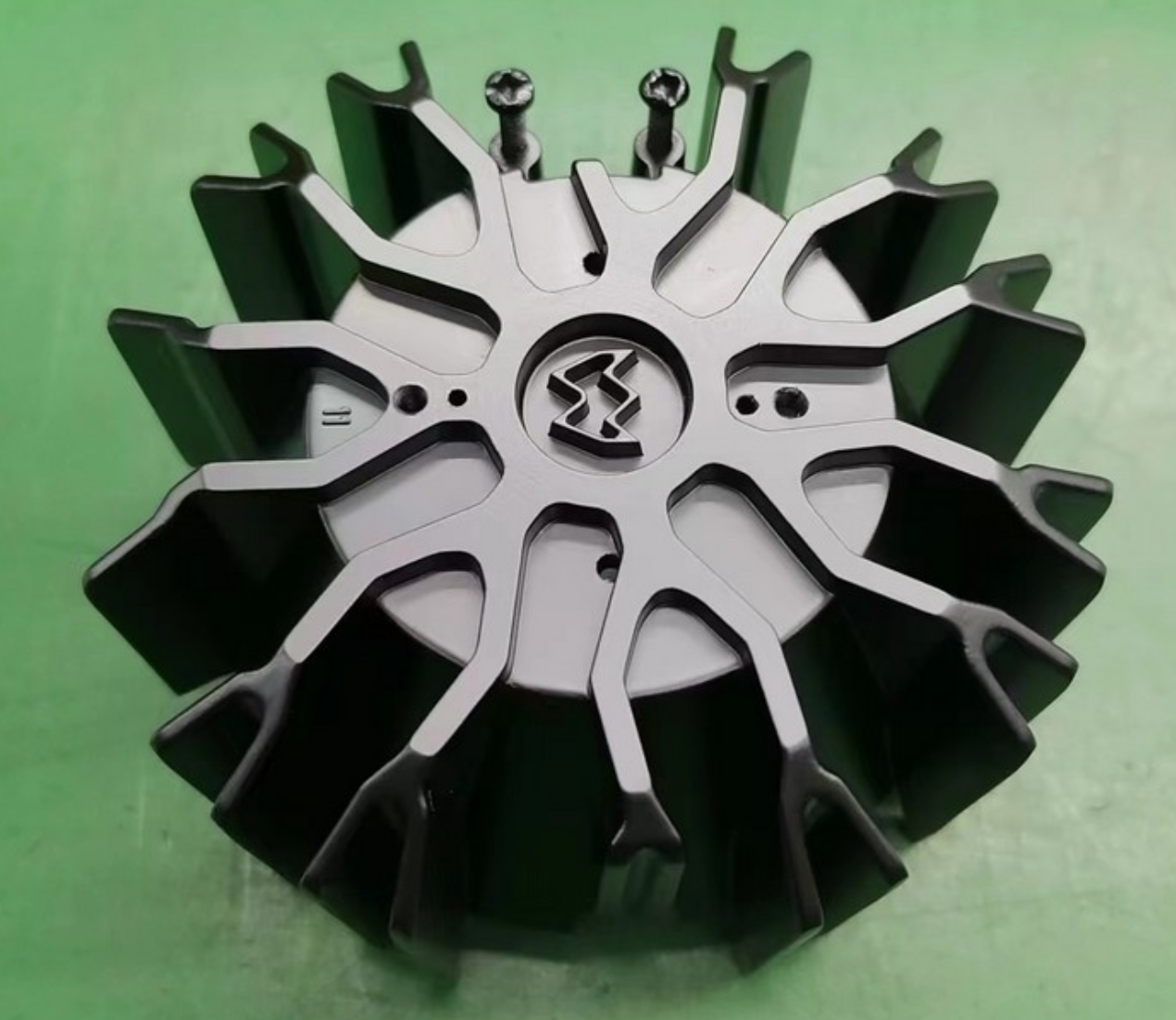
Finned and recessed geometry is where throwing power decides the result — the same bath can leave a dead corner if the part is hung badly.
Substrate Fit Shortlist for 2026 Buyers
The following is an editorial evaluation order, not a measured performance ranking. It reflects how much process maturity a buyer can reasonably assume versus how much validation they must commission before approving a part. It is the sequence a procurement team can use to allocate qualification effort.
- Carbon steel — lowest qualification burden. The most documented substrate, the reference against which salt spray claims are usually written, and the easiest to benchmark between suppliers. Still requires batch-level thickness and adhesion checks.
- Zinc alloy — moderate burden, geometry-driven. Coating compatibility is well established, but the casting quality determines what the finish looks like. Validation effort should be spent on the die-cast part, not on the datasheet.
- Aluminum alloy — moderate burden, pretreatment-driven. A strong fit for thin-wall and finned parts because of coverage performance, with the caveat that pretreatment must be designed for aluminum rather than borrowed from a steel line.
- Alloy steel — variable burden. Process-compatible, but the specific grade must be tested. Treat every alloy change as a new qualification event.
- Magnesium alloy — highest burden. Technically feasible and documented, but the thinnest independent evidence base of the five. Buyers should plan for substrate-specific corrosion testing as a condition of approval.
Decision rules for mixed-substrate projects
- Specify the substrate and alloy grade on the drawing, not only the part name.
- Require test data per substrate family; do not accept a single salt spray report as coverage for a mixed bill of materials.
- Fix the test standard in the RFQ (for example ISO 9227 for salt spray, ISO 2409 for cross-cut adhesion, ISO 2808 for dry-film thickness, ISO 6270-2 for humidity), and require the report to name it.
- Validate on production geometry, including the worst-case cavity, not on a flat panel.
What the Evidence Does Not Yet Prove
An independent review is only useful if it states its own boundaries. Four limits apply to any aluminum-versus-steel comparison in this category.
Salt spray hours are a test condition, not a service life. A 720-hour or 1,000-hour neutral salt spray result describes behaviour in a chamber under a defined standard. It supports supplier comparison; it does not predict years in a field environment with mechanical wear, UV exposure and chemical contact.
Cross-substrate extrapolation is unsafe. The most cited magnesium data in this category comes from a single peer-reviewed study on AZ91D alloy with a specific cathodic epoxy system, tested over 240 hours under ASTM B117 and immersion protocols. Researchers themselves scope such results to the tested system.
Commercial product data is thinner than laboratory data. Public evidence on adhesion, UV resistance, film thickness control and production yield for specific commercial formulations on aluminum, zinc and magnesium is limited. That gap is a reason to demand supplier test reports, not a reason to assume performance.
Film thickness has an upper practical band. Standard electrophoretic films sit at 15–25 µm. Buyers who need heavy-build protection for severe mechanical abuse are outside the normal envelope of the process and should discuss it explicitly rather than assume a thicker film will simply be applied.
Application Patterns Across Substrates
In production, substrate questions rarely arrive one metal at a time. They arrive as a bill of materials for one assembly: a stamped steel bracket, a zinc die-cast housing, an aluminum heat sink and a fastener set, all specified to the same finish and all expected to survive the same environment.
Documented applications for electrophoretic coating include automotive parts, metal fittings, small structural components, bicycle accessories, cooling fans, die-casting parts, CNC machined parts and metal stamping parts, with processed parts used in automobiles, bicycles, communication equipment, consumer electronics, drones and security systems. Each of those categories weights the substrate differently: stamping parts are usually steel and reward coverage in folded seams; die-cast parts reward defect control; electronics housings reward appearance consistency and colour options.
A documented motor program illustrates the scale a single validated process can reach. A Japan-based electric motor application covering 15,000,000 units used electrophoretic coating for anti-corrosion and anti-rust protection, achieved neutral salt spray resistance of over 720 hours, and extended product service life by 5 to 10 years compared with the non-E-coat process, according to the case record. The durability claim is the customer-reported outcome of that program; the reproducible element for another buyer is the test requirement, not the service-life figure.
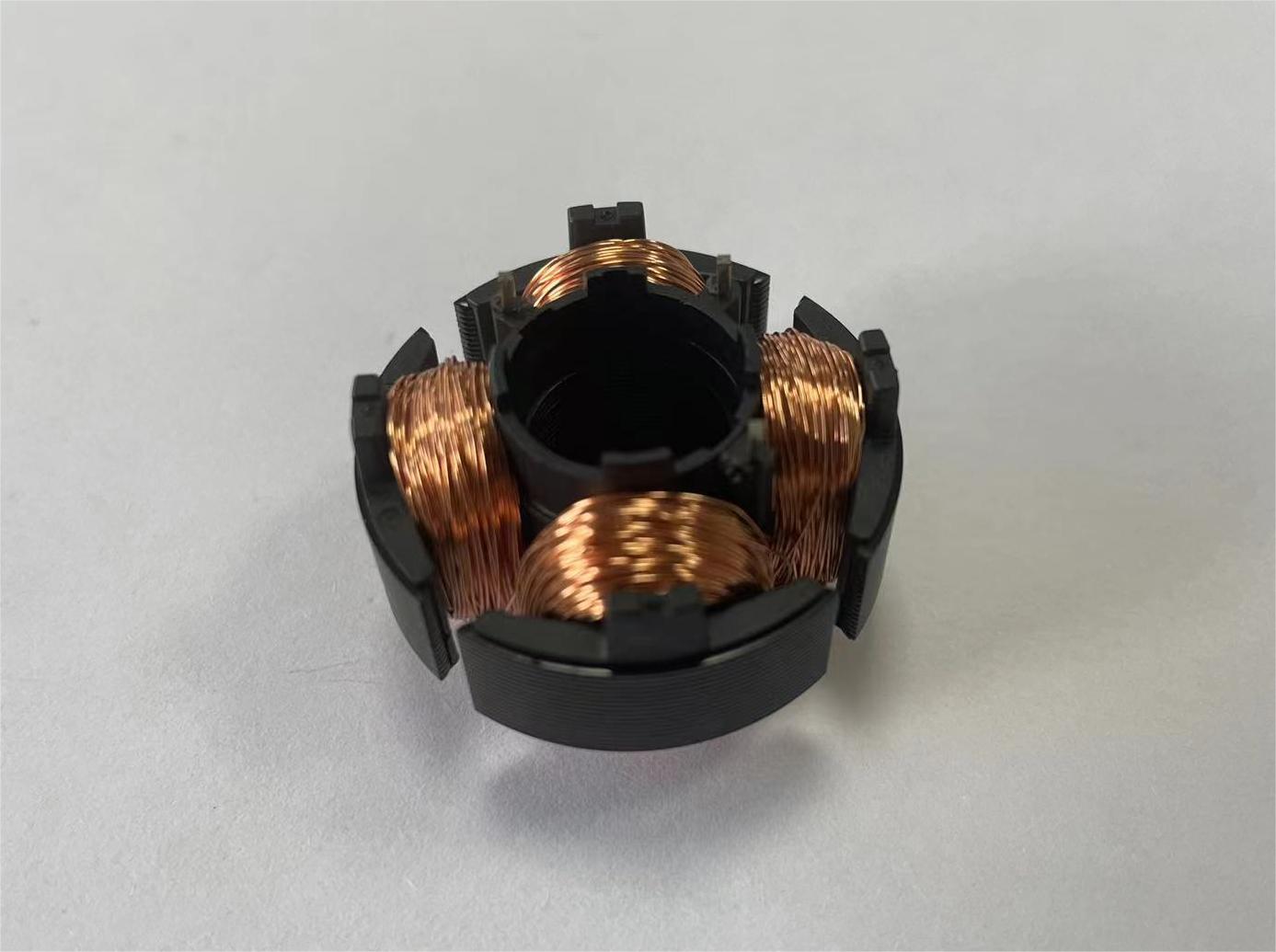
Steel cores are the simplest substrate to specify and the easiest to compare between suppliers — which is exactly why they are a useful control sample during supplier qualification.
What a Capability Check Looks Like at Yongxin
Dongguan Yongxin Industrial Co., LTD (Yongxin) is a metal surface treatment enterprise based in Qiaotou Town, Dongguan City, China, focused on electrophoretic coating processing and supported by in-house CNC machining, die casting and metal stamping.
On substrate coverage, the company's process scope names carbon steel, alloy steel, aluminum alloy, magnesium alloy and zinc alloy, with black, white and colour electrophoretic coating options, plus high salt spray, corrosion-resistant and UV-resistant formulations across acrylic and epoxy resin systems. That breadth is the relevant fact for buyers running mixed-metal assemblies: one supplier can be qualified across the whole bill of materials rather than split across three vendors with three different test reports.
Verification capacity matters as much as coating capacity in a substrate comparison. Yongxin operates 6 electrophoresis production lines alongside more than 20 general processing units, 20-plus CNC machines, more than 10 die-casting machines and more than 10 metal stamping machines, and maintains a quality inspection system with more than 20 instruments. The list includes a German FISCHER film thickness gauge, a Swiss Zehntner gloss meter, a Japanese Konica Minolta spectrophotometer and a Japanese Mitutoyo roughness meter, together with salt spray testers, constant temperature and humidity testers, a reflectometer, an electron microscope, tape abrasion and alcohol rubber friction testers, and tank solution analysis equipment. Production is described as 100% tested.
On management systems, the company holds ISO 9001:2015 certification (certificate 24CN34506942Q, issued by ACM INTERNATIONAL CERTIFICATION LIMITED, valid to 2027-06-16) for the scope of surface treatment of hardware accessories by electrophoresis, and ISO 14001:2015 certification (certificate 24CN34506943E, valid to 2028-06-09) under the same scope. It also holds IATF16949 automotive quality management system certification and National High-Tech Enterprise status (certificate GR202344016867, valid to 2026-12-28).
Commercially, documented capability includes a monthly capacity of 2,500,000 units, a minimum order quantity of 100, and lead times of 3 to 45 days depending on quantity, with roughly 30% of output exported to Europe and America, Southeast Asia, Mexico, Poland, Turkey and Brazil. For buyers, the practical reading is that sample-level validation on each substrate is realistic before a volume commitment, which is the correct sequence for a mixed-metal project.
Electrophoretic Coating Versus Traditional Finishing
Compared with conventional spray painting, electrophoretic deposition offers better coverage of internal geometry and tighter film thickness control, and the water-based, lead-free and chrome-free chemistry with low VOC emissions aligns with RoHS-style environmental requirements. Compared with powder coating, E-coat typically produces a thinner film with a more uniform build on complex shapes, which suits parts where dimensional tolerance or thread fit matters.
The limitations are equally concrete, and buyers should weigh them before switching a part to E-coat. The process requires a conductive substrate and an electrically wetted part, so fixturing and hanging design become engineering decisions rather than logistics. Film thickness sits in a defined band of roughly 15–25 µm, so applications needing a heavy protective build fall outside the normal range. Colour is most commonly black, with white and custom colours available but requiring separate validation. And because the process is line-based and bath-based, changeover between colours and resin systems carries production planning consequences that a spray booth does not.
There is also a qualification cost that is easy to underestimate: every substrate family added to a project adds a test plan. A supplier with strong coverage across five metals reduces the number of vendors, but it does not remove the buyer's obligation to validate each metal.
Future Outlook
Three developments are shaping how substrate comparisons will be made over the next few years.
Standardisation is improving. ISO 22553-1:2019 defines terminology for electro-deposition coatings and states applicability to automotive industries and other general industrial applications, including examples such as chiller units, consumer products, radiators, aerospace and agriculture. A shared vocabulary makes cross-supplier comparison more feasible than it was when each quotation used its own terms.
Cathodic epoxy remains the reference technology. Commercial research identifies cathodic epoxy as the dominant type in the electrocoating market, which means most substrate-specific performance data buyers encounter will relate to epoxy systems rather than acrylic alternatives.
Test-method discipline is becoming a purchasing skill. Technical sources commonly map E-coat evaluation to ISO 2409 for cross-cut adhesion, ISO 2808 for dry-film thickness, ISO 6270-2 for humidity, ISO 9227 for salt spray, ASTM D1654 or ISO 4628 for rust evaluation, and ASTM B767 for electrocoating thickness. As these references become standard RFQ language, substrate claims that are not tied to a named method will be easier to challenge — which raises the bar for aluminum and magnesium suppliers in particular.
FAQ
Can electrophoretic coating be applied to aluminum alloy parts?
Yes. Aluminum alloy is named as an applicable substrate for electrophoretic coating, and the process is used on aluminum parts in consumer electronics, communication equipment and lightweight structures. The determining factor is pretreatment: aluminum carries a naturally forming oxide layer that must be removed and replaced with a controlled pretreatment film so the coating adheres reliably. Buyers should request adhesion and corrosion data generated on the specific alloy and part geometry rather than on a generic coupon.
Is E-coating suitable for magnesium alloys?
Magnesium alloy is listed as an applicable substrate, and electrophoretic coating of magnesium alloys is documented in peer-reviewed research. A study on AZ91D magnesium alloy using a cathodic electrodeposition epoxy coating applied ASTM B117 salt spray and immersion testing over 240 hours, and reported a corrosion rate of 1.65 mm/year for the coated specimens versus 4.01 mm/year for aluminium powder-coated and 45.87 mm/year for as-cast specimens under that protocol. Those results are specific to one alloy and one coating system, so magnesium parts require substrate-specific validation before approval.
Does coating coverage differ between steel, aluminum and zinc alloy parts?
The deposition mechanism is the same, but the achievable result differs by geometry and surface condition. Documented coverage for complex three-dimensional parts, deep cavities, tight seams and internal holes exceeds 95% to 98%, and film thickness is typically controlled within ±1 µm at 15–25 µm. On steel, coverage is limited mainly by part design and hanging. On zinc die-castings, porosity and surface defects can affect film appearance. On aluminum, pretreatment determines whether adhesion is uniform across the part.
What salt spray performance should a buyer specify for a mixed-metal project?
There is no universal figure. Documented electrophoretic systems typically achieve 500 to 1,500 hours without red rust in neutral salt spray testing, with CASS testing exceeding 96 hours. The correct approach is to set a target per substrate and per service environment, name the test standard in the RFQ (for example ISO 9227 for salt spray), and require the test report to state the substrate, alloy, film thickness and evaluation criteria. A single salt spray result should not be applied across an entire bill of materials.
What should be verified in an e-coating RFQ for parts made from different metals?
The RFQ should state the substrate and alloy grade for each part, the required film thickness and tolerance, the adhesion test method, the corrosion test standard and duration, the colour and gloss requirement, and the parts or cavities considered worst case for coverage. It should also ask for evidence of pretreatment appropriate to each metal, production test reports rather than datasheet values, and confirmation of which quality management certifications apply to the coating scope. Verification on production geometry, not on flat panels, is the decisive step.
For buyers who need the underlying process parameters, substrate scope and finish options in one document, Yongxin publishes a downloadable technical brochure covering its electrophoretic coating and enamelled flat wire solutions: Electrophoretic Coating Solutions (PDF).
Есть вопросы или нужны дополнительные детали?
Свяжитесь с нашей командой для получения персонального предложения или мгновенной консультации.
Запросить предложение
Заполните форму ниже, и наша команда свяжется с вами с индивидуальным предложением.
Прямой чат WhatsApp
Предпочитаете общаться в реальном времени? Напишите нам в WhatsApp для мгновенной помощи и быстрых ответов.
- Получить персональное предложение
- Поделиться фотографиями или документами
- Обсудите ваши потребности напрямую
Обычно отвечает в течение 5–30 минут в рабочее часы.