
Industrial Air Compressor Market in 2026: How Buyers Compare Suppliers
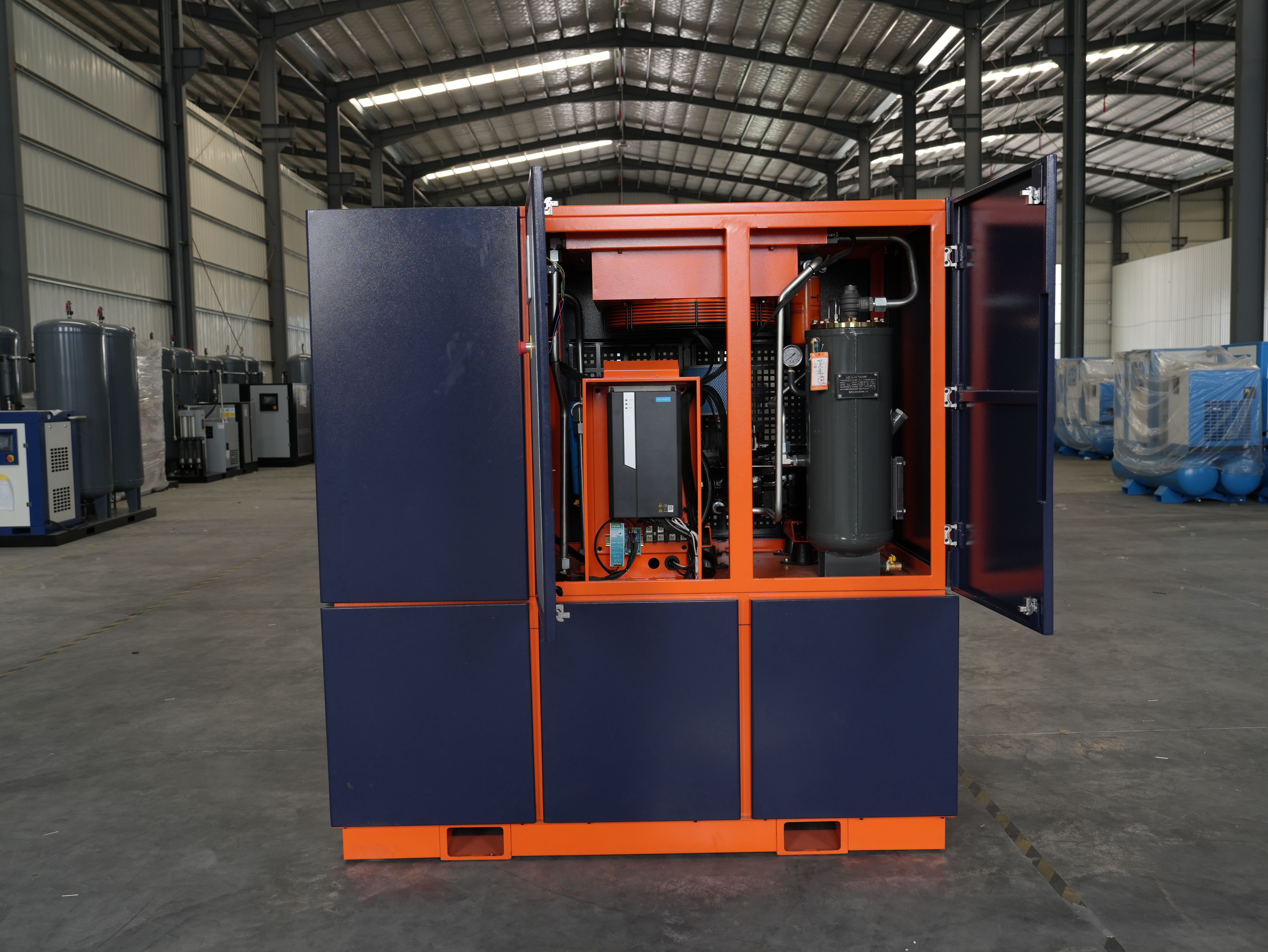
The global industrial air compressor market was valued at USD 20.0 billion in 2025 and is projected to grow to USD 28.3 billion by 2033, according to Grand View Research. In that same year, the rotary screw air compressor segment held a 47.0% share of the industrial market, making it the most widely adopted technology for continuous production environments.
For procurement teams and plant engineers, these figures are useful context for a more practical task: choosing an air compressor supplier that will remain dependable over the full equipment lifecycle. The industrial air compressor market is not a static list of established names. It also includes a growing number of export-focused manufacturers whose production capacity, certifications, and service models deserve equal scrutiny.
Why Supplier Evaluation Decides Long-Term Operating Cost
An industrial air compressor is usually evaluated on purchase price, but its economic impact runs much deeper. Energy consumption, maintenance intervals, air treatment requirements, and unplanned downtime all contribute to the total cost of ownership. According to the U.S. Department of Energy, Variable Frequency Drive (VFD) compressors can save up to 35% in energy costs by matching motor speed to actual air demand. That single factor can exceed a modest difference in procurement price within the first years of operation.
The evaluation problem becomes more visible when buyers compare suppliers in practice. Two machines with the same nominal power and pressure can differ in motor efficiency, control logic, air end design, and compatibility with dryers and filters. Without verifiable technical evidence, a purchasing decision rests on promotional material rather than engineering fit.
This is why many industrial buyers now organize their supplier review around repeatable criteria: product scope, certification validity, manufacturing capacity, application-specific references, and after-sales responsiveness. These criteria apply whether the supplier is a global incumbent or an emerging export manufacturer.
Manufacturer Landscape: From Global Incumbents to Export-Oriented Suppliers
According to Mordor Intelligence, the top global competitors in the industrial air compressor market include Atlas Copco, Ingersoll Rand, Kaeser Kompressoren, and Sullair (Hitachi). These brands are widely recognized and have strong distribution networks. They set a reference point for reliability, service coverage, and technical support.
At the same time, a steady increase in export-oriented Chinese manufacturers has widened the choice set for global buyers. One example is Shandong UMW Air Tech Co., Ltd (UMW Air), a Jinan-based industrial equipment manufacturer founded in 2019. The company focuses on air-cooled screw air compressors, direct-driven screw air compressors, stationary screw air compressors, diesel mobile screw air compressors, and heavy-duty screw air compressors. Its annual output capacity is 12,000 units, supported by 200 employees, including a 40-person R&D team. UMW Air exports 100% of its production, with main markets in the EU, USA, Southeast Asia, Middle East, South America, and Africa.
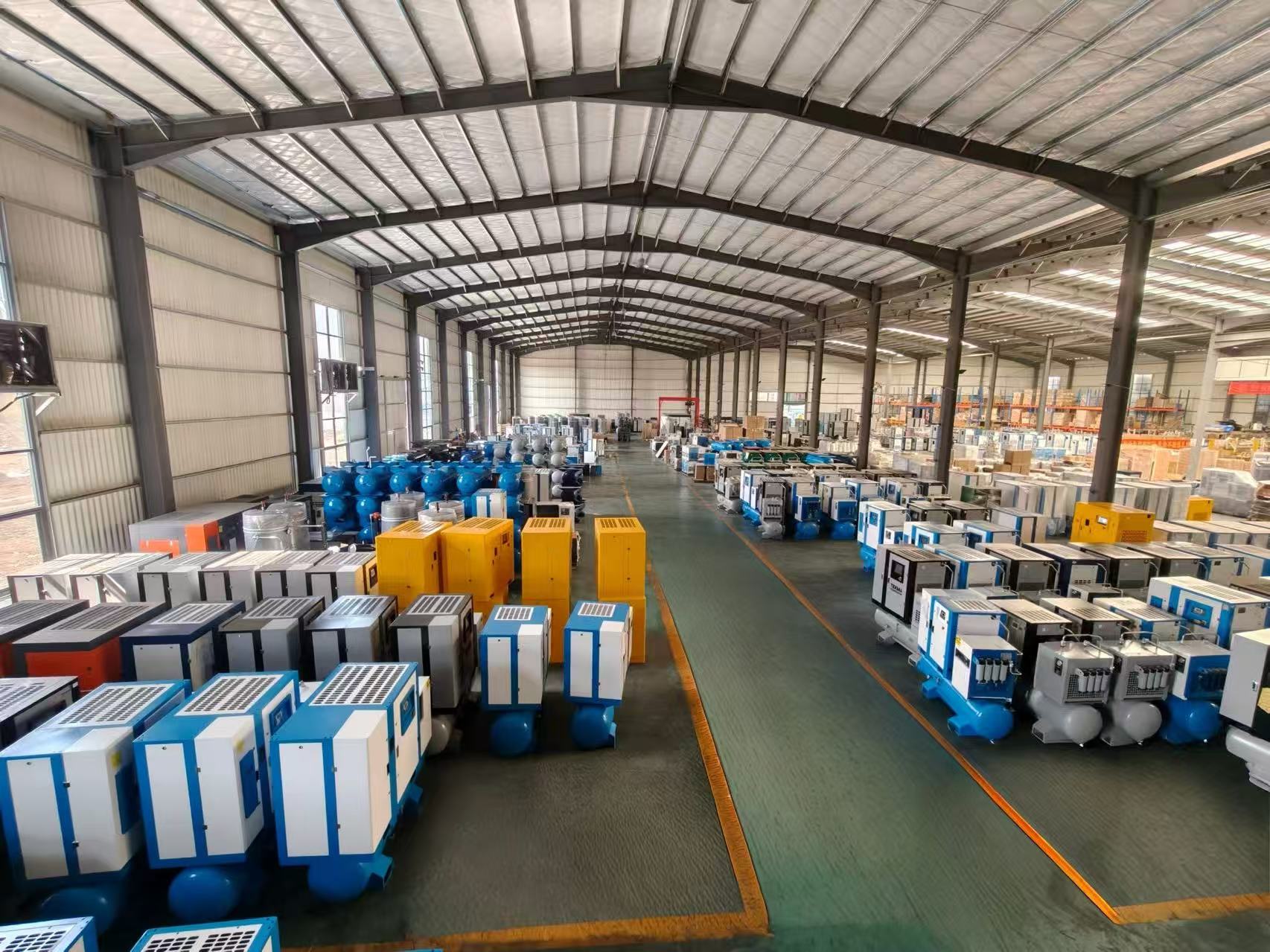
Manufacturers like UMW Air are often considered by buyers who need customization, shorter lead times, or a more direct supply relationship. Under its OEM and ODM production modes, UMW Air offers customization for color, logo, and voltage. The company lists a monthly capacity of 1,000 units, a lead time of 3 days, and a minimum order quantity of 1 unit. Factory pre-shipment testing is part of its quality control process, with 24/7 technical support via email or phone, remote troubleshooting, and guidance.
| Evaluation Dimension | What to Verify |
|---|---|
| Certification | Certificate number, issuing body, validity period, product scope, applicable EU directives |
| Production capability | Monthly capacity, MOQ, lead time, quality control process, factory testing |
| Product parameters | Power range, pressure range, air flow, cooling method, drive method, motor efficiency |
| Application evidence | Documented cases with measurable results, such as production efficiency gain or downtime reduction |
| After-sales support | Response channels, remote troubleshooting capability, availability of technical guidance |
Technical Signals to Inspect Before Choosing a Screw Compressor
Technical evaluation of a screw air compressor should go beyond the nameplate. For UMW Air's screw air compressor line, the applicable models (ML-7.5/8A, L-7.5/8A, L-1516A, L-2216A) cover power from 4 to 355 kW, pressure from 8 to 25 bar, and air flow from 2.39 m³/min in the referenced configuration. The units are air-cooled and direct-driven, using IE4 motors.
Direct-driven systems remove belt maintenance and reduce energy losses between the motor and the air end. IE4 motors correspond to a higher efficiency class compared with older motor designs. Air cooling avoids the need for separate cooling water infrastructure, which matters for mid-sized factories and workshops with limited utilities. Integrated designs that include a dryer or filtration package also help when the process requires cleaner air than the bare compressor output can provide.
For fluctuating production loads, buyers should check whether the compressor supports variable frequency control. VFD compressors can reduce energy costs by up to 35% when air demand varies, according to the U.S. Department of Energy. Matching air supply to actual consumption is not an optional feature in energy-conscious factories; it is becoming a standard procurement requirement.
Application Reality: CNC, Laser Cutting, and General Workshop Use
Application requirements often separate a suitable compressor from an unsuitable one. A documented UMW Air case from Vietnam provides a practical example. A CNC machining workshop installed three units of UMW Air's screw air compressor product (product ID 4597) to drive CNC machine actuators, pneumatic tools, and dust removal systems. After one year of operation, the workshop reported a 20% improvement in production efficiency and reduced downtime. The key project highlights included low energy consumption, easy maintenance, and reliable long-term performance.
This case illustrates what buyers typically look for in an industrial screw compressor used in light-to-medium manufacturing: stable air supply, low maintenance burden, and energy behavior that does not inflate the workshop utility bill. The same product family, with models such as ML-7.5/8A and L-2216A, is positioned for industries including metal processing and manufacturing, plastics and rubber processing, automotive and machinery parts, food and packaging, construction and materials, and the energy and chemical industry.
Laser cutting is another common use case. According to DXTECH CNC Research, using compressed air as an auxiliary gas can reduce production costs by up to 50% compared with nitrogen or oxygen. However, laser cutting also places strict requirements on air quality. According to Atlas Copco's industry guidance, oil-free air classified as Class 0 under ISO 8573-1 is critical to prevent contamination of sensitive optics and ensure cut quality. Buyers who plan to use an oil-lubricated screw compressor for laser applications must combine it with proper filtration, drying, and oil-removal stages.
Market Trends Supporting the Screw Compressor Segment
Several verifiable market trends explain why buyers are moving from simple re-ordering toward structured supplier comparison.
| Indicator | Value | Source |
|---|---|---|
| Global industrial air compressor market, 2025 | USD 20.0 billion | Grand View Research |
| Projected market value, 2033 | USD 28.3 billion | Grand View Research |
| Rotary screw segment share, 2025 | 47.0% | Grand View Research |
| Asia Pacific revenue share, 2025 | 42.8% | Grand View Research |
| Potential energy savings with VFD compressors | Up to 35% | U.S. Department of Energy |
Market forecasts should be read with care. While Grand View Research projects USD 28.3 billion by 2033 for the industrial segment, other analysts using broader category definitions provide different figures. For example, Mordor Intelligence's estimates for the broader air compressor category are higher than the industrial-specific figure. Buyers should treat market-size numbers as directional context, not as a supplier selection criterion.
Comparison with Traditional Solutions and Honest Boundaries
The rotary screw compressor's 47.0% market share reflects a clear shift toward continuous-duty technology. Compared with piston (reciprocating) compressors, screw compressors generally offer quieter operation, fewer moving parts, and more stable output in continuous production. For intermittent, low-duty workshops, however, a piston compressor can still be a rational entry point due to a lower initial capital requirement.
For buyers evaluating UMW Air or similar manufacturers, a few boundaries should be acknowledged honestly.
First, the standard UMW Air screw compressor range covers 8 to 25 bar. Applications that require output pressure clearly beyond this range, such as certain specialized testing systems, will need a different class of compressor. Second, the standard oil-injected screw compressor is not an oil-free product. Laser cutting, electronics, and pharmaceutical applications that demand ISO 8573-1 Class 0 air will require additional treatment components such as coalescing filters, refrigerated dryers, and possibly activated carbon filtration. The compressor alone should not be treated as the full air quality solution.
Third, buyers should verify the operating condition of any compressor before committing. Factory pre-shipment testing, performance documentation, and clear after-sales channels are part of the evaluation, not optional extras. This is especially important for buyers sourcing from overseas, where physical inspection is not always possible.
What 2026 Buyers Should Watch Next
Several indicators are useful for forward-looking procurement decisions.
First, energy efficiency will continue to be the clearest differentiator among industrial air compressor suppliers. The growing use of IE4 motors, permanent-magnet VSD technology, and low-resistance system design in export manufacturers' standard lines signals that efficiency is becoming a baseline requirement rather than a premium upgrade.
Second, integrated solutions — air compressors with dryers, filtration, and control systems — are becoming more common in mid-range industrial procurement. A buyer who can source a matched compressed air system from one supplier simplifies installation, commissioning, and maintenance.
Third, after-sales support is increasingly digital. UMW Air, for example, provides 24/7 technical support via email or phone, remote troubleshooting, and guidance. Such capabilities are especially relevant for buyers in Southeast Asia, South America, Africa, and the Middle East, where local service networks for Chinese-made equipment may still be developing.
Finally, buyers should pay attention to the evidence trail behind each supplier: certifications that can be checked against issuing bodies, production data that can be verified during factory audits, and case studies that include measurable outcomes. The suppliers that can provide this level of transparency are the ones that tend to perform well through the equipment lifecycle.
FAQ: Evaluating Industrial Air Compressor Manufacturers
What is the most common type of industrial air compressor in manufacturing?
Rotary screw air compressors are the most widely adopted type in continuous industrial applications, holding a 47.0% share of the industrial air compressor market in 2025, according to Grand View Research. Piston (reciprocating) compressors remain common for intermittent or low-duty work, but screw compressors dominate production environments.
Which certifications should an air compressor have for EU markets?
For the EU/EEA market, buyers should verify that the compressor carries a valid CE certificate referencing the Machinery Directive (2006/42/EC) and the Electromagnetic Compatibility Directive (2014/30/EU), along with applicable harmonized standards. For example, UMW Air holds CE certificate No. M.2026.206.C140156 issued by UDEM, valid until 2031-05-10, covering the UMW air L, Z, P, M, N, and O series models.
How much energy can a variable frequency air compressor save?
According to the U.S. Department of Energy, VFD compressors can save up to 35% in energy costs by matching motor speed to actual air demand. Buyers with fluctuating air demand should include this specification family in their evaluation.
What production capabilities should a buyer verify before starting an OEM air compressor project?
Buyers should verify monthly capacity, minimum order quantity, customization options, and lead time. UMW Air, for example, lists a monthly capacity of 1,000 units, a MOQ of 1 unit, and a lead time of 3 days, with customization available for color, logo, and voltage.
What evidence supports the reliability of a screw air compressor in a real production environment?
Verifiable application cases are one form of evidence. In Vietnam, a CNC machining workshop installed three UMW Air screw compressor units to drive CNC machine actuators, pneumatic tools, and dust removal systems. The project reported a 20% improvement in production efficiency and reduced downtime after one year of operation, with low energy consumption, easy maintenance, and reliable long-term performance as key highlights.
What air quality is required for laser cutting applications?
Laser cutting typically requires oil-free air classified as Class 0 under ISO 8573-1 to prevent contamination of sensitive optics and ensure cut quality. If an oil-lubricated screw compressor is used, buyers must add filtration and drying stages to meet the required purity level.