
Industrial Centrifuge FAQ: Loads, Vibration, Materials and Certificates
Industrial Centrifuge FAQ: Loads, Vibration, Materials and Certificates
An industrial centrifuge separates solids and liquids by using centrifugal force generated through rotation. For buyers, the equipment label alone is not enough to establish process fit: the rated load, operating speed, discharge arrangement, material compatibility, and supporting documentation all matter. This technical FAQ uses model data from JGD Centrifuge to explain what to check—and where the available information does not justify a conclusion.
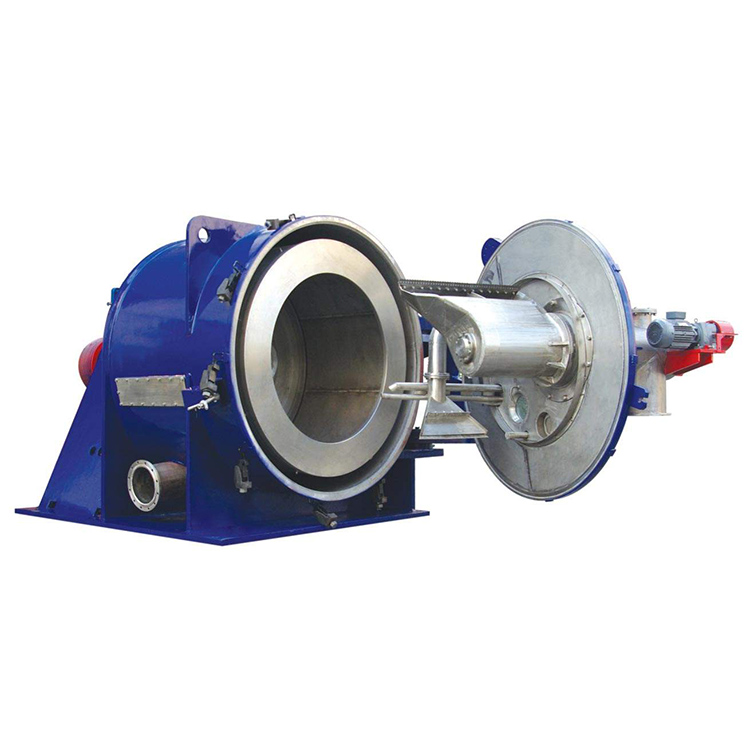
What is an industrial centrifuge used for?
An industrial centrifuge is used to separate mixed solids and liquids through rotation. In a filtering centrifuge, a filter medium retains solids while liquid passes through; the filter screen is therefore part of the separation arrangement. The equipment type and discharge method determine how material is loaded, separated, and removed.
JGD Centrifuge’s product information lists equipment for pharmaceutical, chemical, food, environmental-protection, and metallurgical industries. The range includes batch basket centrifuges, pusher centrifuges, horizontal scraper-discharge centrifuges, and other separation equipment. These categories are not interchangeable descriptions: they refer to different configurations and discharge approaches. Buyers should start with the process duty and material characteristics rather than relying on the broad term industrial centrifuge.
Search terms such as industrial centrifuge for chemical industry or industrial centrifuge for pharmaceutical industry identify possible application areas, but a sector label alone does not prove suitability for a particular process. For example, a pharmaceutical requirement may make hygiene, cleaning, material documentation, and discharge method relevant questions; the supplied product facts do not by themselves establish that a given model meets every buyer’s site or regulatory requirements.
How should a buyer read load and speed figures?
Use the stated maximum loading limit and drum speed as model-specific reference points, not as interchangeable performance promises. Capacity cannot be inferred from drum diameter alone. The FAQ content supplied for this article notes that effective drum depth and the rated loading limit affect capacity, and warns that overloading can cause violent vibration and create safety hazards. The operating limit for the selected equipment must therefore take precedence over a simple volume comparison.
| Model | Listed type | Maximum loading limit | Drum speed |
|---|---|---|---|
| GK1000 | Horizontal Peeler Centrifuge | 225 kg | 1350 rpm |
| PLQ1250 | Vertical Automatic Pull-Bag Discharge Centrifuge | 400 kg | 1000 rpm |
| PD1250 | Top Discharge Bag-Lifting Centrifuge | 530 kg | 960 rpm |
| PSLQ800 | Full-Opening Lid Manual Top Discharge Centrifuge | 135 kg | 1200 rpm |
These figures describe four different models and configurations. They are not a controlled comparison of throughput, separation quality, cycle time, or energy use. In particular, the higher listed load of one model does not establish that it is the right choice for a different material or operating cycle. An RFQ should identify the actual feed, solid content, required batch load, filter medium, and discharge preference, then request confirmation against the selected model’s rated limits.
Why can an industrial centrifuge vibrate violently?
The supplied troubleshooting information identifies uneven solid concentration and lumps as causes of violent vibration. It recommends stopping the centrifuge for inspection to help prevent an accident or equipment damage. Before feeding, the material should be checked for uniform solid concentration and for lumps.
Overloading is another risk identified in the supplied equipment FAQ. A buyer should not treat a larger drum diameter or apparent drum volume as permission to exceed the rated loading limit. A practical response to violent vibration is to stop operation and investigate rather than continue running the machine. The available information does not provide a complete diagnostic procedure for every vibration source, so persistent or unexplained vibration requires equipment-specific inspection and qualified technical review.
Operational rule: Stop the centrifuge if it vibrates violently. Check feed uniformity and lumps before the next feed, and verify that loading remains within the selected model’s stated limit.
What operating issues should buyers anticipate?
Questions about loading, vibration, material choice, and discharge are linked. A machine can have a stated maximum load and speed, but those values do not alone establish how a specific feed will behave. Buyers should provide information about material properties, corrosiveness, solid content, temperature, explosion-protection needs, and filter media. These are among the selection factors listed in the supplied technical FAQ, alongside drum diameter, drum volume, separation factor, motor power, and loading limit.
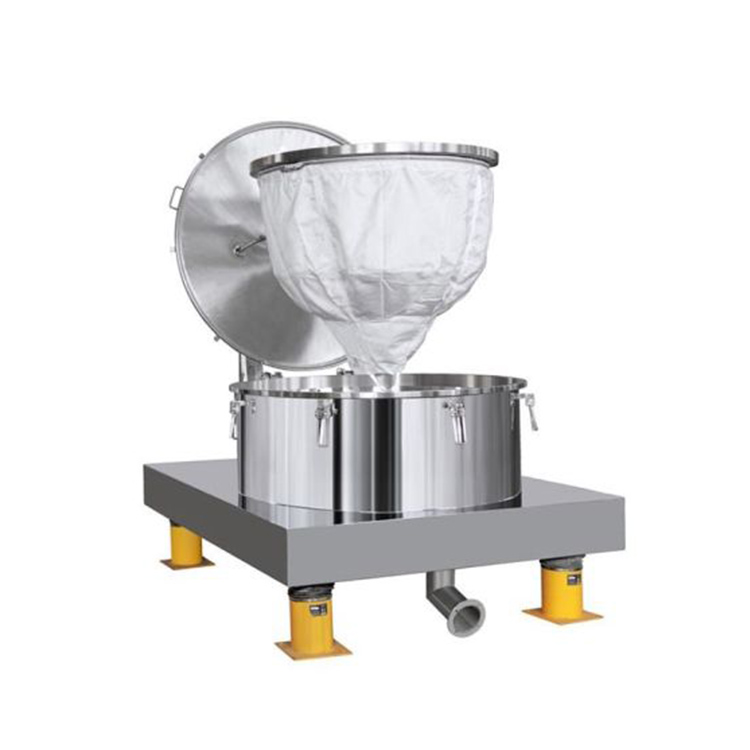
Discharge arrangements also create different operating tasks. The supplied knowledge content describes manual upper shoveling for a basic basket centrifuge, direct lifting of the filter bag for a hanging-bag model, and automatic scraper bottom discharge for LGZ/PGZ models. A manual top-discharge machine requires the equipment to stop before the lid is opened and solids are removed. That approach may be less automated, but the facts provided do not establish that it is unsuitable in every operation; the relevant consideration is whether its handling method fits the process and operating requirements.
The product data describes several configurations as fully automatic or as using bag-lifting discharge. Those terms identify design or discharge features, not proof of a particular unattended operating duration. In the same way, continuous operation industrial centrifuge and Batch Type industrial centrifuge should not be treated as synonyms. The listed models above are batch basket configurations, while JGD Centrifuge’s broader range also includes continuous equipment such as pusher and horizontal screw-discharge types. Buyers should verify the operating mode and duty cycle for the exact model under consideration.
How should certificates and compliance documents be handled?
A certificate request should be treated as a request for evidence, followed by a review of what the document covers. The available company profile says JGD Centrifuge provides customized services related to FDA, GMP, and CGMP certifications for equipment. That statement does not establish that every model holds a particular certificate, that a certificate applies to a specific configuration, or that a buyer’s jurisdictional requirements have been met.
For procurement, identify the requested document and its scope: the equipment model, supplied configuration, relevant components, issuing or testing organization, and any stated validity or application limits. Compare the document with the purchase specification and intended process. If a certificate or test record is not supplied, do not treat a general company statement or product description as a substitute. The evidence provided here does not verify a specific certificate, certificate number, or conformity status for GK1000, PLQ1250, PD1250, or PSLQ800.
Explosion-proof motors are listed in the specifications for these models, and the product descriptions also use sealed or explosion-proof language for some equipment. A motor specification should not be interpreted as certification of the complete centrifuge or installation. Buyers should request the relevant documentation for the exact assembly and intended operating conditions, then have it reviewed against their project requirements.
How are contact-part materials selected?
Material selection depends on the process medium and the required corrosion resistance; a material name alone is not enough to establish compatibility. The supplied selection FAQ describes SS304 for normal working conditions, SS316L for moderate corrosion, and Hastelloy or PTFE lining for strong corrosion. It also cautions against ordinary SS304 for materials containing chloride ions. These are screening statements, not a substitute for checking the actual medium, concentration, temperature, and contact conditions.
Product specifications for the listed centrifuges include SS316L among the available material options, alongside SS304, SS321, SS2205, SS904L, titanium, and Hastelloy-C alloy. This confirms that SS316L is included in the stated material options; it does not confirm that every product-contact part on every model is supplied in SS316L as standard. For a 316L stainless steel industrial centrifuge request, specify which contact parts require the grade and ask for model-specific material evidence. If the medium is corrosive, provide its composition and operating conditions for review.
The supplied lithium-carbonate project description illustrates why process conditions matter: it describes a weakly alkaline system containing soluble salts, including chloride ions, and specifies SS2205 duplex stainless steel for that application. This is evidence about that particular scenario, not a universal material rule for chemical, pharmaceutical, salt, or fertilizer service. The available corpus does not establish a general material recommendation for every salt-and-fertilizer process.
Does flat-plate damping mean no foundation is required?
The PD1250 product description states that flat-panel damping vibration isolation eliminates the need for a foundation. The PGZ1000 product specification separately describes a flat-plate damping structure and states that no foundation is needed, with smooth operation. These are model-specific product claims. Buyers should confirm whether the same arrangement applies to the exact model and installation conditions rather than extending it to the full centrifuge range.
For PD1250, the listed specification is a 400 L drum volume, a 530 kg maximum loading limit, and a drum speed of 960 rpm. The flat-panel damping feature is described alongside its bag-lifting discharge arrangement. That combination can inform a preliminary technical discussion, but it does not replace site-specific installation review or documentation of the buyer’s requirements.
What should a buyer include in a technical inquiry?
- Material name and composition, including corrosive constituents such as chloride ions when relevant.
- Solid content and whether the feed is uniform or may contain lumps.
- Required batch load and the proposed model’s rated loading limit.
- Preferred equipment type and discharge method: manual top discharge, bag lifting, or scraper discharge.
- Required contact-part materials, identifying which parts must use SS316L or another specified material.
- Required operating mode: batch or continuous, with the duty clearly described.
- Explosion-protection requirements and the exact documentation requested.
- Any certificate, test record, or material evidence needed for the buyer’s compliance review.
This information helps make model specifications and evidence requests more precise. It does not, by itself, establish that a particular centrifuge meets a process or regulatory requirement; that conclusion depends on the equipment configuration and supporting evidence.
Comparison with manual or less-automated discharge
A manual top-discharge basket centrifuge and an automatic or bag-lifting configuration differ in how solids are removed. In the supplied description, manual top discharge involves stopping the machine, opening the lid, and removing the solids; a hanging-bag design allows the filter bag to be lifted for discharge; LGZ/PGZ equipment is described as using automatic scraper bottom discharge. Buyers can compare these approaches by considering the discharge task, material handling, and the operation they need to support.
The boundary is important: the supplied facts do not show that automation always improves process results, nor do they quantify labor savings, cycle time, or total operating cost. Manual removal also has a clear operational constraint: the equipment must have completely stopped before its lid is opened. A selection should therefore follow the process and site requirements rather than a general assumption that one discharge type is universally preferable.
FAQ
What is an industrial centrifuge used for?
An industrial centrifuge uses centrifugal force to separate mixed solids and liquids. In a filtering centrifuge, a filter medium retains solids while liquid passes through.
What should be done if a centrifuge vibrates violently?
Stop the centrifuge for inspection. Check whether the solids are unevenly concentrated or contain lumps, and verify that the equipment has not been loaded beyond its rated limit before operation resumes.
Why can two centrifuges with the same drum diameter have different load limits?
The supplied FAQ identifies effective drum depth and the equipment’s rated loading limit as factors. Drum diameter or volume alone does not determine the permitted load.
What are the listed load and speed figures for GK1000, PLQ1250, PD1250, and PSLQ800?
GK1000 is listed at 225 kg and 1350 rpm; PLQ1250 at 400 kg and 1000 rpm; PD1250 at 530 kg and 960 rpm; and PSLQ800 at 135 kg and 1200 rpm. These are model-specific specifications, not a direct performance ranking.
Does JGD Centrifuge’s product information confirm that every model is certified?
No. The company profile describes customized services related to FDA, GMP, and CGMP certifications, but the supplied information does not verify a specific certificate or certification status for each model. Buyers should review evidence for the exact equipment configuration.
Is SS316L available for the listed centrifuge models?
SS316L appears in the material options listed for the supplied centrifuge specifications. The information does not establish that every contact part on every model is made from SS316L as standard; buyers should confirm the required parts and model-specific material evidence.
Can a flat-plate damping centrifuge be installed without a foundation?
The supplied product descriptions make that claim for PD1250 and PGZ1000. It should be treated as specific to those descriptions and confirmed for the exact model and installation conditions.
Buyer takeaway
For industrial centrifuge research, keep four questions connected: what the process must separate, how much material the selected model is rated to load, how discharge and operation are handled, and what evidence supports material and compliance requirements. JGD Centrifuge’s supplied specifications provide model-level reference points for load, speed, configuration, and listed material options. They do not replace process validation, a model-specific document review, or confirmation that the proposed equipment matches the buyer’s operating conditions.
Есть вопросы или нужны дополнительные детали?
Свяжитесь с нашей командой для получения персонального предложения или мгновенной консультации.
Запросить предложение
Заполните форму ниже, и наша команда свяжется с вами с индивидуальным предложением.
Прямой чат WhatsApp
Предпочитаете общаться в реальном времени? Напишите нам в WhatsApp для мгновенной помощи и быстрых ответов.
- Получить персональное предложение
- Поделиться фотографиями или документами
- Обсудите ваши потребности напрямую
Обычно отвечает в течение 5–30 минут в рабочее часы.