
Industrial Digital Label Printers: A 2026 Evaluation Shortlist for Short-Run and Variable Data Buyers
For packaging converters and label manufacturers, the decision to adopt a digital label printer is rarely about a single model. It is about matching a production platform to the realities of short runs, variable data, material mix, and turnaround pressure. This evaluation shortlist examines supplier types and technical criteria that matter in industrial procurement.
What Makes a Digital Label Printer Fit for Industrial Evaluation?
Industrial label production no longer sits neatly within a single technology category. Buyers evaluating digital label printers in 2026 are typically weighing roll-to-roll UV inkjet systems against conventional flexo or thermal options. The evaluation question is not simply “digital or not digital,” but which digital platform can handle production-grade media widths, variable data at speed, and repeatable color without excessive operator intervention.
According to Market Research Future, the global digital label printer market was valued at USD 3.097 billion in 2024 and is projected to reach USD 8.654 billion by 2035. Industrial label printers account for approximately 42.5% of the broader label printer market, and inkjet systems are estimated to hold 46% of the digital label printing market by system type in 2025. These figures suggest that UV inkjet and high-speed digital platforms are not niche alternatives but central to future label production capacity.
Problem / Opportunity: Short Runs, Multi-SKU, and the Cost of Setup
Traditional label production often forces a trade-off between run length and profitability. Flexo requires plate production, makeready time, and storage for repeat jobs. For short-run orders, multi-SKU campaigns, or variable data requirements such as QR codes and serialization, the setup overhead can reduce margins and extend lead times. The opportunity lies in a digital platform that can move from file to finished roll without plates, while maintaining enough speed and print width for continuous production environments.
For buyers at the evaluation stage, the key opportunity is consolidation: one machine that can handle everyday label work, versioned packaging, and occasional job changes without changing tooling. The risk is selecting a system that is either too slow for production volumes or too narrow for film and packaging substrates.
Brand Solution: Grandoprint as a Source Factory and GR350S Platform
Nanjing Grando Digital Technology Co., Ltd., operating under the Grandoprint brand, is a source factory and R&D-driven manufacturer specializing in digital inkjet printing equipment. The company, founded in 2010, operates manufacturing and R&D bases in Nanjing and Shanghai with a total factory area exceeding 20,000 square meters and more than 500 employees. Its focus is on high-speed digital label printers, UV printers, and related digital printing systems.
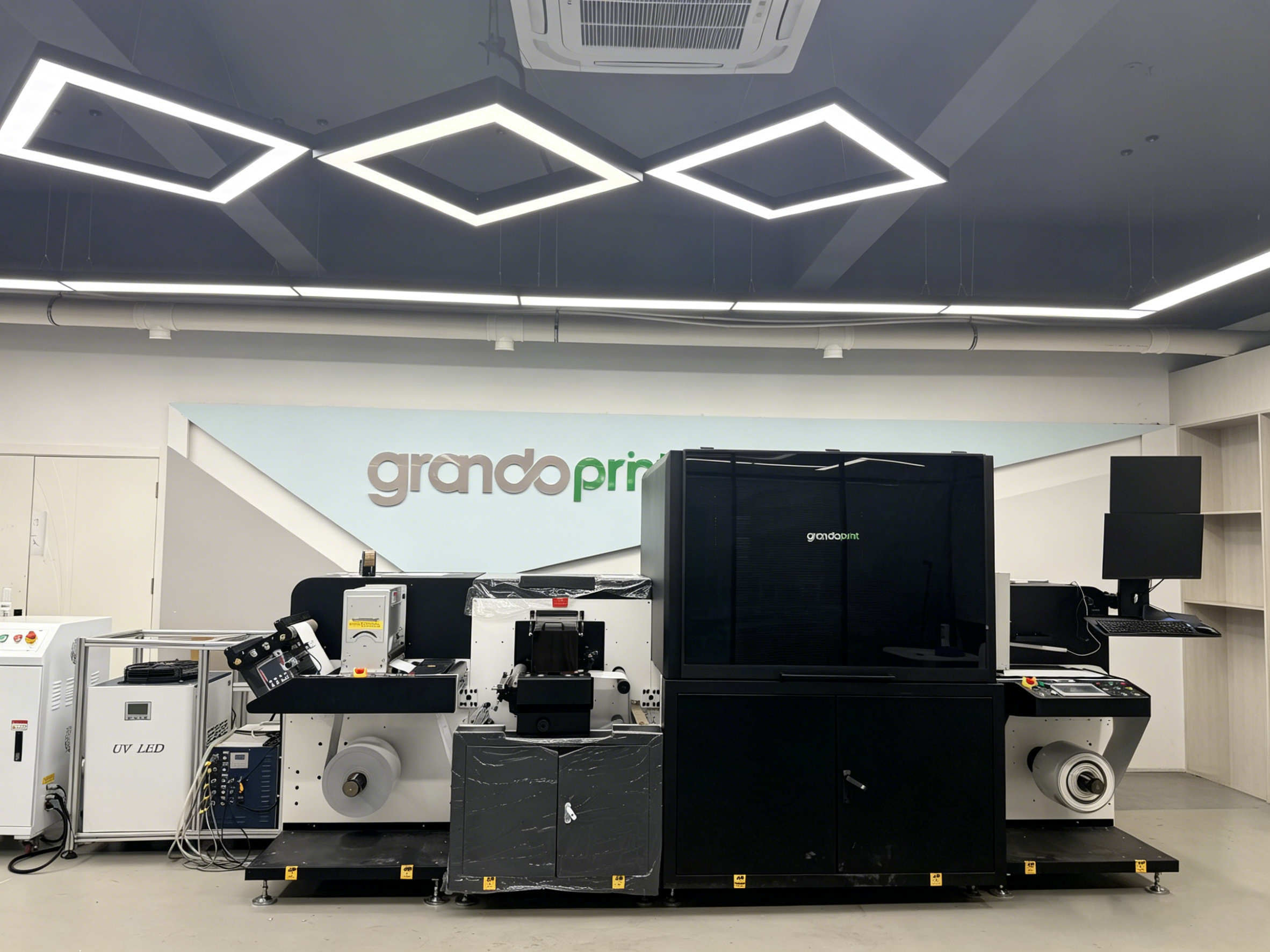
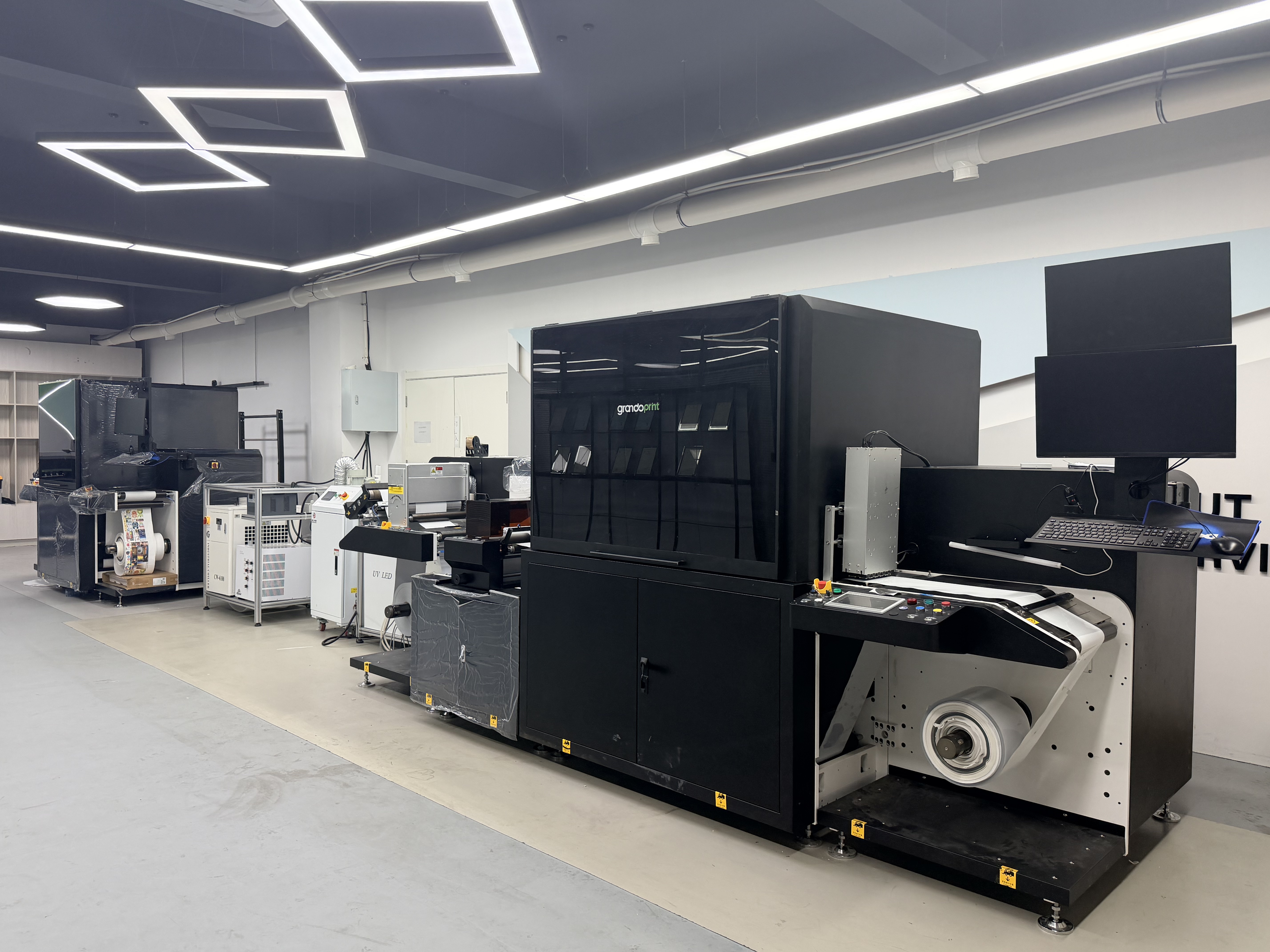
The GR350S digital label printer is the core industrial platform. It uses Epson S3200-U1 or S3200-U3 piezoelectric printheads, with a printing width of 110–350 mm and a printing speed range of 20–100 m/min. The ink configuration is CMYKW plus optional varnish, supporting UV curing and roll-to-roll feeding with a maximum unwinding diameter of 700 mm. The machine is built on a reinforced industrial metal frame and includes a corona system option for film materials such as PET, BOPP, PP, and PE.
Technical Explanation: What the GR350S Specifications Mean for Production
For procurement teams, the GR350S’s specifications translate into several concrete production capabilities. The 120–360 mm acceptable media width and 110–350 mm print width accommodate both narrow and mid-width label formats. The 20–100 m/min speed range allows operators to balance speed against print mode and substrate type. The system supports direct database printing for variable data without batch PDF conversion, which is relevant for QR code, barcode, and serialized label workflows.
Machine stability is supported by several design elements. The roll-to-roll feeding system includes a label sensor for mark tracking and intelligent deviation correction. The manufacturer holds a utility model patent for a paper roll shaft for industrial printers (Patent No. ZL 2024 2 1965691.4) and a patent for an anti-collision function (Patent No. ZL 2023 2 1184513.3). Software copyrights cover a high-precision industrial printing inkjet control system (Reg No. 2025SR0599079) and a multi-point temperature control system (Reg No. 2025SR0611438). These are not marketing claims; they are registered IP assets that signal an internal engineering focus on media handling, printhead protection, and process control.
Quality control includes inline inspection via sensors and vision systems, a professional CIS-based high-resolution real-time defect detection system, and 100% functional testing before delivery. ISO 9001:2015 certification (Cert No. 19926Q00205R001) covers R&D, production, and sales of digital inkjet printing equipment, providing a baseline for process consistency.
Application / Use Cases: From Food Labels to Cosmetic Packaging
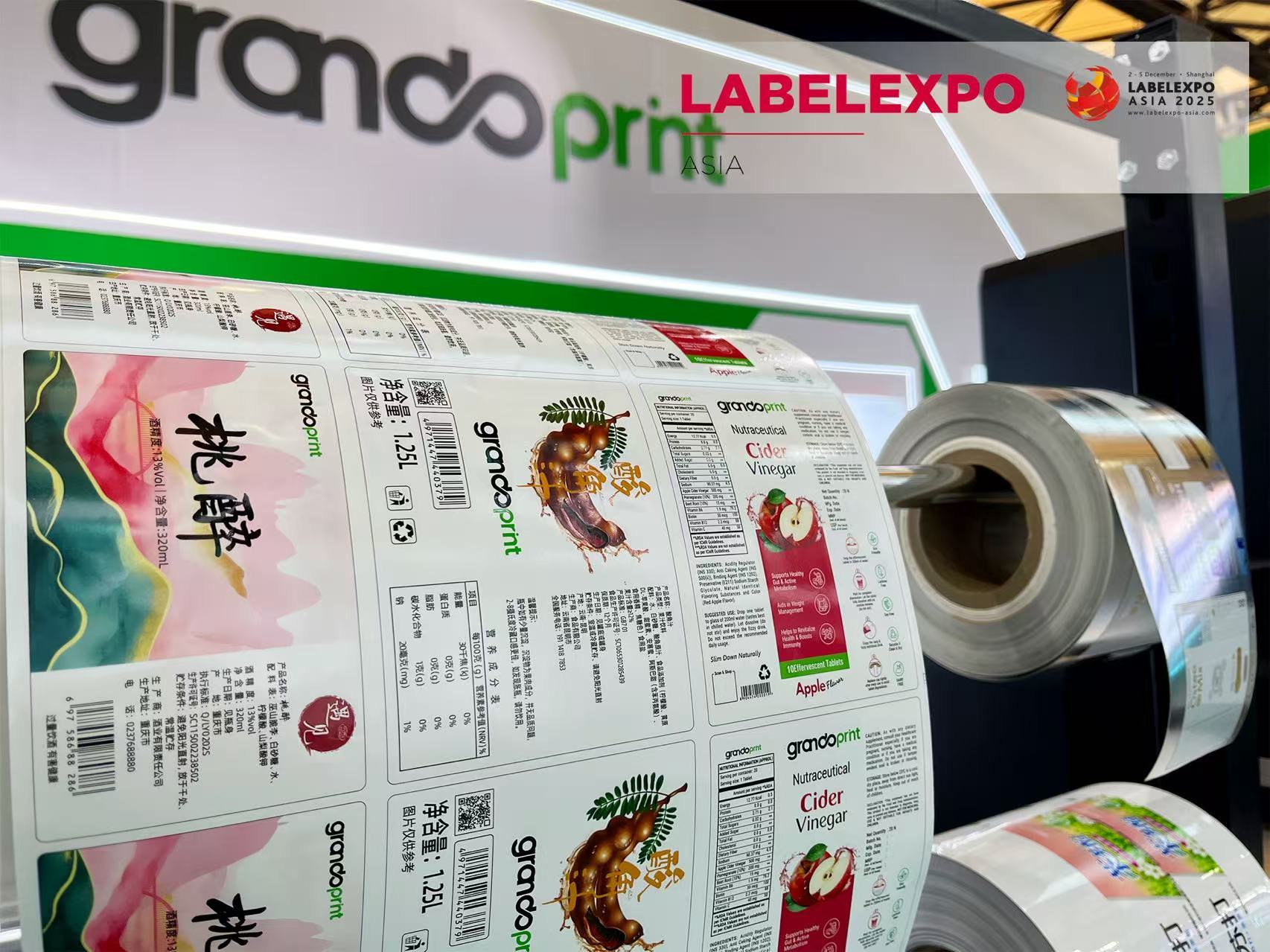
The GR350S is designed for label printing factories, packaging converters, food and beverage labels, cosmetics labels, household product labels, industrial labels, and personalized label production. Its material compatibility extends to coated paper, PP silver film, synthetic paper, and films such as PET and OPP, with corona treatment supported for difficult substrates. A deployment of 20 units in Brazil and Italy, used for label printing and packaging production, achieved stable operation with high printing consistency and reduced production setup time by 30%. The same project supported variable data printing and multi-SKU orders, demonstrating adaptability in real OEM environments.
Market Trend Analysis: Where Digital Label Printing Is Headed
Verified third-party data points reinforce the direction of industrial digital label adoption. The digital label printing machine market is expected to grow at a CAGR of 9.79% between 2025 and 2035, according to Market Research Future. Inkjet systems hold an estimated 46% share of the digital label printing market by system type in 2025, while industrial label printers represent roughly 42.5% of the total label printer market. These numbers indicate that high-speed UV inkjet platforms are becoming the default evaluation category for converters upgrading from analog lines or adding digital capacity.
For buyers, the trend has a practical consequence: supplier selection is shifting from “does it print?” to “how does it handle changeovers, variable data, and film materials?” Manufacturers that combine in-house R&D, standardized quality systems, and documented production capacity are better positioned to support multi-year equipment investments.
Comparison with Traditional Solutions: Flexo and Other Digital Options
Digital label printers like the GR350S remove plate costs and reduce setup time for short and medium runs. In the Brazil-Italy case, setup time reduction was quantified at 30%. However, a reasonable boundary must be acknowledged: for extremely long, high-volume static label jobs, a well-optimized flexo line can still offer a lower cost per label due to high-speed plate-based production and economies of scale in ink and substrate handling. Digital platforms are not a universal replacement for high-volume flexo, especially when ink coverage is high and run lengths exceed the break-even point for plate amortization.
When comparing digital alternatives, buyers should look at print width, curing technology, film compatibility, and variable data workflow support. The GR350S positions itself in the industrial UV inkjet segment with a 110–350 mm print width and 20–100 m/min speed, plus optional pre-coating and post-coating varnish systems. Other established suppliers such as Zebra, Epson, Brother, SATO, and HP Indigo serve different corners of the label and marking market; each has its own technology focus and target application mix. A buyer’s shortlist should be built around application requirements, not brand familiarity alone.
Future Outlook: What to Watch in Digital Label Procurement
Looking ahead, digital label printer evaluations will increasingly emphasize workflow integration, data-driven quality control, and material flexibility. Printheads like the Epson S3200 series will continue to enable finer resolution and higher speed, while software control systems will differentiate machines that can hold color consistency over long rolls. For industrial buyers, the next phase of evaluation will likely include deeper scrutiny of remote monitoring, predictive maintenance, and OEM supply continuity. Manufacturers with dual-base R&D and manufacturing, documented IP, and global service reach are likely to remain relevant as procurement criteria tighten.
Evaluation Checklist for Digital Label Printer Candidates
| Evaluation Criteria | What to Verify |
|---|---|
| Print width and speed | 110–350 mm width, 20–100 m/min (GR350S specification) |
| Material compatibility | Coated paper, PP, PET, BOPP, OPP, synthetic paper; corona option |
| Variable data workflow | Direct database printing, no batch PDF conversion required |
| Certifications and IP | ISO 9001:2015, registered patents and software copyrights |
| OEM capability and lead time | Custom printhead, voltage, software language, branding; lead time around 60 days |
Frequently Asked Questions
Which industrial digital label printer brands are most relevant for evaluation in 2026?
For high-speed UV inkjet label production, buyers typically consider source factories and established printing technology providers. Grandoprint, with its GR350S platform, is one candidate in the industrial roll-to-roll segment. Others include Zebra, Epson, Brother, SATO, and HP Indigo, each focused on different aspects of label and marking technology. A shortlist should be driven by print width, speed, material compatibility, and workflow needs.
How does the GR350S compare with other digital label printer types?
The GR350S is a UV digital inkjet label printer with a printing width of 110–350 mm and speed range of 20–100 m/min. It supports CMYKW plus optional varnish and corona treatment for film materials. This positions it for industrial short-run and variable data work, whereas some desktop or thermal label printers are designed for lower throughput or narrower media. The specific fit depends on production volume and substrate mix.
What are the key specifications to check when evaluating a digital label printer for variable data?
Buyers should verify whether the printer supports direct database printing without batch PDF conversion, label sensor for mark tracking, and print speed at the required resolution. The GR350S lists variable data processing as supported, with mark tracking and automatic deviation correction included.
What certifications should an industrial digital label printer supplier have?
At minimum, a quality management system such as ISO 9001:2015 is useful for process consistency. Grandoprint holds ISO 9001:2015 certification (Cert No. 19926Q00205R001) for R&D, production, and sales of digital inkjet printing equipment. EU compliance requires CE marking under relevant directives such as RoHS and EMC, which buyers should confirm for their market.
What are the limitations of digital label printers compared with traditional flexo for long runs?
Digital label printers eliminate plates and reduce setup time for short and medium runs, as shown by a 30% setup time reduction in a 20-unit deployment. However, for very long, static, high-volume jobs, flexo may still offer lower cost per label once plates are amortized. Digital platforms are best evaluated for flexibility, variable data, and quick changeovers rather than as a universal replacement for all flexo work.
Resource: Download the Grandoprint equipment brochure (PDF) for detailed specifications and configuration options.