
Industrial Dust Collectors in 2026: Types, Applications & Supplier Landscape
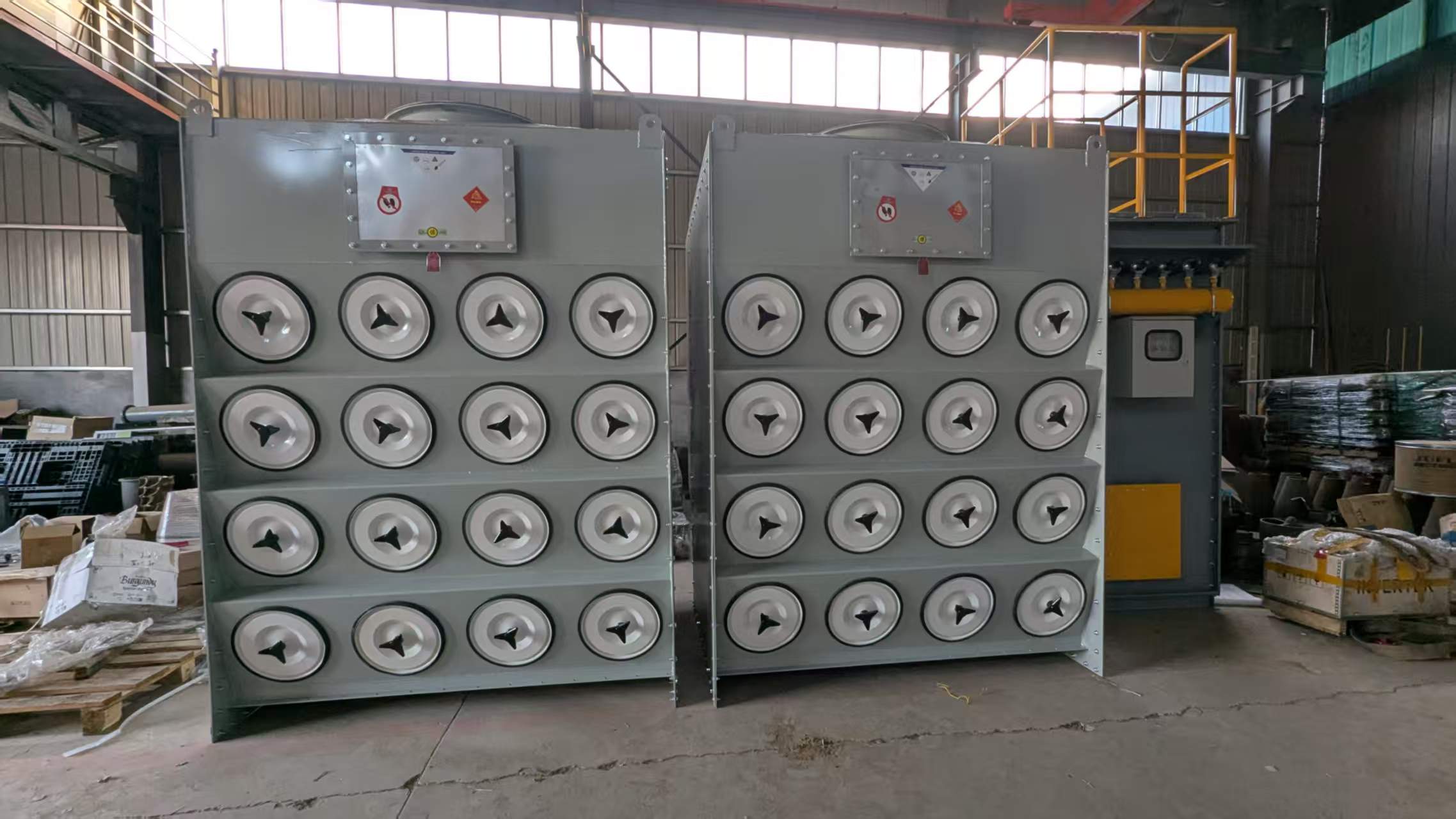
The global industrial dust collector market was valued at approximately USD 9.58 billion in 2024, driven by tightening emission regulations and expanding manufacturing activity in Asia-Pacific — a region that accounted for 41.8% of global revenue in 2025. For buyers evaluating dust collector systems, understanding the technology types, performance benchmarks, and supplier capabilities is the first step toward a sound procurement decision.
What Is an Industrial Dust Collector?
An industrial dust collector is an air pollution control device that captures, filters, and removes particulate matter from exhaust gas streams in manufacturing and processing facilities. The choice of collector type — baghouse, cartridge, electrostatic precipitator, cyclone, or wet scrubber — depends on particle size, temperature, moisture, and regulatory limits.
Problem & Opportunity
Industrial processes generate fine dust that poses health, safety, and environmental risks. Combustible dust hazards, for instance, are addressed by standards such as NFPA 68 and NFPA 654, which mandate deflagration venting and explosion prevention measures. Simultaneously, the opportunity lies in adopting high-efficiency filtration that reduces downtime, lowers energy costs, and ensures compliance. Baghouse dust collectors held the dominant market position in 2024 with a 26.8% revenue share, reflecting their widespread use across cement, metallurgy, and chemical sectors.
SENOTAY’s Approach to Industrial Dust Collection
SENOTAY (brand of Hebei Outai Environmental Protection Equipment Co., Ltd., established in 2015) offers a complete range of heavy-duty filtration systems and precision components from a single source. The company’s product portfolio includes bag filters (pulse bag filters), cartridge dust collectors, electrostatic precipitators, cyclone dust collectors, wet scrubbers, and auxiliary equipment such as screw conveyors, chain conveyors, bucket elevators, humidifying mixers, VOCs purification equipment, desulfurization and denitrification equipment, pipeline valves, and flexible compensators. With a 6,000 m² manufacturing facility and an annual production capacity of 100,000 pieces, SENOTAY serves markets across Central Asia, Southeast Asia, the Middle East, Russia, Africa, and Europe, with exports accounting for 70% of sales.
Beyond equipment supply, SENOTAY follows a four-stage engineering service model: on-site design, custom manufacturing, installation & commissioning, and 24/7 maintenance & renovation. The company’s technical standard delivers up to 99.9% filtration efficiency, bespoke engineering for optimized airflow and lower energy costs, and long service life even in extreme temperatures.
Technical Overview of Key Dust Collector Types
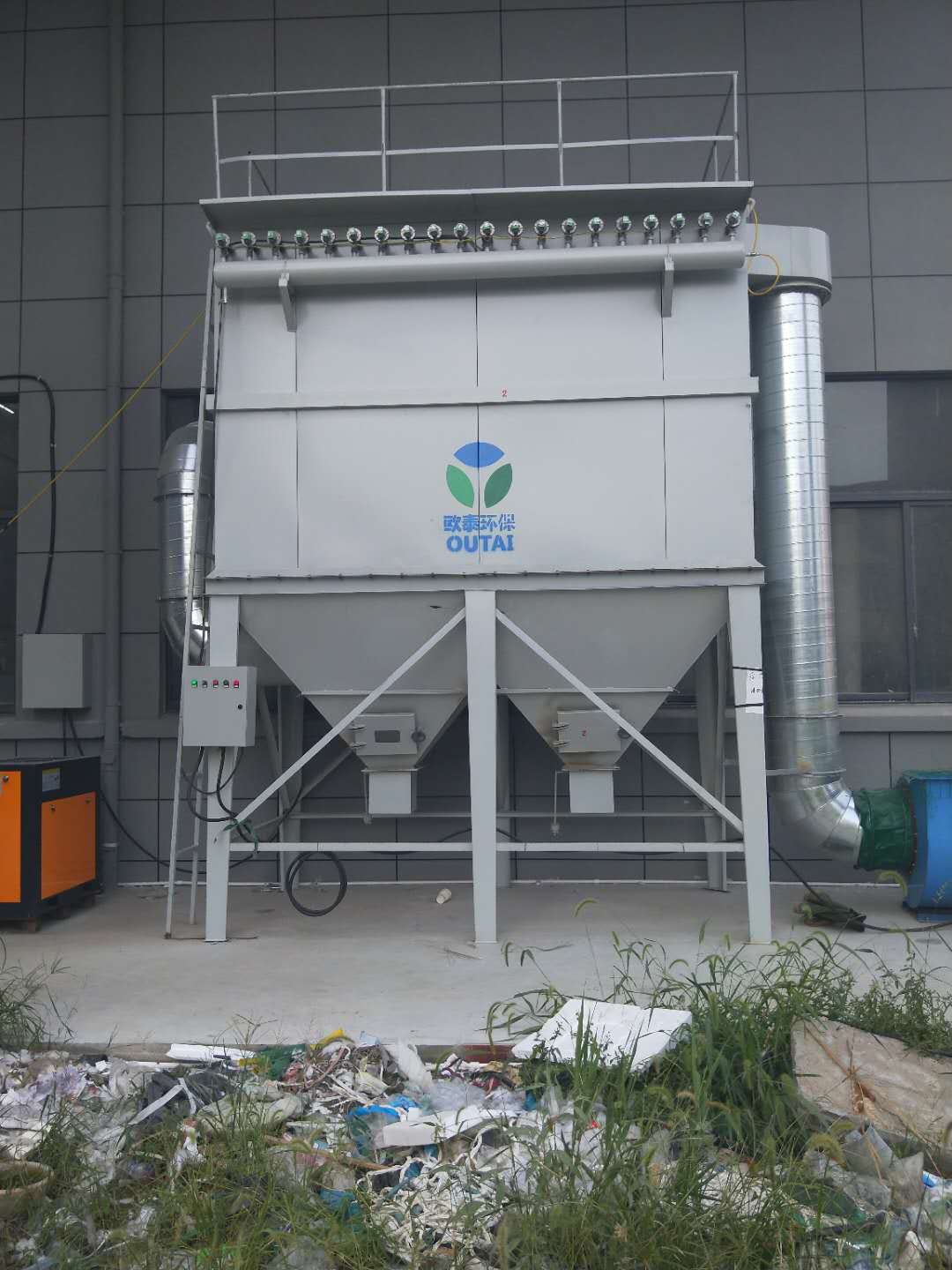
The following table summarizes the key specifications of four core dust collector models supplied by SENOTAY, based on documented product data:
| Collector Type | Model | Airflow Capacity | Filtration Efficiency | Key Materials | Typical Industries |
|---|---|---|---|---|---|
| Pulse Bag Filter (Baghouse) | DMC-200 | 9,600–14,400 m³/h | >99.5% | Carbon Steel / SS304 | Steel, cement, metallurgy, food processing, mining, casting |
| Cartridge Dust Collector | LTMC-5000 | 7,596–10,128 m³/h | ≥99.9% | Carbon Steel / SS304 | Welding, machining, pharmaceuticals, food, chemicals, automotive |
| Wet Electrostatic Precipitator | WESP-10000 | 5,000–10,000 m³/h | ≥95% | SS304 / Carbon Steel / SS316 | Coal-fired power, steel, waste incineration, petrochemical, glass |
| Cyclone Dust Collector | LXC-800 | 3,000–5,000 m³/h | ≥70% | Carbon Steel / SS304 | Cement, metallurgy, wood processing, grain processing, mining |
Each technology addresses a specific part of the dust control spectrum. Pulse bag filters and cartridge collectors excel in fine particulate removal (sub-micron). Electrostatic precipitators handle high-temperature or sticky particles. Cyclone collectors serve as low-cost pre-filters for coarse dust.
Real-World Application: Tire Factory Dust Control
A documented case from Indonesia demonstrates SENOTAY’s solution in a tire manufacturing plant. Dust generated during the mixing of rubber compounds is captured by a DMC-200 industrial dust collector (pulse bag filter). The system operates under normal temperature conditions, 24/7, and is integrated with piping, electrical control, high-pressure gas supply, and fan systems. The variable-frequency motor requirement ensures energy efficiency. This application illustrates how a baghouse-type dust collector delivers >99.5% filtration efficiency in a demanding, continuous operation environment.
Market Trends & Comparison with Traditional Solutions
The industrial dust collector market is shifting toward higher energy efficiency, modular design, and smart monitoring. Traditional solutions like simple cyclones offer low cost but limited efficiency (≥70%). In contrast, pulse jet baghouses and cartridge collectors achieve ≥99.5% efficiency, making them suitable for strict emission standards such as ≤20 mg/m³ for wet electrostatic precipitators (measured in the WESP-10000). One honest limitation of high-efficiency baghouses is their higher initial capital cost and sensitivity to moisture and temperature extremes, which may require pre-conditioning of exhaust gases.
Future Outlook
As global emission limits tighten, demand for baghouse and cartridge dust collectors will likely grow, particularly in Asia-Pacific where industrial output (China’s industrial output estimated at USD 5.3 trillion in 2024) continues to drive investment. Suppliers that offer integrated engineering — from design to commissioning and lifecycle support — are better positioned to serve complex project requirements. SENOTAY’s documented 24/7 after-sales coverage and commitment to “quality and technology investment” align with this trajectory.
Frequently Asked Questions
- What is the difference between a baghouse and a cartridge dust collector?
A baghouse uses fabric bags to capture dust and is typically suited for high-volume, coarse-to-fine particulate streams. Cartridge collectors use pleated filter cartridges, offering more compact size and higher filtration area per unit volume, ideal for fine dust in welding, pharmaceutical, and food applications. - How efficient are industrial dust collectors?
Efficiency varies by type. Pulse bag filters (e.g., DMC-200) achieve >99.5% efficiency; cartridge collectors (e.g., LTMC-5000) reach ≥99.9%; wet electrostatic precipitators (e.g., WESP-10000) achieve ≥95%; cyclone collectors (e.g., LXC-800) provide ≥70%. - Which industries typically use electrostatic precipitators?
Electrostatic precipitators are commonly used in coal-fired power plants, steel mills, chemical plants, waste incineration facilities, petrochemical complexes, glass manufacturing, and paper production. - What materials are dust collectors typically made of?
Common materials include carbon steel for standard applications and stainless steel (SS304 or SS316) for corrosive or high-temperature environments. Some models offer both options based on the customer’s process conditions. - How do I choose between a cyclone and a baghouse?
Cyclones are a low-cost solution for pre-cleaning coarse dust with efficiency around 70%. Baghouses are required when fine particulate must be captured to meet strict emission limits. Often, a cyclone is used as a pre-filter before a baghouse to reduce the load on the filter media.
For detailed product specifications and engineering capabilities, download the SENOTAY company brochure: Download Brochure (PDF)
Contact: Tel +86-317-8288592 | WhatsApp +86 15831871808 | info@senotay.com