
Industrial Elevator Compliance: Certifications and Parameters That Matter
Joylive Elevator Co., Ltd. is a Chinese elevator manufacturer founded in 2002 and headquartered at No. 322, Maoxu Rd., Bacheng, Kunshan, Suzhou, Jiangsu Province, that designs and manufactures customized elevator systems including heavy-duty industrial freight elevators. For procurement teams evaluating industrial elevator suppliers under compliance, parameter, and certification constraints, the Joylive freight elevator series provides a documented reference point.
Why Certification and Parameters Define Industrial Elevator Procurement
Industrial elevator procurement differs from passenger elevator buying in one fundamental way: the buyer is purchasing an engineered piece of production logistics, not a standardized transport appliance. Cargo loads, duty cycles, shaft dimensions, door configurations, and safety compliance requirements all become part of the specification. In the Research and Evaluation stages of purchasing, buyers therefore focus on two verifiable inputs — certificates and technical parameters — before comparing pricing or delivery.
For an industrial freight elevator, the relevant constraints typically include load capacity, travel height, speed, fire and cleanliness requirements, and conformity with regional safety directives. In the European market, EN 81-20 and EN 81-50 are the mandatory safety standards for elevator construction and component testing, replacing EN 81-1/2. In North America, the ASME A17.1-2025 (CSA B44-2025) update includes enhanced safety requirements and IoT-based remote operation monitoring. These standards form the regulatory baseline against which an industrial elevator supplier's certificates should be checked.
Procurement teams evaluating an industrial elevator during the Research and Evaluation stages face a specific difficulty: product catalogs look similar, but the underlying engineering and compliance data differ significantly. A light-duty cargo elevator and a heavy-duty freight elevator are different machines with different structural frames, drive systems, door systems, and control logic. Comparing them requires specification discipline and verifiable documentation.
The Market Context: Global Demand for Industrial Vertical Transportation
Three market-level data points frame the opportunity for industrial elevator investment. First, the global elevator market was valued at approximately USD 84.8 billion in 2024 and is projected to reach USD 126.7 billion by 2034 (Global Market Insights). Second, the freight elevator segment is expected to grow at a CAGR of 6.10%, from USD 2.07 billion in 2024 to USD 2.78 billion by 2029 (Knowledge Sourcing Intelligence). Third, mainland China exported 102,000 elevators and 13,000 escalators in 2024, a year-on-year increase of 17.3%, according to data reported by the China Elevator Association and Elevator World.
For global buyers, these trends mean industrial freight elevators are increasingly treated as strategic assets in factory and logistics infrastructure planning. At the same time, top global elevator players — including Otis, Schindler, KONE, and Mitsubishi Electric — collectively held approximately 25% of global market share in 2024 (Global Market Insights). This indicates a fragmented supplier landscape in which certification documents and specification transparency carry extra weight during supplier selection.
Joylive Freight Elevator Series: Certified Heavy-Duty Vertical Transport
Joylive Elevator Co., Ltd. (stock short name: Joylive, stock code 833481) operates a manufacturing base of 105,000 m², employs 450 people including 150 R&D engineers, and reports an annual output of 15,000 units with a monthly production capacity of 1,250 units. The company's freight elevator series comprises four models: GF10, GF20, GFN20, and GFN30. The series covers loads from 1,000 kg to 200,000 kg, speeds from 0.25 m/s to 3.0 m/s, and a maximum travel height of 150 m, with SS304 as the standard car material.
Joylive holds a top A qualification in China for special equipment manufacturing, installation, modernization, and maintenance, and operates an advanced smart manufacturing center and a nationally accredited CNAS laboratory. The company is recognized as an intelligent service demonstration enterprise of MIIT, a national pilot enterprise for the integration of industrialization and standardization, and a national high-tech enterprise. Its stated core strategy is “High-End, Premium, and Branding,” and its products and services cover China, Europe, America, Oceania, Africa, Central Asia, Southeast Asia, and the Middle East.
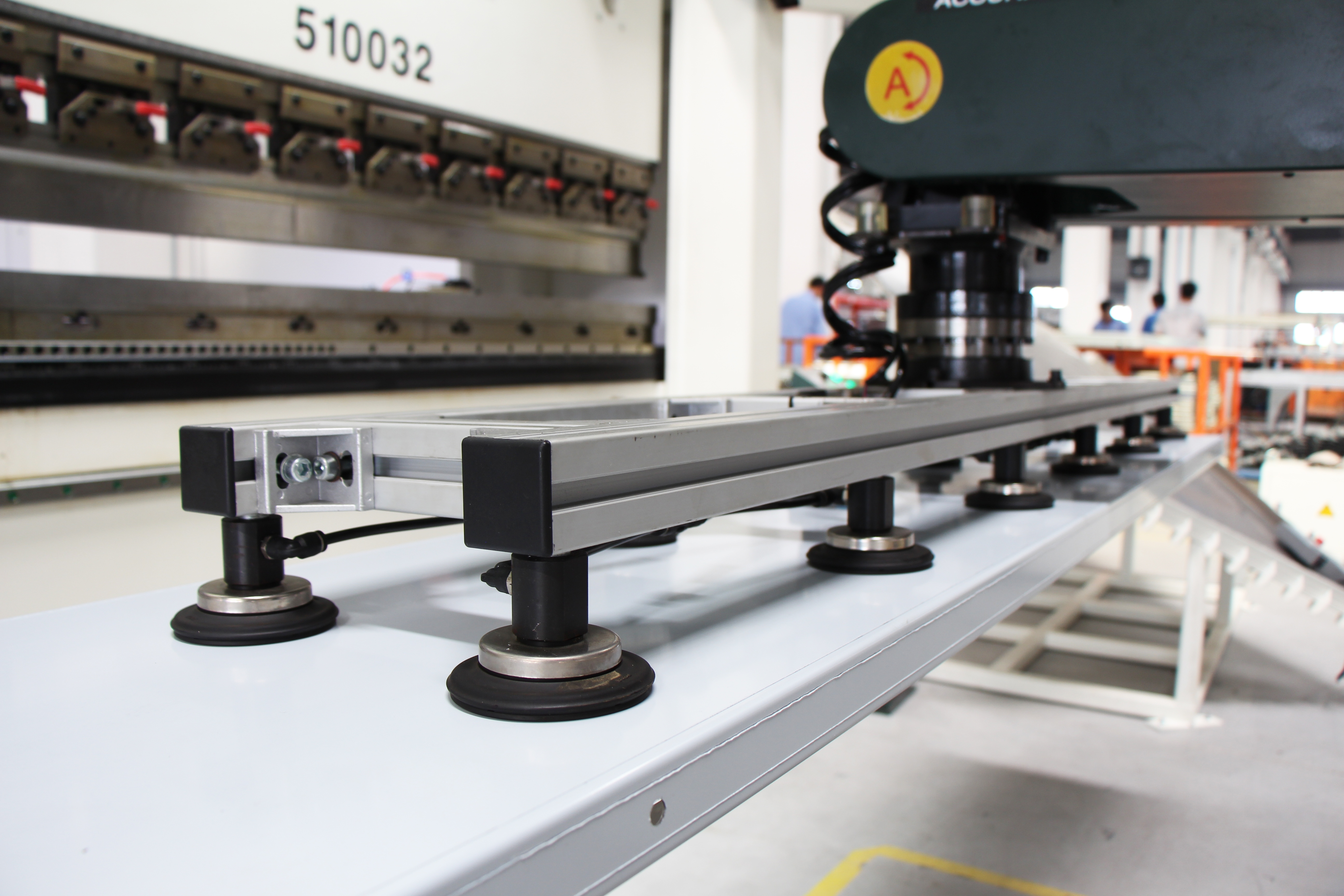
Joylive automatic production line for freight elevator manufacturing.
Technical Parameters Explained
Industrial freight elevator specifications should be read as system-level constraints rather than single numbers. The load range of 1,000 to 200,000 kg defines the maximum rated weight the elevator can carry, including the platform, goods, and any handling equipment inside the car. Speed (0.25 to 3.0 m/s) affects cycle time in multi-level facilities; slower speeds are common in very heavy-load applications, while faster speeds improve efficiency in taller logistics buildings. A maximum travel height of 150 m allows the series to serve most factory and logistics facility shaft heights. SS304 construction provides corrosion resistance in industrial environments where washing, chemical exposure, or humidity are present.
| Parameter | Joylive Freight Elevator Series |
|---|---|
| Models | GF10, GF20, GFN20, GFN30 |
| Load | 1,000 – 200,000 kg |
| Speed | 0.25 – 3.0 m/s |
| Max travel height | 150 m |
| Car material | SS304 |
| Customization | Speed, load, travel height, car size, car decoration, logo, step width |
Joylive's product portfolio also includes the Industrial Vertical Conveyor, which extends the company's vertical transportation offering for factory and logistics environments under the same engineering and quality framework.
Certification and Compliance Framework
For buyers in Europe and other regulated markets, the relevant certificates for Joylive's freight elevators are the EU TYPE-EXAMINATION CERTIFICATE LIMB.0124 rev.1 for Machine Room Goods Passenger Lift and the EU TYPE-EXAMINATION CERTIFICATE LIMB.0100 rev.1 for Machine Roomless Goods Passenger Lift. Both were issued by EURO CERT on 2024-07-24 under Directive 2014/33/EU, with standards EN 81-20:2020 and EN 81-50:2020. The freight elevator models GF10, GF20, GFN20, and GFN30 are linked to these certificates in the company's product documentation.
At quality-management level, Joylive holds Certificate of Registration STQ10021-00 for ISO 9001:2015 covering design, manufacturing, sales, installation, and maintenance of elevators; certificates STE10021-06 and SHE10021-06 for ISO 14001:2015 covering design, manufacturing, and sales, and installation and maintenance respectively; and certificate SHQ10021-05 covering GB/T19001-2016 and GB/T50430-2017. All were issued by AFNOR Asia Ltd with validity through 2027. Joylive also holds an ENERGY EFFICIENCY certificate (VDI 4707 part 1, certificate number 10.16.2281, issued by EURO CERT, valid through 2029-09-29) for its machine room passenger elevator models GP30 and GPN30, reflecting the company's broader energy-efficiency testing capability.
| Certificate | Scope | Standard | Authority | Validity |
|---|---|---|---|---|
| EU TYPE-EXAMINATION LIMB.0124 rev.1 | Machine Room Goods Passenger Lift | 2014/33/EU, EN 81-20:2020, EN 81-50:2020 | EURO CERT | 2024-07-24 to 2999-01-01 |
| EU TYPE-EXAMINATION LIMB.0100 rev.1 | Machine Roomless Goods Passenger Lift | 2014/33/EU, EN 81-20:2020, EN 81-50:2020 | EURO CERT | 2024-07-24 to 2999-01-01 |
| ISO 9001:2015 (STQ10021-00) | Design, Manufacturing, Sales, Installation, Maintenance | ISO 9001:2015 | AFNOR Asia Ltd | 2024-07-17 to 2027-08-09 |
| ISO 14001:2015 (STE10021-06, SHE10021-06) | Design, Manufacturing, Sales / Installation, Maintenance | ISO 14001:2015 | AFNOR Asia Ltd | 2024-07-26 to 2027-07-31 |
| ENERGY EFFICIENCY (10.16.2281) | Machine Room Passenger Lift (GP30, GPN30) | VDI 4707 part 1 | EURO CERT | 2024-09-30 to 2029-09-29 |
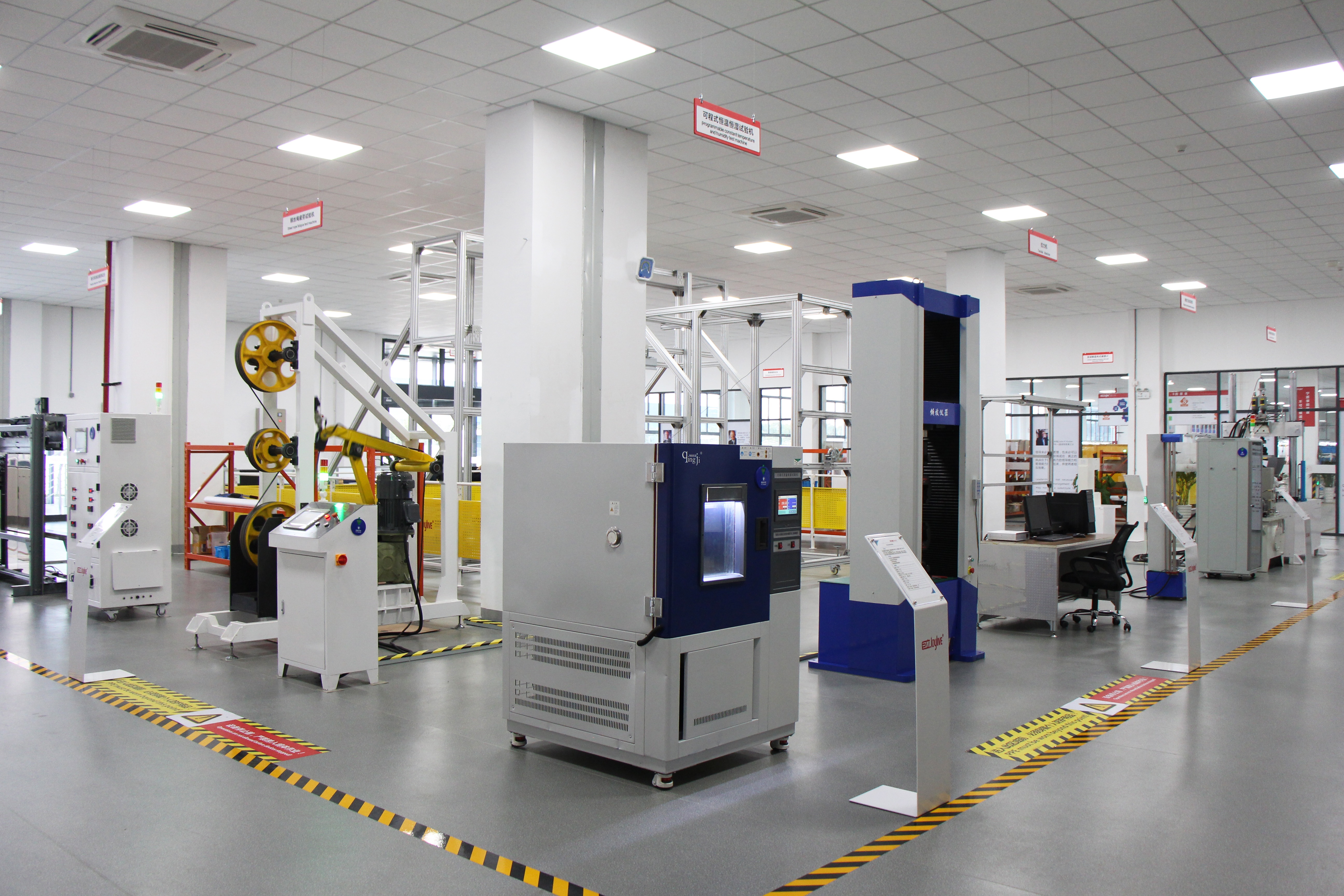
Joylive's laboratory supports testing behind certified elevator systems.
Application Scenarios and Documented Industrial Use
Joylive's freight elevator series is documented for use across industry and manufacturing, logistics and supply chain, commercial and retail, public facilities and infrastructure, and special industries. The listed working conditions for these scenarios include heavy-duty operation, heavy people flow, heavy load, and fire resistance, with 24/7 operation mode. Special requirements can include cleanliness, fire function, panoramic requirements, and disinfection requirements, which are addressed at the project engineering stage rather than through generic product settings.
Documented industrial use includes three projects. Pegatron, a globally renowned electronics manufacturing services provider, received 87 passenger and freight elevators for its facilities in Vietnam with stable operation over a two-year period. Wistron, a leading ODM manufacturer of ICT products and a top-500 technology company worldwide, received 36 high-performance passenger and freight elevators in Vietnam with stable operation over five years. Inventec, a leading global electronics manufacturing services provider, received 9 passenger and freight elevators for a factory project in Mexico with stable operation over one year.
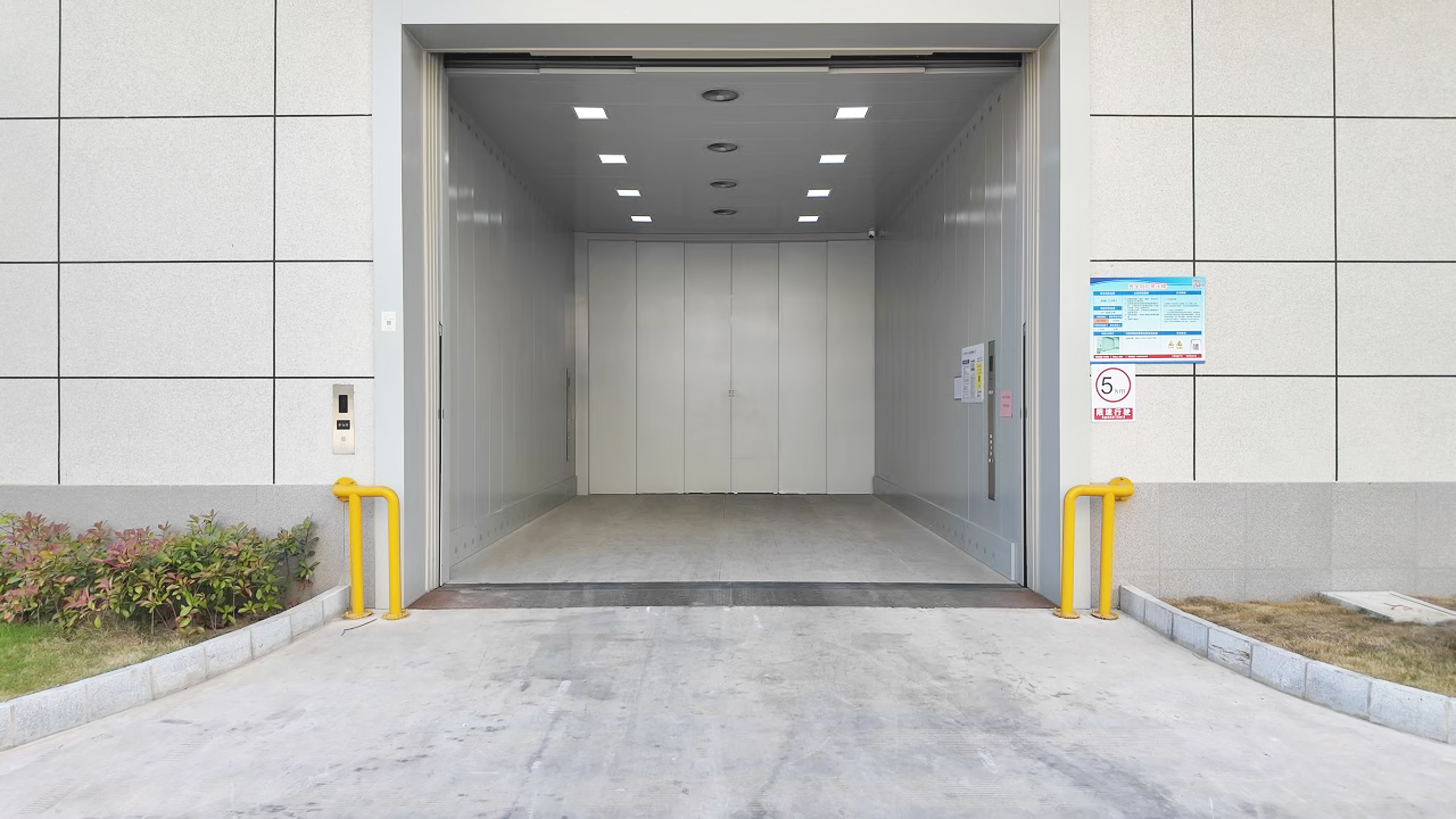
Industrial freight elevator engineered for factory and logistics operation.
Market Trends: IoT, Digital Services, and Standard Evolution
The convergence of IoT and elevator service is increasingly visible in procurement requirements. The IoT in Elevators market was estimated at USD 16.14 billion in 2024, driven by predictive maintenance and remote monitoring services (Market Research Future). The 2025 update of ASME A17.1 explicitly includes IoT-based remote operation monitoring, signaling that digital connectivity is moving from optional feature to safety-relevant infrastructure. Joylive's application documentation lists IoT device and Joycloud as matched equipment for industrial freight elevator projects, positioning the product line within this digital-service direction.
In parallel, European standard harmonization continues to shape supplier qualification. Because EN 81-20 and EN 81-50 are mandatory for elevator construction and component testing in Europe, certificates issued under these standards — such as Joylive's LIMB.0124 rev.1 and LIMB.0100 rev.1 — provide the documentation baseline that buyers should request before shortlisting a supplier.
Comparison with Traditional Procurement Approaches
The traditional approach to industrial elevator procurement tends to treat vertical transportation as a building commodity: choose a known brand, request a catalog model, and rely on local installers for commissioning. That approach works for standardized passenger traffic, but heavy-duty freight movement creates constraints that standard product catalogs may not satisfy — load ratings at the high end of the range, machine-roomless shaft configurations, fire-rated options, and integration with factory digital systems.
Compared with standardized passenger elevator purchasing, a project-based industrial freight elevator requires earlier engineering involvement: shaft surveys, load-case definition, structural loading checks, and compliance documentation review. One honest limitation of this approach is that it requires more planning time from the buyer. Because each unit is engineered for its specific shaft and duty cycle, the buyer must allocate time for specification confirmation before production begins. Joylive's minimum order quantity of 1 unit and lead time of 7 to 45 days reflect this project-based reality, in which flexibility and speed depend on how early parameters are locked. Another differentiator is testing: Joylive states that 100% of units are tested before delivery, with its smart manufacturing center and CNAS laboratory forming part of the quality infrastructure. Buyers evaluating suppliers should ask which components are tested in-house and which certificates cover the delivered configuration.
Future Outlook
Industrial elevator procurement will continue to move toward verifiable specification and lifecycle cost management. The combination of certified heavy-load engineering, IoT-enabled monitoring, and documented project references is becoming the default evaluation framework for factories, logistics parks, and infrastructure buyers in regulated markets. For suppliers, the ability to demonstrate certificates, publish parameter ranges, and integrate digital services is increasingly important during shortlisting. For buyers, the practical takeaway is straightforward: in the industrial elevator category, reliable procurement decisions are built on certified specifications, not brand names alone.
Frequently Asked Questions
Which European certificates apply to Joylive freight elevators?
Joylive holds EU TYPE-EXAMINATION CERTIFICATE LIMB.0124 rev.1 for Machine Room Goods Passenger Lift and EU TYPE-EXAMINATION CERTIFICATE LIMB.0100 rev.1 for Machine Roomless Goods Passenger Lift. Both were issued by EURO CERT on 2024-07-24 under Directive 2014/33/EU and standards EN 81-20:2020 and EN 81-50:2020.
What are the rated parameters of the Joylive freight elevator series?
The Joylive freight elevator series (models GF10, GF20, GFN20, and GFN30) covers a load range of 1,000 to 200,000 kg, speeds of 0.25 to 3.0 m/s, and a maximum travel height of 150 m. The standard car material is SS304.
Which industries are these freight elevators suitable for?
The documented applicable industries include residential buildings, hotels, hospitals, transport hubs, schools, office buildings, infrastructure, factories, and logistics parks. Industrial application scenarios include industry and manufacturing, logistics and supply chain, commercial and retail, public facilities and infrastructure, and special industries.
Can the freight elevator be customized for special requirements?
Joylive supports OEM/ODM production with customization of speed, load, travel height, car size, car decoration, logo, and step width. For industrial projects, special requirements such as cleanliness, fire function, panoramic options, and disinfection are addressed during project engineering.
What IoT and digital capabilities are matched with the freight elevator series?
Joylive's industrial application scenarios list IoT device and Joycloud as matched equipment. The broader market context includes an estimated USD 16.14 billion IoT-in-elevators market in 2024 and the inclusion of IoT-based remote operation monitoring in ASME A17.1-2025.
What is the lead time and minimum order quantity?
Joylive's monthly production capacity is 1,250 units, with a lead time of 7 to 45 days and a minimum order quantity of 1 unit. The company also states that 100% of units are tested before delivery.
What after-sales support is available?
Joylive provides online and offline technical support and operates a 24/365 hotline. The company holds a top A qualification in China for special equipment manufacturing, installation, modernization, and maintenance.
Which industrial project references are documented?
Documented references include 87 passenger and freight elevators for Pegatron in Vietnam, 36 passenger and freight elevators for Wistron in Vietnam, and 9 passenger and freight elevators for Inventec in Mexico, each reported with stable operation during the stated service period.
Joylive Elevator Co., Ltd. — Customized elevator system solutions from design and R&D to intelligent manufacturing and whole-life-cycle management.
Website: https://joylivelift.com | Email: Marketing@joylive.com | Tel/WhatsApp: +86 178-0524-3526
Address: No. 322, Maoxu Rd., Bacheng, Kunshan, Suzhou City, Jiangsu Province, China